6063 Aluminum Alloy in Solid Cladding Panels Temper Selection Extrusion Limits and Coating Decisions
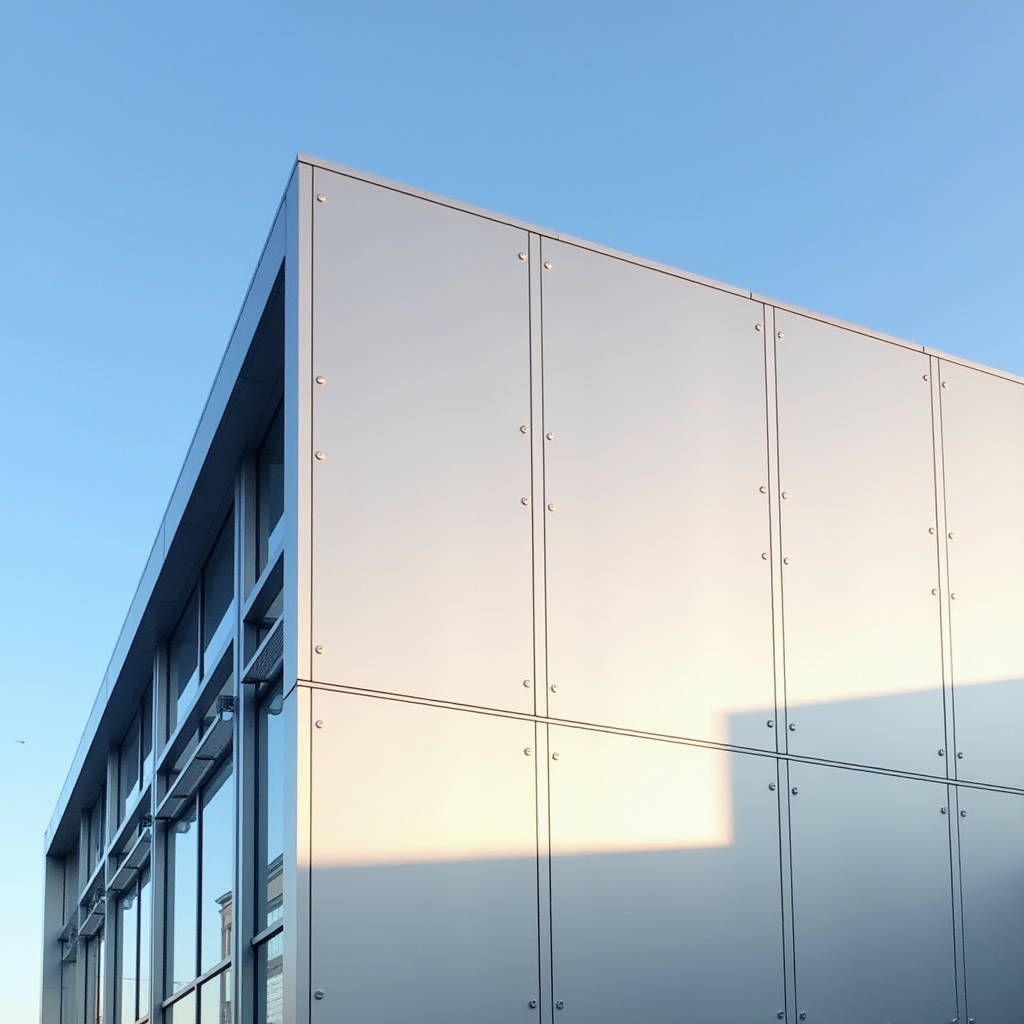
When a curtain wall consultant specifies extruded aluminium profiles for a high-rise facade, the choice of alloy determines how the finished building will look ten years after handover. 6063 Aluminum Alloy sits at the center of that decision. Its reputation as the "architectural alloy" is not marketing fluff. It comes from a specific metallurgical profile: roughly 0.4% silicon and 0.7% magnesium, balanced to produce a material that flows through extrusion dies with minimal resistance while still delivering enough strength to hold its shape across 3-meter spans. For solid aluminium cladding panels fabricated from extruded sections, 6063 provides the substrate that anodizing and PVDF coatings need to bond properly. The alloy's grain structure, thermal response, and surface chemistry all feed into how a panel performs under UV exposure, salt spray, and thermal cycling. This article examines what engineers and procurement teams need to know about 6063 for facade applications, with specific attention to temper selection, corrosion behavior in coastal environments, and the practical limits of extrudability when designing custom profiles.
What Makes 6063 Different from Other 6000 Series Alloys
Engineers who work with extruded aluminium regularly encounter three alloys: 6061, 6063, and 6082. Each has a distinct role. The difference between 6061 and 6063 comes down to the magnesium-to-silicon ratio and the resulting compromise between strength and formability. 6061 contains roughly 1.0% magnesium and 0.6% silicon, giving it higher tensile strength but making it noticeably harder to extrude into complex hollow shapes. 6082 pushes strength even higher, with manganese added for grain refinement, but its extrudability drops further. 6063 Aluminum Alloy occupies the sweet spot: enough magnesium (0.45-0.9%) and silicon (0.2-0.6%) to achieve meaningful heat-treatable strength, but not so much that the billet fights the die at high ram speeds.
The practical consequence for facade engineering is straightforward. When a project requires a custom extruded profile for a solid aluminium cladding panel edge detail, a snap-fit joint, or a hollow mullion section, 6063 will fill the die cavity more reliably than 6061. Wall thicknesses can go thinner without tearing. Surface finish after anodizing comes out cleaner because the lower copper and iron content in 6063 reduces the risk of streaking or mottling. This is not a theoretical advantage. Extrusion plants routinely run 6063 billets at speeds 20-30% faster than 6061 for equivalent profiles, which translates directly into lower per-meter costs for the fabricator and shorter lead times for the contractor.
Chemical Composition and Its Effect on Surface Quality
The surface appearance of an anodized solid aluminium panel depends heavily on the alloy chemistry underneath. 6063 Aluminum Alloy limits iron to a maximum of 0.35% and copper to 0.10%. These are not arbitrary numbers. Iron-rich intermetallic particles in the aluminium matrix do not dissolve during homogenization and remain as dark spots after anodizing. Copper above 0.10% shifts the anodic oxide color toward yellow or gray, which becomes visible when architects specify light metallic finishes. 6063's tight compositional control, maintained under The Aluminum Association's Teal Sheets, gives anodizers a predictable substrate. That predictability matters when a general contractor is staring at 2,000 square meters of panels that all need to match.
Temper Selection: T5, T6, and What Actually Matters for Cladding
Walk into any extrusion warehouse and you will see 6063 stocked in T5 and T6 tempers. The difference is thermal history. T5 means the extrusion is cooled from the press, then artificially aged. T6 means it goes through a full solution heat treatment, quench, and then artificial aging. The mechanical property difference is real but often overstated for cladding applications. 6063-T5 typically delivers 145 MPa ultimate tensile strength and 110 MPa yield strength. 6063-T6 pushes that to roughly 215 MPa ultimate and 170 MPa yield. For a solid aluminium panel that is mechanically fastened to a subframe, wind load governs the design, and deflection limits usually control long before ultimate strength becomes the failure mode.
The more relevant question for the facade engineer is which temper the local extrusion plant can actually produce consistently. Many mills in Asia and the Middle East default to T5 for 6063 because it skips the solution heat treatment step, saving energy and reducing distortion in thin-walled profiles. T6 requires a separate solution furnace and a controlled quench, which adds cost and can warp long sections. For most architectural cladding applications, properly aged 6063-T5 provides adequate strength, especially when the panel design incorporates stiffening ribs or folded returns. The exception is when the extruded profile also serves as a structural mullion carrying glass dead loads. In that case, specifying T6 and verifying the mill's heat treatment certification against ASTM B221 or ISO 6362-2 becomes necessary.
Corrosion Behavior in Real-World Facade Conditions
Aluminium's corrosion resistance comes from the thin, self-healing oxide layer that forms instantly when bare metal hits air. 6063 Aluminum Alloy, with its low copper content and controlled zinc levels, performs well in most atmospheric conditions without protective coatings. But "most" does not mean "all." In coastal environments where chloride deposition rates exceed 60 mg/m² per day, the oxide layer on bare 6063 can break down locally, leading to pitting. The pitting depth on 6063 in marine atmospheres typically ranges from 0.05 to 0.15 mm after 20 years of exposure, based on long-term field studies. That is not structurally threatening for a 3 mm thick panel, but it is visually unacceptable on a premium facade.
This is where the coating system takes over. A properly applied PVDF coating at 30-35 microns dry film thickness, meeting AAMA 2605 standards, isolates the 6063 substrate from chlorides entirely. The pretreatment step, typically a chrome-based or chrome-free conversion coating, is critical. It etches the aluminium surface, removes the natural oxide layer, and deposits a chemically bonded film that the PVDF primer can anchor to. Skipping or under-specifying pretreatment is the most common cause of premature coating failure on 6063 cladding panels, regardless of the paint quality. For projects within 500 meters of breaking surf, specifying a marine-grade pretreatment and a minimum 35-micron PVDF topcoat is standard practice among experienced facade consultants.
Extrusion Design Limits for Solid Aluminium Cladding Panels
6063 Aluminum Alloy earned its reputation on the extrusion press. Its low flow stress at billet temperatures around 480°C means it can be pushed through dies with tongue ratios (the ratio of the die opening perimeter to the cross-sectional area) that would stall a press running 6061. For cladding panel profiles, this translates into several practical design freedoms. Hollow sections with internal webs can be extruded with wall thicknesses down to 1.0 mm in 6063, though 1.5 mm is a more realistic minimum for profiles over 100 mm wide. The alloy also tolerates higher extrusion ratios, meaning a single billet can produce longer lengths before the die needs cleaning or replacement.
However, there are limits. The maximum circumscribing circle diameter for a 6063 extrusion on a typical 2,000-ton press is around 250 mm. Profiles wider than that require larger presses, which fewer mills operate. Wall thickness variation across a profile should be kept within a 2:1 ratio to avoid distortion during quenching. Sharp internal corners concentrate stress and can initiate cracking during straightening; a minimum 0.5 mm internal radius is standard. These constraints are not unique to 6063, but they are more forgiving than with higher-strength alloys. When Futeng® engineers review custom extrusion drawings for solid aluminium cladding systems, they routinely flag wall thickness transitions and corner radii that would be borderline in 6061 but are comfortably within 6063's capability envelope.
Thermal Movement and Panel Joint Design
Aluminium expands and contracts. 6063 has a coefficient of thermal expansion of approximately 23.4 × 10⁻⁶ per °C. On a 3-meter panel subjected to a 60°C temperature swing from a winter night to direct summer sun, that is 4.2 mm of linear movement. If the panel joints do not accommodate this, the result is buckling, fastener tear-out, or sealant failure. The math is simple, but the consequences of ignoring it are expensive.
For solid aluminium cladding panels fabricated from 6063 extrusions, joint design must account for both thermal movement and installation tolerances. A 10 mm nominal joint with a 6 mm minimum after movement is a common starting point. The exact number depends on panel dimensions, color (darker colors absorb more solar radiation and run hotter), and the fixing system. Slotted holes at one end of each panel, combined with fixed points at the other, allow the panel to breathe without transferring stress to the substructure. This is standard curtain wall detailing, but it is worth reiterating because site teams sometimes weld panels to steel subframes for "extra security," locking in thermal stresses that will eventually crack the aluminium or pop the fasteners.
Welding 6063: What Changes After the Arc
6063 is weldable, but the heat-affected zone (HAZ) loses strength. In the as-welded condition, the HAZ in 6063-T5 drops to roughly the strength of annealed material, around 90 MPa ultimate tensile. For 6063-T6, the drop is even steeper because the base metal starts higher. This matters when cladding panels require welded corner joints or when brackets are welded to the back of a panel. The designer has two choices: locate welds in low-stress areas, or size the section based on the HAZ strength rather than the parent metal strength.
Post-weld heat treatment can restore some strength, but it is rarely practical for large fabricated panels. The distortion from solution treating a welded assembly often exceeds the dimensional tolerances required for facade work. Gas tungsten arc welding (GTAW/TIG) with 4043 or 5356 filler rod is standard for 6063. 4043 provides better fluidity and is less crack-sensitive; 5356 gives a better color match after anodizing but is slightly more difficult to work with. The choice depends on whether the weld will be visible and whether the panel will be anodized or painted. For PVDF-coated panels, the weld is hidden under the paint, and 4043 is the default choice for most fabricators.
Cost Drivers: What Makes 6063 Cladding Panels More or Less Expensive
Procurement managers evaluating bids for 6063-based solid aluminium cladding systems need to understand where the cost lives. The billet price for 6063 is typically 3-5% lower than 6061 due to lower alloying element content and higher production volumes. Extrusion die costs are lower for 6063 because the dies last longer and the press runs faster. These are real savings, but they are modest in the context of a finished, coated, fabricated panel.
The bigger cost drivers are profile complexity, coating specification, and fabrication labor. A simple rectangular panel with folded edges and a standard PVDF color might cost $45-60 per square meter ex-works. The same panel with a custom extruded snap-fit perimeter frame, a 3-coat metallic PVDF finish, and CNC-routed perforations can easily exceed $120 per square meter. The 6063 substrate itself accounts for perhaps 20-30% of the finished panel cost. The rest is value-added processing. This is why specifying 6063 over 6061 rarely changes the project budget by more than a few percent, while the design and coating choices can swing it by a factor of two.
| Property | 6063-T5 | 6063-T6 | 6061-T6 | 6082-T6 |
|---|---|---|---|---|
| Tensile Strength (MPa) | 145 min | 215 min | 290 min | 310 min |
| Yield Strength (MPa) | 110 min | 170 min | 240 min | 260 min |
| Elongation (%) | 8 min | 8 min | 10 min | 10 min |
| Extrudability Rating | Excellent | Excellent | Good | Fair |
| Anodizing Response | Excellent | Excellent | Good | Fair |
| Weld HAZ Strength Loss | ~40% | ~50% | ~45% | ~50% |
| Typical Cladding Application | Standard panels, trim | Structural mullions | Heavy-duty brackets | High-load profiles |
| Relative Billet Cost | Base | Base + processing | +3-5% | +5-8% |
Anodizing vs. PVDF on 6063: A Practical Decision Framework
Architects love anodized aluminium. The metallic depth, the way light plays across the surface, the honest expression of the material. 6063 Aluminum Alloy is the ideal substrate for architectural anodizing because its low iron and copper content produces a clear, consistent oxide layer. But anodizing has limitations that PVDF does not. An anodic coating is essentially aluminum oxide grown from the substrate itself. It is hard, typically 10-25 microns thick, and electrically non-conductive. It also has no flexibility. When the aluminium substrate expands thermally, the anodic layer cannot stretch. Micro-cracking develops over time, especially on dark colors that run hotter. This is not a defect; it is inherent to the technology.
PVDF coatings, applied as a liquid and baked at 230-250°C, are a polymer film that sits on top of the aluminium. They flex with the substrate. They are available in a vastly wider color range, including bright whites, vivid reds, and metallic effects that anodizing cannot achieve. For a 6063 solid aluminium panel on a coastal high-rise, PVDF is the safer choice. For an interior feature wall or a sheltered soffit where the architect demands the anodized look, 6063 will deliver it beautifully. The key is matching the finish to the exposure, not defaulting to one or the other.
Supply Chain Realities: Where 6063 Extrusions Come From
The global extrusion capacity for 6063 is concentrated in a few regions. China accounts for roughly 60% of global aluminium extrusion output, with dedicated architectural extrusion lines in Guangdong, Shandong, and Jiangsu provinces. The Middle East, particularly the UAE and Saudi Arabia, has built significant capacity over the past decade, driven by local construction demand. European mills in Germany, Italy, and Spain serve the high-end specification market with shorter lead times but higher prices. North American extruders, concentrated in the US Midwest and Southeast, supply domestic projects but face billet cost pressures from import tariffs.
For a procurement manager sourcing 6063-based solid aluminium cladding panels, the decision matrix includes billet source, extrusion capability, coating line certification, and logistics. A mill that extrudes 6063 but sends panels to a third-party coater introduces quality-control handoffs that can go wrong. Vertically integrated suppliers that control extrusion, fabrication, and coating under one roof reduce that risk. Lead times for custom 6063 profiles typically run 6-10 weeks from die approval to first shipment, though this varies by region and order volume. Dies for 6063 extrusions cost $500-2,000 depending on profile complexity and are typically amortized over the project volume.
Quality Assurance: What to Check Before the Panels Ship
Before a container of 6063 cladding panels leaves the factory, the specifier should require mill test certificates (MTCs) showing chemical composition and mechanical properties for each heat/batch. The composition should fall within Aluminum Association limits for 6063. Mechanical testing per ASTM B557 or equivalent should confirm the specified temper. Coating thickness, adhesion, and color consistency should be verified against the approved control sample. For PVDF coatings, a simple MEK rub test (50 double rubs with no breakthrough) provides a quick field check of cure quality.
Dimensional tolerances for extruded profiles should reference ASTM B221 or EN 755-9. For fabricated panels, flatness tolerances of 0.5% of the panel diagonal (or 2 mm, whichever is greater) are typical. Checking a random sample of panels on a granite surface plate before shipment catches bowing, twisting, or fabrication errors before they become site problems. These checks add a day to the inspection process and save weeks of site rework.
Designing with 6063: Engineering Judgement Over Rule-of-Thumb
6063 Aluminum Alloy has been the backbone of architectural aluminium for decades because it does many things well and nothing badly. It extrudes cleanly, anodizes beautifully, welds adequately, and resists corrosion in all but the harshest environments. For solid aluminium cladding panels, it provides a substrate that balances cost, workability, and long-term performance. The engineering decisions that matter are not about whether to use 6063, but about which temper to specify, what coating system to apply, and how to detail the joints so the panels survive decades of thermal cycling without complaint.
Specifiers who understand the metallurgical reasons behind 6063's behavior, rather than just memorizing property tables, make better decisions. They know when a 1.5 mm wall thickness is sufficient and when it needs to be 2.0 mm. They know to check the iron content on the MTC before approving an anodized finish. They know that a well-designed joint with room to move is worth more than an extra 50 MPa of tensile strength. That level of engineering judgement separates facades that perform from those that fail. And it starts with understanding the alloy that carries the architect's vision from rendering to reality.