5754 Aluminum Alloy Solid Cladding Panels Marine Corrosion Resistance and Temper Selection for Facade Engineers
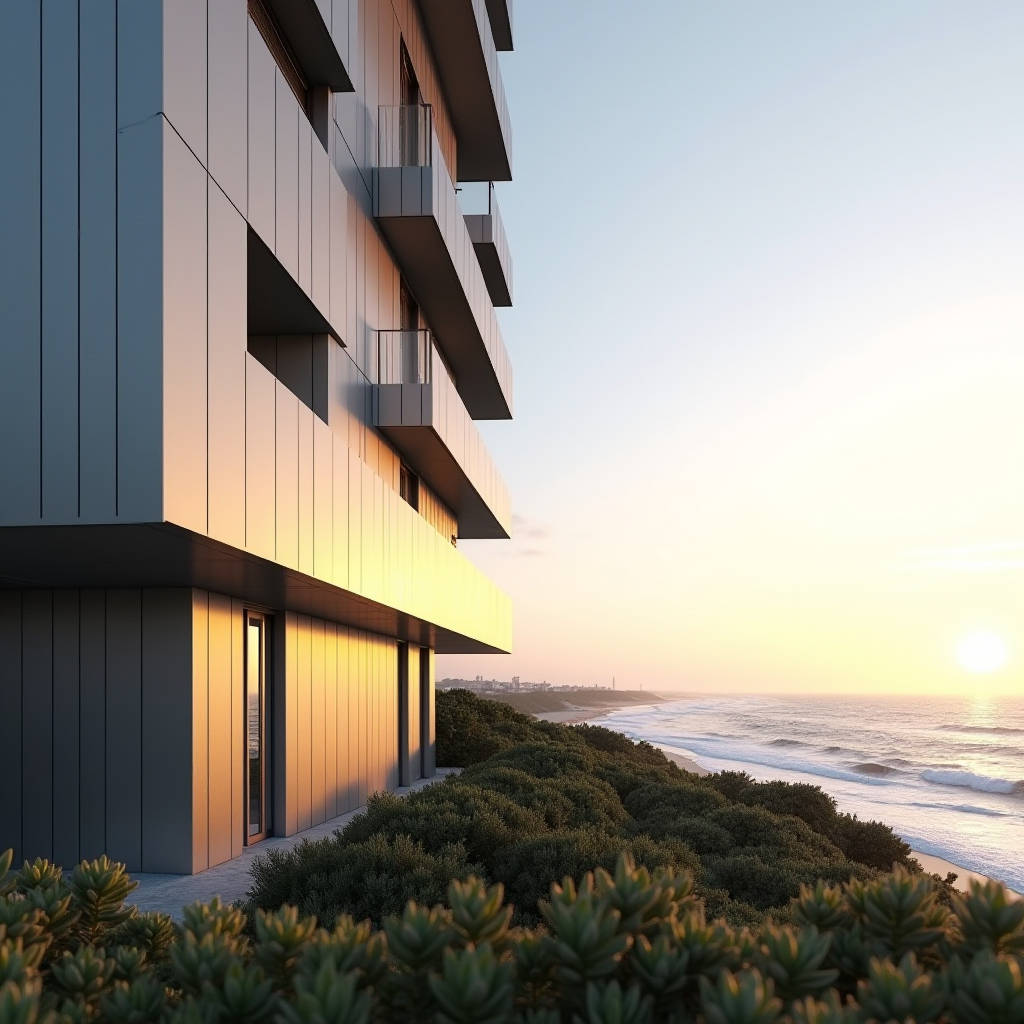
When a project specification calls for a marine-grade wrought aluminium alloy that can hold its own against salt spray, industrial fallout, and decades of thermal cycling without corroding or losing structural integrity, 5754 Aluminum Alloy sits at the top of a very short list. Architects and facade engineers who work on coastal high-rises, offshore platforms, and waterfront public buildings have been quietly specifying this alloy for years, not because it is trendy, but because the combination of moderate strength, class-leading weldability, and genuine seawater corrosion resistance solves problems that 5xxx-series cousins like 5052 or 5083 cannot always address with the same balance of formability and cost. This article examines what makes 5754 Aluminum Alloy distinct in the context of solid aluminium cladding, how its mechanical and chemical properties translate into real-world facade performance, and which temper and finishing choices matter most when procurement teams sit down to write a purchase order.
Where 5754 Sits in the 5xxx Family and Why That Matters for Cladding
The 5xxx series groups wrought aluminium alloys where magnesium is the primary alloying element. Within that family, 5754 Aluminum Alloy occupies a specific position: magnesium content between 2.6% and 3.6%, with controlled additions of manganese and chromium. This is not the highest-magnesium alloy in the series — 5083 pushes magnesium to 4.0–4.9% — but the moderate Mg level in 5754 delivers something that higher-strength marine alloys sometimes sacrifice: room-temperature formability without the risk of sensitization that can trigger intergranular corrosion in certain environments.
For solid aluminium cladding panels, this matters in two practical ways. First, fabricators can bend, brake, and route 5754 sheet into complex facade geometries — deep returns, folded corners, curved soffit panels — without the micro-cracking that can appear in higher-strength tempers. Second, the alloy's resistance to stress corrosion cracking (SCC) remains intact even after welding, which is not always true for 5083 in the H321 temper when exposed to temperatures above 65°C for extended periods. The 5754 aluminium alloy composition, as documented in the Aluminum Association register, deliberately keeps Mg below the threshold where beta-phase precipitation along grain boundaries becomes a long-term durability concern.
Procurement managers who cross-shop 5052 and 5754 often notice the price differential and wonder whether the upgrade is justified. The answer depends on the corrosion exposure category. In ISO 12944-2 terms, 5052 handles C2 and C3 environments competently. But move to C4 (coastal with moderate salinity) or C5-M (marine, high humidity, persistent salt aerosol), and the additional magnesium in 5754 begins to pay for itself in reduced pitting depth and slower propagation rates.
Mechanical Properties That Define Fabrication Limits
Specifying the right temper is where engineering intent meets shop-floor reality. 5754 Aluminum Alloy ships in several standard tempers, each with distinct implications for bending radii, springback, and surface finish after forming.
| Temper | Tensile Strength (MPa) | Yield Strength (MPa) | Elongation (%) | Typical Cladding Application |
|---|---|---|---|---|
| 5754-H111 | 190–240 | ≥ 80 | ≥ 18 | Deep-drawn panels, complex curved fascia |
| 5754-H22 | 220–270 | ≥ 130 | ≥ 12 | Flat rainscreen panels, moderate forming |
| 5754-H14 | 240–280 | ≥ 180 | ≥ 8 | Stiffened panels, high wind-load zones |
| 5754-H114 | 220–270 | ≥ 130 | ≥ 12 | Welded assemblies, marine cladding |
The H111 temper deserves particular attention for architectural cladding. It is an annealed and lightly strain-hardened condition that provides the softest forming characteristics while still meeting minimum strength requirements for most rainscreen applications. Fabricators working with 2.5 mm and 3.0 mm solid sheet in H111 can achieve tight bend radii — typically 1.0 to 1.5 times material thickness — without orange-peel surface defects or edge cracking. H22 and H14, by contrast, demand larger bend radii (2.0–2.5t) and produce more springback, which complicates CNC brake programming for repetitive panel production.
For projects in high wind-load regions — think Gulf Coast towers or North Sea offshore accommodation modules — the H14 temper provides a measurable stiffness advantage. At 3.0 mm thickness, an H14 panel spanning 600 mm between support rails can handle wind pressures approaching 3.5 kPa with deflection staying within L/175 limits, a common rainscreen criterion. The same panel in H111 might require reducing the span or increasing thickness to 4.0 mm, which adds weight and cost. This is the kind of trade-off calculation that 5754 aluminum alloy data sheets enable when engineers run the numbers early in the design phase.
Corrosion Resistance: The Real-World Performance Gap
Laboratory salt-spray tests per ASTM B117 tell part of the story, but facade engineers who have inspected buildings after 10 or 15 years of coastal exposure know that real-world corrosion follows a more complex script. 5754 Aluminum Alloy earns its reputation in three specific corrosion mechanisms that matter for building envelopes.
Pitting Corrosion in Chloride Environments
All aluminium alloys pit when chloride ions breach the passive oxide layer. The question is how deep and how fast. Independent testing of 5754 sheet exposed to intermittent seawater spray over 5-year periods shows average pit depths of 40–60 µm, compared to 80–120 µm for 5052 under identical conditions. The difference traces back to the magnesium content: the Mg₂Si precipitates that strengthen the alloy also create a more homogeneous electrochemical surface, reducing the number of active pit initiation sites.
Intergranular Corrosion and Sensitization
This is the failure mode that separates well-specified 5xxx alloys from poorly chosen ones. When magnesium content exceeds approximately 3.0%, prolonged exposure to temperatures above 50–80°C can cause beta-phase (Mg₂Al₃) to precipitate continuously along grain boundaries. That beta phase is anodic to the surrounding matrix, creating a corrosion pathway that can propagate through the entire sheet thickness. 5754, with its magnesium cap at 3.6%, sits in a sweet spot: enough Mg for strength and marine corrosion resistance, but not so much that standard PVDF curing cycles (which peak at 230–250°C for 10–15 minutes) trigger sensitization. The 5754 aluminium alloy technical literature from Smiths Metal confirms this thermal stability advantage in fabrication environments.
Galvanic Compatibility with Fasteners and Substructure
Every rainscreen cladding system creates galvanic couples where aluminium panels meet stainless steel fasteners, aluminium extrusion rails, or — in poorly detailed projects — carbon steel backup structures. 5754 has a corrosion potential of approximately -0.83 V versus SCE (saturated calomel electrode), which places it close enough to 304 and 316 stainless steels (-0.05 to -0.15 V) that galvanic corrosion rates remain manageable in most atmospheric conditions. The key is maintaining an appropriate cathode-to-anode area ratio. Large aluminium panels with small stainless fasteners create a favorable ratio; the reverse — small aluminium components on large steel structures — demands isolation strategies like EPDM gaskets or nylon washers.
Weldability and Its Implications for Cladding Design
Not all cladding systems require welding, but when they do — think sealed cassette panels, welded corner joints on column covers, or continuous welded soffit assemblies — the alloy choice directly affects fabrication cost and long-term joint integrity. 5754 Aluminum Alloy welds readily using both MIG (GMAW) and TIG (GTAW) processes with 5356 or 5554 filler wire. The 5356 filler, containing approximately 5% magnesium, provides overmatching weld strength relative to the 5754 base metal, which means the weld itself is stronger than the surrounding material. This is the preferred condition for structural welds.
Post-weld heat treatment is not required for 5754, unlike some heat-treatable 6xxx alloys. The heat-affected zone (HAZ) does experience some strength reduction — typically 10–15% below the parent metal strength in H22 temper — but the loss is predictable and can be accounted for in joint design. For cladding applications where welds are primarily sealing rather than structural, this reduction rarely governs the design.
A practical note for fabricators: 5754 in the H111 temper produces cleaner weld beads with less porosity than strain-hardened tempers, because the softer material allows better fit-up and reduces residual stress during cooling. When Futeng® supplies 5754 sheet for welded cladding assemblies, the mill test certificates typically include actual Mg content and weldability verification, which helps fabricators dial in their parameters before cutting into production material.
Surface Finishing: PVDF, Anodizing, and the 5754 Substrate
The architectural specification for solid aluminium cladding almost always includes a factory-applied finish, and 5754 Aluminum Alloy interacts with each finishing technology in specific ways that affect warranty terms and long-term appearance.
PVDF Liquid Coating
Polyvinylidene fluoride (PVDF) coatings meeting AAMA 2605 requirements are the industry standard for high-end architectural cladding. Applied as a multi-coat system — typically a chrome-based conversion coat or chrome-free pretreatment, followed by a primer and a 70% PVDF color coat — the total dry film thickness ranges from 25 to 40 µm. 5754 accepts PVDF coatings well, with adhesion testing per ASTM D3359 consistently achieving 5B ratings (no removal) on properly pretreated surfaces. The key process variable is the pretreatment stage: 5754's magnesium content means the surface oxide that forms during mill processing is slightly different from that of 1xxx or 3xxx alloys. A quality pretreatment line will adjust etch time and chemical concentration to ensure uniform conversion coating across the entire sheet surface.
Anodizing Considerations
While 5754 can be anodized, it is not the ideal candidate for architectural anodizing in the way that 5005 or 6063 are. The magnesium content produces an anodic film that tends toward a yellowish or grayish cast rather than the bright silver of lower-magnesium alloys. For projects where anodized finish is non-negotiable, 5005 or 6061 may be better substrate choices. However, for dark bronze or black anodized finishes where color consistency is less sensitive to substrate tint, 5754 can perform adequately if the anodizing parameters are tightly controlled.
Forming and Fabrication: What Shop Drawings Need to Capture
The transition from flat sheet to finished cladding panel involves multiple forming operations, and 5754 Aluminum Alloy behaves differently from the 3xxx and 6xxx alloys that many fabricators encounter more frequently. Three fabrication specifics deserve attention in shop drawings and quality plans.
Minimum bend radius. For 5754-H111 at 2.5 mm thickness, the inside bend radius can go as tight as 1.5 mm for a 90-degree bend without cracking, provided the bend line is perpendicular to the rolling direction. Parallel to the rolling direction, increase the radius to 2.5 mm. For H22 and H14 tempers, add 50–100% to these values. Specifying bend orientation on the shop drawing avoids the situation where the fabricator nests parts for maximum material utilization but ends up bending across the grain on critical visible edges.
Springback compensation. 5754 exhibits springback of approximately 3–5 degrees for a 90-degree bend in H111 temper, and 6–10 degrees in H14. CNC press brake programs need to overbend accordingly, and the compensation should be validated on a first-article inspection before production runs begin.
Routing and perforating. Solid 5754 sheet machines cleanly with carbide tooling. For perforated cladding panels — increasingly popular for sun-shading and acoustic applications — the alloy's moderate hardness means tool life is better than with 6xxx alloys, and burr formation at hole edges is minimal when feeds and speeds are optimized. The 5754 aluminium alloy properties data from Altek Metal confirms good machinability in the strain-hardened tempers.
Supply Chain Realities: Sourcing 5754 Sheet for Cladding Projects
Not every aluminium distributor stocks 5754 in cladding-appropriate thicknesses and tempers. The alloy is more common in European markets, where EN AW-5754 (AlMg3) is a standard mill product, than in North America, where 5052 dominates the 5xxx sheet market. For international projects, this creates procurement considerations.
Mill lead times for 5754 sheet in 2.0 mm, 2.5 mm, and 3.0 mm thicknesses typically range from 8 to 14 weeks depending on mill location and order volume. Width availability up to 2,000 mm is standard from most mills; widths beyond 2,200 mm may require special production runs. For projects requiring PVDF finishing, the total lead time extends by 3–5 weeks for coating, depending on color complexity and whether the color is standard or custom-matched.
Material certification is non-negotiable for facade applications. Every shipment should include mill test certificates (MTCs) per EN 10204 Type 3.1 or 3.2, showing actual chemical composition, mechanical properties, and temper designation. For projects in the Middle East, additional compliance with Dubai Civil Defence or Qatar Construction Standards may be required, particularly regarding fire performance of the complete cladding system.
One procurement strategy that works for large projects — 5,000 m² and above — is to reserve mill capacity early and have the sheet cut to panel blank sizes at the mill before shipping. This reduces freight costs, minimizes handling damage, and ensures that the fabricator receives material that is already close to final dimensions. The trade-off is that blank sizes must be finalized early in the design process, which requires a higher level of design maturity at the tender stage than some projects achieve.
Thermal Movement and Facade Detailing
Aluminium expands and contracts with temperature changes, and 5754 Aluminum Alloy follows the same coefficient of thermal expansion as other wrought aluminium alloys: approximately 23.8 × 10⁻⁶ per °C. For a 3-meter-long panel subjected to a 60°C temperature swing (from -10°C winter night to 50°C summer sun on a dark-colored panel), the linear expansion is roughly 4.3 mm. That is not a rounding error — it is enough to cause panel buckling, fastener loosening, or sealant failure if the fixing system does not accommodate movement.
Rainscreen systems using 5754 panels should incorporate slotted fixing holes or allow sliding connections at one end of each panel. The standard detail: fixed point at the top center of the panel, slotted connections elsewhere, with slot length calculated for the expected temperature range plus a safety factor of 1.5. For cassette systems, the interlocking joint geometry itself can provide some movement capacity, but the joint depth and engagement must be verified against the calculated expansion.
Fire Performance in the Context of Building Regulations
Solid aluminium cladding panels made from 5754 Aluminum Alloy are non-combustible in the sense that the aluminium substrate itself does not burn (Euroclass A1 per EN 13501-1). However, the complete cladding system — including the PVDF coating, any insulation behind the panel, and the mounting substructure — must be evaluated as an assembly. The Grenfell Tower tragedy and subsequent regulatory reforms worldwide have made fire performance the single most scrutinized aspect of facade material specification.
For 5754 solid aluminium panels, the critical fire-related specification points are: the panel thickness (solid 3.0 mm aluminium does not melt through quickly in a fire scenario, unlike thin composite skins), the coating system (PVDF coatings contribute negligible fuel load at 25–40 µm thickness), and the absence of any polyethylene or other combustible core. This is where the distinction between solid aluminium and aluminium composite material becomes not just a technical preference but a regulatory requirement in many jurisdictions.
The EN AW-5754 aluminium alloy data from XCB Group references the material's use in applications where consistent certification matters, and fire compliance documentation should be part of every cladding material submittal.
Cost Drivers and Value Engineering Without Compromising Performance
5754 sheet typically carries a 10–20% premium over 5052 in equivalent tempers and thicknesses, driven by higher magnesium content and lower production volumes. Value engineering exercises that propose substituting 5052 for 5754 should be evaluated against the specific corrosion exposure category of the project site. For inland projects more than 5 km from the coast, 5052 may be adequate. For projects within 1 km of breaking surf or in industrial zones with SO₂ emissions, the 5754 premium is cheap insurance against premature pitting.
Other cost levers that do not compromise performance include: optimizing panel sizes to reduce cutting waste from standard mill sheet dimensions (2,000 × 4,000 mm and 1,500 × 3,000 mm are common), specifying H111 rather than H22 where forming complexity justifies the softer temper, and consolidating color selections to minimize coating line changeovers. On a 10,000 m² project, these optimizations can recover 5–8% of the material cost without touching the alloy specification.
Specifying 5754 Aluminum Alloy for solid cladding is fundamentally a decision about corrosion margin. The alloy buys you decades of additional service life in aggressive environments, and that value shows up not in the tender price but in the absence of facade remediation costs 15 years after handover.
Making the Specification Decision
For the architect or facade engineer sitting down to write a cladding specification, the decision to call out 5754 Aluminum Alloy should be driven by three questions. Is the project within 5 km of a marine coastline or in an industrial atmosphere with known corrosive pollutants? Does the panel geometry involve welding, deep drawing, or tight-radius bending that demands the alloy's formability? And does the project's expected service life — 30, 40, 50 years — justify the incremental material cost relative to lower-alloyed alternatives?
When the answer to any two of those questions is yes, 5754 becomes the rational engineering choice. The alloy's track record in North Sea offshore structures, Mediterranean coastal buildings, and chemical processing facilities provides a body of empirical evidence that laboratory data alone cannot replicate. For procurement teams, the practical takeaway is to engage mills and distributors early, lock in temper and thickness requirements before the tender stage, and treat material certification as a deliverable rather than an afterthought. A well-executed 5754 cladding package, supplied by manufacturers who understand the alloy's specific handling requirements, delivers a facade that performs as specified for decades — and that is the only metric that ultimately matters.