6061 Aluminum Alloy in Solid Cladding Panels Engineering Thresholds and Cost Logic for Facade Teams
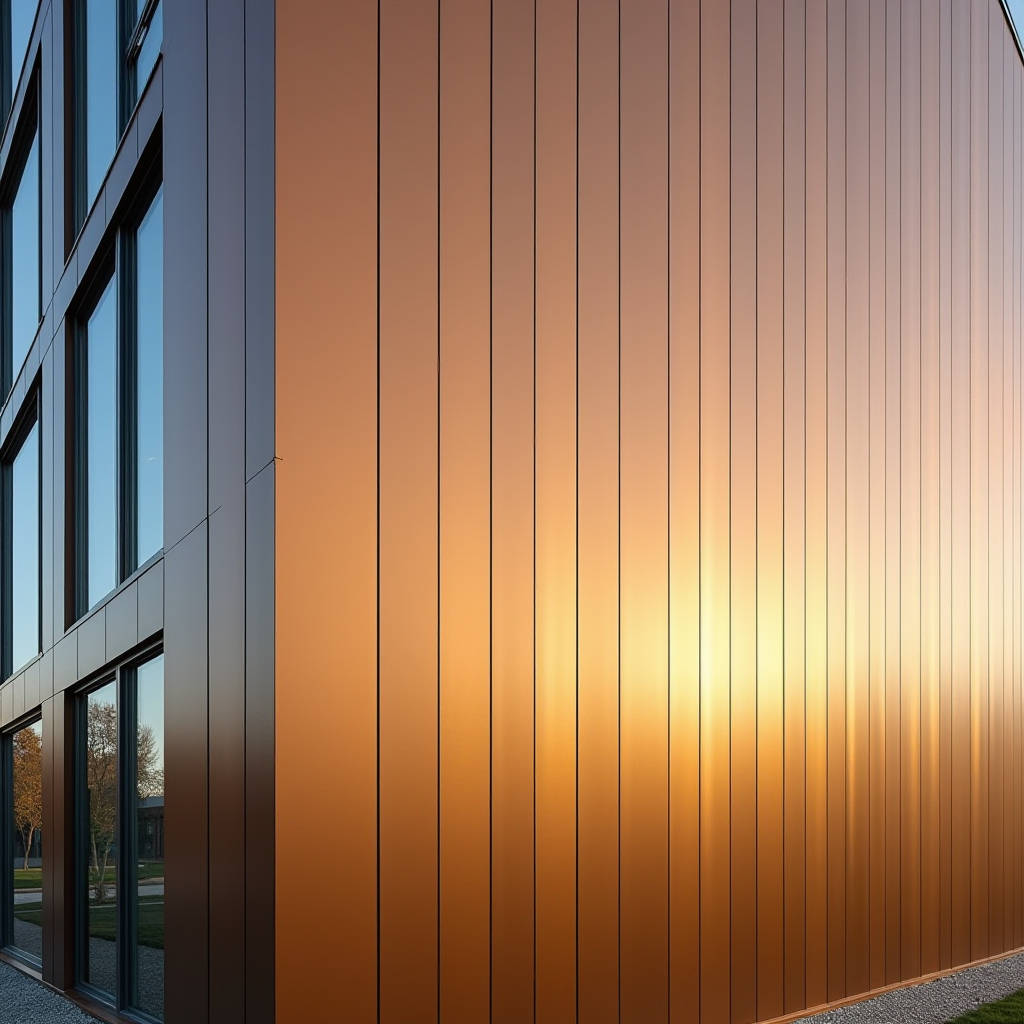
When a facade engineering team selects 6061 Aluminum Alloy for a large-scale cladding project, the decision rarely hinges on basic tensile strength numbers. What drives the real conversation is how the alloy behaves across a 30-year service life when exposed to cyclic thermal stress, coastal chloride deposition, and the mechanical demands of modern unitized curtain wall systems. 6061 Aluminum Alloy occupies a peculiar position in the cladding supply chain: it is structurally superior to the more common 6063 alloy, yet it demands a fundamentally different approach to extrusion, welding, and finishing. This article examines the specific engineering thresholds that determine whether 6061 makes sense for a given facade application, the cost implications that procurement managers need to anticipate, and the long-term performance data that architects should reference when writing specifications.
Why 6061 Enters the Cladding Conversation
The 6000 series aluminum alloys are the backbone of architectural metalwork. Within this family, 6063 dominates because it extrudes beautifully, anodizes with a consistent finish, and costs less to process. But 6061 Aluminum Alloy brings something 6063 cannot match: roughly 40% higher tensile strength in the T6 condition and significantly better fatigue resistance. For a curtain wall contractor, this matters when panels span longer distances between mullions, when wind loads push past 2.5 kPa, or when the design calls for thinner panels that still need to resist deflection under negative pressure. The alloy's magnesium and silicon content, typically 1.0% Mg and 0.6% Si, creates a precipitation-hardening system that responds aggressively to artificial aging. The result is a yield strength around 276 MPa for T6 temper, compared to 214 MPa for 6063-T6. That 62 MPa difference translates directly into either material savings or increased safety margins, depending on how the engineer chooses to deploy it.
Mechanical Properties That Actually Matter for Facade Engineering
Spec sheets list dozens of numbers, but for solid aluminium cladding panels fabricated from 6061 Aluminum Alloy, three properties dominate the engineering discussion: yield strength, elongation at break, and the modulus of elasticity. Yield strength determines the stress level at which a panel permanently deforms. For 6061-T6 sheet in the 2.0 mm to 3.0 mm thickness range commonly used in cladding, the minimum yield strength per ASTM B209 is 240 MPa, though mill-certified material often tests closer to 276 MPa. This is critical when calculating wind load resistance per ASCE 7-22. A 3.0 mm 6061-T6 panel spanning 1,200 mm between stiffeners can typically handle design wind pressures exceeding 3.0 kPa without exceeding the L/175 deflection limit required by AAMA 508. Elongation at break for 6061-T6 sheet sits around 8-10% in 50 mm gauge length. This is lower than 6063-T6, which typically achieves 12-14%. The reduced ductility means 6061 panels are less forgiving during brake forming operations. Fabricators must use larger bend radii, typically 2.5t to 3t for 6061-T6 versus 1.5t to 2t for 6063-T6, to avoid stress cracking at the bend line. The modulus of elasticity, approximately 68.9 GPa for all 6000 series alloys, means stiffness is essentially identical across the family. So 6061 does not make a panel stiffer, it makes it stronger before yield. This distinction matters enormously when optimizing panel thickness against cost.
Thermal Movement and the 6061 Coefficient
Aluminum expands and contracts. Every millimeter of a 6061 Aluminum Alloy panel moves approximately 0.0236 mm per meter per degree Celsius of temperature change. On a 4-meter panel subjected to a 60°C temperature swing between a cold winter night and direct summer sun, the total linear movement reaches 5.66 mm. This is not a trivial number. If the panel attachment system does not accommodate this movement, the result is either buckling, fastener fatigue, or sealant joint failure. The coefficient of thermal expansion for 6061 is 23.6 × 10⁻⁶/°C, essentially identical to 6063. The difference lies in the stress generated when movement is restrained. Because 6061 has a higher yield strength, a restrained panel generates higher reaction forces on its anchors before yielding. Engineers must calculate these forces and ensure that anchor bolts, aluminum sub-frames, and the building structure itself can absorb them. A common mistake on 6061 cladding projects is specifying the same slot-and-slide connection details designed for 6063, then discovering that the higher restraint forces have caused the sliding mechanism to bind or the anchor to creep. The fix is straightforward: increase slot length by 15-20% over the calculated movement range, and use PTFE slip pads at all fixed points to reduce friction coefficients below 0.1.
Corrosion Behavior in Architectural Exposure
6061 Aluminum Alloy contains 0.15-0.40% copper, which is the primary metallurgical difference from 6063 (which limits copper to 0.10% max). Copper improves strength and machinability, but it also increases susceptibility to intergranular corrosion in certain environments. For architectural cladding, this becomes relevant in three scenarios: coastal exposure with chloride deposition above 30 mg/m²/day, industrial zones with SO₂ concentrations exceeding 80 μg/m³, and situations where 6061 panels are in direct contact with dissimilar metals without proper isolation. In standard urban and suburban environments, properly finished 6061 performs comparably to 6063 over decades. The key is the finishing system. PVDF coatings meeting AAMA 2605, applied at a minimum dry film thickness of 30 microns over a chrome-based pretreatment, provide a barrier that effectively neutralizes the copper-related corrosion risk. For anodized 6061, the situation is more nuanced. The copper content can cause a slightly darker, less uniform anodic layer compared to 6063. This is why many architectural specifications explicitly call for 6063 when a clear anodized finish is required. For PVDF-coated solid aluminium panels, however, 6061's copper content is a non-issue from a corrosion standpoint, provided the pretreatment process includes a proper de-smut step after etching.
Weldability and Fabrication Realities
6061 Aluminum Alloy is rated as having good weldability by GTAW (TIG) and GMAW (MIG) processes, but this statement requires qualification. In the T6 condition, the heat-affected zone (HAZ) adjacent to the weld experiences a significant strength reduction as the precipitation hardening is locally reversed. The as-welded HAZ typically drops to approximately 150-170 MPa tensile strength, roughly 55-60% of the parent material. For cladding fabrication, this means welded corner joints on 6061-T6 panels will not achieve full parent-metal strength unless the entire assembly is re-heat-treated after welding, which is rarely practical for architectural fabricators. The practical solution is to design welded connections with sufficient safety factor to account for the HAZ strength reduction. A common rule of thumb in facade engineering is to assume the welded joint strength at 50% of the parent material yield and size the weld accordingly. Alternatively, fabricators working with 6061 can use 5356 filler rod, which provides better ductility and corrosion resistance than 4043 filler in 6061 welds. The 5356 filler produces a weld with approximately 200 MPa tensile strength, offering a modest improvement over 4043. For structural brackets and stiffener attachments on 6061 cladding panels, many fabricators at Futeng® have found that mechanical fastening with stainless steel rivets or bolts, rather than welding, preserves the full T6 strength and simplifies quality control.
Cost Structure: Why 6061 Commands a Premium
Procurement managers evaluating 6061 Aluminum Alloy for cladding programs need to understand where the cost delta originates. Raw 6061-T6 sheet in 2.0-3.0 mm gauge typically carries a 12-18% premium over equivalent 6063-T6 sheet from mill sources. This premium reflects higher magnesium and copper content, tighter composition control, and lower production volumes. But the raw material premium is only part of the story. Fabrication costs for 6061 run higher due to increased tool wear during cutting and machining, the need for larger bend radii (which can increase scrap rates on complex geometries), and longer welding times if welding is required. A typical 6061 cladding panel program might see total fabricated panel costs 15-22% higher than an equivalent 6063 program. The counterargument is that 6061 may allow a reduction in panel thickness while maintaining the same structural performance. A 2.5 mm 6061-T6 panel can often replace a 3.0 mm 6063-T6 panel, yielding a weight reduction of approximately 16.7% and a raw material cost that may actually be lower despite the higher per-kilogram price. The engineering team must run the numbers for each specific project geometry and loading condition.
Machining 6061 for Cladding Components
Beyond the panel face itself, 6061 Aluminum Alloy sees extensive use in machined cladding components: corner brackets, anchor cleats, stiffener ribs, and custom connection nodes. Here the alloy's superior machinability compared to 6063 becomes a genuine advantage. 6061-T6 machines with a surface finish quality that 6063 cannot match, producing clean chip formation and minimal burring when using carbide tooling at speeds of 300-500 surface meters per minute. The magnesium-silicide precipitates that give 6061 its strength also act as chip breakers during cutting, reducing the tendency for long, stringy chips that can damage tooling or mar finished surfaces. For CNC-machined facade components with tight tolerances in the ±0.1 mm range, 6061-T6 is the standard choice among experienced architectural metal fabricators. The alloy also responds well to post-machining anodizing, though as noted earlier, the color consistency will differ from 6063. For components that will be visible on the finished building, this is a specification detail that must be coordinated between the architect and the fabricator early in the design phase.
Comparing 6061 with 6063 and 7075 for Facade Applications
The following table provides a practical comparison of the three aluminum alloys most commonly considered for architectural cladding and facade components. The data is drawn from ASTM B209 (sheet) and ASTM B221 (extrusions) standards, along with typical fabrication experience in solid aluminium panel manufacturing.
| Property | 6061-T6 | 6063-T6 | 7075-T6 |
|---|---|---|---|
| Tensile Strength (MPa) | 290 min | 205 min | 540 min |
| Yield Strength (MPa) | 240 min | 170 min | 470 min |
| Elongation (%) | 8-10 | 12-14 | 7-9 |
| Copper Content (%) | 0.15-0.40 | 0.10 max | 1.2-2.0 |
| Anodizing Quality | Good (slight tint) | Excellent | Poor (not recommended) |
| Weldability | Good | Excellent | Poor |
| Corrosion Resistance | Good | Very Good | Moderate |
| Relative Cost (Sheet) | 1.15-1.20× | 1.00× (baseline) | 2.50-3.00× |
| Typical Cladding Use | High-load panels, brackets | Standard panels, extrusions | Specialty structural only |
7075 appears in the comparison because some engineers, facing extreme loading conditions, ask whether it could be used for cladding. The answer is almost always no. 7075's poor corrosion resistance and near-zero weldability disqualify it for exterior architectural applications unless extraordinary protective measures are taken. 6061 occupies the middle ground: stronger than 6063, far more corrosion-resistant than 7075, and workable with standard fabrication equipment.
Finishing Systems and Long-Term Performance
The long-term performance of 6061 Aluminum Alloy in architectural cladding depends heavily on the finishing system. PVDF fluoropolymer coatings, applied to a minimum 30-micron dry film thickness over a chrome conversion coating pretreatment, represent the industry standard for high-performance facades. The AAMA 2605 specification requires these coatings to demonstrate less than 5 Delta E color change after 10 years of South Florida exposure at 45° tilt. For 6061 substrates, the chrome pretreatment step is particularly important because it passivates the copper-rich intermetallic particles at the surface, preventing localized galvanic cells from forming under the coating. Some fabricators have moved to chrome-free pretreatment systems based on titanium or zirconium chemistry. These can work on 6061, but the process parameters must be validated for the specific alloy. A pretreatment protocol optimized for 6063 may not adequately passivate 6061's copper-bearing surface. The prudent specification approach is to require the coating applicator to demonstrate AAMA 2605 compliance on 6061 substrate specifically, not just on generic aluminum. For projects in marine environments within 3 km of a coastline, an additional specification for salt spray resistance per ASTM B117, with a minimum 4,000-hour exposure without blistering or creep beyond 2 mm from the scribe, provides an extra layer of quality assurance.
Fire Performance and Building Code Compliance
Solid aluminium cladding panels fabricated from 6061 Aluminum Alloy present a fundamentally different fire risk profile than aluminum composite panels. The absence of a polyethylene or mineral-filled core means there is no combustible material within the panel cross-section. 6061 alloy melts at approximately 582-652°C, and in a fire scenario, solid aluminium panels will melt and drain away rather than contributing fuel to the fire. This behavior aligns with the requirements of major international building codes, including the International Building Code (IBC) and the National Construction Code of Australia (NCC), which increasingly restrict the use of combustible cladding materials on buildings above certain height thresholds. The melting point range of 6061 is slightly lower than that of 6063 (which melts at approximately 615-655°C) due to the higher magnesium and copper content. This difference is small enough to be irrelevant for fire engineering purposes. What matters more is that solid aluminium panels, regardless of alloy, are classified as non-combustible per ASTM E136 and achieve an A1 rating under EN 13501-1 when tested as a standalone material. Specification writers should note that the overall facade system fire rating depends on the complete assembly, including insulation, vapor barriers, and mounting hardware, not just the cladding panel material.
Supply Chain Considerations for International Projects
Procuring 6061 Aluminum Alloy for cladding projects outside North America requires attention to equivalent standards and regional availability. The alloy is standardized under ASTM B209 in the United States, EN 485 in Europe (where it is designated EN AW-6061 or Al-Mg1SiCu), and JIS H4000 in Japan (A6061). While the composition ranges are harmonized across these standards, minor differences exist in allowed impurity levels. For projects in the Middle East, Southeast Asia, and Australia, where cladding supply chains often draw from multiple source countries, specifying dual certification to ASTM and EN standards can prevent disputes during material inspection. Lead times for 6061-T6 sheet in architectural gauges typically run 6-10 weeks from mill, compared to 4-8 weeks for 6063. This longer lead time reflects the additional aging heat treatment required to achieve the T6 temper and the generally lower production volumes. Project schedules should account for this difference, particularly for large programs requiring 50+ tonnes of material. Some fabricators maintain buffer stocks of common 6061 gauges, but this is less common than for 6063, and the available size range is narrower.
Structural Design Methodology for 6061 Cladding Panels
Designing a 6061 Aluminum Alloy cladding panel for structural adequacy involves a sequence of calculations that starts with wind load determination and ends with connection design. The process follows the allowable stress design (ASD) methodology outlined in the Aluminum Design Manual published by the Aluminum Association. For 6061-T6 sheet, the allowable bending stress for building-type structures is typically 132 MPa (0.55 × F_y), though this can be increased to 165 MPa (0.69 × F_y) for tension in the net section. When calculating panel deflection under wind load, the modulus of elasticity of 68.9 GPa and the panel's moment of inertia based on its thickness and stiffener spacing determine the result. A 2.5 mm thick 6061-T6 panel with stiffeners at 600 mm centers will typically deflect approximately L/200 under a 2.0 kPa design wind load, which is adequate for most applications. Reducing stiffener spacing to 400 mm improves this to approximately L/350. The trade-off between stiffener count and panel thickness is one of the fundamental optimization decisions in cladding design, and 6061's higher strength provides more room to maneuver than 6063. The connection design must account for both the gravity load of the panel (typically 7.0-8.5 kg/m² for 3.0 mm solid aluminium) and the wind load reactions, with appropriate safety factors per local building code requirements.
"6061 Aluminum Alloy in the T6 temper offers facade engineers a genuine structural upgrade over 6063, but only if the design accounts for its reduced formability, higher thermal restraint forces, and the specific pretreatment requirements for coating adhesion. The alloy is not a universal replacement for 6063. It is a targeted solution for high-load, long-span, or weight-sensitive cladding applications where the engineering math justifies the cost premium."
Quality Control and Inspection Protocols
For 6061 Aluminum Alloy cladding panels arriving on site, the inspection protocol should go beyond the standard visual check for coating defects. The material should be verified against mill test certificates (MTCs) that confirm the alloy composition falls within the ranges specified in ASTM B209 or EN 485. Key elements to verify include magnesium (0.8-1.2%), silicon (0.4-0.8%), copper (0.15-0.40%), and chromium (0.04-0.35%). The T6 temper should be confirmed by hardness testing using a Webster hardness tester or equivalent, with expected readings in the range of 14-16 on the Webster B scale for 6061-T6. Coating thickness should be checked with a calibrated eddy-current gauge, with a minimum of 5 readings per panel and a minimum average of 30 microns for PVDF systems. For anodized 6061, the anodic layer thickness should meet the project specification, typically 15-25 microns for architectural Class I anodizing per AAMA 611. The color and gloss of the anodized finish on 6061 will differ from 6063 reference samples. If the project mixes 6061 and 6063 components with anodized finishes, the specification should either require them to be on non-adjacent elevations or accept the color variation as inherent to the material choice.
When 6061 Is the Right Call and When It Is Not
The decision to specify 6061 Aluminum Alloy for a cladding project should be driven by specific engineering requirements, not by a general preference for higher strength. 6061 is the right call when panel spans exceed 1,200 mm between supports and wind loads are above 2.0 kPa design pressure, when the project requires 2.0 mm panels for weight reduction but 6063-T6 at 2.0 mm cannot meet deflection criteria, when machined connection components need the superior surface finish and dimensional stability that 6061 provides, and when the project is in a moderate corrosion environment and will receive a PVDF coating. 6061 is not the right call when the finish specification calls for clear or light-tint anodizing with tight color consistency requirements, when the panel geometry involves complex, tight-radius brake forming, when the project budget is extremely constrained and 6063-T6 can meet all structural requirements, or when the supply chain timeline cannot accommodate the longer lead times for 6061 material. These are engineering decisions, not marketing ones. The alloy either solves a specific problem on the project or it does not. For facade consultants and specification writers, the key is to understand the thresholds at which 6061's advantages become material to the project outcome, and to write specifications that are clear about where 6061 is required and where 6063 is acceptable. This approach prevents the common scenario where a contractor proposes a full substitution to 6063 to save cost, without the engineering team understanding which specific components genuinely need the higher strength.
For procurement teams managing international cladding programs, engaging with fabricators who have demonstrated experience with 6061 Aluminum Alloy across multiple project types can substantially reduce the technical risk. The alloy's behavior during fabrication, finishing, and long-term service is well understood within the industry, but it requires a supply chain that treats it as a distinct material with its own processing requirements, not simply as a slightly stronger version of 6063. The engineering reference documents that should inform any 6061 cladding specification include the Aluminum Association's Aluminum Design Manual, ASTM B209 for sheet product tolerances, AAMA 2605 for high-performance coatings, and the relevant local building code for wind load determination. With proper engineering, appropriate finishing, and realistic cost expectations, 6061 Aluminum Alloy delivers measurable structural advantages that translate directly into facade performance over the building's service life.
"} <|DSML|parameter name="description" string="true">6061 Aluminum Alloy in solid aluminium cladding: engineering thresholds for wind load, thermal movement, corrosion, and cost. When to specify 6061 over 6063 for facade projects.