5052 H32 Aluminum for Solid Cladding Panels Marine Grade Performance and Fabrication Data
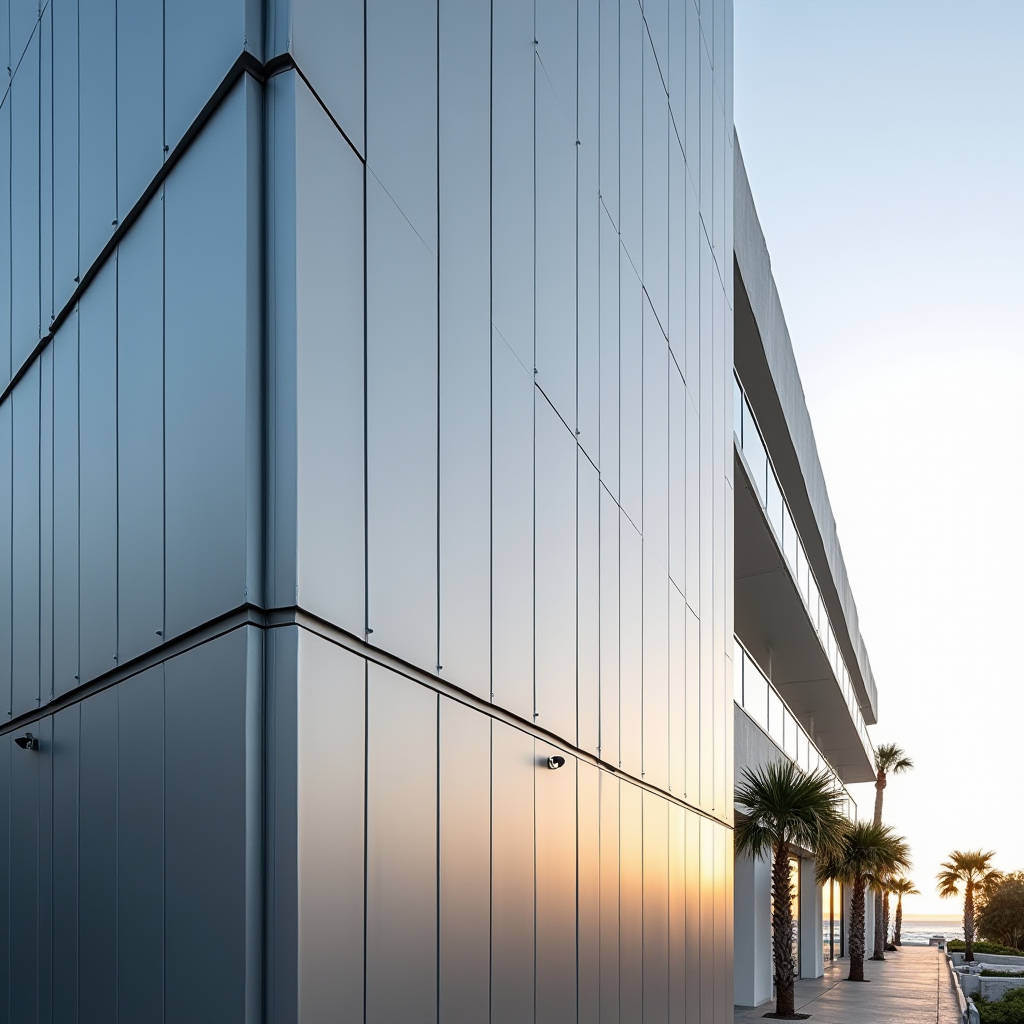
When a project specification calls for a non-heat-treatable alloy that can handle repeated flexing, salt spray, and fabrication stresses without cracking, the conversation almost always lands on 5052 H32 Aluminum. This grade sits in a sweet spot that few other alloys occupy: it is stronger than 3003, more formable than 6061, and carries marine-grade corrosion resistance without the cost premium of 5xxx-series variants loaded with higher magnesium percentages. Architects and facade engineers who have dealt with coastal cladding failures or shop-floor rejection rates on tight-radius brake work understand why H32 temper matters. The "H32" designation means strain-hardened and then stabilized through a low-temperature thermal treatment — a quarter-hard condition that preserves enough ductility for bending while delivering a measurable bump in tensile strength over O-temper sheet. For solid aluminium cladding panels fabricated from 2.0 mm to 3.0 mm sheet, this balance between workability and mechanical properties translates directly into fewer rejected parts, cleaner bend profiles, and predictable long-term performance on the wall.
What the H32 Temper Actually Means for Facade Work
Aluminum temper designations are not marketing labels. They describe a specific sequence of mechanical and thermal processes that alter grain structure, residual stress distribution, and ultimately how the metal behaves on a press brake. 5052 H32 Aluminum starts as annealed sheet, gets cold-worked to approximately quarter-hard condition, then undergoes a low-temperature stabilization treatment. That last step is what distinguishes H32 from H12 or H22 tempers. The stabilization relieves some of the internal stresses introduced by cold rolling without fully recrystallizing the grain structure. The result is a material with a tensile strength around 31,000 to 38,000 psi (214 to 262 MPa) and yield strength near 28,000 psi (193 MPa), per ASTM B209 data. Elongation typically lands between 7% and 12% in 1.6 mm gauge, depending on the mill source and exact processing parameters.
For a curtain wall subcontractor cutting and folding hundreds of panels per project, those numbers are not abstract. Yield strength dictates how much springback to expect after bending. Elongation determines whether a 90-degree brake on a 2.5 mm sheet produces a clean radius or a micro-crack that becomes a corrosion initiation site six months after installation. The H32 temper, specifically, gives enough yield strength to handle wind loads on mid-rise facades while keeping elongation high enough that standard V-die tooling can form flanges and return legs without annealing steps. Shops that have tried running 5052-H38 through the same tooling learn the difference quickly: the harder temper cracks at the bend line, and suddenly the scrap bin is fuller than the finished goods rack.
Chemical Backbone: Magnesium, Chromium, and the Marine-Grade Claim
The 5052 alloy belongs to the aluminum-magnesium family, with magnesium content typically ranging from 2.2% to 2.8% and a small chromium addition of 0.15% to 0.35%. This is not a zinc-heavy 7xxx-series aerospace alloy, nor is it a copper-bearing 2xxx-series material. The magnesium provides solid-solution strengthening without making the alloy heat-treatable. Chromium plays a quieter but equally important role: it refines grain structure and helps control recrystallization during the stabilization step that produces H32 temper. Together, these elements create a material that resists chloride-induced pitting far better than 6061-T6, which contains copper and is known to suffer intergranular attack in coastal environments.
Industry shorthand calls 5052 "marine-grade," and that is not an exaggeration. The alloy meets the corrosion resistance requirements laid out in ASTM B209 for sheet and plate, and it performs reliably in environments where salt-laden air would degrade galvanized steel within a few years. Facade engineers specifying solid aluminium panels for buildings within 5 km of a coastline should consider 5052 H32 Aluminum as a baseline material choice. The chromium content, though small, provides a measurable improvement in stress-corrosion cracking resistance compared to plain Al-Mg binaries. This matters when panels are subjected to thermal cycling and wind-induced vibration simultaneously — conditions that can accelerate crack propagation in less stable alloys.
Formability and Bend Radius: Where 5052 H32 Earns Its Keep
Ask any shop foreman what separates a profitable cladding job from a loss-making one, and the answer often involves how many panels split during forming. 5052 H32 Aluminum bends well on standard air-bending setups. The recommended minimum inside bend radius for 2.0 mm sheet is approximately 1.5 to 2 times the material thickness, meaning a 3.0 mm to 4.0 mm radius. For 3.0 mm sheet, the ratio stays similar, though some shops push to 1.5T with careful grain-direction alignment. Bending perpendicular to the rolling direction always yields better results — parallel bends are more likely to open up at the outer fiber, especially on thicker gauges.
The alloy's work-hardening rate is moderate. Unlike 3003, which stays soft through multiple forming stages, 5052 gains strength with each deformation cycle. This can be an advantage: a panel that starts at H32 temper may approach H34 hardness in the bend zones after forming, locally increasing resistance to denting and impact. The trade-off is that progressive die operations or multi-stage forming sequences need to account for the increasing flow stress. Lubrication is rarely necessary for simple brake work, but deep drawing or complex embossing patterns benefit from a light film of forming oil to reduce galling on the die shoulders.
Futeng® has supplied 5052 H32 Aluminum sheet in thicknesses from 1.5 mm to 3.0 mm for facade projects across Southeast Asia and the Middle East, and the feedback from fabricators consistently highlights the alloy's predictability on CNC press brakes. When a material behaves the same way on the first panel and the five-hundredth panel, programming time drops and confidence in the finished dimensions rises.
Welding 5052 H32: What Changes at the Heat-Affected Zone
Welding is where 5052 H32 Aluminum requires a clear-eyed understanding of what happens to mechanical properties around the weld. The alloy welds readily using both GTAW (TIG) and GMAW (MIG) processes, with 5356 filler rod being the standard recommendation. The 5356 filler contains approximately 5% magnesium, which provides a slight overmatch in weld metal strength compared to the 5052 base material. However, the heat-affected zone adjacent to the weld will soften. The cold-worked H32 temper partially anneals in the HAZ, dropping tensile strength to roughly the O-temper level — around 25,000 to 28,000 psi (173 to 193 MPa).
For cladding applications, this softening is rarely a structural problem. Most panel-to-subframe connections use mechanical fasteners or proprietary clip systems rather than field welds. Where welding is necessary — for example, attaching stiffener ribs to the back of large-format panels — the design should account for the reduced HAZ strength. A common approach is to locate welds away from the highest-stress regions of the panel, or to size stiffeners such that the combined section modulus of the panel-plus-stiffener assembly meets deflection limits even with HAZ softening factored in. Post-weld heat treatment is not an option for restoring the H32 temper, since 5052 is non-heat-treatable. The only path back to higher strength is cold working, which is impractical on a finished panel.
Surface Treatment Compatibility: PVDF, Anodizing, and Pretreatment Requirements
Solid aluminium cladding panels almost always carry a factory-applied finish. The two dominant options are PVDF (polyvinylidene fluoride) liquid coatings and anodizing. 5052 H32 Aluminum accepts both, but the pretreatment paths differ significantly, and getting them wrong leads to adhesion failures that are expensive to remediate.
For PVDF coatings, the standard pretreatment is a chromate conversion coating applied over a properly cleaned and etched surface. The chromium in the 5052 alloy does not interfere with chromate conversion — in fact, the alloy's natural corrosion resistance means that even if the pretreatment is slightly under-applied in recessed areas, the base metal is less likely to initiate filiform corrosion than, say, 3003. AAMA 2605-compliant PVDF systems typically specify a minimum total dry film thickness of 30 microns for a two-coat system and 40 microns for a three-coat system. On 5052 H32 Aluminum, adhesion testing per AAMA 2605 regularly exceeds the "no removal" rating on cross-hatch tests when pretreatment is properly executed.
Anodizing 5052 is possible but requires careful process control. The magnesium content in the alloy can produce a slightly yellowish or grayish cast in the anodic layer compared to the brighter, clearer finish achievable on 5005 or 6063. For architectural applications where color consistency across panels is critical, many specifiers opt for PVDF on 5052 rather than anodizing. If anodizing is specified, the fabricator should run sample panels through the full anodizing line and get architect sign-off on the color before proceeding with production. Sulfuric acid anodizing per MIL-A-8625 Type II is the typical process, with a minimum coating thickness of 10 microns for interior applications and 15 microns for exterior exposure.
| Property | 5052 H32 Aluminum | 3003 H14 | 6061 T6 | 5005 H34 |
|---|---|---|---|---|
| Tensile Strength (MPa) | 214 - 262 | 150 - 200 | 290 - 310 | 160 - 200 |
| Yield Strength (MPa) | ~193 | ~145 | ~275 | ~150 |
| Elongation (% in 1.6 mm) | 7 - 12 | 8 - 16 | 10 - 12 | 8 - 14 |
| Marine-Grade Corrosion Resistance | Excellent | Moderate | Poor (copper-bearing) | Good |
| Formability (Bend Radius) | 1.5T - 2T | 1T - 1.5T | 2.5T - 3T | 1.5T - 2T |
| Weldability (GTAW/MIG) | Excellent | Excellent | Good (post-weld aging needed) | Excellent |
| Heat-Treatable | No | No | Yes | No |
| Typical Cladding Gauge (mm) | 2.0 - 3.0 | 2.0 - 3.0 | Rarely used for cladding | 2.0 - 3.0 |
| Approx. Cost Index (relative) | 1.15 - 1.25 | 1.00 (baseline) | 1.40 - 1.60 | 1.05 - 1.15 |
ASTM B209 and the Specification Paper Trail
Any serious procurement conversation about 5052 H32 Aluminum sheet starts with ASTM B209. This standard covers aluminum and aluminum-alloy sheet and plate, and it defines the chemical composition limits, mechanical property requirements, and dimensional tolerances that mills must meet. For 5052 H32, the standard specifies tensile strength of 31.0 to 38.0 ksi (214 to 262 MPa), yield strength minimum of 23.0 ksi (159 MPa), and elongation minimums that vary by thickness — 7% for gauges from 0.063 to 0.249 inches, and 8% for 0.250 to 0.499 inches.
Beyond ASTM B209, a complete submittal package for a cladding project should reference the relevant finish standards. AAMA 2605 governs high-performance PVDF coatings for architectural applications. ASTM B117 salt spray testing provides comparative corrosion data, though it is more of a quality-control tool than a direct predictor of service life. For projects in the European market, EN 485-2 covers equivalent mechanical property requirements for 5052, though the temper designation system remains consistent across ASTM and EN frameworks. Fabricators should also be aware of The Aluminum Association registration records, which maintain the official alloy and temper designation system used globally.
Thermal Movement and Panel Joint Design
Aluminum expands and contracts with temperature changes. The coefficient of thermal expansion for 5052 is approximately 23.8 × 10⁻⁶ per °C, which means a 3-meter-long panel subjected to a 60°C temperature swing will change length by roughly 4.3 mm. Facade joint design must accommodate this movement without buckling panels or overloading the fastening system. 5052 H32 Aluminum behaves predictably here — the H32 temper's moderate yield strength means the panel can absorb some thermal stress elastically, but the primary defense is always adequate joint width.
The rule of thumb for solid aluminium cladding is to provide a minimum joint width of 8 mm to 10 mm for panels up to 1.5 meters in the long dimension, scaling up to 12 mm to 15 mm for panels approaching 3 meters. These numbers assume an open-joint or drained-joint system where the rear ventilation cavity handles any water that penetrates the face. Pressure-equalized rainscreen designs, which are increasingly common in high-performance building envelopes, add another layer of complexity: the compartmentalization behind each panel affects how thermal movement manifests at the joints. 5052 H32 Aluminum's stiffness-to-weight ratio, combined with its thermal expansion characteristics, makes it well-suited to these systems because the panels remain flat under thermal load rather than bowing or oil-canning.
Wind Load Performance and Deflection Limits
Solid aluminium panels function as part of the building's weather barrier, and they must resist wind loads without excessive deflection or permanent deformation. The allowable deflection limit for cladding panels is typically L/60 to L/90 of the span, depending on the local building code and the specific performance specification. For a 5052 H32 Aluminum panel spanning 1,200 mm between supports, an L/60 limit allows 20 mm of deflection under design wind load.
Calculating the required panel thickness for a given wind load involves the panel's bending stiffness, which is a function of the elastic modulus (approximately 70 GPa for 5052) and the section geometry. A 2.5 mm thick solid panel with a 600 mm stiffener spacing might handle a design wind pressure of 1.5 kPa with deflection well within L/90, while the same panel at 2.0 mm might need closer stiffener spacing or a smaller panel format. The H32 temper's yield strength of 193 MPa provides a comfortable margin against permanent set: the panel can deflect elastically under peak gusts and return to flat when the load passes. This is not a given with softer tempers, where wind-induced yielding can leave panels with a subtle but permanent curvature that catches light and draws the eye — and not in a good way.
Coastal Cladding: Why 5052 H32 Outperforms 6061 and 3003 in Salt Environments
The corrosion mechanism that attacks aluminum in coastal environments is primarily pitting driven by chloride ions. The magnesium in 5052 H32 Aluminum shifts the alloy's electrochemical potential in a direction that reduces pitting susceptibility compared to copper-bearing alloys like 6061-T6. Independent testing documented by NACE International has shown that 5xxx-series alloys consistently outperform 6xxx-series alloys in marine atmospheric exposure tests, with pit depths after multi-year exposure being significantly shallower.
For a building located within 500 meters of breaking surf, the difference between 5052 and 3003 becomes stark. 3003 relies primarily on its manganese content for strengthening and has no magnesium to speak of. Its corrosion resistance in industrial and rural environments is perfectly adequate, but in chloride-heavy air, pitting initiates earlier and propagates faster. 5052 H32 Aluminum, with its 2.5% magnesium content, forms a more stable passive oxide layer that resists chloride attack. This is not to say 5052 is immune — no aluminum alloy is completely immune to marine corrosion — but the maintenance cycle for panels made from 5052 H32 is measurably longer. Anodized or PVDF-coated 5052 panels on coastal buildings can go 20 to 30 years before requiring refinishing, assuming proper cleaning to remove salt deposits at reasonable intervals.
Cost Drivers and Supply Chain Realities
5052 H32 Aluminum commands a modest premium over 3003, typically in the range of 10% to 20% on a per-kilogram basis, depending on mill location, order volume, and prevailing magnesium prices. The premium reflects the higher magnesium content and the additional processing steps required to achieve the H32 temper. For a typical mid-rise facade project consuming 15 to 20 tonnes of 2.5 mm sheet, the material cost differential between 5052 H32 and 3003 H14 might be in the range of USD 8,000 to USD 15,000. Set against the total installed cost of the cladding system — which includes fabrication, finishing, framing, and installation labor — that differential often represents less than 2% of the package value.
Lead times for 5052 H32 Aluminum sheet are generally 4 to 8 weeks from mill, though this can stretch during periods of high demand or when specific width and length combinations are required. Standard mill widths are 48 inches (1,219 mm) and 60 inches (1,524 mm), with lengths up to 144 inches (3,658 mm) commonly available. Custom widths and lengths are negotiable but add to lead time and minimum order quantities. Distributors carrying certified ASTM B209 stock can shorten lead times to days for smaller quantities, though the cost per kilogram is higher than mill-direct pricing. For projects with tight construction schedules, the distributor premium is often worth paying to avoid holding up the entire facade installation sequence.
Fabrication Shop Considerations: Tooling, Handling, and Quality Control
Running 5052 H32 Aluminum through a fabrication shop does not require exotic equipment, but it rewards attention to detail. Carbide-tipped saw blades with a triple-chip grind and a 10-degree positive hook angle produce clean cuts with minimal burr. Router bits for CNC routing should be single-flute or double-flute upcut spirals designed for aluminum, running at 18,000 to 24,000 RPM with a feed rate that produces a chip load around 0.10 mm to 0.15 mm per tooth. Coolant mist is optional for routing but recommended for high-volume production to extend tool life and improve edge finish.
Press brake tooling should use V-die openings of 6 to 8 times the material thickness for air bending. A 2.5 mm sheet bent over a 16 mm V-die produces a bend radius close to 2.5 mm to 3.0 mm, which is within the recommended range for H32 temper. The bend deduction and bend allowance calculations should be verified with test coupons before production quantities are cut, since actual springback varies slightly between mill batches. Shops that use the same bend deduction for 5052 H32 Aluminum as they do for 3003 H14 will find their flanges coming up short — the higher yield strength of 5052 means more springback, and the flat pattern must be adjusted accordingly.
Quality control during fabrication should include regular checks of bend angle, flange length, and panel flatness. A coordinate measuring machine or a simple granite surface plate with a dial indicator can catch deviations before panels reach the finishing line. Panels that are out of flat by more than 0.5% of the diagonal dimension will show visible distortion once installed, especially under raking light conditions that are common on south-facing and west-facing elevations.
Fire Performance and Building Code Compliance
Solid aluminium cladding panels made from 5052 H32 Aluminum are non-combustible as defined by most international building codes. The alloy's melting point is approximately 607°C to 649°C (1,125°F to 1,200°F), and it does not contribute to flame spread or smoke development in the way that combustible core materials do. This is a critical distinction in the current regulatory environment, where building codes in many jurisdictions have been tightened in response to facade fire incidents involving composite materials with polyethylene cores.
Testing per ASTM E136 or EN 13501-1 typically classifies solid aluminium sheet as A1 or A2, depending on the specific coating system applied. PVDF coatings add a small amount of organic material, but the total calorific value remains well below the thresholds that would trigger a combustible classification. For projects where fire performance is under intense scrutiny — high-rise residential, hospitals, schools — specifying solid 5052 H32 Aluminum panels with a non-combustible insulation and framing system provides a straightforward compliance path that does not require the engineering judgments and concessions sometimes needed for composite panel systems.
Comparing 5052 H32 to Other 5xxx-Series Alloys for Cladding
Within the 5xxx family, 5052 H32 Aluminum occupies a specific performance niche. 5005 H34 offers slightly better anodizing response and is often specified for architectural sheet work where a bright, consistent anodic finish is the priority. However, 5005 has lower magnesium content (0.5% to 1.1%) and correspondingly lower strength — tensile strength runs around 160 to 200 MPa, compared to 5052's 214 to 262 MPa. For panels that need to span wider support distances or handle higher wind loads, 5052 is the stronger choice.
5083 H116 and 5086 H32 are higher-magnesium alternatives that offer even greater strength and corrosion resistance, but they come at a higher cost and are typically reserved for marine hull construction and pressure vessels rather than architectural cladding. The formability of these higher-magnesium alloys is also more limited, making them less suitable for the complex folded geometries common in modern facade design. 5052 H32 Aluminum strikes a practical balance: enough magnesium for marine-grade corrosion resistance and meaningful strength, but not so much that the material becomes difficult to form or cost-prohibitive for architectural applications.
The International Organization for Standardization and ASTM International both maintain comprehensive databases of alloy specifications that allow direct comparison of these grades. For facade engineers conducting material selection studies, cross-referencing the mechanical property tables in ASTM B209 against the project's specific wind load, span, and corrosion exposure requirements is a methodical way to confirm that 5052 H32 is the right call — or to identify edge cases where a different alloy might be warranted.
Making the Specification Decision
Choosing 5052 H32 Aluminum for a solid cladding package is rarely the wrong answer, but it is worth confirming that the specific project conditions align with what the alloy does best. Buildings within 5 km of salt water, facades with complex folded geometries requiring tight-radius bends, projects where the cladding spans exceed 800 mm between supports, and applications where the specifier wants to avoid the post-weld complications of heat-treatable alloys — these are the scenarios where 5052 H32 earns its premium over 3003 and makes more practical sense than 6061.
The alternative scenario — a low-rise inland building with simple flat panels, modest wind loads, and a tight budget — might be adequately served by 3003 H14. But the cost difference between 3003 and 5052 H32 is small enough that many project teams standardize on 5052 across their portfolio to simplify procurement and reduce the risk of a material mix-up that puts the wrong alloy on a demanding elevation. The material arrives with mill test reports certifying compliance to ASTM B209, the shop processes it with familiar tooling, and the finished panels go up on the wall with a corrosion-resistance pedigree that holds up over decades. That predictability, as much as any single mechanical property, is what keeps 5052 H32 Aluminum on the shortlist for solid aluminium cladding specifications worldwide.