5052 Aluminum Alloy in Solid Cladding Temper Selection Fatigue and Marine Corrosion Performance
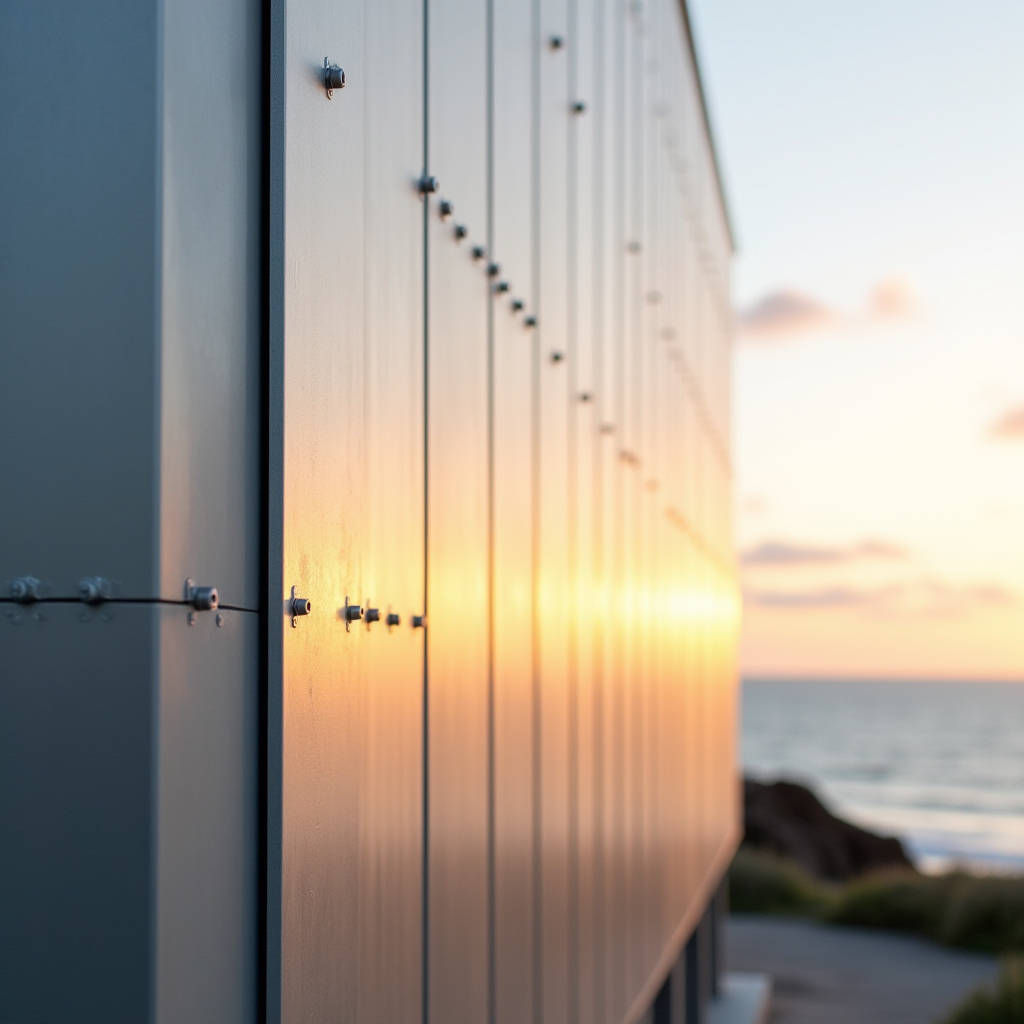
When a project specification calls for cladding panels that must endure salt-laden coastal winds, constant vibration from nearby industrial equipment, or the relentless freeze-thaw cycles of northern climates, the alloy selection narrows fast. 5052 Aluminum Alloy has earned its place in these demanding scenarios not through exotic chemistry but through a practical combination of magnesium-driven strength, work-hardening capacity, and corrosion resistance that outperforms conventional 1000 and 3000 series alternatives. This article examines 5052 Aluminum Alloy specifically through the lens of solid aluminium cladding fabrication — what happens to mechanical properties after bending, how temper selection affects flatness in large-format panels, and why fatigue performance matters when cladding wraps around structures subject to dynamic wind loading. The focus stays on real fabrication outcomes and long-term installed performance, not laboratory ideals.
What Makes 5052 Different From Other 5000-Series Alloys
The 5000 series groups aluminium alloys where magnesium serves as the primary alloying element. Within this family, 5052 occupies a specific position — it contains approximately 2.2% to 2.8% magnesium with a small chromium addition of 0.15% to 0.35%. This puts it below 5083 (4.0% to 4.9% Mg) and 5086 (3.5% to 4.5% Mg) in terms of magnesium content, but well above 5005 (0.5% to 1.1% Mg). The practical consequence for cladding fabrication is significant: 5052 offers better formability than the higher-magnesium alloys while still delivering tensile strength in the 210-260 MPa range for H32 temper, compared to roughly 110-145 MPa for 3003-H14.
Chromium, present in small quantities, performs a specific function in 5052 Aluminum Alloy. It helps control grain structure during solidification and subsequent processing. For cladding panels that undergo brake press bending, this grain control translates to more predictable bend radii and reduced risk of orange-peel surface defects on the outer radius of formed corners. The chromium also contributes to stress corrosion cracking resistance — a failure mode that becomes relevant when panels are installed under sustained load in corrosive environments.
The alloy's non-heat-treatable nature means fabricators cannot rely on thermal processing to boost strength after forming. Instead, the mechanical properties come from the cold-working history of the sheet or plate. This creates a direct relationship between the temper designation and the forming behavior that every estimator and production manager needs to understand before committing to a project.
Temper Selection and Its Impact on Cladding Fabrication
Tempers for 5052 Aluminum Alloy follow the standard H-series designation system, where the digits after "H" describe the specific combination of strain hardening and thermal treatment. For solid aluminium cladding, three tempers dominate real-world specifications: H32, H34, and H111. Each behaves differently on the shop floor.
H32 temper represents material that has been strain-hardened to a quarter-hard condition and then stabilized through a low-temperature thermal treatment. The result is a sheet with yield strength around 160-195 MPa and elongation of 7-12% depending on thickness. For cladding panels requiring moderate forming — 90-degree bends with a radius of 1.5 to 2 times material thickness — H32 provides a workable balance. The stabilized condition also means the material's mechanical properties remain consistent during storage and transit, which matters when panels are fabricated in one location and shipped to another.
H34 temper takes the strain hardening further, producing yield strength in the 180-220 MPa range with elongation dropping to 6-10%. This temper suits flat panels with minimal forming requirements, particularly large-format panels where the higher stiffness helps maintain flatness across spans of 1,200 mm or more. The trade-off is reduced bendability — fabricators report that H34 requires bend radii closer to 2.5 to 3 times material thickness to avoid cracking, especially when bending perpendicular to the rolling direction.
H111 temper, annealed and lightly strain-hardened, provides the highest formability with elongation values exceeding 16%. This temper becomes necessary when the architectural design calls for complex geometries — deep drawn panels, curved facades with tight radii, or panels with multiple return legs. The lower strength (yield typically 65-95 MPa) means the installed panel relies more on its geometry and support structure for stiffness than on the material's inherent rigidity.
Work Hardening During Bending Operations
When a 5052 Aluminum Alloy sheet passes through a press brake, the material at the bend line undergoes additional cold working. The outer fibers stretch while the inner fibers compress, and this deformation locally increases hardness and strength in the bend zone. For H32 temper 3.0 mm sheet bent at 90 degrees with a 4.5 mm radius, the yield strength at the bend line can increase by 15-25% compared to the flat portion of the panel. This localized hardening has practical implications: the bend zone becomes less ductile, and secondary forming operations near existing bends carry higher risk of cracking. Production planners should sequence forming operations so that the most severe bends occur last, or specify bend radii generous enough to accommodate the cumulative effect of multiple forming steps.
Corrosion Performance in Marine and Industrial Environments
The magnesium content in 5052 Aluminum Alloy provides the chemical basis for its corrosion resistance. In marine atmospheres, aluminium naturally forms a protective oxide layer, but chloride ions can attack this layer at vulnerable points. The magnesium in 5052 helps stabilize the oxide film, making it more resistant to chloride penetration than the pure aluminium oxide on 1000-series alloys or the manganese-stabilized oxide on 3003.
Field performance data from installations within 500 meters of coastlines shows that 5052-H32 cladding panels with properly applied PVDF coatings — minimum 25 microns dry film thickness per AAMA 2605 — can maintain structural integrity and appearance for 20-plus years with standard maintenance. The key variable is not the alloy alone but the combination of alloy, pretreatment, and coating system. Chromate conversion coating, while facing increasing regulatory restrictions in some jurisdictions, remains the most effective pretreatment for 5052 in marine environments. Alternatives based on titanium-zirconium chemistry are gaining acceptance but require tighter process control to achieve equivalent performance.
Industrial environments present a different set of challenges. Sulfur dioxide, nitrogen oxides, and acidic particulates attack aluminium through different mechanisms than chlorides. 5052 Aluminum Alloy performs well in these conditions because the magnesium oxide component of the passive film resists acidic dissolution better than pure aluminium oxide. However, alkaline environments — common near cement plants, concrete batching facilities, and some chemical processing operations — can rapidly degrade 5052. The amphoteric nature of aluminium means alkaline attack dissolves the protective oxide, and the magnesium in 5052 does not significantly alter this vulnerability. Projects in these environments should specify full barrier coating systems with epoxy primers rather than relying on the alloy's inherent corrosion resistance.
Fatigue Behavior Under Wind-Induced Cyclic Loading
Cladding panels on high-rise structures experience cyclic loading from wind. The frequency is low — typically 0.1 to 1 Hz for wind gusts — but the cumulative cycle count over a 30-year design life can reach tens of millions. 5052 Aluminum Alloy's fatigue strength, approximately 115-125 MPa at 5 × 10⁸ cycles for H32 temper, provides a meaningful advantage over 3003 (around 70-80 MPa at the same cycle count) and 1100 (around 50-60 MPa).
This fatigue performance becomes critical at panel attachment points. The stress concentration around rivet holes, screw penetrations, and clip connections can amplify local stresses by a factor of 2 to 3. A panel that experiences a nominal stress of 40 MPa from wind loading might see 80-120 MPa at the edge of a fastener hole. For 3003, this approaches or exceeds the fatigue limit, creating a risk of crack initiation over the design life. For 5052, the same scenario leaves a comfortable margin.
Fabrication quality directly affects fatigue performance. Sheared edges, particularly when the shear tool is worn, create micro-cracks and stress risers that can reduce the effective fatigue strength by 20-30%. Laser-cut or waterjet-cut edges, followed by light deburring, preserve more of the material's inherent fatigue resistance. For projects where wind-induced fatigue is a documented concern — confirmed through computational fluid dynamics modeling or wind tunnel testing — specifying edge preparation methods becomes as important as specifying the alloy itself.
| Property | 5052-H32 | 5052-H34 | 3003-H14 | 5005-H34 |
|---|---|---|---|---|
| Tensile Strength (MPa) | 210-260 | 235-285 | 140-180 | 145-185 |
| Yield Strength (MPa) | 160-195 | 180-220 | 115-145 | 110-145 |
| Elongation (%) | 7-12 | 6-10 | 8-16 | 8-12 |
| Fatigue Strength at 5×10⁸ cycles (MPa) | 115-125 | 120-130 | 70-80 | 75-85 |
| Bend Radius (90°, 3.0mm sheet) | 1.5-2.0t | 2.5-3.0t | 1.0-1.5t | 1.5-2.0t |
| Marine Atmosphere Rating | Excellent | Excellent | Good | Very Good |
| Weldability (GTAW) | Good | Good | Excellent | Good |
Welding 5052 for Cladding Applications
While mechanical fastening dominates cladding installation, welding enters the picture for specific scenarios: fabricating large panels from narrower sheet stock, creating watertight corner joints, or attaching stiffeners to the rear face of panels. 5052 Aluminum Alloy welds readily with gas tungsten arc welding (GTAW/TIG) and gas metal arc welding (GMAW/MIG) processes using 5356 filler metal.
The critical consideration is the strength reduction in the heat-affected zone (HAZ). In H32 and H34 tempers, the heat of welding locally anneals the material, reducing yield strength in the HAZ to approximately 90-100 MPa — close to the annealed condition. For a panel subjected to uniform wind loading, this localized weakness may not govern the design because the HAZ occupies a small fraction of the total panel area. However, when welds are positioned at high-stress locations — near attachment points or at the corners of panels with significant thermal movement restraint — the reduced HAZ strength requires explicit consideration in the structural analysis.
Post-weld distortion also demands attention. The coefficient of thermal expansion for 5052 is approximately 23.8 × 10⁻⁶ per °C, and the localized heating during welding creates differential expansion and contraction that can pull a flat panel out of tolerance. Tack welding sequences, back-step welding techniques, and fixturing all play roles in controlling distortion. For panels with flatness tolerances tighter than 0.5% of the panel dimension, fabricators should budget for post-weld flattening operations or design weld joints that minimize heat input.
Surface Preparation and Coating Adhesion
The oxide layer that gives 5052 its corrosion resistance also presents challenges for coating adhesion. Freshly rolled 5052 sheet carries mill oxide and residual rolling lubricants that must be removed before pretreatment. The standard sequence — alkaline cleaning, rinsing, deoxidation, rinsing, and conversion coating — applies to 5052 as it does to other aluminium alloys, but the magnesium content introduces a nuance.
During alkaline cleaning, magnesium at the surface can form a smut layer of magnesium oxide and hydroxide that inhibits subsequent conversion coating. This smut must be removed through the deoxidation step, typically using an acidic solution containing fluoride ions. If the deoxidation is incomplete, the conversion coating will be non-uniform, and coating adhesion will suffer. Quality control at this stage involves water-break testing after the final rinse — a continuous water film that holds for 30 seconds or more indicates a clean surface ready for conversion coating.
For PVDF coatings applied to 5052 Aluminum Alloy cladding panels, adhesion testing per AAMA 2605 typically requires a minimum of 5B classification under ASTM D3359 (cross-hatch tape test) after 4,000 hours of accelerated weathering. Panels fabricated from 5052 with proper pretreatment consistently achieve this benchmark. The alloy's relatively low copper content — 0.10% maximum — contributes to this performance, as copper at the surface can catalyze coating degradation under UV exposure.
Thermal Movement and Panel Joint Design
All aluminium cladding panels move with temperature changes, and 5052 Aluminum Alloy is no exception. With a coefficient of thermal expansion of 23.8 × 10⁻⁶ per °C, a 3,000 mm long panel experiences approximately 2.1 mm of length change for every 30°C temperature swing. This movement must be accommodated by the joint design, or the panels will buckle, fasteners will loosen, or sealant will fail.
For 5052 panels, the combination of thermal expansion and the alloy's relatively high stiffness (elastic modulus approximately 70 GPa) means that restrained panels generate significant forces. A 3,000 mm × 1,500 mm × 3.0 mm panel fully restrained against thermal expansion and subjected to a 50°C temperature rise generates a compressive force of approximately 15 kN. This force can cause panel buckling if the panel lacks sufficient stiffness or if the attachment system does not provide adequate rotational freedom.
The practical solution involves joint widths calculated for the specific panel dimensions and expected temperature range. For 5052 panels up to 3,000 mm in length, a minimum joint width of 10 mm with sealant capable of ±25% movement accommodates typical thermal cycles. Larger panels or installations in climates with extreme temperature swings may require wider joints or sliding attachment systems that decouple thermal movement from structural support.
Cost Factors and Procurement Strategy
The price premium for 5052 Aluminum Alloy over 3003 typically ranges from 8% to 15%, depending on market conditions, sheet thickness, and order volume. This premium reflects the higher magnesium content and the more stringent process controls required during casting and rolling. For a mid-rise building with 5,000 square meters of 3.0 mm solid aluminium cladding, the material cost difference between 5052-H32 and 3003-H14 might amount to $15,000 to $30,000 — significant but often justified by the performance requirements.
Procurement timing matters for 5052. Mill lead times for non-standard thicknesses can extend to 8-12 weeks, and minimum order quantities from some mills start at 2-3 metric tons per thickness and temper combination. Projects that require multiple thicknesses — perhaps 2.5 mm for most panels and 3.0 mm for high-wind zones — should consolidate orders early to avoid partial-shipment surcharges. Suppliers such as Futeng® maintain inventory of common 5052 tempers and thicknesses, which can shorten lead times for projects that cannot accommodate mill-direct timelines.
Specifying 5052 also affects fabrication costs. The higher strength compared to 3003 means press brake tonnage requirements increase — a 3.0 mm 5052-H34 sheet requires approximately 20-25% more bending force than the same thickness in 3003-H14. Fabricators with older or lower-capacity equipment may need to process 5052 in narrower widths or thinner gauges, which can increase the number of panels and the associated labor for assembly and installation.
ASTM B209 governs the dimensional tolerances, mechanical properties, and quality requirements for 5052 aluminium sheet and plate. Projects should reference this standard explicitly in material specifications to ensure consistent quality across different mill sources.
Quality Verification for Incoming Material
Material arriving at the fabrication facility should undergo verification before production begins. For 5052 Aluminum Alloy, the essential checks include confirmation of temper through hardness testing, verification of thickness against the purchase order and ASTM B209 tolerances, and visual inspection for surface defects such as rolled-in scale, pits, or scratches that could compromise coating adhesion or panel appearance.
Hardness testing provides a quick, non-destructive method for temper verification. H32 temper typically registers 60-70 on the Rockwell B scale, while H34 falls in the 68-78 range. Values outside these ranges warrant tensile testing per ASTM B557 to confirm mechanical properties. Thickness verification should account for the tolerance bands in ASTM B209 — for 3.0 mm sheet, the tolerance is typically ±0.15 mm for widths up to 1,500 mm.
Mill test reports (MTRs) should accompany each shipment and include the heat number, chemical composition, mechanical properties, and temper. Cross-referencing the MTR heat number against the markings on the material provides traceability that becomes important if performance issues arise after installation. For projects requiring third-party verification, samples from each heat can be sent to an accredited laboratory for independent chemical analysis and mechanical testing.
Practical Takeaways for Cladding Projects
Selecting 5052 Aluminum Alloy for solid aluminium cladding involves decisions that cascade through fabrication, finishing, and installation. The temper choice — H32 for moderate forming, H34 for flat panels requiring stiffness, H111 for complex geometries — sets the baseline for everything that follows. The alloy's corrosion resistance justifies its specification in marine and industrial environments, but alkaline exposure demands additional coating protection regardless of the alloy's inherent qualities.
Fatigue performance, often overlooked in cladding specifications, deserves attention for tall buildings and structures in high-wind regions. The margin that 5052 provides over 3000-series alloys at the attachment points can prevent crack initiation over decades of service. Weld procedures, when required, must account for HAZ strength reduction and post-weld distortion. Surface preparation requires attention to magnesium smut removal to ensure coating adhesion that meets AAMA 2605 requirements.
The cost premium for 5052, while real, represents a fraction of the total installed cladding cost and delivers measurable performance differences in the right applications. The engineering judgment lies in matching the alloy to the actual environmental and structural demands — not over-specifying where 3003 would suffice, and not under-specifying where 5052's properties are genuinely needed.