5005 H34 Aluminum for Architectural Cladding Anodizing Performance and Fabrication Guide
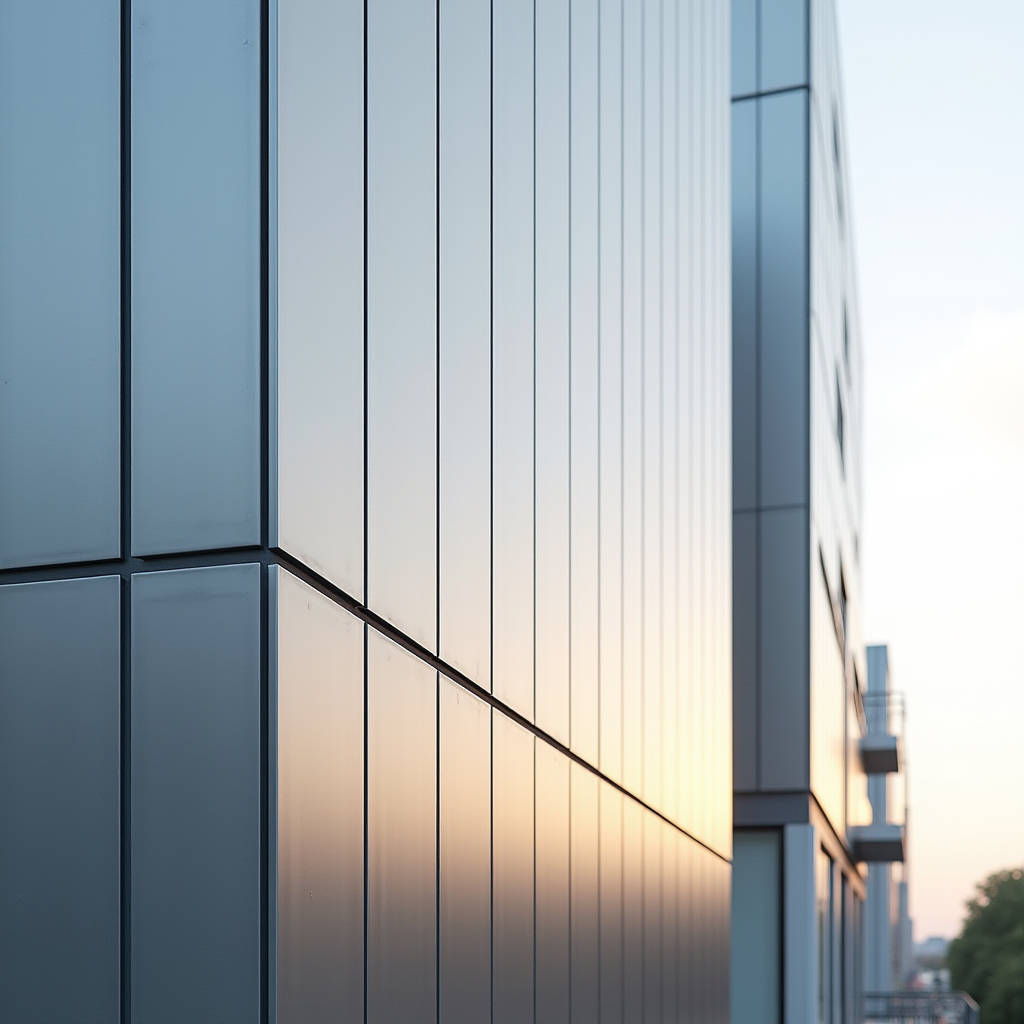
When a project specification calls for an aluminium cladding alloy that balances moderate strength with genuine long-term atmospheric durability, 5005 H34 Aluminum tends to surface in the conversation. It is not the strongest 5000-series grade available, and that is precisely the point. The H34 temper — strain hardened and then stabilized — delivers a set of mechanical properties that make this alloy particularly well-suited to architectural sheet metal work where flatness, anodizing response, and resistance to coastal or industrial environments matter more than raw tensile numbers. For curtain wall fabricators and building envelope engineers, understanding what 5005 H34 brings to the table means looking past generic datasheet figures and into the practical realities of bending radii, weld performance, and surface finishing consistency across large production runs.
What the H34 Temper Actually Means in Practice
The H34 designation is not arbitrary. It describes a specific thermomechanical path: the aluminium is strain hardened beyond the H32 level, then subjected to a low-temperature stabilization treatment that relieves residual internal stresses while locking in mechanical properties roughly halfway between annealed (O) and full-hard (H38) conditions. For 5005 alloy specifically, this yields a typical tensile strength around 159 MPa and yield strength near 138 MPa, with elongation hovering around 8-10% depending on gauge.
Why does stabilization matter for cladding? Rolled aluminium sheet carries internal stresses from the cold-working process. Without stabilization, those stresses can release unpredictably during fabrication — a sheet that lies flat on the cutting table can warp after routing or perforating. The H34 temper reduces this risk significantly. Fabricators working with 5005 H34 Aluminum report better dimensional stability during CNC routing compared to H32 material, particularly on panels exceeding 1,200 mm in width. This is not a marginal improvement; on large-format rainscreen panels, the difference between a panel that stays flat and one that develops oil-canning is often traceable back to temper selection.
The stabilization treatment also improves ductility slightly compared to non-stabilized strain-hardened tempers. For roll-forming operations that produce cassette profiles or interlocking plank systems, this extra ductility translates into fewer edge cracks and more consistent spring-back angles across coil runs.
Corrosion Resistance: Where 5005 Earns Its Keep
Alloy 5005 contains roughly 0.8% magnesium as its primary alloying element — a modest addition compared to 5052 (2.5% Mg) or 5083 (4.5% Mg). This lean chemistry produces a material with genuinely excellent resistance to atmospheric corrosion, often outperforming higher-magnesium 5000-series alloys in marine and industrial environments. The reason is electrochemical: higher magnesium content increases susceptibility to intergranular corrosion and stress corrosion cracking under certain conditions, particularly when exposed to elevated temperatures over extended periods.
For building envelopes in coastal zones, 5005 H34 Aluminum offers a practical advantage. The alloy's corrosion rate in marine atmospheres is low enough that uncoated mill-finish applications remain viable for decades, though most architectural specifications will still require a PVDF or anodized finish. What matters is that the substrate itself is not actively degrading beneath the coating system. Curtain wall consultants specifying projects within 5 km of saltwater coastlines have increasingly gravitated toward 5005 as a substrate precisely because its corrosion resistance does not depend entirely on the coating for protection.
Independent testing per ASTM B117 (neutral salt spray) consistently shows 5005 outperforming 5052 in terms of pit depth progression after 3,000 hours of exposure. This is not to say 5052 is unsuitable — it remains an excellent alloy — but when the specification demands maximum corrosion resistance with adequate strength, 5005 H34 becomes the logical choice.
Anodizing Quality: The Architectural Finish Argument
Perhaps the single most compelling reason architects and specification writers select 5005 H34 Aluminum for visible cladding elements is its anodizing response. The alloy's low magnesium content and tight control over iron and silicon impurities produce a clean, uniform anodic layer with minimal color variation across batches. This is not marketing language; it is a metallurgical reality that anodizers have understood for decades.
When 5005 is anodized — typically to Class I or Class II architectural specifications per AAMA 611 — the resulting oxide layer exhibits consistent clarity and color response. This matters enormously on large facade areas where panels from different production lots must sit adjacent to one another. A slight batch-to-batch color shift that might be invisible on a small component becomes glaringly obvious across a 20-meter elevation.
The H34 temper adds another layer of consistency here. Because the stabilization treatment relieves internal stresses, the anodic oxide layer grows more uniformly across the surface. Stressed areas in non-stabilized tempers can produce localized variations in oxide thickness, which manifest as subtle cloudiness or color banding under certain lighting conditions. For projects specifying clear anodized finishes — where the natural metallic appearance of the aluminium is the design intent — 5005 H34 is difficult to beat.
Powder coating and PVDF (polyvinylidene fluoride) systems also perform well on 5005 substrates. The alloy's surface chemistry promotes good conversion coating adhesion, and the H34 temper's dimensional stability means fewer coating defects arising from substrate movement during thermal curing cycles. This is particularly relevant for PVDF systems requiring a 3-coat or 4-coat buildup, where total dry film thickness can reach 35-45 microns and coating stresses become non-trivial.
Mechanical Properties in Context: A Practical Comparison
Datasheet figures tell part of the story. The table below compares 5005 H34 against other aluminium alloys commonly encountered in architectural cladding specifications, with a focus on properties that directly influence fabrication and in-service performance.
| Property | 5005 H34 | 5052 H32 | 3003 H14 | 5754 H22 |
|---|---|---|---|---|
| Tensile Strength (MPa) | 159 | 230 | 150 | 220 |
| Yield Strength (MPa) | 138 | 195 | 130 | 170 |
| Elongation (%) | 8-10 | 10-12 | 8-12 | 12-15 |
| Anodizing Quality | Excellent | Good | Fair | Good |
| Marine Corrosion Resistance | Excellent | Very Good | Good | Very Good |
| Weldability (GTAW) | Excellent | Excellent | Excellent | Excellent |
| Typical Sheet Thickness Range (mm) | 0.5-6.0 | 0.5-6.0 | 0.5-6.0 | 0.5-6.0 |
| Relative Cost Index | 1.0 (base) | 1.05-1.15 | 0.90-0.95 | 1.05-1.10 |
What the table does not capture is the practical interplay between these properties. 5052 H32 offers higher strength, which can allow for slightly thinner gauges in some applications. But if the project requires anodized finishing and is located in a corrosive environment, the strength advantage may be irrelevant because 5005 H34 Aluminum delivers better overall system performance. The cost index differential is narrow enough that material selection should rarely hinge on raw alloy price alone — fabrication efficiency, finishing yield rates, and long-term warranty risk carry far more weight in the total installed cost calculation.
Fabrication Behavior: Bending, Welding, and Forming
5005 H34 Aluminum bends readily, but the minimum bend radius must be respected. At the H34 temper, a bend radius of 1.5t to 2t (where t is sheet thickness) is generally safe for 90-degree bends perpendicular to the rolling direction. Bending parallel to the rolling direction increases the risk of cracking, and fabricators should increase the radius to 2.5t minimum in that orientation. For 2.0 mm and 2.5 mm sheet — common gauges in rainscreen and spandrel panel applications — this means practical bend radii of 3.0-5.0 mm, which is well within the capability of standard press brake tooling.
Spring-back is moderate. Fabricators transitioning from 5052 H32 to 5005 H34 will notice slightly less spring-back due to the lower yield strength, which can simplify angle control on long bends. However, the difference is subtle enough that existing tooling setups generally do not require modification.
Weldability is a strong point for the entire 5000 series, and 5005 is no exception. Gas tungsten arc welding (GTAW/TIG) with 5356 filler rod produces sound welds with good color match after anodizing — a critical consideration when welds will be visible on architectural surfaces. The heat-affected zone (HAZ) will experience localized annealing, reducing strength in that area to approximately the O-temper level. For structural attachments on cladding panels, this HAZ softening must be accounted for in the connection design. Typical practice is to locate welds away from high-stress regions or to size the attachment to accommodate the reduced HAZ strength.
For projects requiring extensive perforation or expanded mesh patterns, 5005 H34 Aluminum offers a distinct advantage over harder tempers. Tool wear is lower, and the risk of tear-out between closely spaced perforations decreases. Perforated panels with open areas exceeding 30% benefit from the alloy's combination of moderate strength and good ductility, maintaining panel flatness during punching operations that would cause significant distortion in higher-strength alloys.
Supply Chain Realities: Sourcing 5005 H34 Sheet
Not every aluminium service center stocks 5005 H34 Aluminum in the gauges and widths required for architectural cladding. The alloy sits in a somewhat specialized position: it is a commercial alloy, not exotic, but demand patterns are driven primarily by the architectural and transportation sectors rather than general fabrication. This means lead times can vary significantly depending on mill production schedules and regional inventory levels.
Standard sheet sizes for architectural applications typically range from 1,250 mm × 2,500 mm up to 1,500 mm × 3,000 mm, with thicknesses of 2.0 mm, 2.5 mm, and 3.0 mm being the most commonly specified for solid aluminium cladding panels. Coil-processed material can be supplied in widths up to 1,650 mm for projects requiring larger panel dimensions or continuous fascia elements.
Specification writers should verify that the mill source is certified to BS EN 573-3:2009 for alloy chemistry and BS EN 485-2:2008 for dimensional tolerances on sheet product. These standards are referenced in most architectural specifications and provide a common baseline for quality assurance across different producing mills. Suppliers such as Futeng® maintain inventory programs specifically for 5005 H34 sheet in architectural-grade finishes, which can reduce lead times for projects that cannot accommodate mill-direct production schedules.
For international projects, attention to mill test certificates (MTCs) is essential. The MTC should confirm not only the alloy and temper but also the actual mechanical properties of the supplied lot, including tensile strength, yield strength, and elongation values. Discrepancies between specified and actual properties are uncommon with reputable mills, but they do occur, and the cost of replacing non-conforming installed panels far exceeds the effort of reviewing certificates upon receipt.
Coating System Compatibility and Performance
While 5005 H34 Aluminum is prized for its anodizing characteristics, the majority of architectural cladding applications will involve organic coating systems — either liquid PVDF (typically 70% PVDF resin content per AAMA 2605) or polyester powder coating. The alloy's surface characteristics support both technologies well, but the specifics of pretreatment matter.
For PVDF systems, a chrome-based or chrome-free conversion coating per the coating manufacturer's specification is standard. The conversion coating provides the bonding interface between the aluminium substrate and the primer layer. 5005's relatively low alloying element content means the surface is less prone to intermetallic particle formation that can create localized coating defects. This is not a theoretical concern — intermetallic particles at the surface can act as initiation points for filiform corrosion if the coating system is damaged in service.
Powder coating on 5005 H34 follows a similar pretreatment path. Polyester and super-durable polyester powders adhere well, and the H34 temper's thermal stability means the sheet is less likely to distort during the curing cycle (typically 10-15 minutes at 180-200°C). This is particularly relevant for thin-gauge panels (2.0 mm and below) where thermal distortion during curing can produce visible waviness in the finished panel.
For projects specifying AAMA 2605-compliant PVDF systems, the total coating system thickness typically ranges from 30-45 microns across a 3-coat or 4-coat buildup. The 5005 H34 substrate's dimensional stability contributes to coating uniformity by maintaining a consistent surface plane during application, reducing the likelihood of edge pull-back or orange-peel effects that can occur when the substrate moves during flash-off and curing.
Wind Load Performance and Panel Engineering
Solid aluminium cladding panels fabricated from 5005 H34 Aluminum must be engineered to resist the design wind loads for the project location. The alloy's moderate yield strength (138 MPa) means that panel spans, stiffener spacing, and attachment details must be calculated accordingly — what works for 5052 H32 may not directly transfer to 5005 H34.
For a typical 2.5 mm thick rainscreen panel with a 600 mm stiffener spacing, 5005 H34 can generally accommodate design wind pressures up to approximately 2.5 kPa without exceeding deflection limits of L/60. Increasing panel thickness to 3.0 mm extends this to roughly 3.5 kPa under the same support conditions. These are approximate values; project-specific calculations per the relevant building code and wind tunnel data are always required.
The key engineering consideration is not ultimate strength but serviceability deflection. 5005 H34's modulus of elasticity (approximately 73 GPa) is essentially identical to other aluminium alloys, so deflection behavior under a given load and span is similar across alloy choices. The difference lies in the allowable stress: with a lower yield strength, the margin between design stress and yield is narrower, and deflection limits will typically govern the design rather than strength limits.
For attachment engineering, the HAZ strength reduction near welds must be factored into clip and bracket design. A common approach is to assume the HAZ has a yield strength of approximately 40-50 MPa (roughly the O-temper condition) and to size the attachment length accordingly. Mechanical fastening — using stainless steel rivets or screws — avoids the HAZ issue entirely and is preferred for high-load connections.
Thermal Movement and Building Integration
Like all aluminium alloys, 5005 H34 Aluminum expands and contracts with temperature changes. The coefficient of linear thermal expansion is approximately 23.5 × 10⁻⁶ per °C, which means a 3-meter panel will expand by roughly 3.5 mm across a 50°C temperature swing. Rainscreen and curtain wall systems must accommodate this movement through appropriate joint design and clip detailing.
The H34 temper's stabilized condition provides a subtle advantage here: because internal stresses have been relieved, thermal cycling is less likely to produce cumulative distortion over time. Panels that are installed flat tend to remain flat, even after years of diurnal temperature cycling. This is particularly important for large-format panels with minimal joint widths, where even small amounts of cumulative distortion can cause panels to contact each other or bind against their attachment clips.
For projects in climates with extreme temperature ranges — desert environments, high-altitude locations, or regions with intense solar exposure — the combination of 5005's corrosion resistance and the H34 temper's stability makes a strong case for specification. The alloy's reflectivity in its natural mill finish or with light-colored coatings also helps reduce solar heat gain, which can lower the panel's peak service temperature and reduce the magnitude of thermal movement.
Cost Considerations Beyond the Mill Price
Comparing aluminium alloys on a per-kilogram basis misses the factors that actually drive project costs. 5005 H34 Aluminum typically carries a modest premium over 3003 and is generally priced at or slightly below 5052, depending on market conditions and order volume. But the material cost is only a fraction — often 30-40% — of the total installed cladding cost.
The real economic case for 5005 H34 emerges in the finishing and fabrication stages. Higher anodizing yield rates (fewer rejected panels due to color inconsistency) directly reduce material waste and schedule risk. Better dimensional stability during routing and perforating means fewer panels require rework or replacement due to distortion. And the alloy's excellent corrosion resistance reduces the long-term warranty exposure for the cladding system as a whole.
For projects where the cladding specification is driven by anodized finish quality and long-term corrosion performance, 5005 H34 is frequently the cost-optimized choice — not because the metal is cheaper, but because the total system cost, including fabrication, finishing, and warranty risk, trends lower than alternatives that may appear less expensive on a mill price basis alone.
Quality Assurance and Incoming Material Inspection
Receiving 5005 H34 Aluminum sheet for a cladding project involves more than checking the thickness with a micrometer. A systematic incoming inspection protocol protects against the risk of non-conforming material reaching the fabrication line.
Key inspection points include: verification of alloy and temper markings against the mill test certificate; dimensional checks for thickness, width, length, and flatness per the applicable standard (typically BS EN 485-2:2008 or equivalent); visual inspection for surface defects including scratches, roll marks, and corrosion staining; and, if resources permit, conductivity testing to verify alloy type (5005 has a typical electrical conductivity of approximately 40-42% IACS, which distinguishes it from other 5000-series alloys).
For projects requiring anodized finishing, a sample panel from each batch should be processed through the full anodizing line and evaluated for color consistency before the main production run begins. This step adds a few days to the schedule but can prevent the costly discovery of batch-to-batch variation after hundreds of panels have been fabricated.
The Aluminum Association publishes reference standards that are useful for establishing incoming inspection criteria, and the AAMA (American Architectural Manufacturers Association) provides guidelines specific to architectural aluminium finishes. European projects typically reference ISO standards for both material properties and coating performance.
Making the Specification Decision
Selecting 5005 H34 Aluminum for a cladding project is a decision grounded in specific performance requirements, not a default choice. The alloy makes sense when the specification demands excellent anodizing response, proven marine-grade corrosion resistance, and adequate rather than maximum mechanical strength. If the project requires higher strength for longer spans or thinner gauges, 5052 H32 or 5754 H22 may be more appropriate. If cost minimization is the overriding concern and anodizing is not required, 3003 H14 may suffice.
What 5005 H34 offers is a balance that suits a wide range of architectural applications — rainscreen panels, spandrel covers, column wraps, fascia elements, and interior feature cladding where visual consistency matters. The H34 temper's stabilized condition provides the dimensional reliability that fabricators need, while the alloy's metallurgical cleanliness delivers the surface quality that architects and building owners expect.
For the building envelope professional, the takeaway is straightforward: understand what the specification actually requires, verify that the supplied material matches the documentation, and recognize that the cheapest alloy on the mill quote is rarely the cheapest option when fabrication, finishing, and long-term performance enter the calculation. 5005 H34 Aluminum has earned its place in architectural specifications through decades of proven performance — not through datasheet optimization, but through consistent, predictable behavior in the real conditions that buildings actually face.