5005 H14 Aluminum for Anodized Facades Color Consistency Flatness and Specification Guide
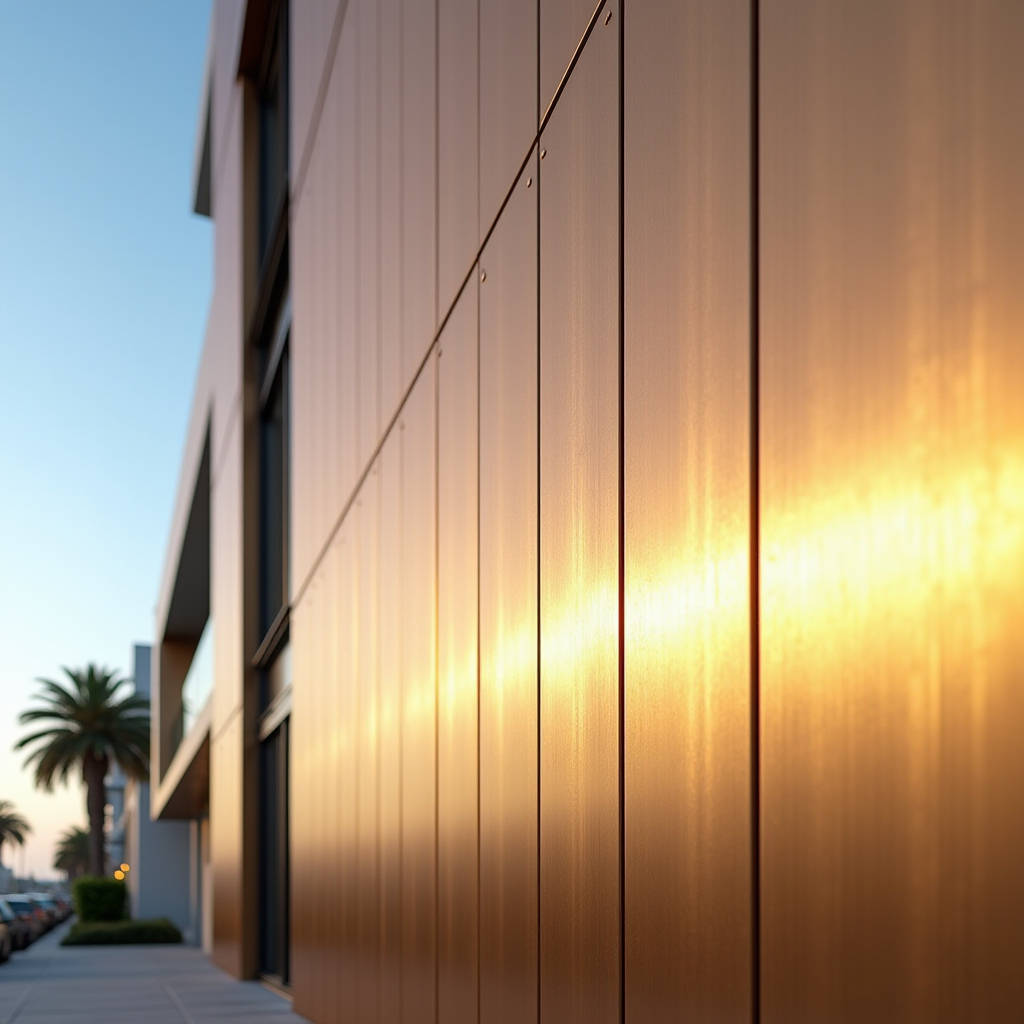
When a facade engineering team sits down to review material submittals for a coastal high-rise or a museum expansion, 5005 H14 Aluminum often lands on the shortlist for one specific reason: it anodizes better than almost any other alloy in the 5000 series. That single fact shapes procurement decisions across architectural markets from Southeast Asia to the Middle East. But the conversation around 5005 H14 Aluminum has shifted in the last five years. Fabricators and specifiers now ask harder questions about batch-to-batch color consistency, about whether the H14 temper genuinely holds flatness through perforation and bending, and about how the material behaves when a project demands both anodized and PVDF-coated finishes on the same elevation. This article addresses those questions directly, drawing on mill data, field experience, and the realities of global supply chains.
Why 5005 H14 Aluminum Dominates the Anodized Facade Segment
The 5005 alloy sits in a narrow compositional band within the 5000 series. Its magnesium content runs between 0.5% and 1.1%, lower than the 2.2% to 2.8% found in 5052. This matters because magnesium forms intermetallic compounds that scatter light differently during anodizing. When you anodize a 5052 panel, the higher magnesium load produces a darker, grayer cast that shifts unpredictably under different lighting conditions. 5005 H14 Aluminum, by contrast, yields a cleaner, brighter oxide layer. The H14 temper — strain-hardened to roughly half the strength of full-hard H18 — provides enough rigidity to resist oil-canning on flat panels while retaining enough ductility for brake-formed returns and edge profiling.
From a specification standpoint, the alloy meets the compositional requirements of ASTM B209 for aluminum sheet and plate. The standard anodizing specification, AAMA 611, references 5005 as the preferred substrate for Class I anodic coatings. This is not a marketing claim; it is baked into the standard because the Aluminum Association and coating manufacturers have decades of correlation data showing that 5005 H14 Aluminum produces the most consistent color range across the clear anodized spectrum — from champagne to medium bronze.
Mechanical Properties That Drive Fabrication Decisions
The H14 temper occupies a practical middle ground. Tensile strength for 5005 H14 Aluminum typically lands between 140 and 165 MPa, with yield strength around 120 to 140 MPa. Elongation runs 4% to 8% depending on gauge. These numbers are not spectacular on paper — 5052 H32 delivers higher tensile values — but the combination of moderate strength and predictable springback makes 5005 H14 far easier to brake-form consistently across thousands of panels on a single project.
Fabricators who process 5005 H14 Aluminum on CNC turret punches and press brakes report that the material holds flatness better than 5052 H32 after perforation patterns exceeding 30% open area. The reason ties back to residual stress distribution during strain hardening. The H14 temper, achieved through controlled cold rolling, leaves a more uniform residual stress profile through the sheet thickness. When you punch a dense pattern of holes, the sheet relaxes, but 5005 H14 Aluminum typically exhibits less distortion than harder tempers or higher-magnesium alloys.
For specifiers evaluating the alloy for load-bearing facade components, the following table provides a practical comparison of mechanical properties across the three architectural tempers most commonly encountered in cladding specifications.
| Property | 5005 H14 | 5005 H18 | 5052 H32 |
|---|---|---|---|
| Tensile Strength (MPa) | 140 - 165 | 185 - 210 | 210 - 260 |
| Yield Strength (MPa) | 120 - 140 | 170 - 195 | 160 - 195 |
| Elongation (%) | 4 - 8 | 2 - 4 | 7 - 12 |
| Bend Radius (90°, 2.0mm) | 1.5t - 2t | 2.5t - 3t | 1.5t - 2.5t |
| Anodizing Response | Excellent | Good | Fair (gray cast) |
| Flatness After Perforation | Good | Moderate | Variable |
| Typical Sheet Gauge Range (mm) | 1.5 - 3.0 | 1.0 - 2.0 | 1.5 - 4.0 |
Corrosion Resistance and Coastal Performance
All 5000-series alloys resist atmospheric corrosion well, but 5005 H14 Aluminum deserves a closer look for marine and industrial environments. The alloy contains no copper, which is the primary culprit in galvanic corrosion for architectural aluminum. Its chromium content — typically 0.10% maximum — provides additional passivation benefit without the weldability compromises seen in higher-chromium grades.
In accelerated corrosion testing per ASTM B117 (neutral salt spray), 5005 H14 Aluminum with a Class I clear anodized finish routinely exceeds 3,000 hours without significant pitting when the coating thickness meets the AAMA 611 minimum of 0.7 mils (18 microns). The same substrate with a three-coat PVDF system — primer, color coat, clear coat — tested to AAMA 2605 standards pushes past 4,000 hours in South Florida exposure equivalents. The key variable is not the alloy itself but the pretreatment. Chromate conversion coating, though increasingly restricted under REACH and other regulations, still delivers the best adhesion for PVDF on 5005 H14 Aluminum. Titanium-zirconium pretreatment systems have improved significantly and now represent the default for projects in the European Union and markets aligned with EU chemical regulations.
The Anodizing Consistency Problem Nobody Talks About
Ask any facade contractor who has managed a large anodized project and they will tell you: the real headache is not the specification, it is the batch variation. 5005 H14 Aluminum from different mill sources — even when all meet the ASTM B209 chemical composition limits — can produce visibly different oxide layer colors. The culprit is iron content. The ASTM B209 spec allows up to 0.7% iron in 5005. In practice, material from mills that hold iron below 0.3% anodizes to a noticeably lighter, more neutral tone than material at the upper end of the iron range, which shifts toward a warmer, slightly yellow cast.
This is not a defect. It is a metallurgical reality. But it becomes a project problem when a fabricator sources coil from two different mills to meet a tight schedule, or when a contractor orders replacement panels two years after the original installation. The solution is not to specify a tighter iron limit — most mills will not guarantee it without a significant premium — but to require mill certificates of analysis for every heat and to physically compare anodized samples from each heat before fabrication begins. Some fabricators, including Futeng®, maintain inventory segregated by mill heat number specifically to support phased projects where color continuity across multiple fabrication batches is critical.
PVDF Coating on 5005 H14: When and Why
Not every 5005 H14 Aluminum panel gets anodized. A substantial portion of the market uses the alloy as a substrate for PVDF coatings, particularly when a project requires custom colors that cannot be achieved through anodizing or when the specifier wants the same alloy across both anodized and coated panels for consistency in thermal movement and attachment engineering.
PVDF adhesion on 5005 H14 Aluminum is generally excellent, provided the surface preparation is correct. The alloy's relatively low magnesium content means less surface oxide formation during storage and handling compared to 5052 or 5083. This translates to fewer pretreatment rejects and more consistent coating adhesion. The standard PVDF system for architectural cladding — a 70% PVDF resin-based coating applied at a minimum dry film thickness of 30 microns for a two-coat system or 40 microns for a three-coat system — performs identically on 5005 H14 as on other 5000-series substrates when applied by a certified applicator following AAMA 2605 guidelines.
One nuance worth flagging: 5005 H14 Aluminum has a slightly lower thermal conductivity than 6061 or 3003 alloys. This is rarely significant for cladding panels, but it can affect cure oven dwell times for PVDF coatings. Coaters experienced with 5005 H14 adjust their line speeds accordingly. A shop accustomed to running 3003 coil may need to slow down slightly to achieve the same peak metal temperature on 5005 H14.
Supply Chain Realities: Sourcing 5005 H14 Aluminum in 2025
The global supply of 5005 H14 Aluminum sheet and coil has tightened in the past two years. Several factors are at play. Primary aluminum production capacity in China — the world's largest source of 5005 coil — has been constrained by energy consumption caps and environmental regulations. European mills have shifted some capacity toward higher-margin aerospace and automotive alloys. The result is longer lead times for architectural-grade 5005 H14, particularly in gauges above 2.5mm and widths above 1,500mm.
For procurement managers, this means mill allocation planning has become as important as price negotiation. Projects requiring 50 tonnes or more of 5005 H14 Aluminum should secure mill allocation at least 16 to 20 weeks before fabrication start. Smaller quantities can typically be sourced from distributor stock, but the available temper and gauge range narrows considerably. The most commonly stocked gauges are 2.0mm and 2.5mm in widths up to 1,250mm. Anything wider or thicker often requires a mill production slot.
Quality verification at receipt is essential. Incoming material should be checked against the mill test certificate for tensile properties, chemical composition, and gauge tolerance. A reputable supplier will provide certificates traceable to the specific coil or batch. The Aluminum Association maintains the registration records for alloy designations and can verify that a given mill's 5005 composition falls within the registered limits.
Flatness Tolerances and What They Mean for Installation
Flatness is the most litigated property in architectural aluminum cladding. 5005 H14 Aluminum, in the as-rolled condition, typically meets the flatness tolerances defined in ASTM B209 for stretcher-leveled sheet. The standard allows a maximum deviation of 6mm over a 2,400mm span for sheet up to 3.0mm thick. In practice, material from quality-conscious mills consistently holds half that tolerance.
The challenge arises after fabrication. When a 5005 H14 sheet is routed, perforated, or brake-formed, residual stresses redistribute. The resulting distortion — often called "oil-canning" — is a function of the original flatness, the fabrication process, and the panel's aspect ratio and attachment method. There is no ASTM standard that defines acceptable oil-canning for fabricated panels. The industry relies on visual inspection under specified lighting conditions, typically defined in the project specification or the facade consultant's mock-up requirements.
For panels larger than 1,200mm in any dimension, 5005 H14 Aluminum at 2.5mm or 3.0mm gauge is strongly recommended. Thinner gauges amplify the visibility of any waviness. Some fabricators also specify a minimum of H14 temper for large flat panels, rejecting H12 or O-temper material that may have been substituted by a supplier trying to meet a delivery date. The H14 temper designation is not just a strength number; it is a flatness guarantee when the material comes from a mill that controls its cold-rolling process properly.
Welding and Joining Considerations for Fabricators
5005 H14 Aluminum welds readily using GTAW (TIG) and GMAW (MIG) processes with 5356 or 4043 filler alloys. The choice of filler depends on the post-weld finish. For anodized panels, 5356 filler is preferred because it anodizes to a color closer to the base metal than 4043, which contains silicon and turns dark gray to black after anodizing — a defect that is immediately visible and nearly impossible to correct.
The heat-affected zone (HAZ) adjacent to the weld loses the H14 temper's strain hardening and reverts to approximately O-temper strength. For structural attachments on cladding panels, this is rarely a problem because the HAZ is small relative to the panel dimensions and the loads are primarily wind-induced, not structural. However, for panels with welded stiffeners or welded corner joints, the fabricator should account for the HAZ softening in the attachment design. Mechanical fastening through the HAZ is not recommended; fasteners should be located at least 15mm from the weld centerline.
For projects where welding is extensive — such as complex folded and welded panel geometries — some fabricators switch to 5052 H32 for the welded components while maintaining 5005 H14 for the flat anodized panels. This hybrid approach requires careful management of the visual difference between the two alloys after finishing, but it can be the most practical solution for geometrically demanding designs.
Cost Structure and Value Engineering
5005 H14 Aluminum typically commands a 5% to 10% premium over 3003 H14 in the same gauge, reflecting the tighter composition control and the higher magnesium content. Compared to 5052 H32, 5005 H14 is usually priced similarly or slightly lower, depending on the market and mill source. The cost difference between 5005 H14 and 5052 H32 is rarely the deciding factor in material selection; the anodizing performance and formability characteristics drive the decision.
Value engineering exercises that propose substituting 3003 for 5005 H14 on anodized projects should be approached with extreme caution. 3003 contains manganese, not magnesium, and anodizes to a distinctly different color — typically more yellow and less uniform. The cost savings are real, but the visual result is often unacceptable to architects who have specified 5005 H14 Aluminum specifically for its anodized appearance. A more productive value engineering path is to optimize panel sizes and gauges to reduce waste, or to negotiate mill-direct pricing for large project volumes.
The AAMA provides technical resources that help specifiers and contractors evaluate finish performance claims, and the ISO standards for aluminum alloy designations (ISO 209) offer a cross-reference for projects that follow international rather than ASTM-based specifications.
Practical Specification Language for 5005 H14 Aluminum
A well-written specification section for 5005 H14 Aluminum cladding panels should address the following points explicitly, leaving no room for substitution without the specifier's approval:
- Alloy and temper: 5005 H14 per ASTM B209, with mill test certificates required for each heat.
- Chemical composition: Iron content to be reported on the mill certificate; specifier reserves the right to reject material with iron exceeding 0.4% if anodized color consistency is critical.
- Gauge: Minimum 2.0mm for panels up to 1,200mm in any dimension; minimum 2.5mm for panels between 1,200mm and 1,800mm; minimum 3.0mm for panels exceeding 1,800mm.
- Flatness: Stretcher-leveled per ASTM B209; additional flatness requirements to be verified through a project-specific mock-up under lighting conditions representative of the installed condition.
- Finish: Class I anodized per AAMA 611, minimum 0.7 mils, or three-coat PVDF per AAMA 2605, minimum 40 microns dry film thickness.
- Fabrication: Welding, if required, shall use 5356 filler for anodized panels. Mechanical fasteners shall be stainless steel, isolated from the aluminum with a suitable barrier material to prevent galvanic corrosion.
For projects in regions with high seismic activity or extreme wind loads, the attachment system design should reference the ASCE 7 standard for wind load calculations and the applicable local building code for seismic performance. The alloy selection — 5005 H14 — is only one component of a facade system that must perform as an integrated assembly.
Common Failure Modes and How to Avoid Them
Most failures involving 5005 H14 Aluminum cladding are not alloy failures. They are failures of specification, fabrication, or installation. The most common issues include:
Anodized color mismatch: As discussed earlier, iron content variation between heats is the primary cause. The fix is procedural: require mill certificates, segregate heats, and produce anodized samples from each heat before full production.
Coating delamination: PVDF delamination on 5005 H14 Aluminum is almost always a pretreatment failure. The aluminum surface must be cleaned, deoxidized, and conversion-coated within a controlled time window before coating. If the pretreatment line is not properly maintained — bath chemistry, temperature, dwell time — the coating will not bond, regardless of the alloy.
Oil-canning: This is a system-level issue involving material gauge, panel aspect ratio, attachment method, and thermal expansion. 5005 H14 Aluminum has a coefficient of thermal expansion of approximately 23.6 × 10⁻⁶ per °C, similar to other aluminum alloys. A 3-meter panel will expand roughly 2.1mm across a 30°C temperature swing. If the attachment system does not accommodate this movement, the panel will buckle. The alloy is not the problem; the attachment design is.
Galvanic corrosion at fasteners: Stainless steel fasteners in direct contact with aluminum will cause galvanic corrosion in the presence of an electrolyte — which, in a building facade, means rain or condensation. The solution is a physical barrier: nylon washers, EPDM gaskets, or a suitable isolating coating on the fastener.
The NACE (National Association of Corrosion Engineers) provides detailed guidance on galvanic corrosion prevention in architectural applications, and their resources are worth consulting for projects in aggressive environments.
Looking Ahead: 5005 H14 Aluminum in the Next Decade
The architectural market for 5005 H14 Aluminum is stable but evolving. Three trends are worth watching. First, the growing demand for decarbonized aluminum — material produced using renewable energy and with a lower carbon footprint than the global average — is pushing mills to offer 5005 H14 with verified environmental product declarations (EPDs). Specifiers on projects pursuing LEED v4.1 or BREEAM certification increasingly request these documents.
Second, the rise of complex parametric facades — with panels that are folded, twisted, or curved in ways that push the limits of the alloy's formability — is driving renewed interest in the H14 temper's balance of strength and ductility. Some fabricators are exploring warm forming of 5005 H14 Aluminum to achieve tighter radii without cracking, though this remains a niche application.
Third, the tightening of environmental regulations around anodizing chemistry — particularly the use of chromic acid anodizing and chromate sealers — is pushing the industry toward alternative processes. 5005 H14 Aluminum performs well with sulfuric acid anodizing and with the newer thin-film sulfuric acid processes that reduce energy consumption and waste generation. The alloy's compatibility with these evolving processes positions it well for the regulatory environment of the next decade.
For the facade engineer, contractor, or procurement manager making decisions today, 5005 H14 Aluminum remains the reference standard for anodized architectural cladding. It is not the strongest alloy, nor the cheapest. It is the alloy that delivers the most predictable anodized finish, the most consistent formability, and the most straightforward path through specification, fabrication, and installation. On a complex project, that predictability is worth more than a marginal cost saving or a few extra megapascals of tensile strength.