3105 Aluminum Alloy in Solid Cladding Engineering Temper Selection and Wind Load Performance
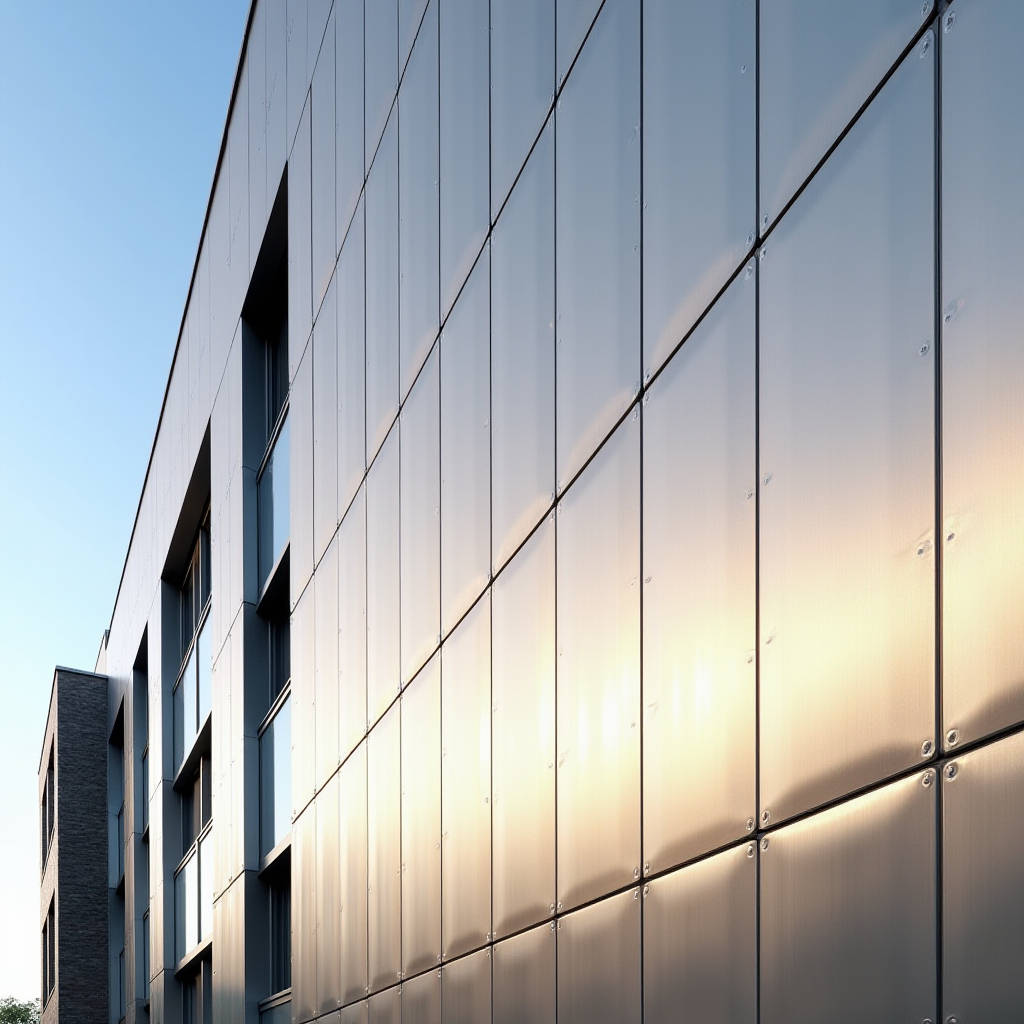
When a project specification calls for solid aluminium cladding panels that balance formability with adequate mechanical strength, 3105 aluminum alloy sits in a narrow but critical performance band. This manganese-enhanced, 98% pure aluminium grade has been quietly doing the heavy lifting across North American rainscreen assemblies, European residential roofing, and Middle Eastern HVAC ductwork for decades. It is not the strongest alloy in the 3xxx series, nor the most corrosion-resistant. What it offers instead is a pragmatic combination of bend radius tolerance, weld integrity, and cost-per-square-meter efficiency that makes it genuinely difficult to replace once the engineering math is done. This article examines the specific technical thresholds where 3105 aluminum alloy becomes the correct material decision—and where it does not.
Where 3105 Sits in the 3xxx Series Landscape
The 3xxx series of wrought aluminium alloys uses manganese as the primary alloying element, typically in the range of 1.0–1.5%. Within this family, 3105 aluminum alloy occupies a middle ground between the widely specified 3003 and the higher-strength 3004. Its manganese content sits at 0.30–0.80%, with an additional 0.20–0.80% magnesium—a modest bump that distinguishes it from 3003, which contains no deliberate magnesium addition. This Mg content, while small, shifts the work-hardening curve enough to matter in cold-formed profiles.
The practical consequence for a cladding fabricator is straightforward: 3105 in H14 temper delivers tensile strength around 150–180 MPa, compared to 130–170 MPa for 3003-H14. Yield strength follows a similar pattern, with 3105-H14 typically at 125–155 MPa versus 115–145 MPa for 3003-H14. These are not dramatic differences on paper, but they translate into measurable reductions in panel deflection under wind load when sheet thickness is held constant. For a 2.5 mm solid aluminium panel spanning 600 mm between stiffeners, moving from 3003-H14 to 3105-H14 can reduce mid-span deflection by approximately 8–12%, depending on the specific temper and batch chemistry.
Chemical Composition and the Magnesium Factor
Understanding what goes into 3105 aluminum alloy helps explain why it performs the way it does. The alloy is essentially 98% aluminium with a carefully controlled set of minor additions. The key elements, per ASTM B209 and EN 573-3 standards, break down as follows:
| Element | Minimum (%) | Maximum (%) | Role in Alloy Performance |
|---|---|---|---|
| Aluminium (Al) | 96.0 | 99.3 | Base metal; provides corrosion resistance and ductility |
| Manganese (Mn) | 0.30 | 0.80 | Primary strengthener; refines grain structure during rolling |
| Magnesium (Mg) | 0.20 | 0.80 | Secondary strengthener; improves work-hardening response |
| Iron (Fe) | — | 0.70 | Incidental; influences recrystallization behavior |
| Copper (Cu) | — | 0.30 | Kept low to preserve corrosion resistance |
| Zinc (Zn) | — | 0.40 | Trace; limited to avoid stress-corrosion sensitivity |
| Silicon (Si) | — | 0.60 | Incidental from casting; affects fluidity during rolling |
| Others (each) | — | 0.05 | Controlled per standard limits |
| Others (total) | — | 0.15 | Ensures alloy consistency batch to batch |
The magnesium content is the differentiator. In 3003, magnesium is not specified as an alloying addition—it appears only as a residual impurity. In 3105, the deliberate Mg addition of 0.20–0.80% means the material responds more aggressively to cold work. This is why 3105-H16 can reach tensile strengths approaching 195 MPa, while 3003-H16 typically tops out around 180 MPa. For a rainscreen panel on a 40-story tower, that 15 MPa difference can be the margin that eliminates one row of sub-frame stiffeners per floor, saving thousands of linear meters of aluminium extrusion across the project.
Tempers and Their Practical Meaning for Cladding
3105 aluminum alloy is non-heat-treatable, meaning all strength gains come from strain hardening—the mechanical deformation of the metal during rolling or subsequent forming. The temper designations describe how much cold work the material has received and whether any partial annealing followed. For solid aluminium cladding and sheet metal applications, four tempers dominate procurement specifications:
H14: The Workhorse Temper
H14 indicates strain-hardened to half-hard condition. This is the most commonly specified temper for architectural cladding panels, flashings, and trim. It provides a balanced combination of formability and strength: the material can be bent to a 90° angle with an inside radius equal to the sheet thickness (1t) without cracking, while still delivering tensile strength in the 150–180 MPa range. For a 2.0 mm PVDF-coated panel subjected to a design wind pressure of 2.0 kPa, H14 temper typically allows stiffener spacing of 500–600 mm depending on panel aspect ratio and edge fixity.
H16: Higher Strength, Tighter Bend Radius Limits
H16 temper pushes the strain hardening further, yielding tensile strength of 170–200 MPa. The trade-off is reduced ductility. Minimum bend radius increases to approximately 1.5t–2t for 90° bends, which limits its use in complex folded geometries. H16 finds its niche in flat panels with minimal edge returns, long-span soffit cladding, and applications where panel weight reduction is a priority—the higher strength allows a 2.0 mm sheet to perform where H14 might require 2.5 mm.
H19: Maximum Strength, Minimal Formability
H19 represents the fully hard condition, with tensile strength exceeding 220 MPa. At this temper, 3105 aluminum alloy is essentially a flat product—it can be roll-formed into simple profiles but cannot be bent sharply without risk of fracture. H19 is rarely specified for architectural cladding panels but appears in industrial roofing profiles, siding planks, and certain HVAC components where the sheet is used in its as-rolled flat condition.
H24/H26: Partially Annealed Variants
H24 and H26 tempers take the H14/H16 strain-hardened material and partially anneal it. This restores some ductility while retaining most of the strength. H24 temper, for instance, provides tensile strength similar to H14 but with improved bendability—useful for panels with complex return legs or deep drawn features. The annealing step adds cost and lead time, so these tempers are typically specified only when the geometry genuinely demands it.
Corrosion Resistance: The Real-World Performance Envelope
3105 aluminum alloy inherits aluminium's natural passivation behavior: exposure to oxygen forms a thin, adherent aluminium oxide layer that halts further oxidation. The manganese and magnesium additions do not meaningfully compromise this mechanism, which is why 3105 rates as "Excellent" in standard atmospheric corrosion tests. But "excellent" is a relative term, and specifying engineers need to understand the boundaries.
In rural and suburban environments, uncoated 3105 will develop a dull grey patina over 12–24 months and then stabilize. The corrosion rate in such conditions is typically less than 0.1 μm per year—negligible over a 50-year building lifespan. Marine environments introduce chloride ions that attack the passive oxide layer. Here, 3105 performs better than 2000-series and 7000-series alloys but is not as resistant as the 5000-series (e.g., 5052, 5083) which contain higher magnesium levels specifically to combat saltwater corrosion. For a building within 5 km of a coastline, 3105 aluminum alloy panels should always carry a PVDF or polyester coating system—the coating, not the alloy, becomes the primary corrosion barrier.
Industrial environments with SO₂ or NOₓ pollution accelerate surface pitting. Testing per ASTM G50 and G85 has shown that 3105 in such conditions develops pit depths of 25–50 μm over 10 years when uncoated. A properly applied PVDF coating (minimum 25 μm dry film thickness per AAMA 2605) effectively eliminates this concern for the coating's service life, which reputable manufacturers like Futeng® warrant for 20–30 years depending on the specific formulation and application.
Formability, Welding, and Fabrication Benchmarks
Fabricators who work with 3105 aluminum alloy regularly report that it behaves similarly to 3003 on the press brake but with a slightly higher springback angle. For a 90° bend in 2.0 mm H14 sheet, springback is typically 3–5°, compared to 2–4° for 3003-H14. This is a direct consequence of the higher yield strength and the magnesium content. The practical fix is straightforward: overbend by an additional 1–2° and the finished angle will settle within tolerance.
Welding 3105 is done primarily with GTAW (TIG) and GMAW (MIG) processes using 4043 or 5356 filler rod. The alloy's narrow melting range of approximately 635–655°C means the heat-affected zone is relatively small, reducing distortion in thin-gauge sheets. Tensile tests on welded 3105-H14 coupons show joint efficiency of 60–70% relative to the parent metal—the weld zone is annealed by the heat input and loses the strain-hardened strength. For structural applications where welded joints carry load, this reduction must be accounted for in the design. Most cladding applications avoid the issue by using mechanical fasteners and interlocking panel joints, where welding is limited to cosmetic corner closures and watertight seam sealing.
Coating Compatibility and Surface Preparation
3105 aluminum alloy accepts the full range of architectural coating systems without special pretreatment beyond the standard chromate or chrome-free conversion coating applied in a coil coating line. The alloy's surface chemistry, with its low copper and zinc content, minimizes the risk of filiform corrosion initiating at cut edges or fastener holes—a known failure mode with copper-bearing alloys like 2024.
For PVDF (polyvinylidene fluoride) coatings meeting AAMA 2605, the standard build is a primer layer (5–8 μm) plus a color coat (20–25 μm) and sometimes a clear topcoat (10–15 μm), yielding a total dry film thickness of 30–45 μm. Adhesion testing per ASTM D3359 Method B consistently shows 5B ratings (no peel) on properly pretreated 3105. Polyester coatings (AAMA 2604) use a similar primer but thinner color coats, and they are typically specified for interior applications or less aggressive exterior environments where the 10–15 year service life is acceptable.
One fabrication note: PVDF coatings on 3105 aluminum alloy can be bent to 90° at 1t radius without cracking, provided the bend is made at room temperature (above 15°C). Cold-weather fabrication below 5°C can cause micro-cracking in the coating at the bend apex. Pre-warming the sheet to 20–25°C or increasing the bend radius to 2t solves this.
Comparative Performance: 3105 vs. 3003 vs. 5052
Procurement decisions often come down to a three-way comparison between 3105, 3003, and 5052. The table below summarizes the key engineering parameters that drive specification choices for solid aluminium cladding panels:
| Parameter | 3105-H14 | 3003-H14 | 5052-H32 |
|---|---|---|---|
| Tensile Strength (MPa) | 150–180 | 130–170 | 210–260 |
| Yield Strength (MPa) | 125–155 | 115–145 | 160–200 |
| Elongation (%) | 8–12 | 8–14 | 7–12 |
| Minimum Bend Radius (90°) | 1t | 1t | 1.5t–2t |
| Marine Atmosphere Rating | Good (coated) | Good (coated) | Excellent (coated or bare) |
| Weld Joint Efficiency | 60–70% | 60–70% | 70–80% |
| Relative Cost Index | 1.00 | 0.95 | 1.20–1.35 |
| Typical Cladding Thickness (mm) | 2.0–3.0 | 2.0–3.0 | 1.5–2.5 |
| PVDF Adhesion (ASTM D3359) | 5B | 5B | 5B |
| Thermal Expansion (μm/m·°C) | 23.6 | 23.6 | 23.8 |
The cost index is revealing. 3105 aluminum alloy typically carries a 5–8% premium over 3003 but delivers a 10–15% improvement in yield strength. For a project consuming 10,000 m² of 2.5 mm solid aluminium cladding, the material cost difference between 3003 and 3105 might be $8,000–12,000, while the strength advantage could eliminate $25,000–40,000 in sub-frame members. 5052 adds another 20–35% to the material cost and is justified only when marine corrosion resistance or higher strength is non-negotiable.
Wind Load Performance and Deflection Criteria
Solid aluminium cladding panels are typically designed to a deflection limit of L/175 to L/240 under design wind load, where L is the span between supports. For a 2.5 mm thick 3105-H14 panel spanning 600 mm, the uniform pressure capacity at L/175 deflection is approximately 2.8–3.2 kPa, depending on panel aspect ratio and edge restraint conditions. This covers the design wind pressures for most low-rise and mid-rise buildings in Exposure B terrain per ASCE 7.
For high-rise applications where corner zone pressures can reach 4.0–5.0 kPa, the engineering options are: increase panel thickness to 3.0 mm, reduce stiffener spacing to 400–450 mm, or switch to H16 temper. The H16 route often provides the most cost-effective solution, as it avoids the weight penalty of thicker material while keeping stiffener layouts practical. A 2.5 mm 3105-H16 panel at 450 mm span can handle 4.5 kPa at L/175, which covers the vast majority of high-rise cladding zones.
Thermal movement must also be accounted for. With a coefficient of thermal expansion of 23.6 μm/m·°C, a 3-meter panel subjected to a 60°C temperature swing will expand and contract by approximately 4.2 mm. Joint design must accommodate this movement without stressing fasteners or sealant. The standard detail uses a 10–12 mm nominal joint filled with a low-modulus silicone sealant capable of ±25% movement accommodation.
Supply Chain Realities: Mill Sources and Lead Times
3105 aluminum alloy is produced by a limited number of rolling mills globally, primarily in North America, Europe, and China. The alloy is not as universally stocked as 3003 or 5052, which means procurement requires more careful planning. Standard mill lead times for 3105 coil in architectural gauges (1.5–3.0 mm) range from 6–10 weeks, with an additional 3–4 weeks for PVDF coil coating. Custom colors outside a supplier's standard palette can add 2–3 weeks.
For cladding fabricators and contractors, the practical implication is that 3105 should be specified early in the design phase and ordered with sufficient buffer. Rush orders are possible but carry premiums of 15–25% and are limited to available mill overrun or distributor stock. Some suppliers, including Futeng®, maintain buffer stocks of 3105 in common gauges and standard PVDF colors (RAL 9010 white, RAL 9006 silver metallic, RAL 7016 anthracite grey) to support project timelines that cannot accommodate full mill lead times.
Material certification is another supply chain consideration. Mill test certificates (MTCs) per EN 10204 Type 3.1 should be requested and reviewed for each coil. Key values to verify include: actual Mn and Mg content within specification, tensile and yield values meeting the ordered temper, and coating thickness and adhesion results for pre-painted material. Discrepancies between certified and actual values are rare with reputable mills but can cause project delays if discovered late.
Fabrication Tolerances and Quality Control
Solid aluminium cladding panels fabricated from 3105 aluminum alloy are typically produced to dimensional tolerances of ±1.0 mm on length and width, ±0.5 mm on return leg height, and ±1.0° on bend angles. These tolerances are achievable with CNC press brakes and proper tooling. Flatness is governed by the sheet thickness and temper: a 2.5 mm H14 panel should exhibit no more than 2–3 mm of oil-canning (visible waviness) over a 600 mm span when properly supported.
Oil-canning is a persistent concern with solid aluminium panels and is influenced by multiple factors: sheet thickness, temper, stiffener spacing, thermal stresses, and the residual stresses from the rolling process. 3105 aluminum alloy, with its slightly higher yield strength, tends to resist oil-canning marginally better than 3003 of the same thickness—the higher stiffness means the panel is less likely to buckle elastically under compressive thermal stress. However, the difference is small enough that it should not be relied upon as a primary mitigation strategy. Proper stiffener design and installation remain the first line of defense.
When 3105 Is Not the Right Choice
Knowing when to walk away from 3105 aluminum alloy is as important as knowing when to specify it. The alloy is not suitable for structural applications where welded joints carry primary loads—the loss of strength in the heat-affected zone is too significant, and 5083 or 6061-T6 should be used instead. It is also not the best choice for uncoated panels in severe marine environments, where 5052 or 5083 will provide measurably longer service life.
For interior decorative panels where strength is irrelevant and cost is the primary driver, 1100 or 3003 may be more economical. And for applications requiring the highest possible surface finish—mirror-polished feature panels, for instance—the 5000-series alloys generally produce a brighter, more uniform anodized appearance than 3105, which can exhibit slight surface clouding due to its manganese content.
The decision to use 3105 aluminum alloy should be grounded in a specific engineering rationale: the panel geometry demands a bend radius that 5052 cannot deliver, the wind loads require more strength than 3003 provides, and the project budget cannot absorb the cost of a full 5000-series specification. When those three conditions align, 3105 is the correct call.
Specification Language and Standards References
Writing a clear specification for 3105 aluminum alloy cladding panels prevents substitution disputes and ensures the installed product meets design intent. A robust specification should reference the following standards:
- ASTM B209 / B209M: Standard specification for aluminium and aluminium-alloy sheet and plate. This covers chemical composition limits, mechanical property requirements, and dimensional tolerances for 3105 sheet.
- EN 573-3: European standard for chemical composition of wrought aluminium alloys. Designates 3105 as EN AW-3105.
- EN 485-2: Mechanical properties for aluminium sheet, strip, and plate. Provides temper-specific tensile and elongation requirements.
- AAMA 2605: Voluntary specification for high-performance organic coatings on aluminium extrusions and panels. Governs PVDF coating performance including color retention, chalk resistance, and adhesion.
- ASTM D3359: Standard test method for coating adhesion by tape test. Used to verify coating bond strength on fabricated panels.
The specification should also state the required temper, sheet thickness, coating system, and any project-specific requirements such as minimum bend radii or flatness criteria. Vague language like "3105 aluminium" without temper designation invites substitution of annealed O-temper material, which has dramatically lower strength and is unsuitable for cladding.
For architectural cladding fabricators and project specifiers seeking reliable 3105 aluminum alloy supply in standard and custom PVDF finishes, Futeng® provides mill-certified material with full traceability and technical support throughout the specification and fabrication process.
3105 aluminum alloy occupies a specific, defensible position in the solid aluminium cladding material palette. It is not a universal solution, but for the class of projects where formability, moderate strength, and cost efficiency intersect, it remains one of the most rational choices an engineer can make. The key is understanding the temper options, the corrosion boundaries, and the fabrication parameters—and then writing a specification that locks in those requirements without ambiguity.