Dimpled Aluminum Processing for Solid Cladding Panels Engineering Stiffness and Coating Performance
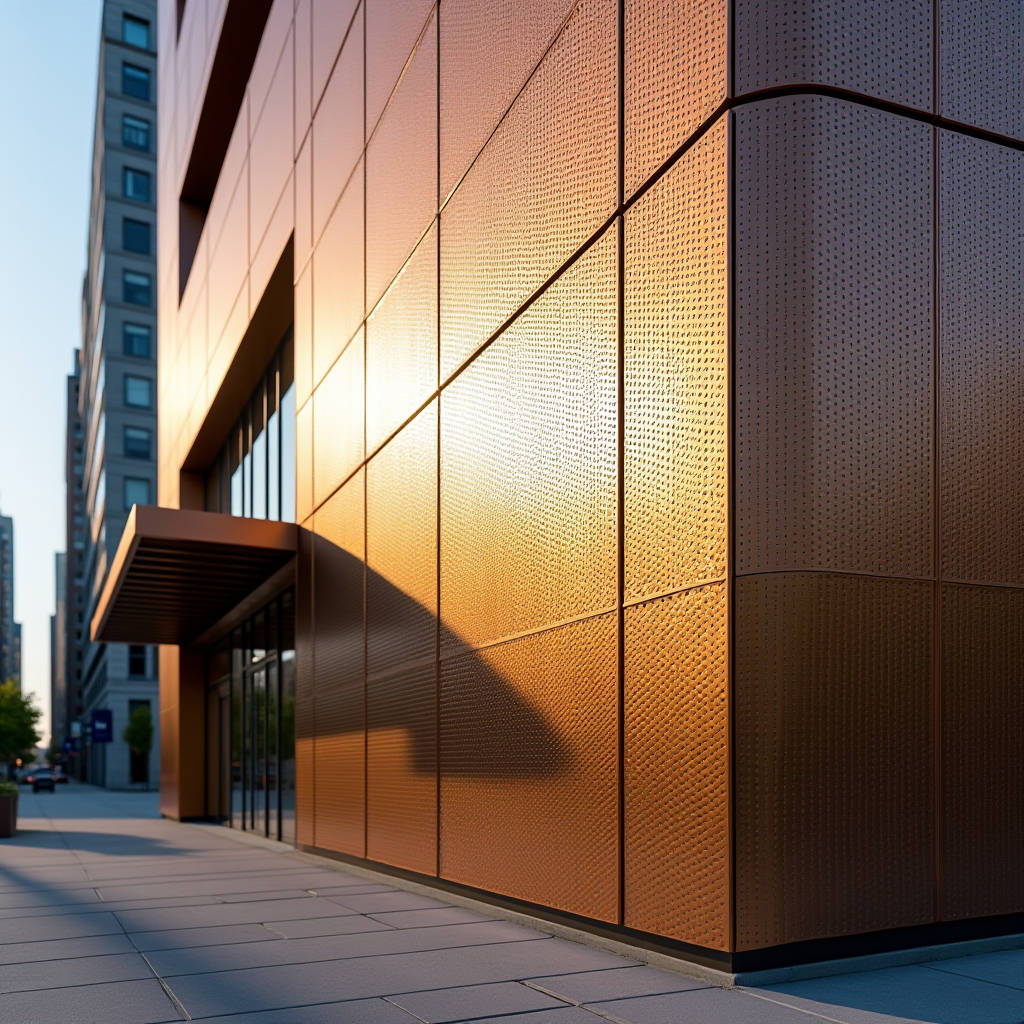
Dimpled Aluminum Processing has carved out a distinct niche in modern facade engineering, not as a decorative afterthought but as a structural strategy that merges mechanical performance with visual depth. When architects specify dimpled aluminum panels for exterior cladding, they are chasing more than texture. They want increased panel rigidity without adding thickness, reduced oil-canning across large spans, and a surface that catches light in ways flat sheet cannot. For curtain wall contractors and project managers, the conversation shifts quickly to formability, coating adhesion on textured substrates, and whether the dimpling process introduces micro-fractures that compromise long-term durability. This article examines the engineering logic behind dimpled solid aluminum panels, the processing methods that produce reliable results, and the practical considerations that determine whether a dimpled facade performs or fails over a 30-year service life.
What Dimpled Aluminum Processing Actually Means for Solid Cladding Panels
In the context of solid aluminum cladding panels, dimpling refers to the controlled formation of indentations or raised geometries across the sheet surface. Unlike perforation, which removes material, dimpling displaces it. The aluminum is stretched locally under mechanical pressure, creating a three-dimensional topography that stiffens the panel through geometric reinforcement. This principle is familiar to anyone who has worked with corrugated metal roofing, but dimpling operates at a finer scale. A grid of shallow, evenly spaced dimples can increase the section modulus of a 2.5mm aluminum sheet by enough to reduce the number of stiffeners required behind the panel. For a 3.0mm thick solid aluminum panel spanning 1,200mm between supports, properly engineered dimpling can push the allowable wind load capacity upward by 15 to 20 percent, depending on dimple depth, spacing, and pattern geometry.
The processing itself falls into two broad categories: mechanical press forming and CNC-controlled incremental forming. Mechanical press forming uses matched male-female die sets to stamp the dimple pattern into the sheet in a single stroke or progressive sequence. This method suits high-volume production runs where the pattern is standardized. CNC incremental forming, by contrast, uses a stylus or forming tool that moves across the sheet surface, pressing dimples one at a time according to a programmed toolpath. This approach offers flexibility for custom patterns, variable dimple depths, and smaller batch sizes, though cycle times are longer. Both methods demand careful control of material springback, which is pronounced in the 3xxx and 5xxx series aluminum alloys commonly used for architectural cladding.
Material Selection: Why Alloy Choice Determines Dimpling Success
Not all aluminum alloys respond to dimpling the same way. The 3003-H14 and 5052-H32 grades dominate the architectural cladding market, and each behaves differently under the localized plastic deformation that dimpling requires. 3003-H14, with its moderate tensile strength of approximately 152 MPa and elongation around 8 percent, dimples readily but exhibits greater springback. 5052-H32, with tensile strength closer to 228 MPa and elongation of 12 percent, offers better formability and less springback, making it the preferred choice for deeper dimple profiles. The trade-off is cost: 5052 typically commands a 10 to 15 percent premium over 3003.
Grain structure matters too. Aluminum sheets produced through continuous casting tend to have a coarser grain structure than those from direct chill casting, which can lead to uneven dimple formation and surface roughness at the dimple edges. For architectural applications where the dimpled surface will receive a PVDF or FEVE coating, surface quality after forming is critical. Any roughness, micro-cracking, or orange-peel effect at the dimple boundaries will telegraph through the coating, creating visible defects that become glaring under raking light. Specifying direct chill cast aluminum with a fine, uniform grain structure adds cost but reduces rejection rates at the coating stage.
Suppliers like Futeng® have developed proprietary pre-treatment protocols for dimpled panels, ensuring that the textured surface receives uniform chromate conversion coating before the PVDF spray application. This step is easy to overlook but essential for adhesion on non-planar surfaces.
Structural Engineering Behind Dimple Patterns
The structural benefit of dimpling is not linear. Dimple depth, diameter, spacing, and pattern geometry all interact with the base sheet thickness to determine the panel's effective stiffness. A common engineering approach treats the dimpled panel as an orthotropic plate, where the bending stiffness differs in the longitudinal and transverse directions depending on the dimple arrangement. For a staggered dimple pattern with 40mm center-to-center spacing and 3mm depth on a 2.5mm thick 5052-H32 sheet, the effective moment of inertia can increase by roughly 25 percent compared to a flat sheet of the same thickness. This matters most at the panel edges and mid-span, where deflection under wind suction governs the design.
However, dimpling also introduces stress concentrations. The transition zone at the rim of each dimple experiences higher localized stress under load. Fatigue testing on dimpled aluminum panels shows that crack initiation sites overwhelmingly occur at these transition zones, particularly when the dimple profile has a sharp radius rather than a generous fillet. A minimum radius of 2.5 times the sheet thickness at the dimple root is a practical rule of thumb that balances stiffness gain against fatigue risk. For a 2.5mm sheet, that means a root radius of at least 6.25mm, which limits how small the dimple diameter can be for a given depth.
| Parameter | Flat 2.5mm 5052-H32 | Dimpled 2.5mm 5052-H32 (3mm depth, 40mm spacing) | Flat 3.0mm 5052-H32 |
|---|---|---|---|
| Weight per m² | 6.75 kg | 6.75 kg (negligible change) | 8.10 kg |
| Effective Section Modulus (relative) | 1.0 (baseline) | ~1.22 | ~1.44 |
| Allowable Wind Load (1,200mm span, L/180 deflection) | ~1.8 kPa | ~2.2 kPa | ~2.6 kPa |
| Oil-Canning Resistance | Moderate | High | High |
| Material Cost Index | 100 | 100 + processing cost | 120 |
| Coating Adhesion Risk | Low | Moderate (requires process control) | Low |
Coating Dimpled Surfaces: The PVDF Challenge
Applying PVDF coatings to dimpled aluminum surfaces introduces challenges that flat panel coating does not. The standard architectural PVDF system, typically a three-coat process with primer, color coat, and clear topcoat meeting AAMA 2605 requirements, relies on uniform film thickness across the surface to achieve its 20-year-plus durability guarantees. On a dimpled surface, spray application tends to build up thicker on the raised areas between dimples and thinner inside the dimple cavities. This variation can exceed the acceptable tolerance of ±5 microns, compromising corrosion protection at the thin spots.
Electrostatic spray application helps mitigate this issue by wrapping the charged paint particles into recessed areas, but it does not eliminate the problem entirely. For dimpled panels destined for coastal or high-humidity environments, a supplementary clear coat application focused on the dimple interiors may be warranted. Some coating applicators address this by adjusting the spray angle and atomization pressure specifically for textured panels, a process refinement that separates experienced architectural finishers from general-purpose coaters.
Powder coating offers an alternative with better edge coverage and more uniform thickness on textured surfaces, but the color range and gloss consistency for architectural-grade powder coatings still lag behind liquid PVDF. For projects where the dimpled panels will be installed at ground level or within touching distance, the superior film uniformity of a well-applied powder coat may outweigh the broader color palette of PVDF.
Manufacturing Tolerances and Quality Control
Dimpled aluminum panels for architectural cladding must meet the same dimensional tolerances as flat panels, but the textured surface complicates measurement. Panel flatness, typically specified as within 0.5 percent of the panel dimension per ASTM standards, is harder to verify when the surface is intentionally non-planar. The industry practice is to measure flatness at the lands between dimples, using a straightedge and feeler gauge. For a 1,200mm x 2,400mm panel, the maximum deviation between any two adjacent lands should not exceed 3mm.
Dimple consistency across the panel is another quality metric. A dimple depth variation of more than 0.2mm across a single panel will be visible under oblique lighting, especially on dark-colored PVDF finishes. This variation typically stems from uneven press tonnage, worn die surfaces, or inconsistent material temper. Regular die maintenance and incoming material hardness testing are essential quality control steps that reputable processors perform on every batch.
Edge condition deserves attention too. Dimpling near the panel perimeter can distort the edge, making it difficult to achieve a clean fold for return legs or cassette edges. A common solution is to leave an un-dimpled border of 25 to 40mm around the panel perimeter, which provides a flat zone for edge bending and attachment. This border must be accounted for in the panel layout drawings and coordinated with the facade consultant early in the design phase.
Comparing Dimpling Methods: Press vs. CNC Incremental Forming
The choice between press forming and CNC incremental forming for Dimpled Aluminum Processing hinges on project scale, pattern complexity, and budget. Press forming delivers high throughput and excellent repeatability once the tooling is dialed in. A hydraulic press with a dedicated die set can produce 200 to 500 dimpled panels per shift, depending on panel size and automation level. The upfront tooling cost, however, ranges from $15,000 to $50,000 for a custom die set, making press forming economically viable only for projects exceeding roughly 1,000 square meters of dimpled panel area.
CNC incremental forming eliminates the tooling investment. The same CNC machine that produces a custom dimple pattern for a one-off feature wall can switch to a different pattern for the next job with a change of program, not hardware. Cycle times are slower, typically 15 to 45 minutes per panel depending on dimple count and depth, but the flexibility suits architectural projects where the dimple pattern is a bespoke design element rather than a standard specification. The incremental forming process also allows for variable dimple depth across the panel, creating gradient effects that press forming cannot achieve.
Both methods leave residual stresses in the material. Stress-relief heat treatment after dimpling is rarely specified for architectural panels because the temperatures involved (typically 175 to 230°C for 5052) can degrade the mechanical properties if not precisely controlled. Instead, processors rely on over-forming to compensate for springback, a technique that requires trial runs and careful measurement to dial in the correct parameters for each batch of material.
Wind Load Performance and Deflection Behavior
The interaction between dimpled panel geometry and wind load resistance is more nuanced than simple stiffness calculations suggest. Under positive wind pressure, the dimpled surface experiences complex stress distributions that differ from those under negative wind suction. The dimples act as local stiffeners under compression but can buckle differently under tension. Full-scale mockup testing, conducted in accordance with ASTM E330, remains the most reliable method for validating the structural performance of a dimpled cladding system.
In practice, the wind load improvement from dimpling allows designers to achieve a given span rating with thinner material, offsetting some of the processing cost. A 2.5mm dimpled panel may match the stiffness of a 3.0mm flat panel while saving approximately 1.35 kg per square meter. On a 10,000-square-meter facade, that translates to 13.5 metric tons of aluminum saved, with corresponding reductions in embodied carbon and supporting structure requirements. The Aluminum Association publishes environmental product declarations that can help quantify these savings for green building certification submissions.
Acoustic and Thermal Considerations
Dimpled surfaces affect more than structural performance. The textured surface scatters sound waves differently than a flat panel, which can modestly improve the acoustic absorption of the facade when measured in accordance with ISO 354. The effect is not dramatic, typically a 5 to 10 percent improvement in the sound absorption coefficient at mid-range frequencies, but it can contribute to meeting overall building acoustic targets when combined with other strategies.
Thermally, the dimpled surface increases the effective surface area of the panel, which slightly raises the convective heat transfer coefficient. For a ventilated rainscreen facade, this means marginally better cooling of the cavity behind the panel, which can reduce the cooling load on the building. The difference is small enough that it rarely drives design decisions, but it is worth noting in energy modeling submissions where every fraction of a percentage point counts toward compliance.
Practical Procurement and Specification Guidance
When writing a specification for dimpled aluminum cladding panels, several details must be explicit to avoid disputes during fabrication and installation. The specification should define the dimple pattern with a dimensioned drawing showing dimple diameter, depth, spacing, edge distance, and pattern orientation relative to the panel edges. It should reference the applicable aluminum alloy and temper, the coating system and performance standard, and the acceptable tolerances for dimple depth variation and panel flatness.
The specification should also address the sequence of operations. Dimpling must occur before coating, and the coating applicator must be informed that the substrate is textured so they can adjust their process accordingly. If the panels require edge folding or cassette forming, the specification should state whether folding occurs before or after dimpling, as this affects the flat border width required around the panel perimeter.
For procurement, requesting a first-article inspection panel is standard practice. This panel, produced using the actual production tooling and process, allows the design team to verify the dimple pattern, coating appearance, and edge condition before full production begins. The cost of a first-article panel is typically absorbed into the overall project cost and is a small price to pay compared to the cost of reworking an entire batch of non-conforming panels.
Dimpled Aluminum Processing is not a one-size-fits-all solution. Its value depends on the specific demands of the project: the wind loads, the span requirements, the aesthetic intent, and the budget. When these factors align, dimpled panels offer a way to reduce weight, improve stiffness, and create a facade that holds visual interest across changing light conditions. When they do not, a flat panel of appropriate thickness remains the simpler, more predictable choice.
The Path from Design Intent to Installed Facade
Getting dimpled aluminum panels from the architect's render to the finished building requires coordination between the designer, the panel fabricator, the coating applicator, and the installation contractor. The fabricator must confirm that the specified dimple geometry is achievable with the available tooling and material. The coating applicator must demonstrate that their process can achieve uniform film thickness on the textured surface. The installer must handle the panels carefully to avoid flattening dimples or scratching the coated surface during lifting and fixing.
Panel handling is an underappreciated risk. Dimpled panels are stiffer than flat panels of the same thickness, but the dimples themselves are vulnerable to localized damage. A panel dropped on its face will likely show flattened dimples that cannot be repaired. Protective interleaving and vertical storage racks are standard precautions. On site, vacuum lifters with foam pads distribute the lifting force across multiple dimples, reducing the risk of point-load damage.
For projects in regions with extreme thermal cycling, the differential expansion between the aluminum panel and its supporting structure must be accommodated in the fixing design. Dimpled panels expand and contract at the same rate as flat panels, approximately 0.024mm per meter per degree Celsius for 5052 alloy, but the textured surface can mask minor buckling that would be immediately visible on a flat panel. This is not a reason to relax the expansion joint requirements; it is a reminder that visual inspection alone may not catch all problems.
The decision to specify dimpled aluminum cladding should be grounded in engineering analysis, not aesthetic preference alone. A well-executed dimpled facade rewards the effort with durability, performance, and a surface that changes character as the sun moves across the sky. A poorly executed one becomes a source of punch-list items and warranty claims. The difference lies in the details covered here: alloy selection, dimple geometry, coating process control, and quality verification at every stage from flat sheet to finished building.