Brushed Aluminum Facade Grain Direction and Coating Compatibility for Solid Panel Systems
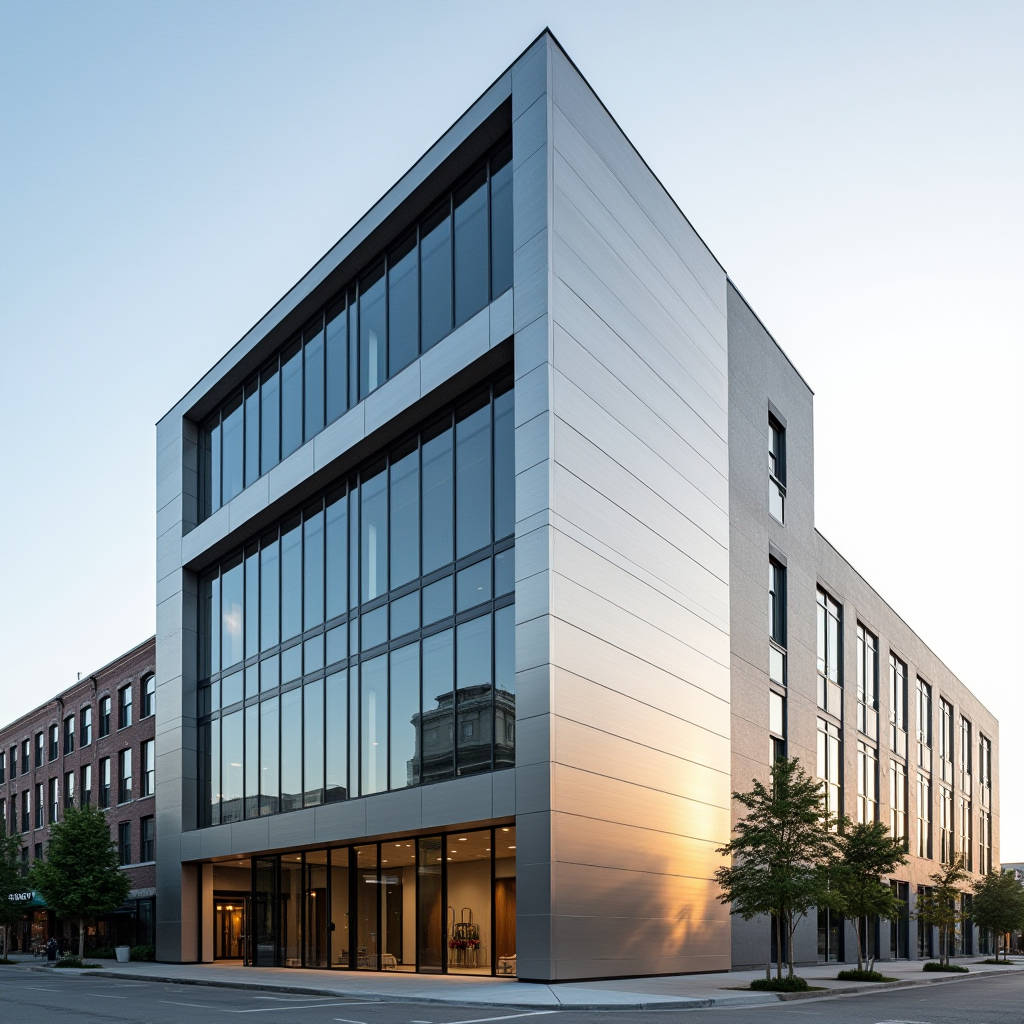
Brushed aluminum facade systems have gained significant traction in commercial construction over the past five years, driven by a combination of aesthetic demand and practical engineering requirements. The linear grain pattern produced by mechanical or chemical brushing creates a directional, low-reflectance surface that masks minor scratches and environmental wear better than mirror-polished alternatives. For architects and facade consultants, the appeal lies in the controlled light scattering properties — the anisotropic finish reads differently depending on viewing angle and sun position, creating dynamic visual depth across large building envelopes. This article examines the technical realities behind specifying, fabricating, and installing brushed aluminum facade panels, with a specific focus on grain direction consistency, coating compatibility, and long-term weathering performance that procurement managers and building envelope contractors need to evaluate before committing to a project specification.
How the Brushed Finish Is Actually Produced on Solid Aluminum
Understanding the manufacturing process matters because it directly affects what you can and cannot achieve on a building scale. The brushed finish on solid aluminum sheets — typically 2.0mm, 2.5mm, or 3.0mm thick 5052 or 3003 alloy — is created through mechanical abrasion using rotating nylon or wire brushes running at controlled speeds across the metal surface. The process removes a microscopic layer of aluminum, typically 0.02–0.05mm, leaving behind parallel micro-grooves that produce the characteristic linear grain.
There are two distinct approaches in industrial production. The first is coil-to-coil brushing, where the aluminum is processed in continuous rolls before being cut to panel dimensions. This method delivers excellent grain uniformity across large batches but limits the maximum panel size to the coil width, typically 1,500mm. The second is sheet-by-sheet brushing, where individual cut panels are processed on a flatbed brushing machine. This allows for larger panel dimensions — up to 2,000mm x 4,000mm in some facilities — but requires more rigorous quality control to maintain grain consistency from panel to panel.
Grain depth is measured in microns and categorized into three general grades: fine (0.5–1.0μm Ra), medium (1.0–2.0μm Ra), and coarse (2.0–3.5μm Ra). Fine grain produces a subtle sheen suitable for interior applications or sheltered exterior areas. Medium grain is the most commonly specified for exterior brushed aluminum facade applications because it balances visual impact with practical cleanability. Coarse grain creates a more industrial aesthetic but tends to trap airborne particulates, requiring more frequent maintenance cycles.
ASTM B209 governs the dimensional tolerances for aluminum sheet, but there is no single international standard that defines "brushed finish" parameters. Specifiers should always request physical sample panels — not just small swatches — measuring at least 300mm x 300mm to evaluate grain consistency under site lighting conditions.
Grain Direction: The Specification Detail That Trips Up Projects
Grain direction is the single most overlooked specification parameter in brushed aluminum facade projects, and it is also the most common source of disputes between fabricators, installers, and design teams. The issue is straightforward: the brushing process creates a directional linear pattern, and how that direction is oriented across the building envelope fundamentally changes the visual reading of the facade.
In a typical project, the architect will specify either vertical grain (brushing lines running top-to-bottom on each panel) or horizontal grain (lines running side-to-side). Vertical grain is the default in most specifications because it aligns with the natural drainage direction of rainwater, helping to mask any minor streaking that occurs between cleaning cycles. Horizontal grain can create a striking visual effect — particularly on low-rise, horizontally proportioned buildings — but it requires more meticulous installation because any slight misalignment between adjacent panels is immediately visible as a break in the grain line.
The real challenge emerges at panel joints, corners, and transitions. At a 90-degree external corner, the grain direction must either wrap continuously (requiring the fabricator to brush the panel after bending, which is technically demanding) or meet at the corner edge (creating a visible seam where the grain direction changes). Neither approach is inherently wrong, but the specification must state the intended treatment explicitly. Projects that fail to do so often end up with a mix of both approaches on the same building, producing a disjointed appearance that undermines the design intent.
For large-scale projects, fabricators like Futeng® typically recommend that the design team provide a grain direction drawing — a separate elevation drawing that uses arrows to indicate the intended grain orientation on every panel. This drawing becomes part of the approved shop drawing package and serves as the reference document for both fabrication QC and site installation inspection.
Coating Systems Compatible with Brushed Substrates
One of the most common technical questions from specifiers is whether a brushed aluminum facade panel can be clear-coated to preserve the raw metallic appearance while providing corrosion protection. The answer is yes, but the choice of coating system has significant implications for appearance, durability, and cost.
The industry standard for exterior aluminum cladding is PVDF (polyvinylidene fluoride) coating, typically applied as a 3-coat or 4-coat system with a total dry film thickness of 30–40μm, conforming to AAMA 2605 for high-performance exterior applications. When applied over a brushed substrate, a clear PVDF topcoat preserves the metallic appearance while providing UV resistance and chemical durability. However, the clear coat does alter the visual character slightly — it tends to deepen the apparent color temperature and adds a subtle gloss that can reduce the perceived "rawness" of the brushed texture.
An alternative is a tinted PVDF coating that incorporates a small amount of metallic pigment matched to the natural aluminum tone. This approach provides better color consistency across production batches because the pigment compensates for minor variations in the underlying brushed surface. The trade-off is that the panel reads as slightly more "coated" and less "raw metal" than a clear-coated equivalent.
For projects where the purest possible brushed aluminum appearance is required, some manufacturers offer a thin anodic treatment combined with a clear organic seal. This approach, governed by standards such as ISO 7599 for anodizing, produces a harder surface than PVDF but is less flexible in terms of color range and is more susceptible to variations in the base metal composition.
| Coating Type | Dry Film Thickness | UV Resistance | Impact on Brushed Appearance | Relative Cost Index |
|---|---|---|---|---|
| Clear PVDF (3-coat) | 30–35μm | Excellent | Moderate gloss increase, slight darkening | 1.0 (baseline) |
| Tinted PVDF (3-coat) | 30–35μm | Excellent | More uniform color, less raw metal character | 1.05–1.1 |
| Clear PVDF (4-coat) | 40–45μm | Superior | Slightly more gloss than 3-coat | 1.15–1.25 |
| Anodic + Clear Seal | 10–20μm (anodic layer) | Good | Closest to raw brushed metal | 1.3–1.5 |
| Polyester Powder (clear) | 60–80μm | Moderate | Noticeable gloss, softer texture reading | 0.7–0.85 |
Weathering Behavior: What Happens After Five Years
All exterior building materials change over time, and brushed aluminum is no exception. Understanding the expected weathering trajectory helps set realistic client expectations and informs maintenance planning.
In the first 12–18 months after installation, a clear-coated brushed aluminum facade will undergo a subtle color shift as the aluminum substrate naturally oxidizes beneath the coating. This shift is typically a slight warming of the tone — moving from a cool silver-white toward a marginally warmer grey — and is generally uniform across the facade. The rate of this shift depends on UV exposure, ambient pollution levels, and proximity to marine environments. Buildings in coastal locations, particularly those within 500 meters of breaking surf, will experience accelerated surface changes due to chloride deposition, and the specification should reference ISO 12944 corrosion categories to determine appropriate coating specifications.
Over a 5–10 year timeframe, the primary weathering mechanism shifts from oxidation to mechanical wear. Wind-driven particulates — essentially fine sand and dust — abrade the coating surface, gradually reducing the gloss level and softening the visual distinction between the brushed grain and the surrounding metal. This is not a failure mode; it is a predictable aging characteristic. The rate of this change is heavily influenced by the building's location and orientation. Facades facing prevailing winds will weather faster than sheltered elevations.
For procurement managers, the practical implication is that replacement panels ordered 3–5 years after the initial installation will not match the weathered original panels. This is not a manufacturing defect — it is the natural consequence of differential aging. Projects that anticipate future modifications or phased construction should consider ordering a small quantity of spare panels with the initial production run and storing them in controlled conditions, or alternatively, accept that later additions will read as intentionally distinct elements.
Installation Systems and Their Impact on the Brushed Surface
The choice of installation system directly affects how the brushed aluminum facade performs visually and structurally over the building's lifetime. Three primary systems dominate the market for solid aluminum rainscreen applications.
Riveted Face-Fixed Systems: Panels are secured to the substructure using exposed mechanical fasteners — typically stainless steel rivets or screws with color-matched heads. This is the most economical installation method, with installed costs typically ranging from $45–$65 per square meter (labor and substructure only, excluding panel material). For brushed aluminum facade panels, the fastener heads create a visible pattern on the panel face that becomes part of the architectural expression. The specification must address whether fasteners should align with the grain direction or be arranged in a grid independent of the grain. Misalignment between fastener pattern and grain direction is a common cause of visual dissatisfaction on completed projects.
Concealed Clip Systems: Panels are hung on aluminum support rails using interlocking clips or cassettes, with no visible fasteners on the panel face. This system is preferred for high-end brushed aluminum facade applications because it allows the uninterrupted grain pattern to read cleanly across the entire elevation. Installed costs range from $70–$100 per square meter. The engineering consideration is that the panel edge returns must be precisely formed to engage the clip system, and the brushing process must extend around the panel edges to ensure a consistent appearance at open joints.
Unitized Panel Systems: Large pre-assembled panels — often spanning floor-to-floor — are fabricated in the factory and lifted into place on site. This approach minimizes site handling of the delicate brushed surface and allows for the highest level of quality control. Unitized systems are typically specified for high-rise commercial projects where site access is constrained and installation speed is critical. Costs are project-specific but generally exceed $120 per square meter for the complete system.
Cleaning and Maintenance Protocols
Brushed aluminum facades require different cleaning protocols than smooth or gloss-finished panels. The micro-grooves that create the brushed texture also provide a foothold for airborne contaminants, and cleaning methods that work well on smooth surfaces can actually damage the brushed finish.
The fundamental rule is that cleaning must always follow the grain direction. Wiping across the grain — perpendicular to the brushing lines — pushes contaminants into the micro-grooves and can create visible smearing that is difficult to remove. Cleaning with the grain, using a soft microfiber cloth or a low-pressure (under 500 psi) water spray directed along the grain lines, removes surface deposits without embedding them in the texture.
Cleaning frequency depends on the building's location and exposure. In urban environments with moderate pollution, an annual cleaning cycle is typically sufficient to maintain the intended appearance. Buildings in industrial areas or near major roadways may require semi-annual cleaning. The cleaning agent should be a pH-neutral detergent specifically formulated for coated aluminum surfaces; acidic or alkaline cleaners can attack the PVDF coating and accelerate gloss loss.
For buildings where regular access for cleaning is impractical — such as high-rise structures or buildings with complex geometries — the specification should consider a slightly coarser grain (medium rather than fine) combined with a self-cleaning hydrophilic coating. These coatings, applied as a thin film over the PVDF topcoat, use rainwater to wash away loose contaminants, reducing the required mechanical cleaning frequency. The additional cost is approximately $8–$12 per square meter of panel area.
Cost Drivers and Budget Planning
Budgeting for a brushed aluminum facade requires understanding which specification decisions drive cost and which have minimal impact. The baseline material cost for 2.5mm solid aluminum sheet with a medium brushed finish and clear PVDF coating typically ranges from $55–$75 per square meter, FOB factory, depending on order volume and panel complexity.
The single largest cost variable is panel size and geometry. Simple rectangular panels with no perforations, folds, or curved profiles can be produced efficiently and fall at the lower end of the cost range. Panels with complex geometries — curved sections, tapered panels, panels with integrated sun-shading elements — require additional fabrication steps and generate more material waste, pushing costs toward the upper end of the range or beyond.
Grain specification also affects cost. A consistent grain direction across all panels is the baseline. If the design requires alternating grain directions on adjacent panels (for example, a checkerboard pattern of vertical and horizontal grain), the fabricator must sort and track panels individually, increasing handling time and the risk of installation errors. This adds approximately 5–8% to the panel fabrication cost.
For procurement managers working on large-scale projects — above 5,000 square meters of panel area — it is worth discussing batch production scheduling with the fabricator. Producing all panels for a single elevation in one continuous production run minimizes batch-to-batch variation in the brushed finish and coating appearance. This is particularly important for clear-coated brushed aluminum facade panels, where minor variations in brushing pressure or coating thickness can produce visible differences between production batches.
Specification Checklist for Tender Documents
Based on the technical issues discussed throughout this article, the following checklist provides a structured approach for specifying brushed aluminum facade panels in tender documents. Each item should be explicitly addressed; leaving any of these points undefined in the specification creates ambiguity that will lead to disputes during fabrication or installation.
- Alloy and temper: Specify 5052-H32 or 3003-H14, referencing ASTM B209 for dimensional tolerances.
- Panel thickness: State the nominal thickness (2.0mm, 2.5mm, or 3.0mm) and the applicable tolerance range.
- Grain grade: Define the surface roughness in Ra (μm) — fine, medium, or coarse — and provide a physical reference sample.
- Grain direction: Provide a grain direction drawing showing orientation on every elevation, including corner treatments.
- Coating system: Specify coating type (clear PVDF, tinted PVDF, or anodic), number of coats, and the applicable performance standard (AAMA 2605 for PVDF).
- Sample panel requirements: Require a minimum 300mm x 300mm physical sample for approval before production.
- Batch continuity: For projects above 2,000m², specify that all panels for each elevation must be produced in a single continuous production batch.
- Installation system: Define the attachment method (face-fixed, concealed clip, or unitized) and fastener finish requirements.
- Cleaning and maintenance: Include a maintenance protocol specifying cleaning direction, frequency, and approved cleaning agents.
- Spare panels: Require 2–3% spare panels from the same production batch for future repairs or modifications.
For projects seeking technical guidance on solid aluminum panel specifications, manufacturers such as Futeng® provide engineering support during the design development phase, including wind load calculations per ASCE 7 and thermal movement analysis per The Aluminum Association design guidelines. Engaging the fabricator early — ideally during schematic design — allows the specification to be aligned with the manufacturer's production capabilities, avoiding costly redesigns during the tender phase.
Common Failure Modes and How to Avoid Them
Even well-specified brushed aluminum facade installations can develop problems if certain risk factors are not addressed during design and construction. The most frequently observed issues fall into three categories.
Oil Canning: This is the visible waviness or distortion that appears on flat metal panels, caused by residual stresses in the material combined with thermal expansion and contraction. Solid aluminum panels are more susceptible to oil canning than composite panels because the material lacks the internal damping provided by a polyethylene core. The primary mitigation strategy is to specify an adequate panel thickness — 2.5mm minimum for panels larger than 1,200mm in any dimension — and to ensure that the panel support system allows for thermal movement without restraint. The Metal Building Manufacturers Association (MBMA) provides guidance on acceptable flatness tolerances for metal wall panels.
Galvanic Corrosion: When brushed aluminum panels are installed in contact with dissimilar metals — particularly carbon steel, copper, or brass — in the presence of moisture, galvanic corrosion can occur. The aluminum acts as the anode and corrodes preferentially. The prevention is straightforward: use stainless steel fasteners and ensure that aluminum panels are electrically isolated from any dissimilar metal components in the substructure using nylon washers or EPDM gaskets.
Coating Delamination at Cut Edges: The brushing and coating processes are applied to the panel face, but panels are cut to size after coating. The cut edges expose raw aluminum that is not protected by the coating system. On a brushed aluminum facade, edge corrosion can initiate at these exposed cut edges and propagate beneath the coating, causing delamination. The solution is to specify that all cut edges must be sealed with a touch-up coating system matched to the factory-applied finish, applied by the fabricator before the panels leave the factory.
Addressing these three failure modes in the specification and during shop drawing review eliminates the majority of long-term performance issues that affect brushed aluminum cladding installations. The additional cost of these preventive measures is negligible compared to the cost of remedial work on a completed building.