5005 Aluminum Alloy for Solid Cladding Panels Anodizing Temper and Flatness Specs
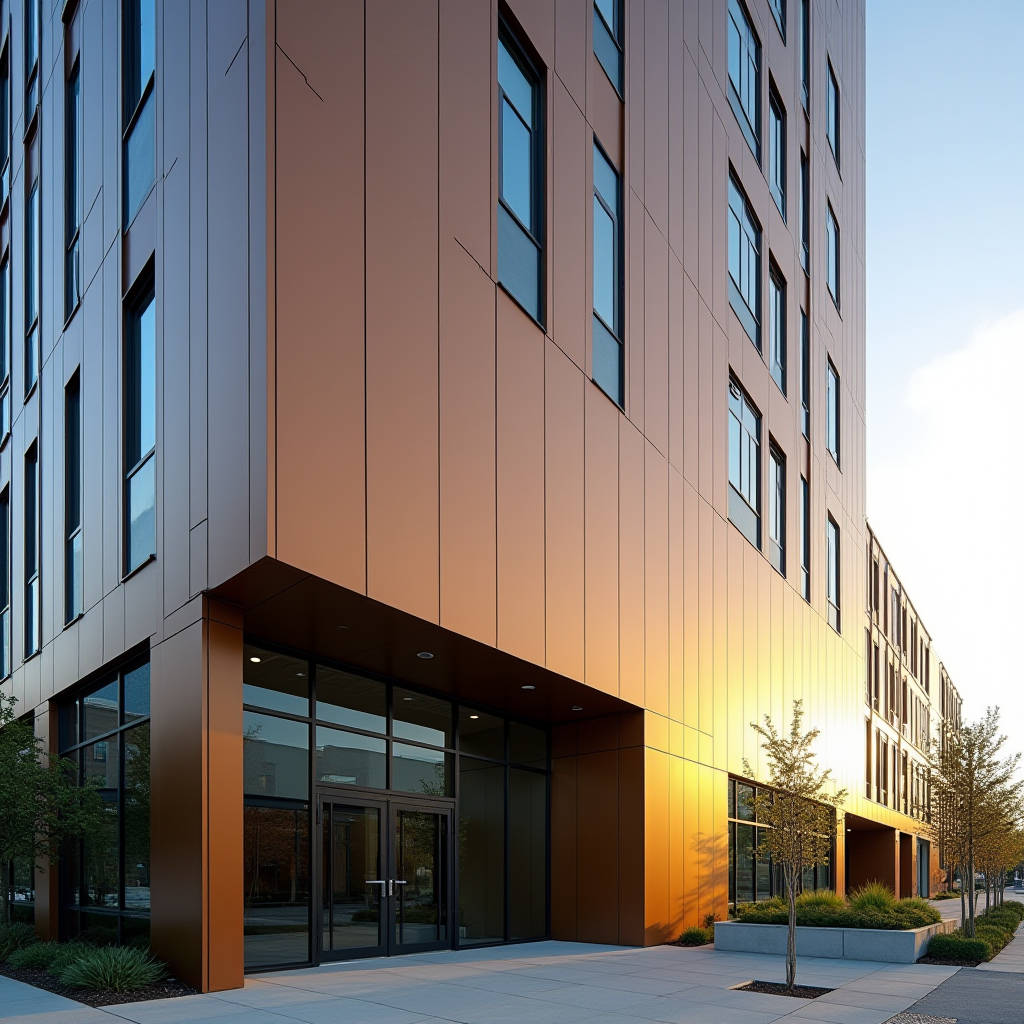
Specifying the right aluminum alloy for an architectural facade is rarely a one-dimensional decision. When a project demands a balance of moderate structural capacity, Class I anodized finish quality, and long-term atmospheric corrosion resistance without the cost premium of 5052 or 6061, 5005 Aluminum Alloy becomes the logical engineering choice. This alloy occupies a narrow but critical niche in the 5000 series: it carries enough magnesium to outperform 1xxx and 3xxx grades in coastal and industrial atmospheres, yet its lean 0.8% Mg content keeps the material soft enough for deep drawn panels, complex brake-formed cladding profiles, and perforated screen elements that would crack or orange-peel in higher-strength tempers. For facade consultants and building envelope contractors, the real question is not whether 5005 works — it is whether the specifier understands the temper selection, anodizing response, and flatness tolerances that separate a successful rainscreen installation from a warranty claim.
Where 5005 Sits in the 5000 Series Landscape
Magnesium is the primary alloying element across the entire 5000 series, but the concentration makes all the difference. 5052 carries roughly 2.5% Mg, 5083 pushes toward 4.5%, and 5005 stays at a modest 0.8%. This lean composition produces tensile strength in the 120–175 MPa range depending on temper, which is lower than 5052 but significantly higher than 1100 or 3003. The trade-off is deliberate: 5005 Aluminum Alloy sacrifices some ultimate tensile strength to gain superior anodizing clarity, reduced springback during forming, and a surface that resists the streaking and "tiger striping" that higher-magnesium alloys sometimes exhibit after bright dip anodizing.
From a procurement standpoint, 5005 is typically supplied in flat-rolled coil, sheet, and plate. Standard mill widths range from 1,000 mm to 2,000 mm, with thicknesses commonly stocked at 0.5 mm through 6.0 mm. For solid aluminum cladding panels, the relevant range is 2.0 mm, 2.5 mm, and 3.0 mm — the thicknesses that meet wind load deflection criteria under ASTM E330 without requiring stiffener ribs at standard 600 mm anchor spacing. The alloy is non-heat-treatable, meaning mechanical properties are developed through cold work (H-tempers) rather than solution heat treatment, which simplifies welding procedures and reduces distortion risk during fabrication.
Temper Selection and Its Effect on Fabrication
The temper designation on a mill certificate is not a formality. It dictates how the material behaves under a press brake, how it responds to routing and perforation, and whether the finished panel will exhibit Luders lines or stretcher strain marks after forming. For 5005 Aluminum Alloy, four tempers dominate architectural specification:
- O Temper (Annealed): Fully soft, with tensile strength around 105–125 MPa. Used when the panel requires deep drawing, embossing, or complex radius bending. The downside is lower yield strength, which may require thicker gauge to meet wind load requirements.
- H14 Temper (Strain-Hardened, Half-Hard): Tensile strength in the 140–165 MPa range. This is the most commonly specified temper for flat cladding panels because it provides sufficient stiffness for standard spans while retaining enough ductility for 90° brake bends without cracking.
- H24 Temper (Strain-Hardened and Partially Annealed): Similar strength to H14 but with improved bend formability due to the partial anneal. Preferred when the panel design includes tight-radius returns or complex folded geometries.
- H34 Temper: A variant with slightly higher strength and reduced ductility. Used selectively for panels with minimal forming requirements.
One practical consideration that does not appear on data sheets: H14 5005 sheet at 2.5 mm thickness will typically accept a 90° bend with an inside radius equal to the material thickness (2.5 mm) without cracking when the bend line runs perpendicular to the rolling direction. Parallel to the rolling direction, the minimum bend radius increases to roughly 1.5T. Fabricators who ignore grain direction on large-format panels often discover this through rejected batches, not through the spec.
Anodizing Performance: Why 5005 Outperforms Higher-Magnesium Alloys
Architectural anodizing is where 5005 Aluminum Alloy genuinely separates from the rest of the 5000 series. The anodizing process builds a controlled aluminum oxide layer on the substrate surface, and the clarity, color consistency, and durability of that layer depend heavily on the alloy's magnesium content and impurity profile.
Magnesium in solid solution oxidizes preferentially during anodizing. At concentrations above roughly 1.5% Mg, the anodic film begins to take on a yellowish or brownish cast, which limits the achievable brightness in clear anodized finishes and can shift the color of electrolytically deposited tones. 5005, with its 0.8% Mg content, stays well below this threshold. The result is a clear, bright anodic film that meets Class I architectural specifications under AAMA 611-14 without the color inconsistency that plagues 5052 when specified for high-visibility facade elements.
The following table summarizes the anodizing response across aluminum alloys commonly considered for architectural cladding:
| Alloy | Mg Content (%) | Clear Anodize Clarity | Class I (AAMA 611) Feasibility | Typical Film Thickness | Color Consistency (Batch-to-Batch) |
|---|---|---|---|---|---|
| 5005 | 0.8 | Excellent — bright, neutral tone | Fully compliant | 15–20 μm (Class I) | High |
| 5052 | 2.5 | Moderate — slight yellow cast | Possible but inconsistent | 15–20 μm | Moderate to low |
| 6061 | 1.0 | Good — slight gray tone | Compliant with limitations | 15–20 μm | Moderate |
| 3003 | <0.1 | Good — but lower strength | Compliant | 15–20 μm | High |
| 1100 | <0.1 | Excellent — but very soft | Compliant | 15–20 μm | High |
The table makes the trade-off explicit: 3003 and 1100 anodize beautifully but lack the structural integrity for large-format rainscreen panels. 5052 offers strength but compromises finish quality. 5005 Aluminum Alloy sits at the intersection — strong enough for engineered cladding, clean enough for Class I anodized aesthetics.
Corrosion Resistance in Real Atmospheric Conditions
Laboratory salt spray tests (ASTM B117) provide a baseline, but they do not replicate the cyclic wet-dry conditions, UV exposure, and industrial pollutants that real facades endure. 5005 Aluminum Alloy derives its corrosion resistance from the magnesium in solid solution, which stabilizes the naturally occurring passive oxide layer. In marine atmospheres, the alloy performs well at distances greater than 800 meters from the shoreline — a threshold where chloride deposition rates drop below the level that triggers pitting in unprotected 5000-series surfaces.
For projects in coastal zones within 800 meters of breaking surf, the specifier should consider two additional measures: specifying a minimum 20 μm anodic film thickness (exceeding the Class I minimum of 15 μm), or switching to a PVDF fluoropolymer coating system applied at 30–35 μm dry film thickness over a chrome-based conversion coating. The PVDF route — typically Kynar 500® or Hylar 5000® resin-based — adds roughly $18–25 per square meter to the finished panel cost but extends the maintenance-free service life by 15–20 years in aggressive environments.
Industrial atmospheres with elevated SO₂ concentrations present a different challenge. Sulfur dioxide reacts with moisture to form sulfurous and sulfuric acid micro-droplets on the panel surface. 5005 resists this attack better than 2xxx or 7xxx alloys, but regular cleaning — every 6–12 months depending on exposure — is recommended to prevent acid concentration in surface crevices. The Aluminum Association's Designation System for Aluminum Finishes provides detailed guidance on cleaning protocols for architectural aluminum.
PVDF Coating on 5005 Substrate: Adhesion and Specifying Film Thickness
While 5005 is famous for anodizing, a substantial portion of architectural 5005 sheet is factory-applied with PVDF coil coatings. The substrate matters for coating adhesion: 5005's relatively low magnesium content means less surface oxidation during pretreatment, which translates to more consistent chrome-phosphate conversion coating coverage and fewer adhesion failures at the bend line.
For solid aluminum cladding panels, the PVDF specification should follow AAMA 2605-20 for high-performance exterior applications. The minimum total dry film thickness is 30 μm for a two-coat system (primer + color coat) and 40 μm for a three-coat system (primer + color coat + clear coat). The clear coat in a three-coat system typically contains 70% PVDF resin by weight, which provides the UV resistance that prevents chalking and fade. A two-coat system with 70% PVDF in the color coat is acceptable for colors that do not require a protective clear layer, but metallic and pearlescent pigments almost always demand the three-coat approach.
Futeng® aluminum systems, for instance, process 5005 coil through a continuous pretreatment and coating line that applies PVDF at controlled film weights verified by eddy-current thickness gauges at line speed. The key quality metric is not just the average film thickness but the minimum spot measurement: AAMA 2605 requires that no single spot reading fall below 80% of the specified minimum. For a 30 μm spec, that means every reading must be 24 μm or higher. Procurement teams should request the full coating thickness map, not just the certificate average.
Flatness, Tolerances, and the Problem of Oil Canning
Oil canning — the visible waviness or buckling in flat metal panels — is one of the most persistent quality complaints in solid aluminum cladding. 5005 Aluminum Alloy in H14 temper is not immune to this phenomenon, but its moderate yield strength and uniform grain structure make it more predictable than higher-strength tempers. The root cause of oil canning is usually not the alloy itself but a combination of residual stress from the rolling process, thermal expansion under solar gain, and insufficient panel thickness relative to the unsupported span.
Mill flatness tolerances for 5005 sheet are defined in ASTM B209. For sheet up to 1,500 mm wide, the standard flatness tolerance is 6 mm of deviation over a 2,400 mm length. For architectural cladding, this is often insufficient. Specifiers should consider calling out a "stretcher-leveled" or "tension-leveled" flatness standard — typically 3 mm over 2,400 mm or better — which can be achieved by passing the sheet through a tension leveling line after cold rolling. The cost premium is roughly 8–12% over standard mill flatness, but it eliminates the post-installation rippling that leads to withheld retention payments.
Panel thickness is the other lever. A 2.0 mm panel on a 600 mm × 600 mm span may be structurally adequate per deflection calculations (L/60 or L/90 depending on the spec), but it will exhibit more visible oil canning than a 2.5 mm or 3.0 mm panel on the same grid. The thickness upgrade adds material cost — roughly $6–9 per square meter per 0.5 mm increment — but this is often cheaper than the labor to re-level panels on site or the reputational cost of a facade that reads as "wavy" from street level.
Welding and Joining 5005 for Panel Fabrication
Solid aluminum cladding panels frequently require welded corner joints, stiffener attachments, or bracket connections. 5005 Aluminum Alloy welds readily with both GTAW (TIG) and GMAW (MIG) processes using 5356 filler rod. The 5356 filler contains approximately 5% magnesium, which compensates for the dilution of magnesium from the 5005 base metal into the weld pool. Using 4043 filler (Al-Si) on 5005 is not recommended for architectural applications because the silicon-rich weld metal anodizes to a dark gray color that contrasts sharply with the surrounding 5005 base metal after clear anodizing.
The heat-affected zone (HAZ) in a 5005 weld will be annealed — the cold work from the H14 temper is locally removed, reducing tensile strength in the HAZ to approximately 105–110 MPa. For structural attachments like stiffener ribs, the weld should be sized so that the stress in the HAZ does not exceed this annealed strength. A practical rule: the total weld length should provide a shear area at least 1.5 times the cross-sectional area of the attached stiffener. This is conservative but avoids HAZ failure under wind suction loading.
For projects where welding is undesirable — for example, where the panel reverse side will be visible or where heat distortion is a concern — structural adhesive bonding with 3M™ VHB™ tapes or two-part acrylic adhesives is an alternative. The adhesive joint must be designed for the full wind load shear, and the bond line thickness should be controlled to 0.5–1.0 mm. The long-term durability of adhesive-bonded 5005 assemblies has been validated through accelerated aging tests per ASTM D1183 and should be part of the submittal package.
Comparing 5005 to 5052 and 6061 for Cladding Applications
Specifiers often ask why they should not simply default to 5052 or 6061. The answer depends on the priority: finish quality, strength, or cost. The table below provides a side-by-side comparison for architectural cladding scenarios:
| Property | 5005-H14 | 5052-H32 | 6061-T6 |
|---|---|---|---|
| Tensile Strength (MPa) | 140–165 | 210–260 | 290–310 |
| Yield Strength (MPa) | 110–135 | 160–195 | 240–275 |
| Elongation (%) | 8–14 | 10–16 | 8–10 |
| Clear Anodize Quality | Excellent | Fair (yellow cast) | Good (gray cast) |
| Bend Formability | Very Good | Good | Moderate |
| Weldability (GTAW) | Excellent | Excellent | Good (HAZ softening) |
| Relative Sheet Cost | Base | +8–12% | +15–20% |
| Marine Atmosphere (800m+) | Good | Very Good | Moderate (requires coating) |
The cost column is instructive. 5005 is the least expensive of the three, which makes it the default choice when the structural demands are moderate and the aesthetic requirement is high. 5052 is the upgrade path when higher wind loads or larger panel spans demand greater yield strength, but the specifier must accept the anodizing color trade-off or switch to PVDF. 6061-T6 is rarely the right choice for flat cladding panels; its strength is overkill, its formability is limited, and its cost is unjustified unless the panel doubles as a structural element.
Supply Chain Realities: Sourcing 5005 Sheet and Coil
Not all 5005 sheet is created equal, and the mill source matters. Primary aluminum producers in North America, Europe, and Asia all produce 5005 to ASTM B209 or EN 485 standards, but the trace element profile — particularly iron and silicon content — varies between smelters and affects the anodizing response. Iron above 0.4% can cause gray streaking in clear anodized finishes. Silicon above 0.2% can produce a dull, matte appearance. The ASTM B209 specification for 5005 allows up to 0.7% Fe and 0.3% Si, but architectural specifiers should tighten these limits to 0.4% Fe and 0.15% Si when anodizing is specified.
Lead times for 5005 coil in standard architectural gauges (2.0–3.0 mm) typically run 6–10 weeks from mill order, though distributor stock may be available in 48-inch and 60-inch widths. Custom widths and stretcher-leveled flatness add 2–3 weeks. For projects requiring more than 20 metric tons, direct mill ordering is usually more economical than distributor pricing, but the volume threshold varies by region and market conditions.
The Aluminum Association's Teal Sheets provide the definitive international alloy designation and chemical composition limits. For projects governed by Eurocodes, EN 485-2 specifies the mechanical properties, and the conversion between ASTM and EN tempers is not always one-to-one — H14 under ASTM does not map perfectly to H14 under EN 485, and the specifier should confirm which standard governs the mill certificates.
Specifying 5005 for Rainscreen and Ventilated Facade Systems
Rainscreen design places specific demands on the cladding material. The panel must resist wind pressure and suction, accommodate thermal movement without buckling, and maintain its appearance over decades with minimal maintenance. 5005 Aluminum Alloy in H14 temper at 2.5 mm thickness, installed on a vertical-track or horizontal-rail carrier system with stainless steel clips at 600 mm centers, will typically satisfy a design wind pressure of 1.5 kPa (serviceability limit) with deflection below L/90. For higher wind zones — 2.5 kPa and above — either the thickness should increase to 3.0 mm or the anchor spacing should decrease to 400 mm.
Thermal expansion is a critical detail. Aluminum expands at approximately 2.4 mm per linear meter per 100°C temperature change. A 3-meter panel subjected to a 60°C temperature swing (nighttime winter low to daytime summer solar gain) will expand roughly 4.3 mm. The carrier system must accommodate this movement through slotted connections or sliding clips. Fixed-pin connections at panel corners will cause buckling if the expansion is restrained. The AAMA 508 standard provides test methods for determining the structural performance of rainscreen panel systems under combined wind and thermal loads.
For ventilated facades with open joints, the panel edges are exposed to view and to weather. 5005's corrosion resistance makes it suitable for open-joint systems, but the cut edges should be sealed with a clear chromate or non-chromate conversion coating to prevent localized edge corrosion. The edge seal is a small detail — typically applied by brush or roller during fabrication — but it is frequently omitted in shop drawings and becomes a source of staining within the first two years of service.
Quality Assurance: What to Check on Mill Certificates
A mill certificate (MTC) for 5005 sheet should contain more than just the alloy designation and temper. For architectural cladding projects, the following data points should be verified against the specification before the material is released for fabrication:
- Chemical composition: Confirm Mg (0.5–1.1%), Fe (preferably ≤0.4%), Si (preferably ≤0.15%), Cu (≤0.1%), Mn (≤0.2%), Cr (≤0.1%), Zn (≤0.25%). Total others ≤0.15%.
- Tensile properties: For H14 temper, verify UTS 140–165 MPa, yield 110–135 MPa, elongation ≥8% in 50 mm gauge length.
- Grain size: ASTM E112 grain size number of 5 or finer is preferred for anodizing quality. Coarser grains produce a mottled appearance after etching.
- Flatness: If stretcher-leveled flatness was specified, the MTC should state the measured deviation and the standard applied (e.g., ASTM B209 quarter-hard flatness or a custom tolerance).
- Surface condition: Mill finish sheet should be free of roll marks, scratches deeper than 0.05 mm, and oil stains that would interfere with pretreatment.
For anodized finishes, the anodizer should provide a separate certificate confirming film thickness (ASTM B244 eddy-current method), seal quality (ASTM B136 modified dye stain test), and coating weight (ASTM B137). The ISO 7599 standard provides an international framework for architectural anodizing specification that aligns closely with AAMA 611.
Cost Drivers and Budgeting for 5005 Cladding Panels
The finished cost of a 5005 Aluminum Alloy cladding panel is the sum of material, fabrication, finishing, and accessory components. Raw 5005 sheet in 2.5 mm gauge typically costs $4.50–6.00 per kilogram depending on market conditions and order volume. At a density of 2,700 kg/m³, a 2.5 mm sheet weighs 6.75 kg/m², giving a raw material cost of roughly $30–41 per square meter. Fabrication — cutting, bending, routing, and welding — adds $25–50 per square meter depending on complexity. PVDF coating adds $18–25 per square meter; Class I anodizing adds $15–22 per square meter.
Total finished panel cost typically lands between $70 and $115 per square meter, excluding the carrier system, insulation, and installation labor. This positions 5005 as a mid-range architectural metal: more expensive than 3003 coil-coated sheet but 15–20% less than 5052 and 25–30% less than 6061. The value proposition is strongest when the project requires high-quality anodized aesthetics and moderate structural performance — exactly the combination that 5005 was engineered to deliver.
Life-cycle cost analysis favors 5005 in most architectural scenarios. The alloy's corrosion resistance and anodizing durability mean that a properly specified and maintained 5005 facade will deliver 30–40 years of service before requiring major refurbishment. PVDF-coated 5005 can extend that to 50 years in non-coastal environments. The incremental material cost over lower-grade alternatives is recovered within the first maintenance cycle — typically the 15–20 year mark when a cheaper system would require recoating or panel replacement.
Choosing 5005 Aluminum Alloy for a solid aluminum cladding project is a decision grounded in material science and practical engineering. The alloy's 0.8% magnesium content is not an arbitrary number — it is the threshold below which anodizing clarity is excellent and above which strength begins to climb. Understanding that trade-off, specifying the right temper, tightening the impurity limits for anodized applications, and designing the carrier system to accommodate thermal movement are the steps that separate a facade that performs from one that generates punch lists. For the specifier, the architect, and the contractor, the alloy is not the variable — the quality of the specification is.