3004 Aluminum Alloy in Solid Cladding Panels Mechanical Limits and Practical Specification
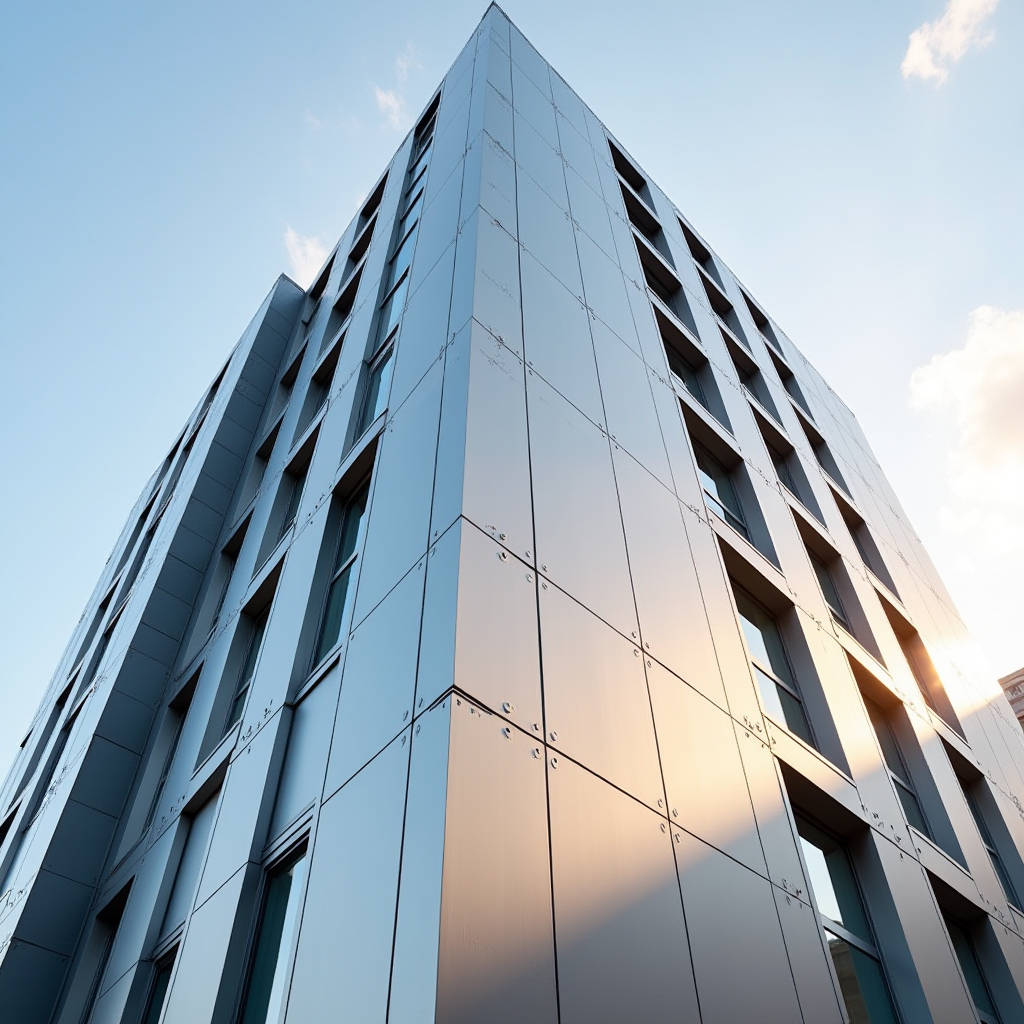
When a cladding panel on a 40-story tower fails, the problem rarely starts with the alloy. It starts with a specification that never asked the right questions. 3004 Aluminum Alloy sits in a strange middle ground—stronger than 3003, more formable than 5052, and significantly less expensive than 5005. Yet many procurement teams default to 3003 for cladding without realizing that the 1% magnesium addition in 3004 changes the entire mechanical profile. This article examines what actually happens when 3004 Aluminum Alloy moves from a mill certificate to a finished rainscreen panel, and where the gap between theoretical properties and installed performance creates real liability for contractors and fabricators.
What 3004 Aluminum Alloy Actually Is
3004 Aluminum Alloy belongs to the 3xxx series, where manganese serves as the primary alloying element. The distinction from 3003—the workhorse alloy many buyers default to—comes from roughly 1% magnesium content. That single percentage point pushes tensile strength approximately 20% higher than 3003 in comparable tempers. The alloy is non-heat-treatable, meaning all strength gains come from cold working during rolling or forming. In cladding applications, the typical temper is H14 (strain-hardened, half-hard) or H24 (strain-hardened and partially annealed), delivering yield strengths in the range of 145–200 MPa depending on gauge and processing history.
The chemical composition per ASTM B209 and EN 573-3 standards breaks down as follows: manganese 1.0–1.5%, magnesium 0.8–1.3%, with iron, silicon, copper, and zinc each held below 0.7%. The tight control on copper is particularly relevant for cladding, since copper content above 0.25% can measurably reduce corrosion resistance in marine and industrial atmospheres. This is not a theoretical concern—panels on buildings within 5 km of saltwater coastlines face chloride deposition rates that punish copper-rich alloys through pitting corrosion.
What makes 3004 Aluminum Alloy genuinely interesting for facade engineering is not any single property but the combination: moderate strength, excellent formability for brake-pressed panel profiles, and corrosion resistance that falls between 3003 and 5052. For architects specifying perforated panels, deep-drawn cassette systems, or complex folded geometries, 3004 offers a forming window that 5052 cannot match without cracking, while delivering more wind-load resistance than 3003 in the same gauge.
Mechanical Properties That Matter for Facade Engineering
Specifiers who only look at ultimate tensile strength are reading the wrong column. For rainscreen cladding, the yield strength and elongation values drive the actual design decisions. In H14 temper, 3004 Aluminum Alloy typically delivers 180–200 MPa tensile strength, 145–160 MPa yield strength, and elongation around 10–14% in 50 mm gauge length. These numbers shift with temper: H24 drops yield slightly but improves elongation to 12–16%, making it the preferred temper for panels requiring significant brake forming or folding.
The modulus of elasticity sits at approximately 70 GPa—identical to other aluminum alloys and roughly one-third of steel. This is not a weakness but a design parameter. Cladding systems using 3004 require deflection analysis that accounts for this lower stiffness, particularly for large-format panels exceeding 1,200 mm in any dimension. A 2.5 mm thick 3004 panel spanning 600 mm between support rails at a design wind load of 2.0 kPa will deflect approximately 4–5 mm at mid-span. That is within typical L/175 deflection limits, but only if the gauge is not reduced to 2.0 mm to save material cost.
Fatigue behavior deserves more attention than it typically receives in cladding specifications. Aluminum alloys do not exhibit a fatigue limit in the way steel does—cyclic loading from wind-induced vibration will eventually initiate cracks at stress concentration points. For 3004 Aluminum Alloy, the fatigue strength at 5×10⁸ cycles is approximately 60–70 MPa. This becomes relevant for buildings in typhoon-prone regions or locations where vortex shedding across building edges creates high-cycle, low-amplitude vibration in cladding panels. Panel edge detailing, rivet spacing, and stiffener design all interact with this fatigue threshold.
Corrosion Behavior: What the Salt Spray Test Does Not Tell You
Standard salt spray testing per ASTM B117 gives 3004 Aluminum Alloy a respectable rating, but the test bears almost no resemblance to how a cladding panel actually weathers. Real-world corrosion on building facades is driven by wet-dry cycling, not continuous immersion. Chloride deposits accumulate during dry periods, then activate during rain or condensation events. The resulting corrosion morphology in 3004 is typically shallow pitting rather than exfoliation or intergranular attack, which is favorable for maintaining panel integrity over a 30-year service life.
In marine environments, 3004 performs adequately when properly coated. The alloy's manganese content helps stabilize the oxide layer, and the magnesium addition does not create the intergranular corrosion susceptibility seen in higher-magnesium 5xxx alloys like 5083. However, uncoated or cut edges of 3004 panels will show visible pitting within 3–5 years in coastal exposures. This is why any serious cladding specification for 3004 Aluminum Alloy must include a PVDF or FEVE coating system with proper chromate or chrome-free pretreatment, and why edge sealing during fabrication is not optional.
Galvanic corrosion is a separate concern. When 3004 panels are installed with stainless steel fasteners (304 or 316 grade), the galvanic potential difference is approximately 0.3–0.5 V depending on the specific stainless alloy. In the presence of an electrolyte—rainwater, condensation—the aluminum will act as the anode and corrode preferentially. The practical solution is isolating fasteners with nylon or EPDM washers, but the specification must explicitly require this. Too many project specifications simply call out "stainless steel fasteners" and leave the galvanic isolation to chance.
Forming and Fabrication: Where 3004 Earns Its Place
The forming characteristics of 3004 Aluminum Alloy are what separate it from 5052 and 5005 in the fabrication shop. 3004 in H24 temper can be brake-pressed to a 90-degree bend with an inside radius equal to the material thickness (1t) without cracking, and can often go to 0.5t with the bend axis perpendicular to the rolling direction. 5052-H32 typically requires 1.5t to 2t minimum bend radii for the same angle, which limits design options for sharp-edged panel profiles.
This formability translates directly to architectural possibilities. Sharp-angled cassette panels, folded tray systems, and perforated panels with narrow web sections between holes all become feasible with 3004 in ways that are difficult or impossible with stronger but less ductile alloys. The trade-off is that 3004 work-hardens more rapidly than 3003, so multi-stage forming operations may require intermediate annealing. For most cladding panel geometries—single bends, perimeter flanges, stiffener ribs—this is not a constraint, but fabricators attempting complex deep-drawn shapes should discuss temper selection with the mill before committing to a production run.
Welding 3004 Aluminum Alloy requires attention to filler metal selection. The magnesium content in 3004 means that autogenous welding (without filler) can produce porous, low-strength welds. The correct filler is typically 4043 or 4047 for general fabrication, though 5356 may be specified when the welded assembly will be anodized and color matching is critical. For cladding panel fabrication, welding is generally limited to attachment of stiffeners and bracket assemblies, not the visible face of the panel, so the filler choice primarily affects structural integrity rather than appearance.
Coating Systems and Surface Finish Options
A 3004 Aluminum Alloy panel leaving the coating line is a different product from the bare mill-finish sheet that entered. The pretreatment step—typically a chrome-phosphate conversion coating or a chrome-free zirconium-based alternative—determines whether the PVDF topcoat will still be adhered in year 20. The chrome-free systems have improved significantly in the past decade, driven by REACH and other environmental regulations, but they remain more sensitive to process control. A poorly rinsed chrome-free pretreatment on 3004 can produce filiform corrosion at cut edges within 18 months of installation.
PVDF (polyvinylidene fluoride) coatings dominate the architectural cladding market for 3004 panels. Applied as a multi-coat system—primer plus color coat plus clear coat—total dry film thickness should be 25–35 microns for standard architectural applications per AAMA 2605. The primer layer is where the real performance lives; it contains the corrosion-inhibiting pigments and provides the adhesion interface. Some coaters offer a two-coat system (primer plus color) at 20–25 microns, which meets AAMA 2604 but not the higher-performance 2605 standard. For buildings in aggressive environments or with difficult access for maintenance, the three-coat system is the minimum defensible specification.
FEVE (fluoroethylene vinyl ether) coatings are gaining traction as an alternative to PVDF, offering comparable weatherability with the advantage of room-temperature curing. This matters for 3004 panels because the lower cure temperature reduces the risk of metallurgical changes in the H14/H24 temper during coating. PVDF requires a peak metal temperature of 230–250°C for proper film formation, which can cause some stress relief in cold-worked tempers. The effect is small—typically a 5–10 MPa reduction in yield strength—but worth noting for panels designed right at the structural limit.
Anodizing 3004 Aluminum Alloy produces a different aesthetic result than anodizing 5005 or 6061. The manganese content creates a slightly grayish, less transparent oxide layer. For architectural applications where color consistency across panels is critical, anodizing 3004 requires tight control of alloy composition and temper from lot to lot. Even minor variations in manganese or magnesium content within the allowable ASTM range can shift the anodized color. Specifiers pursuing an anodized finish on 3004 should request mill certificates for every coil and consider specifying a narrower composition window than the standard allows.
| Coating System | Standard | DFT (microns) | Accelerated Weathering | Best Application |
|---|---|---|---|---|
| PVDF 70% (3-coat) | AAMA 2605 | 30–35 | 4,000+ hrs | High-rise, coastal, industrial |
| PVDF 70% (2-coat) | AAMA 2604 | 20–25 | 3,000+ hrs | Mid-rise, urban |
| FEVE (3-coat) | AAMA 2605 | 30–35 | 4,000+ hrs | High-rise, complex geometries |
| Polyester (SG) | AAMA 2603 | 20–25 | 1,500+ hrs | Interior, low-rise sheltered |
| Anodized (Class I) | AAMA 611 | 15–20 | N/A | Premium architectural, controlled alloy |
Wind Load Performance and Panel Sizing
The structural design of a 3004 Aluminum Alloy cladding panel is governed by deflection limits, not ultimate strength. A panel that fails by yielding is rare; a panel that visibly oil-cans under wind suction is common. The design process starts with the project's specified wind loads—typically derived from ASCE 7 in North America, EN 1991-1-4 in Europe, or local building codes elsewhere—and then works backward to determine maximum panel dimensions for a given gauge and stiffener configuration.
For a 2.5 mm thick 3004-H14 panel with a single central stiffener, the allowable span between support rails at a design pressure of 2.5 kPa (approximately 160 km/h wind speed, exposure C) is roughly 700–800 mm when deflection is limited to L/175. Remove the stiffener, and that span drops to 500–550 mm. Increase the gauge to 3.0 mm, and the unstiffened span extends to 650–700 mm. These are not theoretical numbers—they come from four-side simply supported plate analysis using the alloy's actual modulus and yield values, not generic aluminum assumptions.
The interaction between panel aspect ratio and stiffener layout is where many value-engineering exercises go wrong. A 1,200 × 2,400 mm panel with a single vertical stiffener at mid-width behaves differently than the same panel with two stiffeners at third points. The single-stiffener configuration creates unequal tributary areas that can produce twisting in the stiffener under negative wind pressure. 3004's lower modulus compared to steel means that stiffener design must account for lateral-torsional buckling of the stiffener itself, not just the bending of the panel face. This is a detail that separates experienced cladding engineers from those applying generic metal panel design rules.
Thermal Movement and Fixing Design
Aluminum expands at approximately 23 × 10⁻⁶ per °C. For a 3-meter long 3004 Aluminum Alloy panel subjected to a 70°C temperature swing between winter night and summer sun, that translates to roughly 4.8 mm of thermal movement. If the fixing system does not accommodate this movement, the panel will accommodate it anyway—through buckling, fastener elongation, or sealant failure.
The fixing system design for 3004 cladding panels typically uses a combination of fixed points and sliding points. The fixed point—usually a single bracket near the panel center—provides positional reference and transfers wind loads. Sliding points at the panel perimeter allow thermal movement while restraining out-of-plane deflection. The sliding mechanism can be as simple as an oversized hole with a nylon sleeve, or as engineered as a proprietary rail-and-carrier system. The key specification detail is the slot length: it must equal or exceed the calculated thermal movement plus a safety factor of 1.5, and it must be oriented correctly relative to the fixed point. A slot that is too short or misaligned by 90 degrees is functionally useless.
For projects where Futeng® supplies 3004 Aluminum Alloy panels, the engineering team typically reviews the fixing system design as part of the shop drawing process, catching thermal movement issues before panels reach the site. This kind of technical review is not universal across suppliers, and procurement managers who select purely on price often discover the gap when panels start buckling on a hot afternoon.
Comparing 3004 to Alternative Alloys for Cladding
The alloy selection decision for solid aluminum cladding typically comes down to 3003, 3004, 5005, and 5052. Each has a logic, and the wrong choice usually comes from applying the logic of one application to another.
3003 is the default for many fabricators because it is widely available and easy to form. Its tensile strength of 110–130 MPa in H14 temper is adequate for small-format panels in low-wind regions. The problem arises when 3003 is specified for large panels on high-rise buildings: the required gauge to meet deflection limits becomes uneconomical, and the thicker panel adds dead load to the support system. 3004 Aluminum Alloy at 2.5 mm often replaces 3003 at 3.0 mm with no loss of stiffness and a weight saving of approximately 17%.
5005 offers better anodizing response and slightly higher strength than 3004, but at a cost premium of 8–12% and with reduced formability. For projects where anodized finish is the primary aesthetic driver, 5005 is worth the premium. For PVDF-coated panels where the aluminum substrate is never seen, 5005's anodizing advantage is irrelevant, and 3004 delivers equivalent mechanical performance at lower cost.
5052 is the high-strength option in this group, with tensile strength reaching 210–240 MPa in H32 temper. Its corrosion resistance in marine environments is superior to 3004. The trade-off is formability: 5052 requires larger bend radii and is more prone to springback during forming. For simple flat panels, 5052 is a strong candidate. For panels with complex folded geometries, perforations, or deep cassette profiles, 3004's forming window is significantly wider and reduces fabrication scrap rates.
Supply Chain and Mill Sources
3004 Aluminum Alloy sheet and coil are produced by major mills globally, with significant capacity in China, Europe, and North America. The alloy was originally developed for can body stock, and that application still drives the majority of global production volume. For cladding applications, the relevant product forms are typically 1.5–3.0 mm gauge sheet in widths up to 2,000 mm, though availability varies by region and mill.
Mill certification is non-negotiable for architectural applications. Every coil or sheet lot should come with an EN 10204 3.1 certificate showing actual chemical composition, mechanical properties, and dimensional tolerances. The certificate should reference the applicable standard—ASTM B209, EN 485, or GB/T 3880—and the values should fall within the specified ranges for 3004. A certificate that simply states "conforms to 3004" without actual test values is a red flag.
Lead times for 3004 cladding-grade sheet typically run 6–10 weeks from mill order to delivery, depending on the mill's rolling schedule and the specific gauge and width required. This is longer than 3003 (typically 4–6 weeks) because 3004 is a smaller-volume product in the cladding market. Procurement schedules should account for this, particularly for projects with custom widths or tight flatness tolerances that may require mill-level processing rather than distributor-level slitting.
For international projects, Futeng® maintains relationships with multiple certified mills and can advise on the most efficient supply route based on project location, volume, and technical requirements. The goal is not to push a particular mill but to ensure that the material arriving on site matches the specification that was approved in the shop drawing phase.
Quality Control Beyond the Mill Certificate
A mill certificate tells you what left the mill. It does not tell you what arrived at the fabrication shop after 6,000 km of ocean freight and truck transport. Receiving inspection for 3004 Aluminum Alloy sheet should include, at minimum, verification of gauge using a calibrated micrometer (not a caliper), surface inspection for handling damage and corrosion, and hardness testing if the temper is critical to the forming process.
Flatness is a particular concern for cladding panels. A sheet that meets the mill's flatness tolerance may still show visible waviness when installed as a large flat panel with a high-gloss coating. The standard flatness tolerance for aluminum sheet per ASTM B209 allows deviations that are functionally acceptable for most industrial applications but visually objectionable on a building facade. Specifying a flatness tolerance tighter than the standard—for example, half-standard flatness—adds cost but eliminates the risk of panels being rejected on site for optical distortion.
Coating adhesion testing should be performed on every batch of coated panels, not just on qualification samples. The cross-hatch test per ASTM D3359 is the minimum; for critical applications, a boiling water adhesion test provides a more aggressive assessment of the pretreatment quality. 3004 panels that pass dry adhesion testing can still fail after 20 minutes in boiling water if the pretreatment was inadequate. This is a test that takes 30 minutes and costs almost nothing, but it is skipped on the majority of projects.
Fire Performance and Building Code Compliance
Solid aluminum cladding panels made from 3004 Aluminum Alloy are non-combustible as defined by most building codes. Aluminum itself does not burn, and the PVDF or FEVE coating systems applied to architectural panels are thin enough (under 50 microns total) that they contribute negligible fuel load. This is a fundamental difference from aluminum composite panels with polyethylene cores, which have been the subject of regulatory scrutiny following high-profile facade fires.
However, non-combustibility of the panel material is only one part of the facade fire safety equation. The complete cladding system—including insulation, air barriers, and mounting components—must be evaluated as an assembly per NFPA 285 in North America or the equivalent large-scale test in other jurisdictions. A 3004 panel with a non-combustible mineral wool insulation behind it will perform fundamentally differently than the same panel with a combustible foam insulation. The panel material choice is important, but it does not exempt the system from assembly-level testing.
For projects in jurisdictions that have tightened fire regulations post-Grenfell, specifying solid 3004 Aluminum Alloy panels is a defensible choice that aligns with the regulatory direction. The documentation trail matters: purchase orders, mill certificates, and coating certificates should be retained and organized so that the compliance narrative can be demonstrated to building control authorities without scrambling.
Practical Specification Guidance
Writing a cladding specification for 3004 Aluminum Alloy requires more than stating the alloy number. The specification should address: alloy and temper (e.g., 3004-H14 or H24 per ASTM B209), gauge with tolerance, flatness requirement, pretreatment standard, coating system and performance standard, and minimum mechanical properties. Leaving any of these to the fabricator's discretion creates a gap that will be filled by the lowest-cost interpretation.
A defensible specification for a PVDF-coated 3004 cladding panel on a high-rise project might read: "Solid aluminum panel, alloy 3004-H14 per ASTM B209, 2.5 mm nominal thickness (±0.08 mm), flatness half-standard commercial tolerance. Chrome-phosphate pretreatment per manufacturer's qualified process. Three-coat PVDF coating system, 70% PVDF resin minimum, total DFT 30–35 microns, color [specify], gloss [specify]. Performance to AAMA 2605. Panel fabrication to include perimeter flanges, welded stiffeners as required for deflection limit of L/175 at design wind load of [specify] kPa."
This level of detail may seem excessive, but it is the difference between a specification that produces a compliant building and one that produces a legal argument about what "standard practice" means. The cost of writing a precise specification is measured in hours; the cost of replacing non-compliant cladding is measured in millions.
The 3004 Aluminum Alloy occupies a specific and valuable position in the cladding material palette. It is not the strongest, not the cheapest, and not the most corrosion-resistant. It is the alloy that balances formability, strength, and cost in a way that makes sense for a wide range of architectural cladding applications. Understanding exactly where that balance point sits—and where it tips—is what separates projects that perform from projects that require explanation.