3003 H24 Aluminum for Facade Panels Temper Selection and Flatness Performance
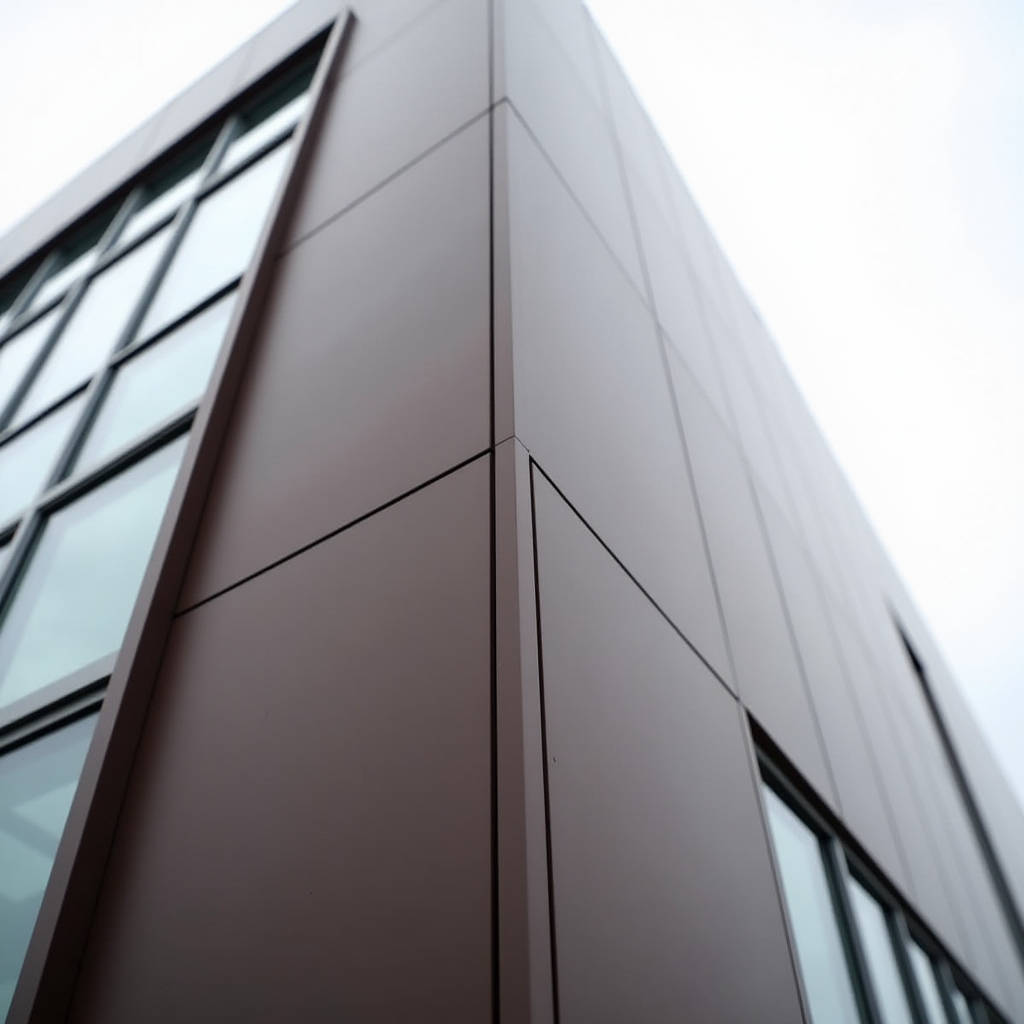
When a facade specification calls for a material that balances moderate strength, reliable corrosion resistance, and the ability to be formed into complex profiles without cracking, 3003 H24 Aluminum enters the conversation. This specific temper of the 3003 alloy sits in a mechanical sweet spot — strain hardened and partially annealed to roughly half the strength between annealed (O) and full-hard (H28) conditions. For curtain wall contractors and building envelope consultants, understanding what that means in practical fabrication and long-term performance terms determines whether a project meets its budget and durability targets.
What 3003 H24 Aluminum Actually Means
The designation "3003 H24" packs three distinct pieces of engineering information into one string. The alloy 3003 belongs to the 3xxx series, where manganese is the primary alloying element at approximately 1.2%, with a small copper addition around 0.12%. This chemistry yields roughly 20% higher strength than commercially pure 1100 aluminum while preserving nearly all of its corrosion resistance and workability. The "H24" temper tells the fabrication story: the material has been strain hardened beyond the H22 condition and then partially annealed, bringing it to a tensile strength range of 145-185 MPa — roughly halfway between the dead-soft O temper and the fully hardened H28 state. This is not a trivial metallurgical detail. It directly governs how the sheet behaves under a press brake, how it responds to welding heat, and whether it can withstand wind loads across a 3-meter span without excessive deflection.
H24 vs. H14: The Temper Decision That Shapes Fabrication
One of the most frequent points of confusion in procurement specifications is the distinction between 3003 H14 and 3003 H24. Both share identical chemical composition. Both are non-heat-treatable. Yet their mechanical behavior diverges in ways that matter at the fabrication bench and on the building face.
H14 temper is strain hardened only — no partial anneal. This produces a material with higher ductility and slightly lower strength than H24. In practical terms, H14 bends more readily around tight radii and is more forgiving during brake forming operations. H24, by contrast, delivers higher yield and tensile strength at the cost of some elongation. The trade-off is quantifiable: H24 typically offers 10-15% higher yield strength, which translates directly into greater resistance to oil canning and wind-induced deflection when the panel is installed. For a 2.5mm thick solid aluminum panel spanning 1200mm between supports, that difference can mean the gap between passing and failing deflection criteria under a 1.5 kPa design wind load.
The choice between these two tempers should not be made by default. Projects with extensive perforation patterns, deep embossing, or tight-radius returns lean toward H14. Projects where flatness retention and span capability dominate — large-format rainscreen panels, long soffit runs, unperforated spandrel zones — benefit from H24. A supplier with deep inventory in both tempers, such as Futeng®, can provide mill test reports that confirm the actual mechanical values rather than relying on nominal ranges.
| Property | 3003 H14 | 3003 H24 | Practical Impact |
|---|---|---|---|
| Tensile Strength (MPa) | 140-180 | 145-185 | H24 offers marginally higher ultimate strength |
| Yield Strength (MPa) | ≥115 | ≥125 | H24 resists permanent deformation earlier |
| Elongation (%) | ≥4 (1.3mm) | ≥3 (1.3mm) | H14 more forgiving on tight-radius bends |
| Hardness (Brinell) | 40 | 42 | Negligible difference for machining |
| Bend Radius (min, 90°) | 1.0t | 1.5t | H24 requires slightly larger tooling |
| Corrosion Resistance | Excellent | Excellent | Equivalent; temper does not affect corrosion |
Corrosion Behavior in Building Envelope Applications
The manganese content in 3003 H24 Aluminum does more than boost strength — it fundamentally alters the corrosion mechanism compared to the 5xxx series alloys that sometimes compete for facade work. Where 5xxx alloys rely on magnesium and can become susceptible to intergranular corrosion and stress corrosion cracking in certain thermal exposure ranges (particularly above 65°C in service), 3003 avoids this vulnerability entirely. The manganese dispersoid particles in the 3003 microstructure create a corrosion potential very close to that of pure aluminum, meaning galvanic coupling with common facade metals is more predictable and less aggressive.
This matters in rainscreen design. A 3003 H24 Aluminum panel fastened to a galvanized steel or aluminum subframe with stainless steel fasteners operates in a relatively benign galvanic environment. The material's natural oxide layer reforms rapidly after cutting or scratching. For coastal installations, the absence of magnesium as a primary alloying element means pitting corrosion progresses more slowly than in 5xxx alternatives, though PVDF or FEVE coating remains essential for direct salt-spray exposure. Testing under ASTM B117 neutral salt spray conditions consistently shows 3003 alloys with PVDF coatings exceeding 4,000 hours without blistering or underfilm corrosion when properly pretreated with a chrome or chrome-free conversion coating per AAMA 2605 requirements.
Forming 3003 H24: What the Press Brake Operator Needs to Know
The H24 temper's partial anneal creates a forming behavior that sits between the easy workability of H14 and the springback challenges of H18. Operators accustomed to H14 will notice three differences immediately. First, springback compensation increases by approximately 2-3 degrees on a 90-degree bend. Second, the minimum bend radius moves from 1.0t to roughly 1.5t for transverse grain direction bends, and closer to 2.0t for longitudinal grain bends. Third, the material exhibits a slightly narrower forming window before edge cracking appears, particularly on parts where the bend line runs parallel to the rolling direction.
For complex facade panels — those with multiple return legs, integrated stiffener ribs, or perimeter hems — these differences demand adjustment in tooling selection and bend sequencing. The payoff comes after installation: the higher yield strength of H24 means the formed geometry holds its shape under thermal cycling with less creep relaxation than H14. Over a 30-year building life in a climate with 40°C seasonal temperature swings, that difference accumulates into measurable panel flatness retention.
Weldability and Joining Methods
3003 H24 Aluminum welds readily with both GTAW (TIG) and GMAW (MIG) processes using 4043 or 1100 filler alloys. The heat-affected zone adjacent to the weld will revert to approximately O-temper properties, creating a localized strength reduction that must be accounted for in structural design. For facade panels where welding is used to attach stiffeners or corner joints, the as-welded strength in the HAZ drops to roughly 110 MPa tensile — a reduction of about 25% from the parent H24 material.
This is why many fabricators prefer mechanical attachment methods for stiffeners on 3003 H24 panels. Adhesive bonding with structural silicone or two-part epoxy tapes preserves the full H24 strength across the entire panel area and eliminates the HAZ softening problem. When welding is unavoidable — such as for watertight corner seams on feature panels — the design should either locate welds away from high-stress regions or increase the local material thickness to compensate. The Aluminum Association publishes comprehensive welding guidelines for 3xxx series alloys that address these design considerations in detail.
Coating Compatibility and Surface Preparation
The surface of 3003 H24 Aluminum accepts the full range of architectural coating systems: PVDF (polyvinylidene fluoride) liquid coatings, FEVE (fluoroethylene vinyl ether) resins, powder coatings based on polyester or fluoropolymer chemistry, and anodizing — though anodizing of 3003 produces a slightly grayish tone compared to the bright finish achievable on 5005 or 6063 alloys. The manganese content that gives 3003 its strength advantage also gives the anodic layer a faint warm-gray cast that some architects embrace as a design feature and others reject in favor of PVDF color consistency.
For PVDF systems applied to 3003 H24 Aluminum, the pretreatment step is critical. A chrome phosphate or zirconium-based conversion coating, applied immediately after alkaline cleaning and deoxidizing, creates the bonding interface that determines whether the coating system reaches its full 20-30 year service life. The AAMA 2605 specification requires minimum 0.8 mil (20 microns) dry film thickness for PVDF on architectural aluminum, though many specifiers now require 1.0-1.2 mils for high-exposure facades. The H24 temper's mechanical properties are unaffected by the coating bake cycle, which typically reaches 230-250°C peak metal temperature for 10-15 minutes — well below the partial anneal temperature that would alter the temper.
Thermal Performance and Panel Flatness
Solid aluminum panels expand and contract with temperature changes at a rate of approximately 23.6 × 10⁻⁶ per °C. For a 3-meter-tall 3003 H24 Aluminum panel experiencing a 60°C surface temperature swing between a winter night and summer afternoon, the thermal movement reaches roughly 4.25mm. The H24 temper's higher yield strength compared to H14 means the panel resists the compressive stresses that cause oil canning — the visible waviness that appears when thermal expansion exceeds the panel's buckling threshold.
The relationship between panel thickness, temper, and oil canning resistance is well documented in engineering literature. A 2.5mm H24 panel offers approximately 20% greater buckling resistance than an equivalent H14 panel, all other variables held constant. This becomes particularly relevant for dark-colored PVDF finishes where surface temperatures can exceed 80°C under direct solar exposure. The ASTM E330 structural test protocol for curtain wall panels evaluates this behavior under combined thermal and wind loads, and the H24 temper consistently outperforms softer tempers in these combined-load scenarios.
Supply Chain Realities: Thickness, Width, and Lead Time
3003 H24 Aluminum is produced primarily as flat-rolled coil and sheet by mills in China, Europe, and North America. Standard coil widths range from 1,000mm to 2,200mm, with thicknesses from 0.5mm to 6.0mm commonly available. For architectural cladding, the relevant thickness range is 2.0mm, 2.5mm, and 3.0mm — with 2.5mm representing the most common specification for rainscreen panels on commercial buildings.
Mill lead times for 3003 H24 coil have fluctuated between 6 and 14 weeks depending on global demand cycles and primary aluminum pricing. The alloy's widespread use in roofing, chemical equipment, and general sheet metal work means it is rarely on allocation, unlike some specialty 5xxx marine grades. However, the H24 temper specifically can sometimes require a mill production minimum, as it is less commonly stocked than H14 in some regional service centers. Working with a supplier that maintains dedicated architectural inventory in H24 temper eliminates this procurement friction. Panel fabricators sourcing from mills that carry both H14 and H24 in standard architectural gauges can typically offer 4-6 week fabrication lead times after coil receipt.
Cost Positioning: Where 3003 H24 Fits in the Budget
On a cost-per-square-meter basis for 2.5mm solid aluminum sheet, 3003 H24 sits between 1100-H14 (lower cost, lower strength) and 5052-H32 (higher cost, higher strength, marine-grade corrosion resistance). The premium for H24 over H14 temper in the same alloy is typically 3-8%, driven by the additional processing step of partial annealing after strain hardening. This is a modest increment for the deflection and flatness benefits it provides.
For a typical mid-rise commercial facade with 2,000 square meters of solid aluminum cladding, the material cost difference between H14 and H24 temper represents approximately 0.3-0.5% of the total installed facade cost — a negligible line item that can determine whether the panels meet the specified flatness tolerance under the project's wind load criteria. The value proposition of H24 is not about saving money on material; it is about avoiding the far greater cost of panel replacement or the professional liability of a facade that exhibits visible oil canning on the day of the owner's final walkthrough.
Specifying 3003 H24 Aluminum Correctly
A competent architectural specification for 3003 H24 Aluminum cladding panels should address at minimum the following points: alloy and temper designation per ASTM B209 or EN 485 standards, thickness with tolerance (typically ±0.08mm for 2.5mm sheet), flatness tolerance (often specified as 0.4% of the panel diagonal or 3mm maximum deviation), coating system per AAMA 2605 with minimum dry film thickness, and mechanical property verification through mill test reports per EN 10204 Type 3.1.
ASTM B209 defines the standard specification for aluminum and aluminum-alloy sheet and plate. All 3003 H24 material supplied for architectural applications should be accompanied by documentation confirming compliance with this standard's chemical and mechanical requirements.
The specification should also address the forming method: whether panels are to be brake-formed, stretch-formed, or routed-and-folded. Each method interacts differently with the H24 temper's springback characteristics. Routing V-grooves on the back face of the panel and folding along the groove line is a common technique for achieving crisp external corners on 3003 H24 without the radius limitations of brake forming. The groove depth must leave approximately 0.5mm of material at the face to maintain a clean corner without cracking — a parameter that the H24 temper's slightly lower elongation compared to H14 makes more critical.
Quality Verification: What to Check Before Installation
Before 3003 H24 Aluminum panels leave the fabrication shop, several verification steps prevent costly site disputes. Mill test reports should be cross-checked against the specified mechanical properties: tensile strength within 145-185 MPa, yield strength at or above 125 MPa, and elongation meeting the minimum for the ordered thickness. Coating thickness should be verified with an eddy-current gauge at multiple points per panel, with readings recorded and submitted as part of the quality documentation. Panel flatness should be checked on a granite surface plate or equivalent reference surface, measuring deviation under the panel's own weight.
For projects in seismic zones or high-wind regions, the panel attachment system deserves equal scrutiny. The higher yield strength of H24 means the panel itself can transmit greater loads to the fasteners and subframe before yielding — a characteristic that must be accounted for in the connection design. The AAMA 508 standard for seismic drift in curtain wall systems provides relevant test protocols for evaluating the interaction between panel stiffness and connection flexibility.
Making the Temper Decision
Selecting 3003 H24 Aluminum over H14 or other tempers is not a decision that should be made in isolation. It requires weighing the specific demands of the project: panel dimensions, wind loads, forming complexity, perforation patterns, coating color, and the architect's flatness expectations. Where large unperforated panels in dark colors face high wind loads, H24 is the technically superior choice. Where deep forming, extensive perforation, or tight-radius bends dominate, H14 may be the more practical option. The best outcome comes from a conversation between the specifier, the fabricator, and the material supplier — one grounded in mill test data rather than catalog nominal values. The temper designation on the purchase order is a small string of characters that carries substantial engineering consequences, and getting it right starts with understanding what H24 actually delivers.