3003 H14 Aluminum Cladding Panels Span Tables Bend Radii and Coating Specs for Facade Engineers
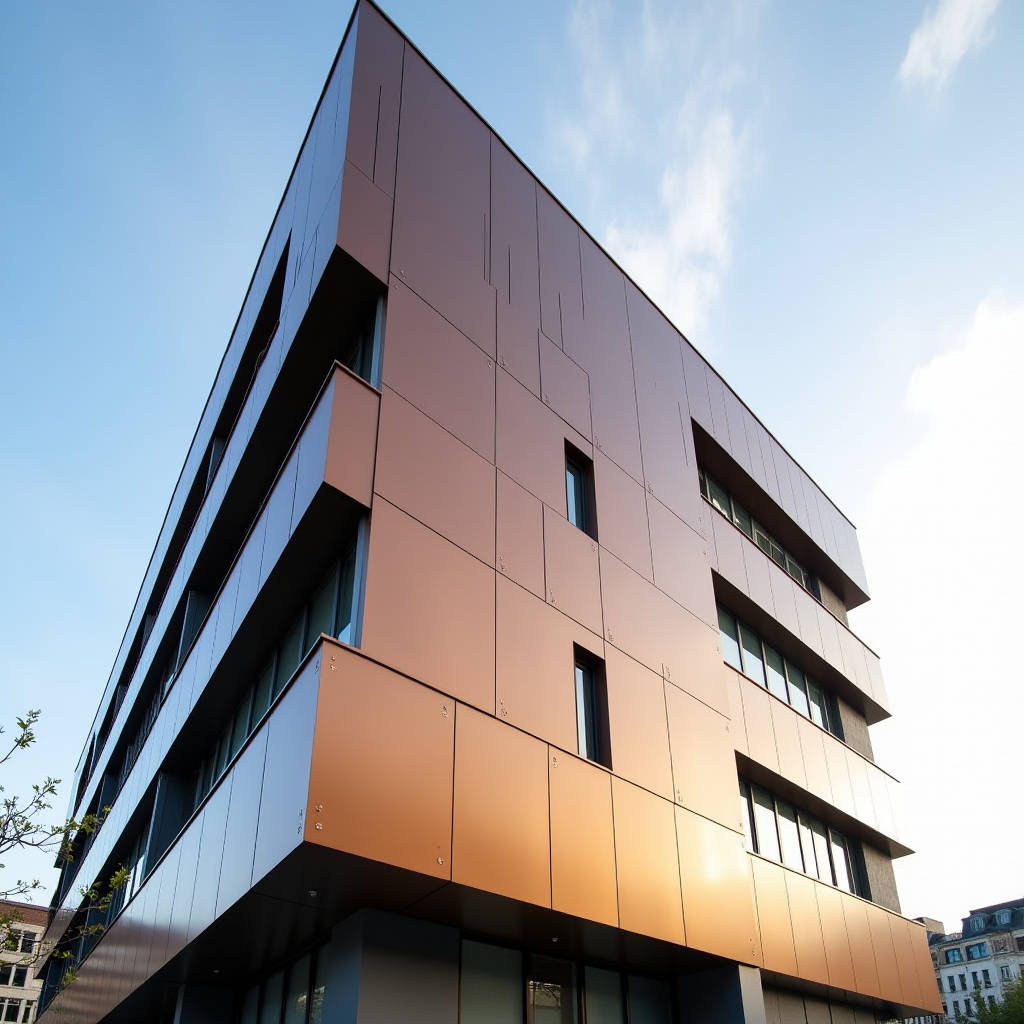
When a facade consultant specifies 3003 H14 Aluminum for a rainscreen cladding system, the decision usually comes down to three factors: formability, corrosion resistance, and cost predictability across large square meter volumes. This alloy sits in a sweet spot. It strain-hardens to roughly 20% greater tensile strength than 1100 aluminum while retaining enough ductility to handle brake-press bending, perforation patterns, and return-flange folding without micro-cracking. For general contractors and cladding fabricators working on mid-rise commercial envelopes, educational facilities, and industrial buildings, 3003 H14 Aluminum delivers a balance that higher-strength 5xxx series alloys sometimes overshoot on price and that 1100-series material undershoots on stiffness.
What 3003 H14 Aluminum Actually Means for Facade Engineering
The designation breaks down into two parts. "3003" identifies the alloy chemistry: essentially commercially pure aluminum with 1.0-1.5% manganese and 0.05-0.20% copper. The manganese addition is what gives the material roughly 20% more strength than 1100 alloy without requiring heat treatment. "H14" describes the strain-hardening condition. The H1 prefix means the material was work-hardened only, with no subsequent thermal treatment. The number 4 indicates a half-hard temper, sitting midway between annealed (O) and full-hard (H18). This matters because H14 temper gives you a yield strength around 145 MPa (21 ksi) and ultimate tensile strength near 165 MPa (24 ksi), per ASTM B209 data. That is enough for cladding panels spanning 600-900 mm between support rails without excessive deflection, yet the material still elongates 8-10% before fracture, which is critical for folded edges and complex geometries.
For facade applications, the non-heat-treatable nature of 3003 is actually an advantage. Heat-treatable alloys like 6061-T6 lose strength in the heat-affected zone after welding. 3003 H14 does not have this problem. Its strength comes from cold work and manganese dispersion, not precipitation hardening. Field modifications, including on-site trimming and minor bending adjustments, do not degrade the material's mechanical properties in the same way they would with a T6 temper.
Corrosion Behavior in Building Envelope Service
Architects specifying rainscreen panels for coastal or industrial environments need to understand where 3003 H14 Aluminum fits on the corrosion resistance spectrum. The alloy performs well in atmospheric exposure, rural environments, and moderate industrial settings. Its manganese content does not create the intergranular corrosion susceptibility that copper-rich 2xxx series alloys exhibit. However, in direct marine splash-zone conditions or heavy chemical exposure, 5000-series alloys with higher magnesium content, such as 5052-H32, offer measurably better resistance to chloride pitting.
The practical distinction for a cladding specification is this: 3003 H14 Aluminum with a properly applied PVDF (polyvinylidene fluoride) coating system, typically a three-coat or four-coat system with a total dry film thickness of 35-45 microns, will perform reliably for decades in most urban and suburban building envelopes. The coating, not the substrate, becomes the primary environmental barrier. For projects within 5 km of breaking surf or in heavy industrial zones with SO₂ emissions, upgrading to 5052 substrate is worth the cost delta. For everything else, 3003 H14 is the rational engineering choice.
Formability Constraints That Affect Panel Design
Cladding fabricators working with 3003 H14 Aluminum need to respect its minimum bend radius. At H14 temper, the recommended inside bend radius for 90-degree cold bending is approximately 1.5 times the material thickness (1.5t) for bend lines perpendicular to the rolling direction, and 2t to 2.5t for bend lines parallel to the rolling direction. Pushing tighter radii risks orange-peel surface texture and, in extreme cases, edge cracking.
This has direct implications for panel joint design. A 2.5 mm thick 3003 H14 panel with a 10 mm return leg requires a minimum inside radius of roughly 3.75 mm, meaning the visible corner radius on the panel edge will be noticeable. Some architects prefer a sharper corner for a crisper shadow line. In those cases, the fabricator can either specify 3003-O temper and accept lower strength, or switch to 5052-H32 which tolerates tighter bends. The trade-off is cost: 5052 typically runs 8-15% higher per kilogram than 3003.
Perforated panels are another area where 3003 H14 Aluminum shows its limits. Open-area ratios above 40% significantly reduce panel stiffness. The remaining metal ligaments between perforations become the weak point. For heavily perforated sunscreen panels, the structural engineer should check that the ligament stress under wind load stays below the material's fatigue endurance limit, which for 3003-H14 is approximately 70 MPa at 5×10⁸ cycles according to available fatigue data. If the numbers do not close, either increase the panel thickness or move to a higher-strength alloy.
Wind Load Performance: Span Tables and Deflection Limits
Wind load governs most rainscreen panel thickness selections. The table below provides calculated maximum spans for 3003 H14 Aluminum solid cladding panels under uniform wind pressure, based on a simply supported two-span continuous condition with a deflection limit of L/175, which aligns with typical facade industry practice for visible panel surfaces.
| Panel Thickness | Wind Load 1.0 kPa | Wind Load 1.5 kPa | Wind Load 2.0 kPa | Wind Load 2.5 kPa |
|---|---|---|---|---|
| 2.0 mm | 820 mm | 710 mm | 640 mm | 590 mm |
| 2.5 mm | 960 mm | 830 mm | 750 mm | 690 mm |
| 3.0 mm | 1,080 mm | 940 mm | 850 mm | 780 mm |
These spans assume 3003 H14 Aluminum with a modulus of elasticity of 69 GPa and a design yield strength of 145 MPa, with a partial safety factor of 1.2 applied to the yield. Values are conservative and should be verified by a licensed structural engineer for the specific project geometry, support conditions, and local building code requirements. The numbers do, however, give procurement teams a quick reference for budgeting panel thickness against anticipated wind zones.
For projects requiring spans beyond these values, increasing panel thickness is the most straightforward solution. Alternatively, adding intermediate stiffeners or switching to a cassette-style panel system with folded returns on all four edges can increase the effective section modulus without changing the base material thickness.
Coating System Compatibility and Surface Preparation
3003 H14 Aluminum accepts the full range of architectural coating systems. The substrate's manganese content does not create adhesion problems with PVDF, polyester powder, or anodizing. However, surface preparation is non-negotiable. The mill finish surface carries a thin oxide layer and residual rolling lubricants. A proper pretreatment sequence for architectural coating involves alkaline degreasing, rinsing, chromate conversion coating or a chromium-free alternative per ASTM D1730 or AAMA 2605, followed by drying before the primer coat is applied.
PVDF coatings dominate the high-end architectural market. AAMA 2605-compliant systems use a minimum 70% PVDF resin content in the color coat, with total dry film thickness of at least 30 microns for a two-coat system and 35-40 microns for a three-coat system. The primer layer, typically 5-10 microns, provides the primary corrosion protection and adhesion bridge. The color coat carries the pigment and PVDF resin for UV resistance. A clear topcoat, when specified, adds 10-15 microns for additional gloss retention and dirt-shedding properties.
For 3003 H14 Aluminum panels in non-visible areas, such as soffit liners or plant room cladding, a polyester powder coating (Qualicoat Class 1 or AAMA 2603 equivalent) is a cost-effective alternative. The service life expectation drops from 30+ years for PVDF to roughly 15-20 years for polyester powder in exterior exposure, primarily due to chalking and gloss degradation rather than corrosion failure of the substrate.
Thermal Movement and Joint Design
Aluminum expands at roughly 2.4 mm per meter per 100°C temperature change. A 3-meter-long 3003 H14 Aluminum panel subjected to a 70°C temperature swing between winter night and summer solar exposure will move approximately 5 mm. Joint design must accommodate this movement without transferring stress to the panel corners or fasteners.
Open-joint rainscreen systems handle thermal movement naturally because each panel is independently supported. The joint width, typically 12-20 mm, provides ample room for expansion. Pressure-equalized systems with gaskets require more careful detailing. The gasket must remain engaged across the full range of panel movement, and the panel fastener holes should be slotted or oversized to allow the panel to float relative to the support framing.
Fabricators should also account for the difference in thermal expansion between the aluminum panel and the support system, which is often galvanized steel or aluminum extruded profiles. Steel supports expand at roughly half the rate of aluminum. If the panel is rigidly fixed at both ends, the differential expansion can induce buckling or fastener tear-out. The standard practice is to use fixed points at one end of the panel and sliding connections at the other, with the sliding connection designed to accommodate the full differential movement.
Weldability and Field Modification
3003 H14 Aluminum welds readily with both TIG (GTAW) and MIG (GMAW) processes using 4043 or 1100 filler alloys. The heat of welding anneals the material in the heat-affected zone, reducing the local strength to approximately the O-temper condition. For cladding panels, this is rarely a structural concern because welds are typically used for corner joints on folded panels, where the geometry provides stiffness that compensates for the localized strength reduction.
On-site modifications to 3003 H14 panels are straightforward. Cutting with a circular saw fitted with a carbide-tipped blade designed for non-ferrous metals produces clean edges. Deburring with a fine file or abrasive pad removes the sharp edge. Touch-up of cut edges with a zinc-rich primer or approved coating repair kit prevents localized corrosion initiation. No post-cut heat treatment is required, unlike with heat-treatable alloys.
This field-friendly characteristic is one reason why 3003 H14 Aluminum remains a preferred substrate for cladding fabricators. The material is forgiving. It does not require the same level of process control during fabrication as 6061-T6 or 7075-T6. It can be sheared, punched, notched, and bent on standard sheet metal equipment without special tooling or thermal processes.
Supply Chain and Procurement Considerations
3003 H14 Aluminum sheet is produced by multiple mills globally, with standard widths ranging from 1,000 mm to 2,000 mm and lengths up to 6,000 mm. Thickness tolerances for sheet products follow ASTM B209 or EN 485 standards. For cladding applications where panel flatness is critical, specifying a flatness tolerance of 0.5% of the panel diagonal or better is recommended. Mill finish sheet typically meets this requirement, but fabricators should confirm with the mill certificate.
Lead times for standard mill finish 3003 H14 sheet are typically 4-8 weeks from major distributors, depending on thickness and quantity. Custom widths or non-standard thicknesses may require mill production runs with lead times extending to 12-16 weeks. Procurement managers should factor this into project schedules, particularly for large facade packages requiring 50,000 square meters or more of finished panel area.
For projects in Asia-Pacific and Middle East markets, suppliers like Futeng® have established supply chains for 3003 H14 Aluminum cladding panels with integrated fabrication and coating capabilities. The advantage of working with a single-source supplier for material, fabrication, and coating is that the quality control chain remains unbroken. The panel fabricator cannot blame the coater, and the coater cannot blame the mill, because one entity owns the entire process.
Cost Structure: Where the Money Goes
Understanding the cost breakdown of a finished 3003 H14 Aluminum cladding panel helps procurement teams negotiate and budget realistically. Raw aluminum sheet typically accounts for 35-45% of the finished panel cost, depending on thickness and market conditions. Fabrication, including cutting, bending, punching, and assembly, represents 25-35%. Coating, whether PVDF or polyester powder, adds 15-25%. The remaining 5-10% covers packaging, quality control documentation, and logistics.
Material yield is a significant cost driver. A standard 1,500 mm × 3,000 mm sheet yields approximately 4.5 square meters of gross area, but the net usable area after nesting panel shapes and accounting for edge trim may be only 3.8-4.2 square meters. A yield loss of 10-15% is typical. Complex panel geometries with multiple cutouts, irregular shapes, or high perforation ratios push yield loss higher. Fabricators should provide a nesting layout and yield calculation as part of their shop drawings so the procurement team can verify material quantities.
ASTM Standards and Specification Language
Writing a tight specification for 3003 H14 Aluminum cladding panels prevents substitution of lower-grade material. The key standards to reference include:
- ASTM B209 — Standard specification for aluminum and aluminum-alloy sheet and plate. This covers chemical composition limits, mechanical properties, and dimensional tolerances for 3003-H14 sheet.
- AAMA 2605 — Voluntary specification for high-performance organic coatings on aluminum extrusions and panels. This is the top-tier PVDF coating standard with the most stringent requirements for color retention, chalk resistance, and gloss retention after accelerated weathering.
- EN 485 — European standard for aluminum sheet, strip, and plate. Equivalent to ASTM B209 for projects using Eurocodes.
- ASTM E330 — Standard test method for structural performance of exterior windows, doors, skylights, and curtain walls by uniform static air pressure difference. Applicable for verifying panel performance under simulated wind load.
The specification should state: "Solid aluminum cladding panels shall be fabricated from 3003-H14 aluminum sheet conforming to ASTM B209, with a minimum thickness of [X] mm. Panels shall receive a factory-applied PVDF coating system conforming to AAMA 2605, consisting of a chromate conversion pretreatment, primer, color coat with minimum 70% PVDF resin, and [optional] clear topcoat." This language leaves no room for material substitution.
Common Failure Modes and How to Prevent Them
Oil canning, the wavy distortion visible on flat panel surfaces, is the most common complaint with metal cladding. It is not a material defect but a result of residual stresses from the rolling process, compounded by thermal expansion restraint. 3003 H14 Aluminum is not immune to oil canning, though its moderate yield strength and good ductility mean it is somewhat less prone than higher-strength tempers. Mitigation strategies include specifying a panel thickness-to-span ratio of at least 1:250, adding stiffener ribs or break shapes, and ensuring the support system allows free thermal movement.
Galvanic corrosion occurs when aluminum is in direct contact with a more noble metal in the presence of an electrolyte. Copper, brass, and carbon steel are all cathodic to aluminum. Stainless steel fasteners are generally acceptable, but in coastal environments, even the small galvanic potential between 3003 aluminum and 304 stainless steel can drive corrosion. Using 316 stainless steel fasteners with a nylon isolation washer or applying a heavy-duty anti-seize compound to the fastener threads minimizes the risk.
Coating delamination is almost always a surface preparation failure. If the chromate conversion coating is applied over a contaminated surface, or if the pretreatment chemicals are not properly rinsed, the paint bond will fail. The specification should require the fabricator to provide pretreatment process control records and coating adhesion test results per ASTM D3359 (cross-hatch adhesion test) for each production batch.
Making the Right Call for Your Project
3003 H14 Aluminum earns its place in the cladding industry through a combination of sensible economics and predictable engineering behavior. For projects where the design wind pressure does not demand spans beyond 1,000 mm, where the architectural geometry involves folded panels with moderate bend radii, and where the environmental exposure is urban, suburban, or light industrial, this alloy is the default choice for good reason. It welds without post-weld treatment, coats reliably with standard pretreatment processes, and handles thermal movement without exotic joint detailing.
For projects pushing the boundaries on span, perforation ratio, or marine exposure, the engineering team should evaluate 5052-H32 as the next step up. The cost increase is real but manageable, typically 8-15% on the raw material. For interior applications or non-visible exterior elements, 3003-H14 with a polyester powder coating offers a cost-effective solution that still meets the mechanical requirements.
The key is to match the material to the specific demands of the project, not to default to a single alloy for every application. 3003 H14 Aluminum covers a broad middle ground, and that is precisely its value. It is not the strongest, not the cheapest, and not the most corrosion-resistant, but it is often the right answer when all three factors are weighed together.