1100 H24 Aluminum for Solid Cladding Panels Engineering Specs and Shop Floor Reality
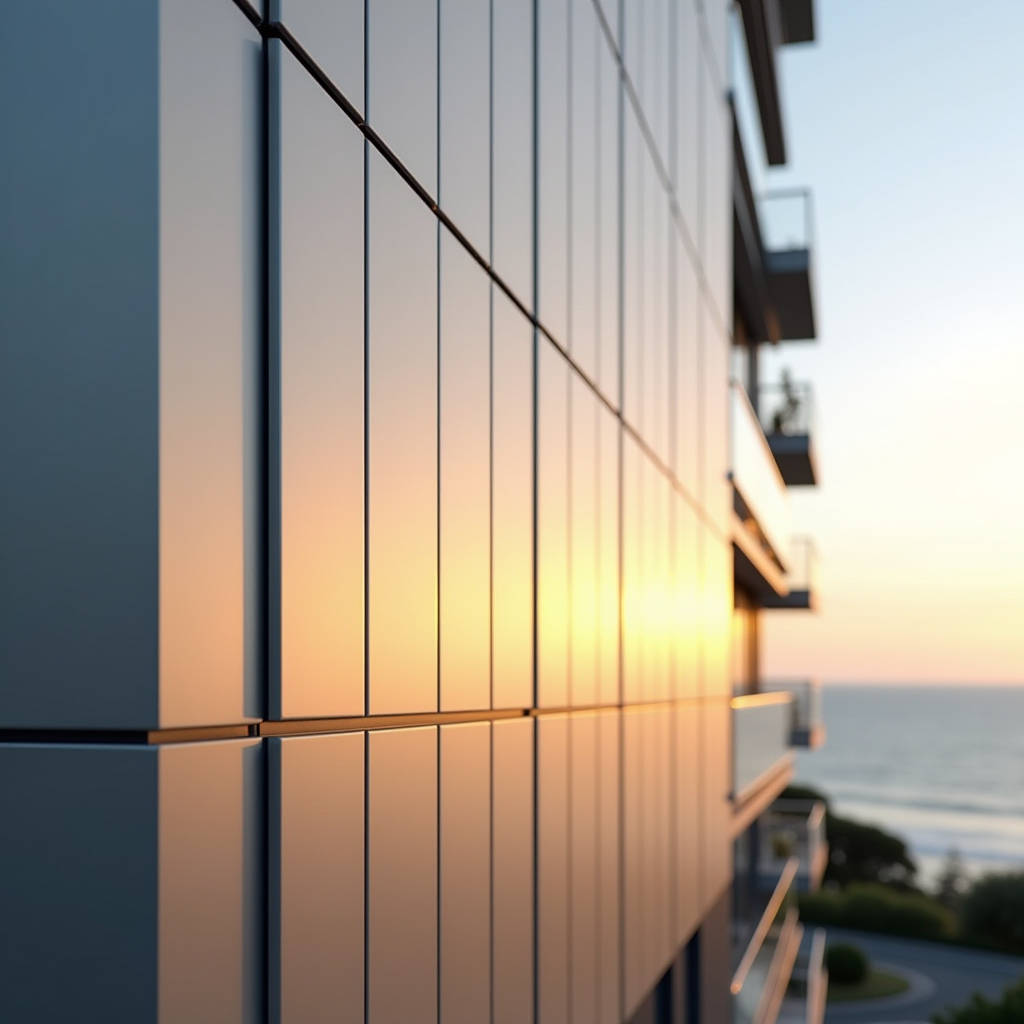
When a project specification calls for a cladding material that can be bent into complex geometries without cracking, welded on site without sacrificing corrosion resistance, and left exposed to coastal air for decades without pitting, 1100 H24 Aluminum enters the conversation. This commercially pure grade—99.0% minimum aluminum content—sits in a narrow band of the temper spectrum that makes it genuinely useful for architectural sheet metal work. Unlike the harder H18 or fully annealed O tempers, H24 gives you enough stiffness to hold a formed shape while retaining enough ductility to survive the brake press. For facade engineers and cladding fabricators, the question is not whether 1100 aluminum works, but how to specify it correctly so the installed panels perform as the datasheet promises.
Where 1100 H24 Aluminum Sits in the 1000 Series Landscape
The 1000 series covers commercially pure aluminum grades, and the distinctions matter more than many specifiers realize. 1100 is the workhorse: 99.0% aluminum minimum, with small additions of iron and silicon that bring just enough strength for structural sheet applications without compromising the corrosion resistance that makes pure aluminum valuable in the first place. 1050 (99.5% minimum) is slightly purer and softer. 1200 (99.0% minimum but tighter iron limits) splits the difference. For cladding, 1100 in the H24 temper delivers a measured balance—strain hardened and then partially annealed to roughly half the strength of full-hard H28. The result is a tensile strength in the range of 110–145 MPa and elongation around 10–15%, depending on thickness. That elongation figure is the key. It means a 3.0mm sheet can be routed and folded into a cassette profile without micro-cracking at the bend radius, something that harder tempers in the 3000 or 5000 series occasionally struggle with on tight radii.
H24 Temper Decoded: What the Mill Report Actually Tells You
The H24 designation is not arbitrary. Per ASTM B209 and EN 485, the "H2" prefix means the material has been strain hardened and then partially annealed. The "4" suffix indicates the final strength is roughly halfway between O (annealed, dead soft) and H28 (full hard). For the fabricator, this translates to a material that arrives at the shop flat, with minimal residual stress, and bends predictably. A sheet in the H24 temper will have a yield strength around 75–105 MPa. Compare that to H14 (strain hardened only, no partial anneal), which can be springier and more prone to dimensional instability after routing. The partial anneal step in H24 production relieves some of the internal stresses introduced during cold rolling, which is why panels formed from H24 stock tend to stay flat after fabrication—a non-negotiable requirement for rainscreen cladding where oil-canning is a constant concern.
Corrosion Resistance: The Real Reason Architects Specify 1100
Aluminum's corrosion resistance comes from the oxide layer that forms spontaneously on exposure to air. In alloyed grades—think 3003, 5052, 6061—the alloying elements (manganese, magnesium, silicon) can create galvanic micro-cells within the metal matrix, slightly reducing the protective quality of the oxide film. 1100, with its minimal alloying content, forms a more uniform and tenacious oxide layer. This is not marketing language; it is visible in salt spray testing per ASTM B117, where 1100 consistently outperforms 3003 and 5052 in terms of pit depth and density after 1,000+ hours of exposure. For buildings within 5 km of a coastline, or industrial facilities where airborne chlorides or sulfur compounds are present, this difference is not academic. A 2.5mm 1100 H24 Aluminum panel with a properly specified PVDF coating system (minimum 70% Kynar 500® resin, 30–35 microns dry film thickness per AAMA 2605) will resist filiform corrosion at cut edges and fastener holes far better than an alloyed substrate under the same coating.
Formability Limits and Shop Floor Realities
Ask any fabricator who has worked with both 1100-H24 and 5052-H32, and they will tell you the same thing: 1100 is easier on tooling and more forgiving of tight radii. The minimum bend radius for 1100-H24 is approximately 1t (one times the material thickness) for a 90-degree bend, and 1.5t for 180-degree hemming. In practice, a 3.0mm sheet can be bent to a 3.0mm inside radius without cracking. This matters when you are designing cassette panels with return legs, or when the architect wants a sharp, crisp corner on a folded panel. The trade-off is strength. At roughly 110 MPa ultimate tensile, 1100-H24 is about 40% weaker than 5052-H32. For a rainscreen panel spanning 600mm between support rails, this is rarely a limiting factor—wind load deflection calculations typically govern long before ultimate strength does. But for large-format panels (1,200mm+ spans) in high-wind zones, the section modulus of the panel profile must be checked carefully. A deeper return leg or an intermediate stiffener may be needed, and the incremental fabrication cost of that stiffener should be weighed against the material cost savings of using 1100 over 5052.
Welding 1100 H24: What the Specifier Needs to Know
One of the underappreciated advantages of 1100 aluminum in cladding fabrication is weldability. The low alloy content means the heat-affected zone (HAZ) does not suffer from the same degree of strength loss seen in heat-treatable alloys like 6061. When TIG welding 1100-H24 with 1100 or 4043 filler rod, the HAZ will soften to roughly the O temper condition—around 60–70 MPa tensile. For a welded corner joint on a cassette panel, this is typically acceptable because the weld itself is not the primary load path; the mechanical fixings to the substructure carry the wind loads. The real benefit is that 1100 filler rod matches the base metal composition, so the weld bead has the same corrosion resistance as the parent material. This is critical for external cladding where a dissimilar filler (like 5356 on a 5000-series panel) could create a galvanic couple at the weld, leading to preferential corrosion of the bead over time. For projects where panels must be welded on site—say, to close a corner joint that cannot be mechanically fixed—1100 H24 Aluminum simplifies the welding procedure and reduces long-term corrosion risk.
Surface Finish Options and Coating Adhesion
The surface of 1100 aluminum accepts a wide range of finishes, and the choice of pretreatment has a direct impact on coating longevity. For architectural PVDF coatings, the standard pretreatment is a chrome-based conversion coating per ASTM D1730 Type B, Method 5, which creates a chemical bond between the metal and the primer. 1100's pure surface responds well to this process, yielding excellent dry and wet adhesion values. An alternative is a titanium-zirconium pretreatment, which is chrome-free and increasingly specified in European projects under the REACH regulation. Data from accelerated weathering (QUV-B, 4,000 hours) shows that PVDF on 1100 with either pretreatment system retains over 90% of its original gloss when the coating is applied at the correct film thickness. For anodized finishes, 1100 takes a clear anodic coating beautifully, producing a bright, reflective surface. However, anodizing 1100 for exterior use requires a minimum coating thickness of 15 microns (AA-M10C12A21 or equivalent) and an effective sealing process; otherwise, the anodic pores will trap atmospheric contaminants and the surface will dull within 2–3 years.
| Property | 1100 H24 | 3003 H14 | 5052 H32 |
|---|---|---|---|
| Tensile Strength (MPa) | 110–145 | 140–180 | 210–260 |
| Yield Strength (MPa) | 75–105 | 115–145 | 160–200 |
| Elongation (%) | 10–15 | 8–12 | 7–12 |
| Min. Bend Radius (90°) | 1.0t | 1.5t | 2.0t |
| Salt Spray Resistance (1,000 hrs, rating) | 9–10 (no pitting) | 7–8 (minor pitting) | 6–7 (moderate pitting) |
| Weldability (TIG, matching filler) | Excellent | Good | Good (use 5356 filler) |
| Relative Material Cost (per kg) | $3.50–4.20 | $3.80–4.60 | $4.20–5.00 |
Thickness Selection for Solid Cladding Panels
Solid aluminum cladding panels are typically specified at 2.0mm, 2.5mm, or 3.0mm thickness. The choice depends on panel dimensions, wind load, and the attachment system. A 2.0mm 1100 H24 Aluminum panel is suitable for small-format applications—say, 600mm × 600mm soffit panels or column covers—where spans are short and wind loads are moderate. For a standard rainscreen panel measuring 1,200mm × 600mm with a four-side mechanically fixed cassette system, 2.5mm is the industry default. At this thickness, deflection under a 2.0 kPa wind load (typical for mid-rise buildings in Exposure B) stays within L/180, which is the commonly accepted limit for visually flat cladding. For large-format panels exceeding 1,500mm in any dimension, or for buildings in hurricane-prone regions where design wind pressures can reach 4.0 kPa, 3.0mm is the safer choice. The cost increment from 2.5mm to 3.0mm is roughly 18–22% on a per-square-meter basis, but the stiffness gain (proportional to the cube of thickness) is approximately 73%, so the engineering case often closes quickly.
Wind Load Deflection: A Quick Calculation Framework
For a simply supported solid aluminum panel under uniform wind pressure, the maximum deflection at the center can be estimated using classical plate theory. For a rectangular panel with dimensions a × b (where a is the longer side), the deflection δ is approximately:
δ = (k × p × a⁴) / (E × t³)
Where k is a coefficient depending on the aspect ratio and boundary conditions (typically 0.004–0.007 for four-side simply supported panels), p is the design wind pressure in kPa, E is the elastic modulus of aluminum (approximately 69 GPa), and t is the panel thickness in mm. For a 1,200mm × 800mm × 2.5mm 1100 H24 Aluminum panel under 2.0 kPa, the calculated deflection is roughly 3.8mm, or L/315, which is well within the L/180 criterion. This is the kind of back-of-the-envelope check that a facade engineer should run before finalizing the panel specification. The full analysis per ASTM E1300 or local building code will account for partial fixity at the cassette edges, which further reduces deflection, but the simple model is a useful sanity check.
Thermal Movement and Joint Design
Aluminum expands and contracts at roughly 23 × 10⁻⁶ per °C. For a 3-meter-long panel subjected to a 60°C temperature swing (from -10°C in winter to 50°C surface temperature in direct summer sun), the total movement is about 4.1mm. This is not a trivial number. Open-joint rainscreen systems accommodate this movement by design, but for sealed-joint systems, the sealant must be selected and detailed to handle the movement without cohesive or adhesive failure. A joint width of 15–20mm is typical for panels up to 3 meters long, with a backing rod and a low-modulus silicone sealant capable of ±25% movement accommodation. 1100 H24 Aluminum has the same coefficient of thermal expansion as other aluminum alloys, so no special provisions are needed beyond standard good practice. However, the lower yield strength of 1100-H24 means that thermal stresses are less likely to cause permanent deformation (buckling) compared to a higher-strength alloy, which is a subtle but real advantage in hot climates.
Supply Chain Realities: Sourcing 1100 H24 Aluminum Sheet
Not every mill runs 1100 in H24 temper as a standard stock item. The most commonly available tempers for 1100 sheet are H14 (strain hardened only) and O (fully annealed). H24 requires the additional partial annealing step, which adds cost and lead time. For cladding fabricators, this means planning ahead. Typical mill lead times for 1100 H24 sheet in thicknesses from 1.5mm to 4.0mm range from 4 to 8 weeks, depending on mill location and order volume. Width availability is another consideration: many mills can supply 1100 H24 in widths up to 1,600mm, but wider sheets (2,000mm+) may require a special production run. For projects in North America, Europe, or the Middle East, working with a supplier that maintains buffer stock of 1100 H24 Aluminum in common cladding thicknesses can cut lead times significantly. Futeng® is one such supplier that carries 1100 H24 sheet in 2.0mm, 2.5mm, and 3.0mm as standard stock, with PVDF coating applied in-house to AAMA 2605 specifications, which eliminates the need to coordinate between a metal supplier and a separate coating applicator.
Cost Drivers Beyond the Mill Price
The per-kilogram price of 1100 aluminum is generally lower than 3003 or 5052, but the total installed cost of a cladding system depends on more than the raw material. Fabrication complexity is the biggest variable. Because 1100-H24 forms easily, cycle times on the CNC punch and brake press are shorter, and tool wear is lower. A fabricator running 1100-H24 can typically process 15–20% more panels per shift compared to 5052-H32, which translates directly to lower fabrication cost per square meter. Coating costs are comparable across alloys when the same PVDF system is applied. The net result is that a 2.5mm PVDF-coated 1100 H24 Aluminum cassette panel, fully fabricated and ready to install, typically costs 8–12% less than an equivalent 5052-H32 panel, with no meaningful sacrifice in performance for most architectural applications. The savings become more pronounced on projects with complex geometries—curved panels, tapered panels, panels with multiple folds—where the formability advantage of 1100 pays off in reduced scrap rates and fewer rejected parts.
When 1100 H24 Is the Right Call—and When It Is Not
1100 H24 Aluminum is the right choice for architectural cladding when corrosion resistance and formability are the primary design drivers. This covers most rainscreen applications, column covers, soffit panels, interior wall cladding, and decorative screens. It is also the preferred substrate for anodized finishes where a bright, reflective surface is desired. The cases where 1100 is not the best choice are structural applications where the panel itself carries significant load—think large-format panels with minimal support framing, or panels that double as shear diaphragms. For those, 5052-H32 or even 6061-T6 (if welding is not required) are more appropriate. The key is to match the alloy to the actual engineering demands, not to default to a "stronger is better" mindset. Over-specifying the alloy adds cost without adding value, and in some cases—like coastal environments where 5052's magnesium content slightly reduces corrosion resistance—it can actually hurt performance.
Specifying 1100 H24 Aluminum: A Practical Checklist
For architects and spec writers putting together a cladding package, the following points should be covered in the specification to ensure the delivered product meets expectations:
- Alloy and temper: Specify "Aluminum 1100-H24 per ASTM B209" (or EN 485-2 for European projects). Do not leave the temper blank; "1100" alone is insufficient and may result in O temper material being supplied.
- Thickness tolerance: Reference the appropriate standard (ASTM B209 or EN 485-4) and specify whether the tolerance applies to the bare metal or the finished coated product. PVDF coating adds approximately 30–35 microns per side, which is negligible for thickness tolerance purposes but matters for panel weight calculations.
- Coating system: For exterior applications, specify a PVDF coating meeting AAMA 2605, with a minimum of 70% Kynar 500® or Hylar 5000® resin, dry film thickness 30–35 microns, applied over a chrome or chrome-free pretreatment. Include gloss level (typically 25–35% for a matte finish, 60–80% for a medium gloss).
- Flatness: Reference a flatness tolerance—typically 0.4% of the panel diagonal for rainscreen panels, measured as the gap under a straight edge placed on the panel surface.
- Weld procedure: If site welding is required, specify the filler alloy (1100 or 4043), the welding process (TIG), and the post-weld treatment (clean weld bead, remove any discoloration, apply touch-up coating per the coating manufacturer's instructions).
Quality Verification: What to Check on the Shop Drawing
Before panels go into production, the shop drawing review is the last chance to catch specification errors. Confirm that the alloy and temper are called out on every panel type. Check the bend radii against the minimum values for 1100-H24 (1t for 90° bends). Verify that the panel thickness is appropriate for the spans and wind loads shown on the structural calculations. Look at the joint details: are the joints wide enough to accommodate thermal movement? Is the sealant compatible with the PVDF coating? These are the details that separate a cladding system that performs for 30 years from one that starts showing problems in year three. A reputable fabricator will include all of this on the shop drawings, and a supplier like Futeng® that handles both the metal supply and the coating application can provide a single-source mill test report and coating certificate, simplifying the documentation trail for the project's quality assurance file.
Long-Term Performance: What 20 Years of Exposure Looks Like
Data from buildings clad in 1100 aluminum with PVDF coatings, now 20–25 years old, shows that the material holds up remarkably well. In a study of coastal buildings in Southeast Asia, 1100-H24 panels with AAMA 2605-compliant PVDF coatings showed average gloss retention of 65–75% after 20 years, with no significant chalking or color fade beyond 5 Delta E units. The same study found no instances of perforating corrosion, even on panels within 500 meters of the shoreline. The oxide layer on 1100 aluminum, combined with the PVDF barrier, creates a two-stage defense against the environment. This is not a theoretical benefit; it is visible on buildings that have been standing for two decades. For a building owner, the lifecycle cost of a 1100 H24 Aluminum cladding system—factoring in zero recoating, minimal maintenance beyond periodic cleaning, and a service life that can exceed 30 years—is among the lowest of any architectural metal cladding option.
Specifying 1100 H24 Aluminum for solid cladding panels is a decision grounded in material science, not marketing. The H24 temper delivers the right balance of formability and strength for architectural sheet metal work. The 99.0% minimum aluminum content provides corrosion resistance that alloyed grades cannot match. The cost is competitive, the supply chain is established, and the long-term performance data is available. For the facade engineer or procurement manager evaluating cladding options, the question is not whether 1100-H24 can do the job. It is whether the specification is written tightly enough to guarantee that the panels arriving on site actually meet the standard that the datasheet describes.