1100 H14 Aluminum Facade Panels Corrosion Performance and Fabrication Guide for Coastal Envelopes
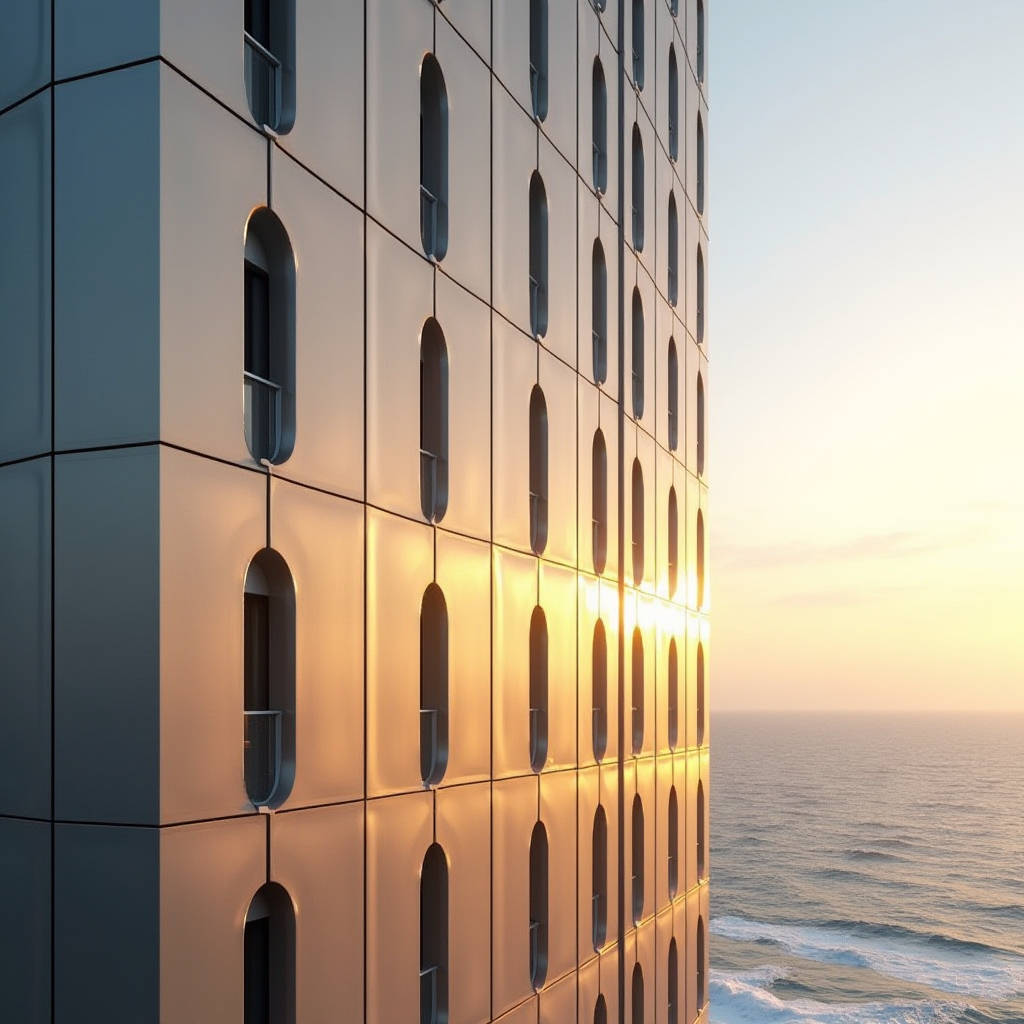
When a project specification calls for a facade material that must withstand decades of coastal salt spray without pitting, form into complex parametric geometries without cracking, and arrive on site with mill certifications that satisfy a third-party inspector, 1100 H14 Aluminum enters the conversation. This commercially pure grade—99.0% minimum aluminum content by weight—occupies a narrow but critical niche in the building envelope sector. It is not the strongest alloy available. It is not the cheapest per kilogram. But for applications where corrosion resistance and formability override tensile strength requirements, 1100 H14 aluminum sheet delivers performance characteristics that no heat-treatable alloy can replicate. Understanding exactly where this material fits, how its H14 strain-hardened temper behaves during fabrication, and what it costs to specify over a 30-year building lifecycle is the difference between a facade that performs and one that generates punch lists.
What 1100 H14 Aluminum Actually Is
1100 H14 Aluminum belongs to the 1000 series, defined by a minimum 99.0% aluminum content with trace additions of iron and silicon. The "H14" temper designation means the material has been strain-hardened to approximately half the strength of full-hard (H18) condition, then partially annealed. The result is a sheet product with an ultimate tensile strength around 110–130 MPa and yield strength near 95–105 MPa, depending on thickness. Elongation typically falls between 9% and 16% in 50mm gauge length, which puts it in a sweet spot—strong enough to hold a formed shape, ductile enough to accept tight-radius bends without orange-peeling or micro-cracking at the outer fiber.
This is not a heat-treatable alloy. Unlike 6061-T6 or 5052-H32, 1100 H14 gains its mechanical properties exclusively through cold work. The practical implication for a facade fabricator: if you anneal it during welding or forming, you lose the H14 temper permanently. There is no solution heat treatment or aging process to restore it. This single fact shapes every fabrication decision downstream.
Why Facade Engineers Specify 1100 H14 for Coastal and Industrial Envelopes
The primary driver behind specifying 1100 H14 Aluminum for building exteriors is corrosion performance. In accelerated salt spray testing per ASTM B117, 1100 alloy consistently outperforms 3003, 5052, and 6061 in resistance to pitting and intergranular attack. The reason is straightforward: with fewer alloying elements, there are fewer galvanic micro-cells within the metal matrix. Copper, which is present in 6061 at 0.15–0.40%, is essentially absent here (0.05–0.20% max, typically much lower). Zinc, magnesium, and manganese—all common in other architectural alloys—are similarly minimized.
For a project manager overseeing a 40-story tower in Jeddah, Singapore, or Miami, this translates to measurable reductions in long-term facade maintenance. The anodized layer on 1100 H14 forms more uniformly and remains more continuous over decades than on copper-bearing alloys. When PVDF coatings are applied—typically a three-coat system with 70% PVDF resin content at 25–35 microns dry film thickness—the substrate's inherent corrosion resistance acts as a secondary defense if the coating is ever scratched or abraded during installation.
Real-World Performance Data
Independent testing conducted on 2.0mm and 3.0mm 1100 H14 panels exposed to the ASTM G85-A5 cyclic acidified salt fog test (a more aggressive protocol than neutral salt spray) showed maximum pit depths under 50 microns after 1,000 hours, compared to 180–220 microns for 6061-T6 under identical conditions. For a building owner calculating lifecycle costs, this difference can mean the delta between first recoating at year 25 versus year 12.
Formability: The Parameter That Changes Fabrication Economics
1100 H14 Aluminum work-hardens more slowly than any other aluminum alloy commonly used in architectural sheet metal. This property is not incidental—it directly determines how many forming operations a fabricator can perform before the material must be annealed, and whether complex geometries can be achieved in a single press cycle.
Consider a typical rainscreen panel with a 25mm return leg and a 15mm stiffening rib formed into the face. In 5052-H32, the rib might require a minimum 3T bend radius (three times material thickness) to avoid stress cracking. In 1100 H14, a 1T radius is achievable in 2.0mm gauge, and 1.5T in 3.0mm. The tighter radius capability means crisper panel edges, narrower shadow gaps, and more precise alignment across the facade grid—details that architects notice and contractors price.
The slower work-hardening rate also reduces springback. When a 1100 H14 sheet is bent to 90 degrees, the elastic recovery is typically 2–4 degrees, versus 5–8 degrees for 5052-H32. For a CNC press brake operator running 200 panels per shift, that difference eliminates the need for over-bend compensation adjustments and reduces dimensional inspection time.
Welding 1100 H14 on the Shop Floor
1100 alloy is universally recognized as the most weldable aluminum grade. Both TIG (GTAW) and MIG (GMAW) processes produce sound welds with 1100 filler rod, and the fusion zone retains ductility without the hot-short cracking that plagues 6061 when welded without proper preheat. However, the H14 temper is lost in the heat-affected zone (HAZ). Post-weld tensile strength in the HAZ drops to approximately 90 MPa—the annealed (O) condition.
For a facade subcontractor, this means welded connections on 1100 H14 panels must be designed with the HAZ strength reduction factored into structural calculations. A common approach: locate welds in low-stress zones of the panel, use intermittent stitch welds rather than continuous seams, and specify mechanical fasteners or adhesive bonding at primary load-transfer points. Some fabricators, including those working with Futeng® mill-certified stock, pre-form panels to minimize on-site welding entirely, relying on interlocking joinery and stainless steel clip systems.
Coating Compatibility and Surface Preparation
The surface of 1100 H14 Aluminum accepts conversion coatings with exceptional uniformity. Chromate conversion coating per MIL-DTL-5541 Type I Class 1A produces a golden iridescent film that serves as both corrosion protection and adhesion promoter for subsequent PVDF or polyester powder coatings. The absence of copper in the alloy eliminates the risk of localized galvanic cells that can cause filiform corrosion under organic coatings—a failure mode well-documented in 2000-series and 7000-series alloys but virtually absent in 1100.
For anodized architectural finishes, 1100 H14 produces a clear, colorless oxide layer that does not yellow or darken over time. This makes it the preferred substrate for projects where the natural metallic appearance must remain stable, such as museum facades, high-end retail storefronts, and interior feature walls where color consistency under varied lighting is non-negotiable.
Cost Structure: Breaking Down the Numbers
1100 H14 Aluminum sheet typically carries a 5–12% premium over 3003-H14 and is roughly price-competitive with 5052-H32, though regional mill pricing and availability create significant variation. The material cost, however, is only one line item. A more useful comparison for a project estimator is the total installed cost per square meter, factoring in fabrication efficiency, scrap rate, and finishing requirements.
| Cost Factor | 1100 H14 (2.5mm) | 3003 H14 (2.5mm) | 5052 H32 (2.5mm) |
|---|---|---|---|
| Raw sheet cost (USD/m²) | $48–$55 | $43–$49 | $50–$58 |
| Typical scrap rate (complex forming) | 3–5% | 6–9% | 8–12% |
| Bend operations before annealing | 6–8 | 4–5 | 3–4 |
| PVDF coating adhesion (cross-hatch) | 5B (no removal) | 4B–5B | 4B–5B |
| Welding filler compatibility | 1100 (perfect match) | 1100 or 4043 | 5356 |
| Estimated installed cost (USD/m²) | $210–$265 | $195–$250 | $225–$280 |
The scrap rate differential is not trivial. On a 15,000m² facade, reducing scrap from 9% to 4% saves approximately 750m² of material—roughly $36,000 at current pricing. When combined with fewer rejected parts due to forming cracks, 1100 H14 often closes the raw material cost gap entirely before the panels leave the fabrication shop.
Thickness Selection: 2.0mm, 2.5mm, or 3.0mm?
The choice of sheet thickness for 1100 H14 Aluminum cladding panels is governed by wind load calculations, panel dimensions, and attachment method—not by arbitrary convention. A 2.0mm panel with a 600mm x 1200mm face dimension and four-edge continuous support can typically withstand design wind pressures up to 2.5 kPa before deflection exceeds L/60. Moving to 2.5mm extends that to approximately 3.8 kPa under the same conditions, and 3.0mm reaches roughly 5.2 kPa.
These figures assume the H14 temper condition and standard Young's modulus of 69 GPa. For projects in hurricane-prone zones where ASCE 7-16 requires design wind speeds of 150 mph (67 m/s) or higher, 3.0mm 1100 H14 panels with intermediate stiffeners are the baseline specification. The incremental material cost of moving from 2.5mm to 3.0mm—typically $8–12/m²—is often less than the cost of adding additional sub-girt framing to reduce panel spans.
ASTM and EN Standards: What the Mill Cert Must Show
When receiving 1100 H14 Aluminum sheet for a facade project, the mill test certificate (MTC) should reference ASTM B209 for US-sourced material or EN 485-2 for European stock. The certificate must confirm chemical composition within the limits established by the Aluminum Association: 99.0% Al minimum, 0.95% Si + Fe maximum combined, 0.05–0.20% Cu, 0.05% Mn max, 0.05% Zn max, and residual elements not exceeding 0.15% total.
Mechanical properties on the MTC should show tensile strength between 110–130 MPa, yield strength between 95–105 MPa, and elongation of 9–16% depending on thickness. Any sheet falling outside these ranges—particularly yield strength exceeding 110 MPa—may have been over-worked and could exhibit reduced formability. Third-party inspection agencies typically require MTCs dated within 12 months of delivery, and some specifications mandate retesting of 5% of sheets per heat number.
For aerospace-adjacent architectural applications, AMS 4001 and AMS 4003 provide additional quality assurance frameworks, though these are rarely necessary for standard building envelope work unless specified by the structural engineer of record.
Supply Chain Realities: Lead Times and Mill Sources
1100 H14 Aluminum is produced by fewer mills than the ubiquitous 3003 and 5052 grades. Primary production centers include several Chinese mills with EN 485-2 certification, select European rolling mills, and limited North American capacity. Standard lead times for 2.0–3.0mm gauge sheets in architectural quantities (5–50 metric tons) range from 6–12 weeks, depending on mill scheduling and shipping logistics.
For a procurement manager, the practical implication is that 1100 H14 must be ordered earlier in the project timeline than more common alloys. Stocking distributors in the Middle East, Southeast Asia, and North America typically carry 1100 H14 in 1220mm x 2440mm and 1500mm x 3000mm sheet sizes, but custom widths and lengths require mill-direct orders. Some suppliers, including Futeng®'s architectural division, maintain buffer stock of 1100 H14 in 2.0mm, 2.5mm, and 3.0mm gauges specifically for facade projects, reducing lead time exposure for contractors working on compressed schedules.
When Not to Use 1100 H14 Aluminum
Honest material selection means acknowledging limitations. 1100 H14 Aluminum has a tensile strength roughly half that of 6061-T6 and about 60% of 5052-H32. For structural applications where the panel itself carries significant load—cantilevered canopies, unsupported spans exceeding 1.5 meters, blast-resistant facades—stronger alloys are appropriate. The material also has lower fatigue strength than 5052, making it less suitable for components subject to cyclic loading, such as operable louvers or dynamic shading elements.
In interior applications where corrosion resistance is irrelevant and cost is the primary driver, 3003-H14 typically offers better value. And in situations where the architect demands a specific anodized color that requires alloying elements for dye absorption, 5005 or 6063 may be more appropriate substrate choices.
Installation Notes for the Field Crew
1100 H14 Aluminum panels are softer than 5052 and 6061. Field cutting with a circular saw requires a triple-chip carbide blade with 60–80 teeth and a feed rate slow enough to prevent chip welding. Drilling for rivet or screw attachment should use 135-degree split-point bits at 2,000–3,000 RPM with light pressure—excessive feed force will gall the material and produce oversized holes.
When installing panels with a PVDF or anodized finish, handling protocols must prevent direct contact between the finished surface and steel scaffolding or tools. The softer substrate means scratches are deeper and more visible than on harder alloys. Dedicated felt-lined storage racks and vacuum lifting equipment are recommended for panels exceeding 2m² in face area.
Thermal movement must be accounted for in the attachment system design. 1100 H14 has a coefficient of thermal expansion of approximately 23.6 × 10⁻⁶ /°C. A 3-meter panel subjected to a 60°C temperature swing will expand and contract by roughly 4.25mm. Slot-and-slide clip systems with 6mm minimum clearance at each end are standard practice, and installers should verify that sealant joints are designed to accommodate ±25% movement capability.
Lifecycle Assessment: 30-Year Cost of Ownership
A facade is a 30-to-50-year asset. Evaluating 1100 H14 Aluminum purely on upfront material cost misses the larger financial picture. The alloy's corrosion resistance directly reduces recoating frequency. In a C4 corrosion environment (coastal with high salinity, per ISO 12944-2), a properly specified PVDF coating on 1100 H14 substrate can deliver 25–30 years before first maintenance coating, compared to 18–22 years for the same coating on 3003 or 5052. Over a 50-year building life, this eliminates one full recoating cycle—a cost that can exceed $80/m² when access equipment, containment, and labor are factored in.
The alloy's formability also contributes to longevity indirectly. Panels formed with tighter radii and fewer residual stresses are less prone to stress-corrosion cracking at bend lines, a failure mode that manifests years after installation and is expensive to diagnose and remediate.
For the building owner, the specification of 1100 H14 Aluminum represents a modest upfront premium that buys measurable reductions in maintenance reserve funding requirements. For the architect, it enables geometries that other alloys cannot achieve without visible defects. For the contractor, it reduces fabrication scrap, rework, and field-modification headaches. Each stakeholder has a different reason to care about this material, and each reason is valid on its own terms.
Selecting 1100 H14 Aluminum for a building envelope is a decision that rewards technical rigor. The alloy's properties are well-documented, its limitations are clear, and its performance in corrosive environments is backed by decades of empirical data. The key is matching the material to the specific demands of the project rather than defaulting to a generic specification. When corrosion resistance, formability, and weldability are the controlling parameters—and when the structural demands are within the alloy's modest strength envelope—1100 H14 remains the technically correct choice, not merely an acceptable one.