1100 Aluminum Alloy Solid Cladding Panels Engineering Corrosion Resistance and Span Limits
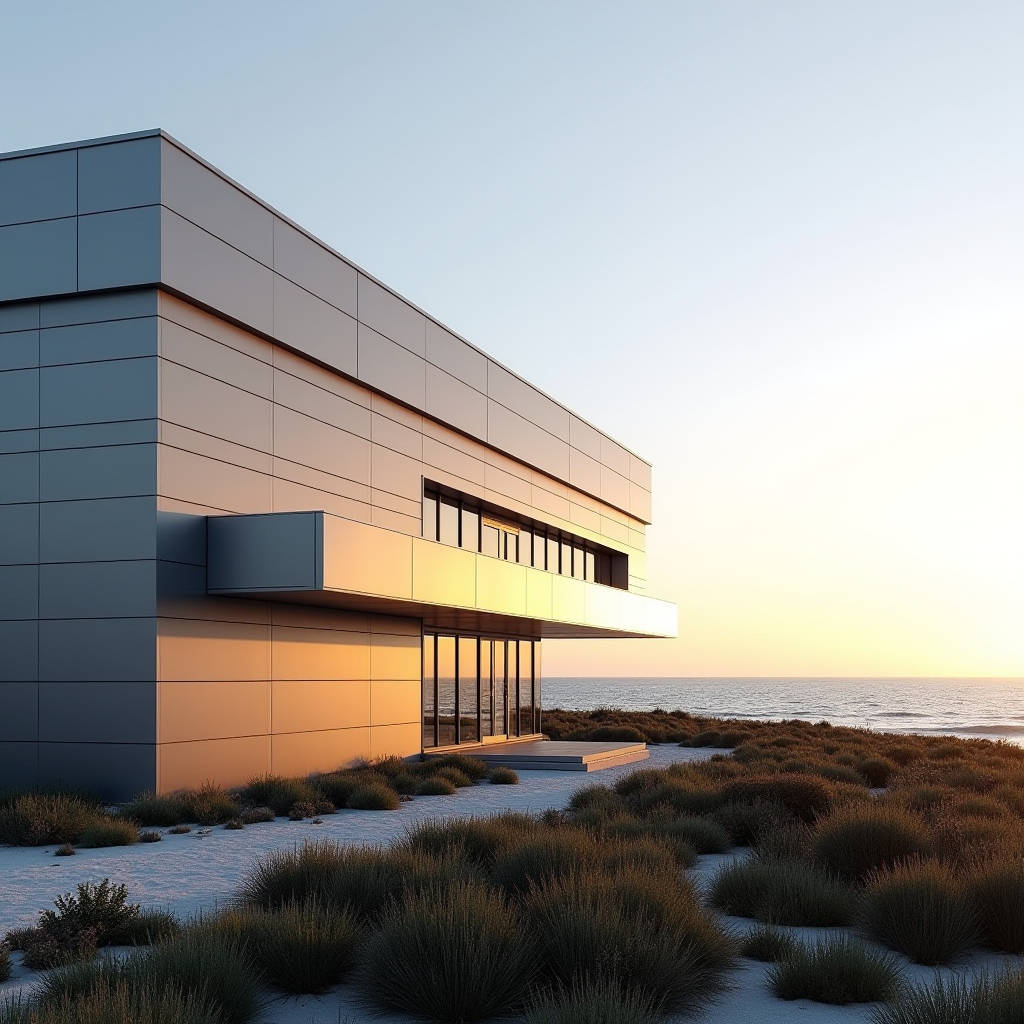
When a project specification calls for cladding that must survive decades of coastal salt spray, chemical plant emissions, or food-processing washdown cycles without pitting or delamination, the conversation narrows quickly. 1100 Aluminum Alloy sits at the center of that conversation. With a minimum aluminum content of 99.0%, this commercially pure grade from the 1xxx series delivers corrosion resistance that heat-treatable alloys like 6061 or 7075 simply cannot match in certain aggressive environments. But pure corrosion resistance is only half the story. The real engineering question is whether a low-strength, non-heat-treatable material can perform as a solid exterior cladding panel under wind load, thermal cycling, and decades of building movement. This article examines that question directly: the mechanical limits, the fabrication trade-offs, the temper selection logic, and the specific architectural scenarios where specifying 1100 Aluminum Alloy as a solid cladding panel makes defensible engineering sense.
Where 1100 Fits in the Solid Cladding Landscape
Solid aluminium cladding panels are manufactured from single sheets of wrought alloy, typically in thicknesses of 2.0 mm, 2.5 mm, or 3.0 mm, with PVDF or polyester coil coatings applied to the exposed face. The alloy selection determines how the panel behaves during bending, how it handles thermal expansion, and how long the metal substrate resists corrosion once the coating system eventually weathers. Most architectural specifications default to 3003 or 5052 alloys for cladding because they offer a middle ground between formability and tensile strength. But 1100 Aluminum Alloy occupies a deliberate niche. Its 99.0% minimum aluminium content means there is very little copper, manganese, or magnesium available to form galvanic micro-cells within the metal matrix. In practical terms, this translates to corrosion resistance that outperforms 3003 in highly alkaline or acidic atmospheric conditions. For a chemical storage facility, a wastewater treatment plant enclosure, or a marine-front building where salt-laden fog is a daily reality, that difference matters.
The trade-off is mechanical. 1100-O temper delivers a tensile strength around 90 MPa, compared to roughly 130 MPa for 3003-O and 240 MPa for 5052-H32. For a cladding panel spanning between support rails, lower tensile strength means either reducing the span, increasing the thickness, or accepting slightly higher deflection under equivalent wind loads. These are calculable decisions, not disqualifications. Engineers who understand the numbers can specify 1100 Aluminum Alloy confidently, provided the structural math is done honestly.
Reading the Temper Designations Correctly
Temper selection for 1100 Aluminum Alloy is not a trivial detail. The temper directly controls yield strength, elongation, and the degree of springback during brake forming. For solid cladding panels, four tempers dominate the conversation:
- 1100-O (Annealed): The softest condition. Tensile strength of 90 MPa, yield strength around 34 MPa, elongation roughly 35%. This temper is ideal for panels requiring deep return legs, complex perforation patterns, or tight-radius bends. The low yield strength means the panel forms easily without cracking, but it also means the finished panel has limited resistance to handling dents.
- 1100-H14 (Strain-Hardened, Half Hard): Tensile strength rises to approximately 110–125 MPa, yield strength to about 105 MPa. Elongation drops to 9–12%. This is the most common temper for flat cladding panels that need moderate dent resistance without sacrificing too much formability.
- 1100-H16 (Strain-Hardened, Three-Quarter Hard): Tensile strength around 130–145 MPa, yield strength near 120 MPa. Elongation falls to 6–8%. Suitable for panels with minimal bending requirements, such as flat soffit panels or simple tray profiles.
- 1100-H18 (Strain-Hardened, Full Hard): Maximum tensile strength for this alloy, roughly 165 MPa. Elongation is only 5%. This temper is rarely used for cladding panels because the material becomes too brittle for standard brake forming, but it can be specified for flat, unbent panels where maximum dent resistance is the priority.
For most architectural cladding applications, 1100-H14 represents the practical sweet spot. It provides enough yield strength to resist wind-induced oil-canning while remaining formable enough for standard return-leg profiles. The H14 temper also work-hardens more slowly than harder tempers, which gives fabricators a wider processing window before the material becomes too stiff to bend accurately.
Corrosion Resistance: The Real Differentiator
The corrosion performance of 1100 Aluminum Alloy is not marketing rhetoric. It is documented in decades of atmospheric exposure testing. The alloy's purity means it forms a dense, continuous aluminium oxide layer that self-passivates rapidly after surface damage. In contrast, copper-bearing alloys like 2024 or 7075 develop oxide layers interrupted by intermetallic particles that act as local cathodes, accelerating pitting corrosion in chloride-rich environments.
For cladding specifiers, the practical question is: when does this difference justify selecting 1100 over the stronger alternatives? Three scenarios stand out:
- Coastal and marine-front buildings: Salt spray testing per ASTM B117 consistently shows 1100 outperforming 3003 and 5052 in pitting resistance over extended exposure periods. For buildings within 500 meters of breaking surf, the corrosion margin provided by 1100 can extend the functional life of the cladding substrate by 10–15 years before perforation becomes a risk.
- Chemical processing and industrial environments: Facilities handling ammonia, sulfides, or acidic vapors create micro-environments that attack the intermetallic phases in alloyed aluminium. 1100, with fewer intermetallic particles, resists this selective attack more effectively.
- Food processing and pharmaceutical plants: Washdown cycles involving alkaline detergents or steam cleaning can strip the passive layer from aluminium surfaces. 1100 repassivates faster and more uniformly than alloyed grades, reducing the cumulative corrosion rate over thousands of cleaning cycles.
It is worth noting that the PVDF or polyester coating applied to the exposed face provides the primary barrier. The substrate alloy matters most at cut edges, fastener penetrations, and any location where the coating is compromised during fabrication, transport, or installation. In these vulnerable zones, 1100 Aluminum Alloy delivers a measurable advantage.
Fabrication Behavior: What the Shop Needs to Know
Fabricators accustomed to 5052 or 3003 will notice differences when processing 1100 Aluminum Alloy. The material is softer and more ductile, which is both an advantage and a liability depending on the operation.
Bending and brake forming: 1100-O and 1100-H14 exhibit excellent bendability. Minimum bend radii can be as tight as 0.5t for O temper and 1.0t for H14 temper, where t is the sheet thickness. This compares favorably to 5052-H32, which typically requires a minimum bend radius of 1.5t to 2.0t. For cladding panels with deep return legs or complex perimeter geometries, 1100 allows tighter corners without cracking. However, springback is more pronounced in 1100-H14 than in 5052-H32, so fabricators must compensate with slightly greater over-bend angles.
Welding: 1100 is readily weldable by TIG and MIG processes using 1100 or 4043 filler rod. The heat-affected zone does not experience the strength loss that occurs in heat-treatable alloys, because 1100 is non-heat-treatable by design. Post-weld annealing is generally unnecessary for cladding applications, though the weld bead area will have slightly lower corrosion resistance than the parent metal due to the cast microstructure.
Cutting and routing: The softness of 1100 means it cuts easily with carbide tooling and generates less tool wear than harder alloys. However, chip formation is more continuous and gummy, so proper lubrication and chip evacuation are essential to prevent built-up edge on cutting tools. For CNC routing of panel perimeters, fabricators should use polished, high-positive-rake tooling designed specifically for pure aluminium.
Surface preparation for coating: 1100 accepts chromate conversion coatings and PVDF primer systems without difficulty. The high purity means the surface oxide is uniform, which promotes consistent coating adhesion. Some coaters report slightly better color consistency on 1100 substrates compared to alloyed grades, though this is a subtle effect.
Wind Load Performance: Engineering the Numbers
The lower yield strength of 1100 Aluminum Alloy means that wind load calculations must be performed with discipline. A panel that spans 600 mm between supports in 5052-H32 might need to be reduced to 450 mm in 1100-H14 to achieve equivalent deflection performance. The table below provides a practical comparison of allowable spans for solid aluminium cladding panels under a uniform wind load of 2.0 kPa, assuming a simply supported condition and a deflection limit of L/90.
| Alloy & Temper | Thickness (mm) | Yield Strength (MPa) | Max Span at 2.0 kPa (mm) | Deflection at Max Span (mm) |
|---|---|---|---|---|
| 1100-H14 | 2.0 | 105 | 480 | 5.3 |
| 1100-H14 | 2.5 | 105 | 550 | 6.1 |
| 1100-H14 | 3.0 | 105 | 620 | 6.9 |
| 3003-H14 | 2.0 | 145 | 560 | 6.2 |
| 3003-H14 | 2.5 | 145 | 640 | 7.1 |
| 5052-H32 | 2.0 | 193 | 650 | 7.2 |
| 5052-H32 | 2.5 | 193 | 740 | 8.2 |
The numbers tell a clear story. At 2.0 mm thickness, 1100-H14 spans roughly 14% less than 3003-H14 and 26% less than 5052-H32 under the same load. Moving to 3.0 mm 1100-H14 recovers most of that gap, approaching the span capability of 2.0 mm 5052-H32. For projects where corrosion resistance is the primary driver, specifying a thicker 1100 panel is often the most cost-effective engineering solution. The material cost increment from 2.0 mm to 3.0 mm is typically 25–35%, which is modest compared to the lifecycle cost of premature cladding replacement in an aggressive environment.
Suppliers like Futeng® regularly provide span tables and deflection calculations for 1100 Aluminum Alloy cladding panels across multiple thicknesses and support conditions. Engaging the supplier's technical team early in the design phase helps avoid the common mistake of applying 5052 span assumptions to a 1100 specification.
Thermal Expansion and Panel Joint Design
All aluminium alloys expand and contract with temperature at roughly the same rate: the coefficient of thermal expansion for 1100 is approximately 23.6 × 10⁻⁶ /°C, nearly identical to 3003 and 5052. This means that joint design for 1100 Aluminum Alloy cladding panels follows the same principles as for any aluminium rainscreen system.
For a 3-meter panel length subjected to a 60°C temperature swing (from -10°C winter night to +50°C summer sun exposure), the thermal movement is:
Movement = 23.6 × 10⁻⁶ × 3000 mm × 60°C = 4.25 mm
A properly designed joint must accommodate this movement without binding, buckling, or over-compressing the sealant. The standard industry practice, documented in AAMA 508 and related guidelines, recommends a minimum joint width of 10–12 mm for panels up to 3 meters, with sealant depth-to-width ratios maintained between 1:2 and 1:1 depending on the sealant chemistry.
The lower stiffness of 1100 compared to 5052 actually provides a subtle advantage in thermal cycling: the panel is more compliant and less likely to transfer thermal stresses to the fasteners and support rails. In systems where the panel is fixed at one end and allowed to slide at the other, this compliance reduces the risk of fastener fatigue over decades of daily temperature cycles.
Coating Systems and Long-Term Durability
The substrate alloy is only one component of a cladding panel's corrosion strategy. The coating system applied to the exposed face provides the primary environmental barrier. For 1100 Aluminum Alloy panels, the coating selection should align with the same aggressive environments that drove the alloy choice in the first place.
PVDF (polyvinylidene fluoride) coatings, typically applied at 25–35 microns dry film thickness for a two-coat system or 35–45 microns for a three-coat system, remain the industry standard for architectural cladding. The Kynar 500® or Hylar 5000® resin systems provide documented 20–30 year color retention and chalk resistance per ASTM D4214 exterior exposure testing. For 1100 panels in coastal or industrial environments, a three-coat system with a corrosion-inhibitive primer is strongly recommended. The primer layer, typically 5–8 microns, contains strontium chromate or a non-chrome alternative that provides sacrificial protection at cut edges and scratches.
Polyester coatings are a lower-cost alternative, but their exterior durability is limited to approximately 10–15 years before significant chalking and color fade occur. For a 1100 Aluminum Alloy panel that is specified specifically for its long-term corrosion resistance, pairing it with a short-lived coating system undermines the engineering logic. The substrate may outlast the coating by a decade or more, leaving the building owner with a maintenance headache that could have been avoided.
Anodizing is technically possible on 1100, but the high purity produces a slightly different oxide morphology than alloyed grades. The anodic layer on 1100 tends to be more transparent and less gray than on 6063 or 5005, which can affect color matching if 1100 panels are installed adjacent to anodized extrusions. Specifiers should request anodizing samples on the exact alloy and temper being used before finalizing color selections.
Cost Realities: Material, Fabrication, and Lifecycle
1100 Aluminum Alloy is generally priced at a modest premium over 3003 and at parity or slightly below 5052, depending on market conditions and mill availability. The raw material cost difference is typically 5–10%, which is small enough that it rarely drives specification decisions on its own. The more significant cost factors emerge during fabrication and installation.
Fabrication costs for 1100-H14 are generally lower than for 5052-H32 because the softer material machines faster, generates less tool wear, and requires less tonnage on the press brake. A fabricator running 1100 panels can often achieve 15–20% higher throughput compared to 5052 of the same thickness. This partially offsets the material premium.
Installation costs are where the span limitation becomes a real economic factor. If 1100-H14 requires support rails at 480 mm centers instead of 650 mm centers for 5052-H32, the additional rail material, brackets, and labor add cost to the overall cladding system. The total installed cost per square meter for 1100 cladding can be 10–18% higher than a 5052 system, depending on the support framing density. However, in the aggressive environments where 1100 is specified, this premium is typically justified by the extended service life and reduced maintenance burden.
Lifecycle cost analysis, following the methodology outlined in ISO 15686 for service life planning, often shows 1100 Aluminum Alloy cladding to be the lower-cost option over a 40–50 year building life when the environment is corrosive enough to threaten the integrity of 3003 or 5052 substrates. The calculation is straightforward: the incremental cost of thicker 1100 panels and closer support spacing is weighed against the avoided cost of recladding at year 25 or 30.
When Not to Specify 1100
Knowing when to avoid 1100 Aluminum Alloy is as important as knowing when to specify it. The alloy is not a universal solution, and using it in the wrong application creates unnecessary cost without corresponding benefit.
1100 should not be specified for cladding panels that require high structural stiffness, such as large-format panels spanning more than 700 mm between supports, or panels that will be subjected to high wind loads in hurricane-prone regions where 5052-H32 or even 6061-T6 may be necessary. The alloy is also poorly suited for panels that will receive heavy foot traffic or impact loads, such as low-level spandrel panels in public spaces, because the low yield strength means dents and dings are more likely.
In interior applications where corrosion resistance is irrelevant, 1100 offers no advantage over 3003, and the cost premium is wasted. Similarly, in benign exterior environments—rural or suburban locations away from salt water, industrial emissions, or chemical exposure—the corrosion advantage of 1100 over 3003 is negligible, and the span penalty is not justified.
The decision to specify 1100 should be driven by a documented environmental assessment. If the project's atmospheric corrosivity category, classified per ISO 9223, falls into C4 (high) or C5 (very high), 1100 Aluminum Alloy becomes a technically defensible choice. For C1 through C3 environments, stronger alloys with adequate corrosion resistance will typically deliver better value.
Supply Chain and Availability Considerations
1100 Aluminum Alloy is widely produced by major mills globally, but not all coil widths and thicknesses are stocked at every service center. The most commonly available sheet thicknesses for cladding applications are 1.5 mm, 2.0 mm, 2.5 mm, and 3.0 mm, in widths up to 1,500 mm. Wider sheets may require mill-direct orders with minimum quantities of 3–5 metric tons, which can extend lead times to 8–12 weeks.
For international projects, the alloy designation may appear as EN AW-1100 under European standards or AA 1100 under the Aluminum Association system. The chemical composition and mechanical properties are harmonized across these standards, so cross-referencing is straightforward. However, temper designations differ slightly: H14 under ASTM is equivalent to H24 under EN standards when the material has been strain-hardened and partially annealed. Specifiers working across regulatory jurisdictions should confirm the exact temper designation with the mill or service center.
Quality documentation for 1100 Aluminum Alloy cladding panels should include mill test certificates (MTCs) per ASTM B209 or EN 485, confirming chemical composition, tensile properties, and dimensional tolerances. For coated panels, additional documentation should verify coating thickness, adhesion test results, and accelerated weathering performance.
Practical Specification Guidance
For the architect or engineer writing a cladding specification, the following points summarize the key decisions when 1100 Aluminum Alloy is under consideration:
- Confirm the environmental corrosivity category. If C4 or C5, 1100 is technically justified. If C3 or below, evaluate whether 3003 or 5052 can meet the durability requirements at lower total installed cost.
- Select the temper based on the panel geometry. H14 is the default for most cladding panels. Specify O temper only when deep forming or complex bending is required, and accept the trade-off in dent resistance. Avoid H18 for any panel that requires bending.
- Run wind load calculations using the actual yield strength of the selected temper, not generic assumptions. Reduce support spacing or increase panel thickness as needed to meet deflection criteria.
- Specify a three-coat PVDF system with corrosion-inhibitive primer for panels in aggressive environments. The substrate and coating must be matched in durability.
- Request fabrication samples on the exact alloy and temper before production begins. Confirm bend quality, springback compensation, and coating adhesion on the actual material.
- Include mill test certificate requirements in the specification to ensure traceability and compliance with the specified alloy and temper.
The engineering case for 1100 Aluminum Alloy in solid cladding panels is narrow but real. It is not the right material for every building, but for the specific subset of projects where atmospheric corrosion is the dominant failure mode, it is often the right material. The key is to approach the decision with honest numbers: calculate the spans, compare the lifecycle costs, and match the alloy to the environment. When that analysis points to 1100, the specification can be defended on solid technical ground.