Aluminum Shim Plate Engineering for Solid Aluminium Rainscreen Façade Systems
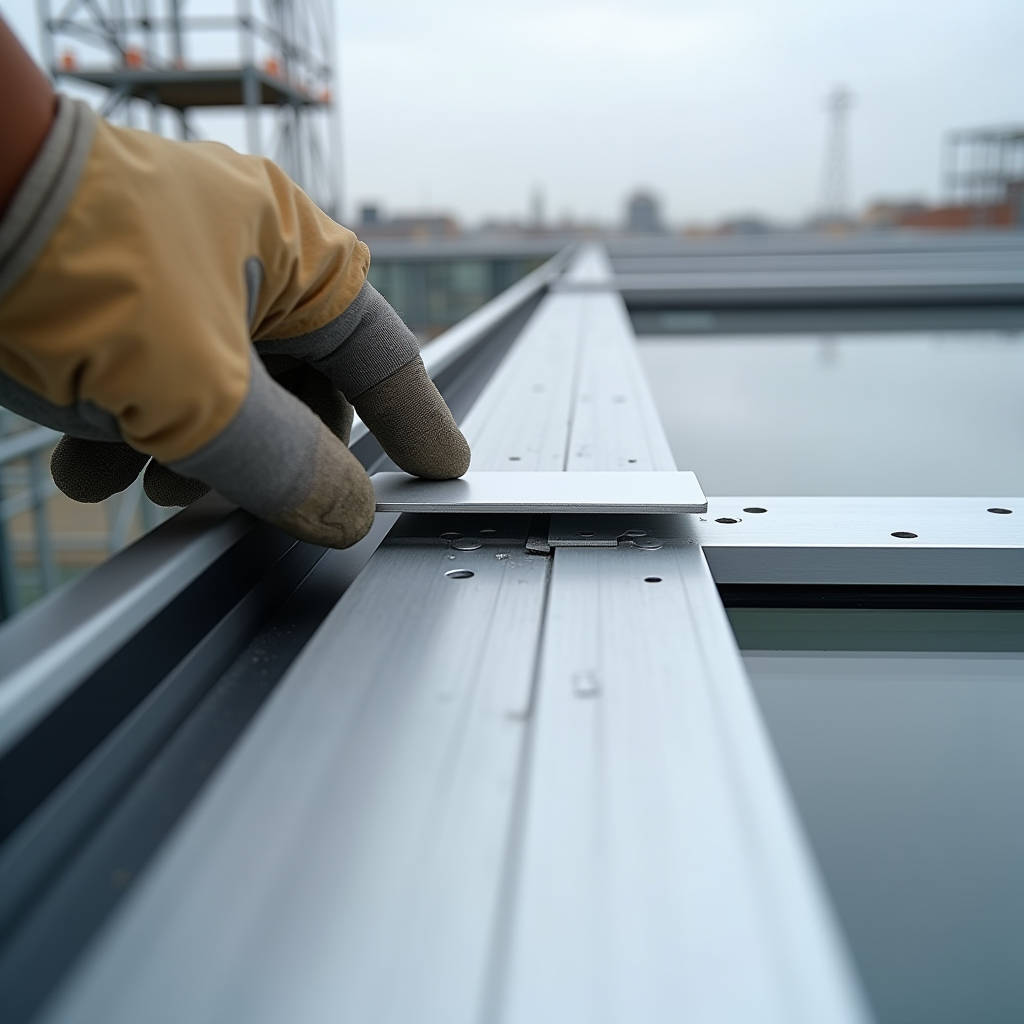
On a rainscreen façade job in Chicago last fall, the site team discovered a 14mm deviation across a 6-meter horizontal carrier span. The aluminium cladding panels—3.0mm solid 5052 H32 with a PVDF finish—had already been fabricated. Reworking the substructure was out of the question. The fix came down to precision-gapped Aluminum Shim Plate components, cut to exact thicknesses and inserted behind the panel attachment clips to bring the face into plane. The episode underscores something that gets far less attention than it deserves: in solid aluminium rainscreen construction, the shim plate is not a minor accessory. It is a load-path component, a corrosion-control element, and a tolerance-resolution tool all at once.
What an Aluminum Shim Plate Actually Does in a Rainscreen System
In the context of solid aluminium cladding—where panels typically measure 2.0mm, 2.5mm, or 3.0mm in thickness and are finished with architectural PVDF or FEVE coatings—an Aluminum Shim Plate serves three distinct functions simultaneously. First, it acts as a precision spacer between the panel attachment point and the structural substrate, absorbing accumulated dimensional tolerances from the steel or aluminium subframe. Second, it provides a continuous metallic load path, ensuring that wind suction and pressure loads transfer from the panel face through the shim into the carrier without introducing soft or compressible materials that could relax over time. Third, and most critically for long-term façade performance, a correctly specified aluminium shim eliminates galvanic corrosion risk at the fastener interface—something that steel shims cannot guarantee when paired with aluminium panels in coastal or high-humidity environments.
The distinction between a general-purpose shim and an Aluminum Shim Plate engineered for façade work matters. General industrial shims—such as those listed under ASTM B209 for 1100 H19 or 3003 H14 alloys—are typically supplied as rolled strip or sheet stock in thicknesses from 0.001 inch (0.025mm) upward. These materials work well for machine alignment and low-load spacing applications. Façade shim plates, by contrast, must handle compressive loads from wind pressure cycling, thermal expansion stresses, and dead-load shear at connection points. A 3.0mm thick 5052 H32 shim plate with a mill finish, for instance, will carry significantly more compressive force than a 0.5mm 1100-O shim, and the difference becomes structural when panels span large open areas on high-rise elevations.
Alloy Selection for Façade Shim Plates: Why It Is Not Just "Aluminium"
Not all aluminium alloys behave the same way under sustained façade loading. The table below compares the alloys most commonly encountered in shim plate manufacturing, evaluated against the specific demands of rainscreen cladding applications.
| Alloy & Temper | Tensile Strength (MPa) | Yield Strength (MPa) | Corrosion Resistance | Typical Façade Shim Application |
|---|---|---|---|---|
| 1100 H19 | 165 | 152 | Excellent (pure Al) | Low-load interior alignment; not recommended for exterior rainscreen load paths |
| 3003 H14 | 150 | 145 | Very Good | Moderate-load spacer applications; limited use in sheltered exterior conditions |
| 5052 H32 | 230 | 195 | Excellent (marine-grade) | Primary recommendation for exterior rainscreen shim plates; high strength and salt-spray resistance |
| 6061 T6 | 310 | 276 | Good (requires coating in coastal zones) | High-load structural connections; specify with anodized or PVDF finish for exterior use |
| 7075 T6 | 572 | 503 | Moderate (stress-corrosion cracking risk) | Specialized high-load scenarios; generally over-specified for standard rainscreen shim applications |
The data above draws from alloy property references published by the Aluminum Association and cross-referenced with EN 485-2 for wrought aluminium products. For the vast majority of solid aluminium rainscreen projects—particularly those within 30 kilometers of a coastline or in regions with high annual rainfall—5052 H32 is the alloy that balances strength, formability, and corrosion resistance without unnecessary cost. Futeng®, a manufacturer with extensive experience supplying solid aluminium cladding systems internationally, has observed that specifying 5052 H32 for both panels and shim plates on a single project simplifies procurement and eliminates any residual galvanic mismatch risk across the entire façade assembly.
Thickness Tolerance and the Problem of "Close Enough"
One of the most persistent misunderstandings on construction sites involves the acceptable thickness tolerance of an Aluminum Shim Plate. A shim specified as 2.0mm thick that arrives at 2.15mm may seem close enough—until 40 of them are stacked across a single elevation, introducing a cumulative 6mm error that pushes the panel plane visibly out of alignment. For solid aluminium rainscreen panels with open joints, where shadow gaps of 15mm to 20mm are typical, even a 3mm deviation across a 3-meter module becomes noticeable under raking light.
Precision shim plates manufactured to ISO 2768-1 medium tolerance class or tighter will typically hold thickness variation within ±0.05mm for plate thicknesses up to 3.0mm. This level of control matters most at the fixing points: a bracket attached with a shim that is 0.1mm off-spec may not seem critical, but when wind loads cycle between positive and negative pressure—as defined in ASCE 7 for North American projects or EN 1991-1-4 for European work—the resulting micro-movement at the connection can accelerate fastener loosening and fretting corrosion over time. The shim plate is not simply filling space; it is maintaining a precise preload condition at the bolted connection.
Laminated aluminium shim stock, manufactured to AMS-DTL-22499 specifications, offers a different approach. These shims consist of multiple foil layers bonded together, allowing the installer to peel off individual layers—typically 0.05mm or 0.076mm each—to achieve the exact thickness required in the field. This peel-to-fit capability is particularly useful during remedial work on existing façades where the as-built substrate conditions are unknown until the cladding is opened up. The trade-off is that laminated shims generally have a lower compressive load capacity than solid monolithic shim plates of equivalent total thickness, because the adhesive interlayers can creep under sustained load at elevated temperatures.
Galvanic Corrosion: The Hidden Cost of Mixing Metals
When a carbon steel shim is placed between an aluminium cladding bracket and a galvanized steel subframe, the resulting galvanic cell will corrode the aluminium component preferentially. The mechanism is well documented in American Galvanizers Association technical literature: aluminium is anodic relative to steel and zinc, and in the presence of an electrolyte—rainwater, condensation, or even high humidity—current flows from the aluminium into the more cathodic steel, consuming the aluminium over time.
An Aluminum Shim Plate made from the same alloy family as the cladding panel eliminates this risk entirely. The shim, the panel bracket, and the aluminium panel itself sit at the same electrochemical potential. There is no driving force for galvanic corrosion, regardless of how wet the cavity gets. For projects where the subframe is steel, the shim plate still provides a benefit: it separates the aluminium bracket from the steel surface, and when used in combination with a suitable isolating washer at the bolt head, the galvanic circuit is broken at both contact interfaces.
This is not a theoretical concern. A 2023 technical bulletin from the American Architectural Manufacturers Association (AAMA) noted that galvanic corrosion at mixed-metal shim connections was identified as a contributing factor in several rainscreen panel retention failures investigated over the preceding five years. The fix is straightforward: specify aluminium shims with aluminium panels, and ensure the alloy selection accounts for the environmental exposure category of the project site.
Load Path Analysis: What the Shim Plate Actually Carries
Understanding the mechanical role of a shim plate in a rainscreen system requires looking at the load path from first principles. A solid aluminium cladding panel—say 2.5mm thick, measuring 1,200mm x 3,000mm, weighing approximately 24.3 kg—is subjected to wind loads that can easily exceed 2.0 kPa (kilopascals) on a mid-rise building in a moderate wind zone. For a panel with four attachment points, each bracket carries roughly 1.8 kN under peak suction conditions, assuming a 1.5 safety factor per EN 1991-1-4 wind load combinations.
The shim plate sits directly in this load path. Compressive stress through the shim is calculated as force divided by the bearing area. For a shim plate measuring 50mm x 50mm with a 10mm bolt hole, the net bearing area is approximately 2,400 mm². Under a 1.8 kN load, the compressive stress is roughly 0.75 MPa—well within the capacity of even 1100-O aluminium, which yields at around 34 MPa. So why specify higher-strength alloys? Because the static calculation does not capture the full picture. Wind gusts produce cyclic loading; thermal expansion of the panel (aluminium expands at roughly 0.024mm per meter per degree Celsius) introduces shear forces at the shim interface; and installation tolerances can concentrate load on a smaller portion of the shim than the full bearing area suggests.
A 5052 H32 shim plate with a yield strength of 195 MPa provides a substantial margin against localized yielding under these combined loading conditions. The margin is not wasteful—it is insurance against the load cases that are difficult to model precisely but that occur regularly in service.
Fabrication Methods and Their Impact on Shim Plate Performance
How an Aluminum Shim Plate is cut and finished directly affects its dimensional accuracy, edge condition, and suitability for façade work. Three fabrication methods dominate the supply chain, each with distinct implications.
Shearing: Guillotine shearing is fast and cost-effective for rectangular shim plates in thicknesses up to 3.0mm. The edge produced is reasonably straight but will exhibit a slight roll-over on the top edge and a burr on the bottom edge. For façade applications, sheared shims should be deburred to prevent the burr from interfering with flat mating surfaces. Shearing is the preferred method for high-volume production runs where shim dimensions are standardized across a project.
Laser Cutting: Fiber laser cutting produces an exceptionally clean edge with minimal heat-affected zone in aluminium. The kerf is narrow—typically 0.15mm to 0.3mm—allowing tight nesting of parts and reduced material waste. Laser-cut shim plates can incorporate complex geometries: slots for lateral adjustment, notches to clear existing fixings, or irregular outlines to match custom bracket shapes. The edge quality is generally burr-free and requires no secondary finishing for most applications. The trade-off is higher per-part cost compared to shearing, though this is partially offset by the elimination of hard tooling.
Waterjet Cutting: Abrasive waterjet cutting is a cold-cutting process that introduces no thermal stress into the aluminium. This matters for shim plates made from 6061 T6 or 7075 T6, where heat from laser cutting could locally alter the temper and reduce strength at the edge. Waterjet is also capable of cutting thicker plates—up to 50mm or more—though shim plates for rainscreen applications rarely exceed 5.0mm. The process is slower than laser cutting but offers the advantage of stacking multiple sheets and cutting them simultaneously, which can improve economics for larger quantities.
For projects requiring custom shim plates with non-standard geometries, Accutrex and similar specialty manufacturers offer prototype and short-run services using laser and waterjet cutting that eliminate tooling costs entirely. This capability is particularly valuable during the design development phase, when bracket geometries may still be evolving and the ability to test-fit shim plates on a mock-up is essential.
Integrating Shim Plates into the Façade Supply Chain
On a typical solid aluminium rainscreen project, the shim plate is often the last component specified and the first one needed on site. This timing mismatch creates recurring problems. The cladding panels are ordered with 8-12 week lead times; the aluminium subframe components arrive in 6-8 weeks; and then someone realizes that shim plates are required to resolve the interface between the two, and the project waits while a small but critical part is rush-fabricated.
Integrating Aluminum Shim Plate procurement into the main cladding package from the outset avoids this bottleneck. When the cladding supplier—such as Futeng®, which manufactures solid aluminium panels, subframe components, and associated accessories under one quality system—provides the shim plates alongside the panels, several advantages accrue. The alloy is matched to the panel specification automatically. The shim thicknesses are determined from the same 3D model used for panel fabrication, so the as-designed and as-built dimensions align. And the shim plates arrive on site with the panels, eliminating the frantic last-minute search for a local fabricator.
The cost of aluminium shim plates is modest relative to the overall cladding package—typically less than 1% of the total façade material cost. Attempting to save money by substituting steel shims, or by cutting shims from scrap material on site, introduces risks that are wildly disproportionate to the savings. A single panel retention failure caused by an undersized or corroded shim can cost tens of thousands of dollars in access equipment, replacement materials, and program delay, not to mention the reputational damage to the installer and the specifier.
Thermal Considerations: Shim Plates and the Building Envelope
An Aluminum Shim Plate placed between a cladding bracket and the structural wall creates a thermal bridge—a direct metallic path from the exterior cladding to the interior structure. In a rainscreen system, the cladding is thermally decoupled from the building by the ventilated cavity; the brackets that penetrate the insulation layer are the primary thermal bridges, and the shim plates are part of that bridge.
The thermal conductivity of aluminium is approximately 205 W/m·K at 25°C, which is roughly four times that of carbon steel and over 1,000 times that of rigid insulation. A 50mm x 50mm x 3mm shim plate has a relatively small cross-sectional area, so the total heat flow through an individual shim is modest. However, on a large façade with hundreds of attachment points, the cumulative effect can be significant enough to affect the overall U-value calculation for the wall assembly.
The solution is not to avoid aluminium shims—the structural and corrosion arguments for using them are too strong—but to incorporate them into the thermal model from the start. Thermal break pads, typically made from high-density polyamide or fiberglass-reinforced phenolic materials, can be placed between the shim plate and the structural substrate to reduce conductive heat transfer. The shim plate still performs its mechanical function, but the thermal path is interrupted. This approach is consistent with the requirements of ASHRAE 90.1 and similar energy codes that mandate continuous insulation with minimal thermal bridging in commercial building envelopes.
Quality Verification: What to Check Before Installation
Site teams receiving Aluminum Shim Plate deliveries should perform a focused set of checks before installation begins. The first is a thickness verification using a calibrated micrometer, not a tape measure. A sample of shims—at least 5% of the delivered quantity or a minimum of 10 pieces, whichever is greater—should be measured at multiple points across the surface. The measured thickness should fall within the tolerance band specified on the purchase order; for façade-grade shims, ±0.05mm is a reasonable expectation.
The second check is alloy verification. Reputable manufacturers will supply material certificates—typically EN 10204 Type 3.1 or 3.2—that confirm the alloy and temper of the aluminium used. If the certificates are not available, a handheld XRF (X-ray fluorescence) analyzer can provide a rapid alloy identification in the field, though it cannot determine temper. Any shim plates that cannot be positively identified as the specified alloy should be quarantined until the documentation is resolved.
The third check is visual: edges should be free of burrs, surfaces should be flat and free of deep scratches or gouges that could act as stress concentrators, and any protective film or interleaving paper should be intact. Aluminium shim plates that will be installed in contact with PVDF-coated panels do not typically require a coating themselves—the mill finish is adequate—but if the shims will be exposed to view in an open-joint system, a PVDF or anodized finish matching the panel color should be specified and verified.
Site Modification: When and How to Adjust Shim Plates in the Field
Even with careful 3D modeling and precise fabrication, field conditions sometimes demand shim plate adjustment. The as-built substrate may differ from the surveyed dimensions; accumulated tolerances from multiple trades may create a gap that was not anticipated in the shop drawings. In these situations, laminated aluminium shims—manufactured to AMS-DTL-22499—offer a practical solution. The installer peels layers until the shim reaches the required thickness, then installs it in the assembly. This peel-to-fit capability eliminates the need for on-site machining and reduces downtime.
For solid shim plates that need thickness reduction, the options are more limited. Belt sanding can remove material gradually, but maintaining uniform thickness across the entire surface is difficult without a surface grinder—equipment rarely found on construction sites. A better approach is to stock a range of shim thicknesses on site: 0.5mm, 1.0mm, 1.5mm, 2.0mm, and 3.0mm covers most adjustment scenarios, and combinations of these can achieve intermediate thicknesses. The cost of carrying this inventory is small relative to the cost of delaying the cladding installation while waiting for custom shims to be fabricated.
Specifying aluminium shim plates from the same alloy family as the cladding panels is not an upgrade—it is baseline engineering for a façade system that will remain serviceable for 30 years or more.
Long-Term Service Performance: What 20 Years of Data Shows
Façade condition surveys conducted on solid aluminium rainscreen buildings constructed in the 1990s and early 2000s provide empirical evidence of shim plate performance over time. Buildings where aluminium shims were used consistently show no signs of galvanic corrosion at the shim-bracket interface, even in coastal environments such as Miami, Singapore, and Dubai. The shim plates themselves remain dimensionally stable; aluminium does not creep at ambient temperatures, and the compressive loads in a rainscreen connection are well below the yield point of any commonly specified alloy.
By contrast, buildings where steel shims were used in contact with aluminium brackets show varying degrees of corrosion at the interface. In inland locations with low humidity, the corrosion is often superficial—a white oxide layer on the aluminium surface that does not compromise structural integrity. In coastal locations, the corrosion can be more aggressive, with pitting depths of 0.5mm to 1.0mm observed after 15-20 years of service. While this level of material loss does not typically cause immediate failure, it reduces the effective bearing area of the connection and increases the risk of loosening under cyclic wind loading.
The data reinforces what the electrochemistry predicts: aluminium-to-aluminium contact is inherently stable, and the small additional cost of specifying aluminium shim plates is recovered many times over through reduced maintenance, inspection, and replacement costs across the building's service life.
Specifying Aluminum Shim Plates: A Practical Checklist
For architects, façade engineers, and procurement managers preparing specifications for solid aluminium rainscreen projects, the following checklist captures the key decisions that should be addressed before the shim plate package is released for fabrication:
- Alloy: Match the shim plate alloy to the cladding panel alloy where possible. 5052 H32 is the default recommendation for exterior rainscreen applications in most environments.
- Thickness range: Specify the nominal thicknesses required and the acceptable tolerance band. ±0.05mm is achievable from quality fabricators.
- Fabrication method: Select shearing for standard rectangular shims, laser cutting for complex geometries, or waterjet for thick plates or heat-sensitive alloys.
- Surface finish: Mill finish is adequate for concealed shims. Specify PVDF or anodized finish if the shim edge will be visible in an open-joint system.
- Material certification: Require EN 10204 Type 3.1 certificates as a minimum; Type 3.2 with third-party witness testing for critical or high-risk applications.
- Quantity: Order shim plates with the main cladding package, not as a separate afterthought. Include a contingency allowance of 10-15% for field adjustments.
- Thermal break: Evaluate whether thermal break pads are required between the shim plate and the structural substrate to meet the project's energy performance targets.
An Aluminum Shim Plate may be one of the least visible components in a solid aluminium rainscreen assembly, but its influence on long-term façade performance is disproportionate to its size and cost. Getting the specification right—alloy, thickness tolerance, fabrication method, and corrosion compatibility—is a straightforward exercise in applied engineering that pays dividends across decades of building service. The alternative is a gamble that the cheapest shim on the shelf will be good enough. In an industry where façade failures make headlines and remedial work costs orders of magnitude more than preventive measures, that is a gamble not worth taking.