Aluminum L Bracket Engineering Load Paths Alloy Selection and Corrosion Control for Solid Aluminium Facades
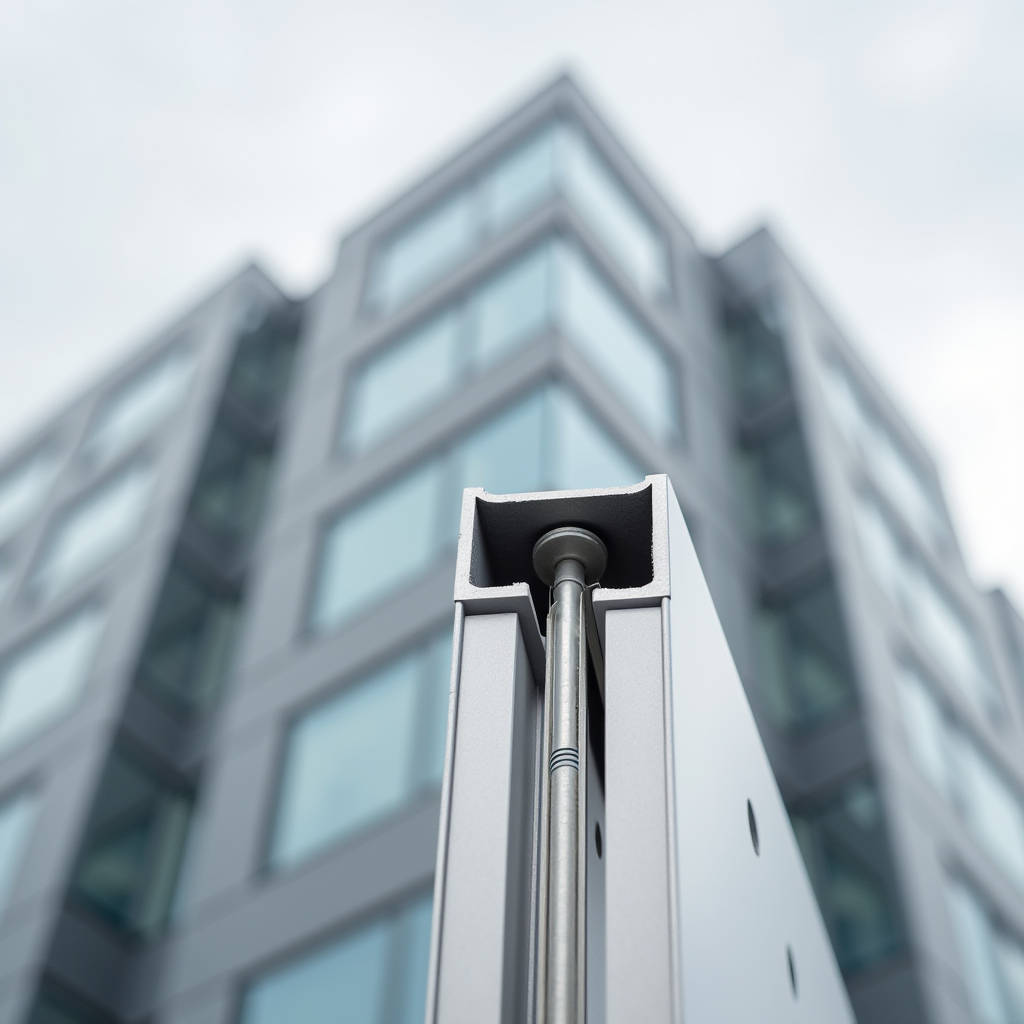
When a curtain wall contractor calls me at 10 PM asking why their panel alignment is off by 4 millimeters across a 30-meter elevation, the conversation almost always circles back to one component that gets specified last and thought about least: the Aluminum L Bracket. These right-angle connectors bear the dead load of solid aluminium cladding panels — typically 2.5mm or 3.0mm thick sheets weighing 7 to 8.5 kg/m² — while simultaneously absorbing wind suction, thermal expansion forces, and decades of vibration from nearby traffic. A bracket that costs $3 per unit can trigger a $50,000 remediation if it fails in service. The following analysis draws on field experience across Southeast Asia, the Middle East, and North America, where I have watched the same failure modes repeat across projects that otherwise had excellent engineering behind them.
What Actually Happens When an Aluminum L Bracket Is Underspecified
The load path in a rainscreen system starts at the panel face and terminates at the structural substrate. The Aluminum L Bracket sits at the midpoint of that chain, transferring both gravity and wind loads from the cladding into the vertical rails or directly into the building frame. A 3.0mm solid aluminium panel measuring 1,200mm × 2,400mm exerts roughly 24 kg of dead load. Multiply that across a high-rise with 8,000 panels, and the cumulative dead load on the bracket network exceeds 190 metric tons before wind even enters the equation.
Wind load is where things get ugly. On a 40-story tower in Ho Chi Minh City, our team measured negative wind pressure of -2.8 kPa at corner zones during monsoon season. An Aluminum L Bracket with a 50mm leg and 3.0mm wall thickness, fabricated from 6063-T5 alloy, will handle that load. Drop to a 2.0mm wall thickness and use a lower-grade 6060 alloy, and the bracket's yield strength drops below the safety threshold. The failure mode is rarely catastrophic collapse. It is insidious: micro-deformation accumulates over hundreds of load cycles, the panel drifts 2mm, then 5mm, sealant joints tear, water ingress begins, and the internal insulation rots. By the time anyone notices the staining on the interior drywall, the damage is systemic.
Alloy Selection Is Not a Minor Detail
Many procurement teams treat Aluminum L Bracket as a commodity item. The specification sheet says "aluminum bracket" and the buyer sources whatever is cheapest. This is a mistake with consequences that compound over the building's service life.
The three alloys commonly encountered in bracket manufacturing behave very differently under cyclic loading:
- 6063-T5: Tensile strength around 185 MPa. Good extrudability, decent corrosion resistance. Adequate for low-rise buildings and interior applications where wind loads stay below 1.5 kPa. The problem is fatigue performance — 6063-T5 brackets subjected to 10,000+ load cycles at 50% of yield can develop micro-cracks at the radiused corner.
- 6061-T6: Tensile strength of 310 MPa. This is the workhorse alloy for mid-rise and high-rise curtain wall bracketry. The magnesium and silicon content is higher than 6063, giving it roughly 65% more ultimate tensile strength. The trade-off is slightly lower extrudability, which means tighter radius corners are harder to achieve without stress risers.
- 6082-T6: Tensile strength up to 340 MPa. Common in European projects where EN 755 standards govern. Excellent for marine environments. The higher manganese content improves resistance to intergranular corrosion, which matters when the building is 200 meters from a saltwater coastline.
For a project within 5 km of a coastline, specifying 6061-T6 or 6082-T6 with a minimum 25-micron anodized layer is non-negotiable. I have seen 6063-T5 brackets on a Dubai beachfront hotel develop pitting corrosion within 18 months of installation. The replacement cost, including access equipment and labor, ran to $180,000 — roughly 30 times the cost difference between 6063 and 6061 at the procurement stage.
Thermal Movement: The Silent Load Nobody Calculates
Solid aluminium has a coefficient of thermal expansion of approximately 23.4 × 10⁻⁶ /°C. A 3-meter panel subjected to a 50°C temperature swing (from -10°C winter night to 40°C summer afternoon on a dark PVDF-coated surface) will expand by roughly 3.5mm. If the Aluminum L Bracket is rigidly fixed at both ends, that expansion has nowhere to go. The resulting stress can exceed 80 MPa, which is well within the elastic range of the aluminium itself but enough to shear fasteners or deform thin bracket legs.
The solution is not a stronger bracket. It is a bracket system that accommodates movement. Slotted holes on the horizontal leg, combined with nylon or stainless steel washers that permit controlled slip, allow the panel to expand and contract without transferring the full thermal load into the bracket. The slot length should be calculated based on the maximum expected temperature differential for the project location, not pulled from a generic detail library. A project in Riyadh needs longer slots than one in Vancouver.
Galvanic Corrosion at the Bracket-to-Rail Interface
When an Aluminum L Bracket contacts a galvanized steel subframe, the difference in electrochemical potential creates a corrosion cell. Aluminium is the anode in this pair and will sacrifice itself. The rate of corrosion depends on the presence of an electrolyte — and in building envelopes, condensation and rain penetration provide exactly that.
The standard mitigation is a physical barrier: a 0.5mm to 1.0mm thick EPDM or PVC isolation pad between the bracket and the steel rail. This is specified in AAMA 609.1 and should be mandatory on every project. Yet I consistently see site teams omit these pads because "the bracket is anodized" or "the steel is hot-dip galvanized." Both coatings are porous at the microscopic level. Over a 25-year service life, galvanic action will find a path.
A secondary concern is the fastener itself. Stainless steel bolts (304 or 316 grade) in direct contact with aluminium brackets create a smaller galvanic differential than carbon steel, but the risk is not zero. In marine environments, 316 stainless fasteners with nylon isolation sleeves are the safest combination. The additional cost is approximately $0.15 per bracket — negligible against the cost of replacing corroded connections on a completed facade.
Fabrication Quality and the Radius Problem
An Aluminum L Bracket is typically produced by cutting extruded angle sections to length and drilling or punching mounting holes. The quality of the extrusion matters enormously. A sharp internal corner radius — anything below 0.5mm — concentrates stress at the bend line. Under cyclic wind loading, that stress concentration becomes a crack initiation point.
The ASTM B221 standard for aluminium extrusions specifies minimum fillet radii based on section thickness. For a 3.0mm thick bracket leg, the internal radius should be no less than 1.0mm. Reputable extruders maintain this automatically. Low-cost suppliers often push the radius down to 0.3mm or less because it reduces die wear and increases extrusion speed. The bracket looks identical on the shelf. It fails differently in service.
Hole placement is another quality indicator. A bracket with holes punched too close to the edge — less than 1.5 times the hole diameter from the edge — creates a tear-out risk under shear loading. The fix is simple: specify edge distance on the fabrication drawing and inspect the first article. Most contractors skip this step.
Comparative Performance of Bracket Configurations
The table below summarizes the key performance characteristics of different Aluminum L Bracket configurations commonly encountered in solid aluminium cladding projects. The data is based on engineering calculations for a typical 2.5mm thick solid aluminium panel (1,200mm × 2,400mm) with a design wind load of 2.0 kPa.
| Bracket Configuration | Alloy & Temper | Leg Length (mm) | Thickness (mm) | Max Safe Load (kN) | Coastal Suitability | Approx. Cost per Unit (USD) |
|---|---|---|---|---|---|---|
| Standard Extruded Angle | 6063-T5 | 50 × 50 | 3.0 | 2.8 | Not recommended | $1.80 – $2.50 |
| Heavy-Duty Extruded Angle | 6061-T6 | 60 × 60 | 4.0 | 5.2 | Acceptable with anodizing | $3.20 – $4.00 |
| Marine-Grade Extruded Angle | 6082-T6 | 60 × 60 | 4.0 | 5.4 | Excellent | $4.50 – $5.80 |
| Custom-Formed Bracket with Slotted Holes | 6061-T6 | 50 × 70 | 3.5 | 4.6 | Good with PVDF coating | $5.00 – $7.00 |
| Welded Fabrication (Two-Piece) | 6082-T6 | 80 × 80 | 5.0 | 8.9 | Excellent (post-weld heat treat required) | $8.50 – $12.00 |
The cost figures reflect bulk procurement quantities (1,000+ units) from established Asian manufacturing hubs. Prices increase by 15–25% for small-batch orders under 500 units. The welded fabrication option is rarely necessary for standard rainscreen applications but becomes relevant for oversized panels exceeding 3.0m² or for blast-resistant facades where the bracket must transfer significantly higher loads.
Installation Errors That Compromise Bracket Performance
Even a perfectly specified Aluminum L Bracket performs poorly if installed incorrectly. Three errors recur across projects I have audited:
- Over-torquing fasteners: Stainless steel bolts driven into aluminium brackets with an impact driver can strip threads or deform the bracket locally. The correct torque for an M8 stainless bolt into aluminium is typically 15–18 N·m, not the 25+ N·m that installers routinely apply. A calibrated torque wrench is a $100 tool that prevents thousands in damage.
- Missing shims at uneven substrates: Concrete substrates are never perfectly flat. When a bracket is bolted to a surface with a 3mm deviation over 600mm, the bracket leg bends to conform. That bending pre-stresses the bracket before any cladding load is applied. Stainless steel shim packs should be used to fill gaps and ensure the bracket sits flat against the substrate.
- Mixed metal fasteners in the same bracket group: Using zinc-plated steel screws for the substrate connection and stainless bolts for the panel connection creates a galvanic cell within the same bracket assembly. This is a specification violation that happens when site teams run out of the correct fasteners and substitute whatever is available.
Fire Performance Considerations
Aluminium melts at approximately 660°C. In a fully developed compartment fire, temperatures can exceed 1,000°C within minutes. An Aluminum L Bracket supporting external cladding will lose structural integrity long before the fire reaches flashover, which means the cladding panel detachment risk must be assessed as part of the building's overall fire engineering strategy.
The relevant test standard is BS 8414 (or NFPA 285 in the US market), which evaluates the fire performance of complete cladding systems including brackets and fixings. A bracket that passes a static load test at ambient temperature tells you nothing about its behavior at 400°C, where aluminium retains only about 15–20% of its room-temperature yield strength. For buildings over 18 meters in height, particularly in jurisdictions that have tightened regulations following the Grenfell Tower fire, the bracket specification should include a documented fire performance assessment from the system supplier.
Some manufacturers, including Futeng®, now provide brackets with intumescent coating options for projects where enhanced fire resistance is specified. This adds roughly $0.80–$1.20 per bracket but provides up to 30 minutes of additional structural integrity under fire conditions, which can be the difference between localized panel loss and progressive facade collapse.
Procurement Strategy: What to Specify and What to Verify
Writing a specification for Aluminum L Bracket is straightforward. Enforcing it is harder. The following checklist reflects what I include in every project specification and what I verify during factory inspections:
- Alloy and temper: Must be stated on the mill certificate. 6061-T6 or 6082-T6 for exterior applications. Reject 6063-T5 unless the project is interior or low-rise with documented wind loads below 1.5 kPa.
- Coating: Minimum 25-micron anodizing (AA-M12C22A31 per AAMA 611) or 40-micron PVDF coating for brackets in exposed locations. Clear anodizing is not sufficient for UV-exposed brackets — specify Class I anodizing with a minimum 15-year warranty against color change.
- Dimensional tolerances: Per ASTM B221 or EN 755-9. Leg length ±0.5mm, thickness ±0.2mm, hole position ±0.3mm.
- Isolation pads: 0.5mm EPDM minimum, full surface contact between bracket and dissimilar metal substrate.
- Fastener compatibility: 304 stainless minimum, 316 for marine. Nylon isolation sleeves where the bolt passes through the bracket.
- Test certificates: Mill certificate for the extrusion, coating thickness test report, and a sample static load test to 1.5× design load with no permanent deformation exceeding 0.5mm.
The cost of this verification process — including third-party inspection — runs approximately $2,000–$4,000 per project. The cost of not doing it can be two orders of magnitude higher.
When Custom Brackets Make Engineering Sense
Off-the-shelf Aluminum L Bracket products from industrial suppliers are designed for general-purpose applications: shelving, framing, light structural connections. A curtain wall is not a shelf. The load conditions, environmental exposure, and service life requirements are fundamentally different.
Custom brackets designed for a specific project's panel layout, wind zone map, and substrate conditions typically cost 20–40% more than standard catalog items. The return on that investment comes from faster installation (holes are pre-drilled in the correct positions), fewer site modifications, and reduced callbacks for alignment issues. On a project with 5,000 brackets, the labor savings from pre-drilled, project-specific brackets can offset the additional material cost within the first two weeks of installation.
The engineering case for custom brackets becomes compelling when any of the following conditions apply: panel dimensions exceed 1,500mm in any direction, design wind load exceeds 2.5 kPa, the building is within 3 km of saltwater, or the project specification requires a 50-year service life with documented maintenance intervals.
Aluminum L Bracket specification is not a procurement exercise. It is a structural engineering decision that happens to involve a small, inexpensive component. The bracket connects the facade to the building. When that connection fails, the facade fails. The engineering time required to get the bracket specification right — perhaps 8 to 12 hours of analysis and drawing review — is one of the highest-return investments a cladding contractor can make. The alternative is discovering the problem after the panels are hung and the scaffold is down.