Aluminum Panel Protective Film Application Matching Adhesive Chemistry to Surface Type and Project Timeline
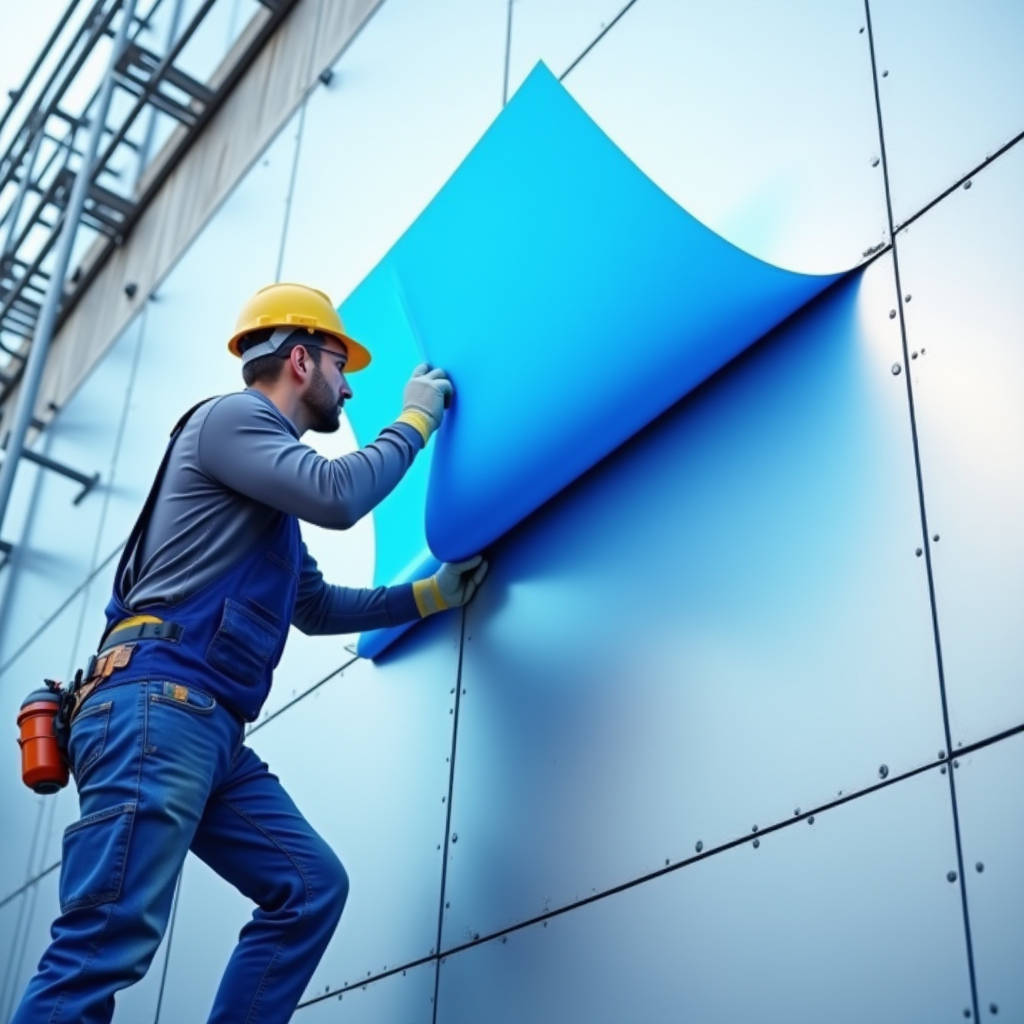
Getting protective film right on solid aluminium cladding panels is not a trivial detail. It is a make-or-break operational decision that separates projects delivered with flawless surfaces from those marred by adhesive ghosting, UV-degraded residue, or impact damage discovered during final inspection. The Aluminum Panel Protective Film Application process sits at the intersection of polymer chemistry, surface energy physics, and hard-nosed construction logistics. When a 3.0mm thick PVDF-coated solid aluminium panel leaves the factory floor, travels 40 days across the ocean, sits on a rack at the jobsite for three weeks, and finally gets hoisted 80 meters up a curtain wall, the film must perform across every single one of those stages without failure. This article examines what that demands in practice.
Why Protective Film Failure Costs More Than You Think
A GC or facade contractor looking at a line item for protective film might see a commodity. The reality is that film failure cascades into costs that no contingency budget comfortably absorbs. Consider a mid-rise commercial tower with 6,000 square meters of solid aluminium cladding. If 8% of panels arrive with scratches requiring rework, the math gets uncomfortable fast. Each panel removed from the rack, stripped of damaged film, inspected, possibly re-polished or re-coated, and re-wrapped means labor hours, crane time, and schedule slippage. At a conservative $120 per panel for rework on a PVDF-finished 2.5mm solid aluminium sheet, that is $57,600 in direct costs before accounting for the delay penalty clauses that most prime contracts carry.
The less visible cost is the reputational one. Adhesive residue left on anodized surfaces after film removal can create a mottled appearance under certain lighting conditions. The building owner's facilities team notices. The architect notices. The photographs taken for the firm's portfolio carry that visual noise permanently. Aluminum Panel Protective Film Application done correctly eliminates this entire category of risk before it materializes.
Surface Types Dictate Film Chemistry
Not all aluminium surfaces interact with adhesives the same way. A film that peels cleanly from a mill-finish surface may bond aggressively to a PVDF topcoat after thermal cycling. Understanding the three dominant surface types in solid aluminium cladding is the starting point for specification.
PVDF (Polyvinylidene Fluoride) Coated Surfaces
PVDF coatings, typically applied at 25-35 microns dry film thickness per AAMA 2605, present a relatively low surface energy substrate. This is the most common finish for architectural aluminium cladding, and the film must strike a balance: enough adhesion to stay put during coil slitting, shearing, and routing, but not so much that the adhesive crosslinks with the fluoropolymer matrix under heat. The risk here is plasticizer migration. Cheap polyethylene films with low molecular weight plasticizers can leach compounds into the PVDF layer, causing a permanent stain visible only after film removal. The specification should demand adhesive systems tested to ASTM D3330 for peel adhesion on PVDF substrates specifically, not generic aluminium.
Anodized Surfaces
Anodized aluminium presents a porous oxide layer, typically 10-25 microns thick depending on architectural class designation. This porosity creates a mechanical interlock opportunity for adhesives. Films that work beautifully on PVDF can leave a haze on anodized surfaces because the adhesive penetrates the pore structure at a microscopic level. The solution involves acrylic-based adhesives with controlled crosslink density. Too low, and the adhesive flows into pores. Too high, and the film lacks sufficient tack to stay adhered during bending operations. Testing per AAMA 611-14 for anodized architectural aluminium provides a relevant framework for verifying film compatibility.
Mill Finish and Brushed Surfaces
Mill finish aluminium, sometimes specified for interior applications or industrial building components, has a thin native oxide layer but no additional barrier. The surface is reactive and susceptible to corrosion if moisture penetrates the film edge. For these applications, the film must incorporate vapor corrosion inhibitors (VCIs) or at minimum use a low-moisture-vapor-transmission-rate (MVTR) backing. Brushed finishes add directional micro-grooves that increase effective surface area, demanding higher initial tack values to maintain full contact.
| Surface Type | Typical Thickness | Recommended Adhesive Type | Peel Adhesion Range (N/25mm) | Key Risk |
|---|---|---|---|---|
| PVDF Coated (AAMA 2605) | 25-35 μm coating | Solvent-acrylic, low migration | 0.8 - 2.5 | Plasticizer staining, ghosting |
| Anodized (Class I) | 18-25 μm oxide layer | Acrylic, controlled crosslink | 1.5 - 3.5 | Adhesive residue in pores |
| Mill Finish | 2-5 nm native oxide | Rubber-based or acrylic with VCI | 2.0 - 4.5 | Corrosion under film edge |
| Brushed / Textured | Variable | High-tack acrylic | 3.0 - 6.0 | Incomplete contact, lifting |
Application Methods: Manual, Semi-Automatic, and Inline
The method by which film meets panel matters as much as the film chemistry itself. Three application approaches dominate solid aluminium panel production lines, and each carries distinct quality implications.
Hand Application with Roller Tools
Smaller fabricators and shops handling custom panel sizes often rely on manual application using handheld roller applicators. The operator positions the film roll at one edge of the panel and walks the roller along, applying even pressure. The skill variable here is significant. Inconsistent pressure creates air channels that expand under thermal cycling, leading to film lifting at edges. A common failure mode: the film looks perfect at 20°C in the shop, but after the panel sits in a container at 55°C for two weeks, those micro-bubbles expand into visible delamination zones. For manual application, a minimum of 40 Shore A durometer roller is recommended to ensure sufficient pressure transfer.
Semi-Automatic Applicator Machines
Mid-volume production facilities typically use semi-automatic applicators. These machines feed the panel through a set of pressure rollers while the film unwinds from a tension-controlled spool. The key advantage is consistent pressure across the full panel width, eliminating the human variability factor. Tension control is critical: too much tension stretches the polyethylene film, which then tries to recover elastically over time, creating shear stress at the adhesive interface. A properly calibrated machine maintains film elongation below 1.5% during application. For Aluminum Panel Protective Film Application at scale, semi-automatic methods represent the practical sweet spot between capital cost and quality consistency.
Inline Application During Coil Processing
High-volume solid aluminium panel manufacturers, including suppliers like Futeng® who run continuous coil coating lines, apply protective film immediately after the PVDF curing oven and cooling section. This inline approach offers the cleanest possible surface at the moment of film application because the panel has not been handled or exposed to shop air. The film bonds to a surface that has not accumulated dust, fingerprint oils, or ambient moisture. The trade-off is that the film must withstand the subsequent slitting, shearing, and fabrication operations. Inline-applied films therefore require higher cohesive strength and edge adhesion to survive these downstream processes without lifting or tearing.
Environmental Factors That Determine Film Performance
Protective film does not live in a laboratory. It lives in shipping containers crossing the equator, on open-air racks at construction sites in the Middle East, and on panels installed during Canadian winters. Each environment imposes different demands.
UV Exposure and Film Degradation
UV radiation attacks polyethylene at the molecular level. Standard LDPE film without UV stabilizers can embrittle within 4-6 weeks of direct sunlight exposure. Once embrittled, the film cannot be removed in one piece. It fractures into small fragments that must be picked off manually, multiplying removal labor by a factor of five or more. UV-stabilized films, typically incorporating hindered amine light stabilizers (HALS) and carbon black, extend outdoor durability to 3-6 months depending on latitude and season. For projects in regions like the Gulf Cooperation Council countries or Southeast Asia, UV-stabilized film is not optional. The specification should reference accelerated weathering per ASTM G154 for a minimum of 500 hours with less than 25% reduction in tensile strength.
Temperature Extremes and Adhesive Behavior
Adhesive systems exhibit temperature-dependent behavior that directly impacts removal. At low temperatures, acrylic adhesives stiffen and lose tack. Film applied at 25°C may be removable at 25°C but become brittle and shatter-prone at -10°C. Conversely, at high temperatures above 50°C, some rubber-based adhesives soften and leave increasing amounts of residue. The practical implication: a panel shipped from a factory in Shanghai in July arrives at a Rotterdam jobsite in August having experienced container temperatures potentially exceeding 60°C. The film adhesive must be formulated to handle this thermal history without degrading. For cold-climate installations, contractors should specify film rated for removal at temperatures as low as -5°C.
Moisture and Condensation Cycles
Panels stored outdoors under tarps experience daily condensation cycles. Water vapor penetrates the film edge and can become trapped between the film and the aluminium surface. This trapped moisture, combined with any surface contaminants, creates a micro-environment where corrosion can initiate, particularly on cut edges where the aluminium substrate is exposed. Edge-sealing techniques, including the use of films with slightly wider dimensions than the panel to create a moisture-shedding overhang, help mitigate this risk. Some film products incorporate a moisture-indicating layer that changes color when water penetration occurs, providing a visual quality check before installation.
Removal Timing: The Critical Window
Every protective film product has a specified removal window. Exceeding it is among the most common causes of film-related failures on construction projects. The removal window is determined by the adhesive's resistance to permanent bonding, which increases over time due to adhesive flow and potential chemical interaction with the substrate.
For standard acrylic-adhesive films on PVDF surfaces, the typical removal window is 6-12 months from application under temperate outdoor conditions. Films left beyond 18 months frequently require heat-assisted removal, solvent cleaning, or in severe cases, mechanical abrasion that damages the underlying coating. The project schedule must account for this. If panels are fabricated and wrapped in Month 1, shipped in Month 2, stored on-site through Months 3-5, and installed in Months 6-8, the film removal in Month 9 falls within a safe window. But if the project hits a delay and panels sit until Month 15, the GC faces a removal problem that was entirely predictable.
A practical protocol: include a film removal deadline in the project quality plan, tied to the date code printed on each film roll. Conduct adhesion peel tests per ASTM D3330 on a sample panel at 3-month intervals if the project timeline extends. This data-driven approach replaces guesswork with evidence.
Adhesive Residue: Causes, Testing, and Remediation
Adhesive residue after film removal is the most visible and complained-about failure mode. Understanding why it happens points toward prevention.
The primary mechanism is adhesive cohesive failure. When the adhesive layer splits internally during removal rather than releasing cleanly from the aluminium surface, part of the adhesive remains. This occurs when the adhesive's cohesive strength is lower than its bond strength to the substrate. Contributing factors include UV degradation of the adhesive polymer, excessive dwell time, and thermal cycling that progressively weakens the adhesive's internal structure.
Testing for residue propensity should be part of the film qualification process. A simple but effective method: apply the candidate film to a sample of the actual panel finish, expose it to 70°C for 72 hours (simulating container heat aging), then remove the film at room temperature. Examine the surface under oblique lighting for any residue. For quantitative results, surface energy measurements using dyne pens before and after film removal can detect invisible contamination. A drop of more than 4 dynes/cm indicates problematic residue.
When residue does occur, remediation options depend on severity. Light residue often responds to isopropyl alcohol or a dedicated adhesive remover formulated for architectural coatings. Heavy residue may require citrus-based solvents with longer dwell times. The critical precaution: always test the cleaning agent on an inconspicuous area or a sample panel first. Some solvents attack PVDF coatings or dull anodized finishes.
Specifying Protective Film: A Practical Checklist
Translating the above into a specification that a procurement team can execute requires clarity on measurable parameters. The following checklist covers the essential elements for solid aluminium cladding panel protective film:
- Film type: LDPE or co-extruded PE, UV-stabilized for outdoor storage exceeding 4 weeks
- Adhesive type: Solvent-acrylic for PVDF; acrylic with controlled crosslink density for anodized
- Thickness: 50-80 microns total (film + adhesive), with thicker films for panels undergoing extensive fabrication
- Peel adhesion: 0.8-3.5 N/25mm depending on surface type, tested per ASTM D3330
- UV resistance: Minimum 500 hours ASTM G154 with less than 25% tensile strength loss
- Removal window: Manufacturer-stated duration, minimum 6 months at 20-30°C ambient
- Temperature range for removal: -5°C to +50°C unless otherwise specified
- Color: Transparent, white, or black/white co-ex; black film provides superior UV blocking
- Width: Sized to panel dimensions plus 5-10mm overhang for edge protection
- Printing: Date code, batch number, and removal instructions printed on film surface
Quality Control During Film Application
Quality control at the point of Aluminum Panel Protective Film Application catches problems before they propagate. The QC checklist should include visual inspection under adequate lighting (minimum 500 lux) for air bubbles, wrinkles, and edge lifting. A simple peel test on a production sample each shift provides ongoing verification of adhesion consistency. Recording ambient temperature and humidity at the time of application creates a traceable data set that can explain film behavior later in the supply chain.
Panel surface cleanliness before film application is non-negotiable. Even a fingerprint contains oils that interfere with adhesive bonding and can initiate localized corrosion. Production lines should incorporate a cleaning stage immediately before the film application station, using a lint-free wipe with a suitable solvent that evaporates completely without leaving residue. The cleaned surface should pass a water break test: deionized water applied to the surface should sheet uniformly without beading, indicating a surface free of hydrophobic contaminants.
Film Selection for Different Project Types
Project characteristics drive film selection as much as surface chemistry does. A quick comparison of common scenarios illustrates the decision logic:
- High-rise curtain wall, 24-month construction schedule: UV-stabilized black/white co-ex film, 70+ microns, rated for 12-month outdoor exposure. The black layer blocks UV, the white outer layer reflects heat.
- Interior wall cladding, climate-controlled storage: Standard transparent LDPE film, 50 microns, 6-month rating. Cost-effective and sufficient for the benign environment.
- Coastal project with salt spray exposure: Film with enhanced edge adhesion and low MVTR to prevent salt-laden moisture ingress. Consider films with corrosion-inhibiting adhesive additives.
- Winter installation in Northern Europe: Film rated for low-temperature removal, acrylic adhesive with plasticizer formulated for cold flexibility. Specify removal test at -5°C.
- Factory-applied, panels shipped within 4 weeks: Standard acrylic film, 50-60 microns, no UV stabilization required if panels are boxed and shipped promptly.
These scenarios underscore that there is no single "best" film. The right film is the one matched to the specific project's surface type, logistics timeline, storage conditions, and installation climate. Suppliers like Futeng® who manage both panel fabrication and film application in-house can align these variables from the start, reducing the finger-pointing that occurs when film and panel come from separate sources.
Industry Standards and References
Several standards provide frameworks for evaluating protective film performance on architectural aluminium. Key references include:
- ASTM D3330 – Standard Test Method for Peel Adhesion of Pressure-Sensitive Tape
- ASTM G154 – Standard Practice for Operating Fluorescent Ultraviolet Lamp Apparatus for Exposure of Materials
- AAMA 2605 – Voluntary Specification for High Performance Organic Coatings on Architectural Aluminum
- ISO 29862 – Self-Adhesive Tapes: Determination of Peel Adhesion Properties
- AAMA 611-14 – Voluntary Specification for Anodized Architectural Aluminum
These standards do not prescribe specific film products, but they establish the test methods and performance criteria against which film suitability can be objectively evaluated. A procurement specification that references these standards gives the supply chain clear, measurable targets.
Practical Engineering Recommendations
The engineering takeaway is straightforward: treat protective film as a specified engineered material, not a consumable afterthought. The film selection should be documented in the project submittal package alongside the panel material certifications. The application process should be subject to the same quality control rigor as the coating application. And the removal timeline should be integrated into the construction schedule as a milestone with the same weight as panel installation completion.
For solid aluminium cladding panels, where the visual surface is the product, the protective film is the last line of defense between the factory's quality output and the building owner's final inspection. Getting Aluminum Panel Protective Film Application right means matching the film's adhesive chemistry to the panel's surface type, verifying UV and temperature ratings against the project's environmental exposure, and enforcing removal within the manufacturer's specified window. When these three elements align, the film does its job invisibly. When any one of them drifts, the consequences are visible, expensive, and permanent.