Aluminum Sheet Cut To Length How Dimensional Precision Drives Facade Performance and Project Cost
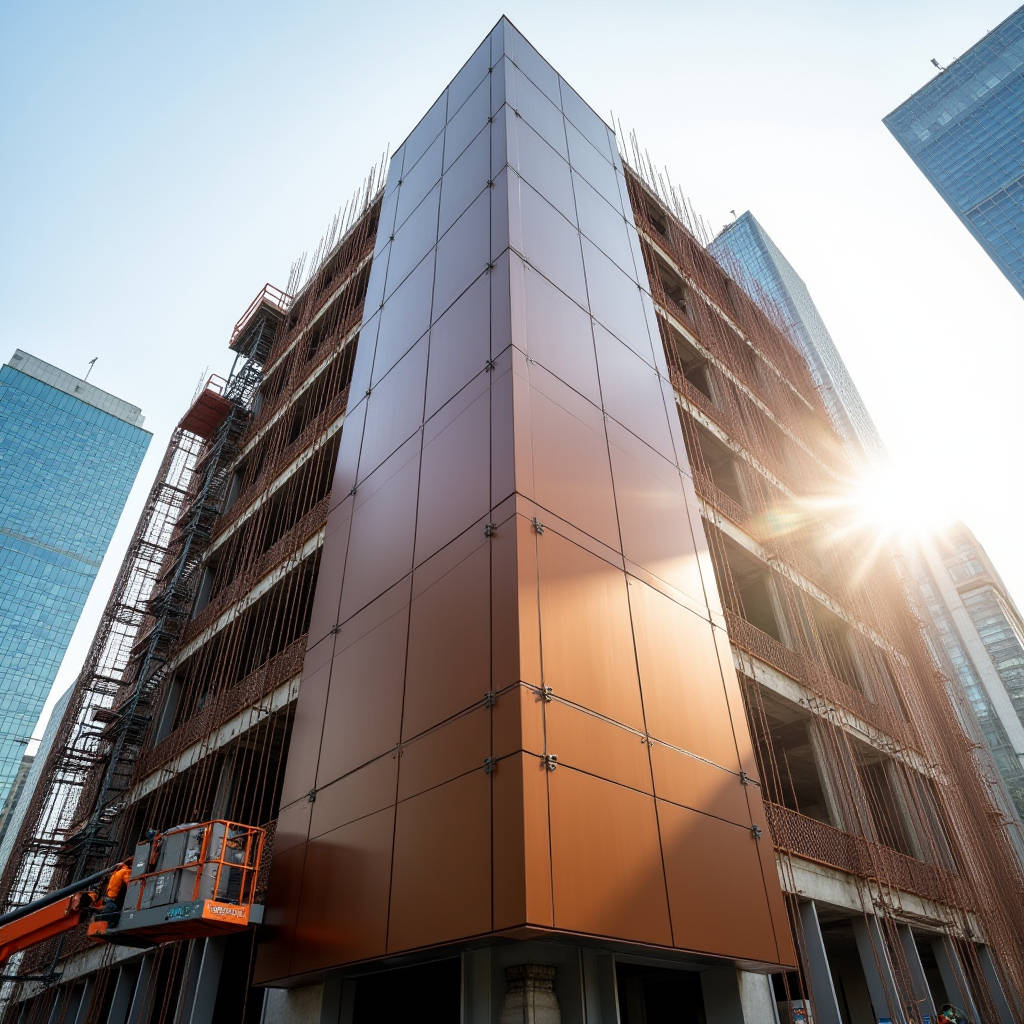
When a facade contractor orders solid aluminum sheets for a rainscreen cladding project, the phrase "Aluminum Sheet Cut To Length" represents far more than a simple sawing operation. It directly determines material yield rates, on-site waste percentages, and whether the installed panels will meet flatness tolerances under direct sunlight. A 3.0mm PVDF-coated sheet that arrives 4mm over specified dimension creates cascading problems: field re-cutting exposes raw edges, compromises coating integrity at the perimeter, and voids warranties that hinge on factory-sealed edges. Getting the cut-to-length specification right before the purchase order is issued separates projects that run smoothly from those that bleed contingency budgets.
What "Cut To Length" Actually Means in Aluminum Sheet Procurement
In aluminum sheet supply, cut-to-length (CTL) describes a service where mill-finish or pre-coated aluminum sheets are sheared, sawn, or laser-cut to precise rectangular dimensions before shipping. This differs fundamentally from buying standard mill sizes (typically 48" x 96", 48" x 120", or 60" x 144") and performing all cutting on-site. The CTL process shifts dimensional responsibility from the jobsite to the supplier's facility, where cutting equipment operates under controlled conditions with calibrated measurement systems.
The distinction matters for three reasons. First, factory-cut edges on PVDF-coated sheets remain sealed with the original coating, whereas field-cut edges expose bare aluminum that must be treated with touch-up pens or clear coat—a process that never matches factory-applied fluoropolymer protection. Second, cutting tolerances in a production environment typically hold ±0.5mm, compared to ±2mm or worse with handheld circular saws on scaffolding. Third, the CTL approach eliminates the need to handle full-size sheets on congested urban sites where staging space is measured in square meters, not acres.
For solid aluminum cladding panels in thicknesses of 2.0mm, 2.5mm, and 3.0mm—the standard range for architectural facades—CTL processing typically uses hydraulic guillotine shears for straight cuts or CNC routers for notched and shaped panels. The alloy selection (commonly 3003-H14, 5052-H32, or 1100-H14) influences which cutting method produces the cleanest edge with minimal burr formation.
Alloy Selection and Its Impact on Cut Quality
Not all aluminum alloys respond to cutting the same way. The three alloys most frequently specified for architectural cladding exhibit distinct behaviors at the shear line:
3003-H14 offers moderate strength (yield strength approximately 145 MPa) with excellent formability. It shears cleanly with minimal burr and accepts bending without cracking at the cut edge. This alloy dominates the cladding market because it balances cost, corrosion resistance, and workability. When specifying 3003-H14 sheets cut to length, expect a clean edge that requires minimal deburring before edge treatment.
5052-H32 provides higher strength (yield strength approximately 193 MPa) and superior corrosion resistance in marine and industrial environments. The higher magnesium content makes the alloy slightly gummier during shearing, which can produce a more pronounced burr if tooling clearances are not optimized. Coastal projects that demand 5052-H32 should specify that the supplier's CTL process includes edge deburring as part of the scope.
1100-H14 is commercially pure aluminum with lower strength but maximum formability. It cuts easily but is rarely specified for exterior cladding due to insufficient mechanical properties for wind load resistance in panel spans exceeding 600mm.
For reference, the Aluminum Association publishes alloy data sheets that detail mechanical properties and typical applications. The ASTM B209 standard governs aluminum sheet and plate specifications, including dimensional tolerances that apply to cut-to-length products. These standards are available through ASTM International.
Dimensional Tolerance: The Numbers That Prevent Site Disasters
The most common dispute between cladding contractors and sheet suppliers revolves around dimensional tolerance. A project specification might call for panels 1200mm wide, but what tolerance is actually achievable and necessary?
For architectural cladding with visible joints, the acceptable tolerance on cut-to-length dimensions depends on the joint design. Open-joint rainscreen systems with 10-15mm gaps can absorb ±1.5mm variation without visual impact. Closed-joint systems with 6-8mm sealant-filled gaps demand tighter control—typically ±0.5mm to ±0.8mm—to maintain consistent joint width and prevent sealant over-extension.
Standard industry practice for CTL aluminum sheets follows these typical achievable tolerances:
| Cutting Method | Typical Tolerance | Best Application | Edge Condition |
|---|---|---|---|
| Hydraulic Guillotine Shear | ±0.5mm to ±1.0mm | Straight rectangular panels, production volumes | Square edge, slight burr possible |
| CNC Router (single sheet) | ±0.3mm to ±0.5mm | Complex shapes, notches, perforations | Clean edge, may show tool marks |
| Laser Cutting | ±0.1mm to ±0.3mm | Intricate patterns, tight tolerances | Heat-affected zone, slight oxide |
| Waterjet Cutting | ±0.2mm to ±0.5mm | Thick plates, no heat distortion | Sandblasted edge finish |
| Panel Saw (field cutting) | ±1.5mm to ±3.0mm | On-site adjustments only | Rough, requires edge treatment |
The tolerance table above reflects real workshop capabilities, not theoretical machine specifications. A supplier quoting ±0.1mm on guillotine-sheared 3.0mm aluminum sheet is either using a precision blanking line or overpromising. Contractors should request documented capability studies for the specific alloy and thickness combination being ordered.
Coating Considerations When Ordering Cut-To-Length Sheets
Pre-coated aluminum sheet presents a particular challenge for CTL processing. PVDF (polyvinylidene fluoride) coatings—the industry standard for architectural exteriors under AAMA 2605—must remain intact at every cut edge. When a sheet is factory-cut after coating, the cut edge exposes bare aluminum. Reputable suppliers address this through several approaches:
Option one: cut the sheet before coating. This produces fully encapsulated edges but limits the coating line to handling pre-cut blanks, which some lines cannot accommodate efficiently. Option two: cut after coating and apply edge sealant at the factory. This provides better logistics but relies on the sealant application quality. Option three: design the facade system so that all cut edges are concealed within the framing system, making edge exposure irrelevant.
The PVDF coating thickness itself—typically 25-35 microns for a two-coat system and 35-45 microns for a three-coat system—must be factored into the final panel thickness. A sheet specified as 3.0mm with a three-coat PVDF system will measure approximately 3.07-3.09mm total thickness. This matters when panels must fit into extruded aluminum frame pockets with tight clearances.
AAMA 2605 provides the performance specification for high-performance organic coatings on aluminum extrusions and panels. The standard addresses color retention, chalk resistance, and gloss retention over extended exterior exposure. Architects specifying cut-to-length coated sheets should reference this standard in their coating specification. Details are available through the American Architectural Manufacturers Association.
Material Yield: Why CTL Ordering Directly Affects Project Cost
The financial case for specifying cut-to-length sheets begins with material yield calculations. Standard mill-size sheets rarely match panel dimensions perfectly, generating offcuts that carry the full cost of the material but contribute nothing to the installed facade.
Consider a project requiring 800mm x 1200mm panels. From a standard 1220mm x 2440mm sheet (approximately 48" x 96"), a fabricator can nest four panels with a 420mm x 1220mm offcut strip—roughly 14% of the sheet area. From a 1525mm x 3050mm sheet (60" x 120"), the same panels yield six units with a 305mm x 1525mm offcut, approximately 10% waste. Neither scenario approaches the 90%+ yield achievable when sheets are ordered pre-cut to 810mm x 1210mm, allowing a 10mm perimeter for final trimming or edge folding.
The yield difference translates directly to material cost. At a hypothetical $45 per square meter for 2.5mm PVDF-coated 3003-H14 sheet, a 10% yield improvement on a 5,000-square-meter facade saves approximately $22,500 in material alone. Add labor savings from eliminating field cutting, reduced waste disposal costs, and faster installation, and the CTL premium—typically 5-10% over mill-standard pricing—pays for itself multiple times over.
Suppliers like Futeng® that offer integrated CTL and coating services can optimize the nesting of pre-cut blanks on the coating line, further reducing the material waste associated with coating overspray on areas that would later become offcuts.
Calculating True Delivered Cost: A Practical Framework
Procurement managers comparing CTL versus standard-sheet pricing should evaluate the total delivered-and-installed cost, not the per-sheet price. The calculation framework includes:
- Material cost: Price per sheet or per square meter delivered to site
- Cutting labor: Hours required to cut sheets to panel dimensions on-site
- Waste factor: Percentage of material that becomes scrap based on nesting efficiency
- Waste disposal: Cost to remove and recycle or landfill aluminum offcuts
- Edge treatment: Touch-up paint, clear coat, or edge sealant for field-cut edges
- Rework risk: Cost of replacing panels damaged during field cutting or handling
- Schedule impact: Days added to the installation timeline for on-site cutting operations
On projects where panel dimensions are standardized and repetitive, CTL ordering typically reduces total installed cost by 8-15% compared to field-cutting from standard sheets. The savings increase on projects with complex geometries, limited site access, or stringent edge-sealing requirements.
Wind Load Performance and Panel Dimensioning
Cut-to-length dimensions directly influence the structural performance of solid aluminum cladding panels under wind load. A panel's spanning capability depends on its thickness, alloy, and the distance between support points. When a contractor orders sheets cut to specific dimensions, those dimensions must account for the structural requirements of the specific building location and height.
For a 3.0mm 3003-H14 aluminum panel with four-edge support on a typical rainscreen carrier system, the allowable wind load varies with panel span. A 600mm x 1200mm panel might resist a design wind pressure of 2.5 kPa (approximately 52 psf), suitable for mid-rise buildings in moderate wind zones. Increase the span to 900mm x 1800mm, and the allowable pressure drops to approximately 1.2 kPa, requiring thicker material or additional intermediate supports.
The relationship between panel dimensions, thickness, and wind resistance follows established engineering principles. The deflection of a rectangular plate under uniform pressure is proportional to the fourth power of the span—doubling the span increases deflection by a factor of 16. This nonlinear relationship means that small increases in cut-to-length dimensions can have outsized effects on structural adequacy.
ASCE 7 provides the wind load calculation methodology used in most North American building codes. The standard defines wind pressure coefficients for building components and cladding, which engineers use to determine the required panel thickness and support spacing. The American Society of Civil Engineers maintains the current edition of this standard.
Thermal Movement and Cut-Length Tolerances
Aluminum expands and contracts with temperature changes at a rate of approximately 23 x 10⁻⁶ per degree Celsius. A 3000mm-long panel subjected to a 60°C temperature swing (from -10°C winter night to 50°C summer sun exposure) will change length by approximately 4.1mm. This movement must be accommodated within the facade joint design.
When ordering Aluminum Sheet Cut To Length, the specified dimension should reflect the panel size at the expected installation temperature. A panel cut to exactly 3000mm at 20°C will measure 3000.7mm at 30°C—a small difference, but one that can matter in tight-tolerance closed-joint systems. More importantly, the joint width between adjacent panels must be sufficient to absorb the cumulative thermal movement without sealant overstressing or panel-to-panel contact.
The relevant standard for thermal expansion data is available through the Aluminum Association, which publishes the Aluminum Design Manual containing thermal expansion coefficients for all common aluminum alloys used in construction.
Quality Verification: What to Check When CTL Sheets Arrive
A systematic incoming inspection protocol prevents non-conforming material from reaching the installation sequence. The following checks should be performed on a statistically representative sample of delivered sheets:
- Dimensional verification: Measure length, width, and diagonal using calibrated steel tape or digital caliper. Diagonal difference exceeding 2mm on a panel under 2000mm suggests out-of-square cutting.
- Thickness check: Use a digital micrometer at multiple points across the sheet. Variation exceeding ±0.08mm from nominal for 3.0mm sheet indicates potential mill tolerance issues.
- Edge condition: Inspect cut edges under adequate lighting for burrs, waviness, or coating delamination. A burr exceeding 0.1mm height requires deburring before installation.
- Coating integrity: Check for scratches, chips, or abrasion near cut edges. Any exposed bare aluminum at the edge should have been factory-sealed.
- Flatness: Place the sheet on a surface plate or known-flat reference. Deviation exceeding 3mm over 1000mm span may cause visible waviness in the installed facade.
- Identification: Verify that heat numbers, alloy designation, and coating batch codes match the mill test reports and project submittals.
Documenting these checks with photographs and measurement records creates an audit trail that protects the contractor if non-conforming material is discovered after installation begins. The ISO 9001 quality management framework provides a structured approach to incoming inspection that many architectural metal suppliers and fabricators follow.
Logistics and Handling of Cut-To-Length Aluminum Sheets
Pre-cut sheets require different handling protocols than full-size mill sheets. The absence of standardized dimensions means that each order may contain multiple unique sizes, complicating packaging, shipping, and on-site storage.
Best practices for CTL sheet logistics include: protective interleaving between coated sheets to prevent transit abrasion; clearly labeled bundles indicating dimensions, alloy, and project reference; vertical storage racks on-site to prevent warping from improper stacking; and just-in-time delivery phasing that matches the installation sequence. A bundle of mixed-dimension sheets that arrives without clear labeling forces the installation crew to measure every sheet before placement—defeating the time savings that CTL ordering was meant to provide.
For international projects, CTL sheets are typically packed in wooden crates with desiccant to prevent condensation during ocean freight. The crate dimensions themselves should be designed to maximize container utilization, as shipping air inside a container adds cost without adding value. A 40-foot high-cube container can accommodate approximately 1,800-2,200 square meters of 2.5mm aluminum sheet, depending on the specific cut dimensions and packing configuration.
When CTL Ordering Makes Sense—and When It Doesn't
Cut-to-length ordering delivers the strongest value proposition under specific project conditions. The decision framework should weigh several factors:
CTL is strongly recommended when: panel dimensions are repetitive and known early in the procurement cycle; the project site has limited space for material staging and cutting; the facade design uses closed joints with tight tolerances; the coating specification requires factory-sealed edges for warranty compliance; or the project schedule cannot absorb the time required for on-site cutting operations.
Standard mill sheets may be preferable when: panel dimensions are not yet finalized at the time of material ordering; the project involves extensive field modifications or custom fitting; the contractor has a well-equipped on-site fabrication facility with calibrated cutting equipment; or the order quantity is small enough that the CTL setup charge exceeds the labor and waste savings.
The decision should be made during the shop drawing phase, not during material procurement. Once shop drawings are approved and panel dimensions are locked, the CTL specification can be written into the purchase order with confidence that the dimensions will not change.
Getting the Aluminum Sheet Cut To Length specification right requires aligning the dimensional requirements with the structural, thermal, and aesthetic demands of the specific facade system. The suppliers who excel at this service combine precision cutting equipment with a working understanding of how their product performs after installation—not just how it looks on the shipping dock.