Aluminum Sheet Tension Leveling Flatness Standards Every Cladding Specifier Must Demand
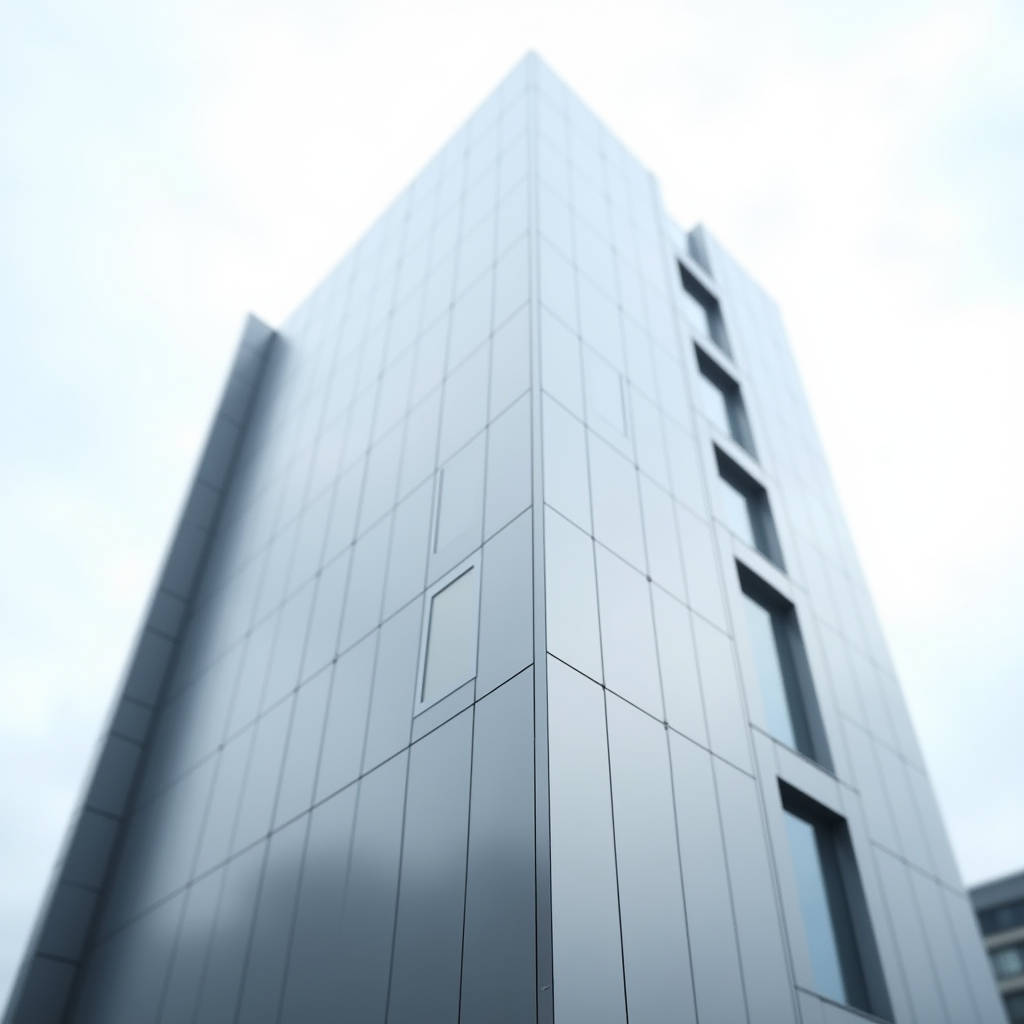
Flatness is not a cosmetic checkbox on an inspection report. For solid aluminium cladding panels—typically 2.0 mm, 2.5 mm, or 3.0 mm thick sheets destined for ventilated facades on high-rise towers—residual stress from rolling manifests as edge wave, center buckle, or crossbow the moment the sheet is released from the stack. Aluminum Sheet Tension Leveling addresses this directly: it is the industrial process of elongating aluminium strip beyond its yield point under precisely controlled tension while simultaneously bending it over small-diameter work rolls. The result is a sheet that stays flat after shearing, forming, and coating. For a curtain wall contractor ordering 8,000 square meters of PVDF-finished panels, the difference between a tension-leveled sheet and a roller-leveled one shows up in oil-canning complaints, installation delays, and ultimately the withheld retention payment. This article examines what happens inside a tension leveling line, how elongation percentage dictates flatness stability, and why procurement specifications that ignore this process are gambling with facade performance.
What Tension Leveling Actually Does to the Aluminium Crystal Structure
To understand why Aluminum Sheet Tension Leveling matters for cladding, you need to look at what happens at the grain level. Cold-rolled aluminium strip carries a legacy of non-uniform internal stress. The rolling mill compresses the material between work rolls, but the reduction is never perfectly uniform across the width. Edge regions cool faster. Center zones experience slightly different reduction ratios. The result is a sheet where some longitudinal fibers are longer than others—a condition metallurgists call "latent shape defect."
Stretch leveling—the older method—pulls the entire strip to roughly 0.5% to 1.0% elongation. That works for mild steel. Aluminium is different. Its elastic modulus is roughly one-third that of steel, meaning it springs back more aggressively. A 0.3% elongation in aluminium might relieve some stress, but the sheet can still exhibit 3 mm to 5 mm of deviation per meter after release. Tension leveling solves this by combining tensile force with alternating bending around small-diameter rolls—typically 20 mm to 60 mm in diameter depending on strip thickness. The bending action forces the outer fibers of the strip to yield in tension and compression simultaneously, while the superimposed global tension ensures that all fibers, long and short, reach the same plastic strain. The industry standard target for aluminium cladding-grade sheet is 0.5% to 1.5% permanent elongation, depending on alloy and temper. For 3003-H14 or 5052-H32 alloys commonly specified for solid aluminium panels, tension leveling lines running at 100 to 300 meters per minute can hold flatness to within 3 I-units or better—a metric that translates to roughly 0.3 mm of deviation per 300 mm of strip length.
This is not a theoretical exercise. A tension leveler equipped with multi-zone roll cassettes—such as the Levelflex® systems developed by REDEX Group—can independently adjust bending penetration across the strip width, compensating for localized shape defects like quarter buckle that a simple stretcher cannot touch. The machine's closed-loop control reads flatness via laser sensors downstream and adjusts intermesh depth in real time. For a service center slitting 1,500 mm-wide coil into 600 mm-wide blanks for cladding fabrication, this means every daughter coil inherits the same flatness as the parent strip.
Why Roller Leveling Falls Short for Cladding-Grade Sheet
Many fabricators own a roller leveler. It is a familiar machine: a series of offset rolls that flex the sheet back and forth, progressively reducing the bend radius until the strip exits reasonably flat. For general sheet metal work—ducting, roofing profiles, simple flashings—roller leveling is adequate. For architectural cladding panels that will be brake-formed, routed, and mounted on a carrier system with 20 mm open joints, it is a risk.
The fundamental limitation of roller leveling is that it only works the surface layers of the sheet. The neutral axis—the mid-plane of the thickness—experiences no plastic deformation. The machine bends the sheet, not stretches it. The internal stress gradient that caused the shape defect in the first place remains largely intact. When the fabricator shears a roller-leveled sheet into a 1,200 mm × 2,400 mm blank, the release of residual stress can reintroduce bow or twist. When that blank goes through a 230°C PVDF curing oven, thermal relaxation can unlock even more latent distortion. The panel that looked acceptable at laydown inspection is suddenly wavy on the installation subframe.
Aluminum Sheet Tension Leveling eliminates this problem at the source. By elongating every fiber through the full thickness, it permanently resets the internal stress state. A tension-leveled sheet stays flat after shearing, after routing, and after the bake cycle. The difference is measurable. In a controlled comparison conducted by BOYA Company's engineering team, 2.0 mm 3003-H14 sheet processed through a roller leveler showed 0.8 mm to 1.5 mm of edge wave after shearing to 1,000 mm width. The same coil processed through a tension leveling line at 0.8% elongation showed less than 0.2 mm deviation—a result that meets the flatness tolerance specified in ASTM B209 for aluminium sheet in architectural applications.
Elongation Percentage: The Number That Procurement Should Specify
Walk into a negotiation with a coil supplier and ask about flatness. You will hear "we level everything." Ask about elongation percentage. The pause tells you everything. Permanent elongation is the single most important parameter in Aluminum Sheet Tension Leveling, yet it rarely appears in purchase orders for cladding-grade sheet.
Here is what the numbers mean in practice. For 3003 alloy at H14 temper, a tension leveling line typically targets 0.6% to 0.8% permanent elongation. This is sufficient to remove coil set, edge wave, and center buckle while preserving the work-hardened strength that gives H14 its 140 MPa minimum yield strength. For 5052-H32—a magnesium-alloyed grade preferred for coastal facades due to its superior corrosion resistance—the elongation target might be slightly lower, around 0.5% to 0.7%, because the higher yield strength (193 MPa minimum) means the line must apply more tension to reach the plastic range. The relationship is straightforward: tension force equals cross-sectional area multiplied by yield strength. A 1,500 mm-wide, 2.0 mm-thick strip of 5052-H32 requires approximately 580 kN of tension to reach yield. The tension leveler's bridle rolls must deliver that force without slipping, and the mill must supply coil with consistent gauge and temper—otherwise the elongation percentage varies across the coil length, and flatness follows suit.
The table below summarizes the practical relationship between alloy, temper, thickness, and the tension leveling parameters that produce cladding-grade flatness. These figures are based on production data from multiple tension leveling line operators and reflect real-world capability, not theoretical maxima.
| Alloy & Temper | Thickness Range | Typical Elongation Target | Tension Force at 1,500 mm Width | Post-Leveling Flatness (I-Unit) | Best Use Case |
|---|---|---|---|---|---|
| 3003-H14 | 1.5 – 3.0 mm | 0.6% – 0.8% | ~420 kN | ≤ 3 I | Standard interior/exterior cladding |
| 3003-H24 | 2.0 – 3.0 mm | 0.5% – 0.7% | ~450 kN | ≤ 4 I | Formed panels with deep draws |
| 5052-H32 | 2.0 – 3.0 mm | 0.5% – 0.7% | ~580 kN | ≤ 3 I | Coastal/high-corrosion facades |
| 5005-H14 | 1.5 – 2.5 mm | 0.6% – 0.8% | ~400 kN | ≤ 3 I | Anodized finish panels |
| 1100-H14 | 2.0 – 3.0 mm | 0.7% – 1.0% | ~350 kN | ≤ 4 I | Interior decorative panels |
Procurement managers who specify "tension leveled to ≤ 3 I-units" and "minimum 0.6% permanent elongation" in their mill orders will see fewer flatness rejections than those who simply write "flat sheet." The specification costs nothing to add and provides a clear pass/fail criterion for incoming inspection. A simple check with a straightedge and feeler gauge on a sheared blank—measuring deviation across a 1,000 mm span—tells you whether the mill actually performed the leveling it claimed.
Surface Integrity: The Hidden Challenge of Tension Leveling Aluminium
Aluminium is soft. Anyone who has handled a freshly uncoiled 5005 sheet knows this. The same property that makes it formable also makes it vulnerable to surface damage during tension leveling. Two specific problems dominate: aluminium powder pickup and chatter marks.
Aluminium powder pickup occurs when the strip surface galls against the work rolls, transferring fine metallic particles that embed into the sheet. These particles are invisible to the naked eye on mill-finish material, but they become glaringly obvious after PVDF or FEVE coating—appearing as small bumps or craters in the 25-35 micron dry film. For a curtain wall panel that will be viewed from 10 meters away in glancing sunlight, these defects are unacceptable. The root cause is usually inadequate roll surface preparation or insufficient lubrication. Leading tension leveling line builders address this through chrome-plated work rolls with a surface roughness of Ra 0.05 to 0.10 microns, combined with a controlled application of low-viscosity leveling oil that evaporates cleanly in the annealing furnace or coating line pre-treatment stage.
Chatter marks are a different beast. They appear as regular, transverse stripes across the strip surface—a vibration pattern transferred from the leveler's drive train to the strip through the work rolls. The frequency typically falls in the 50 to 150 Hz range, corresponding to gear mesh frequencies or bearing defects. On aluminium, chatter is more pronounced than on steel because the material's lower stiffness means the same vibration amplitude produces a deeper impression. BOYA Company's engineering team has documented that chatter marks on 5052 alloy can reach 0.5 to 1.0 micron depth—enough to be visible after a high-gloss metallic PVDF coating is applied. The countermeasure is threefold: helical-cut gearboxes that spread tooth engagement across multiple teeth, dynamically balanced roll assemblies with runout held to under 5 microns, and a stiff machine frame that pushes the natural frequency above the operating range. When specifying aluminium for cladding, the surface after tension leveling should be inspected under a 20x microscope or, at minimum, under angled fluorescent light before the sheet enters the coating line.
AMETEK Surface Vision provides automated surface inspection systems that mount directly on tension leveling lines, using high-speed line-scan cameras and machine-learning algorithms to detect powder pickup, chatter, and other defects in real time. For a service center running 50,000 tons of aluminium annually, such systems pay for themselves by preventing coating rejects that would otherwise be discovered after the expensive PVDF application.
How Tension Leveling Affects Downstream Fabrication: Shearing, Routing, and Forming
The benefits of Aluminum Sheet Tension Leveling extend well beyond the flatness measurement taken at the coil exit. They cascade through every downstream operation in the cladding fabrication sequence.
Shearing is the first test. When a tension-leveled sheet enters a guillotine shear, the blade cuts through material that is uniformly stressed. The offcut drops straight. The blank remains flat. With a roller-leveled sheet, the release of residual stress at the cut edge can cause the blank to spring into a gentle curve—perhaps only 1 mm across 2,400 mm, but enough to cause problems when the panel is mounted on a perfectly planar subframe. The fabricator compensates by over-bending or adding shims, both of which cost labor.
Routing and perforating present a more severe challenge. A CNC router cutting a pattern of slots or holes into a 2.5 mm panel removes material asymmetrically. If the sheet carries residual stress, the routing operation releases it unevenly, and the panel warps. This is a common failure mode for decorative perforated cladding panels, where the designer expects a dead-flat screen and the fabricator delivers a potato chip. Tension-leveled sheet dramatically reduces this risk because the stress field is uniform and low-magnitude before the router touches it.
Brake forming is where flatness and dimensional accuracy converge. A panel that is formed along its length—say, a 3,000 mm-long cassette with 25 mm return legs—must have consistent springback along the entire bend line. If the sheet has localized hard spots from uneven cold work during rolling, the bend angle varies. The installer then fights the panel to align the open joints. Tension leveling, by imparting uniform plastic strain across the entire sheet, homogenizes the yield strength distribution. The result is consistent springback, consistent bend angles, and panels that fit the subframe the first time.
For projects where panels exceed 3,000 mm in length—increasingly common in airport terminals and convention centers—the flatness requirement tightens. A 4,000 mm-long panel with 0.5 mm of edge wave per meter shows 2 mm of total deviation, which is visible across a 20 mm open joint. Specifying tension-leveled sheet with a flatness guarantee of ≤ 3 I-units becomes a contractual necessity, not a preference. Suppliers like Futeng® who run their aluminium coil through dedicated tension leveling lines before slitting and coating can provide mill test certificates that document the actual elongation achieved, giving the contractor traceable quality assurance.
Specifying Tension Leveling in Your Project Documentation
Most architectural specifications for solid aluminium cladding panels are detailed about coating—AAMA 2605 for PVDF, 70% Kynar 500® or Hylar 5000® resin, minimum 25 microns dry film thickness, three-coat system. They are detailed about alloy—3003, 5005, or 5052 per ASTM B209. They are surprisingly silent about flatness. The standard ASTM B209 flatness tolerance for aluminium sheet allows 6 mm of deviation for sheet up to 1,500 mm wide in the as-rolled condition. That is far too loose for architectural cladding.
A proper specification for tension-leveled cladding sheet should include the following elements:
- Flatness standard: Maximum 3 I-units measured per ASTM A1030 or equivalent laser flatness measurement, or alternatively, maximum 0.3 mm deviation per 300 mm of length when measured with a straightedge on a sheared blank.
- Elongation requirement: Minimum 0.6% permanent elongation achieved during tension leveling, documented on the mill test certificate.
- Surface condition: Free from chatter marks, aluminium powder pickup, and roll imprint visible under angled light inspection after cleaning. Surface roughness Ra 0.2 to 0.4 microns on the coating face.
- Applicable standards: ASTM B209 for aluminium sheet, EN 485 for European projects, AAMA 611 for anodized architectural aluminium.
- Verification method: Random sampling of one blank per 500 produced, measured with a calibrated straightedge and feeler gauge across the diagonal and both centerlines, with results recorded and submitted with the batch.
This specification language aligns with the quality requirements defined in AAMA technical documents for architectural metal panels and with the flatness expectations set by the Aluminum Association for coated sheet products. It gives the contractor a defensible basis for rejecting non-conforming material and gives the mill a clear target to hit.
Production Line Configuration: What to Look for in a Tension Leveling Operation
Not all tension leveling lines are equal. A line built for 0.5 mm packaging foil cannot level 3.0 mm cladding sheet. A line designed for steel cannot handle aluminium without modifications to the roll surface and lubrication system. When evaluating a supplier's tension leveling capability—whether at the mill, at a service center, or integrated into the coating line—several machine characteristics indicate whether the operation can deliver cladding-grade flatness.
Bridle roll configuration. The bridle rolls are the tension-generating workhorses of the line. They grip the strip and pull it through the leveling section. For aluminium, the bridle rolls must be large enough in diameter—typically 600 mm to 1,000 mm—to avoid bending the strip around a radius that would itself induce shape defects. The surface of the bridle rolls should be polyurethane-coated or textured to provide grip without marking the aluminium. A four-bridle configuration (two entry, two exit) provides the best tension control, allowing the leveling section to operate at a tension that is independent of the uncoiler and recoiler tension.
Leveling cassette design. The heart of the machine is the cassette containing the small-diameter work rolls. A cassette with 17 to 21 rolls arranged in two banks (upper and lower) with independent vertical adjustment of each bank provides the flexibility to address different shape defects. The roll diameter matters: 20 mm to 40 mm for aluminium in the 2.0 to 3.0 mm thickness range. Smaller rolls produce more bending strain for a given intermesh depth, but they also deflect more under load. The cassette frame must be stiff enough to keep roll deflection under 0.05 mm at full load, otherwise the edges get more bending than the center and flatness suffers.
Multi-zone capability. The most advanced lines, such as the Multiflex systems from REDEX Group, divide the backup rolls into independently adjustable segments across the strip width. This allows the operator to apply more bending penetration at the edges if the incoming strip has edge wave, or more at the center for center buckle. The adjustment can be manual or automated based on feedback from a flatness measurement roll downstream. For cladding sheet, where the incoming coil from the mill may have variable shape defects, multi-zone adjustment is the difference between consistently flat product and a batch that requires rework.
Line speed and tension control. Tension leveling lines for aluminium cladding sheet typically run at 100 to 300 meters per minute. At these speeds, the tension control system must respond to variations in coil gauge and temper within milliseconds. A load cell-based tension measurement on each bridle, feeding a PID controller that adjusts the bridle motor torque, can hold tension within ±1% of setpoint. This precision is critical because tension directly determines elongation, and elongation determines flatness.
Cost Implications: Tension Leveling in the Project Budget
Tension leveling adds cost to the aluminium sheet. The question for the project team is whether that cost is offset by savings in fabrication, installation, and warranty claims. The answer, in most cases involving architectural cladding, is yes.
The cost adder for tension-leveled sheet over roller-leveled sheet varies by region and mill, but a reasonable estimate is $50 to $120 per metric ton. For a project consuming 40 metric tons of 2.5 mm aluminium sheet—roughly 6,000 square meters of cladding panels—the premium is $2,000 to $4,800. Spread across the installed panel cost, which typically runs $400 to $800 per square meter for a complete ventilated facade system including subframe, insulation, and installation labor, the tension leveling premium represents less than $1 per square meter, or under 0.2% of the facade budget.
Against this modest cost, consider the potential savings. Panels that arrive flat install faster. A crew that can hang 80 panels per day instead of 60 because they are not fighting alignment saves 25% on installation labor for the panel-hanging phase. Panels that are flat produce uniform joint widths, eliminating the callbacks where the architect's representative rejects the installation because 20 mm joints vary between 18 mm and 22 mm. Panels that stay flat after thermal cycling do not generate warranty claims for oil-canning—a complaint that can cost the contractor $50,000 or more to remediate on a large project.
The ISO 9001 quality management framework, applied to facade contracting, treats incoming material quality as a preventive cost. Tension leveling is a preventive measure. The alternative—discovering flatness problems during installation—is a failure cost that is always higher. Experienced project managers budget for tension-leveled sheet as a form of risk mitigation, not as a material upgrade.
Inspection and Quality Control: Verifying Flatness Before Coating
The best time to verify flatness is before the sheet enters the PVDF coating line. Once the coating is applied and cured, the cost of rejection multiplies—the coating material alone can represent $15 to $25 per square meter. A practical incoming inspection protocol for tension-leveled aluminium sheet destined for cladding fabrication includes the following steps.
First, check the mill test certificate. It should state the tension leveling process, the target elongation, and the measured flatness in I-units. If the certificate only says "leveled" without quantification, treat the material as suspect. Second, select a sample blank from the first coil processed—ideally the first sheared piece from the slitting line. Place it on a certified granite surface plate or a known-flat inspection table. Using a calibrated straightedge conforming to ASTM B209 requirements, measure the gap between the straightedge and the sheet surface at the center, edges, and diagonals. For a 1,200 mm × 2,400 mm blank, the maximum gap should not exceed 0.8 mm for a 3 I-unit flatness specification. Third, visually inspect the surface under angled light for chatter marks, roll imprint, and powder pickup. Any defect visible at this stage will be more visible after coating.
If the material passes these checks, proceed with confidence. If it fails, reject the coil before it enters the coating line. The cost of returning a coil to the supplier is a fraction of the cost of coating defective material and then discovering the problem during panel fabrication or, worse, during installation. The NFCA (National Fenestration Rating Council-related bodies) and various national facade engineering associations publish guidance on flatness acceptance criteria that can be referenced in project specifications.
Practical Takeaways for the Facade Supply Chain
Flatness is a system property, not a material property. A flat sheet becomes a flat panel becomes a flat facade. The chain starts with Aluminum Sheet Tension Leveling at the mill or service center. For the architect, the takeaway is to specify flatness in measurable terms—I-units or millimeter deviation—rather than relying on the vague "free from objectionable defects" language that populates many specifications. For the procurement manager, the takeaway is to request elongation data on mill test certificates and to qualify suppliers based on their tension leveling capability, not just their alloy availability and price per ton. For the fabricator, the takeaway is to verify flatness at incoming inspection, before the sheet enters the coating line, and to build a feedback loop with the coil supplier so that flatness problems are corrected at the source rather than compensated for downstream. For the installer, the takeaway is that panels that arrive flat go up fast, and panels that do not will cost the project in labor, schedule, and reputation.
The technology exists. The standards exist. The cost premium is small relative to the risk it mitigates. What remains is for the cladding industry to treat flatness as a specified, measured, and verified property—the same way it already treats alloy chemistry, coating adhesion, and wind load resistance. Tension leveling is the process that makes that possible.