How Aluminum Extrusion Aging Treatment Determines Solid Cladding Panel Strength and Facade Durability
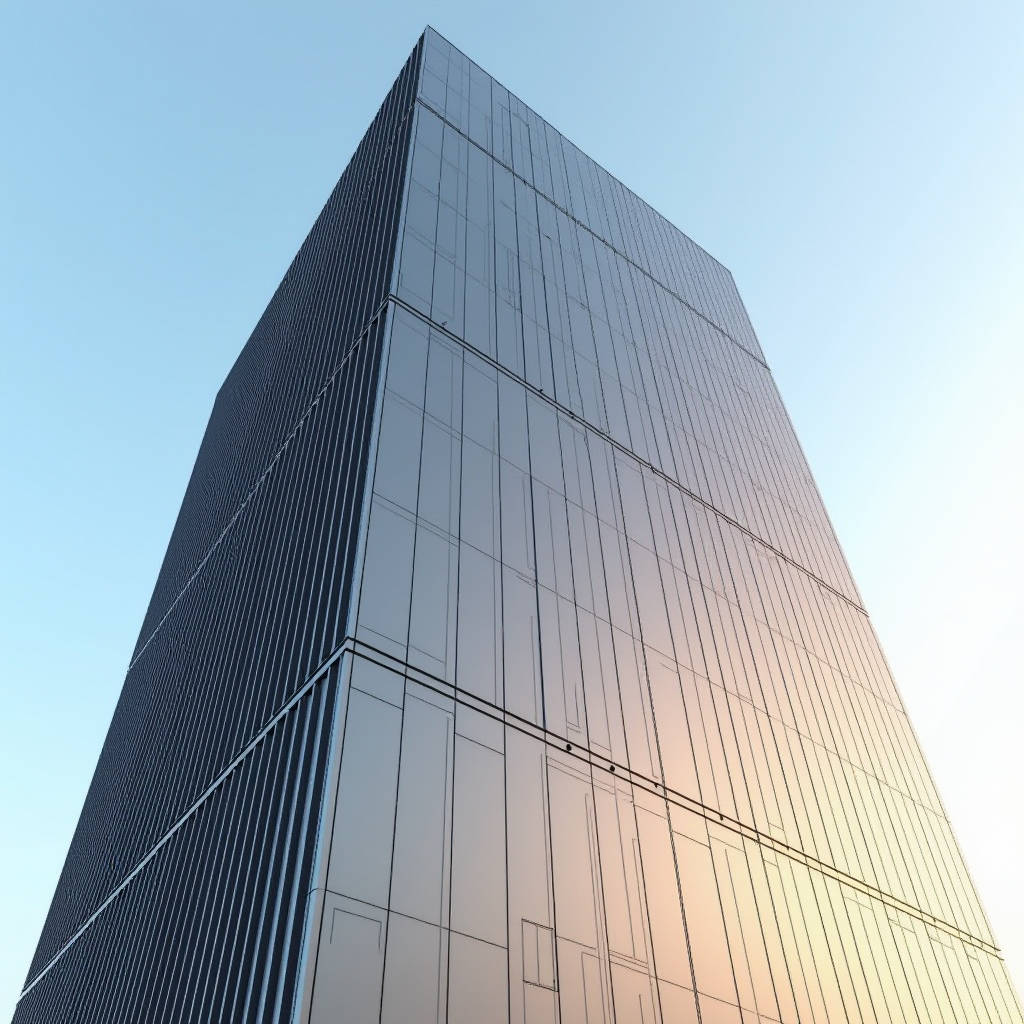
The Aluminum Extrusion Aging Treatment is not merely a post-production checkbox—it is the metallurgical backbone that determines whether a 6xxx-series aluminum cladding panel will hold its mechanical integrity across decades of thermal cycling, wind load, and environmental exposure. When a specification calls for 6082-T6 or 6061-T6 solid aluminum panels, the "T6" designation is entirely dependent on precise artificial aging: a controlled precipitation-hardening cycle that transforms a supersaturated solid solution into a fine dispersion of Mg₂Si precipitates. For architects and facade engineers, understanding this process means the difference between a panel that resists oil-canning and one that distorts under the first summer heat load. This article examines exactly how aging parameters—temperature, soak time, ramp rate—translate into the tensile strength, yield strength, and elongation values that govern cladding performance on high-rise envelopes.
What Happens Inside the Metal During Aging
To grasp why Aluminum Extrusion Aging Treatment matters for cladding, you need to understand what happens at the precipitate level. When a 6xxx-series billet exits the extrusion press at roughly 500°C, the alloying elements—primarily magnesium and silicon—are trapped in a supersaturated solid solution after rapid quenching. This state is unstable. Left alone at room temperature, natural aging begins slowly, producing GP zones (Guinier-Preston zones) that offer modest strength gains over weeks. But for architectural applications demanding consistent mechanical properties, natural aging is too slow and too unpredictable.
Artificial aging accelerates this process dramatically. By holding the extrusions at temperatures between 160°C and 200°C for 4 to 12 hours, manufacturers force the precipitation of needle-shaped β″ (beta double-prime) phases—the metastable Mg₂Si precipitates that deliver peak strength in T6 tempers. The key insight for specifiers: the size, density, and distribution of these precipitates are exquisitely sensitive to both temperature and time. A furnace that overshoots by 10°C can coarsen precipitates, dropping yield strength by 15-20 MPa. A soak time cut short by 90 minutes leaves the alloy under-aged, with hardness values that may pass initial QA but degrade under service conditions.
This is not theoretical. On a 40-story curtain wall project in Southeast Asia, a batch of 6082-T6 panels exhibited unexpected deflection after installation. Metallurgical analysis traced the problem to an aging furnace with a faulty zone thermocouple—the bottom rack of extrusions aged at 155°C instead of the specified 175°C, producing yield strengths 12% below specification. The panels were replaced, but the lesson was expensive: aging is where the material earns its temper designation.
Why Aging Parameters Dictate Cladding Performance
For solid aluminum cladding panels—typically 2.0mm, 2.5mm, or 3.0mm thick sheets fabricated from 6082 or 6061 extrusions or rolled plate—the mechanical properties established during Aluminum Extrusion Aging Treatment directly control three critical performance metrics:
- Resistance to oil-canning: Oil-canning, the visible waviness or buckling in flat panel surfaces, is governed by the panel's yield strength and residual stress distribution. Under-aged material with lower yield strength will exhibit elastic buckling at lower thermal stresses. A properly aged T6 panel with yield strength above 250 MPa (for 6082) provides significantly greater resistance than a T4 or under-aged T5 temper.
- Wind load deflection: Curtain wall panels spanning between mullions must resist positive and negative wind pressures without exceeding L/175 deflection limits per AAMA 508. The modulus of elasticity for aluminum is relatively constant across tempers, but yield strength determines when permanent deformation occurs. Over-aged material may meet deflection criteria but fail under ultimate wind load with plastic deformation.
- Fatigue life under cyclic loading: Building facades experience millions of low-amplitude stress cycles from wind vortex shedding and thermal expansion. Peak-aged T6 microstructures, with their fine, uniformly distributed precipitates, resist crack initiation better than over-aged structures where precipitate-free zones form along grain boundaries.
Futeng® has observed that projects specifying 6082-T6 solid panels for coastal high-rises consistently report fewer oil-canning complaints compared to those using lower-strength tempers—provided the aging process is validated with batch-specific hardness testing rather than relying solely on mill certificates.
T5 vs. T6 vs. T7: The Temper Decision That Shapes Your Facade
The temper designation stamped on every mill certificate encodes the aging history of the material. For architectural cladding, three tempers dominate the conversation, and the differences are entirely about Aluminum Extrusion Aging Treatment parameters:
| Temper | Aging Process | Typical Yield Strength (6082) | Elongation | Best Application |
|---|---|---|---|---|
| T5 | Cooled from extrusion temperature, then artificially aged (no separate solution treatment) | 200-240 MPa | 8-10% | Low-rise cladding, interior panels, soffits with minimal wind exposure |
| T6 | Solution heat-treated, quenched, then artificially aged to peak strength | 250-290 MPa | 8-12% | High-rise curtain walls, large-format panels, hurricane-prone zones |
| T7 | Solution heat-treated, quenched, then over-aged past peak strength | 220-260 MPa | 10-14% | Marine environments requiring maximum stress corrosion cracking resistance |
The T5 route is economically attractive because it eliminates the separate solution heat treatment step. The extrusion exits the press, cools through the critical temperature range, and proceeds directly to the aging oven. However, the cooling rate from extrusion temperature is less controlled than a dedicated quench, producing a coarser precipitate distribution after aging. For 2.5mm thick panels on a 60-meter tower, the strength differential between T5 and T6 can translate to a 15-20% difference in allowable span between stiffeners.
T6 represents the sweet spot for most architectural cladding. The separate solution treatment at 520-540°C fully dissolves Mg₂Si, and the subsequent water or forced-air quench locks in the supersaturated state. Artificial aging at 170-180°C for 6-8 hours then precipitates the β″ phase at peak density. The result: maximum strength with sufficient ductility for bending and forming operations.
T7 over-aging deliberately sacrifices some strength for enhanced resistance to stress corrosion cracking (SCC). In marine environments where chloride-laden air attacks aluminum, the coarser precipitate structure of T7 reduces susceptibility to intergranular corrosion. For a beachfront hotel facade in the Maldives, T7 might be the safer choice despite the 10-15% strength penalty versus T6.
Furnace Technology and Temperature Control: Where Quality Is Won or Lost
The aging furnace is not a simple oven. The Aluminum Extrusion Aging Treatment process demands temperature uniformity within ±5°C across the entire load, as specified in ASTM B918 for aluminum heat treatment. Achieving this in a production furnace loaded with several tons of extrusions requires sophisticated air circulation and multi-zone control systems.
Three furnace types dominate the industry:
- Batch aging ovens: The most common configuration. Extrusions are loaded onto racks and wheeled into a chamber where heated air circulates. Temperature uniformity depends on fan placement, baffle design, and load configuration. A well-designed batch oven can achieve ±3°C uniformity; a poorly maintained one may see ±12°C variation between top and bottom racks.
- Continuous aging lines: Extrusions pass through a tunnel furnace on a conveyor, with residence time controlled by line speed. These systems offer excellent consistency for high-volume production of a single profile, but changeover between different sections can be complex.
- Vertical aging furnaces: Less common in architectural aluminum, but valuable for long extrusions (8-12 meters) where horizontal sagging during aging could cause distortion. The vertical orientation minimizes gravitational deflection at temperature.
For cladding manufacturers and their customers, the critical quality assurance question is: how does the extruder verify that aging was performed correctly? The answer should be hardness testing—typically Webster or Vickers—on samples from each aging batch. A properly aged 6082-T6 extrusion should register 95-105 HB (Brinell). Values below 90 HB suggest under-aging; values above 110 HB may indicate over-aging with reduced ductility. Smart specifiers request hardness test reports alongside tensile test certificates, because hardness testing is faster, cheaper, and can be performed on every batch without destructive sampling.
Common Aging Defects That Compromise Cladding Quality
Even with modern furnace controls, Aluminum Extrusion Aging Treatment can go wrong in ways that directly impact cladding performance. Here are the defects that facade engineers should watch for:
Under-Aging
Under-aging occurs when the soak time is too short or the temperature too low to achieve peak precipitation. The material shows lower hardness and yield strength than the temper designation requires. Visually, under-aged panels are indistinguishable from properly aged ones—the problem only reveals itself during fabrication (excessive springback during bending) or after installation (oil-canning, excessive deflection).
A specific risk: some extruders, facing production pressure, may reduce soak time from 8 hours to 6 hours and compensate with a slightly higher temperature. This "time-temperature equivalence" is valid within limits, but the precipitate size distribution changes. Shorter, hotter aging produces a coarser precipitate structure with lower ductility, even if hardness values appear acceptable. The panel may pass incoming QA but exhibit unexpected cracking during routing or folding operations.
Over-Aging
Over-aging pushes past the peak strength point into the regime where precipitates coarsen and the precipitate-free zones along grain boundaries widen. Yield strength drops—sometimes below the T6 specification minimum—and while ductility increases, the loss of strength can cause panels to exceed deflection limits under design wind loads.
Over-aging is particularly dangerous because it can occur unevenly within a single batch. If a furnace has a hot spot near the heating elements, extrusions in that zone may be over-aged while the rest of the load is correctly aged. The resulting mixed-property batch creates a nightmare for quality control: the sample tested may pass, but individual panels cut from different sections of the extrusion may perform differently on the facade.
Quench Delay Before Aging
This defect is technically a solution-treatment problem, but it manifests during aging. If the time between solution treatment/quenching and artificial aging exceeds 4-8 hours (depending on alloy), natural aging at room temperature produces GP zones that interfere with subsequent artificial aging. The result: lower peak strength after artificial aging, because the GP zones consume solute that would otherwise form β″ precipitates. This is why reputable extruders track the "quench-to-aging delay" as a process control parameter and schedule aging within 2-4 hours of quenching whenever possible.
Specifying Aging Requirements for Cladding Projects
For architects and spec writers, the challenge is translating Aluminum Extrusion Aging Treatment requirements into enforceable specification language. A vague reference to "6082-T6 per ASTM B209" leaves too much room for interpretation. Here is what a robust specification should address:
- Reference the governing standard explicitly: ASTM B918/B918M covers heat treatment of wrought aluminum alloys and specifies furnace classification, temperature uniformity requirements, and testing procedures. Citing this standard gives your specification teeth.
- Require batch-level hardness testing: "Each aging batch shall be tested for Brinell hardness per ASTM E10, with a minimum of three readings per batch. Hardness values shall fall within 95-105 HB for 6082-T6 material. Batches failing to meet this range shall be re-aged or rejected."
- Define acceptable quench-to-aging interval: "Artificial aging shall commence within 4 hours of quenching. Material held at ambient temperature for longer than 4 hours between quench and aging shall be re-solution-treated before aging."
- Specify aging parameters for verification: While you should not dictate the extruder's process, you can require documentation: "The extruder shall provide a furnace time-temperature chart for each aging batch, demonstrating soak temperature within ±5°C of the target and soak duration meeting the minimum specified for the alloy and temper."
- Address re-aging limits: "Material that has been aged more than twice shall be rejected. Re-aged material shall be clearly identified on mill certificates and packing lists."
These requirements add minimal cost to the extrusion supply chain—batch hardness testing takes perhaps 15 minutes and a $2,000 instrument—but they eliminate the risk of under-performing material reaching the jobsite. On a $5 million curtain wall package, the cost of replacing defective panels dwarfs the incremental QA cost.
Alloy Selection: 6061 vs. 6063 vs. 6082 for Cladding Applications
The choice of alloy interacts directly with aging response. While all three are 6xxx-series heat-treatable alloys, their aging behavior and resulting properties differ significantly:
| Property | 6061-T6 | 6063-T6 | 6082-T6 |
|---|---|---|---|
| Mg₂Si content (approx.) | 1.2-1.5% | 0.8-1.0% | 1.3-1.7% |
| Tensile strength (MPa) | 290-310 | 215-240 | 310-340 |
| Yield strength (MPa) | 240-260 | 170-195 | 260-290 |
| Extrudability | Good | Excellent | Moderate |
| Corrosion resistance | Very good | Excellent | Very good |
| Typical aging temp/time | 175°C / 8 hrs | 185°C / 6 hrs | 175°C / 8 hrs |
| Cladding application | High-strength panels, stiffeners | Architectural trim, lower-stress panels | Premium high-rise cladding, large spans |
6063 is the workhorse of architectural extrusions—it flows easily through complex dies, produces excellent surface finish, and anodizes beautifully. But its lower Mg₂Si content limits the strength achievable through aging. For cladding panels that are fabricated from sheet rather than extrusions, 6063 is rarely used; it shines in mullion and transom extrusions where complex geometry matters more than peak strength.
6061 offers a strong balance of strength, corrosion resistance, and formability. Its aging response is well-characterized and predictable. For 2.0mm thick panels on mid-rise buildings (up to 30 meters), 6061-T6 provides adequate strength with good bending characteristics for return flanges and edge details.
6082, with its higher manganese content and slightly higher Mg₂Si fraction, delivers the highest strength of the three after T6 aging. The trade-off is slightly reduced extrudability and marginally higher cost. For 3.0mm thick panels spanning 1.2 meters between stiffeners on a 60-story tower, 6082-T6 is often the only alloy that meets strength requirements without adding stiffeners. The aging process for 6082 requires tighter control—its higher alloy content makes it more sensitive to quench rate variations, and the aging temperature window for peak properties is narrower (±5°C versus ±8°C for 6061).
Energy Consumption and Sustainability in Aging Operations
The Aluminum Extrusion Aging Treatment process is energy-intensive. A typical batch aging furnace operating at 175°C for 8 hours consumes approximately 250-400 kWh per tonne of extrusions, depending on furnace insulation quality, load density, and heat recovery systems. For a mid-sized extrusion plant producing 20,000 tonnes annually, aging alone accounts for roughly 5-8 GWh of electricity consumption per year.
This energy reality has driven several innovations in aging furnace design:
- Regenerative burners and heat recovery: Modern furnaces capture exhaust heat to preheat incoming combustion air, reducing natural gas consumption by 20-30% in gas-fired systems.
- Load optimization: Dense packing of extrusions improves furnace utilization, but excessive density compromises air circulation and temperature uniformity. Computational fluid dynamics (CFD) modeling helps extruders find the optimal balance.
- Reduced-temperature aging: Some research, including work published on 6082 alloy optimization, suggests that two-step aging cycles—a lower-temperature nucleation stage followed by a higher-temperature growth stage—can achieve T6 properties with 10-15% less total energy input. This approach is not yet standardized but represents an active area of development.
For specifiers pursuing LEED or BREEAM credits, the embodied carbon of aluminum cladding is a significant concern. While aging energy is a small fraction of total aluminum lifecycle carbon (primary aluminum smelting dominates), requesting documentation of the extruder's energy management practices and aging furnace efficiency can contribute to Material and Resources credits. Some extruders now offer Environmental Product Declarations (EPDs) that include heat treatment energy in their scope.
Quality Verification: What to Check on Incoming Cladding Material
When solid aluminum cladding panels arrive at the fabrication shop or jobsite, the Aluminum Extrusion Aging Treatment quality can be verified through several practical tests that go beyond reviewing mill certificates:
Hardness Testing
A portable Webster hardness tester provides a rapid, non-destructive check that can be performed on every panel if needed. For 6082-T6, Webster hardness readings of 14-16 (equivalent to 95-105 HB) indicate proper aging. Readings below 13 suggest under-aging and warrant tensile coupon testing before fabrication proceeds. The test takes 30 seconds and leaves a barely visible indentation that is covered by the PVDF or powder coating.
Conductivity Testing
Eddy current conductivity meters offer another rapid verification method. The electrical conductivity of aluminum changes with aging condition—under-aged material has lower conductivity due to solute atoms in solid solution scattering electrons. Properly aged 6082-T6 typically shows conductivity of 40-44% IACS (International Annealed Copper Standard). Values below 38% IACS suggest incomplete precipitation and potential under-aging.
Tensile Testing
When hardness or conductivity results are ambiguous, a tensile test per ASTM E8 provides definitive data. Cut a coupon from a sample panel, test to failure, and verify that yield strength, tensile strength, and elongation meet the specified temper requirements. This is destructive testing and cannot be performed on every panel, but it should be conducted on a per-batch statistical sampling basis—typically one coupon per 50 panels or one per aging batch, whichever is more frequent.
"The difference between a properly aged T6 panel and an under-aged one is invisible to the eye but unmistakable under load. We learned this the hard way on a project where panels that passed visual inspection developed oil-canning within six months of installation. Batch hardness testing has been non-negotiable in our QA process ever since." — Senior Facade Engineer, international curtain wall contractor
Interaction Between Aging and Subsequent Fabrication Processes
Aging is not the final step in the cladding supply chain. After aging, extrusions or rolled sheets undergo cutting, routing, bending, welding (for stiffener attachment), and surface finishing. Each of these processes interacts with the aged microstructure:
Welding: When stiffeners are welded to the back of cladding panels, the heat-affected zone (HAZ) experiences local temperatures that dissolve aging precipitates. The HAZ reverts to a near-annealed condition with yield strength potentially 40-50% below the parent T6 material. For this reason, post-weld aging is sometimes specified—a localized or full-panel re-aging cycle that restores some of the lost strength. However, this is rarely practical for large architectural panels. The better approach is to design stiffener layouts so that the HAZ does not coincide with regions of maximum bending stress.
Bending: The elongation remaining after T6 aging—typically 8-12% for 6082—determines the minimum bend radius achievable without cracking. Under-aged material with higher elongation may bend more readily, but at the cost of final strength. Over-aged material with coarser precipitates may show reduced bendability despite higher measured elongation, because strain localizes in precipitate-free zones. The practical message: if your panel design involves tight-radius bends (less than 2t for 2.5mm material), discuss the bending requirements with the extruder before finalizing the aging specification.
PVDF coating cure: PVDF liquid coatings are typically cured at 230-250°C for 10-15 minutes. This temperature is above the aging temperature and below the solution treatment temperature. For properly aged T6 material, the PVDF cure cycle has negligible effect on mechanical properties because the time at temperature is short. However, for under-aged material, the PVDF cure can act as a secondary aging step, potentially increasing strength but also introducing unpredictable property changes. This is another reason to verify aging condition before coating.
Global Standards and Their Aging Requirements
Different markets reference different standards for Aluminum Extrusion Aging Treatment, and understanding the nuances helps specifiers avoid compliance gaps:
- ASTM B918 (USA): The primary standard for heat treatment of aluminum alloys. Classifies furnaces by temperature uniformity (Class 1: ±3°C, Class 2: ±5°C, Class 3: ±8°C). For architectural T6 aging, Class 2 is the minimum acceptable classification.
- EN 515 (Europe): Defines temper designations and the processes required to achieve them. References EN 1706 for casting alloys and EN 755 for wrought products. The aging requirements are functionally equivalent to ASTM but use different terminology.
- GB/T 6892 (China): Chinese national standard for aluminum alloy extruded profiles for general engineering. Aging requirements align with international practice, but specifiers should verify that the extruder's furnace classification and testing procedures match ASTM or EN expectations.
- AAMA 611 (USA): Voluntary specification for anodized architectural aluminum. While focused on anodizing, it references heat treatment requirements and provides guidance on acceptable property ranges for architectural applications.
For international projects, the safest approach is to specify dual compliance: "Aging shall be performed in accordance with ASTM B918 Class 2 furnace requirements, and the resulting mechanical properties shall meet the requirements of EN 755-2 for 6082-T6 material." This closes gaps where one standard might be silent on a parameter that another addresses.
Practical Engineering Recommendations
Based on the metallurgical principles and field experience discussed above, here are actionable recommendations for specifying and verifying Aluminum Extrusion Aging Treatment on cladding projects:
- Match the temper to the application, not the budget: The cost difference between T5 and T6 material is typically 5-8% of the extrusion price. On a cladding package where fabrication and installation labor dominate total cost, this premium is negligible compared to the risk of performance issues. For any panel spanning more than 600mm between supports, T6 is the prudent minimum.
- Request furnace charts and hardness data: Mill certificates that only report tensile properties are insufficient. Request the time-temperature chart for the aging cycle and batch hardness readings. If the extruder cannot provide these, find one that can.
- Audit the aging operation during factory visits: When qualifying a new extrusion supplier, visit the aging furnace area. Check for temperature recording instruments, observe load configuration, and ask about quench-to-aging intervals. A well-run aging operation is clean, organized, and documented.
- Consider the full supply chain: Aging quality can be compromised by events before and after the aging furnace. Verify that solution treatment and quenching are equally well-controlled. Check that fabrication processes (welding, coating cure) do not degrade the aged microstructure.
- Build QA into the specification: Include specific acceptance criteria for incoming material: hardness range, conductivity range, and sampling frequency for tensile testing. Make these requirements contractual, not advisory.
Futeng® supplies solid aluminum cladding panels fabricated from 6082-T6 and 6061-T6 material, with full traceability to the aging batch and comprehensive QA documentation. The principles outlined here apply regardless of supplier, but the rigor of aging process control varies significantly across the industry. Ask the right questions, demand the right documentation, and verify before fabrication begins.
The metallurgy of precipitation hardening has been understood since the 1930s, but its application to architectural cladding continues to evolve. As building envelopes become more demanding—taller, lighter, more thermally efficient—the role of precise Aluminum Extrusion Aging Treatment in delivering reliable, long-term facade performance only grows. The furnace operator adjusting a temperature setpoint may seem far removed from the architect specifying a panel finish, but the connection is direct and consequential. Understanding that connection is what separates a durable facade from one that disappoints.