Aluminum Extrusion Quenching Methods and Their Effect on Solid Cladding Panel Flatness
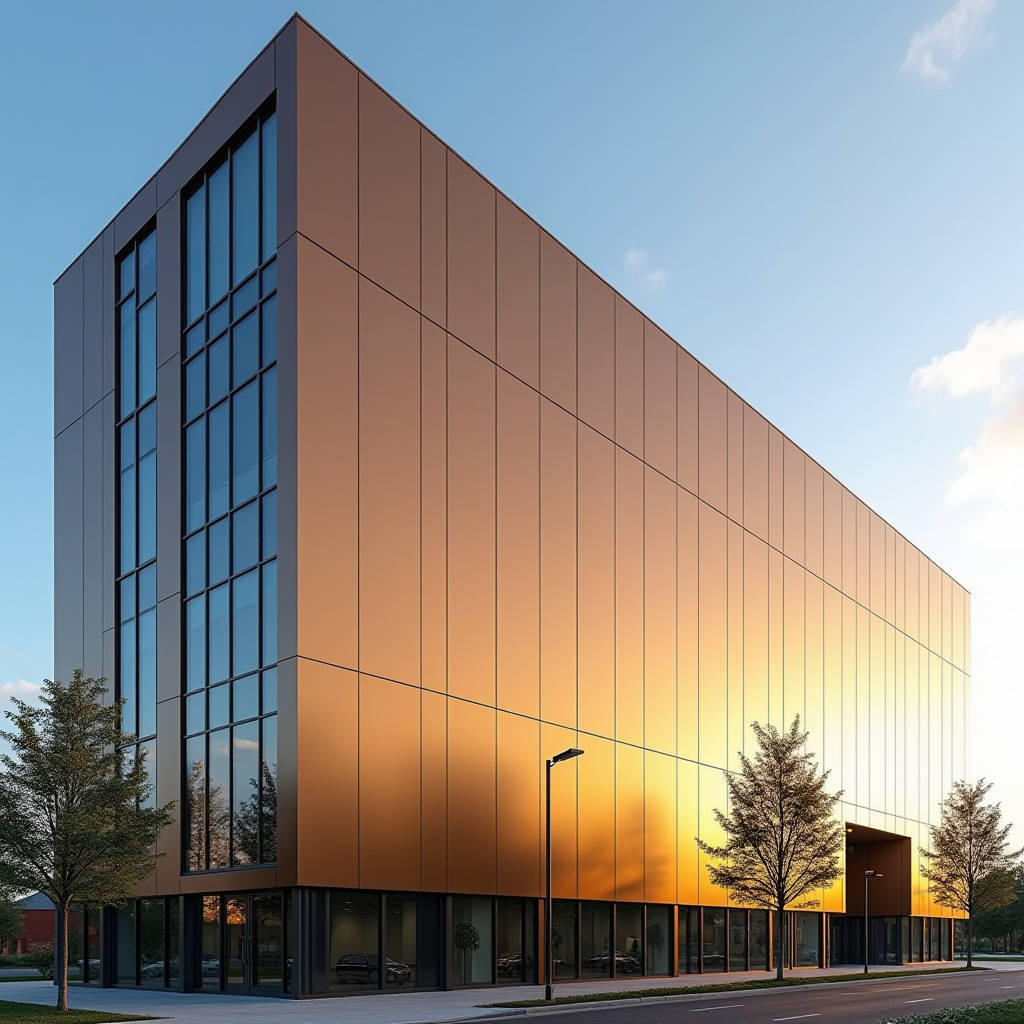
Aluminum extrusion quenching is the controlled rapid cooling of extruded aluminium profiles immediately after they exit the press die, and it determines whether your cladding panels will meet the mechanical properties specified in your project documentation. When a 2.5mm solid aluminium sheet arrives on site, its tensile strength, yield point, and grain structure were largely locked in during those first seconds after extrusion. Getting quenching right means the difference between panels that stay flat under thermal cycling and panels that warp before installation is complete. For architects and facade engineers specifying solid aluminium cladding panels, understanding what happens inside the quench zone translates directly to predictable performance on the building envelope.
What Happens During Aluminum Extrusion Quenching
Aluminium billets are heated to approximately 450-500°C before being forced through the extrusion die. At this temperature, alloying elements like magnesium, silicon, copper, and zinc are fully dissolved in the aluminium matrix. The profile exits the die at roughly 480-520°C, depending on the alloy and extrusion speed. If the profile cools slowly, these alloying elements precipitate out of solution in an uncontrolled manner, forming coarse, unevenly distributed particles that contribute little to strength. Rapid cooling through aluminum extrusion quenching traps the alloying elements in a supersaturated solid solution, setting the stage for subsequent age hardening.
The critical temperature window is between roughly 400°C and 290°C for most 6xxx series alloys used in architectural cladding. If the cooling rate through this range drops below the alloy's critical cooling rate, premature precipitation occurs. The result is a profile with lower mechanical properties that cannot be fully recovered through subsequent aging treatments. This is why the quench system must be positioned immediately after the press exit, and why the cooling medium and its delivery method matter so much.
The Supersaturated Solid Solution and Age Hardening
Quenching does not directly strengthen the aluminium. What it does is preserve the condition needed for precipitation hardening during the aging cycle. After quenching, profiles are typically aged at 160-200°C for several hours (T5 temper) or given a separate solution heat treatment followed by quenching and artificial aging (T6 temper). During aging, the trapped alloying elements form nanometer-scale precipitates that obstruct dislocation movement through the crystal lattice. These precipitates, primarily Mg2Si in 6063 and 6061 alloys, are what give architectural aluminium its strength. Without proper quenching, the aging process has far less raw material to work with, and the final mechanical properties fall short of specification.
Quenching Methods and Their Impact on Solid Aluminium Cladding Panels
Not all quench methods produce the same result, and the choice of method has direct consequences for the flatness, surface quality, and mechanical consistency of solid aluminium cladding panels. The three primary methods used in architectural aluminium extrusion are air quenching, water quenching, and mist quenching. Each has a characteristic cooling rate curve and a specific set of trade-offs.
Air Quenching: Controlled Cooling for Dimensional Stability
Air quenching uses high-velocity fans to direct ambient or slightly chilled air across the profile as it travels along the runout table. Cooling rates typically range from 2-8°C per second, depending on profile geometry, air velocity, and ambient conditions. For thin-walled, simple profiles in 6063 alloy, air quenching can achieve sufficient cooling rates to meet T5 property requirements. The primary advantage for cladding applications is minimal thermal shock. Because the cooling is relatively gentle, residual stresses are lower, and profiles tend to stay straighter. This translates to better flatness in finished panels, which is critical when 2.0mm or 2.5mm solid aluminium sheets are being fabricated into large-format rainscreen panels.
However, air quenching has limitations. Thicker profiles, complex geometries with varying wall thicknesses, and alloys with higher hardenability requirements like 6061 may not cool fast enough in air to achieve the specified mechanical properties. The American Society for Testing and Materials provides guidance on cooling rate requirements in ASTM B221, which covers aluminium alloy extruded bars, rods, wire, profiles, and tubes. For 6061 alloy, the critical cooling rate is significantly higher than for 6063, meaning air quenching may be insufficient regardless of profile geometry.
Water Quenching: Maximum Properties at a Cost
Water quenching delivers the highest cooling rates, typically 50-500°C per second depending on water temperature, agitation, and profile immersion. This aggressive cooling ensures that even thick sections of high-hardenability alloys achieve full supersaturation. The mechanical properties after aging are typically at the upper end of the specification range. For projects requiring maximum strength from solid aluminium cladding panels, water quenching is the most reliable route to consistent properties.
The downside is thermal shock. Immersing a 500°C profile in water creates steep temperature gradients between the surface and the core, and between thick and thin sections. These gradients produce residual stresses that can manifest as distortion during subsequent fabrication. When a water-quenched profile is cut, machined, or welded, the release of these locked-in stresses can cause the part to warp. For cladding panel manufacturers, this means additional straightening operations, higher scrap rates, and more difficulty maintaining flatness tolerances. The Aluminum Association publishes detailed guidance on quenching practices and their effects on residual stress in their Aluminum Design Manual.
Mist and Spray Quenching: The Middle Ground
Mist quenching uses a fine water spray or air-water mixture to achieve cooling rates between those of air and full water immersion. By adjusting the water-to-air ratio and nozzle configuration, the cooling rate can be tuned to the specific profile and alloy. This approach allows operators to achieve the required mechanical properties while minimizing the thermal shock that causes distortion. Modern quench systems from equipment manufacturers like Kautec Solutions use variable geometry spray arrays and real-time thermal monitoring to maintain consistent cooling across the entire profile cross-section.
For solid aluminium cladding panel production, mist quenching represents an important optimization point. A 2.5mm panel made from 6063-T5 extrusion that was mist-quenched will typically show better flatness than an equivalent water-quenched panel, while still meeting the tensile strength requirements of AAMA 2605 compliant facade systems. The trade-off is that mist quenching systems are more complex to operate and maintain than simple air or water quenches, requiring skilled operators and regular calibration.
Alloy Selection and Quenching Requirements
The alloy specified for your solid aluminium cladding panels directly determines the quenching severity required. Understanding this relationship helps procurement teams evaluate whether a supplier's quenching capabilities match the project's technical requirements.
| Alloy | Temper | Typical Tensile Strength (MPa) | Critical Cooling Rate Range | Recommended Quench Method | Typical Cladding Application |
|---|---|---|---|---|---|
| 6063 | T5 | 150-185 | 0.5-2°C/s | Air or Mist | Standard architectural panels, trim |
| 6063 | T6 | 205-240 | 2-8°C/s | Mist or Water | High-wind zones, large panels |
| 6061 | T6 | 290-310 | 20-50°C/s | Water | Structural cladding, heavy-duty applications |
| 6005A | T5 | 250-270 | 5-15°C/s | Mist or Water | Load-bearing facade elements |
| 6082 | T6 | 310-340 | 15-40°C/s | Water | High-strength architectural components |
For most architectural cladding projects, 6063-T5 is the workhorse alloy, and its relatively low critical cooling rate means air or mist quenching is usually sufficient. However, when project specifications call for 6061-T6 or 6082-T6 due to structural requirements, water quenching becomes necessary. The project team must then account for the higher distortion potential and specify tighter incoming material inspection criteria. Suppliers like Futeng®, who operate extrusion lines with multiple quench system configurations, can match the quenching method to the alloy and profile geometry rather than applying a one-size-fits-all approach.
Quenching Defects That Compromise Cladding Panel Quality
When aluminum extrusion quenching goes wrong, the defects show up in the finished cladding panels. Some are immediately visible, while others only become apparent after installation when panels begin to behave unexpectedly under thermal cycling.
Distortion and Residual Stress
The most common quenching-related defect in cladding panel production is distortion caused by residual stress. When a profile cools unevenly, the faster-cooling sections contract first and are then placed under tension by the slower-cooling sections as they catch up. This creates a locked-in stress pattern that may not be visible in the raw extrusion but appears when the profile is cut to length, routed for panel edges, or punched for attachment hardware. The panel that was flat when it left the fabricator can develop a visible bow or twist within hours or days as the stresses redistribute.
Mitigation requires both proper quenching control and post-extrusion stress relief. Some specifications call for a T52 temper, which includes a controlled stretching operation after quenching to relieve residual stresses. The stretching, typically 1-3% elongation, plastically deforms the material enough to equalize the stress distribution. This is particularly important for solid aluminium cladding panels in 3.0mm thickness that will be installed in visible locations with strict flatness requirements.
Quench Sensitivity and Intergranular Corrosion
Certain alloys, particularly those with higher copper content like 2024 and 7075, are considered quench-sensitive. If the cooling rate is too slow, grain boundary precipitation occurs that not only reduces strength but also creates pathways for intergranular corrosion. While these alloys are rarely used for architectural cladding, the principle applies to 6xxx series alloys as well. Slow quenching in 6061 can produce a microstructure susceptible to intergranular attack, which matters for panels installed in coastal or industrial environments where corrosion resistance is critical.
The ISO 11846 standard provides test methods for intergranular corrosion susceptibility in aluminium alloys. For cladding panels destined for aggressive environments, specifying quench rate verification and intergranular corrosion testing as part of the incoming material inspection protocol is a prudent engineering decision.
Surface Blistering and High-Temperature Oxidation
Excessively high quench water temperatures or inadequate water quality can produce surface defects that affect the adhesion of subsequent PVDF or polyester coatings. Blistering occurs when steam pockets form on the profile surface during water quenching, creating localized areas of reduced cooling and altered surface chemistry. These areas may not be visible until after the coating is applied and cured, at which point the blister becomes a costly reject.
Proper quench water management, including temperature control, filtration, and chemical treatment to prevent scale formation, is essential for maintaining surface quality on profiles destined for high-performance architectural coatings. The American Architectural Manufacturers Association addresses coating adhesion requirements in AAMA 2605, which specifies the performance standard for superior-performing organic coatings on aluminium extrusions and panels.
Process Control and Quality Verification
Ensuring consistent aluminum extrusion quenching requires more than just having the right equipment. It demands systematic process control, regular verification, and documentation that provides traceability from the extrusion press to the installed panel.
Quench Rate Monitoring
Modern extrusion lines incorporate thermal imaging or pyrometer arrays that track the profile temperature as it moves through the quench zone. By measuring the temperature at multiple points along the runout table, operators can calculate the actual cooling rate and compare it to the alloy-specific minimum. Systems like the GOTA software platform provide real-time feedback and can automatically adjust quench parameters to maintain the target cooling curve. This level of control is particularly valuable when running mixed production schedules where different alloys and profiles require different quench conditions.
Mechanical Property Verification
The definitive check on quenching effectiveness is mechanical testing of the finished extrusion. Tensile testing per ASTM B557 or ISO 6892-1 provides yield strength, tensile strength, and elongation values that confirm whether the quench-and-age process achieved the specified temper. For cladding panel applications, hardness testing using Webster or Vickers methods offers a rapid, non-destructive alternative for in-process verification. A properly quenched and aged 6063-T5 extrusion should show a Webster hardness of 8-12, while 6061-T6 should read 15-18.
Conductivity Testing
Eddy current conductivity testing provides a quick, non-destructive indication of whether the alloying elements are properly in solution. Conductivity decreases as the amount of elements in solid solution increases, so a properly quenched profile will show lower conductivity than one that experienced premature precipitation. This method is particularly useful for sorting mixed material or identifying profiles that may have been inadequately quenched before they enter the fabrication process.
Practical Implications for Cladding Panel Procurement
For procurement managers and facade engineers, the quenching process may seem like a distant concern compared to panel dimensions, coating specifications, and delivery schedules. But the quenching quality directly affects whether the panels will arrive flat, stay flat, and perform as specified over the building's service life.
When evaluating solid aluminium cladding panel suppliers, several questions can help assess their quenching capabilities. What quench methods do they operate, and can they match the method to the alloy and profile? Do they have documented quench rate monitoring, and can they provide cooling curve data for specific production runs? What mechanical property testing do they perform, and at what frequency? How do they handle residual stress management for profiles destined for large-format panels?
The answers to these questions separate suppliers who treat quenching as a basic production step from those who understand it as a critical quality-determining process. For projects where panel flatness, coating adhesion, and long-term dimensional stability are non-negotiable, this distinction matters.
Aluminum extrusion quenching is not a one-time decision but a continuous process that must be monitored, adjusted, and verified for every production run. The profiles that become your cladding panels carry the history of their thermal processing in their microstructure, and that history writes itself into the building facade over years of sun, wind, and rain. Getting the quench right at the start is the cheapest and most effective way to ensure the facade performs as designed.