Aluminum Extrusion Tapping for Solid Cladding Panel Sub Frames Thread Design and Corrosion Control
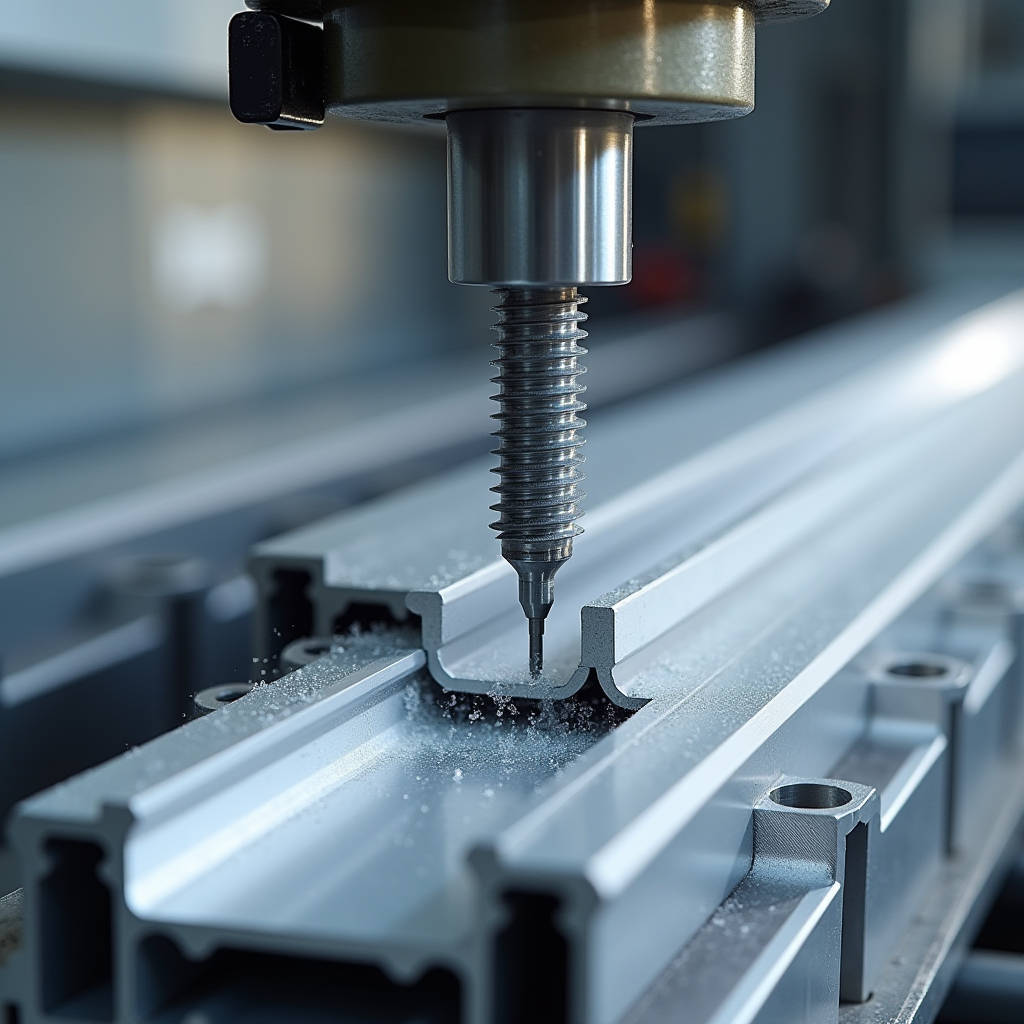
Aluminum extrusion tapping is a precision machining operation that creates internal threads in the ends of extruded aluminum profiles, allowing structural connections without the need for through-bolts or welded brackets. For curtain wall contractors and façade engineers working with solid aluminum cladding panels, understanding how extruded sub-frames, mullions, and transoms are tapped directly determines connection reliability, load transfer efficiency, and long-term structural integrity. A poorly executed tapping operation can strip threads, crack the extrusion wall, or leave burrs that compromise fastener engagement. This article examines the specific interplay between aluminum extrusion tapping and solid aluminum cladding panel installation, focusing on thread design for wind-loaded façades, galvanic corrosion mitigation at tapped connections, and the quality control protocols that separate a durable building envelope from one that requires premature maintenance.
Why Aluminum Extrusion Tapping Matters in Solid Cladding Panel Systems
Modern unitized curtain wall systems rely heavily on extruded aluminum sub-structures to carry the dead load of solid aluminum cladding panels — typically 2.0 mm, 2.5 mm, or 3.0 mm thick sheets with PVDF coatings applied at 25–35 microns minimum dry film thickness per AAMA 2605. These panels do not self-support across large spans. They attach to a grid of extruded mullions and transoms, and the connection points between these framing members often use tapped threads rather than nut-and-bolt assemblies. The reason is practical: inside a closed extrusion cavity, you cannot access the back side to hold a nut. Tapping the extrusion end or face creates a threaded anchor point that accepts a machine screw directly.
The load path in a typical rainscreen assembly runs from the panel face, through the clip or bracket, into the screw, and into the tapped aluminum extrusion. If the tapped thread fails under cyclic wind loading — which can reach design pressures of 2.0 kPa to 4.5 kPa on high-rise façades — the entire connection cascade fails. This is not a theoretical concern. Curtain wall failures traced to stripped or fractured threads in extruded aluminum sub-frames are documented in post-installation forensic reports. The engineering takeaway is that aluminum extrusion tapping is not a secondary workshop operation; it is a structural process that must be specified, tested, and inspected with the same rigor applied to panel fabrication.
Thread Engagement Percentage and Extrusion Wall Thickness
Thread engagement percentage is the ratio of actual thread depth to the theoretical full thread depth. For structural connections in aluminum extrusions, a 65% to 75% engagement range is the practical sweet spot. Below 60%, the thread becomes too shallow to resist pull-out forces under wind suction. Above 80%, the tapping torque increases sharply, raising the risk of tap breakage and extrusion wall deformation without a proportional gain in holding strength.
The extrusion wall thickness at the tapping location governs what thread sizes are feasible. Consider a typical 6063-T6 aluminum extrusion with a 3.0 mm wall thickness used as a transom in a stick-built curtain wall system. If you tap an M8 × 1.25 thread into this wall, the thread depth at 75% engagement is approximately 0.68 mm. That leaves 2.32 mm of wall material behind the thread root — adequate for most façade applications. But if the same extrusion has a 2.0 mm wall and you attempt an M10 × 1.5 thread, the thread depth at 75% engagement is roughly 0.81 mm, leaving only 1.19 mm of supporting material. Under tensile load, the thread may strip or the extrusion wall may bulge outward.
The following table summarizes recommended thread sizes against common extrusion wall thicknesses found in curtain wall sub-frames, based on a 70% thread engagement target and 6063-T6 alloy properties:
| Extrusion Wall Thickness (mm) | Recommended Thread Size | Approx. Thread Depth at 70% Engagement (mm) | Remaining Wall Behind Thread (mm) | Typical Application |
|---|---|---|---|---|
| 2.0 | M5 × 0.8 | 0.43 | 1.57 | Panel clip attachment, light brackets |
| 2.5 | M6 × 1.0 | 0.54 | 1.96 | Transom-to-mullion connections |
| 3.0 | M8 × 1.25 | 0.68 | 2.32 | Main mullion joints, heavy bracket anchors |
| 4.0 | M10 × 1.5 | 0.81 | 3.19 | Structural connections, base anchors |
| 5.0+ | M12 × 1.75 | 0.95 | 4.05+ | High-load tie-back points |
These values assume the tap hole is centered in the extrusion wall. Off-center drilling reduces the effective wall thickness on one side and can lead to asymmetric thread formation or breakthrough. For critical connections, specifying the minimum wall thickness at the tapping location on extrusion drawings is a practice that experienced façade engineers follow. Suppliers like Futeng® provide mill-certified extrusion reports that verify wall thickness tolerances, which helps contractors avoid surprises when tapping on site or in the fabrication shop.
Tap Selection for 6063-T6 Curtain Wall Extrusions
6063-T6 is the dominant alloy for architectural extrusions because it balances extrudability, surface finish quality, and mechanical strength. Its tensile strength ranges from 205 MPa to 240 MPa, and its Brinell hardness sits around 73 HB. This is relatively soft compared to 6061-T6 (95 HB), which means 6063-T6 taps more easily but also galls more readily if the wrong tap geometry is used.
Spiral-flute taps are the preferred choice for aluminum extrusion tapping in blind holes — the most common scenario when tapping into the end of a closed extrusion profile. The spiral flute pulls chips backward out of the hole, preventing chip packing at the bottom of the blind cavity. For through-hole tapping, which occurs when tapping across both walls of a hollow extrusion, spiral-point taps push chips forward and work efficiently.
Coating matters. Uncoated high-speed steel (HSS) taps work for low-volume work but wear quickly when tapping hundreds of holes. TiN-coated taps offer better wear resistance, but TiCN (titanium carbonitride) coatings provide superior performance in aluminum because they reduce the coefficient of friction between the tap and the aluminum surface. This directly lowers the tendency for aluminum to gall onto the cutting edges.
Roll-form taps, also called cold-forming taps, deserve special mention. Instead of cutting material away, they displace aluminum to form threads. The resulting threads have higher fatigue strength because the grain structure of the metal flows around the thread profile rather than being cut across it. For curtain wall connections subject to millions of low-amplitude wind vibration cycles over a building's service life, this fatigue advantage is meaningful. However, roll-form tapping requires tighter control over hole diameter — typically within ±0.05 mm — and works best with a high-quality lubricant. It also demands more machine torque, so hand-tapping with roll-form taps is not practical for larger sizes.
Lubrication and Heat Management During Tapping
Aluminum has a high coefficient of thermal expansion — approximately 23.6 × 10⁻⁶ /°C for 6063 alloy. When a tap cuts threads, friction generates localized heat at the cutting interface. Without adequate lubrication, this heat can cause the aluminum to expand into the tap flutes, increasing friction further and creating a feedback loop that ends with a seized or broken tap. A broken tap lodged in a 6-meter-long curtain wall mullion is not a simple extraction; it often means scrapping the entire extrusion.
For manual tapping operations on site or in small fabrication shops, a dedicated aluminum tapping fluid — not general-purpose cutting oil — is essential. Products formulated with a blend of mineral oil and extreme-pressure additives reduce friction and carry heat away from the cutting zone. WD-40 works in a pinch for one-off holes but is not a production solution. For CNC tapping centers, water-soluble coolants with a concentration of 7–10% provide adequate cooling and lubrication while being easier to manage in recirculating systems.
A practical rule: if the tap feels hot to the touch after withdrawing from the hole, the lubrication or speed is insufficient. Tapping speed for 6063-T6 aluminum should stay in the range of 15–25 meters per minute surface speed for HSS taps, and 25–40 meters per minute for carbide taps. This translates to roughly 600–1,000 RPM for an M6 tap — slower than many operators assume.
Galvanic Corrosion at Tapped Connections in Façade Systems
When a carbon steel or stainless steel screw threads into a tapped aluminum extrusion, a galvanic couple forms in the presence of moisture. Aluminum is anodic to both carbon steel and stainless steel on the galvanic series. In a rainscreen cavity, condensation and driven rain can create a persistently damp environment, and the threaded interface — where the protective anodized layer or PVDF coating has been cut away by the tapping process — exposes bare aluminum directly to the fastener.
The galvanic corrosion risk is highest with carbon steel fasteners. The potential difference between carbon steel and 6063 aluminum is approximately 0.5–0.7 volts in seawater, which drives significant corrosion current. Stainless steel (304 or 316) is closer to aluminum on the galvanic series, with a potential difference of roughly 0.2–0.3 volts, making it a better choice. However, stainless steel fasteners in aluminum still require a barrier to prevent direct metal-to-metal contact in wet conditions.
Three mitigation strategies are standard practice in high-performance curtain wall design:
- Thread-locking compounds with corrosion inhibitors: Anaerobic thread-locking adhesives serve a dual purpose — they prevent screw loosening under vibration and seal the thread interface against moisture ingress. Products formulated specifically for aluminum-to-stainless-steel assemblies incorporate corrosion-inhibiting additives.
- Isolation washers and bushings: Nylon or PTFE washers under the screw head prevent galvanic contact at the bearing surface. For through-hole connections, a nylon bushing or insert isolates the fastener shank from the extrusion bore.
- Post-tapping surface treatment: After tapping, applying a chromate conversion coating or a thin-film corrosion inhibitor into the threaded hole can restore some corrosion resistance to the cut surfaces. This is more common in factory-controlled environments than on site.
ASTM G71 provides guidance on conducting galvanic corrosion tests in laboratory settings, and AAMA 611 references corrosion testing requirements for architectural aluminum components. Specifying fasteners that meet the corrosion resistance requirements of ASTM B117 salt spray testing — typically 1,000 hours minimum for coastal applications — aligns the tapped connection with the expected service life of the PVDF-coated solid aluminum cladding panels themselves.
CNC Tapping vs. Manual Tapping: Production Implications
For large-scale curtain wall projects — think 20,000 m² of solid aluminum cladding supported by thousands of linear meters of extruded sub-frame — the tapping method directly affects project schedule, labor cost, and quality consistency.
CNC tapping centers with rigid tapping cycles can produce hundreds of consistently tapped holes per hour. Rigid tapping synchronizes the spindle rotation with the Z-axis feed, so the tap advances exactly one thread pitch per revolution. This eliminates the need for a tension-compression tap holder and reduces the risk of thread bell-mouthing at the hole entrance. Modern CNC controllers can also monitor spindle torque in real time, flagging holes where the torque exceeds a preset threshold — indicating a dull tap, inadequate lubrication, or an undersized pilot hole.
Manual tapping remains necessary for site adjustments, repair work, and small-batch fabrication. The key to manual aluminum extrusion tapping is using a tap guide block or a drill press with the power off to ensure the tap enters the hole perpendicular to the extrusion face. A tap started at even a 2-degree angle will produce threads that bind the fastener and concentrate stress unevenly. For 2020, 3030, and 4040 T-slot profiles commonly used in smaller architectural elements, a spring-loaded tap guide that registers against the extrusion face is a low-cost tool that dramatically improves thread quality.
Pneumatic tapping arms bridge the gap between full CNC and manual tapping. They provide vertical alignment, controlled feed rate, and adjustable torque clutches. For a fabrication shop processing several hundred extrusions per week, a tapping arm can pay for itself in reduced tap breakage and rework within a few months.
Quality Control and Inspection of Tapped Threads
Thread inspection in a production environment goes beyond running a screw in and checking if it feels tight. Go/No-Go thread gauges, conforming to ISO 1502 or ASME B1.2, provide a definitive pass/fail assessment. The Go gauge must thread into the full depth of the tapped hole without excessive force. The No-Go gauge must not enter more than two full threads.
For structural connections in curtain wall systems, the following QC protocol is recommended:
- First-article inspection: Tap three holes in a sample extrusion section. Check all three with Go/No-Go gauges. Cut one hole longitudinally and inspect the thread profile under 10× magnification for tearing, galling, or incomplete thread formation.
- In-process sampling: For batches of 100 or more tapped holes, inspect a random sample of 5–10% with Go/No-Go gauges. If any failure is found, inspect 100% of that batch.
- Pull-out testing: For critical connections, conduct destructive pull-out tests on a representative sample. A properly tapped M8 thread in 6063-T6 with 70% engagement should withstand a pull-out force exceeding 8 kN before thread stripping occurs. Documented pull-out values provide confidence that the connection will survive design wind loads with an adequate safety factor.
- Torque auditing: Use a calibrated torque wrench to verify that the installation torque of the fastener matches the specified value. Under-torqued fasteners risk loosening; over-torqued fasteners can strip the tapped aluminum threads.
ISO 898-1 and ASTM F606 provide standardized test methods for fastener mechanical properties, including proof load and tensile strength, which complement the thread quality inspection.
Common Failure Modes and How to Prevent Them
Understanding how tapped threads fail in aluminum extrusions helps engineers design connections that avoid these failure modes from the outset:
Thread stripping is the most common failure. It occurs when the axial load on the fastener exceeds the shear strength of the aluminum thread. The shear area of an internal thread is a function of the thread engagement length, the thread pitch diameter, and the shear strength of the aluminum alloy. For 6063-T6, the ultimate shear strength is approximately 150 MPa. As a design rule, the thread engagement length should be at least 1.5 times the nominal thread diameter for aluminum to ensure the bolt fails in tension before the thread strips — a ductile failure mode that is preferable to the sudden brittle failure of thread stripping.
Tap breakage during the tapping operation is an operational failure with serious consequences. Broken taps are extremely difficult to remove from aluminum because the soft metal deforms around the broken tap fragments. EDM (electrical discharge machining) can burn out a broken tap, but EDM equipment is rarely available on construction sites. Prevention is the only practical strategy: use the correct tap type, apply adequate lubrication, clear chips frequently, and never force a tap that feels tight.
Galvanic thread seizure manifests months or years after installation. The screw and the aluminum thread corrode together, making disassembly impossible without destroying the connection. This is particularly problematic for curtain wall systems that require periodic access for glazing replacement or panel repair. The corrosion mitigation measures discussed earlier — stainless steel fasteners, thread-locking compounds, and isolation strategies — are the primary defenses.
Fatigue cracking at the thread root is a long-term failure mode driven by cyclic loading. Wind-induced vibration and thermal expansion cycles create fluctuating stresses at the thread root, where the geometric notch concentrates stress. Roll-formed threads, as noted, offer better fatigue resistance than cut threads. Additionally, designing connections so that the fastener carries a preload that exceeds the fluctuating service load keeps the joint in compression and reduces the stress amplitude experienced by the aluminum threads.
Integrating Tapped Extrusion Connections with Solid Aluminum Cladding Panel Design
Solid aluminum cladding panels — 2.0 mm to 3.0 mm thick sheets with PVDF or FEVE fluoropolymer coatings — are typically fabricated with folded returns, welded corners, and integrated stiffeners. The panel attachment system, whether a cassette system with perimeter clips or a tray system with exposed fasteners, ultimately connects to the extruded aluminum sub-frame through mechanical fasteners. The tapped holes in the sub-frame are the final link in this load path.
When specifying the sub-frame and its tapped connections, the following coordination points between the panel supplier and the extrusion fabricator are essential:
- Hole pattern coordination: The panel attachment clip spacing must match the tapped hole spacing on the extrusions. A mismatch of even 5 mm can force the installer to drill new holes on site, compromising the corrosion protection at the new hole locations.
- Thermal movement accommodation: Solid aluminum panels expand and contract with temperature changes. The connection between the panel clip and the tapped extrusion must allow for differential movement. Slotted holes in the panel clip, combined with a shoulder screw that bottoms out in the tapped hole without clamping the clip rigidly, provide a sliding connection that relieves thermal stress.
- Load distribution: The number of tapped connections per panel must distribute the wind load so that no single tapped hole carries more than its design capacity. For a 1.2 m × 3.0 m solid aluminum panel experiencing a design wind pressure of 3.0 kPa, the total load is 10.8 kN. With four attachment points, each tapped connection sees 2.7 kN — well within the capacity of a properly tapped M8 thread in 6063-T6.
Futeng® and other established aluminum product manufacturers provide extrusion fabrication services that include CNC drilling and tapping to customer-specified hole patterns, which eliminates the quality variability associated with on-site tapping and ensures that the corrosion protection applied after fabrication covers the entire assembly uniformly.
Standards and Specifications Relevant to Aluminum Extrusion Tapping
Several international standards govern the materials, processes, and testing relevant to tapped connections in architectural aluminum extrusions. Familiarity with these standards helps specifiers write clear, enforceable requirements:
- ASTM B221 / EN 755: Standard specifications for aluminum and aluminum-alloy extruded bars, rods, wire, profiles, and tubes. These define the mechanical properties of 6063-T6 and other architectural alloys.
- ISO 965: ISO general-purpose metric screw threads — tolerances. This standard defines the tolerance classes for internal and external threads. For tapped holes in aluminum extrusions, tolerance class 6H is typical.
- AAMA 2605: Voluntary specification for high-performance organic coatings on aluminum extrusions and panels. While this standard primarily addresses coating performance, it also requires that fabricated components — including tapped holes — maintain coating integrity or receive appropriate touch-up treatment.
- ASME B1.13M: Metric screw threads — M profile. This standard defines the thread form geometry that taps must produce.
- ASTM F606: Standard test methods for determining the mechanical properties of externally and internally threaded fasteners, washers, and rivets. Relevant for verifying the strength of the fastener that engages the tapped hole.
Referencing these standards in project specifications provides an objective basis for quality acceptance and reduces disputes between contractors, fabricators, and specifiers. For more detailed guidance, the Aluminum Association's Aluminum Design Manual includes provisions for the design of aluminum members and connections, including threaded fasteners in aluminum.
Practical Recommendations for Curtain Wall Contractors
For contractors and façade engineers managing projects where solid aluminum cladding panels mount to extruded aluminum sub-frames, the following practices reduce the risk of tapped connection failures:
First, specify the tapping method in the fabrication scope. Do not assume the extrusion supplier will tap holes to the correct tolerance unless it is explicitly required. A clear specification reads: "All tapped holes in aluminum extrusions shall be produced using spiral-flute taps suitable for 6063-T6 aluminum, with thread tolerance class 6H per ISO 965, and shall be inspected with Go/No-Go thread gauges per ISO 1502."
Second, require pull-out test reports for critical connections. A test report showing that an M8 tapped hole in a 3.0 mm wall extrusion withstands 8 kN without thread stripping provides objective evidence that the connection meets design requirements. This is far more defensible than a visual inspection or a "feels tight" assessment.
Third, mandate corrosion protection for all field-tapped holes. When tapping must occur on site — for adjustments, repairs, or unforeseen conditions — the installer should apply a chromate-based touch-up primer or an approved equivalent to the cut threads before fastener installation. This simple step, often overlooked in the rush to close up the façade, significantly extends the service life of the connection.
Fourth, align the fastener material specification with the environmental exposure. For inland applications, 304 stainless steel fasteners with a thread-locking compound are generally adequate. For coastal or industrial environments, 316 stainless steel fasteners with additional isolation measures — nylon washers or bushings — provide the necessary corrosion resistance to match the 30-year service life expected of PVDF-coated solid aluminum cladding.
Aluminum extrusion tapping, when executed with the right tools, techniques, and quality controls, produces connections that are as durable as the extruded aluminum itself. The thread geometry, the alloy properties, and the corrosion protection strategy must all work together. A failure in any one of these areas compromises the entire connection, and in a curtain wall system, connection failures are never isolated — they cascade into panel displacement, water ingress, and, in the worst case, panel detachment. The engineering attention devoted to this seemingly small detail pays dividends over the decades that a well-constructed façade stands in service.