Aluminum Gusset Plate Welding Distortion Control and Quality Verification for Solid Facade Panel Fabrication
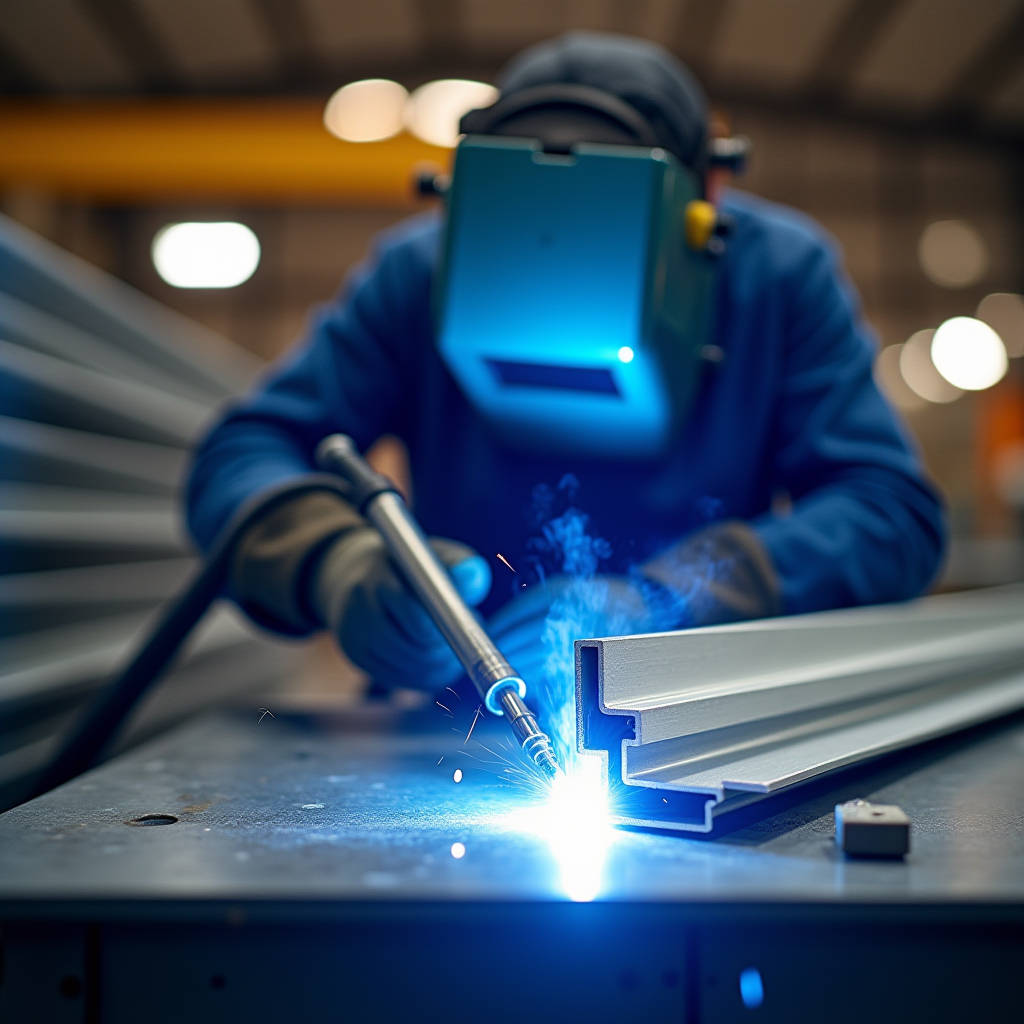
Aluminum Gusset Plate Welding represents one of the most structurally decisive yet frequently underestimated fabrication processes in modern curtain wall engineering. When a 3.0mm solid aluminum panel spans 1,200mm between stiffeners and wind loads hit 3.5 kPa, the gusset plate connection becomes the single point of failure that separates a 50-year facade from a remedial nightmare. This article examines the metallurgical realities, distortion control strategies, and quality verification protocols that determine whether an aluminum gusset plate weld performs as designed or fails prematurely. Every project manager who has stared at stress cracks propagating from a welded corner bracket understands that the difference between a clean weld and a catastrophic one is measured in fractions of a millimeter and degrees of interpass temperature.
Why Aluminum Gusset Plate Welding Demands a Different Engineering Mindset
Steel gusset plate welding follows a relatively forgiving path. Aluminum does not. The thermal conductivity of 5052 and 6061 aluminum alloys runs roughly five times higher than carbon steel, which means heat dissipates away from the weld zone almost as fast as the welder applies it. This creates three immediate challenges that directly affect solid aluminum cladding panel fabrication.
First, the heat-affected zone (HAZ) in aluminum loses significant strength. A 6061-T6 base material that delivers 276 MPa tensile strength in its parent condition drops to approximately 165 MPa in the as-welded HAZ. For a gusset plate transferring wind-induced moment loads from a 2.5mm thick aluminum cladding panel to the primary framing, this 40% strength reduction must be accounted for in the connection design, not discovered during a forensic investigation after a storm.
Second, aluminum's oxide layer melts at roughly 2,050°C while the base metal underneath melts at 660°C. This means the oxide remains solid while the weld pool forms beneath it, trapping oxides, creating lack-of-fusion defects, and producing the kind of radiographic indications that keep quality managers awake at night. Proper AC-TIG welding with continuous high-frequency arc cleaning addresses this, but the technique requires welders who understand aluminum specifically, not just welders who can lay a bead on steel.
Third, aluminum's coefficient of thermal expansion is roughly twice that of steel. A 200mm gusset plate welded along two edges will distort measurably during cooling. When that gusset plate is supposed to sit flush against a PVDF-coated aluminum panel with a 35-micron minimum dry film thickness, even 1.5mm of distortion translates to visible oil-canning on the finished facade under raking light. Architects notice. Consultants notice. And the resulting non-conformance report costs everyone time and money.
Material Selection for Welded Aluminum Gusset Plates in Facade Applications
Not all aluminum alloys weld equally, and the choice of alloy for gusset plate fabrication has downstream consequences that ripple through the entire curtain wall supply chain. The facade industry predominantly works with 5xxx series (Al-Mg) and 6xxx series (Al-Mg-Si) alloys, but their welding behavior differs substantially.
5052-H32 aluminum offers excellent weldability with minimal hot cracking susceptibility. The magnesium content (2.2-2.8%) provides solid solution strengthening, and while the HAZ still softens, the as-welded joint typically retains sufficient ductility for the cyclic thermal and wind loading that curtain wall gusset connections experience. For projects in coastal environments where chloride corrosion resistance matters, 5052 welded gussets paired with 5052 solid aluminum cladding panels create a galvanically compatible system that avoids the dissimilar metal corrosion issues that plague mixed-alloy assemblies.
6061-T6 aluminum delivers higher parent metal strength but presents greater welding challenges. The magnesium-silicon precipitates that give 6061-T6 its strength dissolve in the HAZ, and natural aging recovery takes weeks. Post-weld artificial aging at 177°C for 8 hours can restore significant strength, but this is rarely practical for large facade assemblies. The practical compromise: design the gusset plate connection using the as-welded HAZ strength values (approximately 165 MPa for 6061-T6), not the parent metal values, and size the weld throat accordingly.
For projects specifying 3.0mm solid aluminum panels with welded gusset stiffeners, 5083-H111 alloy deserves consideration. Its higher magnesium content (4.0-4.9%) provides superior as-welded strength retention, and its marine-grade corrosion resistance makes it suitable for the most aggressive atmospheric environments. The trade-off is cost and availability, which is where experienced suppliers like Futeng® can provide guidance on alloy selection matched to specific project requirements and lead times.
Weld Joint Design That Actually Works on Aluminum Gusset Plates
The engineering debate referenced in structural forums about the "correct" welding approach for angle sections on gusset plates reflects a genuine design tension. The answer depends on load path, access, and distortion control, but certain principles consistently produce reliable results.
Fillet welds dominate aluminum gusset plate connections for practical reasons. A properly sized fillet weld along both sides of a gusset-to-angle connection distributes shear stress across the weld throat rather than concentrating it at the root. The American Welding Society's Structural Welding Code for Aluminum (AWS D1.2) provides the governing design rules, and the critical parameter is effective throat thickness. For a 6mm fillet weld on aluminum, the effective throat equals approximately 4.2mm. The allowable shear stress on that throat, per AWS D1.2 for 5356 filler metal on 5052 base material, runs approximately 82 MPa. Multiply those numbers and you get the load capacity per linear millimeter of weld, which must exceed the factored load from the connected panel.
Groove welds enter the picture when the gusset plate thickness exceeds 10mm or when the connection geometry prevents adequate fillet weld access. Full-penetration groove welds eliminate the stress concentration at the weld root that can initiate fatigue cracks under cyclic wind loading. The trade-off: groove welds require more joint preparation, tighter fit-up tolerances, and higher skill levels. For most curtain wall gusset plate applications using 3-6mm thick aluminum, properly designed double-sided fillet welds provide the optimal balance of structural performance and fabrication economy.
One common failure mode observed in field inspections involves gusset plates welded only on one side. The un-welded gap acts as a crevice corrosion site and a stress riser. Under repeated thermal cycling (a dark-colored PVDF panel can reach 80°C in summer sun), the differential expansion between the welded and un-welded sides gradually initiates cracking at the weld toe. The fix is straightforward: specify welding on both accessible sides, and where access prevents double-sided welding, increase the single-sided weld size by 40% and add a seal weld to close the gap.
Distortion Control: The Practical Problem That Separates Good Fabricators from Great Ones
Aluminum gusset plate welding distortion is not a cosmetic issue. It is a dimensional control issue that directly affects the flatness of the finished solid aluminum cladding panel. A gusset plate that pulls 2mm out of flat during welding will telegraph that distortion through the panel face when the assembly is riveted or bolted together. Under the low-angle morning or late afternoon light that architects use to photograph completed buildings, these distortions become glaringly visible.
The distortion mechanism is straightforward. The weld metal solidifies and contracts. Because aluminum conducts heat so efficiently, the surrounding base metal expands during welding and contracts during cooling. The gusset plate, typically thinner than the connected members, responds to these thermal strains by bending. The resulting angular distortion accumulates across multiple gusset plates on a single panel, producing a cumulative deviation from flatness that can exceed the 0.5% of panel dimension typically specified in architectural aluminum cladding standards.
Several mitigation strategies exist, and the best fabricators use them in combination. Back-step welding, where each weld segment is deposited in the opposite direction of the overall welding progression, distributes thermal stresses more evenly. Intermittent welding with specified stitch lengths and spacing reduces total heat input while maintaining the required structural capacity. Mechanical restraint using tack-welded strongbacks holds the gusset plate in position during welding, though the strongbacks must be removed carefully to avoid introducing residual stresses.
Pre-setting the gusset plate at a slight opposite angle before welding compensates for the expected distortion. This requires experience and trial-and-error calibration for each joint configuration, but experienced aluminum fabricators develop reliable preset values. For a 6mm thick 5052 gusset plate welded with a 6mm fillet on both sides, a preset of 1-2 degrees opposite the expected pull direction typically produces a final assembly within flatness tolerance.
The most effective distortion control strategy, however, is minimizing weld volume. Every cubic millimeter of unnecessary weld metal adds heat and distortion without adding strength. Weld sizes should be calculated based on the required structural capacity, not simply matched to the gusset plate thickness. A 6mm gusset plate does not automatically require a 6mm fillet weld. If the load calculations show that a 4mm fillet provides adequate capacity, the smaller weld reduces distortion, saves filler metal, and speeds production.
Filler Metal Selection and Its Impact on Weld Performance
The choice of filler metal for aluminum gusset plate welding affects not just weld strength but also crack resistance, corrosion behavior, and the ability to accept post-weld surface treatments. Two filler alloys dominate structural aluminum welding: 4043 (Al-Si) and 5356 (Al-Mg).
5356 filler metal is the preferred choice for welding 5xxx series aluminum gusset plates used in curtain wall applications. Its magnesium content (approximately 5%) matches the base metal chemistry, providing compatible strength and corrosion resistance. The weld metal deposited by 5356 electrodes typically delivers tensile strength in the 240-275 MPa range, which exceeds the as-welded HAZ strength of the base metal. This means the connection fails in the HAZ rather than the weld metal itself, which is the desired failure mode because it provides predictable, ductile behavior rather than brittle weld fracture.
4043 filler metal offers better fluidity and is more forgiving of less-than-perfect fit-up, making it popular for general aluminum fabrication. However, its lower shear strength (approximately 170 MPa) and reduced ductility make it less suitable for gusset plate connections that experience cyclic loading. Additionally, 4043 weld metal anodizes to a dark gray color, which can be problematic if the gusset plate assembly receives a clear anodized finish. For PVDF-coated assemblies where the weld is hidden, this cosmetic issue is irrelevant, but the lower strength remains a design consideration.
For welding 6xxx series gusset plates, the choice between 4043 and 5356 involves trade-offs. 4043 provides better resistance to solidification cracking in 6xxx alloys, while 5356 provides higher as-welded strength. The project-specific decision should consider the loading conditions, the post-weld treatment (if any), and the required corrosion resistance. In all cases, the filler metal specification should be clearly stated on fabrication drawings, not left to the welder's discretion.
Quality Verification: What to Inspect and How to Inspect It
Visual inspection catches many aluminum gusset plate welding defects, but not all of them. A comprehensive quality verification program for facade gusset plate welds includes visual examination, dimensional checks, and, for critical connections, volumetric inspection.
Visual inspection per AWS D1.2 acceptance criteria looks for cracks, incomplete fusion, excessive porosity, undercut exceeding 0.8mm, and overlap. On aluminum, porosity appears as small spherical cavities on the weld surface or, worse, just below it. Hydrogen is the culprit, introduced by moisture, hydrocarbons, or hydrated oxides on the base metal surface. The prevention is proper cleaning: stainless steel wire brushing immediately before welding, followed by solvent wiping with acetone or isopropyl alcohol. Wire brushes used on aluminum must never be used on steel, as iron contamination causes galvanic corrosion and weld defects.
Dimensional inspection verifies weld size, length, and location against the fabrication drawings. A fillet weld gauge measures throat thickness and leg length. For a specified 6mm fillet weld, the convexity should not exceed 1.5mm, and the leg lengths should be within 1.5mm of the specified dimension. Undersized welds reduce load capacity. Oversized welds add unnecessary distortion and cost. Both are non-conformances.
For gusset plate connections designated as fracture-critical or subject to fatigue loading (such as those on high-rise facades in hurricane-prone regions), liquid penetrant testing (PT) provides a cost-effective surface inspection method. The fluorescent or visible dye penetrant reveals surface-breaking cracks and lack-of-fusion defects that visual inspection might miss. Radiographic testing (RT) offers volumetric inspection capability but is typically reserved for full-penetration groove welds on thick sections where internal defects could compromise structural integrity.
Destructive testing of procedure qualification coupons provides the baseline for weld quality. A qualified welding procedure specification (WPS) should include tensile tests, bend tests, and macro-etch examination of weld cross-sections. The macro-etch reveals the weld penetration profile, the extent of the HAZ, and any internal defects. For projects with significant repetition, such as a curtain wall with hundreds of identical gusset plate assemblies, the cost of procedure qualification testing is negligible compared to the cost of field repairs.
The following table summarizes the key quality verification methods and their applicability to aluminum gusset plate welding in facade applications:
| Inspection Method | Defects Detected | Applicability | Relative Cost | Standard Reference |
|---|---|---|---|---|
| Visual (VT) | Surface cracks, porosity, undercut, overlap, weld size | 100% of production welds | Low | AWS D1.2 Section 8 |
| Dimensional (DT) | Weld size, length, location, distortion | Sample basis (10-25%) | Low | Project fabrication drawings |
| Liquid Penetrant (PT) | Surface-breaking cracks, lack of fusion | Critical connections, 5-10% sample | Medium | ASNT SNT-TC-1A |
| Radiographic (RT) | Internal porosity, lack of fusion, cracks | Full-penetration groove welds | High | AWS D1.2 Section 8 |
| Macro-etch | Weld profile, penetration, HAZ extent | Procedure qualification only | Medium | AWS D1.2 Annex C |
Fatigue Considerations for Cyclically Loaded Facade Gusset Connections
Wind loads on building facades are not static. They fluctuate in magnitude and direction, sometimes at frequencies that can excite fatigue-sensitive details. Aluminum gusset plate welds, with their inherent geometric stress concentrations at the weld toe, are exactly the kind of detail that fatigue analysis must address.
The fatigue strength of an as-welded aluminum gusset plate connection is governed primarily by the weld toe geometry, not by the base metal or filler metal strength. A smooth, slightly concave weld profile with a gradual transition at the toe provides significantly better fatigue performance than a convex weld with an abrupt toe angle. The difference can be a factor of two or more in allowable stress range for a given fatigue life.
Post-weld treatment can improve fatigue performance. Toe grinding, where the weld toe is ground to a smooth radius, removes the microscopic crack-like intrusions that serve as fatigue initiation sites. Shot peening introduces compressive residual stresses at the surface that counteract the tensile stresses driving fatigue crack growth. These treatments add cost and must be specified in the fabrication documentation, but for high-rise facades in wind-prone regions, the investment in fatigue-resistant details pays for itself through reduced inspection requirements and extended service life.
The design approach for fatigue-loaded gusset plate welds follows the stress range methodology outlined in The Aluminum Association's Aluminum Design Manual. The allowable stress range depends on the connection detail category, the number of design cycles, and the stress ratio. For a typical curtain wall gusset plate with fillet-welded attachments, the detail category corresponds to a fatigue strength of approximately 40-55 MPa at 2 million cycles. This should be checked against the calculated stress range from the project-specific wind loading analysis, with appropriate safety factors applied.
Production-Scale Fabrication: Balancing Quality, Speed, and Cost
A single large curtain wall project may require thousands of welded gusset plate assemblies. The fabrication approach that works for five prototypes will not necessarily scale to 5,000 production units without careful process engineering.
Fixture design becomes the critical productivity driver. A well-designed welding fixture positions the gusset plate and the connected members accurately, provides the necessary restraint against distortion, and allows the welder to access all joints without repositioning. The fixture should incorporate heat sinks (copper or aluminum backing bars) that conduct heat away from the weld zone, reducing distortion and allowing faster welding speeds. The cost of a purpose-built fixture amortized across thousands of assemblies is negligible per unit.
Automated and semi-automated welding processes deserve consideration for high-volume production. Robotic gas metal arc welding (GMAW) with pulsed current control provides consistent weld quality, higher deposition rates, and lower heat input compared to manual welding. The programming cost is justified when the production volume exceeds a few hundred identical assemblies. For smaller volumes, mechanized GMAW with a travel carriage on a linear track provides a cost-effective middle ground between manual and fully robotic welding.
The welding procedure specification (WPS) must be qualified for the specific production conditions, not just the ideal laboratory conditions of the procedure qualification test. The WPS should specify the acceptable ranges for current, voltage, travel speed, interpass temperature, and shielding gas flow rate. For aluminum GMAW, pure argon shielding gas at 15-20 L/min provides stable arc characteristics and good oxide cleaning action. The interpass temperature should be controlled below 150°C to minimize HAZ softening and distortion accumulation.
Quality control in production should follow a statistical process control approach rather than 100% inspection. Initial production samples should undergo full dimensional and visual inspection. Once the process is stable, sampling inspection at a defined frequency (typically 5-10% for visual and dimensional checks) maintains quality oversight without creating a bottleneck. The sampling frequency should increase if non-conformances are detected, following a tightened inspection protocol until the process is corrected.
Corrosion Protection for Welded Aluminum Gusset Plate Assemblies
Aluminum's natural corrosion resistance comes from its self-passivating oxide layer. Welding disrupts this layer, and the as-welded surface is more susceptible to localized corrosion than the mill-finished or pre-treated parent material. For facade applications where the gusset plate assembly may be exposed to condensation, rain, or coastal atmospheres, post-weld corrosion protection is essential.
The minimum treatment is chemical cleaning to remove welding flux residues (if any) and to restore a uniform oxide layer. A nitric acid-based cleaning solution followed by thorough water rinsing removes surface contaminants and promotes repassivation. For assemblies that will receive PVDF coating, the cleaning step is integrated into the pretreatment process before coating application.
For gusset plate assemblies that remain uncoated (such as those hidden within the panel assembly), a chromate conversion coating per MIL-DTL-5541 Type I Class 3 provides excellent corrosion protection and serves as an effective base for subsequent painting if required. The environmental concerns around hexavalent chromium have driven development of trivalent chromium and non-chromate conversion coatings. These alternatives provide adequate corrosion protection for most architectural applications and should be specified when project environmental requirements restrict hexavalent chromium use.
Galvanic corrosion deserves specific attention when aluminum gusset plates connect to dissimilar metals. Stainless steel fasteners are common in curtain wall assemblies, and the galvanic potential between aluminum and stainless steel can drive corrosion of the aluminum if an electrolyte (moisture) is present. The mitigation strategy includes isolating the dissimilar metals with non-conductive washers or coatings, ensuring drainage to prevent moisture accumulation, and specifying fastener materials with galvanic compatibility. Type 316 stainless steel fasteners with a proprietary coating system provide the best combination of strength and corrosion resistance for aluminum gusset plate connections in aggressive environments.
Specifying Aluminum Gusset Plate Welding in Project Documentation
The quality of welded gusset plate assemblies on a curtain wall project is determined long before the first arc is struck. It is determined by the clarity and completeness of the specification and fabrication drawings. Ambiguous specifications produce ambiguous welds, and ambiguous welds produce disputes.
The specification should reference the applicable welding code explicitly. For aluminum structural welding in the United States, AWS D1.2 is the governing standard. The specification should state the required weld quality acceptance criteria (typically AWS D1.2 Class B for architectural applications), the required welder qualification standard, and the inspection requirements. It should identify the base metal alloys, the filler metal specification, and any post-weld treatment requirements.
Fabrication drawings should show each welded joint with the weld type, size, length, and location clearly indicated using standard AWS welding symbols. The drawings should distinguish between continuous and intermittent welds, specify the stitch length and pitch for intermittent welds, and identify any joints that require full penetration. Notes should address cleaning requirements, interpass temperature limits, and any special distortion control measures.
The specification should also address the qualification requirements. Welding procedure specifications (WPS) should be qualified by testing per AWS D1.2 requirements before production welding begins. Welders should be qualified by testing for the specific welding process, position, and joint configuration they will use in production. Requiring these qualifications in the contract documents, not just as a quality control afterthought, ensures that the fabrication team understands the requirements before they submit their bid.
For international projects, the specification may need to reference multiple standards. The European equivalent to AWS D1.2 is EN 1090-3, which governs the execution of aluminum structures. The Chinese standard GB 50661 covers welding of steel structures but has aluminum-specific provisions that may apply. The project specification should establish the hierarchy of standards and clearly state which standard governs in case of conflict.
The engineering reality of aluminum gusset plate welding is that it demands respect for the material's unique properties, rigorous process control, and verification that matches the consequences of failure. Facade engineers who treat aluminum welding as simply "steel welding but lighter" learn expensive lessons. Those who understand the metallurgy, design the joints appropriately, control the process, and verify the results produce curtain wall assemblies that perform reliably for decades. The investment in proper welding engineering pays for itself through reduced rework, fewer field failures, and facades that look as good after 20 years as they did on day one.