How the Aluminum Dyeing Process Determines Facade Color Performance and Longevity
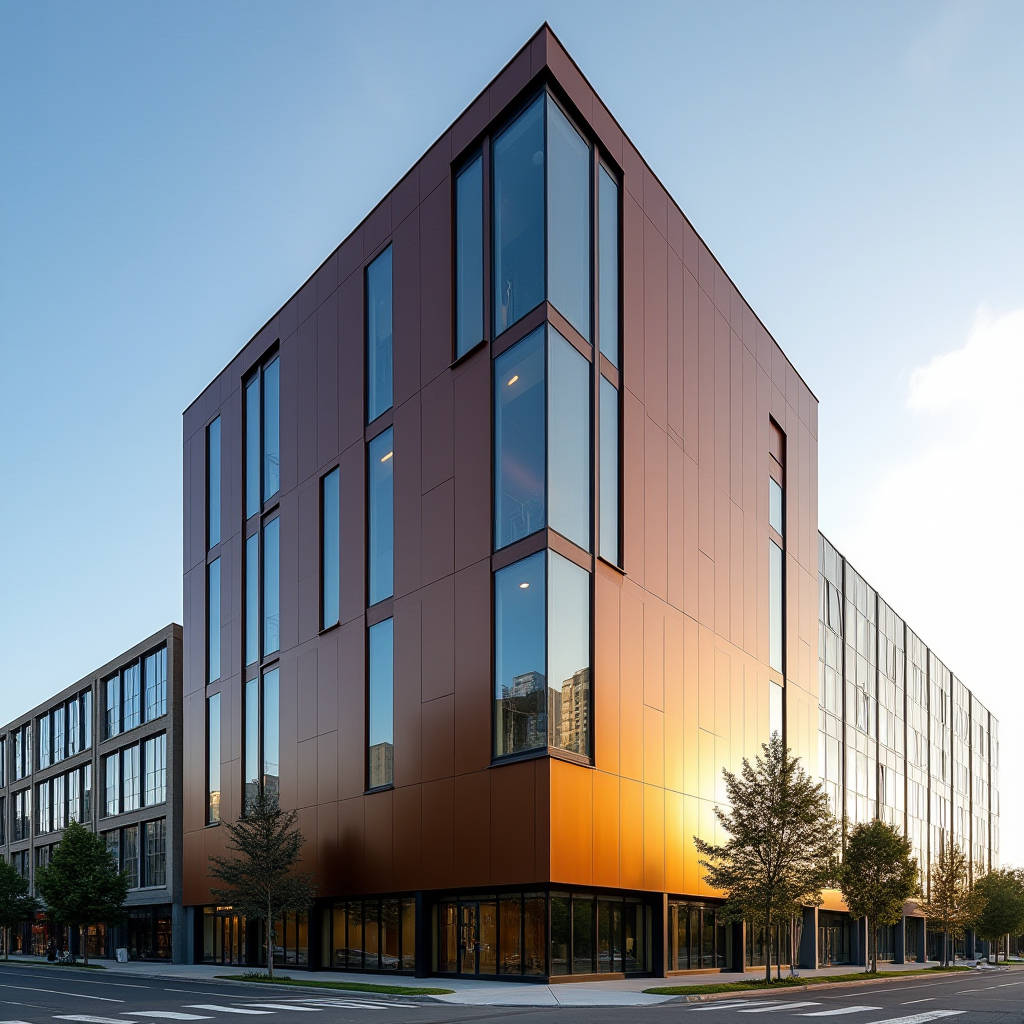
The Aluminum Dyeing Process sits at the intersection of architectural ambition and industrial chemistry. For decades, specifiers have turned to anodized and dyed aluminum to achieve facade colors that paint simply cannot replicate—translucent bronzes, deep champagne tones, and black finishes that read differently as the sun moves across a building skin. Yet the process itself remains poorly understood by many in the supply chain. This article unpacks the dominant industrial dyeing methods used on solid aluminum cladding panels, examines how each method performs under real-world weathering, and provides the technical data that architects and facade engineers need when specifying colored aluminum for exterior envelopes. Whether you are evaluating a 2.5mm solid aluminum sheet for a high-rise curtain wall or auditing a supplier's quality control protocols, understanding what happens inside the anodizing tank directly affects project outcomes.
How the Aluminum Dyeing Process Works at Industrial Scale
The Aluminum Dyeing Process is not a single operation but a sequence of tightly controlled electrochemical and chemical steps. At its core, the process begins with sulfuric acid anodizing—the most common Type II anodizing per MIL-A-8625—which grows a porous aluminum oxide layer on the substrate surface. This oxide layer, typically 5 to 25 microns thick depending on bath conditions, contains billions of microscopic pores per square centimeter. These pores are the key to the entire dyeing operation. Without them, dye molecules have nowhere to anchor.
After anodizing, the aluminum is rinsed thoroughly in deionized water to remove residual acid. Timing here is critical. The pores begin to seal naturally upon exposure to air, and the window for effective dye absorption is measured in minutes, not hours. Most high-volume architectural anodizing lines move racks directly from the anodizing bath through rinse stations and into dye tanks within 60 to 120 seconds. This is where the Aluminum Dyeing Process diverges into two distinct industrial pathways: organic dye adsorption and electrolytic two-step coloring.
Organic Dye Adsorption: The Broad-Spectrum Approach
Organic dye adsorption is the method most people picture when they think about the Aluminum Dyeing Process. The anodized aluminum is immersed in a heated dye bath—typically maintained between 50°C and 65°C—where dissolved organic dye molecules migrate into the open pores through a combination of physical adsorption and weak chemical bonding. The dye bath concentration, immersion time, temperature, and pH all influence final color intensity. A typical architectural dye cycle runs 10 to 20 minutes, though deep blacks and saturated reds may require longer dwell times.
This method offers the widest color gamut available in architectural aluminum. Blues, reds, greens, golds, and custom-matched corporate colors are all achievable with organic dyes. The trade-off is UV stability. Organic dye molecules are susceptible to photodegradation. Under direct sunlight, particularly in high-UV environments like the Middle East, Australia, or high-altitude locations, organic-dyed anodized aluminum can show noticeable fading within 5 to 8 years. For interior applications or sheltered exterior areas—soffits, column covers, entrance canopies with limited sun exposure—organic dyeing remains a cost-effective and visually striking choice.
Electrolytic Two-Step Coloring: The Durability Standard
Electrolytic coloring, sometimes called the two-step process, takes a fundamentally different approach to the Aluminum Dyeing Process. After the initial anodizing step, the aluminum is immersed in an electrolyte bath containing metal salts—most commonly tin, nickel, or cobalt sulfates. An alternating current is passed through the bath, causing metal ions to deposit at the base of the anodic pores. The color produced is not a dye at all. It is a physical phenomenon: light interacts with the deposited metal particles, and the apparent color shifts depending on particle size and distribution.
The practical result is a palette limited to bronze and black tones—from light champagne through medium bronze to deep architectural black—but with vastly superior lightfastness. Because the color comes from electrodeposited metal rather than organic molecules, electrolytically colored anodized aluminum does not fade in UV exposure. AAMA 611-14 certified electrolytic finishes carry warranties of 20 years or more for exterior architectural applications. For solid aluminum cladding panels on high-rise facades, where long-term color stability is non-negotiable, electrolytic coloring is the default specification.
Electrolytic two-step coloring produces a color that is not a dye at all—it is a physical phenomenon of light interacting with electrodeposited metal particles, and it does not fade.
Comparing Dyeing Methods: Performance Data That Matters
Specifying the right Aluminum Dyeing Process for a project requires understanding how each method performs across multiple dimensions. The table below consolidates key performance indicators drawn from ASTM testing protocols and real-world weathering data. These figures are representative of properly processed solid aluminum sheets—2.0mm, 2.5mm, and 3.0mm substrates—finished in a quality-controlled industrial anodizing line.
| Performance Parameter | Organic Dye Adsorption | Electrolytic Coloring (Tin) | Electrolytic Coloring (Nickel) | Integral Color Anodizing |
|---|---|---|---|---|
| Color Range | Full spectrum (200+ colors) | Champagne to black | Bronze to black | Bronze, gray, black |
| UV Lightfastness (AAMA 611) | Moderate (5-8 years to fade) | Excellent (20+ years) | Excellent (20+ years) | Excellent (25+ years) |
| Coating Thickness | 5-25 μm oxide layer | 10-25 μm oxide layer | 10-25 μm oxide layer | 15-30 μm oxide layer |
| Corrosion Resistance (ASTM B117) | 1,000-3,000 hours | 3,000+ hours | 3,000+ hours | 3,000+ hours |
| Relative Cost (per m²) | Low to moderate | Moderate | Moderate to high | High |
| Typical Lead Time | 5-10 working days | 7-14 working days | 7-14 working days | 14-21 working days |
| Color Consistency (Batch to Batch) | Good (requires QC) | Excellent | Excellent | Very good |
| Recommended Exterior Application | Sheltered/indirect sun | Full exposure | Full exposure | Full exposure |
This data makes clear why project location and facade orientation should drive specification decisions. A solid aluminum panel installed on a south-facing elevation in Dubai requires a different Aluminum Dyeing Process than the same panel used as an interior lobby cladding in London. The cost difference between organic dyeing and electrolytic coloring—roughly 15% to 30% per square meter depending on volume—can seem significant at the bid stage, but the lifecycle cost calculation heavily favors electrolytic finishes for any surface that sees regular sun exposure.
Critical Process Variables That Determine Color Quality
Anyone who has managed a facade project knows the frustration of receiving panels from the same supplier that do not match. The Aluminum Dyeing Process is sensitive to variables that, if not rigorously controlled, produce visible color shifts from batch to batch. Understanding these variables helps procurement teams write tighter specifications and evaluate supplier capabilities more effectively.
Anodizing Bath Parameters
The anodizing step sets the stage for everything that follows. Sulfuric acid concentration—typically 15% to 20% by weight—must be maintained within a narrow range. Temperature fluctuations in the anodizing bath directly affect pore diameter and density. Most architectural anodizing lines operate at 18°C to 22°C, with aggressive cooling systems required because the process is exothermic. A bath that drifts to 25°C produces a softer, more porous oxide layer with larger pores; a bath at 15°C produces a harder, denser layer with smaller pores. Both conditions change how dye is absorbed downstream.
Current density, measured in amperes per square foot (ASF), is another critical parameter. Type II architectural anodizing typically runs at 12 to 18 ASF. Higher current density accelerates oxide growth but also generates more heat. The relationship between current density, bath temperature, and final oxide structure is nonlinear, and experienced anodizing line operators develop an intuitive feel for how these parameters interact on a given alloy.
Alloy Selection and Its Impact on the Dyeing Process
Not all aluminum alloys accept dye equally. The Aluminum Dyeing Process works best on alloys in the 5xxx and 6xxx series—specifically 5005, 5052, and 6061—which anodize with a clear, transparent oxide layer. Alloys high in copper (2xxx series) or zinc (7xxx series) produce oxide layers with a yellowish or grayish cast that muddies dyed colors. For solid aluminum cladding panels, 5005 and 5052 are the preferred substrates because they combine good formability with excellent anodizing response. The magnesium content in 5xxx alloys contributes to a bright, clear oxide that faithfully reproduces the intended dye color.
Alloy temper also matters. The H14 and H32 tempers commonly specified for architectural sheet—these are strain-hardened and stabilized conditions—anodize consistently. Variations in temper within a single batch can cause subtle color differences that become apparent only after dyeing. Reputable suppliers, including mills that serve the architectural aluminum market, maintain tight temper control specifically because they understand the downstream demands of the Aluminum Dyeing Process.
Sealing: The Step That Locks In Performance
After dyeing, the porous oxide layer must be sealed. Sealing converts the aluminum oxide from its hydrated form to a more stable crystalline structure, trapping dye molecules inside. The most common architectural sealing method is hot water sealing—immersion in deionized water at 96°C to 100°C for 30 to 60 minutes. Mid-temperature sealing using nickel acetate solutions at 70°C to 85°C is also widely used and offers faster cycle times with good seal quality.
Incomplete sealing is one of the most common defects in the Aluminum Dyeing Process. An improperly sealed panel will leach dye when exposed to moisture, stain adjacent materials, and exhibit poor corrosion resistance. The ASTM B136 standard provides a test method for seal quality using a dye spot test, and specifiers should require compliance with this standard as a minimum quality gate. For exterior architectural applications, AAMA 611 requires sealed anodic coatings to pass a modified dye stain test with a rating of 2 or better on the AAMA scale.
Quality Control Protocols for Architectural Projects
For procurement managers and facade consultants, specifying the Aluminum Dyeing Process is only half the battle. Verifying that the specified process was actually followed—and that the results meet project requirements—requires a structured quality control program. The following checks should be standard practice on any project involving colored anodized aluminum cladding.
First, require mill test reports and anodizing batch records for every shipment. These records should document bath chemistry, temperature, current density, dwell time, dye concentration, and sealing parameters. A supplier that cannot or will not provide batch records is a red flag. Second, establish an approved color range using physical samples—not digital renderings. The AAMA 611 standard defines acceptable color variation using a Delta E (CIE Lab) tolerance of 2.0 or less for architectural anodized finishes. Third, conduct adhesion testing per ASTM D3359 on a statistically significant sample from each batch. Fourth, perform a seal quality test per ASTM B136 on at least one sample per batch.
On large projects, consider retaining a third-party inspection agency to witness the anodizing and dyeing process at the supplier's facility. The cost—typically USD 2,000 to USD 5,000 depending on location and duration—is negligible compared to the cost of replacing non-conforming panels after installation. This is standard practice on major projects in the Middle East and Southeast Asia, where main contractors have learned through experience that remote quality assurance is worth the investment.
Environmental and Regulatory Considerations
The Aluminum Dyeing Process involves chemicals that are subject to increasingly stringent environmental regulation. Sulfuric acid anodizing generates waste acid that must be neutralized before discharge. Organic dye baths contain compounds that may require specialized wastewater treatment. Nickel-based electrolytic coloring introduces heavy metals into the process stream, and nickel is classified as a substance of very high concern under the European Union's REACH regulation. Some jurisdictions, particularly in Northern Europe, now restrict or discourage nickel-based coloring in favor of tin-based alternatives.
Specifiers working on projects targeting LEED, BREEAM, or other green building certifications should request environmental compliance documentation from anodizing suppliers. This includes wastewater discharge permits, hazardous waste manifests, and air quality permits for the anodizing line. Aluminum itself is infinitely recyclable, and the anodized oxide layer does not interfere with recycling—the coating burns off in the remelt furnace. This gives anodized and dyed aluminum a favorable lifecycle profile compared to some alternative coating systems.
For projects in the European market, compliance with the Construction Products Regulation (CPR) and EN 15088 for aluminum and aluminum alloy structural products may be required. Suppliers like Futeng® that serve international markets maintain documentation packages that address these regulatory requirements, which can simplify the compliance process for main contractors and specifiers.
Practical Specification Guidance for Facade Engineers
When writing a specification for colored anodized aluminum cladding panels, the following structured approach helps ensure that the finished product meets aesthetic and performance expectations.
Start by defining the substrate: solid aluminum sheet, alloy 5005 or 5052, temper H14 or H32, thickness 2.0mm, 2.5mm, or 3.0mm as required by the structural design. Reference the applicable anodizing standard—AAMA 611 in North America, BS 3987 or EN 12373 in Europe, or AS 1231 in Australia. Specify the anodizing type: Type II (sulfuric acid) for most architectural applications, with a minimum oxide thickness of 15 microns (AA15) or 20 microns (AA20) for exterior exposure.
For the coloring step, specify the method: "Electrolytic two-step coloring using tin-based electrolyte" for exterior applications where color stability is critical, or "Organic dye adsorption" for interior applications or sheltered exterior locations. Include the required color reference—a physical sample, not a Pantone number or RGB value—and the acceptable Delta E tolerance. Finally, specify sealing method (hot water or mid-temperature nickel acetate), seal quality testing per ASTM B136, and the required warranty period.
A well-written specification does not need to be long. It needs to be precise. The most common cause of disputes on architectural anodizing projects is not defective material but ambiguous specifications that leave too much room for interpretation. When the Aluminum Dyeing Process is specified with clear, measurable criteria, both the supplier and the buyer know exactly what constitutes an acceptable product.
For project teams evaluating the Aluminum Dyeing Process for solid aluminum cladding panels, the key takeaway is straightforward: match the dyeing method to the exposure conditions. Electrolytic coloring costs more upfront but delivers color stability that organic dyes cannot match in direct sunlight. Organic dyeing offers a broader palette and lower cost but belongs on sheltered surfaces. The most expensive mistake is specifying the wrong process for the application—and discovering the problem three years after handover, when the facade tells the story that the specification did not anticipate.