Aluminum Electrolytic Coloring Process and Performance for Solid Cladding Facades
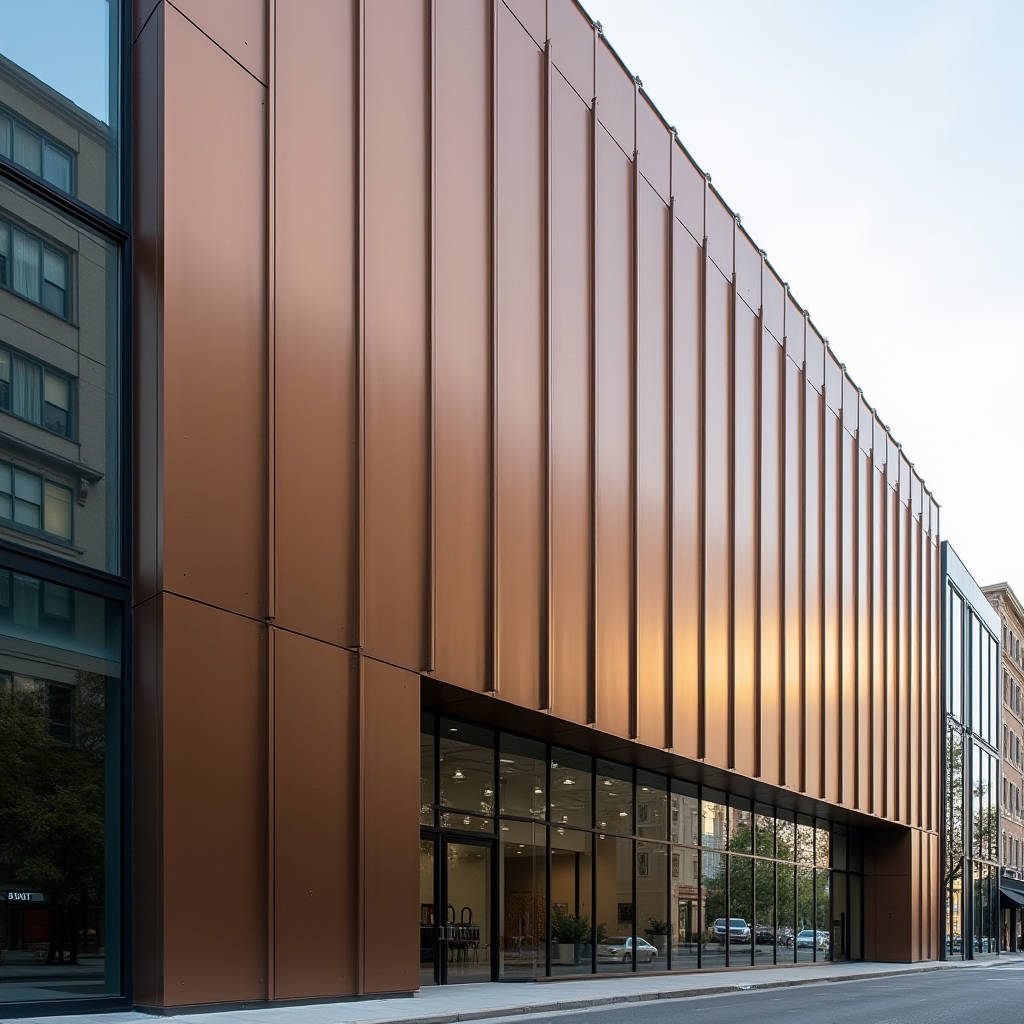
When specifying architectural aluminum for high-visibility facades, the color method matters as much as the alloy itself. Aluminum Electrolytic Coloring stands apart from organic dyeing and liquid coating because it embeds metallic pigment directly into the anodic pore structure. The result is a color layer that does not peel, does not chalk under UV, and does not fade at the same rate as organic alternatives. For curtain wall specifiers and facade consultants, this distinction carries real weight: a 30-year building envelope demands a color system that ages with the metal rather than sitting on top of it. The process involves a two-step sequence—sulfuric acid anodizing to build a controlled porous oxide layer, followed by AC current deposition of tin, nickel, or cobalt salts into those pores. The metal ions reduce inside the pore bottoms, creating a lightfast, abrasion-resistant color that shifts from champagne through bronze to deep black depending on deposition time and bath chemistry. This article examines the technical mechanics, performance benchmarks, and procurement considerations that make electrolytic coloring a defensible specification choice for solid aluminum cladding panels in commercial and institutional projects.
How the Two-Step Process Actually Works
The electrolytic coloring process is frequently misunderstood as a variant of dyeing. It is not. Dyeing relies on organic molecules that adsorb into the anodic pore walls through weak van der Waals forces and hydrogen bonding. Electrolytic coloring deposits metallic particles through electrochemical reduction at the base of each pore. The distinction is structural: dyes sit inside pores; electrolytic pigments become part of the oxide matrix.
Step one is conventional Type II sulfuric acid anodizing per MIL-A-8625 or AAMA 611. The aluminum panel—typically 2.0mm to 3.0mm solid sheet for curtain wall applications—serves as the anode in a bath of 15–20% sulfuric acid at 18–22°C. Current density runs between 1.0 and 1.5 A/dm². This builds a hexagonal pore structure with pore diameters of roughly 10–25 nm and an oxide thickness of 10–25 microns, depending on duration. The pore density is extraordinary: approximately 10¹¹ pores per square centimeter. Each pore is a potential color site.
Step two transfers the anodized panel into a separate electrolytic coloring bath. This bath contains metallic salts—most commonly tin(II) sulfate, nickel sulfate, or cobalt sulfate—along with stabilizing additives and a sulfuric acid buffer to maintain pH between 0.8 and 1.5. Alternating current (AC) is applied, typically at 12–18 V, with the aluminum panel now serving as one electrode and a stainless steel or graphite counter electrode completing the circuit. During the cathodic half-cycle, metal ions migrate into the pores and reduce to metallic form at the pore base. The anodic half-cycle strips hydrogen gas and refreshes the local chemistry. The length of immersion controls the color: 30–60 seconds yields light champagne; 2–4 minutes produces medium bronze; 8–15 minutes achieves deep black.
The AC waveform is critical. Pure sine wave AC at 50–60 Hz is standard, but some lines use modified waveforms to improve throwing power on complex panel geometries. The deposited metal particles are typically 5–15 nm in diameter and sit at the very bottom of each pore. Sealing follows immediately after coloring—hot water or nickel acetate sealing hydrates the oxide, swelling the pore walls and trapping the metallic pigment permanently inside.
Color Range and the Tin vs. Nickel Decision
Electrolytic coloring does not produce a wide chromatic gamut. The palette is restricted to earth tones and dark neutrals: champagne, light bronze, medium bronze, dark bronze, and black. This limitation stems from the physics of light scattering by sub-wavelength metal particles embedded in a transparent oxide matrix. The perceived color depends on particle size, spacing, and the optical properties of the deposited metal. Tin produces warmer, slightly reddish bronze tones. Nickel yields cooler, more neutral bronzes trending toward charcoal. Cobalt can produce a distinctive bluish-black but is less common in architectural applications due to cost and bath stability issues.
For solid aluminum cladding panels, tin-based electrolytic coloring dominates the architectural market. The reasons are practical: tin baths are more forgiving of bath chemistry fluctuations, produce more consistent color across large panel runs, and the resulting tin particles offer excellent corrosion resistance at the pore base. A single facade may require hundreds of panels; color consistency across the entire batch is non-negotiable. Tin delivers this with less process control overhead than nickel.
The table below compares the three common electrolytic coloring metal systems for architectural cladding specifications:
| Parameter | Tin (Sn) System | Nickel (Ni) System | Cobalt (Co) System |
|---|---|---|---|
| Color Range | Champagne → Deep Black (warm undertone) | Light Bronze → Black (neutral/cool) | Bronze → Bluish Black |
| Bath Stability | High; tolerant of ±5% concentration drift | Moderate; requires tighter pH control | Low; sensitive to organic contamination |
| Typical AC Voltage | 12–16 V | 14–18 V | 15–20 V |
| Color Consistency (Batch) | Excellent; ΔE < 1.0 achievable | Good; ΔE < 1.5 typical | Fair; ΔE often 1.5–2.5 |
| Lightfastness (AAMA 2604) | Passes 10-year Florida exposure | Passes 10-year Florida exposure | Passes 10-year Florida exposure |
| Relative Cost Index | 1.0 (baseline) | 1.15–1.30 | 1.40–1.70 |
| Wastewater Treatment | Straightforward; Sn precipitates as hydroxide | Complex; Ni is a regulated heavy metal | Complex; Co is toxic and costly to treat |
| Architectural Adoption | Dominant globally | Common in Europe and Japan | Niche; specialty applications |
Why Electrolytic Coloring Outperforms Organic Dyes on Facades
Organic dyeing of anodized aluminum produces vibrant, saturated colors—reds, blues, golds, greens—that electrolytic coloring cannot match. But the architectural market has largely abandoned dyed anodized aluminum for exterior applications. The reason is well documented: organic dyes photodegrade. The chromophore bonds in organic dye molecules absorb UV radiation and break. A dyed bronze panel that looks rich on day one can shift to a washed-out tan within 3–5 years of equatorial sun exposure. Florida exposure testing per AAMA 2604 typically shows ΔE shifts of 5–10 for organic dyes versus less than 2 for electrolytically colored panels over the same period.
The mechanism of degradation differs fundamentally. Electrolytic color comes from metallic particles—elemental tin or nickel—that do not have organic bonds to break. UV light can scatter off the particles but cannot chemically alter them. Heat can cause some particle migration within the oxide if the panel surface temperature exceeds 80°C, but this is rare in properly ventilated rainscreen assemblies. The oxide matrix itself provides additional UV shielding: the anodic layer absorbs a significant fraction of incident UV before it reaches the pigment zone at the pore base.
Abrasion resistance tells a similar story. On a Taber abrasion test using CS-10 wheels with a 500g load, electrolytically colored anodized surfaces typically withstand 500–1000 cycles before visible color change, compared to 100–300 cycles for dyed surfaces. On a curtain wall, this translates to better resistance to cleaning scratches, wind-blown dust, and incidental contact during construction. The metallic pigment sits 10–25 microns below the surface, protected by the full thickness of the oxide. Dye molecules occupy the upper portion of the pore and are more exposed.
Process Variables That Determine Color Uniformity
Specifiers who understand the process variables are better equipped to evaluate supplier qualifications. Color uniformity in electrolytic coloring depends on six tightly controlled parameters, and variation in any one of them produces visible banding or panel-to-panel mismatch.
Anodizing bath temperature is the first and most critical variable. The pore diameter of the anodic oxide depends directly on bath temperature. At 18°C, pores are approximately 10–12 nm in diameter. At 22°C, they grow to 18–22 nm. Larger pores admit more metal ions during coloring and produce darker, more saturated tones for the same coloring time. A temperature gradient of just 2°C across a tank can create visible color variation between panels processed at opposite ends. Industrial anodizing lines use aggressive agitation and chillers with ±0.5°C control to maintain uniformity.
Current density during anodizing affects oxide thickness and pore regularity. The standard range is 1.0–1.5 A/dm². Lower current density produces thinner oxide with less uniform pore structure; higher current density risks burning at high-copper alloy grain boundaries. For 2.5mm solid aluminum cladding panels in 5000-series or 6061 alloys, 1.3 A/dm² is a common sweet spot.
Coloring bath tin concentration typically runs 8–15 g/L as tin(II) sulfate. As the bath ages, Sn²⁺ oxidizes to Sn⁴⁺, which does not deposit effectively. Bath analysis and replenishment must occur at least once per shift. AC voltage during coloring determines deposition rate. Higher voltage drives faster deposition but can produce non-uniform color if the panel geometry creates uneven current distribution. Immersion time is the primary color control: operators adjust time to hit the target shade, with ±5 seconds being a typical tolerance for medium bronze.
Alloy composition is the variable that specifiers most often overlook. The same electrolytic coloring parameters produce different results on 5005, 5052, and 6061 alloys because the alloying elements—magnesium, silicon, copper—affect oxide formation and the electrochemical behavior of the pore base. Copper-rich alloys (2xxx and 7xxx series) are particularly problematic; they produce darker, muddier colors and are generally avoided for architectural anodizing. For solid aluminum cladding panels, 5005 and 5052 alloys are preferred for their consistent anodizing response and excellent corrosion resistance.
Sealing: The Step That Determines Service Life
An unsealed anodized panel is a sponge. The pores are open, and the metallic pigment particles at the pore base are vulnerable to corrosion, leaching, and staining. Sealing closes the pores by hydrating the aluminum oxide, causing it to swell and physically pinch off the pore entrances. The quality of the seal directly determines the corrosion resistance and color stability of the finished panel.
Three sealing methods dominate architectural anodizing. Hot water sealing uses deionized water at 96–100°C for 2–3 minutes per micron of oxide thickness. The hydration reaction converts Al₂O₃ to Al₂O₃·H₂O (boehmite), which occupies a larger volume and closes the pores. This method is simple and chemical-free but requires strict water quality control—silicate and phosphate contamination above 5 ppm inhibits sealing. Nickel acetate sealing operates at 70–90°C and deposits nickel hydroxide into the pores alongside the hydration reaction. It provides superior corrosion resistance and is widely specified for architectural applications. Mid-temperature sealing uses proprietary organic additives with or without nickel at 60–80°C, reducing energy consumption but requiring careful validation for exterior durability.
Seal quality is verified by the ASTM B680 acid dissolution test. A properly sealed panel loses less than 2 mg/dm² in the test; values above 3 mg/dm² indicate incomplete sealing and a high risk of field corrosion. For electrolytically colored panels, the seal also locks the metallic pigment in place. A poorly sealed panel can leach tin or nickel ions when exposed to acid rain, causing color shift and environmental compliance concerns.
Specifying Electrolytic Coloring for Solid Aluminum Cladding
Writing a specification for electrolytically colored anodized aluminum cladding requires attention to alloy, anodizing class, color standard, and seal quality. The core reference standards are AAMA 611 (voluntary specification for anodized architectural aluminum) and MIL-A-8625 Type II, Class 2 (sulfuric acid anodize with electrolytic color). AAMA 2604 and 2605 define performance requirements for pigmented organic coatings; they do not directly apply to anodized finishes, but the weathering performance benchmarks are useful for comparison.
A defensible specification for solid aluminum cladding panels with electrolytic coloring should include the following elements:
- Alloy: 5005-H14 or 5052-H32 for sheet; 6061-T6 or 6063-T5 for extruded profiles. Copper content must not exceed 0.10% for consistent coloring.
- Sheet thickness: 2.0mm minimum for non-perimeter areas; 2.5mm or 3.0mm for high-wind zones and large-format panels exceeding 1.2m in any dimension.
- Anodizing: Sulfuric acid Type II per MIL-A-8625. Oxide thickness 15–20 microns (AA15–AA20 per ISO 7599).
- Coloring: Electrolytic deposition using tin-based electrolyte. Color to match architect's approved range sample, with ΔE < 1.0 across the project batch.
- Sealing: Nickel acetate seal per AAMA 611, verified by ASTM B680 acid dissolution test (weight loss < 2.0 mg/dm²).
- Quality control: Statistical sampling per ANSI/ASQ Z1.4, inspection level S-2, AQL 4.0 for color and appearance.
For projects requiring particularly tight color control—such as adjacent buildings or phased construction—suppliers like Futeng® that operate in-house anodizing lines with automated color monitoring can provide batch-to-batch ΔE values below 0.8, which is difficult to achieve when anodizing is outsourced to multiple job shops.
Corrosion Performance in Real-World Environments
Electrolytically colored anodized aluminum performs well in most architectural environments, but it is not immune to corrosion. The performance depends on the oxide thickness, seal quality, alloy choice, and the local atmospheric chemistry.
In rural and suburban environments, AA15 anodized panels with proper sealing routinely achieve 30+ years of service with minimal color change and no significant pitting. In coastal environments, chloride attack accelerates pitting. The rule of thumb is that anodized aluminum should not be used within 500 meters of breaking surf unless the oxide thickness is increased to AA25 (25 microns) and the seal is verified to the highest standard. Even then, regular freshwater rinsing is recommended to remove chloride deposits. In industrial environments with SO₂ pollution, acid rain can attack the oxide if the seal is compromised. Nickel acetate sealing provides measurably better resistance to acid attack than hot water sealing alone.
A key advantage of electrolytic coloring over organic coatings in corrosive environments is the absence of a coating-substrate interface. PVDF and powder coatings rely on adhesion between the organic film and the aluminum surface. If moisture penetrates the coating at a scratch or cut edge, it can migrate along the interface, causing filiform corrosion. Electrolytically colored anodized aluminum has no interface to delaminate. The color is inside the oxide, and the oxide is integral to the metal. A scratch through the anodic layer exposes bare aluminum, but the corrosion is localized and does not spread laterally under a coating film.
Electrolytic coloring embeds metallic pigment within the anodic oxide structure itself. Unlike organic coatings that sit on the metal surface, the color is protected by the full thickness of the oxide layer. This structural integration is the basis for the system's UV resistance, abrasion performance, and long-term durability on architectural facades.
Energy and Environmental Considerations
The environmental profile of electrolytic coloring is mixed. On the positive side, the process uses no organic solvents, produces no volatile organic compounds (VOCs), and the finished panel is fully recyclable—the anodic oxide and tin pigment particles are negligible contaminants in the aluminum recycling stream. Anodized aluminum cladding panels can be fed directly into remelt furnaces without the de-coating step required for PVDF-finished material.
On the negative side, anodizing is energy-intensive. The rectification of AC to DC for anodizing and the heating of sealing baths consume significant electricity. A typical architectural anodizing line processing 2.5mm solid aluminum panels consumes approximately 8–12 kWh per square meter of finished product, depending on oxide thickness and line efficiency. The coloring step itself adds relatively little energy—AC coloring at 12–16 V draws modest current—but the overall process energy footprint is higher than that of coil-applied PVDF coating.
Wastewater treatment is the other significant environmental consideration. Spent anodizing baths contain sulfuric acid and dissolved aluminum. Spent coloring baths contain tin or nickel salts. Tin is relatively benign and can be precipitated as tin hydroxide for disposal or recovery. Nickel is classified as a hazardous substance in many jurisdictions, and nickel-containing wastewater requires treatment to meet discharge limits typically below 1 mg/L. This regulatory burden is one reason tin-based electrolytic coloring has gained market share over nickel in recent years. Specifiers should verify that their supplier's wastewater treatment system meets local discharge standards and that the supplier holds current environmental permits.
Comparing Electrolytic Coloring with PVDF and Powder Coating
For solid aluminum cladding panels, the three dominant finish technologies are electrolytically colored anodizing, PVDF liquid coating, and polyester powder coating. Each has a distinct performance profile, and the choice depends on the project's priorities for color range, durability, cost, and aesthetics.
PVDF coating (70% PVDF resin, per AAMA 2605) offers the widest color range—virtually any RAL or custom color is achievable—and excellent UV resistance. A properly applied PVDF coating on chromate pretreatment can achieve 30+ years of Florida exposure with ΔE < 5. However, PVDF is a surface film. It can be scratched, and deep scratches expose bare aluminum. The metallic appearance of PVDF metallic colors comes from mica or aluminum flake pigments suspended in the resin, producing a different visual quality than the integral metallic look of electrolytic coloring.
Powder coating offers good color range and lower cost than PVDF, but exterior-grade polyester powders typically have a 15–20 year service life before significant chalking and color fade occur. Super-durable polyester powders extend this to 20–25 years. Neither matches the abrasion resistance of anodized finishes.
Electrolytically colored anodizing occupies a specific niche: projects that want a metallic earth-tone or black finish with maximum durability, a surface that does not look like paint, and the ability to recycle panels without de-coating. The color range is narrow, but within that range the performance is unmatched. The table below provides a structured comparison:
| Performance Attribute | Electrolytic Colored Anodizing | PVDF Coating (AAMA 2605) | Super-Durable Powder |
|---|---|---|---|
| Color Range | Champagne through black; earth tones only | Virtually unlimited; RAL, custom | Wide; limited metallics |
| UV Resistance | Excellent; no organic chromophores | Excellent; PVDF resin is UV-inert | Good; 20–25 year chalk resistance |
| Abrasion Resistance | Excellent; oxide is harder than coating | Moderate; film can be scratched | Moderate; similar to PVDF |
| Typical Thickness | 15–25 μm oxide | 25–35 μm dry film | 60–80 μm dry film |
| Recyclability | Direct remelt; no de-coating needed | Requires de-coating before remelt | Requires de-coating before remelt |
| Cost Index (Material + Finish) | 1.0 (baseline for AA15, tin color) | 1.2–1.5 | 0.8–1.0 |
| Service Life (Exterior) | 30+ years (non-coastal) | 30+ years | 20–25 years |
| Field Repair | Difficult; requires stripping and re-anodizing | Possible with liquid touch-up kits | Possible with liquid touch-up |
Procurement and Quality Assurance for International Projects
For international procurement of electrolytically colored solid aluminum cladding panels, the quality assurance process must account for the fact that color is subjective and cannot be fully captured by instrument readings alone. A spectrophotometer can measure ΔE, but it cannot tell you whether the bronze has the right warmth or whether the black reads as true black rather than charcoal under overcast sky.
The standard QA workflow for a large project begins with a range sample submission. The supplier provides 3–5 panels spanning the target color range—for example, light bronze, medium bronze, and dark bronze—each approximately 200mm × 300mm. The architect selects one as the approved range standard. The supplier then produces a production run of 10–20 panels and submits them as a batch sample. The architect approves the batch sample, and it becomes the color reference for the entire project. Every production panel is visually compared to the batch sample under controlled lighting (D65 illuminant) and measured with a spectrophotometer. Panels with ΔE greater than 1.0 against the batch sample are rejected or reworked.
For projects exceeding 5,000 square meters, it is advisable to specify that all panels be processed in a single production campaign to avoid batch-to-batch variation from bath aging and replenishment cycles. If multiple campaigns are unavoidable, the supplier should retain a retained sample from the first campaign and match subsequent campaigns to it.
On-site handling also affects perceived color. Anodized panels are susceptible to fingerprint staining from alkaline construction dust and mortar splatter. A clear understanding between the contractor and the supplier about protective film requirements, on-site cleaning protocols, and the acceptable limits of minor surface variation prevents disputes at handover. The American Architectural Manufacturers Association (AAMA) publishes guidance on cleaning and maintenance of anodized aluminum that should be referenced in the project specification.
When Electrolytic Coloring Is the Right Specification
Electrolytic coloring is not a universal solution. It is the right specification when the design intent calls for a metallic bronze or black finish with a non-plastic appearance, when the project demands a 30-year minimum service life with minimal maintenance, and when the building is located in an environment where UV degradation of organic finishes is a legitimate concern. It is the wrong specification when the architect wants bright red, blue, or gold, when the budget is tight and powder coating will suffice, or when the building is directly exposed to marine salt spray without provision for regular washing.
For solid aluminum cladding panels in the 2.0–3.0mm thickness range, electrolytic coloring offers a combination of durability, recyclability, and aesthetic quality that no organic coating system fully replicates. The color is inside the metal, not on it. That single fact drives the performance advantages that make this 50-year-old technology still relevant for contemporary facade engineering. Projects that specify 5005 or 5052 alloy, AA15–AA20 oxide thickness, tin-based coloring, and nickel acetate sealing with proper QA oversight can expect consistent, durable results from qualified suppliers. The ISO 7599 standard and ASTM B580 provide additional technical references for specifiers developing project-specific finish requirements.