Aluminum Panel Stiffener Welding Methods Compared for Solid Cladding Fabrication
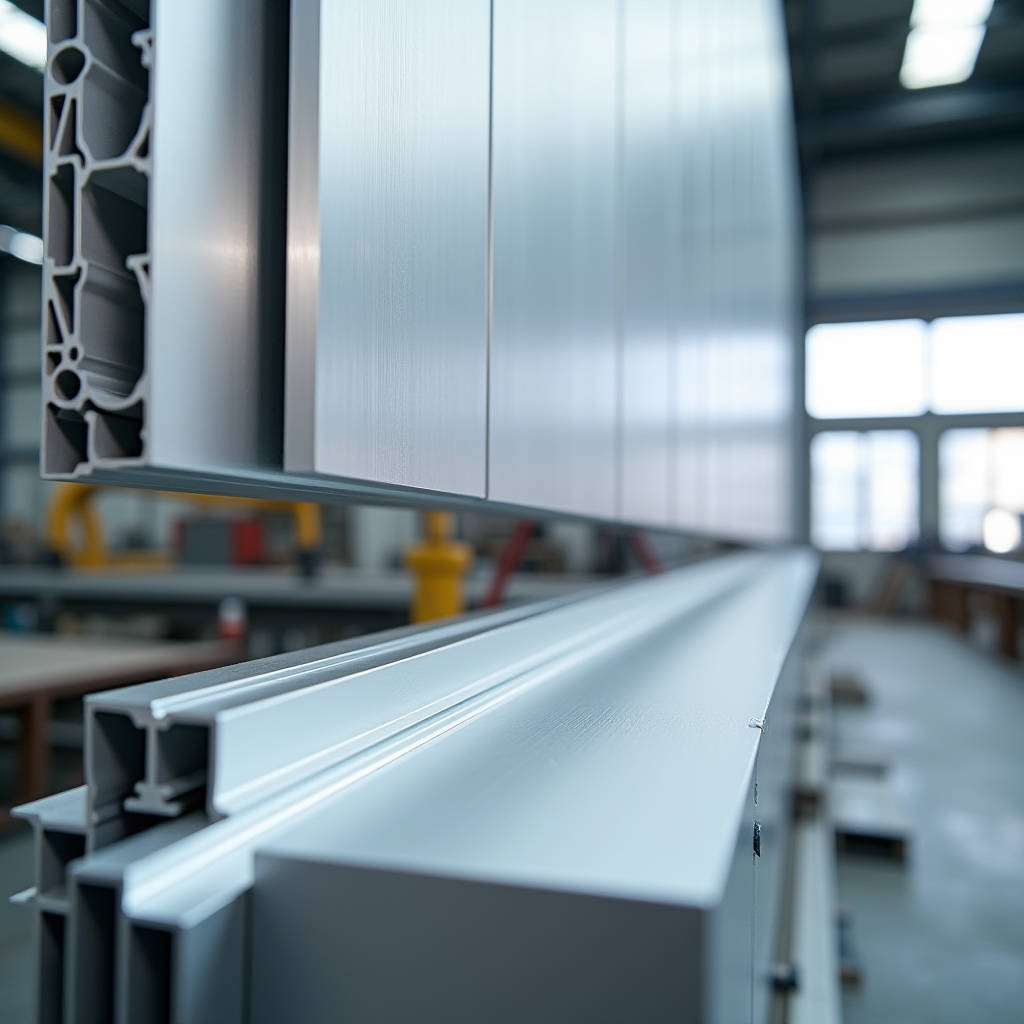
Aluminum panel stiffener welding sits at the intersection of structural performance and long-term facade durability. When a 2.5mm or 3.0mm solid aluminum cladding panel spans across a curtain wall grid, wind loads and thermal movement create bending moments that the bare sheet alone cannot resist. Stiffeners—typically aluminum extrusions or formed profiles—are attached to the interior face to increase section modulus without adding full-sheet thickness. The welding method used to join these stiffeners to the panel directly determines whether the assembly will remain flat under cyclic loading, resist corrosion at the joint interface, and avoid visible read-through on the exterior PVDF-coated surface. This article examines the technical realities behind aluminum panel stiffener welding, comparing conventional MIG tacking against friction stir welding and adhesive bonding, with a focus on what matters for building envelope engineers and facade contractors specifying solid aluminum cladding systems.
Why Stiffeners Exist on Solid Aluminum Cladding Panels
Solid aluminum panels used in architectural cladding—typically 2.0mm, 2.5mm, or 3.0mm thick sheets of alloy 3003, 5052, or 5005—are flat rolled products with inherent flexibility. A 3.0mm panel spanning 1,200mm between supports will deflect visibly under wind suction pressures as low as 1.0 kPa if left unstiffened. The stiffener's job is straightforward: increase the composite section's moment of inertia so the panel resists bending without requiring a thicker, heavier, and more expensive base sheet.
Stiffeners are almost always aluminum extrusions—hat sections, C-channels, or rectangular tubes—in alloy 6063-T5 or 6061-T6. They are placed on the interior (non-visible) side of the panel, running vertically or in a grid pattern depending on the panel's aspect ratio and the structural engineer's calculations. The attachment method between stiffener and panel skin is the critical variable. A poorly executed aluminum panel stiffener welding process can introduce distortion, weaken the base metal through heat-affected zone softening, or create galvanic pathways that accelerate corrosion behind the rainscreen.
The Three Dominant Attachment Methods
Industry practice for stiffener-to-panel joining has consolidated around three approaches: MIG stitch welding, friction stir welding (FSW), and structural adhesive bonding with acrylic foam tapes. Each method carries distinct implications for production speed, thermal distortion, fatigue life, and aesthetic outcome.
MIG Stitch Welding: The Traditional Workhorse
Gas metal arc welding (GMAW/MIG) remains the most widely deployed aluminum panel stiffener welding technique in architectural fabrication shops across Asia, the Middle East, and North America. The process uses a consumable filler wire—typically ER5356 for 5xxx series base alloys—and an inert shielding gas to create intermittent stitch welds along the stiffener flange.
The practical advantage is speed and low equipment cost. A skilled welder can tack a stiffener to a panel in under two minutes. But the engineering trade-offs are real. Each weld bead introduces localized heating that softens the HAZ (heat-affected zone) in cold-worked or strain-hardened alloys. For 5052-H32 panel skin, the HAZ tensile strength can drop from approximately 230 MPa to around 170 MPa—a reduction of roughly 26%. The intermittent nature of stitch welds also creates stress concentration points at weld terminations, where fatigue cracks can initiate under repeated wind-induced vibration.
More critically for architectural applications, MIG welding on thin-gauge material (2.0mm to 3.0mm) frequently causes visible distortion on the exterior face. Even minor weld shrinkage can telegraph through as surface ripples that become painfully obvious under low-angle sunlight on a PVDF metallic finish. Remedial rework—sanding, filling, re-coating—eats into margins and delays project schedules.
Friction Stir Welding: The High-Integrity Alternative
Friction stir welding has migrated from aerospace and shipbuilding into architectural panel fabrication over the past decade. The process uses a rotating, non-consumable tool that plunges into the joint line between stiffener flange and panel skin. Frictional heat plasticizes the aluminum without melting it, and the tool's shoulder forges the plasticized material into a solid-state bond.
The metallurgical advantages are substantial. Because FSW operates below the melting point, the HAZ is narrower and peak temperatures are lower. Grain structure in the weld zone is refined rather than cast, yielding fatigue properties that can exceed those of MIG welds by 30-50% in bending tests. Distortion is dramatically reduced—typically less than 0.5mm of out-of-flatness across a 1,200mm panel, compared to 2-3mm with MIG stitch welding on the same geometry.
FSW is not without limitations. The equipment is capital-intensive. The tool applies significant downward force, requiring rigid fixturing and a backing anvil. For architectural fabricators accustomed to handheld MIG torches, the transition to a CNC-controlled FSW station represents a six-figure investment and a learning curve. Cycle times per stiffener are generally longer than MIG tacking, though the elimination of post-weld straightening and cosmetic rework can offset this in total throughput.
Futeng® has observed growing demand from European and Australian facade contractors specifying FSW-joined panels for high-rise projects where wind-induced fatigue and zero-defect aesthetic standards are non-negotiable. The premium over MIG-welded panels is typically 15-25%, but the warranty risk reduction often justifies the cost on landmark buildings.
Structural Adhesives and Acrylic Foam Tapes
A parallel trend, particularly in North America, is the elimination of welding altogether. Structural acrylic foam tapes—such as 3M VHB and similar products from other manufacturers—are applied as continuous or segmented beads between the stiffener and panel. When combined with a liquid structural adhesive for edge sealing, these tape-bonded assemblies can achieve lap shear strengths exceeding 1.0 MPa across the bonded area.
The appeal is obvious: zero heat input, zero distortion, zero HAZ softening. The bond line also provides vibration damping and acts as a thermal break, reducing the risk of condensation on the stiffener in cold climates. Independent testing by the Pressure Sensitive Tape Council (PSTC) has demonstrated that tape-bonded stiffeners can match or exceed the static strength of stitch-welded assemblies in ASTM E330 uniform load tests, though performance under cyclic fatigue and elevated temperatures requires careful engineering assessment.
The limitation is durability. While acrylic foam tapes have demonstrated 20-year outdoor weathering performance in properly designed joints, the bond's long-term creep resistance under sustained dead load and thermal cycling is less predictable than a welded joint. For panels installed at high elevations or in seismic zones where differential movement between panel and stiffener is expected, purely adhesive attachments may require supplementary mechanical fastening.
Comparative Performance Data
The table below summarizes key engineering parameters for the three stiffener attachment methods, based on published test data from ASTM E330, ASTM E72, and industry technical papers. Values are representative for a 2.5mm 5052-H32 panel skin with a 6063-T5 hat-section stiffener at 600mm spacing.
| Parameter | MIG Stitch Weld | Friction Stir Weld | Acrylic Foam Tape + Adhesive |
|---|---|---|---|
| Joint shear strength (MPa) | 90-120 (weld metal) | 130-160 (weld zone) | 0.8-1.5 (bond line) |
| HAZ strength reduction | 20-30% in 5xxx alloys | 5-10% in 5xxx alloys | None (cold process) |
| Panel distortion (mm/m²) | 1.5-3.0 | 0.3-0.8 | 0.0-0.2 |
| Fatigue life (cycles to failure at 50% yield) | 50,000-150,000 | 200,000-500,000+ | Limited data; creep-dependent |
| Relative equipment cost | Low | High | Minimal |
| Cycle time per stiffener (min) | 1.5-3.0 | 3.0-6.0 | 2.0-4.0 (incl. curing) |
| Corrosion resistance at joint | Good (filler-dependent) | Excellent | Excellent (isolated joint) |
| Typical application climate | All; requires drainage design | All; preferred for marine/coastal | Moderate; avoid sustained high humidity |
Welding Distortion: The Silent Specification Killer
Ask any facade consultant who has inspected panels on-site, and they will tell you that distortion from aluminum panel stiffener welding is among the top three reasons for panel rejection. The physics is straightforward: aluminum has a thermal expansion coefficient of approximately 23 × 10⁻⁶ /°C—roughly twice that of steel. When a MIG arc deposits weld metal at 600-650°C onto a 2.5mm panel skin at ambient temperature, the differential expansion and subsequent contraction creates residual tensile stresses that pull the panel out of plane.
The visible result is "oil-canning"—a wavy distortion pattern that becomes accentuated by specular reflection on smooth PVDF or FEVE coatings. The AAMA 609.1 and 610.1 standards for architectural aluminum panels specify flatness tolerances, but the subjective nature of visual assessment means that what passes a dimensional check may still fail an architect's aesthetic review.
Mitigation strategies for MIG-welded panels include: back-step welding sequences to distribute heat input, copper chill bars clamped adjacent to the weld line, and post-weld stress relief through controlled heating. In practice, many fabricators rely on skilled welders who develop an intuitive feel for heat management—an approach that works until it does not, and one that is difficult to scale across production shifts.
FSW addresses distortion at the process level. Because the peak temperature is lower (typically 400-500°C) and the heat input is more uniform along the weld line, residual stresses are lower and more predictable. This is why FSW has become the default process for stiffened aluminum panels in railcar bodies and ship superstructures, where flatness tolerances are tight and rework is prohibitively expensive. The Stirweld research group has documented these advantages extensively in peer-reviewed studies on aluminum stiffened panels.
Corrosion Considerations at the Stiffener Joint
A welded stiffener-to-panel joint creates a metallurgical connection that can become a corrosion cell if the alloy combination and environmental exposure are not carefully managed. When a 6063-T5 stiffener (containing approximately 0.4% magnesium and 0.4% silicon) is MIG-welded to a 5052 panel skin (2.5% magnesium), the filler metal selection becomes critical. ER5356 filler, with 5% magnesium content, provides good galvanic compatibility with the 5052 skin but is less noble than the 6063 stiffener. In a marine or industrial atmosphere with chloride deposition, the weld metal can become the anode in a galvanic couple, leading to preferential corrosion at the weld bead.
FSW eliminates filler metal from the equation entirely. The solid-state bond is formed from the parent materials themselves, so there is no dissimilar metal junction at the weld interface. This is a significant advantage for panels specified for coastal buildings, where salt spray testing per ASTM B117 is often a contractual requirement. Independent testing by the Aluminum Association has confirmed that FSW joints in 5xxx/6xxx dissimilar combinations exhibit corrosion resistance equal to or better than the less noble parent alloy.
For adhesive-bonded stiffeners, the corrosion picture is different. The bond line electrically isolates the stiffener from the panel, breaking the galvanic circuit. This is a genuine advantage, but it comes with the caveat that any moisture trapped in the bond line during application can initiate crevice corrosion that is invisible until the bond fails. Proper surface preparation—abrasion followed by solvent degreasing within a controlled time window—is non-negotiable.
Production Realities: What Specifiers Need to Know
Architects and facade engineers writing specifications for aluminum panel stiffener welding need to understand the production constraints that fabricators face. A typical architectural panel fabrication shop in China, Southeast Asia, or the Middle East may process 200-500 panels per day. At that volume, the difference between 2 minutes and 5 minutes per stiffener attachment translates to hours of additional labor per shift.
MIG stitch welding remains dominant in these high-volume environments because the equipment is inexpensive, the skill base is widely available, and the process is tolerant of minor fit-up variations. Panels that are slightly out of flat after welding can be straightened on a press, and minor cosmetic defects on the interior face are irrelevant once the panel is installed. For mid-rise commercial buildings with standard architectural finishes, this approach is cost-effective and proven.
The calculus changes for premium projects: high-rise towers with metallic or anodized-look PVDF coatings, buildings in coastal corrosion zones, and projects where the facade specification includes cyclic wind load testing per ASTM E1886 or AAMA 501.1. On these projects, the cost of one panel failure—scaffolding, crane time, replacement panel fabrication, and programme delay—can exceed the entire premium for FSW or adhesive bonding across the full facade package.
Quality Verification Methods
Regardless of the attachment method chosen, quality verification is essential. For welded joints, the minimum standard is visual inspection per AWS D1.2 (Structural Welding Code - Aluminum) supplemented by dye penetrant testing on a sample basis. More rigorous programmes include macro-etch cross-sections to verify penetration depth and lack of fusion defects, and tensile pull-off testing of witness coupons welded alongside production panels.
For adhesive-bonded stiffeners, peel adhesion testing per ASTM D903 and lap shear testing per ASTM D1002 should be conducted on samples prepared with the same surface treatment and curing conditions as production panels. Environmental conditioning—humidity aging, thermal cycling, and salt spray exposure—provides confidence in long-term durability.
The American Architectural Manufacturers Association (AAMA) publishes relevant standards for architectural panel performance, and the International Organization for Standardization (ISO) provides guidelines for weld quality assessment under ISO 10042 for aluminum arc welding and ISO 25239 for friction stir welding of aluminum.
Thermal Movement and Stiffener Design
A frequently overlooked aspect of aluminum panel stiffener welding is the interaction between the stiffener attachment and the panel's thermal movement. A solid aluminum panel on a south-facing facade in Dubai or Phoenix can reach surface temperatures of 80°C in summer, then cool to 20°C at night. The 60°C delta, multiplied by aluminum's thermal expansion coefficient, produces approximately 1.4mm of movement per meter of panel length.
If stiffeners are continuously welded along their full length, this thermal strain is constrained, generating compressive stresses that can buckle the panel or tensile stresses that can fatigue the weld. Stitch welding inherently accommodates some thermal movement because the unwelded segments between stitches act as expansion joints. FSW, being a continuous process, requires more careful engineering of the stiffener layout to ensure that thermal stresses remain within elastic limits. Some fabricators address this by FSW-welding the stiffener at discrete intervals rather than continuously, combining the metallurgical benefits of FSW with the thermal compliance of stitch attachment.
Making the Right Call for Your Project
Selecting the appropriate aluminum panel stiffener welding method is not a one-size-fits-all decision. It requires balancing structural requirements, aesthetic expectations, environmental exposure, budget constraints, and the available fabrication capability in the project's supply chain.
For standard commercial projects where panels are specified with a solid-color PVDF finish and installed in a benign inland environment, MIG stitch welding by an experienced fabricator will deliver acceptable performance at the lowest cost. The key is specifying minimum weld length, spacing, and visual acceptance criteria in the fabrication quality plan, and enforcing those criteria through third-party inspection at the factory.
For premium architectural projects—particularly those with metallic finishes, coastal exposure, or high-rise wind conditions—the case for FSW or adhesive bonding is strong. The 15-25% cost premium is a small fraction of the total facade package value, and the risk reduction in terms of distortion, corrosion, and fatigue is substantial. When specifying FSW, reference ISO 25239 for process qualification and require macro-etch samples from the first article inspection. When specifying adhesive bonding, require the adhesive system supplier to provide project-specific engineering support, including joint design calculations and weathering test data.
Ultimately, the stiffener attachment method should be selected at the specification stage, not left to the fabricator's discretion. A clear specification gives the design team control over the performance outcome and provides a level playing field for fabricators to bid on. The Metal Construction News technical archives provide additional case studies on stiffener attachment performance that specifiers may find useful for reference.
Aluminum panel stiffener welding, in all its forms, remains a critical fabrication process that directly impacts the long-term performance of solid aluminum cladding systems. Understanding the trade-offs between MIG, FSW, and adhesive methods empowers architects, engineers, and contractors to make decisions that align with their project's technical and commercial priorities.