Aluminum Panel Bending Radius Limits Coating Integrity and Forming Methods for Curved Facade Cladding
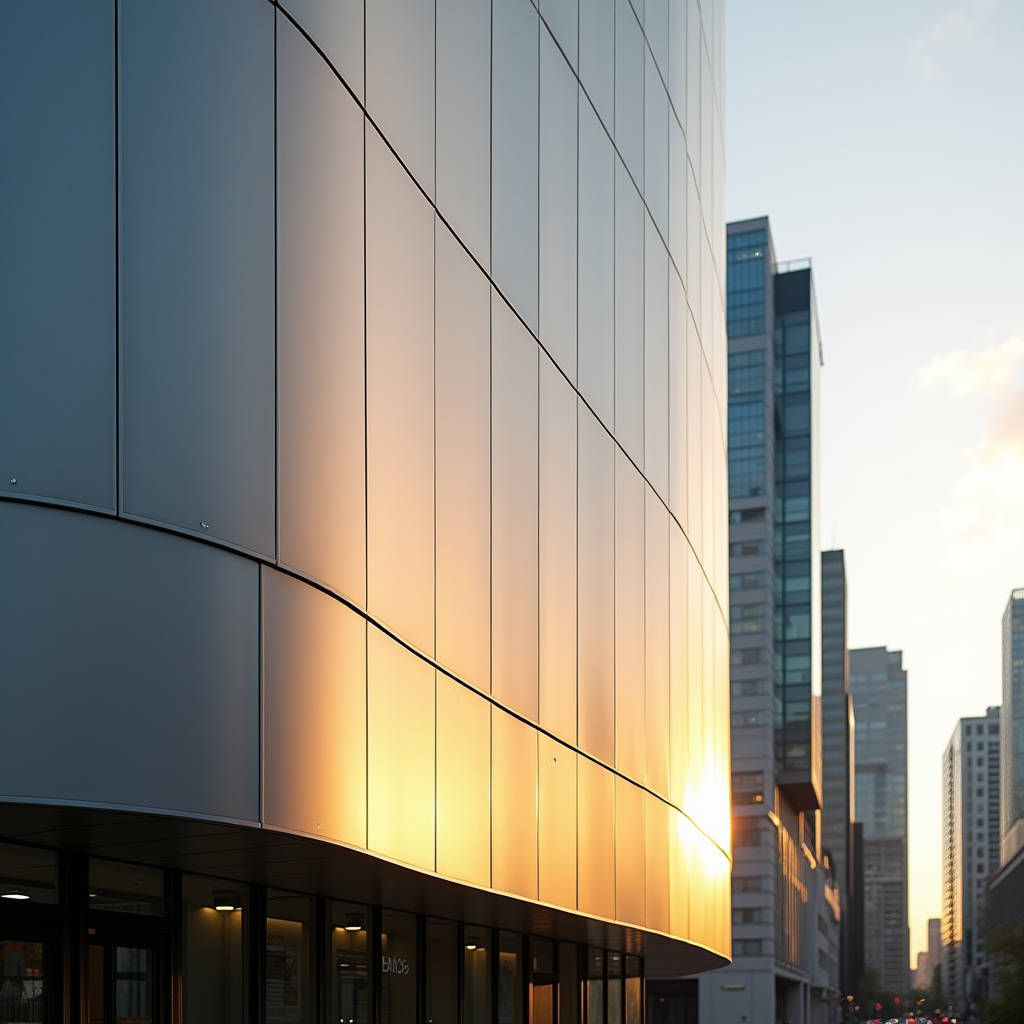
When a facade design calls for curved geometry, the conversation shifts from simple panel selection to the physics of Aluminum Panel Bending. Architects are pushing the limits of what solid aluminium sheets can do, specifying tight radii, compound curves, and large-format panels that test the boundaries of material science. The challenge is not whether aluminium can bend—it can—but whether it can bend without cracking, oil-canning, or losing its flatness tolerance after forming. This article focuses on the specific intersection of bending solid aluminium cladding panels and the coating integrity that must survive the deformation process. If you are a facade contractor or project manager evaluating curved panel specifications, the following analysis of bend radii, alloy selection, and PVDF performance under strain will give you a practical framework for technical decision-making.
The Material Reality of Bending Solid Aluminium
Solid aluminium panels—typically 2.0mm, 2.5mm, or 3.0mm thick—behave very differently from composite sheets when subjected to bending forces. A solid sheet has no polyethylene core to absorb stress; every millimeter of deformation translates directly into tensile strain on the outer surface and compressive strain on the inner surface. This is the fundamental mechanical truth of Aluminum Panel Bending.
The alloy you specify determines everything. 3003-H14 is the workhorse for architectural bending. It offers a good balance of formability and strength, with an elongation of 8-16% depending on temper. 5052-H32 gives you higher strength and better corrosion resistance, but with slightly reduced formability. 6061-T6—common in structural applications—is notoriously difficult to bend at room temperature. Its elongation is only around 8-10%, and it will crack if you push the bend radius too tight. The Fabricator magazine has documented the specific challenges of bending 6061-T6, noting that even experienced shops struggle with this alloy without proper planning.
For architectural facades, 3003-H14 and 5052-H32 dominate the market. They can be brake-formed, roll-bent, or stretch-formed into the curved profiles that modern buildings demand. The key is matching the alloy to the bend severity and the final finish requirements.
Bend Radius and the Minimum Rule
The minimum bend radius is the single most important parameter in Aluminum Panel Bending. It is typically expressed as a multiple of the material thickness (t). For 3003-H14, the recommended minimum inside bend radius is 1t to 1.5t. For 5052-H32, it is 1.5t to 2t. For 6061-T6, you are looking at 2.5t to 3t minimum, and even then, cracking is a real risk without annealing or hot forming.
These numbers are not theoretical. They come from decades of fabrication experience and are backed by ASTM standards. When a specification calls for a 3.0mm 5052-H32 panel with a 90-degree bend at a 3mm inside radius, that is a 1t bend—pushing the lower limit of what the alloy can handle. The fabricator needs to account for grain direction, tooling condition, and forming speed. Bend the sheet with the grain, and you increase the risk of cracking. Bend across the grain, and the material is more forgiving.
Grain direction is a detail that separates experienced fabricators from novices. Aluminium sheet is rolled during production, and the rolling process creates a directional grain structure. Bending perpendicular to the grain direction gives you better elongation and reduces crack risk. For critical architectural panels, the grain direction should be specified on the fabrication drawings. This is not a minor detail—it can mean the difference between a panel that passes inspection and one that goes to scrap.
Coating Integrity Under Deformation
Here is where the conversation gets interesting for facade applications. Solid aluminium panels for exterior use are almost always finished with PVDF (polyvinylidene fluoride) coatings, typically applied at 25-35 microns dry film thickness in a three-coat system. The coating is factory-applied on flat sheet. When you bend that sheet, the coating must stretch with the metal.
PVDF coatings, when properly formulated and cured, can handle significant elongation—up to 50-100% depending on the specific resin system. This is well-documented in AAMA 2605, the standard for high-performance architectural coatings. However, the coating's ability to stretch depends on several factors: the primer system, the cure temperature, the pigment loading, and the age of the coating. Metallic and mica finishes are more sensitive to strain than solid colors because the flake orientation can shift during bending, creating visible color variation along the bend line.
A practical concern: when a panel is bent after coating, the outer surface of the bend experiences tensile strain. If the strain exceeds the coating's elongation capacity, micro-cracks form. These cracks are not always visible immediately, but they become pathways for moisture and pollutants, eventually leading to coating delamination and corrosion. For projects in coastal or industrial environments, this is a long-term durability risk that should be addressed during specification.
The preferred approach for high-risk bends is to form the panel first, then apply the coating. This eliminates the strain-on-coating problem entirely. But it adds complexity: curved panels are harder to handle in coating lines, and achieving uniform film thickness on curved surfaces requires skilled operators. The trade-off between cost and performance needs to be evaluated case by case.
Forming Methods for Architectural Panels
Three primary forming methods are used for solid aluminium cladding panels, each with distinct advantages and limitations.
Press Brake Forming is the most common method for straight bends. A press brake uses a punch and die to create linear bends at precise angles. For architectural panels, the tooling must be clean and smooth—any imperfection on the die surface will transfer to the panel and show through the coating. The bend sequence matters: complex panels with multiple bends require careful planning to avoid tooling interference. Modern CNC press brakes can hold angle tolerances of ±0.5 degrees, which is sufficient for most facade applications.
Roll Bending is used for large-radius curves. Three or four rollers progressively bend the sheet into a cylindrical or conical shape. This method is ideal for curved facade elements like column covers, canopy edges, and curved wall panels. The challenge with roll bending is maintaining consistent radius across the full width of the panel. Variations in material thickness, temper, or roller pressure can create flat spots or inconsistent curvature. For panels wider than 1.5 meters, this becomes a real quality control issue.
Stretch Forming is the premium method for complex curves. The panel is clamped at its edges and stretched over a die, creating compound curves that cannot be achieved with press brakes or roll bending. Stretch forming produces the most consistent results because the material is under uniform tension throughout the forming process. However, it requires dedicated tooling for each panel geometry, making it cost-effective only for larger production runs. The aerospace industry has used stretch forming for decades, and the technology has migrated to architectural applications as demand for complex facade geometries has grown.
Salvagnini panel benders represent a fourth category: automated bending cells that can handle multiple bends in a single setup without manual intervention. These machines are designed for high-mix, low-volume production and can achieve remarkable consistency. For fabricators handling large architectural projects with hundreds of unique panel geometries, this automation can be a competitive advantage. The universal tooling eliminates the need for custom dies, and the automatic handling reduces labor costs.
Springback: The Unavoidable Variable
Every metal that is bent will spring back slightly after the bending force is released. Aluminium, being relatively elastic, exhibits springback that must be compensated for in the bending process. For 3003-H14, springback is typically 2-5 degrees. For 5052-H32, it is 3-6 degrees. For 6061-T6, it can be 5-10 degrees or more.
Springback is not a constant. It varies with bend angle, bend radius, material thickness, and temper. A 90-degree bend in 2.0mm 3003-H14 might spring back 2 degrees, while the same bend in 3.0mm 5052-H32 might spring back 4 degrees. The fabricator must overbend to compensate, and the amount of overbend is determined by experience and trial.
For architectural panels, inconsistent springback creates problems. If two panels that are supposed to mate at a corner have different springback behavior, the joint will not close properly. This is why controlled material sourcing is important. Panels from the same coil, processed in the same batch, will have more consistent springback than panels from different coils or different suppliers. When the project involves hundreds of curved panels, this consistency becomes critical to installation efficiency.
Quality Control for Curved Panels
Inspecting curved panels requires different tools and criteria than inspecting flat panels. A flat panel can be checked with a straightedge and feeler gauge. A curved panel needs a template or a coordinate measuring system to verify the radius and profile.
The key quality parameters for curved solid aluminium panels include:
- Radius tolerance: Typically ±2mm for radii under 500mm, and ±0.5% of the nominal radius for larger curves.
- Surface flatness in the non-curved direction: Oil-canning (waviness) is a common problem in curved panels, especially those with large radii. The panel should be checked for local distortions that would be visible under grazing light.
- Coating continuity: The bend area should be inspected under magnification for micro-cracks, especially for metallic finishes.
- Edge condition: The edges of curved panels are often trimmed after forming. The cut quality, deburring, and edge coating integrity all matter.
- Dimensional accuracy: Overall length, width, and diagonal measurements should be checked to ensure the panel will fit the substructure.
For projects requiring high precision, coordinate measuring machines (CMM) or 3D scanning can be used to create a digital record of each panel's geometry. This data can be compared to the BIM model to verify compliance before the panels leave the factory.
Cost Factors in Curved Panel Projects
Curved panels cost more than flat panels. The premium depends on the bending method, the alloy, the finish, and the production volume. Understanding these cost drivers helps in budgeting and value engineering.
| Cost Factor | Flat Panel Baseline | Press Brake (Simple Bend) | Roll Bending (Large Radius) | Stretch Forming (Compound Curve) |
|---|---|---|---|---|
| Material Utilization | 85-90% | 80-85% | 75-82% | 65-75% |
| Labor Hours per m² | 0.3-0.5 hrs | 0.8-1.2 hrs | 1.0-1.5 hrs | 2.0-3.5 hrs |
| Tooling Cost | Minimal | $200-$800/die set | $500-$2,000/roller setup | $3,000-$15,000+/die |
| Scrap Rate (Typical) | 2-4% | 5-8% | 6-10% | 8-15% |
| Quality Inspection Time | 5-10 min/panel | 15-20 min/panel | 20-30 min/panel | 30-60 min/panel |
| Relative Cost Multiplier | 1.0x | 1.5-2.0x | 2.0-3.0x | 3.5-6.0x |
These numbers are estimates based on typical fabrication scenarios. Actual costs depend on project specifics: panel size, quantity, tolerance requirements, and geographic location. The tooling cost for stretch forming is the biggest variable—a simple single-curvature die is relatively affordable, while a complex compound-curvature die with tight tolerances can cost significantly more.
For projects with a mix of flat and curved panels, it is worth considering whether the curved panels can be standardized to reduce tooling costs. If the same radius is used across multiple panel types, the same forming setup can be reused, spreading the tooling cost over a larger area.
Installation Considerations for Curved Panels
Curved panels introduce challenges that flat panels do not. The substructure must match the panel curvature precisely. If the panel is curved but the supporting framework is not, the panel will be forced into the wrong shape during installation, creating stress in the panel and potentially distorting the curve.
The attachment system also needs attention. Curved panels have different stiffness characteristics than flat panels. A panel curved in one direction is stiffer in that direction but may be more flexible in the perpendicular direction. The fastener layout should account for this. For roll-bent panels with large radii, intermediate stiffeners may be needed to prevent vibration and oil-canning under wind load.
Thermal movement is another consideration. Aluminium expands and contracts with temperature changes at a rate of approximately 0.024mm per meter per degree Celsius. A 3-meter curved panel subjected to a 50°C temperature swing will move about 3.6mm. The attachment system must accommodate this movement without binding or creating noise. For curved panels, the movement path is not linear—it follows the curve—so the attachment design needs to account for both the magnitude and direction of movement.
Futeng® has supplied curved solid aluminium panels for projects where these installation factors were critical to the facade's long-term performance. The key lesson from those projects is that early coordination between the fabricator, the structural engineer, and the installer prevents problems that are expensive to fix on site.
Specifying Curved Panels: A Practical Checklist
When writing specifications for curved solid aluminium cladding panels, the following points should be addressed explicitly:
- Alloy and temper: Specify 3003-H14 or 5052-H32 for architectural bending. Avoid specifying 6061-T6 unless structural requirements demand it, and if you do, specify the bend radius accordingly.
- Bend radius: State the minimum inside bend radius as a multiple of material thickness. Reference the alloy's formability limits.
- Grain direction: Require that bends be made perpendicular to the grain direction unless otherwise approved.
- Coating sequence: Specify whether coating is applied before or after forming. For tight bends, post-forming coating is preferred.
- Springback compensation: Require the fabricator to document their springback compensation method and demonstrate consistency.
- Inspection criteria: Define radius tolerance, surface flatness, and coating continuity requirements.
- Mock-up requirement: Require a physical mock-up of the most critical curved panel assembly before production begins.
These specification points are consistent with AAMA 2605 for coating performance and ASTM E84 for surface burning characteristics. For structural performance, ASTM E330 (wind load) and ASTM E283 (air infiltration) apply to the overall facade system, including curved panels.
For more detailed guidance on aluminium bending fundamentals, the technical resources available through KDM Fabrication and industry publications like The Fabricator provide practical insights that complement the specification framework outlined here. The American Architectural Manufacturers Association (AAMA) publishes standards that are directly applicable to curved panel quality assurance.
When Bending Goes Wrong: Common Failure Modes
Understanding what can go wrong is as important as knowing what to do right. The most common failure modes in Aluminum Panel Bending for architectural applications include:
Corner cracking: This occurs when the bend radius is too tight for the alloy and temper. The crack starts at the outer edge of the bend and propagates inward. Once a crack forms, the panel is scrap—there is no reliable repair method for architectural applications.
Orange peeling: A rough, pebbled surface texture that appears on the outer surface of the bend. It is caused by excessive grain growth in the aluminium or by bending beyond the material's uniform elongation limit. Orange peeling is a cosmetic defect that may be acceptable in non-visible areas but is generally unacceptable on exposed facade surfaces.
Coating delamination: The coating separates from the aluminium substrate along the bend line. This is usually caused by inadequate surface preparation before coating, or by bending strain that exceeds the coating-to-substrate adhesion. Once delamination starts, it will spread over time.
Springback inconsistency: Panels that should be identical end up with different bend angles. This is a process control problem, often caused by variations in material temper or inconsistent forming parameters. The result is panels that do not fit together properly on the building.
Oil-canning: Wavy distortions in the flat areas of a curved panel. This is particularly problematic for large-radius curves where the panel retains significant flat area. Oil-canning is influenced by residual stresses from the bending process, panel thickness, and the support system.
Each of these failure modes can be prevented with proper material selection, process control, and quality inspection. The cost of prevention is always lower than the cost of replacing panels after installation.
Closing Notes for the Project Team
Aluminum Panel Bending for architectural facades sits at the intersection of material science, fabrication technology, and design intent. The decisions made during specification—alloy selection, bend radius, coating sequence, and quality criteria—ripple through the entire project, affecting cost, lead time, and long-term performance.
For architects, the message is to engage with fabricators early. The curved panel you envision may be achievable, but the feasibility depends on details that are best discussed before the design is locked. For contractors, the message is to vet your fabricator's bending capabilities carefully. Ask to see samples of curved panels they have produced, visit their facility if possible, and review their quality control documentation. For fabricators, the message is to invest in process control—consistent springback compensation, controlled grain direction, and thorough inspection are what separate reliable suppliers from the rest.
The technology exists to produce curved solid aluminium panels that meet the most demanding architectural requirements. The key is knowing what to specify, what to ask for, and what to inspect. When these three things align, the result is a facade that performs as intended for decades.