Specifying Weatherproof Aluminum Coating Systems for Solid Aluminium Cladding Performance
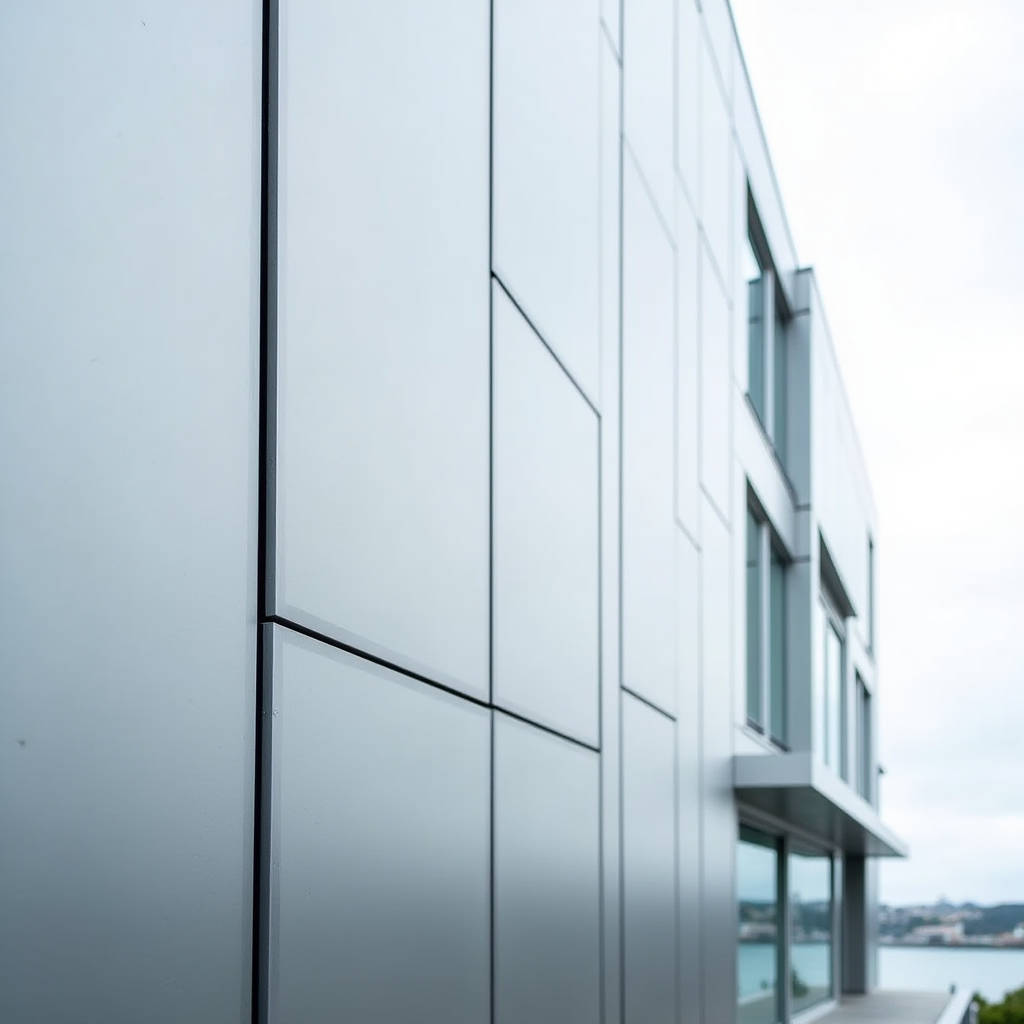
Specifying the right coating system for architectural aluminium cladding is a decision that directly determines how a facade performs across decades of exposure. Among the available options, Weatherproof Aluminum Coating systems built on fluoropolymer chemistry have become the benchmark for projects where long-term appearance retention and substrate protection are non-negotiable. The distinction between a standard architectural finish and a genuinely weatherproof coating lies in the resin system, the application method, and the quality controls applied during pretreatment and curing. For solid aluminium panels in the 2.0mm to 3.0mm thickness range, the coating is not decorative—it is the primary barrier between the metal and everything that wants to degrade it: UV radiation, salt-laden air, industrial pollutants, and thermal cycling. This article examines the technical realities behind weatherproof coating selection, focusing on what the specification data sheets do not always reveal: how different coating technologies perform under sustained environmental stress, how to verify that a coating system will meet the demands of a specific site, and what procurement teams should look for beyond the warranty certificate.
What Separates a Weatherproof Coating from a Standard Architectural Finish
Standard architectural coatings for aluminium—typically polyester-based systems—perform adequately in benign environments. They provide reasonable color consistency and initial gloss levels at a competitive price point. But the term "weatherproof" implies a fundamentally different performance envelope. A Weatherproof Aluminum Coating must resist not just occasional rain but sustained UV bombardment, repeated thermal expansion and contraction, and chemical attack from airborne contaminants.
The critical difference sits in the polymer backbone. Polyester resins use ester linkages that are inherently vulnerable to hydrolysis. When moisture penetrates the coating film—and it always does, at some rate—these ester bonds break. The result is gradual chalking, gloss loss, and eventually coating delamination. Fluoropolymer systems, by contrast, use carbon-fluorine bonds that are among the strongest known in organic chemistry. The bond dissociation energy of a C-F bond is approximately 485 kJ/mol, compared to roughly 350 kJ/mol for the C-O bonds in polyester systems. This is not a marginal difference. It is the reason why a properly applied PVDF coating can maintain color and gloss for 20 to 30 years in exterior exposure, while a polyester finish in the same location may show visible degradation within 5 to 7 years.
Specifiers should understand that "weatherproof" also means resistance to the combined effects of UV and moisture. These two factors work synergistically: UV breaks chemical bonds at the surface, and moisture then carries away the degraded material, exposing fresh polymer to further attack. A coating that resists only one of these mechanisms will still fail prematurely. The fluoropolymer approach addresses both simultaneously.
PVDF Coatings: The 70% Resin Rule That Actually Matters
When the industry refers to PVDF coatings, the conversation almost always leads to the 70% resin specification. This number comes from AAMA 2605, the most demanding voluntary specification for architectural coatings on aluminium. The standard requires a minimum of 70% polyvinylidene fluoride resin by weight in the coating's pigment-free resin component. The remaining 30% is typically acrylic resin, which serves as a carrier and aids pigment dispersion and adhesion.
Why 70%? Below this threshold, the acrylic component begins to dominate the weathering behavior. At 50% PVDF, the coating behaves more like an acrylic with some fluoropolymer content than a true fluoropolymer system. The 70% minimum is not arbitrary—it represents the point where the carbon-fluorine bonds in the PVDF component form a continuous protective matrix that shields the acrylic from direct UV exposure. This is sometimes called the "fluoropolymer shielding effect."
Procurement teams should verify PVDF resin content through third-party testing rather than relying solely on manufacturer claims. Reputable suppliers, including Futeng®, can provide documentation tracing the resin source to licensed PVDF manufacturers. The coating applicator must also be certified by the resin supplier, which ensures that the application process—pretreatment, primer application, topcoat application, and curing—meets the standards required for the warranty to be valid.
FEVE: The Alternative Fluoropolymer for Complex Fabrication
While PVDF dominates the architectural aluminium market, fluoroethylene vinyl ether (FEVE) resins represent an alternative worth understanding. FEVE-based coatings are typically applied as liquid coatings rather than the coil-applied or spray-applied PVDF systems. They offer comparable weathering performance—AAMA 2605 compliance is achievable—with one distinct advantage: FEVE coatings can be formulated with higher gloss levels and can be field-applied, which PVDF generally cannot.
This matters for projects where panels require on-site touch-up after installation, or where the design calls for a gloss level above the 30-40 GU (gloss units) typical of PVDF. FEVE coatings can achieve gloss readings of 60-80 GU while maintaining weatherproof performance. The trade-off is that FEVE systems are generally more expensive per square meter and require equally rigorous surface preparation.
The practical distinction for specifiers: if the project involves standard flat or curved panels with factory-applied finishes, PVDF remains the most cost-effective route to AAMA 2605 compliance. If the design requires high-gloss finishes, complex fabricated shapes that may need post-fabrication coating, or field touch-up capability, FEVE should be evaluated.
Pretreatment: Where Weatherproofing Actually Begins
No coating system can compensate for inadequate surface preparation. The pretreatment process for solid aluminium panels determines whether the coating bonds to the metal or merely sits on top of it. The industry standard for architectural applications is a multi-stage chromate or non-chromate conversion coating process.
The sequence typically runs: alkaline cleaning to remove oils and shop contaminants, rinsing, deoxidation to remove the natural oxide layer, rinsing, conversion coating application, rinsing, and drying. Each step must be controlled for chemical concentration, temperature, and dwell time. A failure at any stage creates a weak point where moisture can eventually penetrate and initiate filiform corrosion—the thread-like corrosion that spreads beneath the coating surface.
For coastal or industrial environments, the pretreatment specification becomes even more critical. The conversion coating weight should fall within the range of 40-60 mg/ft² for chromate systems or the equivalent performance range for non-chromate alternatives. Below this range, corrosion resistance drops sharply. Above it, the conversion coating becomes brittle and can crack during panel forming, creating pathways for moisture ingress.
Quality-focused manufacturers apply a primer layer after pretreatment and before the color topcoat. The primer serves multiple functions: it provides additional corrosion inhibition, improves topcoat adhesion, and creates a uniform surface that enhances color consistency. For a complete Weatherproof Aluminum Coating system, the primer is not optional—it is an integral part of the weatherproofing package.
Coating Thickness: The Numbers That Affect Warranty Validity
Coating thickness specifications are not suggestions. They are the physical reality that determines whether a coating system can deliver the performance promised in the warranty document. AAMA 2605 specifies a minimum total dry film thickness of 1.2 mils (30 microns) for a two-coat system and 1.4 mils (35 microns) for a three-coat system. These numbers include the primer layer.
For projects in aggressive environments—coastal sites with salt spray, industrial zones with acidic emissions—many specifiers increase the minimum to 1.6-2.0 mils (40-50 microns). The additional thickness provides a greater margin against the gradual erosion that all coatings experience. The erosion rate for a quality PVDF coating is typically less than 0.5 microns per year in normal exposure, but this can accelerate in harsh conditions.
The table below provides a comparison of the primary coating systems used for weatherproof aluminium cladding, based on published performance data and industry standards.
| Coating System | Resin Type | Dry Film Thickness (mils) | AAMA Standard | Typical Gloss Retention (10 Years) | Best Application Environment |
|---|---|---|---|---|---|
| PVDF 70% (3-Coat) | Fluoropolymer + Acrylic | 1.4 - 2.0 | AAMA 2605 | 85-95% | Coastal, industrial, high-UV |
| PVDF 70% (2-Coat) | Fluoropolymer + Acrylic | 1.2 - 1.6 | AAMA 2605 | 80-90% | Urban, suburban |
| FEVE (Liquid) | Fluoroethylene Vinyl Ether | 1.5 - 2.5 | AAMA 2605 | 85-95% | High-gloss designs, field-applied |
| SMP (Silicone-Modified Polyester) | Polyester + Silicone | 1.0 - 1.4 | AAMA 2604 | 50-65% | Moderate climates, budget-sensitive |
| Standard Polyester | Polyester | 0.8 - 1.2 | AAMA 2603 | 30-50% | Interior, sheltered exterior |
This comparison makes clear that the jump from AAMA 2604 to 2605 represents a significant performance threshold. Projects that specify AAMA 2604-compliant SMP coatings may save 15-25% on coating costs, but the long-term weathering performance difference is not linear—it is exponential. An SMP coating at year 15 may need replacement, while a PVDF coating at the same age may still be performing within specification.
Environmental Factors That Should Drive Specification Decisions
Generic coating specifications are a common source of premature facade degradation. The appropriate Weatherproof Aluminum Coating for a project in Dubai is not necessarily the same as the appropriate system for a project in Singapore, even though both locations experience high temperatures.
In the Middle East, the primary stress factors are extreme UV radiation and thermal cycling. Panel surface temperatures can swing from 15°C at night to over 80°C in direct afternoon sun. This 65°C daily range imposes significant stress on the coating-substrate interface. The thermal expansion coefficient of aluminium is approximately 23 × 10⁻⁶ /°C, meaning a 3-meter panel experiences roughly 4.5mm of thermal movement across this temperature range. The coating must be flexible enough to accommodate this movement without cracking or losing adhesion.
In Southeast Asia, the combination of high humidity, frequent rainfall, and moderate UV creates different challenges. The coating must resist moisture absorption and prevent the formation of micro-blisters that can develop when water vapor penetrates the film and then expands during heating. This is where the primer system becomes particularly important. An epoxy-based primer provides superior moisture barrier properties compared to acrylic primers, though it adds cost and complexity to the application process.
Coastal environments anywhere in the world introduce chloride attack. The chloride ions in salt spray are small enough to penetrate coating defects and initiate pitting corrosion on the aluminium substrate. For projects within 5 kilometers of a coastline, the coating specification should include enhanced pretreatment (higher conversion coating weight), increased minimum dry film thickness, and consideration of a three-coat rather than two-coat system.
Quality Verification: Testing Beyond the Data Sheet
A coating data sheet provides a starting point, not a guarantee. The verification process for a Weatherproof Aluminum Coating should include both laboratory testing and production quality control documentation.
The key laboratory tests referenced in AAMA 2605 include accelerated weathering (ASTM G154 or G155), salt spray resistance (ASTM B117), humidity resistance (ASTM D2247), and chemical resistance to acids, alkalis, and solvents. Accelerated weathering tests typically run for 4,000 to 5,000 hours and should demonstrate color change (ΔE) of less than 5 units and gloss retention above 50% for AAMA 2605 compliance.
However, specifiers should understand that accelerated testing correlates imperfectly with real-world performance. A 5,000-hour QUV test provides useful comparative data but does not precisely predict 20-year performance in a specific location. This is why warranty terms and the track record of the coating system in similar environments carry significant weight in specification decisions.
Production quality control should include daily coating thickness measurements, gloss readings, color readings (using a spectrophotometer against the approved standard), and adhesion testing (cross-hatch or pull-off methods). These records should be available for review as part of the project documentation package.
Warranty Structures and What They Actually Cover
Coating warranties for architectural aluminium are structured differently than the warranties familiar from consumer products. A typical PVDF coating warranty covers film integrity, color change, and gloss retention for a specified period—commonly 20 or 30 years—but the coverage is prorated and subject to specific exclusions.
The warranty typically defines acceptable color change as ΔE ≤ 5 units (measured per ASTM D2244) and acceptable gloss retention as a minimum of 50% of the original reading. These numbers represent visible degradation. A ΔE of 5 is clearly noticeable to the human eye when viewed side-by-side with an unexposed sample. The warranty does not promise that the coating will look new after 20 years; it promises that the degradation will remain within defined limits.
Exclusions typically include damage from abrasive cleaning methods, exposure to chemical agents not specified in the warranty, and mechanical damage during handling or installation. The warranty is also void if the panels are not installed with adequate ventilation behind the cladding, as trapped moisture can attack the coating from the reverse side.
For procurement managers, the practical question is whether the warranty is backed by a financially stable entity with a track record of honoring claims. Resin manufacturers like Arkema (Kynar®) and coating applicators certified by these manufacturers provide a warranty chain that has been tested over decades of commercial use.
Cost Considerations Beyond the Per-Square-Meter Price
The installed cost of a Weatherproof Aluminum Coating system involves more than the coating line item on the panel supplier's quote. A three-coat PVDF system applied to 2.5mm solid aluminium panels typically adds $8-15 per square meter compared to a standard polyester finish, depending on color, gloss level, and order volume. Metallic and mica colors cost more than solid colors due to the additional processing required to achieve uniform appearance.
But the total cost of ownership calculation should factor in the expected service life and the cost of any remedial work. If a polyester-coated facade requires recoating or panel replacement at year 12, while a PVDF-coated facade is still performing at year 25, the initial cost premium for PVDF represents a fraction of the avoided remediation cost. For buildings with difficult access—high-rise towers, structures with complex facade geometries—the logistics cost of scaffolding or swing stages for recoating can exceed the original coating cost by a factor of three or more.
For budget-sensitive projects where full AAMA 2605 compliance is not achievable, a partial upgrade path exists: specify AAMA 2605 for the most exposed elevations (south-facing in the Northern Hemisphere, coastal-facing elevations) and AAMA 2604 for sheltered areas. This approach concentrates the coating budget where it delivers the greatest benefit.
Application Methods: Spray, Coil, and Powder
The method by which a Weatherproof Aluminum Coating is applied affects both performance and appearance consistency. For solid aluminium cladding panels, the dominant application method is liquid spray coating, applied in a controlled factory environment. The panels are pretreated, primed, and then sprayed with the PVDF topcoat, typically in a two-coat (primer plus color) or three-coat (primer plus color plus clear) configuration.
Coil coating—where the coating is applied to continuous aluminium coil before fabrication—is more common for composite panels and thin-gauge sheet products. For solid panels in the 2.0-3.0mm thickness range, spray application allows for coating after fabrication, which means cut edges and formed corners receive full coating coverage. This is a significant advantage for corrosion resistance, as exposed edges are common initiation points for coating failure.
PVDF powder coating has emerged as an alternative to liquid PVDF in recent years. Powder application eliminates solvent emissions and can achieve excellent edge coverage. However, the color range and gloss consistency of powder PVDF have historically been more limited than liquid systems. This gap is narrowing as powder technology advances, and specifiers should evaluate current offerings rather than relying on assumptions from five or ten years ago.
Common Failure Modes and How to Prevent Them
Understanding how weatherproof coatings fail helps specifiers write better specifications and helps procurement teams evaluate supplier claims more critically. The most common failure modes include:
Chalking occurs when the resin at the coating surface degrades, leaving pigment particles exposed. The surface becomes powdery to the touch and color appears faded. Chalking is the expected end-of-life mechanism for organic coatings and is addressed by the fluoropolymer resin's inherent UV resistance. A properly formulated PVDF coating should show minimal chalking for 20-plus years.
Fading is distinct from chalking and refers to color change without significant resin degradation. Some pigments are inherently more fade-resistant than others. Inorganic pigments—iron oxides, mixed metal oxides—generally outperform organic pigments in exterior exposure. Bright reds, yellows, and oranges that rely on organic pigments may show visible fading within 10-15 years even in a PVDF system, while earth tones and inorganic blues and greens remain stable for decades.
Filiform corrosion appears as thread-like filaments spreading beneath the coating surface, typically initiating at cut edges or scratches. Prevention requires proper pretreatment, adequate coating thickness at edges, and careful handling during fabrication and installation to minimize damage to the coated surface.
Delamination—the separation of the coating from the substrate or the separation of coating layers—indicates a fundamental adhesion failure. Root causes include inadequate pretreatment, contamination between coating layers, or curing problems. This is a manufacturing defect, not a weathering phenomenon, and should be covered by the coating warranty.
Making the Specification Decision
The selection of a Weatherproof Aluminum Coating for solid aluminium cladding panels ultimately comes down to matching the coating system to the project's specific environmental exposure, performance expectations, and budget constraints. There is no single correct answer for all projects, but there are clear technical criteria that should guide the decision.
For projects where the facade is expected to perform with minimal maintenance for 20 years or more, AAMA 2605-compliant PVDF or FEVE coatings represent the established standard. The 70% PVDF resin rule, proper pretreatment, and adequate dry film thickness are the three pillars of a specification that will deliver on this expectation. Projects in aggressive environments should consider three-coat systems with increased film thickness and enhanced pretreatment.
For projects with shorter design lives or more constrained budgets, AAMA 2604-compliant SMP coatings offer a middle ground. The performance gap between SMP and PVDF is real and measurable, but so is the cost difference. The key is to make this trade-off consciously rather than discovering it through premature coating failure.
The most valuable investment in the specification process is not the coating itself but the due diligence: verifying applicator certifications, reviewing test reports, checking warranty terms, and confirming that the specified system has a track record in environments similar to the project site. A coating system that looks identical on a data sheet may perform very differently depending on the quality systems behind its application. This is where supplier selection matters as much as product selection. Working with manufacturers who maintain certified coating lines and provide transparent quality documentation removes much of the risk from the specification process.