Anti Static Aluminum Coating for ESD Sensitive Building Envelopes Technical Specification Guide
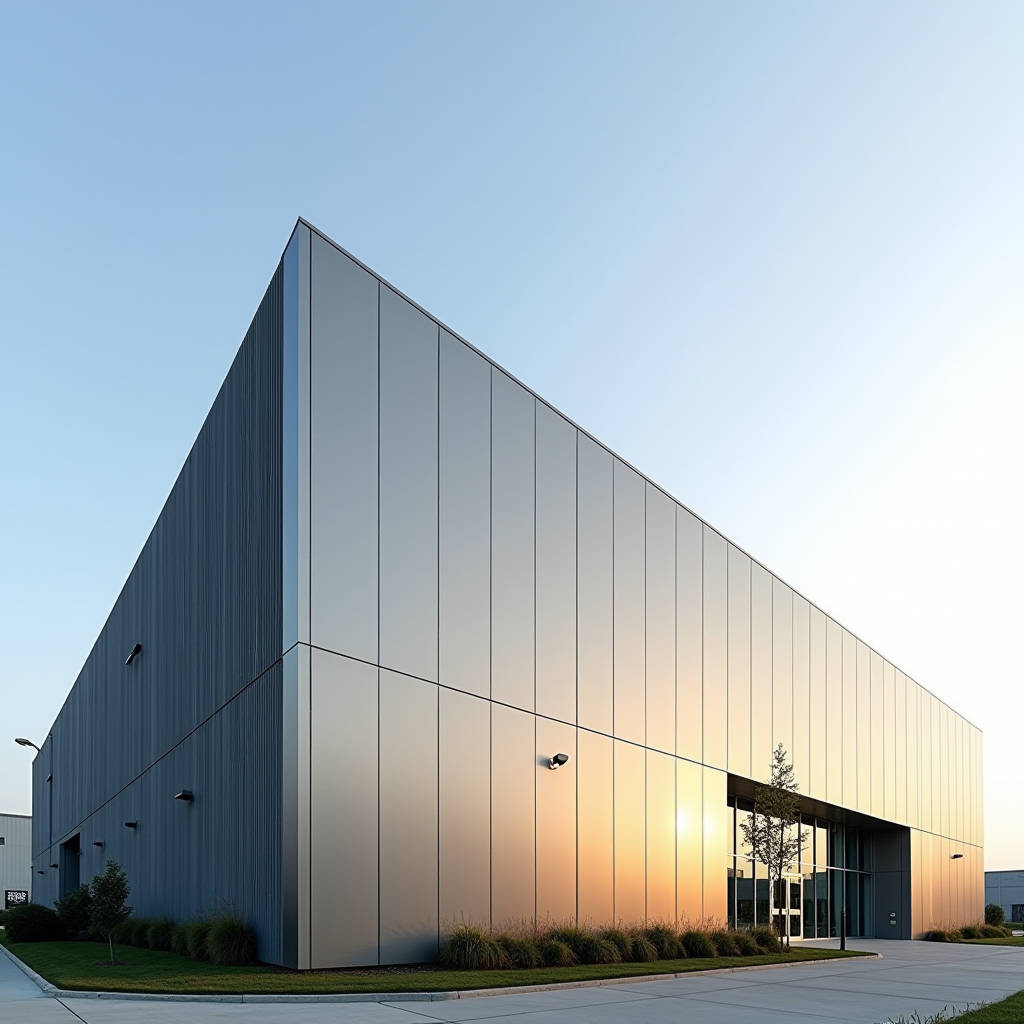
Anti Static Aluminum Coating addresses a specific and growing problem in modern building envelopes: the accumulation of electrostatic charge on metal facade surfaces. In cleanrooms, electronics manufacturing plants, data centers, and pharmaceutical facilities, uncontrolled static discharge can damage sensitive equipment, attract airborne contaminants, and create safety hazards for personnel. Solid aluminium cladding panels with anti-static coatings offer a practical solution by providing a controlled dissipation path for surface charges while maintaining the durability, corrosion resistance, and architectural flexibility that aluminium facades are known for. This article examines the technical mechanisms behind anti-static coatings on solid aluminium panels, the relevant performance standards, surface resistivity ranges, application methods, and what procurement teams need to verify when specifying these materials for ESD-sensitive projects.
How Electrostatic Charge Builds on Aluminium Facades
Aluminium is inherently conductive, which might suggest that static accumulation should not be a problem. In practice, the mill finish or anodized layer on untreated aluminium panels can act as a partial insulator. Wind-driven dust particles, dry air movement across the facade surface, and even routine cleaning operations generate triboelectric charges. In climates with relative humidity below 30%, static voltages on untreated metal cladding surfaces can exceed 10,000 volts within hours of installation.
The issue becomes critical in environments where uncontrolled electrostatic discharge (ESD) can damage microprocessors, ignite flammable vapors, or disrupt precision measurement instruments. A semiconductor fabrication plant, for instance, may have internal ESD controls that are completely undermined by a building envelope that accumulates and suddenly discharges static electricity. The facade itself becomes a latent threat vector. Anti Static Aluminum Coating transforms the panel surface from a charge accumulator into a controlled dissipative layer, bleeding accumulated charge to ground before it reaches dangerous voltage thresholds.
Coating Mechanisms: Conductive Fillers and Surface Resistivity
Anti-static coatings for aluminium panels function through the incorporation of conductive fillers within a polymer matrix. The most common approach uses quaternary ammonium compounds, carbon nanotubes, or intrinsically conductive polymers dispersed in a polyurethane or fluoropolymer base. These fillers create a microscopic conductive network across the coating surface, reducing surface resistivity from the typical 10¹²–10¹⁴ ohms per square (insulative range) down to 10⁶–10⁹ ohms per square (dissipative range).
The distinction between dissipative and conductive is important. A fully conductive coating (below 10⁴ ohms/sq) can discharge too rapidly, creating a spark risk. A dissipative coating in the 10⁶–10⁹ range allows charge to bleed off gradually and safely. This is the target range for most anti-static aluminium cladding applications in controlled environments. The exact resistivity value can be tuned by adjusting filler loading, coating thickness, and the specific resin chemistry. Manufacturers like Futeng® have developed PVDF-based anti-static coatings that maintain this dissipative range without sacrificing the weatherability and color retention expected from architectural fluoropolymer finishes.
Surface Resistivity Standards and Testing Protocols
Specifying an anti-static aluminium cladding system requires understanding the relevant testing standards. The primary reference is ANSI/ESD S20.20, which defines the requirements for ESD control programs. For surface resistivity measurement, ASTM D257 and IEC 61340-2-3 are the governing test methods. These standards specify electrode configurations, applied voltage, and conditioning requirements that directly affect measured values.
Key parameters that procurement teams should verify include:
- Surface resistivity: Measured in ohms per square at 12% relative humidity and 23°C, per ASTM D257. Target range 10⁶–10⁹ Ω/sq.
- Static decay time: Per Federal Test Standard 101C, Method 4046, the time required for a 5,000-volt charge to decay to 500 volts. Acceptable values are typically under 2 seconds.
- Charge generation: Measured in volts using a walking test or triboelectric charge measurement per IEC 61340-4-5.
- Resistance to grounding point: Per ANSI/ESD S6.1, the point-to-point resistance and point-to-groundable-point resistance should be under 1×10⁹ Ω.
These measurements must be performed on production panels, not laboratory coupons. The coating application process—spray parameters, curing temperature, film thickness uniformity—all influence the final electrical properties. A specification that only references "anti-static" without quantitative resistivity targets and test methods is insufficient for procurement.
Coating Types: PVDF Anti-Static vs. Standard ESD Coatings
Not all anti-static coatings are suitable for exterior building envelopes. Many ESD coatings developed for electronics manufacturing—such as acrylic-based topical treatments—lack the UV resistance, flexibility, and adhesion required for 20-plus years of outdoor exposure. Solid aluminium cladding panels typically use PVDF (polyvinylidene fluoride) coatings based on 70% Kynar 500® or Hylar 5000® resin systems, which provide industry-standard weathering performance per AAMA 2605.
The challenge is incorporating conductive fillers into a PVDF formulation without compromising film integrity, color consistency, or gloss retention. Carbon-based fillers, while effective conductors, can darken the coating and limit color options. Quaternary ammonium compounds, used extensively by antistatic additive producers such as Deuteron, offer good compatibility with various resin systems but may be sensitive to moisture and leaching over time. The most advanced formulations use transparent conductive oxides or intrinsically conductive polymers that maintain the full color palette of architectural PVDF while delivering the required dissipative performance.
| Coating Parameter | Standard PVDF (AAMA 2605) | Anti-Static PVDF (Dissipative) | Acrylic ESD Topical |
|---|---|---|---|
| Surface Resistivity (Ω/sq) | 10¹²–10¹⁴ | 10⁶–10⁹ | 10⁶–10⁹ |
| Static Decay (5000V→500V) | >30 seconds | <2 seconds | <2 seconds |
| UV Resistance (QUV-B 3000 hrs) | ΔE < 5, gloss retention > 50% | ΔE < 5, gloss retention > 50% | ΔE > 10, chalking likely |
| Film Thickness (μm) | 25–35 (3-coat) | 30–40 (3-coat with conductive primer) | 5–15 (single coat) |
| Service Life (exterior) | 20–30 years | 20–25 years (projected) | 2–5 years (interior only) |
| Color Availability | Full RAL, custom matches | Full RAL (with transparent filler technology) | Limited, often tinted |
| Applicable Standard | AAMA 2605, EN 13523 | AAMA 2605 + ANSI/ESD S20.20 | ANSI/ESD S20.20 only |
This comparison highlights why exterior-grade anti-static PVDF coatings are the appropriate specification for building envelopes. The acrylic ESD topical might work for interior equipment housings, but it will fail rapidly on a facade exposed to UV radiation, thermal cycling, and moisture. For project specifications, the coating manufacturer should provide test data demonstrating simultaneous compliance with both AAMA 2605 weathering requirements and ANSI/ESD S20.20 dissipative requirements.
Application Methods for Solid Aluminium Panels
Applying anti-static coatings to solid aluminium cladding panels follows the same fundamental process as standard PVDF coating but with additional quality control steps. The aluminium substrate—typically 2.0mm, 2.5mm, or 3.0mm thick alloy 3003 or 5052—undergoes pretreatment including degreasing, alkaline cleaning, and chromate conversion coating per ASTM B449. This pretreatment is critical for coating adhesion and also influences the electrical continuity between the coating and the aluminium substrate.
The anti-static coating system generally consists of three layers: a conductive primer, a dissipative color coat, and a clear topcoat. The primer contains the highest loading of conductive filler and establishes electrical contact with the aluminium substrate. The color coat provides the aesthetic finish while maintaining the dissipative pathway. The clear topcoat, typically a 70% PVDF formulation, protects the conductive layers from UV degradation and environmental exposure while being formulated to not insulate the dissipative layers beneath.
Spray application parameters—fluid pressure, atomization air, gun distance, and booth humidity—must be tightly controlled. Variations in film thickness of even 5 microns can shift surface resistivity by an order of magnitude. Post-cure testing should include resistivity measurements at multiple points across each panel, with a minimum of 9 points for panels larger than 1 square meter. The AAMA 2605 specification provides the framework for coating durability testing, while electrical testing follows the ESD Association standards referenced earlier.
Grounding and Integration with Building ESD Systems
An anti-static coating on aluminium panels is only effective when integrated into a complete building grounding system. The coating provides the dissipative surface, but the charge must have a path to earth. This requires deliberate electrical bonding between each cladding panel and the building's structural steel or dedicated grounding grid.
Standard aluminium cladding installation typically involves aluminium extrusion subframes and stainless steel fasteners. For ESD-sensitive applications, the installation must ensure electrical continuity across all panel joints. This may involve:
- Stainless steel grounding straps bridging panel-to-subframe connections
- Conductive gaskets or fingerstock at panel joints to maintain continuity across expansion gaps
- Dedicated grounding conductors from the subframe to the building's earth electrode system
- Verification of point-to-ground resistance below 1 ohm for the structural path, per NFPA 70 (NEC) Article 250
The total resistance from any point on the coated panel surface to earth should not exceed 1×10⁹ ohms per ANSI/ESD S6.1. This total includes the coating's surface resistivity, the coating-to-substrate interface resistance, and the structural grounding path. The dominant resistance is typically the coating itself, which is why maintaining the 10⁶–10⁹ Ω/sq range is critical.
"The anti-static coating not only reduces the risk of static build-up but also provides additional protection against corrosion and wear, enhancing the lifespan of the aluminium profiles." — Industry observation on the dual benefits of anti-static treatments for aluminium surfaces.
Durability and Long-Term Performance Considerations
The long-term stability of anti-static properties in exterior applications is a key concern for specifiers. Conductive fillers can degrade through multiple mechanisms: UV exposure can break down polymer chains, thermal cycling can disrupt filler-to-filler contact, and moisture ingress can leach water-soluble antistatic agents. For solid aluminium panels specified with a 25-year design life, the anti-static performance must be maintained for a comparable duration.
Accelerated weathering data for anti-static PVDF coatings is still accumulating, as the technology is relatively young compared to standard PVDF systems. However, available data from QUV-B and xenon arc testing per ASTM G154 and G155 suggests that properly formulated systems retain dissipative properties after 5,000 hours of accelerated exposure, which correlates to approximately 15–20 years of Florida-equivalent exterior exposure. The key variables are the type of conductive filler used and the encapsulation efficiency of the PVDF matrix.
Facility managers should plan for periodic verification of anti-static performance. Annual surface resistivity measurements at representative locations on the facade can identify any degradation trends before they become operational problems. If a panel requires replacement, the new panel must be from the same coating batch or validated to have equivalent electrical properties, as batch-to-batch variations in filler dispersion can affect resistivity.
Cost Factors and Procurement Strategy
Anti-static PVDF coating adds approximately 15–25% to the coating cost compared to standard PVDF, depending on the specific filler technology, color, and order volume. For a typical solid aluminium cladding project, the coating represents roughly 20–30% of the total panel cost, so the anti-static premium translates to a 3–7% increase in overall panel pricing. This is a modest increment for the functional benefit provided in ESD-sensitive environments.
Procurement teams should consider the following when sourcing anti-static aluminium cladding:
- Request full test reports: Surface resistivity per ASTM D257, static decay per FTMS 101C, and AAMA 2605 weathering data. Do not accept a generic "anti-static" claim without quantitative data.
- Specify the resistivity range: 10⁶–10⁹ Ω/sq is the industry-standard dissipative range. Tighter tolerances (e.g., 10⁷–10⁸) may be achievable but will increase cost and potentially limit supplier options.
- Verify coating system compatibility: The anti-static coating must be applied over the same pretreatment system as the standard PVDF. Incompatible pretreatments can cause adhesion failure.
- Plan for grounding integration: The panel supplier is responsible for the coated panel's electrical properties. The installer is responsible for the grounding system. Coordination between these parties is essential.
- Consider total lifecycle cost: A slightly higher upfront panel cost is negligible compared to the cost of ESD-related equipment damage or production downtime in a semiconductor or pharmaceutical facility.
Futeng® and other established solid aluminium panel manufacturers have developed anti-static coating solutions that integrate with their standard PVDF coating lines, ensuring consistent quality and traceability. When evaluating suppliers, look for those with in-house coating capability rather than those outsourcing to third-party applicators, as process control is critical for the electrical performance of anti-static coatings.
Industry Applications Driving Demand
The adoption of anti-static aluminium cladding is concentrated in sectors where ESD control is a non-negotiable operational requirement. Semiconductor fabrication plants (fabs) represent the largest market, where even a single ESD event can destroy wafers worth hundreds of thousands of dollars. The Semiconductor Industry Association has documented that ESD-related losses in advanced fabs can exceed 5% of total yield without comprehensive controls, and the building envelope is increasingly recognized as part of that control system.
Pharmaceutical manufacturing facilities, particularly those handling powdered active ingredients, benefit from anti-static facades that reduce dust attraction. In cleanroom environments classified under ISO 14644, particle counts are tightly regulated, and a facade that attracts and holds airborne particles works against the HVAC system's filtration efforts. Data centers, with their dense concentrations of sensitive electronics, are another growing application. A data center facade with anti-static properties complements the internal ESD flooring and workstation controls, creating a holistic protection strategy.
Explosive atmosphere (ATEX) environments, including chemical processing plants and fuel storage facilities, also benefit from anti-static cladding. In these applications, the concern is not equipment damage but ignition risk. A static discharge from an untreated metal facade can ignite flammable vapors or dust clouds. Anti-static coatings reduce this risk by preventing charge accumulation in the first place.
Specification Language for Project Documents
For architects and specifiers preparing project documentation, clear and enforceable specification language is essential. A performance-based specification for anti-static aluminium cladding should include the following elements:
The solid aluminium panels shall be fabricated from alloy 3003-H14 or 5052-H32, minimum thickness 2.0mm (or 2.5mm/3.0mm as required by structural calculations). The coating system shall be a 70% PVDF resin-based fluoropolymer coating applied over a chromate conversion pretreatment. The cured coating shall exhibit surface resistivity between 10⁶ and 10⁹ ohms per square when tested per ASTM D257 at 12% relative humidity and 23°C. Static decay time from 5,000V to 500V shall be less than 2 seconds per FTMS 101C Method 4046. The coating shall also meet all requirements of AAMA 2605, including color retention, gloss retention, chalking resistance, and adhesion after 10-year Florida exposure equivalent.
This language gives the contractor clear, measurable criteria while allowing multiple qualified suppliers to compete. It also protects the project owner by establishing verifiable performance requirements that can be confirmed through third-party testing of production samples.
Anti Static Aluminum Coating on solid aluminium panels represents a meaningful advancement in functional building envelope technology. The combination of controlled surface resistivity, exterior-grade PVDF durability, and integration with building grounding systems provides a practical solution for ESD-sensitive facilities. The technology is mature enough for specification on major projects, provided that procurement teams apply rigorous testing and verification standards. As semiconductor, pharmaceutical, and data center construction continues to grow globally, the demand for facade systems that actively contribute to operational risk reduction will only increase. For project teams, the key is to treat anti-static performance as a quantifiable, verifiable property—not a marketing claim—and to specify accordingly.