Anti Fingerprint Aluminum Surface Engineering What Specifiers Need to Know About Oleophobic Coating Performance
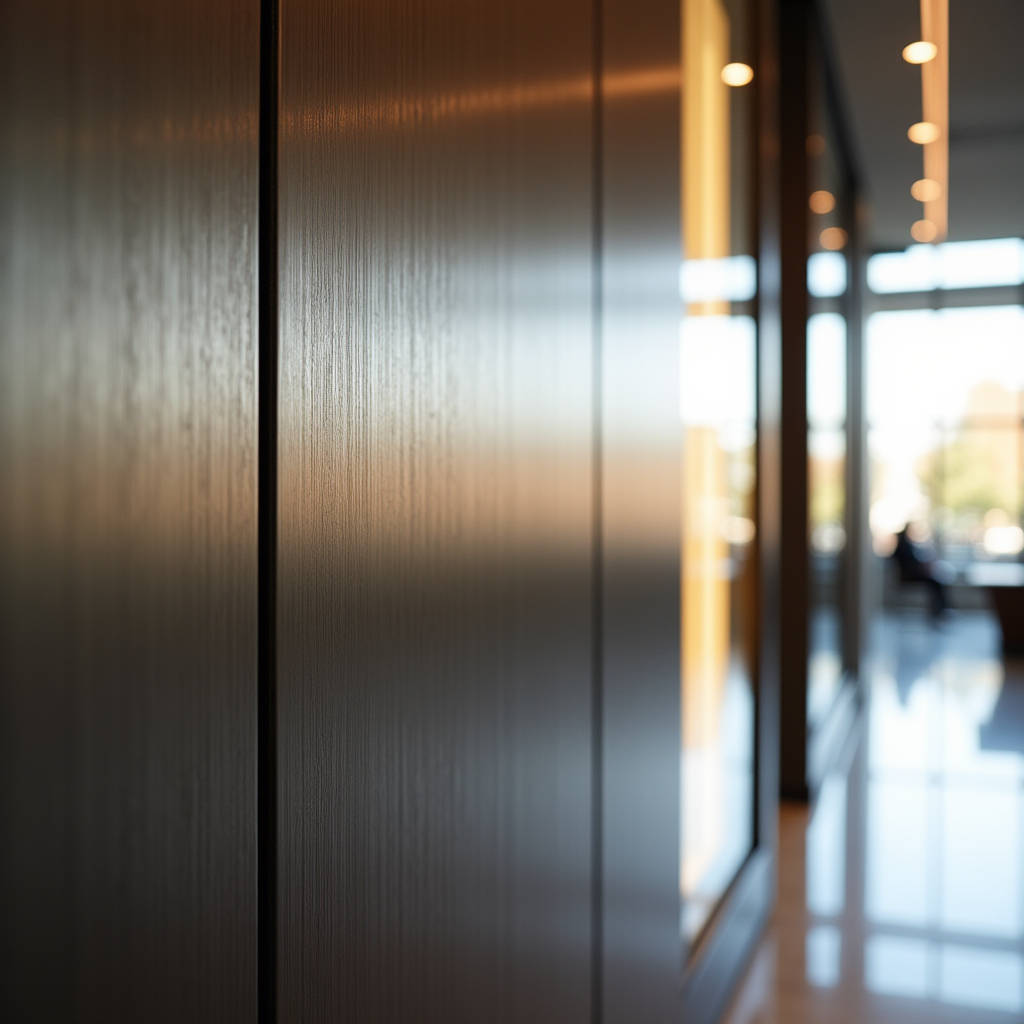
When a general contractor signs off on a lobby elevation clad in dark brushed aluminum, the expectation is a flawless metallic finish that holds its dignity through thousands of hand touches, cleaning cycles, and shifting interior light. Within weeks, ordinary anodized or standard PVDF surfaces tell a different story: ghostly finger marks that refuse to wipe clean, micro-abrasions from maintenance staff using the wrong cloth, and a gradual loss of the crisp linear texture that sold the design in the first place. Anti Fingerprint Aluminum Surface technology addresses this exact failure mode. It is not a cosmetic add-on or a temporary wax. It is a chemically engineered surface modification that alters how the aluminum panel interacts with skin oils, moisture, and ambient contaminants at the molecular level. For solid aluminum cladding panels in high-touch interior environments, this treatment determines whether the facade remains an asset or becomes a maintenance liability. This article examines the technical mechanisms behind anti-fingerprint performance, the measurable differences between coating technologies, and the engineering decisions that separate a surface that resists fingerprints from one that merely claims to.
What Anti Fingerprint Aluminum Surface Actually Means at the Molecular Level
The term gets thrown around in specification documents with surprising looseness. A true Anti Fingerprint Aluminum Surface is not defined by a single property but by three simultaneous performance characteristics: oleophobicity (oil repellency), hydrophobicity (water repellency), and optical index matching. When a human finger presses against bare aluminum, two things happen. Sebum — a complex mixture of triglycerides, wax esters, and squalene — transfers to the metal. On an untreated surface with high surface energy (typically 40-50 dynes/cm for aluminum), the oil spreads instantly into a thin film. That film scatters light differently than the surrounding metal, creating the visible smudge. The anti-fingerprint treatment reduces surface energy below 20 dynes/cm, often into the 12-15 dyne/cm range, forcing the deposited oil to bead rather than wet out. The second mechanism is equally important: the coating's refractive index is tuned to minimize the optical contrast between the oil droplet and the substrate. Even if some oil remains, the human eye struggles to register it. This dual-action approach — physical repellency plus optical camouflage — is what separates industrial-grade treatments from consumer-grade spray-on products that fail within months.
Surface Energy and Contact Angle: The Numbers That Matter
Specifiers should ask for two measurable values when evaluating any anti-fingerprint coating: the water contact angle and the oleic acid contact angle. Water contact angle on a quality treated surface should exceed 105°, with top-tier formulations reaching 110-115°. More telling is the oleic acid contact angle, which should sit above 70°. This second number is harder to achieve and harder to maintain over time. Many coatings that deliver impressive initial water beading fail badly on oil repellency after six months of abrasion. The gap between these two numbers is a useful proxy for real-world durability. A coating with a water contact angle of 112° but an oleic acid contact angle of only 55° will likely disappoint in high-touch applications. The best formulations keep both values high and, critically, keep the gap between them narrow after accelerated weathering.
Why Standard Anodizing and PVDF Alone Cannot Solve the Problem
Anodized aluminum builds a hard aluminum oxide layer that protects against corrosion. It does not inherently repel oil. The anodic pore structure can actually trap sebum, making fingerprints harder to remove than on bare metal. PVDF (polyvinylidene fluoride) coatings — the workhorse of exterior architectural aluminum — provide excellent weatherability and color retention. Standard PVDF formulations, however, have surface energies in the 25-30 dyne/cm range, which is low enough to resist some wetting but not low enough to prevent fingerprint visibility. The resin chemistry lacks the fluorinated or siloxane functional groups needed for true oleophobicity. This is why many architectural specifications now call for a dedicated anti-fingerprint topcoat applied over the color coat, or for modified PVDF formulations that incorporate nano-scale additives. The base coating handles UV, weather, and color. The surface treatment handles the human hand.
Coating Technology Breakdown: Sol-Gel, Nano-Siloxane, and Fluorinated Systems
Three dominant chemical pathways deliver anti-fingerprint performance on solid aluminum cladding panels. Each carries distinct trade-offs in durability, application method, and long-term maintenance behavior. Understanding these differences prevents the costly mistake of specifying a coating optimized for consumer electronics on a building facade that must perform for 20 years.
Sol-gel coatings form a glass-like ceramic layer through hydrolysis and condensation of metal alkoxide precursors, typically silicon or titanium-based. The resulting film is inorganic, hard (often 6H-9H pencil hardness), and thermally stable. The sol-gel matrix can be functionalized with organic groups — fluorinated alkyl silanes or PDMS chains — that migrate to the air interface during curing, providing the low surface energy. The inorganic backbone gives excellent abrasion resistance. The organic functional groups deliver the anti-fingerprint behavior. The limitation is brittleness. On a rigid aluminum substrate, thermal expansion mismatch between the sol-gel layer and the metal can cause micro-cracking over thousands of thermal cycles. This failure mode is slow but real, particularly on dark-colored panels that see significant solar gain.
Nano-siloxane treatments take a different approach. Rather than building a discrete glass layer, they graft siloxane oligomers directly onto the aluminum surface through covalent bonding. The treatment penetrates the natural aluminum oxide layer and anchors chemically. The result is a surface modification measured in nanometers rather than microns — no distinct film thickness to delaminate, no interface to fail. The trade-off is that the treatment offers less mechanical protection than a sol-gel coating. It resists fingerprints effectively but does not add meaningful scratch resistance. For interior cladding panels that see cleaning chemicals and abrasive contact, this can be a concern.
Fluorinated polymer systems, including modified PVDF and FEVE (fluoroethylene vinyl ether) resins, represent the high-durability end of the spectrum. These coatings incorporate perfluorinated side chains that pack tightly at the surface, creating a dense, low-energy barrier. The fluorinated chemistry provides the best oleophobicity numbers available — oleic acid contact angles can exceed 80° — and the polymer backbone delivers flexibility that sol-gel systems lack. The historical concern with fluorinated systems has been environmental persistence. The industry is shifting toward short-chain (C6 or shorter) fluorinated chemistry and, increasingly, toward entirely PFAS-free formulations that use silicone or hydrocarbon-based hydrophobic groups. Momentive and other material suppliers have commercialized PFAS-free anti-fingerprint coatings that approach the performance of fluorinated systems, though long-term durability data in architectural applications is still accumulating.
A well-specified anti-fingerprint surface is not a single coating but a system: pretreatment, base coat for color and weather protection, and a functional top layer engineered for skin oil repellency. The layers must be chemically compatible and thermally matched to the aluminum substrate.
Manufacturing Process: How the Treatment Gets Applied to Solid Aluminum Panels
The application method matters as much as the chemistry. Anti-fingerprint treatments on solid aluminum cladding panels are applied through three primary routes: roll coating, spray coating, and vacuum deposition. The choice depends on panel geometry, production volume, and the specific coating chemistry.
Roll coating dominates for flat sheet stock before fabrication. The aluminum coil passes through a series of rollers that apply the pretreatment, primer, color coat, and anti-fingerprint topcoat in a continuous process. Each layer is cured in-line. Film thickness control is excellent — typically ±2 microns — and the process is efficient for large production runs. The limitation is that roll coating applies the treatment to flat sheets only. Once the panel is cut, routed, bent, or perforated, the edges and fabricated features carry no anti-fingerprint protection. For simple flat panels, this is acceptable. For panels with returns, stiffeners, or complex geometries, post-fabrication treatment is necessary.
Spray coating handles fabricated panels. The anti-fingerprint solution is atomized and applied to the finished panel surface, then cured at elevated temperature (typically 80-150°C depending on chemistry). Spray application can coat complex geometries, edges, and weld zones. Film thickness uniformity is harder to control than roll coating, and the process requires skilled operators and proper ventilation. For architectural projects where panels are fabricated to size before finishing, spray application is the standard route.
Vacuum deposition, specifically plasma-enhanced chemical vapor deposition (PECVD), represents the high-end approach. The aluminum panel is placed in a vacuum chamber, and precursor gases are introduced and energized into a plasma state. The resulting film deposits molecule by molecule, creating an exceptionally uniform, pinhole-free layer. The process is expensive and size-limited by the vacuum chamber dimensions. It is used primarily for premium interior applications where absolute uniformity is non-negotiable.
Futeng® has integrated anti-fingerprint surface treatment capabilities into its solid aluminum panel production line, offering both roll-coated and spray-applied options depending on the project's fabrication sequence and performance requirements.
Performance Testing Standards and What They Reveal
Architectural specifications for anti-fingerprint coatings should reference established test methods. Without them, the spec is unenforceable. The following standards are the most relevant for solid aluminum cladding panels in high-touch environments.
| Test Standard | What It Measures | Relevance to Anti-Fingerprint Performance | Typical Pass Threshold |
|---|---|---|---|
| AAMA 2605 | PVDF coating performance: color retention, chalk resistance, gloss retention after accelerated weathering | Ensures the base coating system under the anti-fingerprint layer maintains integrity | ΔE ≤ 5 after 10 years Florida exposure |
| ASTM D4060 | Abrasion resistance via Taber abraser with CS-10 wheels | Simulates repeated cleaning and contact wear on the anti-fingerprint layer | Weight loss ≤ 20 mg after 1000 cycles |
| ISO 2812-1 | Resistance to liquids: cleaning agents, hand sanitizer, synthetic sweat | Critical for interior panels exposed to cleaning chemicals and skin contact | No blistering, softening, or visible change after 24h contact |
| ASTM D7334 | Contact angle measurement for surface wettability | Direct quantification of oleophobic and hydrophobic performance | Water contact angle ≥ 100°, oil contact angle ≥ 65° |
| AATCC TM118 | Oil repellency via hydrocarbon resistance test | Industry-standard method for evaluating oleophobicity of treated surfaces | Grade 6 or higher (resists n-decane) |
The AATCC TM118 test deserves particular attention. It uses a series of eight hydrocarbon liquids with decreasing surface tension, from mineral oil (grade 1) to n-heptane (grade 8). A drop of each liquid is placed on the surface, and the highest grade that does not wet the surface within 30 seconds is recorded. For architectural anti-fingerprint applications, grade 6 (resistance to n-decane, surface tension ~23.5 dynes/cm) is a reasonable minimum. Grades 7-8 require fluorinated chemistry and may not be achievable with PFAS-free formulations. Specifiers should understand what grade their chosen coating delivers and whether that grade is maintained after abrasion testing.
Durability Under Real-World Conditions: What Accelerated Testing Cannot Predict
Accelerated weathering chambers provide useful comparative data, but they compress years of exposure into weeks by intensifying UV radiation, temperature, and humidity simultaneously. Real-world degradation follows different pathways. Three factors that accelerated testing systematically underrepresents are worth understanding.
Cleaning chemical exposure. Building maintenance crews use a wide range of cleaning products, many of which contain solvents, surfactants, or abrasives that attack anti-fingerprint coatings. Isopropyl alcohol-based hand sanitizers, now ubiquitous in commercial lobbies, are particularly aggressive toward some siloxane treatments. A coating that survives 4000 hours of QUV testing can be destroyed in six months by a cleaning contractor using the wrong product. Specification documents should include a cleaning protocol and list of approved cleaning agents.
Micro-abrasion from repeated contact. A brushed aluminum elevator lobby panel might receive 500-1000 hand contacts per day. Over five years, that is roughly one million touches. Each contact deposits oil and, more importantly, microscopically abrades the surface. Fingertip ridges carry dead skin cells and ambient dust particles that act as a fine abrasive. The anti-fingerprint layer thins gradually, and at some point — typically after 200,000-500,000 cycles for quality coatings — the oleophobic performance begins to degrade measurably. This wear is concentrated in specific zones: the area around door handles, push plates, and the lower portion of wall panels where people lean or touch.
Thermal cycling and condensation. Interior panels near building entrances experience significant temperature and humidity swings. Warm, humid air condenses on cold aluminum surfaces in the morning. The condensed water can extract low-molecular-weight components from the anti-fingerprint coating, gradually depleting the functional chemistry. This mechanism is slow but cumulative. Panels in climate-controlled interior zones far from entrances show measurably better anti-fingerprint retention after five years than identical panels near building entries.
Cost-Benefit Analysis for Project Stakeholders
The incremental cost of adding an anti-fingerprint treatment to solid aluminum cladding panels typically ranges from $8-22 per square meter, depending on the coating chemistry, application method, and project volume. This cost is not trivial, but it must be weighed against the operational savings and aesthetic benefits over the building's service life.
For a mid-rise commercial lobby with 800 square meters of brushed aluminum wall cladding, the anti-fingerprint treatment adds approximately $12,000-17,000 to the facade package. The alternative — untreated panels that require daily cleaning to maintain appearance — generates ongoing costs. A cleaning crew servicing that lobby might spend 30 minutes per day on panel maintenance, translating to roughly 180 hours annually. At $35-50 per hour for commercial cleaning labor, the annual cost runs $6,300-9,000. The anti-fingerprint treatment pays for itself within two to three years on cleaning labor alone, before accounting for the aesthetic value of a consistently clean appearance and the reduced risk of surface damage from aggressive cleaning.
More importantly, anti-fingerprint treatment extends the interval between restorative maintenance. Untreated anodized aluminum in high-touch areas often requires re-finishing or panel replacement after 7-10 years due to accumulated micro-scratching and staining. Treated panels, properly maintained with approved cleaning agents, can extend that interval to 15-20 years. The avoided replacement cost — including demolition, disposal, fabrication of new panels, and installation — dwarfs the initial treatment cost.
Specifying Anti Fingerprint Aluminum Surface for Different Building Typologies
The performance requirements for an Anti Fingerprint Aluminum Surface vary significantly by building type. A hospital corridor, an airport terminal, a corporate headquarters lobby, and a luxury retail facade each impose different demands on the coating system.
Healthcare facilities require chemical resistance above all else. The panels will be cleaned multiple times daily with hospital-grade disinfectants, many of which contain quaternary ammonium compounds, hydrogen peroxide, or sodium hypochlorite. The anti-fingerprint coating must withstand these chemicals without degradation. Sol-gel systems generally perform better than purely organic siloxane treatments in this environment. Specification should require ISO 2812-1 testing with the specific disinfectants the facility uses.
Transportation hubs — airports, rail stations, bus terminals — combine extreme touch frequency with public visibility. Panels in these environments need maximum abrasion resistance. The anti-fingerprint treatment should be paired with a hard base coat, and the specification should include Taber abrasion testing (ASTM D4060) with a pass threshold appropriate for the expected contact volume. For these applications, fluorinated polymer systems or high-performance sol-gel coatings are the appropriate choice.
Corporate and commercial lobbies represent the largest market for anti-fingerprint aluminum cladding. The performance requirements are balanced: good oleophobicity, adequate chemical resistance for standard cleaning products, and aesthetic consistency across large panel areas. Nano-siloxane treatments often provide the best value proposition for these applications. The lower cost and easier application process offset the slightly lower abrasion resistance compared to sol-gel or fluorinated systems.
Luxury retail and hospitality environments demand the highest aesthetic standard. The anti-fingerprint treatment must not alter the visual characteristics of the underlying finish — no haze, no color shift, no change in gloss level. This is where vacuum-deposited treatments excel, as their extreme thinness (often sub-100nm) and uniformity produce no perceptible change in appearance. The cost premium is significant but justified by the aesthetic requirements and the relatively small panel areas involved.
Common Failure Modes and How to Prevent Them
Anti-fingerprint coatings fail in predictable ways, and most failures are preventable through proper specification, handling, and maintenance. The most common failure mode is not chemical degradation of the coating but mechanical damage during installation. Anti-fingerprint treated panels arrive on site with the protective film intact. When that film is removed, the surface is exposed. Installers wearing dirty gloves, stacking panels without interleaving, or dragging panels across each other can scratch the treatment before the building is even occupied. The damage may be invisible initially but creates nucleation points for coating failure. Site handling protocols should be included in the specification package.
The second common failure is incompatibility between the anti-fingerprint treatment and the base coating. A siloxane-based anti-fingerprint treatment applied over a PVDF base coat that contains certain slip additives may not bond properly. The treatment may bead up during application or delaminate within months. This is a chemistry problem that should be resolved at the coating supplier level before panels are fabricated. The specifier should require the coating supplier to certify compatibility between the specific base coat and anti-fingerprint treatment being proposed.
The third failure mode is cleaning-induced degradation. Building maintenance staff, unaware that the panels carry a specialized surface treatment, may use abrasive pads, acidic cleaners, or solvent-based products that strip or damage the anti-fingerprint layer. The solution is a mandatory cleaning protocol delivered as part of the project closeout documentation, with specific approved products and methods.
For projects where long-term performance is critical, working with an experienced solid aluminum panel manufacturer that controls the entire finishing process — from pretreatment through anti-fingerprint topcoat — reduces the risk of inter-coat compatibility issues. Integrated production also provides a single point of accountability if performance problems arise.
Future Directions: PFAS-Free Chemistry and Self-Healing Surfaces
The anti-fingerprint coating industry is undergoing two significant shifts. The first is the move away from long-chain fluorinated chemistry toward PFAS-free formulations. Regulatory pressure, particularly in the European Union under REACH and in several U.S. states, is driving the phase-out of perfluorinated compounds in architectural coatings. The replacement technologies — silicone-based, hydrocarbon-based, and hybrid organic-inorganic systems — have improved rapidly. Current PFAS-free anti-fingerprint coatings can achieve oleic acid contact angles of 68-72°, approaching the 75-80° range of fluorinated systems. The durability gap is closing as well, though fluorinated systems still hold an advantage in chemical resistance, particularly against alkaline cleaners.
The second shift is toward self-healing or replenishable surface treatments. Researchers are exploring coatings that contain reservoirs of functional molecules that migrate to the surface when the top layer is abraded away. This approach, inspired by the way human skin replenishes its lipid barrier, could dramatically extend the service life of anti-fingerprint treatments. The technology is still in development and not yet commercially available for architectural applications, but the concept points toward a future where anti-fingerprint performance is maintained for decades rather than years.
The aluminum cladding industry has largely solved the problems of corrosion, color fading, and structural integrity. The remaining frontier is surface interaction — how the building's skin responds to human touch. Anti Fingerprint Aluminum Surface technology, properly specified and applied, addresses that frontier directly. For specifiers and project teams, the key is to treat anti-fingerprint performance as an engineering requirement with measurable parameters, not as a vague marketing claim. Demand contact angle data, abrasion test results, and chemical compatibility certifications. The numbers will tell you whether the surface will perform or whether you are buying a temporary coating that will disappoint within the first year of occupancy.