Anti Scratch Aluminum Coating Technical Guide for Solid Aluminium Facade Panels
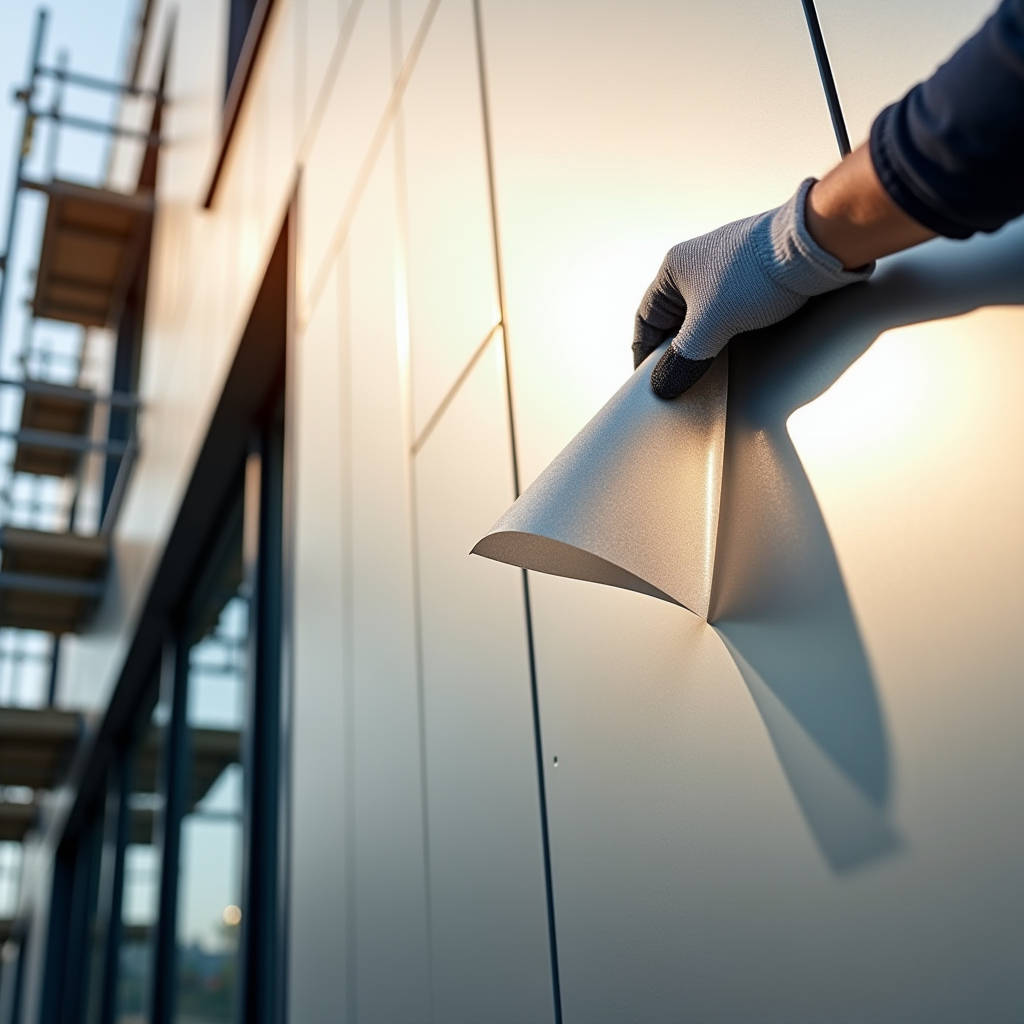
Specifying an Anti Scratch Aluminum Coating on solid aluminium cladding panels is not just about preserving surface gloss. For facade engineers and procurement teams managing large-scale commercial envelopes, scratch resistance directly correlates with defect liability costs, on-site rework schedules, and the final handover sign-off. A single scratched panel on a 20-meter-high feature wall can trigger a logistical chain reaction: scaffold re-erection, replacement lead times of 4-6 weeks, and potential liquidated damages. Understanding what an anti-scratch coating actually delivers in terms of measurable hardness, film integrity, and long-term weathering performance separates a specification that holds up from one that looks good only in a mock-up room. This article examines the technical mechanisms behind anti-scratch treatments on solid aluminium, the test standards that matter, and the cost-benefit calculus for commercial facade projects.
What Anti Scratch Aluminum Coating Actually Means at the Molecular Level
An Anti Scratch Aluminum Coating is not a single product category. It spans multiple chemistries, each with distinct hardness mechanisms. The common thread is the creation of a surface layer that resists plastic deformation when a sharp object slides across it under load. In PVDF-based systems — the dominant specification for architectural aluminium cladding — scratch resistance is achieved through a two-coat or three-coat system where the clear topcoat carries a higher concentration of cross-linked acrylic or nano-ceramic particles. These particles increase the coating's pencil hardness from the typical 2H range up to 4H-6H, depending on formulation and cure conditions.
Hard anodizing takes a fundamentally different approach. Rather than depositing a polymer film, it converts the aluminium surface itself into a dense aluminium oxide layer through electrochemical oxidation. The resulting Al₂O₃ layer can reach 25-75 microns in thickness with a Vickers microhardness of 350-500 HV, compared to approximately 120-150 HV for standard architectural anodizing. This puts hard anodized surfaces in a different league for scratch resistance, though the color range is limited to darker tones — a constraint that matters for architectural expression.
Liquid ceramic coatings, a newer entrant in architectural metal finishing, use sol-gel chemistry to deposit a silicon-dioxide-rich film that can achieve 9H pencil hardness in laboratory conditions. However, field performance data beyond 5 years remains limited, and the cost premium over PVDF is substantial. For facade consultants, the key question is whether the incremental scratch resistance justifies the cost, given that PVDF systems with anti-scratch clear coats already deliver 25-30 years of documented field performance.
Testing Standards That Separate Marketing Claims from Engineering Reality
Not all scratch resistance claims are equal. A coating marketed as "scratch-resistant" may have been tested to a standard that bears little resemblance to the abuse a panel endures during shipping, installation, and building maintenance. Three test methods dominate the architectural aluminium sector:
ASTM D3363 (Pencil Hardness Test): This is the most commonly cited standard, but also the most misinterpreted. The test involves dragging pencils of increasing hardness across the coating surface at a 45-degree angle. The "hardness" reported is the hardest pencil that does not gouge or scratch the film. A result of 4H means the coating resists scratching from a 4H pencil. However, pencil hardness is not a linear scale, and results can vary by 1-2 grades depending on operator technique and ambient humidity. Reputable suppliers like Futeng® report pencil hardness alongside the specific test conditions (temperature, film thickness, substrate preparation) to give specifiers a complete picture.
ISO 1518 (Scratch Test with a Stylus): This method uses a hemispherical or conical stylus loaded with a known weight and drawn across the surface. The result is the minimum load at which the coating is penetrated. This test better simulates the type of damage caused by a metal tool or fastener during installation. Values above 3N for PVDF clear coats and above 10N for hard anodized surfaces indicate meaningful scratch resistance for construction environments.
Taber Abraser (ASTM D4060): While technically an abrasion test rather than a scratch test, the Taber method provides critical data on how the coating surface degrades under repeated contact. This matters for areas subject to wind-driven dust or sand, where cumulative micro-abrasion can dull the surface over years. Weight loss after 1000 cycles with CS-10 wheels is the standard metric, with high-performance anti-scratch PVDF systems typically showing less than 20 mg loss.
Specifier's Note: Always request test reports that reference the specific standard, test conditions, and substrate. A pencil hardness value without the ASTM D3363 reference and film thickness data is functionally meaningless for specification purposes.
Coating Technology Comparison: PVDF vs. Hard Anodizing vs. Ceramic
The choice of anti-scratch technology must balance scratch resistance against other performance requirements: color consistency, UV stability, formability, and cost. The table below provides a technical comparison based on data from coating manufacturers, independent test labs, and project specifications for solid aluminium cladding panels in the 2.0-3.0mm thickness range.
| Property | PVDF with Anti-Scratch Clear | Hard Anodizing (Type III) | Ceramic (Sol-Gel) |
|---|---|---|---|
| Pencil Hardness (ASTM D3363) | 3H - 6H | Not applicable (substrate conversion) | 7H - 9H |
| Coating/ Layer Thickness | 30-40 μm (clear topcoat) | 25-75 μm | 5-15 μm |
| Microhardness | Limited (polymer matrix) | 350-500 HV | 600-900 HV |
| Color Range | Full RAL, metallic, mica | Dark tones only (natural, bronze, black) | Limited; developing |
| UV Resistance (AAMA 2605) | Excellent; 10+ year Florida data | Excellent; no organic degradation | Good; limited long-term data |
| Field Repairability | Touch-up kits available | Difficult; requires strip and re-anodize | Difficult; requires specialist |
| Relative Cost (per m²) | $$ (baseline) | $$$ | $$$$ |
| Typical Lead Time | 3-4 weeks | 4-6 weeks | 5-8 weeks |
For the vast majority of commercial facade projects, PVDF with an anti-scratch clear topcoat remains the pragmatic choice. It delivers the color flexibility architects demand while providing sufficient scratch resistance for normal handling and installation. Hard anodizing earns its place in high-traffic zones — podium levels, entrance canopies, and interior cladding within arm's reach — where impact and abrasion risks are elevated. Ceramic coatings occupy a niche for projects where ultimate scratch hardness is non-negotiable and the budget accommodates both the material premium and the longer lead time.
Where Scratch Damage Actually Occurs: The Supply Chain Reality
Most scratch damage to solid aluminium cladding panels does not happen on the building. It happens before the panels are ever lifted into place. Understanding the damage chain helps procurement teams allocate anti-scratch investment where it delivers the highest return.
Factory Handling and Packaging
Even with an Anti Scratch Aluminum Coating applied, poor factory handling can introduce micro-scratches before the protective film is applied. The critical control points are: conveyor roller condition (worn rollers create linear scratches on the reverse side), stacking procedures (interleaving with acid-free paper or foam), and the quality of the PE protective film. A 60-micron PE film with a medium-tack acrylic adhesive provides adequate protection for domestic transport, but 80-100 micron films are recommended for export shipments involving containerization and transshipment. The protective film itself should be UV-stabilized if panels will be stored outdoors for more than 4 weeks.
Transportation and Site Storage
Containerized shipping introduces vibration-induced fretting, where panels rub against each other or against packing materials. This micro-motion can wear through protective films and initiate scratches even on coated surfaces. The solution is a combination of adequate film thickness, rigid stillage frames that prevent panel-to-panel contact, and desiccant packs to control humidity inside the container. On-site, panels should be stored vertically on A-frames with padded contact points, under cover, and away from construction traffic. A common failure mode is site operatives leaning panels against scaffold poles — a single such incident can destroy the anti-scratch coating on multiple panels.
Installation Damage
During installation, the primary scratch risks are: fastener slip (a power drill bit skidding across the panel surface), handling with dirty gloves, and contact with scaffold components. Specifying clip-fix or cassette systems that eliminate face-fixed fasteners reduces the first risk. Requiring installers to use clean, soft-soled footwear and gloves during panel handling addresses the second. For the third, protective film should remain in place until the panel is fully installed and the immediate work area is clear of scaffolding and debris.
Quantifying the Cost of Scratched Panels on a Typical Project
To make the business case for anti-scratch coating specification, procurement teams need hard numbers. Consider a mid-rise commercial building with 3,000 m² of solid aluminium cladding at 2.5mm thickness, PVDF coated, with a panel size of 1,200mm x 3,000mm (approximately 835 panels).
Without a specified anti-scratch clear coat, field experience across multiple projects suggests a scratch-related rejection rate of 3-8% depending on installation complexity and site conditions. Taking a conservative 4% rejection rate, that means 34 panels require replacement. The direct cost includes: replacement panel fabrication (approximately $85-120/m² for the panel itself), freight for replacements (often air freight to meet schedule, at $15-25/m²), scaffold re-erection or cherry picker hire ($500-1,500 per access), and installer labor for removal and re-installation ($40-60/m²). For 34 panels averaging 3.6 m² each, the total direct cost ranges from $18,000 to $35,000.
The indirect costs often exceed the direct costs: project delay penalties (commonly 0.1-0.5% of contract value per week), consultant re-inspection fees, and the intangible cost of a strained client-contractor relationship. The premium for an anti-scratch clear topcoat on a PVDF system is typically $3-7/m² — on a 3,000 m² project, that means an additional $9,000-21,000. The investment breaks even at very low scratch rates and delivers a strong return when scratch rates exceed 2-3%.
Specification Language That Protects the Project
Vague specification clauses like "coating shall be scratch-resistant" invite disputes. A properly drafted specification for Anti Scratch Aluminum Coating on solid aluminium panels should reference measurable criteria:
- Coating system: PVDF shall comply with AAMA 2605, with a minimum 70% PVDF resin content in the color coat and a clear topcoat with anti-scratch additives achieving minimum 4H pencil hardness per ASTM D3363 at 25°C and 50% RH.
- Film thickness: Total dry film thickness shall be 35-45 μm for a two-coat system or 45-55 μm for a three-coat system, measured per ASTM D7091.
- Scratch resistance: Coating shall withstand a minimum stylus load of 3N without penetration per ISO 1518, using a 0.5mm radius hemispherical stylus.
- Protective film: Panels shall be supplied with a UV-stabilized PE protective film of minimum 80 μm thickness, medium-tack acrylic adhesive, removable without residue after 6 months of outdoor exposure.
- Warranty: Coating shall carry a minimum 20-year film integrity warranty against cracking, peeling, and chalking in excess of Delta E 5 (ASTM D4214).
These criteria give the specifier objective benchmarks for evaluating submittals and provide a clear basis for rejection if the supplied product does not meet the stated requirements. For projects in the Middle East or Southeast Asia, where high UV and humidity accelerate coating degradation, the warranty period and film thickness requirements should be tightened accordingly.
Field Repair: When Anti-Scratch Coatings Get Damaged Anyway
No coating is scratch-proof. When damage occurs on site, the response protocol determines whether the repair is invisible or becomes a permanent eyesore. For PVDF-coated solid aluminium panels with anti-scratch clear coats, minor scratches that do not penetrate the color coat can sometimes be polished out using a fine automotive polishing compound and a microfiber cloth. This should only be attempted by a trained technician, as over-polishing can thin the clear coat and create a visible depression in oblique light.
Scratches that penetrate into the color coat or to bare metal require a different approach. PVDF touch-up kits supplied by the coating manufacturer can fill and seal the scratch, but the repair will typically be visible at close range. The touch-up paint has a different cure mechanism (air-dry rather than oven-cure) and will weather differently over time. For panels in highly visible locations, replacement is the only option that guarantees long-term appearance consistency. This reality reinforces the value of specifying adequate anti-scratch protection from the outset — the cost of prevention is a fraction of the cost of replacement.
For hard anodized surfaces, field repair is even more challenging. The anodic layer cannot be "touched up" in any meaningful way. Minor scratches may be disguised with a colour-matched wax stick, but this is a cosmetic fix only. Deep scratches require the panel to be stripped, re-anodized, and re-installed — a process that is rarely practical on an active construction site.
Emerging Technologies: What's Next for Anti-Scratch Aluminium Surfaces
The anti-scratch coating landscape is evolving. Three developments merit attention from facade specifiers:
Self-healing coatings: Based on microencapsulated healing agents or reversible polymer networks, these coatings can repair fine scratches when exposed to heat (typically 60-80°C). Several automotive clear coats now incorporate this technology, and architectural-grade versions are in development. The challenge for facade applications is that the heat required for healing is rarely available on a building exterior except in the hottest climates.
Plasma-enhanced CVD coatings: Plasma-enhanced chemical vapor deposition can deposit diamond-like carbon (DLC) films onto aluminium surfaces, achieving hardness values approaching 2,000 HV. Currently used in aerospace and high-end consumer electronics, the process is expensive and limited to small batch sizes, but scale-up efforts are underway.
Graphene-enhanced PVDF: Research into graphene nanoplatelet additives for PVDF coatings shows promise for simultaneously improving scratch resistance, UV stability, and thermal management. Graphene's exceptional hardness and barrier properties could enable thinner coatings with equivalent or better performance. Commercial availability for architectural applications is likely 3-5 years away.
For projects being specified today, these emerging technologies are interesting but not yet bankable. The proven path remains PVDF with anti-scratch clear coats for general applications, and hard anodizing for high-wear zones. Suppliers with established quality control systems, such as Futeng®, offer the reliability that large-scale facade projects demand.
Relevant industry resources for further reading include the American Architectural Manufacturers Association (AAMA) for coating specifications, ASTM International for test method details, and the International Organization for Standardization (ISO) for global standards alignment. The Aluminum Association also publishes technical guides on aluminium finishing that are useful for specification development.
Anti Scratch Aluminum Coating technology, when properly specified and quality-controlled, transforms solid aluminium cladding from a material that requires kid-glove handling into one that withstands the realities of construction logistics. The investment is modest relative to the cost of failure, and the specification criteria are well-established. For the facade engineer or procurement manager, the task is not to decide whether scratch resistance matters — it is to specify it with enough precision that the delivered product meets the project's actual needs.