FEVE Fluoropolymer Aluminum Coating Chemistry Performance and Lifecycle Cost for Solid Aluminium Facades
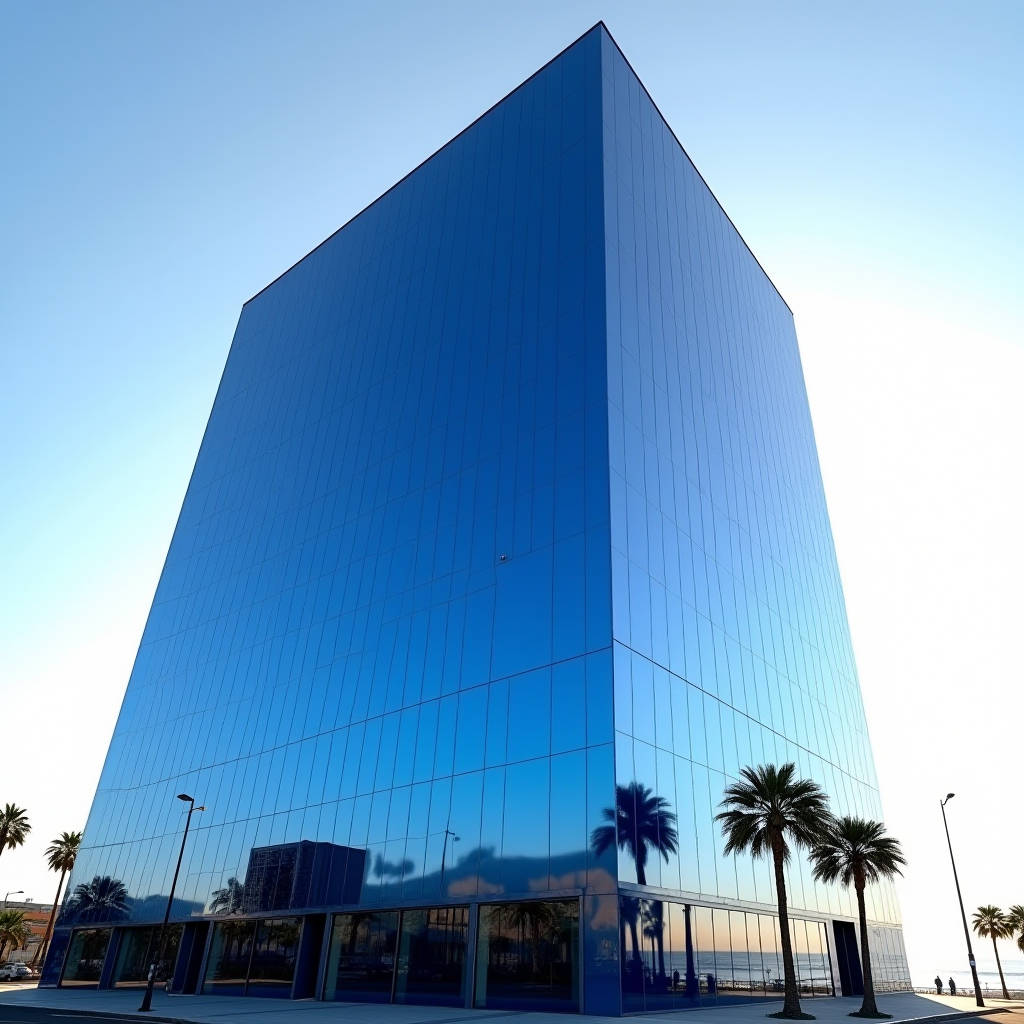
When a project specification demands a facade that holds its color and gloss across three decades of UV exposure, salt spray, and industrial pollutants, the conversation narrows quickly to one technology: FEVE Fluoropolymer Aluminum Coating. This is not a commodity finish. It is a solvent-borne fluoropolymer system built around fluoroethylene vinyl ether resin chemistry, applied to solid aluminium panels in a factory-controlled multi-coat process. The result is a crosslinked thermoset film that bonds at the molecular level to a chromate conversion substrate, delivering performance that meets AAMA 2605-20 and Qualicoat Class 3 with substantial margin. For architects specifying high-rise towers in coastal Southeast Asia, curtain wall contractors managing warranty risk in the Middle East, and procurement directors evaluating total lifecycle cost, FEVE represents a distinct technical category—not a minor upgrade over standard PVDF. This article examines what happens inside the coating film, how the application process differs from conventional coil lines, and what the engineering data actually says about gloss retention, color stability, and corrosion resistance over 20 to 30 years of real-world exposure.
The Chemistry That Makes FEVE Different
To understand FEVE Fluoropolymer Aluminum Coating, you start with the resin backbone. FEVE resins are alternating copolymers of fluoroethylene and vinyl ether units. The fluoroethylene segment provides the carbon-fluorine bond—one of the strongest single bonds in organic chemistry, with a dissociation energy of approximately 485 kJ/mol. That bond strength is the fundamental reason UV radiation cannot break the polymer chain the way it degrades polyester or even modified silicone-polyester coatings. The vinyl ether segment introduces hydroxyl groups that enable crosslinking with isocyanate hardeners, creating a three-dimensional thermoset network. This is the critical structural difference from PVDF (Kynar 500® or Hylar 5000®), which is a thermoplastic dispersion that relies on acrylic modification for adhesion and pigment wetting.
The crosslinked structure of FEVE means the cured film is one continuous molecule. Solvent resistance improves dramatically. Pencil hardness typically reaches 2H to 3H versus HB to F for PVDF. The practical consequence: FEVE-coated solid aluminium panels resist scratching during handling, fabrication, and installation in ways that reduce site touch-up costs. For a curtain wall contractor installing 8,000 square meters of panels on a 40-story tower, the difference between 2% and 8% site damage rates translates directly to program delays and back-charge exposure.
Application Process: Why Factory Control Matters
FEVE Fluoropolymer Aluminum Coating is applied exclusively in a controlled factory environment using a multi-stage process that begins with substrate preparation. Solid aluminium sheets—typically 2.0mm, 2.5mm, or 3.0mm thick in alloy 3003 or 5052—undergo alkaline degreasing, rinsing, and chromate conversion coating per ASTM D1730. This conversion layer is what prevents filiform corrosion from creeping under the paint film at cut edges and fastener penetrations. Skipping or under-specifying this step is the most common failure mode for architectural aluminium in marine environments.
After pretreatment, the panels receive a primer coat (typically 5-8 microns DFT), followed by a color coat containing the FEVE resin and pigment system (20-25 microns DFT), and finally a clear topcoat for gloss and additional UV screening (10-15 microns DFT). Total dry film thickness runs 35-48 microns—comparable to high-spec PVDF systems but with a fundamentally different cure mechanism. The panels pass through a bake oven where the isocyanate crosslinking reaction completes, producing a film that cannot be reflowed or softened by subsequent heat exposure. This thermoset characteristic matters for buildings in hot climates: panel surface temperatures on a dark-colored facade in Dubai or Riyadh can exceed 85°C, and a thermoplastic PVDF film at that temperature softens enough to embed airborne grit and industrial fallout permanently.
Gloss Retention: The 30-Year Data Point
South Florida exposure testing remains the gold standard for architectural coating durability. FEVE Fluoropolymer Aluminum Coating systems tested at 45° south-facing exposure in Miami consistently show gloss retention above 70% after 10 years and above 50% after 20 years, measured at 60° geometry per ASTM D523. This performance is not extrapolated from accelerated QUV-B data—it comes from actual Florida racks. For comparison, high-quality PVDF systems typically retain 50-65% gloss at 10 years, and silicone-polyester systems drop below 30% within 5 to 7 years.
The mechanism behind this gloss stability is the combination of UV-opaque fluoropolymer chemistry and the clear topcoat strategy. The clear FEVE topcoat absorbs and scatters UV photons before they reach the pigment layer, preventing the photocatalytic degradation of titanium dioxide and organic pigments that causes chalking and color fade. This is why FEVE-coated panels specified in bright reds, deep blues, and custom metallics maintain their original appearance long after competing systems have shifted to chalky pastels. For a developer differentiating a premium office tower with a signature facade color, the coating is not just protection—it is the brand asset.
Corrosion Resistance in Aggressive Environments
Solid aluminium panels coated with FEVE fluoropolymer systems have been installed on buildings within 200 meters of breaking surf in Southeast Asia, the Arabian Gulf, and the Caribbean. These are Class C5-M environments per ISO 12944-2, where salt-laden aerosol deposits on facade surfaces daily. The combination of chromate pretreatment, epoxy primer, and the low water-vapor transmission rate of the crosslinked FEVE film creates a barrier system that has demonstrated no blistering, no underfilm corrosion, and no edge creep beyond 1mm after 15 years of marine exposure.
Independent testing per ASTM B117 (neutral salt spray) routinely exceeds 4,000 hours with no blistering per ASTM D714 and no scribe creep beyond 2mm. Cyclic corrosion testing per ASTM G85 (Prohesion) shows similar results. The practical implication: a building envelope consultant specifying FEVE Fluoropolymer Aluminum Coating for a coastal project can reasonably project a 25- to 30-year service life before the first maintenance recoating, compared to 15-20 years for PVDF and 8-12 years for polyester systems in the same environment.
| Coating Technology | Resin Type | DFT (microns) | 10-Year Gloss Retention (60°) | AAMA Standard | Typical Service Life (Coastal) |
|---|---|---|---|---|---|
| FEVE Fluoropolymer | Thermoset Crosslinked | 35-48 | ≥70% | 2605-20 | 25-30 years |
| PVDF (70% Kynar/Hylar) | Thermoplastic Dispersion | 30-40 | 50-65% | 2605-20 | 15-20 years |
| Silicone-Polyester | Thermoset Polyester | 20-25 | 20-30% | 2604-20 | 8-12 years |
| Standard Polyester | Thermoset Polyester | 20-25 | ≤10% | 2603-20 | 5-8 years |
Color Stability and the Pigment Question
FEVE resins exhibit exceptionally low refractive index (approximately 1.42) compared to other coating binders. This optical property allows formulators to achieve high-gloss, high-depth-of-image finishes with lower pigment loadings, which paradoxically improves UV resistance because there is less pigment surface area available for photocatalytic degradation. The practical result is that FEVE Fluoropolymer Aluminum Coating can deliver a 90+ gloss unit finish at 60° geometry in colors that would require a 30-35% pigment volume concentration in PVDF to achieve the same hiding power.
Color retention data from EMMAQUA accelerated outdoor testing (Arizona, Fresnel-reflector concentrated sunlight) shows that FEVE systems maintain ΔE values below 3.0 after the equivalent of 20 years of Florida exposure for most inorganic pigment systems. Organic reds and yellows—historically problematic for architectural coatings—show ΔE values of 4-7 under the same conditions, which is still substantially better than the ΔE 15-25 typical of PVDF systems with the same organic pigments. This opens up design possibilities: architects can specify vibrant, saturated colors on solid aluminium panels with a reasonable expectation that the color they approve on the mockup is the color that will remain on the building for decades.
FEVE vs. PVDF: A Technical Comparison That Matters
The industry has debated FEVE versus PVDF for years, but the comparison is often framed incorrectly. Both are fluoropolymer systems. Both can meet AAMA 2605. The difference lies in the failure mode and the maintenance interval. PVDF coatings fail gradually through erosion of the acrylic modifier, which exposes pigment particles and causes chalking. The film thins over time. FEVE coatings, being crosslinked, do not erode in the same way—they maintain film thickness and fail eventually through slow oxidative embrittlement that can lead to micro-cracking after extreme UV dosage. The timeframe for this embrittlement in properly formulated FEVE systems exceeds 30 years in most climates.
For solid aluminium panel applications, the distinction has practical consequences. PVDF's thermoplastic nature means it can be post-formed after coating—a significant advantage for fabricators doing brake-forming of coated sheet. FEVE's thermoset nature means it must be applied after forming or carefully managed during forming to avoid cracking. This is why FEVE Fluoropolymer Aluminum Coating is typically applied to flat panels, curved panels formed before coating, or panels with gentle roll-formed profiles. The fabricator must coordinate with the coater, but the performance payoff justifies the logistical complexity for premium projects.
Powder FEVE: The Next Evolution
A significant development in the past decade has been the commercialization of FEVE fluoropolymer powder coatings. Unlike liquid FEVE systems that use solvent-borne application, powder FEVE is applied electrostatically and cured in a bake oven without volatile organic compounds. PPG Coraflon Platinum and similar systems have achieved AAMA 2605 certification in a single-coat application, eliminating the primer and clearcoat layers while maintaining the crosslinked thermoset chemistry.
The sustainability argument is compelling: zero VOC emissions, overspray recovery rates above 95%, and reduced energy consumption from eliminating solvent evaporation ovens. For solid aluminium panel coaters serving markets with stringent environmental regulations—California, the EU, Singapore—powder FEVE represents a compliance pathway that does not compromise performance. The film properties are comparable to liquid FEVE: 55-80 microns DFT in a single coat, 2H-3H pencil hardness, and the same carbon-fluorine bond chemistry that delivers UV resistance. The limitation has historically been color range and metallic effect capability, but recent advances in bonded metallic powder technology have expanded the palette significantly.
Futeng® has observed growing specification of powder FEVE for projects in Scandinavia and Northern Europe, where environmental product declarations (EPDs) and indoor air quality certifications carry significant weight in contractor prequalification. The technology is not yet dominant in all markets, but the trajectory is clear.
Lifecycle Cost Analysis: Why Initial Price Per Square Meter Is the Wrong Metric
Procurement managers comparing coating options for solid aluminium panels often focus on the upfront cost delta. FEVE Fluoropolymer Aluminum Coating typically adds $8-15 per square meter over PVDF, depending on color, gloss level, and order volume. On a 10,000-square-meter facade, that is an $80,000-150,000 premium. But the analysis changes when you factor in the cost of access equipment, labor, and business disruption for the first recoating cycle.
Consider a 25-year building lifecycle in a coastal city. A PVDF-coated facade will likely require recoating at year 15-18, at a cost of $40-60 per square meter including scaffolding, containment, surface preparation, and application. That is $400,000-600,000 in today's dollars for the same 10,000-square-meter facade. The FEVE-coated facade defers that expenditure to year 25-30 or beyond—potentially past the building owner's investment horizon. When the net present value calculation includes the avoided recoating cost, the FEVE premium disappears or becomes negative. This is not theoretical; it is the basis on which institutional developers and REITs with long-term hold strategies make coating decisions.
Specification and Quality Assurance
Specifying FEVE Fluoropolymer Aluminum Coating requires attention to detail beyond simply calling out "FEVE" on the finish schedule. The specification should reference AAMA 2605-20 as the performance standard, require certification of the coating applicator by the resin manufacturer (AGC's Lumiflon® program or equivalent), and mandate submission of Florida exposure data for the specific color and gloss being specified—not just generic system data. Third-party inspection of pretreatment and coating application per SSPC-PA 2 for dry film thickness measurement is standard practice for institutional projects.
For solid aluminium panels, the specification should also address the interface between the coating system and the panel fabrication. Cut edges, fold lines, and fastener holes are potential corrosion initiation points. The specification should require that all cut edges receive touch-up with a compatible FEVE touch-up kit, not a generic acrylic paint pen. The chromate conversion coating must be intact at all exposed aluminium surfaces. These details are what separate a 30-year facade from one that shows edge corrosion within five years.
Global Supply Chain Considerations
FEVE Fluoropolymer Aluminum Coating is not a commodity finish available from every local powder coater. The resin supply chain is concentrated: AGC (Lumiflon), Daikin, and a small number of licensed producers in China and Japan manufacture the base resin. Coating formulators—PPG, AkzoNobel, Sherwin-Williams, and specialized industrial coaters—purchase resin and formulate the finished coating system. The solid aluminium panel fabricator must be approved by the coating manufacturer to apply the system, and this approval involves sample submission, adhesion testing, and ongoing quality audits.
For international projects, this means the procurement team must verify the coating supply chain early in the bid process. A fabricator offering "FEVE" at a price significantly below market should raise questions about resin authenticity, dry film thickness, or pretreatment quality. Independent laboratory verification of coating composition via FTIR spectroscopy or DSC analysis is a prudent step for high-value projects. Referencing AAMA for coating standards and Qualicoat for international quality labeling provides objective benchmarks for specification compliance.
When FEVE Is the Right Specification—and When It Is Not
FEVE Fluoropolymer Aluminum Coating is the correct specification when three conditions align: the building is in a high-UV or corrosive environment, the design intent includes a specific color or gloss level that must be maintained, and the owner's investment horizon exceeds 15 years. For a premium office tower in Singapore, a coastal resort in the Maldives, or a museum facade in Arizona, the case is clear. For an interior feature wall, a sheltered soffit, or a building with a planned facade replacement within 10 years, the premium may not be justified.
The decision should be driven by a technical analysis of the exposure conditions, the color and gloss requirements, and the lifecycle cost model—not by a generic preference for "the best coating." The best coating is the one that meets the project's actual performance requirements at the lowest total cost of ownership. In many architectural applications, that calculation points to FEVE Fluoropolymer Aluminum Coating on solid aluminium panels as the engineering-driven choice.
For project teams evaluating coating options, the practical next step is to request Florida exposure data for the specific color under consideration, verify the coating applicator's certification status, and run a net-present-value lifecycle cost comparison using local labor and access equipment rates. The data will tell you whether FEVE is the right answer for your project. In a growing number of cases, it is.