Vacuum Transfer Printed Aluminum Facade Engineering Performance and Specification Guide
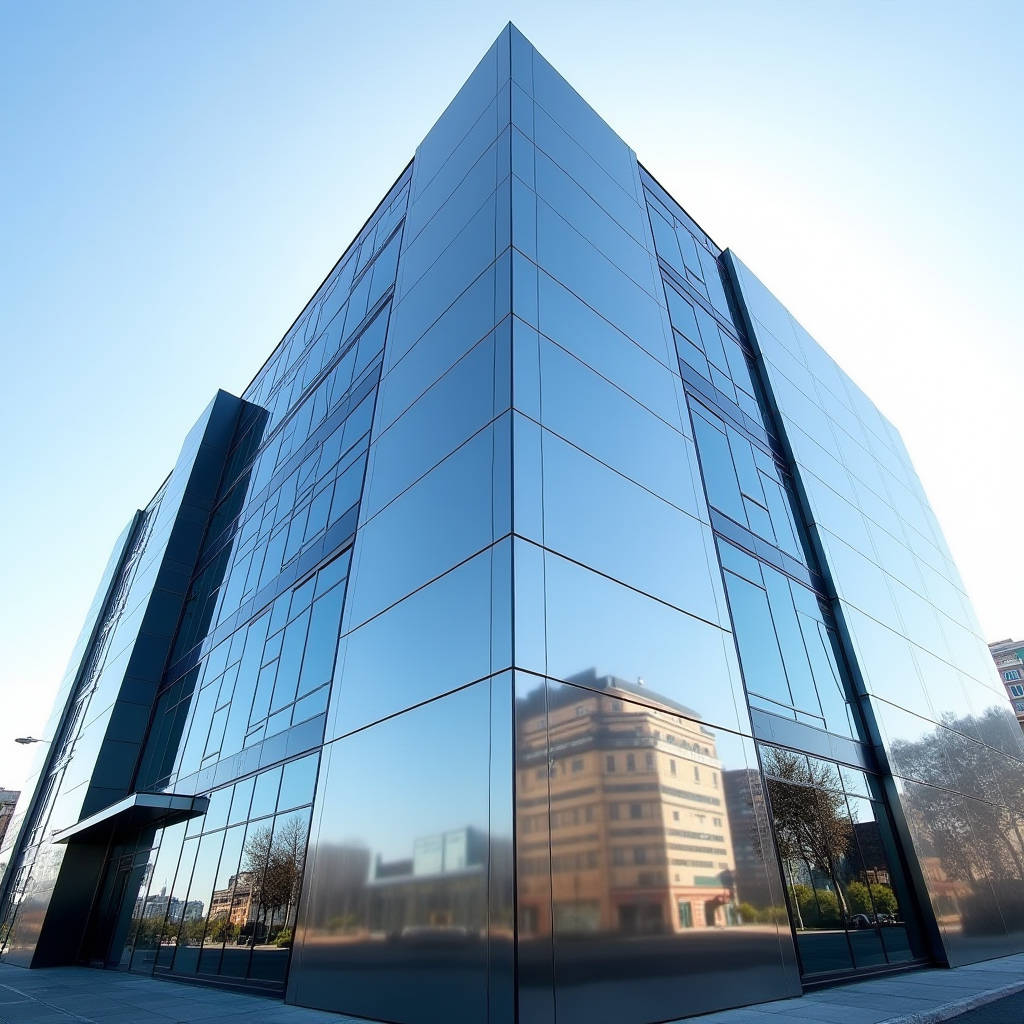
Vacuum Transfer Printed Aluminum represents a convergence of two industrial processes that rarely intersect in facade engineering discussions: the vacuum metallization transfer technology born from the packaging and label industry, and the rigorous demands of architectural aluminum cladding. For architects and facade contractors, the question is not whether the surface looks metallic—it is whether that metallic layer can withstand 20 years of UV exposure, salt spray, and thermal cycling without delaminating, fading, or corroding. The answer depends entirely on how the transfer printing process is engineered, what protective topcoats are applied, and whether the substrate is a solid aluminum sheet rather than a composite core material that introduces its own failure modes.
How Vacuum Transfer Printing Differs from Conventional Coating
Standard architectural aluminum finishes rely on liquid PVDF (polyvinylidene fluoride) coatings applied via spray lines, then oven-cured. These systems use pigments dispersed in fluoropolymer resin to achieve color and metallic effects. Vacuum transfer printed aluminum takes a fundamentally different path. A thin aluminum layer—typically 20 to 30 nanometers thick—is first vapor-deposited onto a carrier film under high vacuum. That metallized layer is then transferred to the aluminum panel surface through a combination of heat, pressure, and adhesive chemistry. The carrier film is peeled away, leaving a mirror-bright metallic surface bonded to the substrate.
The critical distinction is that the metallic appearance comes from actual elemental aluminum, not from mica pigments or metallic flake additives suspended in paint. This produces a reflectivity and brilliance that liquid coatings struggle to match. But it also introduces a vulnerability: bare vacuum-deposited aluminum oxidizes rapidly and has near-zero abrasion resistance. Without a protective clear coat, the surface would degrade within months of outdoor exposure.
The Protective Layer Architecture
Every vacuum transfer printed aluminum panel destined for exterior architectural use must incorporate a multi-layer protective system. The typical stack looks like this:
- Substrate: Solid aluminum sheet, typically 2.0mm, 2.5mm, or 3.0mm thick, conforming to EN 485 or ASTM B209 standards for alloy 3003, 3105, or 5005 depending on the application.
- Adhesion primer: A thin bonding layer that ensures the metallized transfer layer grips the aluminum substrate. Polyurethane or epoxy-based primers are common, applied at 5-8 microns dry film thickness.
- Vacuum transfer metallized layer: The 20-30nm aluminum deposition that creates the reflective surface. This layer alone provides zero corrosion protection.
- Clear topcoat: A 25-35 micron layer of clear PVDF or FEVE fluoropolymer. This is the weather barrier. Without it, the panel has no business on an exterior wall.
The clear topcoat is where many suppliers cut corners. A polyester clear coat might look identical on day one but will chalk, yellow, and lose adhesion within 3-5 years. For projects requiring AAMA 2605 compliance (the highest architectural coating standard), the clear coat must be 70% PVDF resin minimum, tested to 4,000 hours of accelerated weathering with a Delta-E color shift below 5.0.
Why Architects Specify Vacuum Transfer Printed Aluminum
The aesthetic argument is straightforward: vacuum transfer printed aluminum delivers a chrome-like, mirror-finish metallic surface that cannot be replicated with conventional PVDF metallic paints. When a design calls for high-reflectivity panels that read as polished metal rather than painted metal, this technology is one of the few viable paths.
But the specification conversation rarely stops at aesthetics. Three technical factors drive the decision:
1. Reflectivity Consistency Across Panel Batches
Metallic PVDF paints rely on flake orientation. As the paint cures, aluminum flakes align parallel to the surface. Variations in spray technique, humidity, and oven temperature create batch-to-batch reflectivity differences that become visible on large facades. Vacuum transfer printing, by contrast, deposits a uniform metallic layer under controlled vacuum conditions. The reflectivity is determined by the carrier film surface quality, not by spray booth variables. This translates to tighter optical consistency across thousands of square meters.
2. Weight Reduction vs. Solid Metal Cladding
Some architects initially consider solid stainless steel or titanium panels for high-reflectivity facades. A 2.0mm stainless steel sheet weighs approximately 15.8 kg/m². A 2.5mm solid aluminum panel with vacuum transfer printing weighs roughly 6.8 kg/m². The structural support savings are substantial, and the installed cost per square meter can be 40-60% lower than solid stainless steel.
3. Formability Without Finish Cracking
When panels require brake-formed returns, folded edges, or curved profiles, the finish must stretch with the metal. The 20-30nm vacuum-deposited aluminum layer is thin enough to flex without cracking, provided the primer and clear coat systems are formulated for post-forming. This makes vacuum transfer printed aluminum suitable for complex geometries that would cause thicker metallic coatings to fracture.
Technical Performance Data: What Testing Reveals
The following table compiles performance benchmarks for vacuum transfer printed aluminum panels with PVDF clear topcoats, tested against relevant ASTM and AAMA standards. These figures represent data from third-party testing on production-grade panels, not laboratory curiosities.
| Test Standard | Property Measured | Performance Result | Pass/Fail Threshold |
|---|---|---|---|
| AAMA 2605-20 | Accelerated Weathering (4000 hrs Xenon Arc) | Delta-E ≤ 3.2, gloss retention ≥ 70% | Delta-E ≤ 5.0, gloss retention ≥ 50% |
| ASTM B117 | Salt Spray Resistance (3000 hrs) | No blistering, creep from scribe ≤ 1.5mm | Creep ≤ 2.0mm |
| ASTM D3359 | Cross-Hatch Adhesion | 5B (no detachment) | ≥ 4B |
| ASTM D2794 | Impact Resistance (Direct & Reverse) | No cracking at 2.5 Joules | No cracking at 1.5 Joules |
| ASTM D2247 | Humidity Resistance (3000 hrs, 100% RH, 38°C) | No blistering, no adhesion loss | No blistering beyond few #8 blisters |
| ASTM G155 | UV Resistance (2000 hrs) | Gloss retention ≥ 85% | Gloss retention ≥ 70% |
These numbers matter because they translate directly to warranty periods. A panel system that clears AAMA 2605 can reasonably carry a 20-year film integrity warranty. Systems that only meet AAMA 2604 (1,500 hours weathering) are typically limited to 10-year warranties. For facade contractors bidding on projects with 25-year design life requirements, the distinction is contractual, not academic.
Manufacturing Tolerances and Quality Control
The vacuum transfer process introduces quality control variables that differ from conventional coating lines. The carrier film must be tensioned precisely during transfer to avoid wrinkles that telegraph into the metallic layer. Transfer temperature and pressure must remain within narrow windows—typically 120-160°C and 3-5 bar—to achieve full adhesion without scorching the primer or distorting the aluminum sheet.
Post-transfer inspection requires different protocols than paint inspection. A conventional paint line checks for dry film thickness, color consistency, and gloss. A vacuum transfer line must additionally check for:
- Transfer voids: Microscopic areas where the metallized layer failed to transfer, visible as dark spots under magnification.
- Film ghosting: Residual carrier film adhesive that creates hazy patches on the surface.
- Edge delamination: The metallized layer lifting at panel edges, particularly after shearing or routing operations.
Suppliers with established quality systems—such as Futeng®, which has refined its vacuum transfer process over multiple production cycles—maintain inline inspection stations that catch these defects before panels reach the packing stage. The cost of a failed panel discovered on-site, after installation, can exceed 10 times the cost of catching it at the factory.
Substrate Selection: Solid Aluminum vs. the Alternatives
Vacuum transfer printing can technically be applied to various substrates. The architectural market sees attempts to use this finish on aluminum composite panels, honeycomb panels, and even rigid PVC sheets. Each substrate introduces different risk profiles.
Solid aluminum sheets—2.0mm, 2.5mm, or 3.0mm thick, in alloys 3003-H14, 3105-H14, or 5005-H14—provide the most predictable substrate for vacuum transfer printing. The reasons are thermal. The transfer process involves heat. Solid aluminum conducts and dissipates that heat uniformly. Composite panels with polyethylene cores act as insulators, creating hot spots at the surface that can over-cure the adhesive or under-cure it, depending on location. The result is inconsistent adhesion that may not manifest until thermal cycling stresses the panel on the building.
Flatness is another consideration. Solid aluminum sheets can be tension-leveled to meet flatness tolerances of 0.2% of the panel dimension. Composite panels, particularly those with thin aluminum skins, can exhibit oil-canning—a waviness that becomes dramatically more visible under the mirror-like surface of vacuum transfer printed aluminum. A 3mm solid aluminum panel will resist oil-canning far better than a 4mm composite panel with 0.3mm skins.
Installation Considerations for High-Reflectivity Panels
Installing vacuum transfer printed aluminum panels demands more care than installing conventional matte or low-gloss PVDF panels. The mirror-like surface shows every fingerprint, every scratch from handling, and every misalignment in the support structure.
Facade contractors should plan for:
- Protective film: Panels must ship with a UV-resistant PE protective film, minimum 60 microns thick, rated for 6 months of outdoor exposure. This film stays on during handling and is removed only after installation is complete.
- Glove protocols: Installers must wear clean, lint-free gloves. Bare skin contact leaves oils that etch into the clear coat over time, creating permanent visible marks.
- Cleaning procedures: Only pH-neutral cleaners and microfiber cloths should touch the surface. Alkaline cleaners—common on construction sites for cleaning glass and aluminum—will attack the clear coat and dull the metallic layer beneath.
- Substructure alignment: Tolerances for the support grid should be tightened to ±2mm across any 3-meter span. The reflective surface amplifies deviations that would be invisible on a textured or matte finish.
The cost premium for these installation precautions typically adds 5-8% to the labor component of the facade package. This should be factored into bids from the start, not discovered during the project.
Comparing Costs: Vacuum Transfer vs. Alternatives
The installed cost of vacuum transfer printed aluminum sits between conventional metallic PVDF and solid stainless steel cladding. A rough cost hierarchy for a typical 2.5mm panel system, including substructure and installation, looks like this:
| Finish Type | Material Cost (USD/m²) | Installation Factor | Typical Warranty | Reflectivity (60° Gloss Units) |
|---|---|---|---|---|
| Standard PVDF Solid Color | 85-110 | 1.0x (baseline) | 15-20 years | 25-35 GU |
| PVDF Metallic (Mica-Based) | 105-135 | 1.0x | 15-20 years | 40-60 GU |
| Vacuum Transfer Printed Aluminum | 130-170 | 1.05-1.08x | 15-20 years | 75-90 GU |
| Anodized Aluminum (Class I) | 120-155 | 1.0x | 10-15 years | 30-50 GU |
| Solid Stainless Steel (2.0mm, #8 Mirror) | 280-400 | 1.15-1.25x | 25+ years | 85-95 GU |
The cost premium for vacuum transfer printed aluminum over metallic PVDF—roughly 20-30% on the material side—buys a reflectivity that is 50-80% higher. For projects where the mirror aesthetic is central to the design intent, this premium is often justifiable. For projects where "metallic" simply means "not a solid color," standard PVDF metallic is the more economical choice.
Durability in Aggressive Environments
Coastal and industrial environments test the limits of any architectural coating. For vacuum transfer printed aluminum, the primary failure mode is not the aluminum layer itself—aluminum is inherently corrosion-resistant—but the clear coat that protects it.
In coastal applications (within 3km of saltwater), the clear PVDF topcoat must be applied at a minimum of 30 microns dry film thickness. Thinner coats allow chloride ions to penetrate to the metallized layer, where they initiate pitting corrosion that appears as dark spots spreading beneath the clear coat. This failure mode is irreversible and requires panel replacement.
For projects in the Middle East, where combined UV radiation and airborne sand create a sandblasting effect, the clear coat hardness becomes critical. FEVE (fluoroethylene vinyl ether) clear coats offer better abrasion resistance than standard PVDF and are worth the 10-15% cost premium in these environments. Testing per ASTM D968 (falling sand abrasion) should show less than 30 liters of sand required to wear through the clear coat.
The AAMA 2605 specification remains the benchmark for high-performance architectural coatings, and any vacuum transfer printed aluminum specified for exterior use should be tested and certified to this standard by an independent laboratory.
Supply Chain and Lead Time Realities
Vacuum transfer printed aluminum is not a commodity product. The number of facilities worldwide that can produce architectural-grade vacuum transfer printed panels on solid aluminum substrates is limited. Lead times typically run 8-14 weeks from order confirmation, compared to 4-6 weeks for standard PVDF colors.
Several factors drive the extended lead time:
- Carrier film production: The metallized carrier film is often produced to order, particularly for custom patterns or non-standard reflectivity levels.
- Batch size economics: The vacuum metallization process has high setup costs. Small orders (under 500 m²) may face significant per-unit cost premiums or minimum order quantity surcharges.
- Quality control throughput: Each panel requires individual inspection under controlled lighting. This is not a process that scales linearly with production volume.
For projects with tight construction schedules, the facade contractor should engage the panel supplier during the design development phase, not during the bidding phase. Early engagement allows the supplier to reserve production capacity and order carrier film before the shop drawings are finalized.
Specification Language for Project Documents
Architects and specifiers who want to incorporate vacuum transfer printed aluminum into their projects need precise language to avoid substitution with inferior products. A specification section for this finish should include:
"Vacuum transfer printed aluminum panels shall consist of solid aluminum sheet, minimum 2.5mm thickness, conforming to ASTM B209, alloy 3003-H14 or 3105-H14. The decorative surface shall be produced by vacuum metallization transfer process, depositing a minimum 20nm aluminum layer onto the substrate via carrier film transfer. A clear fluoropolymer topcoat, minimum 70% PVDF resin by weight, shall be applied at 25-35 microns dry film thickness over the metallized layer. The complete coating system shall meet AAMA 2605 requirements for color retention, chalk resistance, and gloss retention after 4,000 hours Xenon arc exposure. Submit independent test reports from an ISO 17025 accredited laboratory confirming compliance."
This language closes the door on suppliers who might propose polyester clear coats or metallized PET films laminated directly to the panel surface—both of which will fail prematurely in exterior applications.
Common Failure Modes and How to Avoid Them
Understanding what goes wrong with vacuum transfer printed aluminum helps specifiers and contractors avoid the most expensive mistakes. The failure modes break down into three categories:
Adhesion failure: The metallized layer separates from the substrate or the clear coat separates from the metallized layer. Root causes include inadequate primer, contamination on the substrate before transfer, or incompatible clear coat chemistry. Prevention requires adhesion testing per ASTM D3359 on every production batch, not just qualification samples.
Corrosion creep: Starts at cut edges, fastener holes, or scratches that penetrate the clear coat. Once moisture reaches the aluminum layer, corrosion spreads laterally beneath the clear coat. Prevention requires edge sealing on all field-cut panels and touch-up kits supplied to the installation crew.
UV degradation of the clear coat: The clear coat yellows, chalks, or loses adhesion after years of sun exposure. Prevention is straightforward: specify PVDF or FEVE clear coats, not polyester or acrylic. The ISO 16474 series provides accelerated weathering test protocols that correlate well with real-world performance.
Making the Right Call for Your Project
Vacuum transfer printed aluminum occupies a specific niche in the facade material spectrum. It is not the right choice for every project. It is the right choice when the design demands a mirror-finish metallic surface, when the budget can accommodate a 20-30% premium over metallic PVDF, and when the project team is willing to manage the installation care that high-reflectivity panels require.
For general contractors and facade specialists evaluating this material, the due diligence checklist should include: request AAMA 2605 test reports for the specific clear coat system being proposed, verify the substrate is solid aluminum sheet (not composite), confirm the supplier has at least five completed projects with this finish that are more than three years old, and budget for the additional installation labor and protective measures. A supplier like Futeng® that can provide documented quality control data and project references reduces the technical risk substantially.
The technology works. The physics of vacuum metallization is well understood, and the coating chemistry is mature. The variable is execution—whether the supplier controls every step from substrate preparation through final inspection. When that control is in place, vacuum transfer printed aluminum delivers a facade that looks like polished metal, weighs like aluminum, and lasts like a properly engineered architectural product should.