Sublimation Wood Grain Aluminum Cladding What Facade Engineers Need to Know About Powder Chemistry and Weathering Performance
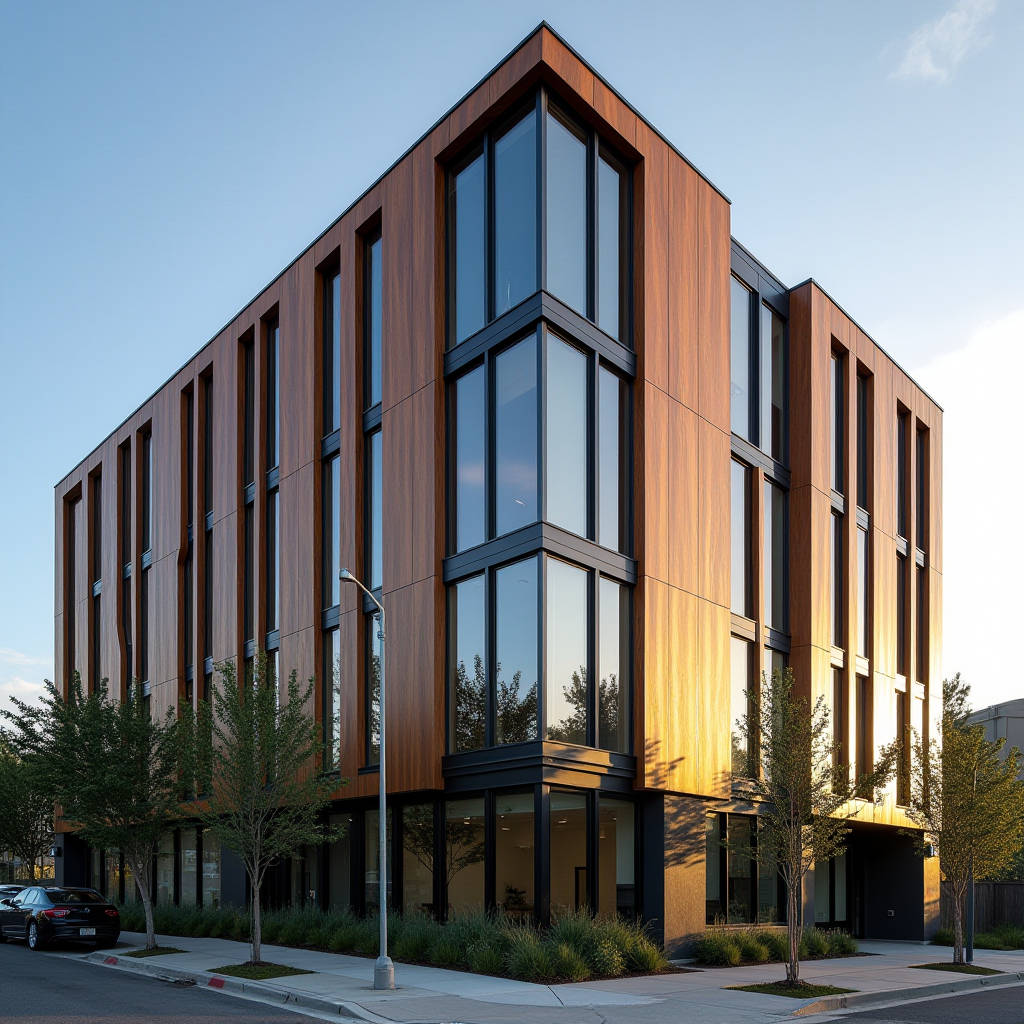
When a project specification calls for the warmth of timber on a high-rise exterior, the answer is increasingly Sublimation Wood Grain Aluminum. The question from contractors and facade engineers is rarely about whether the finish looks convincing. Modern sublimation technology has solved that problem. The real conversation happens around how the grain holds up after five years of direct UV exposure on a south-facing elevation, or whether the film layer delaminates at folded edges after repeated thermal cycling. These are the concerns that separate a decorative interior panel from a legitimate rainscreen cladding product. Sublimation Wood Grain Aluminum is a powder-coated solid aluminum sheet that has undergone a secondary heat-transfer process where a woodgrain pattern is embedded into the coating layer at a molecular level. The result is not a sticker, not a laminate, and not a film applied with adhesive. It is a fused finish that sits inside the powder coat, protected by the same resin system that architects trust for standard PVDF and polyester coatings on aluminum facades.
What Actually Happens During the Sublimation Transfer Process
The term "sublimation" gets thrown around loosely in architectural metal finishing, but the physics are specific. Sublimation means a substance transitions directly from solid to gas without passing through a liquid phase. In the context of wood grain aluminum, the "ink" or dye printed on a transfer film is formulated with sublimation dyes that vaporize at temperatures between 180°C and 210°C. The aluminum sheet is first coated with a base powder coat, typically a polyester or super-durable polyester formulated to accept sublimation dyes. The sheet and transfer film are placed together under vacuum pressure inside a heat press or vacuum membrane machine. As the dyes vaporize, they penetrate the softened powder coating layer. When the assembly cools, the dyes are trapped inside the resin matrix. The wood grain pattern is now part of the coating, not sitting on top of it.
This matters for durability. A film-laminated product relies on an adhesive bond that can degrade under moisture, heat, and UV. A sublimated finish has no adhesive interface to fail. The dye molecules are physically dispersed within the top 20-40 microns of the powder coat. Scratch resistance, chemical resistance, and color stability are determined by the host powder coating chemistry, not by a separate surface layer. This is why specification-grade Sublimation Wood Grain Aluminum can carry the same AAMA 2604 or AAMA 2605 weathering certifications as non-sublimated architectural coatings, provided the powder base coat meets those standards.
Base Powder Chemistry: The Foundation Nobody Discusses
Every failed wood grain aluminum facade that the industry has seen in the past decade traces back to one root cause: the wrong base powder was specified. The sublimation dyes need a receptive host. Standard polyester powders work and are the most common choice, but they have a known limitation. Under sustained UV exposure, the polyester resin itself begins to chalk and degrade, typically within 3-5 years in equatorial or high-altitude climates. When the host resin degrades, the embedded wood grain dyes degrade with it, regardless of how well the sublimation process was executed.
Super-durable polyester powders extend this timeline. Formulated with TGIC-free or HAA crosslinkers and enhanced UV stabilizers, super-durable polyester systems can meet AAMA 2604 standards for 5-year color retention and chalk resistance. For Sublimation Wood Grain Aluminum specified on exterior cladding, this is the minimum baseline that Futeng® and other serious manufacturers recommend. The upgrade path is a fluoropolymer-based powder, such as FEVE or PVDF powder, which pushes performance into AAMA 2605 territory with 10-year color and gloss retention guarantees. The catch is that fluoropolymer powders are harder to sublimate into because they are engineered to be non-porous and chemically inert. The sublimation process requires careful parameter control: higher temperatures, longer dwell times, and specific transfer film formulations designed for fluoropolymer substrates.
The table below summarizes the practical differences across powder chemistries for wood grain sublimation on solid aluminum cladding panels:
| Powder Chemistry | Typical Film Thickness | AAMA Standard | UV Resistance (Years) | Sublimation Difficulty | Relative Cost |
|---|---|---|---|---|---|
| Standard Polyester | 60-80 μm | AAMA 2603 | 1-3 | Easy | 1.0x |
| Super-Durable Polyester | 60-80 μm | AAMA 2604 | 5-7 | Moderate | 1.3x |
| FEVE Fluoropolymer Powder | 70-90 μm | AAMA 2605 | 10-15 | Difficult | 1.8x |
| PVDF Liquid (Spray) | 25-35 μm (3-coat) | AAMA 2605 | 15-20 | Not applicable | 2.2x |
Note that PVDF liquid spray is listed for reference only. It cannot be sublimated into because the coating is too thin and the fluoropolymer is too chemically resistant. Wood grain effects on PVDF liquid-coated panels are achieved through a different process involving inkjet printing with UV-curable inks, which is a separate technology outside the scope of sublimation.
Sheet Metal Thickness and Flatness: Engineering the Substrate
Sublimation Wood Grain Aluminum is only as good as the aluminum sheet underneath it. The sublimation process involves heating the entire panel to nearly 200°C, holding it at temperature, and then cooling it. Solid aluminum sheets expand and contract during this thermal cycle. If the sheet has residual stress from the rolling process, it will warp. This is a quality control problem that shows up at the fabricator's shop, not at the coater's facility.
For exterior cladding panels, the industry standard substrate is 2.0mm, 2.5mm, or 3.0mm solid aluminum sheet in alloy 3003-H14 or 5005-H14. The H14 temper designation means the material is strain-hardened and partially annealed, giving it a good balance of strength and formability. Thinner material, such as 1.5mm, is sometimes used for interior decorative panels or soffit linings, but it carries a higher risk of oil-canning and thermal distortion on exterior walls. The 3.0mm thickness is the default for large-format panels exceeding 1,200mm in any dimension, or for projects in high-wind zones where panel deflection under wind load must be kept below L/180.
Flatness tolerances matter more for wood grain finishes than for solid colors. A solid-color PVDF panel can hide minor ripples and distortions because the eye has no reference pattern to compare against. A wood grain pattern has linear grain lines. Any deviation from flatness causes the grain lines to distort visually, creating a wavy appearance that is immediately noticeable from street level. The acceptable flatness for Sublimation Wood Grain Aluminum panels intended for visible facade areas is typically 0.5% of the panel diagonal, measured as deviation from a true plane. This is tighter than the general 0.8% tolerance often quoted for solid-color panels.
Grain Pattern Selection and Visual Consistency Across Batches
Architects specify wood grain aluminum for the visual warmth it brings to a building envelope. The irony is that natural wood is inherently inconsistent, but architectural clients expect consistency across hundreds of panels on a single elevation. The sublimation process uses transfer films printed with specific wood species patterns: walnut, oak, teak, cedar, elm, beech, and ash are the most commonly stocked options. Each pattern is a high-resolution photographic reproduction of a real wood sample, printed onto the transfer film using dye-sublimation inks.
The challenge is batch-to-batch consistency. Transfer films are printed in runs. If a project requires 2,000 panels and the film supplier changes ink batches or print parameters between runs, the resulting panels will show visible color shift. The fix is to order all transfer film for a project in a single production lot and to produce all panels within a single coating campaign. This requires coordination between the project manager, the powder coater, and the sublimation line. It also means that replacement panels ordered two years later for damage repairs will almost certainly not match the original installation. This is a limitation that must be communicated to the client during specification, not discovered during the defects liability period.
Grain direction is another detail that separates professional installations from amateur ones. For a vertical rainscreen panel, the grain should run vertically unless the design intent specifies otherwise. Horizontal grain on a vertical panel creates a visual conflict that the human eye reads as unnatural. On soffit panels, grain direction should align with the primary pedestrian movement axis. These are not structural requirements, but they are the difference between a facade that reads as intentional and one that reads as an afterthought.
Fabrication After Sublimation: Bending, Routing, and Edge Treatment
One of the most frequently asked technical questions from facade fabricators is whether they can bend or route Sublimation Wood Grain Aluminum after the finish has been applied. The answer is yes, with caveats. The sublimated dye layer is inside the powder coat, not on top of it. When the panel is bent on a press brake, the powder coating stretches with the aluminum substrate. Standard polyester and super-durable polyester powders have enough elasticity to survive a 90-degree bend with an inside radius of 2x material thickness without cracking. Fluoropolymer powders are less elastic and require a minimum inside radius of 3x material thickness.
The wood grain pattern itself will distort at the bend line. The dye molecules are fixed in the coating matrix. When that matrix stretches around a bend radius, the grain pattern elongates proportionally. On a sharp 90-degree fold with a tight radius, the grain lines will visibly stretch and lose definition at the corner. This is not a defect; it is a physical inevitability. The mitigation is to design panel joints so that folded edges are hidden in shadow gaps or behind adjacent panels, or to specify a break shape that minimizes visible stretch.
Routing and cutouts present a different problem. The cut edge exposes bare aluminum. For interior applications, this is cosmetic. For exterior applications, the exposed edge must be protected. The standard detail is to specify that all cut edges be touched up with a color-matched two-part epoxy primer or a clear edge sealant. The touch-up will not carry the wood grain pattern, so it should be applied only to edges that are concealed in the installed condition. For visible edges, the panel should be fabricated with a return leg that wraps the edge back toward the building, so the visible face shows only the sublimated surface.
Weathering Performance: What Five Years of Data Actually Shows
Accelerated weathering tests like ASTM G154 (xenon arc) and ASTM B117 (salt spray) provide standardized comparison data, but they do not fully replicate real-world conditions. The industry has now accumulated enough installed projects globally to draw some practical conclusions about how Sublimation Wood Grain Aluminum performs over time.
On super-durable polyester substrates, wood grain panels installed in temperate climates (Northern Europe, Canada, Northern US) show minimal visible change after 5-7 years. Gloss reduction of 5-10 GU is typical, and color shift measured by Delta E is generally under 3.0, which is below the threshold of visual perception for most observers. In subtropical and tropical climates (Southeast Asia, Middle East, Florida), the same substrate shows more pronounced fading after 3-5 years, particularly in darker wood tones like walnut and teak. Lighter tones like ash and beech hold up better because there is less dye density to degrade.
On FEVE fluoropolymer powder substrates, the available data is more limited because the technology is newer, but early results from installations in Dubai and Singapore show Delta E values under 2.0 after 5 years of exposure. This is comparable to the performance of solid-color PVDF coatings and suggests that the sublimation dyes, when embedded in a UV-stable fluoropolymer matrix, are adequately protected from photodegradation.
The critical failure mode to watch for is not fading but delamination. If the powder coating loses adhesion to the aluminum substrate, the wood grain finish fails catastrophically regardless of how UV-resistant the dyes are. Adhesion failure is almost always a pretreatment problem. The aluminum sheet must be properly degreased, etched, and chromate-conversion-coated (or treated with a chrome-free alternative per AAMA 2605 requirements) before powder coating. Skipping or short-cutting the pretreatment step guarantees adhesion failure within the first few years, usually starting at panel edges and cutouts.
Cost Structure and Value Engineering for Facade Projects
General contractors evaluating Sublimation Wood Grain Aluminum against alternatives need to understand the full cost picture, not just the per-square-meter material price. The sublimation process adds a secondary manufacturing step after powder coating. The transfer film is a consumable cost. The vacuum heat press cycle time is 15-30 minutes per batch depending on panel size and equipment. These factors combine to make sublimated wood grain aluminum approximately 30-50% more expensive than a standard solid-color polyester powder-coated panel of the same thickness.
However, the comparison that matters is against the alternatives that achieve a wood aesthetic on a building exterior. Real timber cladding requires ongoing maintenance: sanding, oiling, or re-staining every 2-5 years depending on climate. Over a 20-year building lifecycle, the maintenance cost of timber cladding can exceed the initial material cost. Aluminum cladding with a sublimated wood grain finish requires only periodic cleaning with mild detergent and water, the same as any other architectural aluminum facade. The lifecycle cost advantage is substantial.
Compared to porcelain tile or HPL panels with wood-look prints, the aluminum option offers lighter weight (approximately 8.1 kg/m² for 3.0mm solid aluminum vs. 20-25 kg/m² for porcelain), which reduces the structural support requirements and can offset some of the higher material cost through substructure savings. For renovation projects where the existing building structure has limited load capacity, this weight difference can be the deciding factor.
Quality Inspection: What to Check Before Signing Off a Batch
Procurement managers receiving Sublimation Wood Grain Aluminum panels at site should conduct a systematic incoming inspection. The following checklist covers the most common non-conformances:
- Grain alignment across panels: Lay out 5-10 panels from the batch side by side in the installed orientation. Check that grain lines flow continuously across panel joints. Misalignment exceeding 2mm at the joint line is a rejectable defect for visible facades.
- Color consistency: Compare panels under natural daylight (not warehouse lighting). Look for color shift between panels, especially at the edges where the sublimation process may have had uneven heat distribution.
- Surface defects: Inspect for pinholes, fisheyes, and orange peel texture in the powder coat. These are base-coat defects that the sublimation process does not hide.
- Edge adhesion: Perform a cross-hatch adhesion test per ASTM D3359 on a sample panel from the batch. The coating should achieve a 4B or 5B rating.
- Film thickness: Measure total coating thickness with a calibrated eddy-current gauge. Total dry film thickness should be 60-90 μm depending on the powder system specified.
- Gloss level: Verify gloss readings against the specification. Wood grain finishes are typically specified at 25-35 GU (matte to low-sheen) to mimic natural wood.
Futeng® and other manufacturers with in-house sublimation lines typically provide a quality certificate with each batch that documents the powder chemistry, film thickness measurements, adhesion test results, and the transfer film lot number for traceability. This documentation is worth requesting and filing, because it becomes the reference point for any future warranty claim or replacement panel order.
Installation-Specific Considerations for Wood Grain Rainscreens
Installing Sublimation Wood Grain Aluminum panels on a rainscreen system follows the same principles as any solid aluminum rainscreen, but the visual nature of the wood grain finish imposes additional discipline on the installation crew. Panel orientation must be consistent. A panel installed upside down will have grain lines running in the wrong direction, and the mistake will be obvious from ground level. Some manufacturers print a directional arrow on the protective film or on the panel back to prevent this error. If the panels do not come with directional marking, the installer should mark the intended orientation on the protective film before removing it.
Handling damage is a bigger concern with wood grain finishes than with solid colors. A scratch on a solid-color PVDF panel can be touched up with color-matched paint and the repair is often invisible from a few meters away. A scratch on a wood grain panel cannot be invisibly repaired because the touch-up paint is a solid color and will not replicate the grain pattern. The only acceptable repair for a scratched wood grain panel is replacement. This means the installation team must be more careful with handling, and the project budget should include a realistic allowance for replacement panels, typically 2-3% of the total panel count.
For ventilated rainscreen systems, the joint gap between panels is typically 8-12mm open or baffled. The shadow line created by the joint depth helps to mask minor alignment variations. For a wood grain finish, a dark-colored joint backing (black or dark gray) provides the best visual result because it creates a shadow that reads as a natural break between panels. A light-colored joint backing highlights any misalignment and should be avoided unless the design specifically calls for a contrasting joint detail.
Specification Language for Project Documents
Writing a clear specification for Sublimation Wood Grain Aluminum prevents substitution of inferior products and sets clear quality benchmarks. The following elements should be included in the cladding specification section:
- Substrate: Solid aluminum sheet, alloy 3003-H14 or 5005-H14, thickness 2.0mm / 2.5mm / 3.0mm as indicated on elevation drawings. Aluminum composite panels are not acceptable as an alternative.
- Pretreatment: Seven-stage chromate conversion coating per AAMA 2605, or chrome-free alternative with documented performance equivalence.
- Base powder coat: Super-durable polyester (AAMA 2604 compliant) as minimum. FEVE fluoropolymer powder (AAMA 2605 compliant) for projects requiring extended weathering warranty.
- Sublimation process: Vacuum heat transfer at 180-210°C with wood grain pattern embedded into the powder coating layer. Film-laminated or adhesive-applied wood grain finishes are not acceptable.
- Wood species: [Specify: Walnut, Oak, Teak, Cedar, etc.]. Provide physical sample panel 300mm x 300mm for approval before production.
- Performance: Coating system to meet AAMA 2604 (or 2605) for color retention, chalk resistance, and adhesion. Test reports from an accredited laboratory to be submitted with shop drawings.
- Warranty: Manufacturer to provide 10-year (AAMA 2604) or 20-year (AAMA 2605) warranty against coating delamination, peeling, and excessive fading.
Specifying "wood grain aluminum" without defining the process leaves the door open for film-laminated products that look identical on day one but fail within three years. The words "sublimation" and "powder coat base" must appear in the specification to close this loophole.
Where Sublimation Wood Grain Aluminum Makes the Most Sense
Not every project benefits from sublimated wood grain aluminum. The technology is best deployed where the design intent calls for a natural wood aesthetic but the building physics demand a non-combustible, zero-maintenance material. The strongest applications are:
High-rise residential towers where real timber cladding is prohibited by fire codes above a certain height. Mid-rise commercial buildings seeking a warm, approachable facade material that differentiates from the glass-and-metal curtain wall default. Hospitality projects where the wood aesthetic is central to the brand identity but the operational budget cannot support ongoing timber maintenance. Public and institutional buildings where 50-year design life requirements rule out organic materials that rot, warp, or attract pests.
For interior applications such as lobby feature walls, elevator cab interiors, and retail fit-outs, the performance demands are lower and standard polyester powder with sublimation is generally adequate. The cost savings from using a standard polyester base instead of super-durable polyester can be redirected to other interior finishes.
The technology has matured to the point where Sublimation Wood Grain Aluminum is no longer an experimental finish. It is a standard product category with established supply chains, documented performance data, and a track record of successful projects across climate zones. The remaining challenge for the industry is education: making sure that architects, specifiers, and contractors understand the difference between a sublimated finish and a film laminate, and that they specify accordingly. When the specification is right, the product delivers exactly what it promises: the look of timber with the durability of architectural aluminum.