Silk Screen Aluminum Panel Technical Specifications for 20 Year Exterior Facade Performance
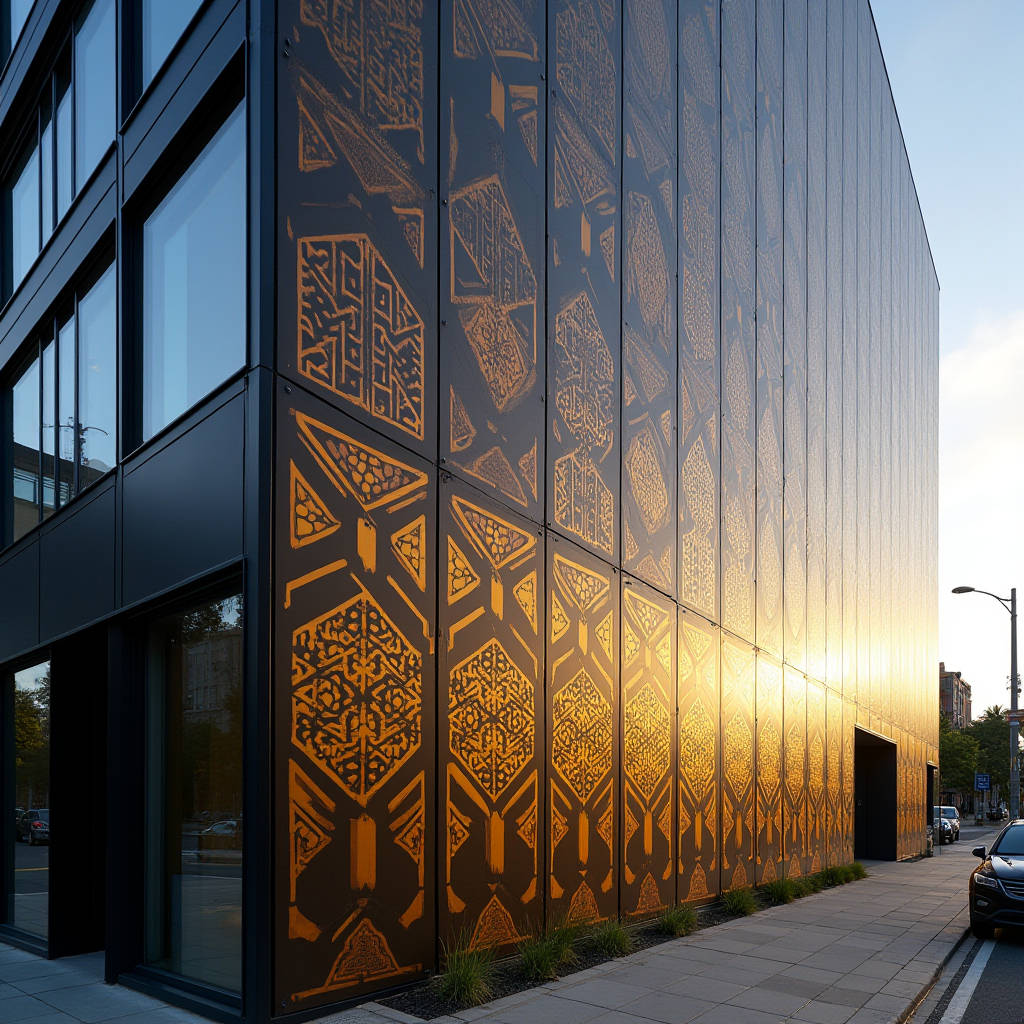
Screen printing on solid aluminium cladding panels has moved far beyond simple logo application. For architects and facade engineers, a Silk Screen Aluminum Panel represents a precise method of depositing ceramic-based or UV-curable inks directly onto a PVDF-coated or anodized aluminium substrate, creating graphic patterns, wayfinding elements, and full-coverage imagery that withstands decades of UV exposure, salt spray, and thermal cycling. The process demands rigorous control over mesh tension, squeegee durometer, ink viscosity, and curing temperatures—variables that directly determine whether the printed facade will still look sharp after 15 years of south-facing exposure in Dubai or Singapore. This article examines the technical thresholds that separate a durable Silk Screen Aluminum Panel installation from one that fades, delaminates, or chalks within three years.
What Separates Architectural Silk Screening from Industrial Marking
Most manufacturers offering "silk screening for metal parts" are servicing the electronics enclosure and appliance industries. Their process uses solvent-based inks rated for indoor environments, applied to small-format aluminium sheets that sit inside climate-controlled equipment housings. The requirements for a Silk Screen Aluminum Panel destined for a 40-story exterior facade are fundamentally different.
Architectural silk screening on solid aluminium cladding involves three distinct technical challenges that indoor applications never encounter. First, the ink system must bond to a PVDF fluoropolymer topcoat—a surface engineered specifically to repel contaminants. PVDF's low surface energy, typically around 25-28 dynes/cm, makes it excellent at resisting dirt but notoriously difficult for ink adhesion. Second, the printed graphic must survive thermal expansion differentials. A 3.0mm solid aluminium panel on a dark-colored facade can reach 85°C in summer sunlight, then cool to 15°C at night. The ink layer expands and contracts at a different rate than the aluminium substrate, creating shear stress at the interface. Third, UV radiation in the 290-400nm range attacks both the pigment particles and the binder resin in the ink, breaking down molecular chains over thousands of exposure hours.
These three factors—adhesion, thermal compatibility, and UV stability—form the technical backbone of any specification for exterior-grade Silk Screen Aluminum Panel products. A specifier who ignores any one of them will face premature failure regardless of how carefully the panels were fabricated.
Ink Chemistry: The Real Determinant of Facade Longevity
The ink system used in architectural silk screening falls into two broad categories, and the choice between them determines whether the facade will last 5 years or 25.
Two-Component Ceramic-Modified Inks
These systems use a polyurethane or epoxy base heavily loaded with ceramic micro-particles and inorganic pigments. After screen deposition, the panels undergo a thermal cure cycle—typically 30-45 minutes at 160-180°C—that cross-links the polymer matrix and fuses the ceramic particles into a continuous film. The resulting ink layer exhibits a coefficient of thermal expansion closer to aluminium than pure organic inks, reducing interfacial stress during temperature swings. Independent accelerated weathering tests per ASTM G154 (Cycle 1, UVA-340 lamps) show that properly formulated ceramic-modified inks retain over 85% of their original color density after 5,000 hours of exposure, equivalent to roughly 10-12 years of Florida-level UV radiation.
UV-Curable Hybrid Inks
UV-curable systems have gained traction in the last five years because they eliminate the energy-intensive thermal cure step. The ink contains photoinitiators that trigger polymerization when exposed to high-intensity UV lamps immediately after screen deposition. The panels can be handled and stacked within minutes rather than hours. However, UV-cured inks typically exhibit lower cross-link density than thermally cured systems, which translates to reduced chemical resistance and slightly higher moisture vapor transmission rates. For interior applications or sheltered exterior locations, UV-curable inks perform adequately. For fully exposed facades in coastal or high-UV environments, the two-component ceramic-modified systems remain the safer specification.
The table below summarizes the performance differences that matter for facade specification:
| Property | Ceramic-Modified 2K Ink | UV-Curable Hybrid Ink | Standard Solvent-Based Ink |
|---|---|---|---|
| Adhesion to PVDF (ASTM D3359) | 5B (no peel) | 4B-5B (trace peel) | 2B-3B (significant peel) |
| QUV Resistance (ASTM G154, 5000hr) | Delta E < 3.0 | Delta E 4.0-7.0 | Delta E > 12.0 |
| Thermal Cycle Resistance (-30°C to +80°C, 200 cycles) | No cracking or delamination | Minor micro-cracking possible | Cracking within 50 cycles |
| Salt Spray (ASTM B117, 3000hr) | No blistering, no under-film corrosion | Slight edge creep possible | Severe blistering |
| Typical Film Thickness | 15-25 microns | 10-18 microns | 8-12 microns |
| Recoatability | Excellent | Moderate (surface prep required) | Poor |
| Recommended Exposure | Full exterior, all climates | Sheltered exterior, interior | Interior only |
Mesh Selection and Print Resolution: The Physics of Dot Gain
The screen mesh is not merely a carrier for the stencil—it is the primary variable controlling ink deposit thickness, edge definition, and halftone reproduction. For architectural Silk Screen Aluminum Panel applications, mesh selection involves balancing three competing demands: sufficient ink deposit for opacity and durability, fine enough resolution for the intended viewing distance, and manageable ink consumption across thousands of square meters.
Mesh count, measured in threads per centimeter (or threads per inch in North American practice), determines the theoretical ink volume passing through each opening. A 120 threads/cm (305 mesh) screen deposits approximately 8-12 microns of wet ink film. A 77 threads/cm (196 mesh) screen deposits 15-22 microns. The coarser mesh produces a thicker, more durable ink layer but sacrifices fine detail—halftone dots below 300 microns in diameter become inconsistent because the mesh threads physically obstruct the stencil openings.
For most architectural applications viewed from distances of 5 meters or greater, a 90-120 threads/cm mesh provides the optimal balance. At this resolution, halftone screens of 35-45 lines per centimeter (LPC) reproduce photographic imagery with sufficient fidelity that the dot pattern becomes invisible to the naked eye at the intended viewing distance. Finer meshes (140-165 threads/cm) are reserved for interior feature walls viewed at arm's length, where the additional cost of slower printing speeds and higher ink consumption can be justified.
Thread diameter also matters. Standard polyester mesh threads range from 31 to 55 microns in diameter. Thinner threads increase the open area percentage, allowing more ink through at a given mesh count. However, thinner threads stretch more under squeegee pressure, reducing registration accuracy on large panels. For panels exceeding 1.5 meters in any dimension, mesh with thread diameters of 40-48 microns provides the necessary dimensional stability.
Substrate Preparation: Why PVDF Topcoats Demand Special Handling
The single most common cause of ink adhesion failure on architectural Silk Screen Aluminum Panel products is inadequate surface preparation of the PVDF-coated substrate. PVDF coatings are formulated with a specific ratio of fluoropolymer resin (typically 70% PVDF) to acrylic resin (30%), as defined by AAMA 2605. The fluoropolymer component provides weather resistance; the acrylic component provides pigment wetting and film formation. This chemistry creates a surface that is chemically inert and low in surface energy—exactly what the facade needs for self-cleaning performance, and exactly what makes ink adhesion difficult.
Three surface preparation methods are used in production environments, and their effectiveness varies significantly:
Corona discharge treatment bombards the PVDF surface with high-voltage electrical discharge, generating ozone and free radicals that oxidize the outermost molecular layers. This raises surface energy from 25-28 dynes/cm to 42-48 dynes/cm, providing a temporary window for ink bonding. The effect degrades within hours, so printing must follow treatment immediately. For continuous production lines, in-line corona treatment immediately upstream of the screen printing station is standard practice.
Plasma treatment uses ionized gas (typically argon or helium with oxygen) to functionalize the surface. Atmospheric plasma systems can achieve surface energies of 55-65 dynes/cm, higher than corona, and the effect persists slightly longer. The capital cost is higher, but the process is more controllable and leaves no ozone residue.
Chemical adhesion promoters—silane-based primers applied as a wipe-on or spray coating—create a covalent bond between the PVDF surface and the ink resin. This method is effective but introduces an additional process step with its own quality control requirements. Primer thickness must be controlled to 2-5 microns; excess primer can cause visible hazing around printed areas.
For specifiers, the key requirement is to demand documented surface energy measurements (dyne test per ASTM D2578) immediately before printing. A minimum of 42 dynes/cm is the threshold below which ink adhesion becomes unreliable, regardless of the ink system used.
Registration and Multi-Color Printing on Large-Format Panels
Multi-color Silk Screen Aluminum Panel projects introduce registration challenges that scale with panel dimensions. A four-color halftone print on a 1.2m × 2.4m panel requires each color to align within a tolerance of ±0.25mm across the entire print area. Achieving this on a flexible mesh screen stretched across an aluminium frame demands careful control of multiple variables.
Screen tension is the foundation. For architectural panels, mesh tension should be maintained at 25-30 N/cm² for polyester mesh, measured with a tension meter at multiple points across the screen. Tension that drops below 20 N/cm² during a production run causes the screen to deform under squeegee pressure, shifting the printed image relative to previous colors. Professional screen makers for architectural applications use rigid aluminium frames with cross-bracing to maintain tension stability across thousands of print cycles.
The panel itself must be mechanically registered. Vacuum tables with retractable registration pins are standard for panels up to 2.0m. For larger panels, optical registration systems using camera-based alignment detect fiducial marks printed in the first color pass and automatically adjust the screen position for subsequent colors. These systems add cost but are essential for maintaining registration on panels where thermal expansion of the aluminium substrate alone can shift the image by 0.3-0.5mm between morning and afternoon production runs.
Futeng® has addressed these challenges in multiple facade projects by implementing in-line tension monitoring and automated optical registration on their dedicated architectural screen printing line. While not the only supplier capable of this work, their approach illustrates the level of process control that specifiers should verify when qualifying a Silk Screen Aluminum Panel manufacturer.
Specifying Silk Screen Aluminum Panels: The Critical Contract Documents
A specification for screen-printed architectural aluminium panels must go beyond "screen print per manufacturer's recommendations." That phrase, common in many architectural specs, transfers all technical risk to the contractor while providing no objective criteria for acceptance or rejection.
The specification should address the following points with measurable values:
- Ink system type and performance requirements: Specify two-component ceramic-modified ink for exterior applications. Require test reports per ASTM G154 (minimum 3,000 hours, Delta E < 5.0) and ASTM B117 (minimum 2,000 hours, no blistering).
- Adhesion testing: Cross-hatch adhesion per ASTM D3359, Method B, achieving classification 5B on the specific PVDF coating system being used. Require testing on production-intent samples, not laboratory coupons.
- Color tolerance: For solid-color prints, Delta E < 2.0 per CIE L*a*b* measured with a spectrophotometer. For halftone or process-color prints, define acceptable variation using a visual reference standard agreed upon by all parties.
- Registration tolerance: ±0.3mm for panels up to 1.5m dimension, ±0.5mm for panels 1.5-3.0m.
- Surface preparation: Require dyne level testing immediately before printing, with a minimum of 42 dynes/cm documented in the quality record for each production batch.
- Cure verification: For thermally cured inks, require temperature recorder charts or data logs showing the full cure cycle. For UV-cured inks, require radiometer readings confirming UV dose received.
The AAMA 2605 standard governs the PVDF coating itself, but it does not address post-coating decoration. Specifiers should reference AAMA 2605 for the base coating and add the ink performance criteria above as supplementary requirements. For projects in Europe, ISO 12944 provides a framework for corrosion protection that can be extended to include decorative printing.
Cost Structure: What Drives the Price of Screen-Printed Facade Panels
Understanding the cost drivers helps procurement managers distinguish between competitive quotes and unrealistically low bids that signal corner-cutting. The base cost of a 2.5mm solid aluminium panel with standard PVDF coating (solid color, no print) typically ranges from $45-65 per square meter, depending on alloy grade, quantity, and market conditions. Adding architectural silk screening introduces the following incremental costs:
Screen fabrication and setup represents the largest fixed cost. Each color in the design requires a separate screen, and for architectural panels, these screens are large-format aluminium frames with high-tension mesh. A single screen for a 1.2m × 2.4m panel costs $400-800 to fabricate, depending on mesh specification and frame construction. For a four-color process print, screen setup alone adds $1,600-3,200 to the project, amortized across the total panel quantity.
Per-panel printing costs scale with print coverage area, number of colors, and ink system. Single-color solid prints covering 50-70% of the panel surface typically add $12-18 per square meter. Four-color process prints with full coverage add $25-40 per square meter. Ceramic-modified inks carry a material cost premium of 30-50% over UV-curable systems, but this premium is modest in the context of the total installed facade cost.
The table below provides a comparative cost framework for a typical 1,000 square meter facade project:
| Cost Component | Single-Color Solid Print | Four-Color Halftone Print | Notes |
|---|---|---|---|
| Base panel (2.5mm, PVDF) | $48-62/m² | $48-62/m² | Alloy 3003/5052, mill finish + PVDF |
| Screen fabrication (amortized over 1,000m²) | $1.50-3.00/m² | $6.00-12.00/m² | 1 screen vs. 4 screens |
| Printing labor and production | $8-12/m² | $18-28/m² | Includes surface prep, printing, curing |
| Ink materials (ceramic-modified) | $3-5/m² | $8-14/m² | Coverage-dependent |
| Quality control and testing | $2-4/m² | $3-6/m² | Adhesion, color, registration checks |
| Total incremental cost | $14.50-24.00/m² | $35.00-60.00/m² | Above base panel cost |
| Total panel cost (estimated) | $62.50-86.00/m² | $83.00-122.00/m² | FOB manufacturer |
These figures are indicative for mid-scale production runs. Very small projects (under 200m²) will see higher per-unit costs due to setup amortization. Very large projects (over 5,000m²) may achieve 10-15% reductions through production efficiency. The cost premium for screen printing, while significant, is typically 30-60% of the base panel cost—substantially less than digital printing on aluminium for comparable durability, and far less than the cost of replacing failed graphics on an installed facade.
Quality Verification: What to Inspect Before Shipment
Before panels leave the factory, a structured inspection protocol should verify that the Silk Screen Aluminum Panel production meets the specification. The following checks require minimal specialized equipment and can be performed by a third-party inspector or the contractor's quality representative:
Visual inspection under controlled lighting: View each panel under D65 (daylight) illumination at a distance of 1.5 meters for overall color consistency, and at 0.3 meters for edge definition and registration. Look for pinholes (small voids in the ink film), ghosting (faint secondary images from screen bounce), and ink splatter at the edges of printed areas.
Cross-hatch adhesion test: Per ASTM D3359, use a cutting tool with 1mm or 2mm spacing to scribe a grid through the ink layer into the PVDF coating. Apply pressure-sensitive tape (specified by the standard) and remove sharply. Classification 5B (no removal) is the target; 4B (trace removal at intersections) may be acceptable for interior applications but not for exterior.
Dry film thickness measurement: Use a digital coating thickness gauge to measure total film thickness (PVDF + ink) at multiple points. Subtract the known PVDF thickness (typically 30-40 microns for a 3-coat system per AAMA 2605) to determine ink film thickness. Ink thickness below 12 microns for ceramic-modified systems indicates insufficient deposit for long-term durability.
Color measurement: A spectrophotometer reading compared against the approved color standard. For solid colors, Delta E should not exceed 2.0. For process-color prints, measure the same tonal area on multiple panels to verify consistency.
Solvent resistance: Rub a cotton swab saturated with MEK (methyl ethyl ketone) across the printed area with moderate pressure for 50 double rubs. The ink should show no softening, color transfer, or loss of adhesion. This test provides a rapid indication of cure completeness—undercured ink will fail within 10-20 double rubs.
Documentation from the manufacturer should include batch records showing surface energy measurements, ink lot numbers, cure cycle data, and the results of any in-house accelerated weathering tests. The ASTM G154 and ASTM B117 test reports are particularly important for exterior applications.
Installation Considerations for Printed Panels
Screen-printed aluminium panels require the same installation systems as unprinted panels—typically a rainscreen carrier system with aluminium extrusions, stainless steel clips, and adjustable brackets. However, the printed surface introduces additional handling and sequencing requirements that the installation team must address.
Panels with directional graphics or patterns that flow across multiple panels must be installed in a specific sequence. Each panel should be marked on the protective film with its position in the facade grid. The protective film itself deserves attention: a low-tack PE film (adhesion 0.5-1.0 N/25mm) should be applied immediately after curing and remain in place until final cleaning. Films with higher adhesion can pull ink from the surface upon removal, particularly if the panels have been stored in hot conditions that soften the adhesive.
Field cutting of printed panels should be avoided. Any panel that requires modification on site—for penetrations, edge trimming, or last-minute dimensional adjustments—will expose bare aluminium at the cut edge and disrupt the printed pattern. The specification should require shop drawings that account for all penetrations and dimensional variations before fabrication begins. If field modification is unavoidable, touch-up ink should be supplied by the original manufacturer and applied by a qualified technician, with the understanding that field-applied touch-up will not match the durability of factory-cured ink.
Cleaning procedures for installed Silk Screen Aluminum Panel facades should follow the same protocols as unprinted PVDF-coated panels: mild detergent solution, soft bristle brushes, and low-pressure water rinse. Abrasive cleaners, high-pressure washing (above 500 psi), and strong solvents must be prohibited—they can erode the ink surface and accelerate gloss loss. The Aluminum Association publishes guidelines for cleaning architectural aluminium that apply equally to printed surfaces.
When Silk Screening Makes Sense—and When It Doesn't
Silk Screen Aluminum Panel technology occupies a specific niche in the architectural decoration spectrum. It is not the right solution for every project, and understanding its limitations is as important as appreciating its capabilities.
Screen printing excels when the design requires a repeating pattern across many panels, when color consistency and durability are paramount, and when the graphic is defined at the fabrication stage rather than evolving during construction. The setup costs favor quantities above 300-500 square meters; below that threshold, the per-unit cost of screen fabrication becomes difficult to amortize. For very small quantities or one-off graphics, digital UV printing may offer better economics, though with reduced weather resistance.
The process also works best with designs that accept the inherent characteristics of screen printing: slight texture in solid areas, visible halftone dots at close range, and the tactile quality of a deposited ink layer. Architects who embrace these qualities rather than fighting them will achieve the most satisfying results. A Silk Screen Aluminum Panel facade has a material presence that digitally printed or vinyl-wrapped surfaces cannot replicate—the ink sits on the surface as a distinct physical layer, catching light differently than the surrounding coating.
For projects where the facade graphic is integral to the building's identity—corporate headquarters, cultural institutions, transportation hubs—the additional cost of architectural-grade screen printing on solid aluminium panels is justified by the extended service life. A properly specified and fabricated Silk Screen Aluminum Panel installation should deliver 20-25 years of color-stable performance with minimal maintenance, matching the lifespan of the PVDF coating system itself. That longevity, rather than any short-term cost advantage, is the real economic argument for specifying this technology.