Digital Printed Aluminum Panel Coating Systems and Exterior Durability for Facade Engineers
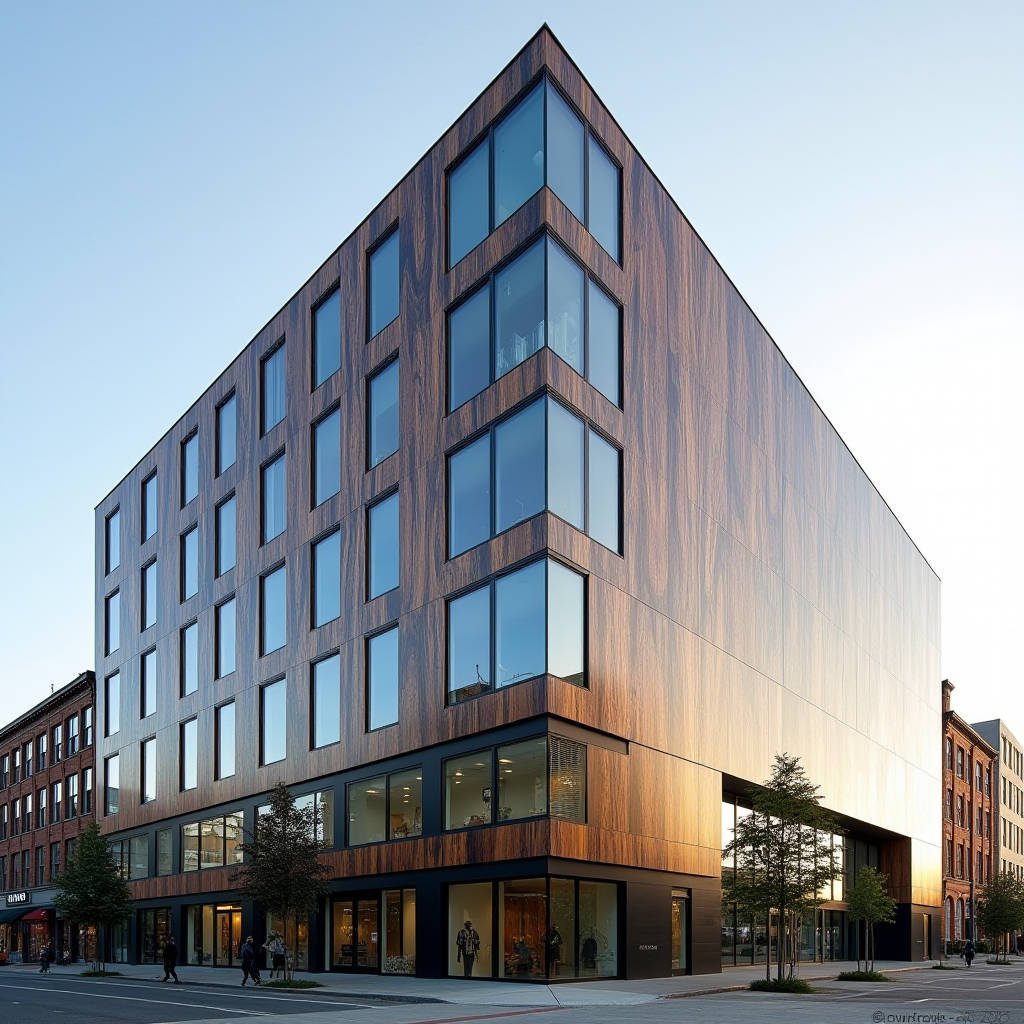
When a facade contractor in Dubai asks for a 3.2m × 1.5m panel with a wood-grain image that matches the architect's Pantone swatch and must survive 15 years of Gulf sun without fading, the conversation has moved far beyond standard PVDF solid colors. The answer sits at the intersection of industrial metal fabrication and high-resolution imaging: the Digital Printed Aluminum Panel. This is not a vinyl wrap glued onto a sheet. It is a 2.5mm or 3.0mm solid aluminum alloy substrate — typically 3003-H14 or 5052 — carrying a cured image layer that is chemically bonded into the coating system. The panel still behaves like a rigid rainscreen component: it can be brake-formed, routed, and mounted on a standard carrier system. But visually, it delivers photographic resolution, wood textures, stone veining, or corporate branding without the weight, thickness tolerance, or fire-risk limitations of laminates. Understanding what makes this technology reliable — or unreliable — is now a core competency for anyone specifying architectural metal cladding.
What "Digital Printed" Actually Means on Solid Aluminum
The term "digital printing" covers at least three fundamentally different processes, and confusing them leads to specification errors that show up two years later as delamination or color shift. On solid aluminum panels — not ACP — the dominant technologies are UV-curable flatbed printing, dye-sublimation into powder-coated surfaces, and thermal transfer film systems. Each has a distinct adhesion mechanism, durability profile, and cost structure.
UV-curable flatbed printing deposits ink directly onto a pre-coated aluminum surface and cures it instantly under ultraviolet light. The ink sits on top of the coating, bonded mechanically and chemically to a primer layer. This is the most common method for high-volume architectural work because it handles panel sizes up to 2m × 4m and requires no post-print baking. The key variable is the primer: a polyester or polyurethane-based adhesion promoter must be factory-applied and fully cured before printing. Skipping this step — or using a generic primer not matched to the ink chemistry — is the single most common cause of field failures. When the system is correct, UV-printed panels can achieve ASTM D3359 cross-hatch adhesion ratings of 4B or 5B and withstand 3,000+ hours of QUV-B accelerated weathering with ΔE color shift under 5.0.
Dye-sublimation works differently. The image is first printed onto a transfer paper, then heat-pressed at approximately 200°C into a powder-coated polyester surface. Under heat, the solid dye converts to gas and penetrates the coating's polymer matrix. When the panel cools, the dye is physically trapped inside the coating — not sitting on top. This is why dye-sub panels show zero edge peeling and can be routed or punched after printing without chipping the image. The limitation is the coating chemistry: sublimation only works into polyester-based powder coats, not PVDF (polyvinylidene fluoride). Polyester powder offers good UV resistance but cannot match PVDF's 20-30 year exterior durability in extreme climates. For interior feature walls, soffits, or sheltered exterior applications, dye-sub provides unmatched image permanence. For fully exposed facades in high-UV regions, the trade-off requires careful evaluation.
Thermal transfer film — sometimes called 3D sublimation — uses a vacuum-assisted process to wrap a printed film around profiled or textured aluminum surfaces. This is the technology behind "3D Digital Printed Aluminum Panel" products that replicate wood grain on embossed surfaces. The film fuses into a powder-coated base layer under heat and vacuum pressure. The visual result is compelling: you can feel the wood grain texture while seeing the grain pattern, and the two align perfectly. The process works on solid aluminum panels up to 3.0mm thickness and can handle formed profiles, not just flat sheets. Weather resistance depends entirely on the film quality and the top clear coat applied after transfer. Leading manufacturers apply a fluoropolymer clear coat over the film, which brings the system's exterior durability closer to PVDF benchmarks.
Coating Architecture: Why the Base Layer Decides Everything
An architect specifying a digital printed aluminum panel typically focuses on the image: resolution, color accuracy, gloss level. The facade engineer, however, should be looking at what is underneath the image. The coating stack — from aluminum substrate to final clear coat — determines whether the panel will still look acceptable in year seven.
A properly engineered coating system for exterior digital printed solid aluminum panels follows this sequence: chromate conversion coating on the aluminum substrate (per ASTM D1730 or equivalent), then a corrosion-resistant primer (typically 5-8 microns epoxy or polyurethane), then the base color coat where the image will be applied, then the printed image layer, and finally a clear protective topcoat. The base coat chemistry must be compatible with both the primer below and the ink system above. For UV printing, a polyester or polyurethane base coat provides the right surface energy for ink adhesion. For dye-sublimation, the base coat must be a polyester powder formulated to accept gas-phase dye penetration.
The clear topcoat is not optional for exterior applications. UV inks, regardless of manufacturer claims, will degrade under direct sunlight if not protected. A 25-35 micron clear fluoropolymer topcoat — applied as a liquid PVDF or FEVE (fluoroethylene vinyl ether) coating — blocks the majority of UV radiation before it reaches the ink layer. This is the same principle used in automotive clear coats over metallic base coats. The cost of this clear coat typically adds $8-15 per square meter to the panel price, but it extends the service life of the printed image from approximately 3-5 years to 15-20 years in temperate climates. In high-UV environments like the Middle East or Australia, the clear coat is the difference between a 5-year warranty and a 15-year warranty.
| Coating Parameter | UV Printing (Unprotected) | UV Printing + PVDF Clear | Dye-Sub + Polyester Powder | Thermal Film + FEVE Clear |
|---|---|---|---|---|
| Typical DFT (microns) | 60-80 | 85-110 | 70-90 | 90-120 |
| QUV-B Resistance (hours to ΔE>5) | 1,500-2,000 | 4,000-5,000 | 2,500-3,500 | 3,500-4,500 |
| Adhesion (ASTM D3359) | 4B-5B | 4B-5B | 5B | 4B-5B |
| Post-Forming Capability | Limited | Limited | Excellent | Good |
| Expected Exterior Life (temperate) | 5-8 years | 15-20 years | 10-15 years | 15-20 years |
| Relative Cost Index | 1.0 | 1.3-1.5 | 1.2-1.4 | 1.5-1.8 |
Image Resolution and the DPI Reality Check
Marketing materials for digital printed aluminum panels routinely claim "high resolution" without specifying what that means. In architectural printing, resolution is a function of three variables: the printer's native DPI (dots per inch), the viewing distance, and the panel size. A 1,200 DPI print looks spectacular on a 300mm × 300mm sample held in your hand. On a 3m × 1.5m facade panel viewed from 8 meters away, 300 DPI is functionally indistinguishable from 1,200 DPI — but the file size and processing time are dramatically different.
For facade applications, the practical standard is 300-600 DPI at full scale for panels viewed from 2-5 meters, and 150-300 DPI for panels installed above 5 meters. The file preparation workflow matters as much as the printer hardware. A 3m × 1.5m panel at 300 DPI requires a raster image approximately 35,400 × 17,700 pixels — roughly 627 megapixels. This exceeds what most digital cameras capture, so the image must be either vector-based (for patterns and logos) or upscaled using interpolation algorithms that preserve edge sharpness. Architects should provide vector files (AI, EPS, PDF) for graphic designs and the highest-resolution raster files available for photographic images. The printer's RIP (raster image processor) software handles the scaling, but the quality of the source file sets the ceiling.
Color management is the other half of the resolution conversation. Digital printed aluminum panels are typically produced in CMYK color space, but architects specify colors in Pantone, RAL, or NCS. The color gamut achievable on coated aluminum is narrower than what a backlit monitor displays. Certain bright oranges, deep blues, and fluorescent tones simply cannot be reproduced in CMYK on a metal substrate. A responsible fabricator provides a physical color proof on the actual aluminum substrate before running the full batch. This proof should be evaluated under the lighting conditions where the panels will be installed — daylight, warm LED, or mixed — because metamerism (color shift under different light sources) affects printed panels differently than painted ones.
Fire Performance: Solid Aluminum vs. Perceptions
Building code compliance for digital printed aluminum panels hinges on the substrate classification. Solid aluminum sheet — 2.5mm or 3.0mm 3003-H14 alloy — is non-combustible per ASTM E136 and achieves an A1 classification under EN 13501-1. The printed coating and clear topcoat add an organic content of typically less than 0.5mm total thickness, which falls within the allowances for non-combustible substrates in most international codes.
This is a critical distinction when specifying for high-rise facades, particularly in markets that have tightened regulations following facade fire incidents. The American Architectural Manufacturers Association (AAMA) and ISO 1182 provide testing frameworks that differentiate between the substrate material and the coating. A solid aluminum panel with a digital print and PVDF clear coat will pass the non-combustibility tests that a polyethylene-core ACP panel cannot. For specifiers, the documentation chain should include: mill test certificates for the aluminum alloy, coating system fire test reports, and a letter from the fabricator confirming that no combustible core materials are used in the panel construction.
Some manufacturers, including Futeng®, have invested in testing their complete digital printed panel systems to EN 13501-1 and ASTM E84, providing project-specific documentation that streamlines the approval process with building control authorities and fire engineers. The testing covers the full build-up: aluminum substrate, primer, printed image, and clear coat, tested as a single assembly rather than individual components.
Fabrication After Printing: What You Can and Cannot Do
One of the advantages of solid aluminum panels over composite alternatives is the ability to fabricate after the surface is finished. A 3.0mm solid aluminum panel with a digital printed surface can be routed, folded, and perforated — but the process parameters shift when the surface carries a printed image rather than a uniform PVDF color coat.
Brake forming is the most common post-print fabrication operation. The panel is bent along a V-groove routed into the back side, leaving approximately 0.5mm of aluminum at the bend line. For UV-printed panels, the bend radius should be at least 2× the panel thickness to avoid cracking the ink layer. Dye-sublimated panels are more forgiving because the image is embedded within the coating rather than sitting on top; they can typically handle 1.5× thickness bend radii without visible cracking. Thermal film panels require the most care: the film can stretch slightly during bending, but sharp corners (under 90 degrees) risk separating the film from the substrate at the edge.
Perforation and routing present different challenges. When a panel is perforated after printing, the hole edges expose bare aluminum. For exterior applications, this is a corrosion risk. The solution is either to perforate before printing (which limits image continuity across holes) or to apply a clear edge sealant to each hole after fabrication. The latter approach is labor-intensive but preserves the image pattern across the perforated area. CNC routing for panel cutouts follows the same logic: all cut edges must be sealed or the panel must be designed so that cut edges are hidden behind flashing or adjacent panels.
Welding is generally not recommended on digital printed panels. The heat-affected zone will destroy the printed image and coating for at least 25-50mm around the weld, and the repair coating will never match the printed pattern perfectly. If a project requires welded corners on printed panels, the fabrication sequence should be: weld first, grind smooth, then print the entire assembly. This requires a printer with sufficient bed size to accommodate the welded panel, which limits the approach to smaller panels or specialized fabricators with large-format printing capability.
Specifying for Exterior Durability: A Practical Checklist
An exterior digital printed aluminum panel specification that survives technical review requires more than a reference to "digitally printed aluminum panels as shown on the architect's drawings." The following elements should be explicit in the specification or the approved fabricator's submittal:
- Aluminum alloy and temper: 3003-H14 or 5052-H32, 2.5mm or 3.0mm nominal thickness, conforming to ASTM B209 or EN 485.
- Pretreatment: Chromate conversion coating per ASTM D1730, or chrome-free alternative per AAMA 2605 if regional regulations prohibit hexavalent chromium.
- Printing technology: Specify UV-curable, dye-sublimation, or thermal transfer. Do not leave this open — the durability expectations differ significantly.
- Clear topcoat: For exterior applications, require a minimum 25 microns DFT of PVDF (70% PVDF resin minimum per AAMA 2605) or FEVE clear coat over the printed image.
- Color and gloss: Reference a physical sample on the actual substrate, not a paper print. Specify gloss range in GU (gloss units) at 60° geometry, typically 25-35 GU for matte, 60-80 GU for gloss.
- Weathering warranty: For exterior facades, require a minimum 10-year warranty against color fade (ΔE > 5) and coating delamination. 15-20 year warranties are available from qualified fabricators.
- Fire classification: Require test reports for the complete panel assembly to EN 13501-1 Class A1 or ASTM E84 Class A, as applicable to the project jurisdiction.
Cost Drivers and Budgeting Realities
The cost of a digital printed aluminum panel is not a single number — it is a function of five variables that project teams can control through specification decisions. Understanding these drivers helps avoid the situation where a beautifully designed facade gets value-engineered into something unrecognizable.
The first driver is print coverage. A panel with a full-bleed photographic image costs more than a panel with a repeating pattern, which costs more than a panel with a small logo on a solid background. The difference is not just ink consumption; full-bleed images require slower print speeds, more careful color management, and higher rejection rates. A full-bleed custom image might add $25-40 per square meter compared to a solid-color panel, while a repeating pattern might add $15-25.
The second driver is the clear coat system. As shown in the comparison table, a PVDF clear coat adds roughly 30-50% to the base printing cost. This is not an area to value-engineer out of an exterior specification. The third driver is panel size and quantity. Printers have fixed bed sizes — typically 2m × 4m for UV flatbed machines — and panels larger than this require splicing or a larger-format printer, both of which increase cost. Setup charges for custom images are amortized over the total panel quantity; a 50-panel order has a much higher per-panel image cost than a 500-panel order.
The fourth driver is fabrication complexity. Simple flat panels with no cutouts, perforations, or formed edges cost less than panels requiring post-print fabrication. The fifth driver is logistics: printed panels require protective interleaving and careful packaging to prevent surface abrasion during shipping. For international projects, this packaging cost can add $3-5 per square meter, and the lead time for ocean freight (typically 4-6 weeks from Asia to North America or Europe) must be factored into the construction schedule.
"We have seen projects where the digital printed panels arrived on site with scuff marks because the packaging specification was not detailed enough. The cost of replacing 12 panels and delaying the facade installation by three weeks far exceeded what proper packaging would have cost."
Quality Control: What to Inspect Before the Panels Leave the Factory
For procurement managers and facade contractors importing digital printed aluminum panels, a factory inspection before shipment is not a luxury — it is the last opportunity to catch problems before they become site disputes. The inspection should cover three areas: substrate quality, print quality, and coating integrity.
Substrate inspection starts with the mill certificates. Verify that the aluminum alloy, temper, and thickness match the specification. Check a random sample of panels with a digital micrometer — thickness tolerance should be within ±0.1mm for 2.5mm and 3.0mm sheets. Inspect panel flatness; a deviation of more than 2mm per linear meter will cause visible waviness in the installed facade, and the printed image can amplify rather than hide this waviness.
Print quality inspection requires a controlled viewing environment. Compare production panels against the approved physical sample under standardized lighting (D65 daylight simulation). Check for banding — visible horizontal or vertical lines caused by print head alignment issues — which is the most common print defect on large panels. Check color consistency across the batch: measure ΔE between the sample and production panels using a spectrophotometer; a ΔE under 2.0 is generally acceptable for architectural work, though critical applications may require ΔE under 1.0.
Coating integrity tests include dry film thickness measurements (DFT), cross-hatch adhesion testing per ASTM D3359, and solvent resistance testing (MEK rub test per AAMA 2605). For exterior panels with a PVDF clear coat, the DFT should be measured at multiple points across each panel and recorded. Adhesion testing should be performed on a witness sample from the same production batch, not on panels destined for installation.
Installation Considerations for Printed Facade Panels
Installing digital printed aluminum panels follows the same principles as any solid aluminum rainscreen system, with additional care points driven by the printed surface. Panel handling is the most obvious: the printed surface is the finished face and must be protected from scratches, impacts, and mortar splatter throughout the installation process. Protective film should remain on the panels until the surrounding construction work is complete. The film must be UV-stable if panels will be stored outdoors for more than two weeks, and it must be removable without leaving adhesive residue on the printed surface.
Panel orientation and sequencing matter more with printed panels than with solid-color panels. If the image is continuous across multiple panels — a large mural or graphic spanning several panels — the installation sequence must follow the image map precisely. Each panel should be numbered on the back side to correspond with the shop drawing layout. Installing panel 7 before panel 4 on a continuous image facade creates a misalignment that cannot be corrected without removing and reinstalling panels.
The carrier system must accommodate the panel dimensions and weight. A 3.0mm solid aluminum panel measuring 1.5m × 3.0m weighs approximately 36 kg, compared to roughly 18 kg for a typical 4mm ACP panel of the same dimensions. The carrier system, brackets, and fixings must be designed for this weight, and the dead load must be accounted for in the structural calculations. For high-rise installations, wind load calculations per ASTM E1300 or the local building code must include the correct panel weight.
Expansion and contraction due to thermal cycling affect all metal panels, but printed panels add a consideration: the image layer and coating system have a different coefficient of thermal expansion than the aluminum substrate. Over a 3m panel length, a 50°C temperature swing can produce differential movement of 1-2mm between the coating and the substrate. The panel joint design must accommodate this movement without stressing the coating at the panel edges. Open joints of 8-12mm are standard for rainscreen systems and provide adequate movement accommodation for printed panels as well.
When Digital Printed Aluminum Panels Make Engineering Sense
Not every project needs a digital printed aluminum panel. The technology carries a cost premium and a lead time premium over standard PVDF color-coated panels. The decision to specify printed panels should be driven by a design requirement that cannot be met by other means — or by a lifecycle cost analysis that justifies the premium.
Projects where digital printed aluminum panels deliver clear value include: facades requiring photographic imagery or complex graphics that cannot be achieved with standard coatings; buildings where the facade must match an existing material (stone, wood, terracotta) but the substrate must be lightweight, non-combustible, and compatible with a rainscreen carrier system; interior feature walls in high-traffic areas where image durability and surface hardness matter; and corporate headquarters where branding is integral to the architectural expression.
Projects where printed panels are less appropriate include: facades where a solid color or simple metallic finish would achieve the same design intent at lower cost; buildings with very tight budgets where the image premium would likely be value-engineered out; and projects with extremely short lead times where the additional 2-3 weeks for printing and clear coat curing would delay the construction schedule.
The engineering case for digital printed aluminum panels ultimately rests on the same criteria as any facade material decision: durability, code compliance, cost, and constructability. When the coating system is properly specified — with a fluoropolymer clear coat for exterior applications, proper pretreatment, and a compatible base coat — a digital printed solid aluminum panel can deliver a 15-20 year service life while achieving visual effects that no other single-skin metal cladding system can match. The key is treating the printed image not as a decorative afterthought but as an engineered layer in a multi-layer coating system that must perform as a whole.