Photolithographic Aluminum Panel Durability and Specification for Exterior Facade Imaging
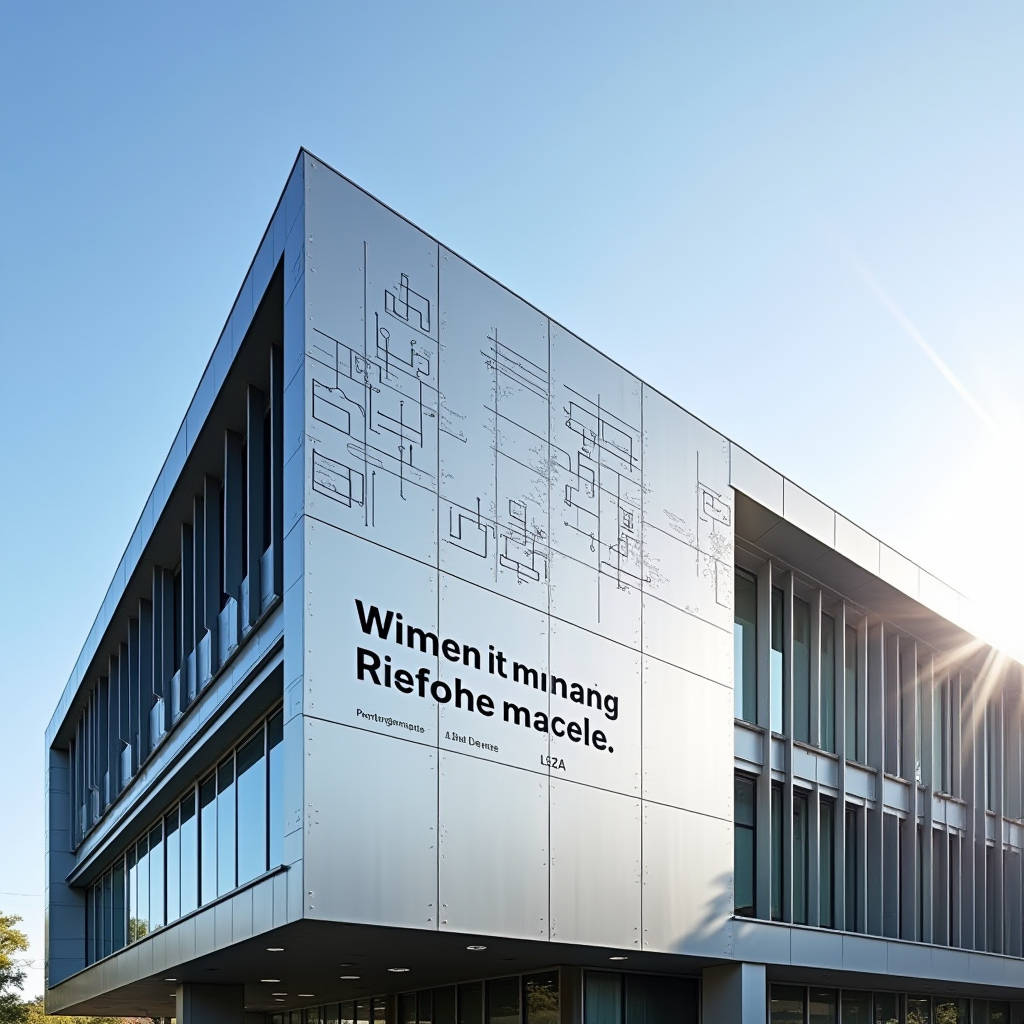
When a facade specification calls for photographic imagery, typography, or intricate graphic patterns permanently bonded to a building envelope, the conversation narrows quickly to one material: the Photolithographic Aluminum Panel. Unlike surface-applied vinyl films or digital prints that degrade under UV exposure within three to five years, a properly manufactured photolithographic aluminum panel embeds the image into the metal oxide layer itself. The result is a solid aluminum sheet — typically 2.0mm, 2.5mm, or 3.0mm thick — that carries architectural-grade graphics with a service life measured in decades rather than seasons. For architects specifying wayfinding systems on hospital exteriors, for contractors executing large-scale public art installations on civic buildings, and for facade engineers who need to validate that the image will survive 20 years of direct sunlight without delamination, this technology solves a persistent problem: how to make a building surface communicate visually without sacrificing the durability of the cladding system.
What Actually Happens During Photolithographic Processing on Aluminum
Photolithography on architectural aluminum panels borrows its core principles from semiconductor fabrication and offset printing plate manufacturing, but the scale and substrate are entirely different. The process starts with a solid aluminum sheet — typically alloy 1100, 3003, or 5005 — that has been chemically cleaned, electro-grained, and anodized to create a porous aluminum oxide layer on the surface. This anodic layer, usually 5 to 25 microns thick depending on the specification, is what makes the image bond possible.
A light-sensitive photoresist compound is applied uniformly across the anodized surface. The desired graphic pattern — whether it is a photographic image, a text-based directory, a repetitive geometric motif, or a custom architectural pattern — is transferred onto the panel via a high-resolution photomask and UV exposure. Where UV light strikes the resist, a chemical reaction occurs that either hardens or softens the resist, depending on whether a positive or negative photoresist system is being used. The unhardened areas are then washed away in a developer bath, exposing the anodic pores beneath.
At this stage, the exposed aluminum oxide pores are filled with a dye, pigment, or metallic salt — typically black, but also available in bronze, gold, or custom color formulations. The dye molecules penetrate the pore structure and become physically trapped when the pores are subsequently sealed through a hydrothermal sealing process. This is the critical distinction: the image is not sitting on top of the aluminum. It is locked inside the anodic layer, protected by the same aluminum oxide that gives anodized aluminum its corrosion resistance. The sealed surface is then typically finished with a clear PVDF or FEVE fluoropolymer topcoat for additional UV and chemical resistance in exterior applications.
Why Anodic Imaging Outlasts Surface Printing on Building Facades
Every facade contractor has encountered the problem: a digitally printed aluminum panel looks pristine on installation day, but five years later the image is faded, cracked, or peeling. The failure mechanism is straightforward. UV radiation breaks down the polymer binders in solvent-based and UV-curable inks. Thermal cycling — daily temperature swings of 30°C or more on dark-colored facades — causes differential expansion between the ink layer and the aluminum substrate. Moisture ingress at the edges of the print accelerates delamination.
A photolithographic aluminum panel avoids these failure modes because the image is not a discrete layer. The anodic aluminum oxide that hosts the dye is chemically identical to the substrate — it is the substrate, transformed. The coefficient of thermal expansion is uniform through the entire cross-section. There is no interface where delamination can initiate. The hydrothermal sealing process closes the pores and creates a hydrated aluminum oxide surface that is chemically stable and resistant to UV degradation.
Independent testing data supports this. According to the Aluminum Association's guidelines on anodized aluminum, properly sealed anodic coatings can maintain color stability for over 30 years in exterior architectural applications. The ASTM B137 standard for measuring anodic coating weight and ASTM B244 for eddy current thickness measurement provide the quality control framework. For color fastness, AAMA 611 specifications for anodized architectural aluminum establish performance criteria that factory-applied photolithographic imaging must meet.
Material Specifications That Determine Project Success
Not all aluminum alloys respond equally well to photolithographic processing. The alloy selection, temper, anodizing parameters, and post-processing all influence the final image resolution, contrast, and durability. The table below summarizes the key technical variables that specifiers need to evaluate when reviewing photolithographic aluminum panel submissions.
| Parameter | Recommended Specification | Impact on Image Quality | Impact on Exterior Durability |
|---|---|---|---|
| Alloy Grade | 1100-H14, 5005-H14 | High-purity 1100 yields finest grain structure for sharpest image resolution; 5005 offers balanced strength and image quality | 5005 provides superior corrosion resistance for coastal and industrial environments |
| Anodic Layer Thickness | 10-20 microns (interior); 20-25 microns (exterior) | Thicker layers hold more dye for deeper blacks and higher contrast | 20+ microns required per AAMA 611 Class I for exterior exposure |
| Sealing Method | Hydrothermal (boiling deionized water) or nickel acetate | Hydrothermal sealing preserves dye color fidelity; nickel acetate may shift warm tones | Seal quality directly determines corrosion resistance; ASTM B680 seal test required |
| Clear Topcoat | 2-coat PVDF (70% PVDF resin) or FEVE fluoropolymer | Minimal impact on image clarity if applied at 25-30 microns DFT | Essential for UV protection of dye molecules; extends image life beyond 20 years |
| Panel Thickness | 2.0mm (interior); 2.5-3.0mm (exterior cladding) | Thicker panels resist oil-canning, which can distort perceived image uniformity | 3.0mm recommended for large-format panels over 1.2m in any dimension |
| Image Resolution | Up to 120 lines per inch (LPI) achievable | Higher LPI enables photographic detail; 60-85 LPI typical for architectural graphics | Resolution does not degrade over time if properly sealed |
Where Photolithographic Aluminum Panels Deliver Value on Real Projects
The technology is not a theoretical curiosity. It has been deployed on projects where the alternative — applied graphics, screen printing, or digital printing — was deemed unacceptable by the design team due to durability concerns. The following application categories represent the bulk of current demand.
Exterior Wayfinding and Signage Systems
Hospital campuses, university complexes, and transit hubs require exterior signage that remains legible for decades. A photolithographic aluminum panel used as a building directory or directional sign eliminates the recurring maintenance cost of replacing faded vinyl graphics. The panels can be fabricated into the same curtain wall system as the surrounding cladding, creating a flush, integrated appearance. For contractors, this means one less trade to coordinate on site — the signage is part of the facade package.
Public Art and Cultural Facades
Museums, performing arts centers, and government buildings increasingly incorporate large-scale imagery into their building envelopes. The photolithographic process allows a photographic image — a historical scene, an abstract composition, a text-based artwork — to be rendered across multiple panels that are then installed as a unified facade. Because the imaging process is photochemical rather than digital, panel-to-panel color consistency can be tightly controlled through standardized processing parameters. This is particularly important on projects where the architect will reject panels with visible color variation.
Corporate Identity and Branded Environments
Corporate headquarters and flagship retail locations use photolithographic aluminum panels to embed brand logos, patterns, or messaging directly into the building skin. The permanence of the image aligns with the permanence of the architecture — a deliberate choice that signals institutional stability. From a procurement perspective, the upfront cost premium over digital printing is offset by the elimination of a lifecycle replacement budget line item.
Cost Structure Compared to Alternative Imaging Methods
Procurement managers evaluating photolithographic aluminum panels need to understand the cost drivers and how they compare to other imaging technologies over the building lifecycle. The initial square-meter cost is higher than digital printing. The 20-year cost is frequently lower.
The primary cost drivers for photolithographic processing include: the photomask production (a one-time setup cost amortized across the panel quantity), the anodizing and imaging process time (which is batch-based rather than continuous), and the clear PVDF topcoat application. For small quantities — under 50 square meters — the photomask setup cost dominates. For larger projects — over 500 square meters — the per-unit cost becomes competitive with high-end digital printing, especially when lifecycle costs are factored in.
A typical budget range for photolithographic aluminum panels with exterior-grade anodizing and clear PVDF topcoat runs from approximately $350 to $650 per square meter, depending on image complexity, panel dimensions, quantity, and alloy specification. This compares to $150 to $300 per square meter for high-quality UV-curable digital printing on aluminum, which typically requires replacement or refinishing within 7 to 10 years on exterior applications. The break-even point, purely on financial terms, often falls between year 8 and year 12, depending on local labor costs for panel replacement.
Fabrication and Installation Considerations
Once the photolithographic imaging is complete, the panels enter standard architectural aluminum fabrication workflows. They can be cut, routed, bent, and perforated — though any post-imaging fabrication must account for the fact that cut edges will expose bare aluminum that requires edge treatment. The panels integrate into standard unitized curtain wall and rainscreen systems using the same engineered carrier frames, clips, and gaskets as non-imaged aluminum panels.
Installation crews need to be briefed on handling procedures. While the anodic image is highly durable, it can be scratched by careless handling with metal tools or abrasive contact during transport. Protective film applied at the factory is standard practice and should remain in place until final installation is complete. For projects where panels are installed in high-traffic public areas, the clear PVDF topcoat provides an additional layer of scratch resistance.
Futeng® has supplied photolithographic aluminum panels for institutional projects across Southeast Asia, and the consistent feedback from site teams is that the panels handle similarly to standard PVDF-coated aluminum sheets — no special tools, no modified installation sequences, and no post-installation treatment required. The learning curve is minimal.
Quality Assurance and Field Verification
Specifying a photolithographic aluminum panel requires clear quality benchmarks. The following inspection points should be included in project specifications and verified during factory visits or upon material delivery:
- Anodic coating thickness measured per ASTM B244 using eddy current instruments, with minimum 20 microns for exterior applications
- Seal quality tested per ASTM B680, with a maximum weight loss of 2.0 mg/cm² in the nitric acid predip test for exterior-grade panels
- Image resolution and registration verified against approved shop drawings, with particular attention to panel-to-panel continuity at joints
- Color consistency evaluated under controlled lighting (D65 illuminant) across the full production run
- Clear topcoat adhesion tested per ASTM D3359 cross-hatch method, achieving classification 4B or better
- Accelerated weathering per ASTM G154 Cycle 1 (UVB-313 lamps, 1,000 hours minimum) to validate image stability
For projects in coastal or industrial environments, additional corrosion testing per ASTM B117 (neutral salt spray, minimum 3,000 hours) should be specified. The anodic layer, when properly sealed, provides excellent salt spray resistance, but the specification must be explicit — contractors should not assume that all photolithographic panels are automatically rated for marine exposure.
Design Limitations and Realistic Expectations
Photolithographic aluminum panels have constraints that designers must understand before committing to the technology. The process is inherently monochromatic or limited to a small color palette within a single panel — typically black, bronze, or gold tones on a natural anodized aluminum background. Full-color photographic reproduction is not achievable through the photolithographic anodic imaging process described here. Projects requiring full-color imagery should investigate alternative technologies, but must accept the trade-off in durability.
Maximum panel dimensions are constrained by the anodizing tank and photomask exposure equipment. Typical maximums are 1.5 meters by 3.0 meters, though some facilities can accommodate larger formats. Panel-to-panel image continuity across joints requires careful planning of the photomask layout and precise fabrication tolerances. A 10mm to 20mm joint is typical in rainscreen systems, and the image must be designed to account for this interruption.
Surface flatness is another consideration. The photolithographic exposure process requires intimate contact between the photomask and the panel surface. Any waviness or oil-canning in the aluminum sheet will result in localized image distortion. Specifying 3.0mm minimum thickness for panels over 1.0 square meter, with flatness tolerances per ASTM B209 for aluminum sheet, helps mitigate this risk.
Specifying Photolithographic Aluminum Panels for Your Next Project
For architects and specifiers, the key to a successful photolithographic aluminum panel installation is early engagement with the manufacturer. The photomask design, panel layout, joint treatment, and edge detailing should be resolved during the design development phase — not during shop drawing review. The following specification framework provides a starting point for project documentation.
Begin with the substrate: solid aluminum sheet, alloy 5005-H14 or 1100-H14, thickness 2.5mm minimum for exterior cladding, 3.0mm for panels exceeding 1.2 meters in any dimension. Specify anodic coating per AAMA 611 Class I, 20-25 microns, with photolithographic imaging to achieve the architect's approved graphic pattern. Require hydrothermal sealing per ASTM B680. Apply a clear 2-coat PVDF topcoat (70% PVDF resin minimum) at 25-30 microns dry film thickness over the imaged surface. Include the quality assurance testing requirements listed above as part of the submittal package.
For contractors, the procurement path is straightforward: identify manufacturers with in-house anodizing and photolithographic capabilities, request project-specific samples that demonstrate the full process on the specified alloy, and factor in a 6-8 week lead time for photomask production and first-article approval. The upfront coordination effort pays off in a facade that requires no graphic maintenance for the service life of the building.
The photolithographic aluminum panel occupies a narrow but critical niche in architectural cladding: it is the option you specify when the image must last as long as the building. It is not the cheapest way to put graphics on a wall. It is the most durable way to make graphics part of the wall. For the right project — a courthouse with an inscribed facade, a research institute with exterior donor recognition, a transit station with permanent wayfinding — the technology delivers exactly what the specification demands and nothing less.