Sandblasted Aluminum Facade Technical Guide for Specifiers and Facade Contractors
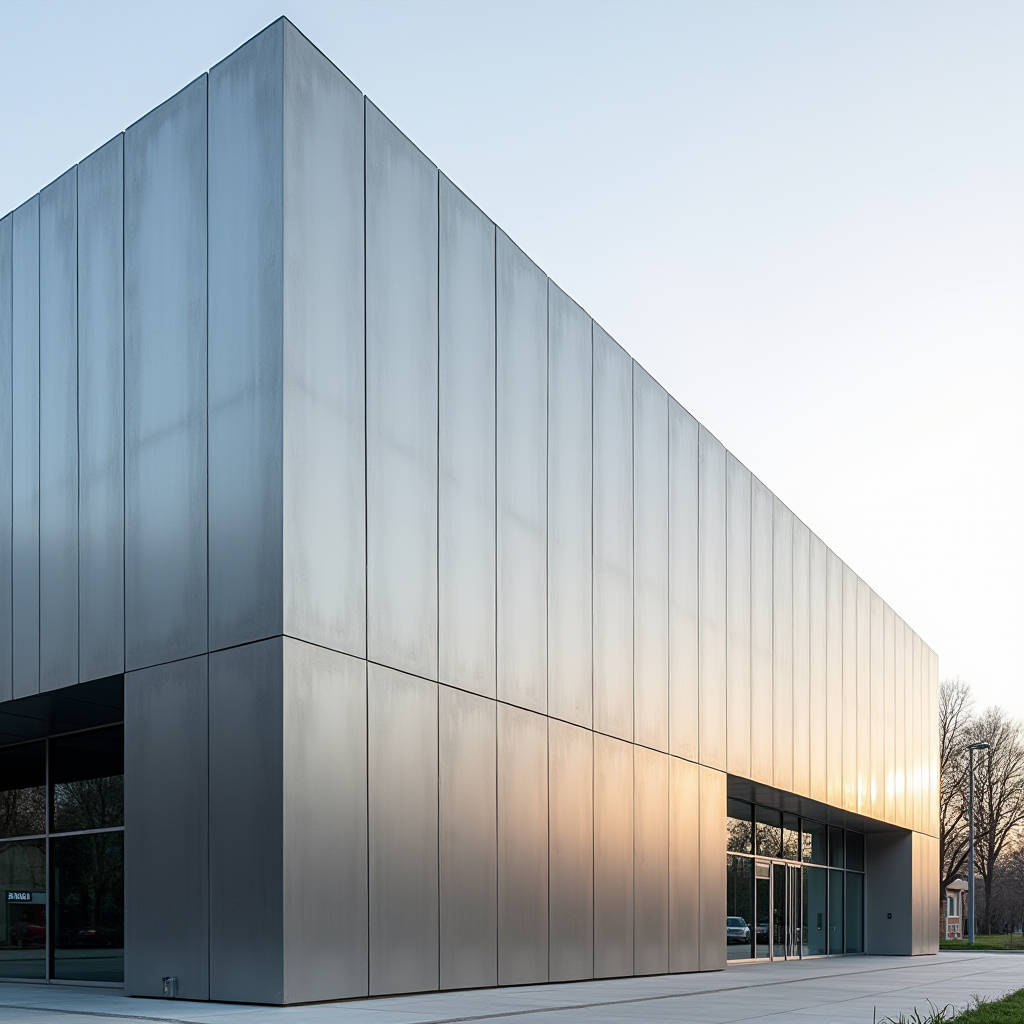
A sandblasted aluminum facade delivers a uniform matte surface that diffuses light rather than reflecting it, eliminating the glare problems common with high-gloss architectural metals. For project managers and facade engineers, the finish is not purely aesthetic. It directly affects how panels are handled on site, how they perform under weathering, and how the building reads from a distance. The microscopic pitting created by blasting alumina or glass bead media at controlled pressure removes mill scale, hides minor scratches, and provides a mechanical key for subsequent anodizing or PVDF coating. This article examines the technical factors that determine whether a sandblasted aluminum facade performs as specified over a 20-year service life: abrasive media selection, substrate thickness constraints, coating compatibility, and the fabrication sequence that separates a durable architectural skin from a warranty liability.
What Actually Happens to the Metal During Sandblasting
Sandblasting aluminum is not a coating. It is a subtractive surface treatment that erodes the outermost layer of the substrate to create a specific texture profile. The process propels abrasive particles at 60–120 PSI against the aluminum sheet, with each particle impact removing a microscopic chip of metal. The cumulative effect produces a surface roughness typically measured between 2.5 and 7.5 microns Ra (roughness average), depending on media type, particle size, air pressure, and dwell time.
The key metallurgical consideration is that the process removes the naturally occurring aluminum oxide layer along with any mill scale or contaminants. Fresh aluminum exposed by blasting begins re-oxidizing within minutes. This makes the post-blast handling window critical. For panels destined for a sandblasted aluminum facade, the interval between blasting and coating application should not exceed 4–6 hours in controlled shop conditions (below 60% relative humidity). Exceeding this window allows uneven oxide formation that can cause coating adhesion failure, visible as micro-blistering 12–18 months after installation.
Different abrasive media produce fundamentally different surface profiles. Aluminum oxide grit (brown fused alumina, 60–120 mesh) cuts aggressively and leaves a sharp, angular profile ideal for coating adhesion. Glass bead (80–120 mesh) peens rather than cuts, producing a smoother, satin-like finish that retains more of the base metal's brightness. Steel grit is never used on aluminum due to galvanic corrosion risk from embedded ferrous particles. The specification for a sandblasted aluminum facade should explicitly state the media type, mesh size, and resulting surface profile range, not simply call for a "sandblasted finish."
Substrate Thickness and the Distortion Problem
Thin aluminum sheets distort under blasting pressure. The combination of compressive stress from particle impact and localized heating causes panels below 2.0mm thickness to bow, ripple, or develop oil-canning that cannot be corrected after fabrication. This is the single most common quality failure in sandblasted aluminum facade projects, and it almost always traces back to value engineering that substituted thinner material to offset the cost of the finish.
For flat panels up to 600mm in width, 2.0mm 3003-H14 or 5052-H32 aluminum can be safely blasted with glass bead media at pressures below 80 PSI. Panels exceeding 600mm width require 2.5mm minimum thickness. For panels over 1200mm in any dimension, 3.0mm is the practical minimum, and even then, the blasting must be performed on both sides to balance the induced stress. Single-sided blasting on large-format 3.0mm panels still produces a measurable bow, typically 3–5mm of deflection across a 1500mm span.
The alloy grade matters as much as the thickness. 5052-H32 offers higher yield strength (193 MPa vs. 145 MPa for 3003-H14) and better resistance to blasting-induced distortion. For marine or coastal sandblasted aluminum facade applications, 5052 or 5754 alloys are mandatory regardless of thickness, as they provide the magnesium content needed for corrosion resistance in chloride-rich environments. The cost premium for 5052 over 3003 is approximately 15–20%, but the reduction in rejection rates for large-format blasted panels often makes it the cheaper option on a total project basis.
Coating Compatibility: Anodizing vs. PVDF Over Blasted Surfaces
The sandblasted surface is an intermediate step, not a final finish. It must be sealed or coated. The two dominant pathways are architectural anodizing and PVDF (polyvinylidene fluoride) liquid coating, and they interact with the blasted profile in fundamentally different ways.
Anodizing a blasted surface produces a matte, metallic appearance that cannot be replicated by any other method. The blasted texture scatters light before it reaches the anodic layer, creating depth without gloss. However, the blasted profile increases the total surface area by 15–30% compared to a smooth surface, which means the anodizing bath consumes more current and time to achieve a given coating thickness. The specifier must account for this: a 15-micron anodic layer on a smooth surface may require parameters that yield only 10–12 microns on a blasted surface if the process is not adjusted. The relevant standard is AAMA 611-14, which governs architectural anodizing.
PVDF coating over a blasted surface follows a different logic. The 25–35 micron (1.0–1.4 mil) dry film thickness required by AAMA 2605 for high-performance architectural coatings must be measured from the peaks of the blasted profile, not the valleys. This means the applicator must apply more wet film to achieve the specified dry film thickness over the full surface area. A 2.5-micron Ra blasted profile requires approximately 5–8 microns of additional coating thickness to ensure the valleys meet the minimum DFT. Skipping this adjustment results in thin spots that chalk and fade within 5–7 years rather than the expected 20+ years.
For projects where the natural metallic look of anodized aluminum is desired but with the durability of a fluoropolymer, some manufacturers offer a PVDF clear coat over the blasted substrate. This preserves the matte metallic appearance while providing the UV and chemical resistance of PVDF. The trade-off is that any scratch or damage to the clear coat exposes the un-anodized blasted aluminum, which will oxidize and discolor differently than the surrounding area.
Coating Performance Comparison: Blasted vs. Smooth Substrate
| Parameter | Smooth Substrate + PVDF | Blasted Substrate + PVDF | Blasted + Anodized | Blasted + Clear PVDF |
|---|---|---|---|---|
| Surface Profile (Ra) | 0.3–0.5 µm | 2.5–5.0 µm | 2.5–5.0 µm | 2.5–5.0 µm |
| Minimum DFT Required | 25 µm (AAMA 2605) | 30–35 µm | 15 µm (AAMA 611) | 30–35 µm |
| Gloss (60° meter) | 25–35 GU | 8–15 GU | 5–12 GU | 8–18 GU |
| Color Consistency (ΔE) | ≤ 1.0 | ≤ 1.5 | ≤ 2.0 | ≤ 1.5 |
| Scratch Visibility | High | Low | Very Low | Low–Moderate |
| Corrosion Resistance (ASTM B117) | 3,000+ hrs | 3,000+ hrs | 1,500+ hrs | 2,500+ hrs |
| Typical Cost Index (per m²) | 1.0 (baseline) | 1.25–1.40 | 1.15–1.30 | 1.35–1.50 |
| Best Application | Standard commercial | High-end commercial, institutional | Premium architectural, interiors | Coastal, high-UV exposure |
Fabrication Sequence: When to Blast in the Production Workflow
The order of operations in the factory determines whether panels arrive on site ready to install or require rework. The fundamental rule: blasting must occur after all cutting, routing, and perforating but before bending, if bending is part of the panel geometry. The reasoning is straightforward. Blasting after cutting removes burrs and edge imperfections that would otherwise telegraph through the coating. Blasting after perforating cleans the hole edges and ensures coating adhesion into the perforations. But blasting before bending means the bend radii are formed on already-textured material, which can accentuate micro-cracking at the bend line if the inner radius is too tight.
For panels with returns (bent edges), the minimum inner bend radius for blasted 5052-H32 is 2.5 times the material thickness (2.5T). For 3003-H14, it is 2.0T. These are more conservative than the standard 1.5T–2.0T for unblasted material because the surface texturing creates stress concentration points. Fabricators who ignore this will see hairline cracks along bend lines, particularly on the outer radius where tensile stress is highest.
The recommended production sequence for a sandblasted aluminum facade panel is:
- Shear or CNC-rout the flat sheet to final developed dimensions
- Punch or drill all mounting holes, perforations, and cutouts
- Sandblast both faces to specified profile (Ra 2.5–5.0 µm)
- Compressed air blow-off and solvent wipe within 30 minutes of blasting
- Apply conversion coating (chromate or non-chromate per project spec) within 2 hours
- Apply primer and PVDF topcoat, or proceed to anodizing line
- Bend returns and attach stiffeners after coating is fully cured
- Apply protective peel film for shipping
Bending after coating is essential. Bending before coating traps coating material in the bend radius, creating thickness variations that cause premature failure. The only exception is when panels are designed as flat plates with no returns, in which case the entire sequence through step 6 is performed on the flat sheet.
On-Site Handling and the Scratch Paradox
A sandblasted aluminum facade presents a handling paradox. The matte texture hides minor scratches far better than a smooth, glossy surface, which makes it forgiving during installation. But the same texture makes it nearly impossible to repair a deep scratch in the field. On a smooth PVDF-coated panel, a scratch can be wet-sanded and polished to near-invisibility. On a blasted surface, any sanding or polishing creates a smooth spot that catches light differently, appearing as a shiny blemish against the matte background. The only viable field repair for significant damage is panel replacement.
This means the installation team must treat blasted panels with greater care than smooth panels, even though the finish appears more robust. Protective film should remain in place until the panel is fixed to the substructure. Suction cup lifters with soft rubber pads are preferred over strap slings, which can abrade the coating along panel edges. On large projects, a dedicated touch-up kit with matched matte coating and a small gravity-feed spray gun should be on site, but the expectation must be set with the contractor: touch-ups on blasted surfaces will be visible under certain lighting conditions.
Weather during installation also matters more for blasted surfaces. Rain or high humidity before panels are sealed at joints allows water to sit in the micro-valleys of the texture, potentially carrying contaminants that etch the surface. This is particularly problematic for anodized blasted finishes, where water spots can become permanent within hours. The specification should require that installed panels be fully sealed at perimeter joints within the same work shift, and that partially installed elevations be covered if rain is forecast.
Specifying a Sandblasted Aluminum Facade: Key Contract Clauses
Generic specifications that call for "sandblasted finish" without quantifying the parameters are the root cause of most disputes between specifiers, fabricators, and contractors. A defensible specification for a sandblasted aluminum facade must include at minimum the following elements:
- Substrate alloy and temper: 5052-H32 or 5754-H32 for exterior applications; 3003-H14 acceptable for interior or sheltered locations only
- Panel thickness: 2.5mm minimum for panels up to 600mm width; 3.0mm for panels exceeding 600mm width
- Abrasive media: Aluminum oxide (60–100 mesh) for coating adhesion; glass bead (80–120 mesh) for aesthetic matte finish
- Surface profile: 2.5–5.0 µm Ra, measured per ISO 4287 using a stylus profilometer with 0.8mm cutoff
- Post-blast processing window: Coating application within 4 hours of blasting; conversion coating within 2 hours
- Coating system: AAMA 2605-compliant PVDF (70% PVDF resin minimum) at 30–35 µm DFT, or AAMA 611-compliant anodizing at 15 µm minimum with adjusted process parameters for blasted surface
- Quality control samples: Three 300mm × 300mm witness panels per batch, blasted and coated concurrently with production panels, retained for project record
The witness panel requirement is particularly important. Unlike color samples for smooth coatings, blasted finish appearance cannot be adequately captured in photographs or spectrophotometer readings alone. The physical witness panel provides the only objective reference for what the specified Ra value actually looks like on the specified alloy. At Futeng®, we have found that this single requirement resolves more pre-installation disputes than any other specification clause.
Cost Structure: Where the Money Goes
The cost of a sandblasted aluminum facade breaks down differently than a standard PVDF-coated facade. The blasting process itself adds 15–25% to the raw fabrication cost, but the downstream effects on coating consumption, rejection rates, and installation logistics can push the total premium to 30–40% over a smooth-coated equivalent.
The primary cost drivers are:
- Media consumption: Aluminum oxide media fractures on impact and loses cutting efficiency after 3–5 cycles. For a 1,000 m² facade project, expect to consume 200–300 kg of fresh media, at a cost of $2–4/kg depending on grade and source
- Increased coating material: The additional 5–8 microns of DFT across the project translates to approximately 20–30% more coating material by volume
- Rejection and rework: Blasting-induced distortion on borderline-thickness panels typically results in a 3–8% rejection rate, compared to 1–2% for smooth panels
- Handling labor: The extra care required during fabrication, packing, and installation adds 10–15% to on-site labor hours
These costs are front-loaded and should be accounted for in the schematic design phase, not value-engineered out during construction documentation. The most common cost-cutting mistake is reducing panel thickness to 2.0mm to offset the blasting premium, which shifts the cost from fabrication to site in the form of oil-canning, distortion, and replacement panels that cost far more than the initial savings.
Weathering Performance and Long-Term Appearance
A properly specified and fabricated sandblasted aluminum facade ages differently than a smooth facade. The matte texture does not develop the visible "orange peel" effect that can appear on smooth PVDF coatings as the resin system weathers. However, the texture does trap atmospheric particulates more readily. In urban environments with diesel particulate or industrial fallout, blasted surfaces require cleaning at 12–18 month intervals to prevent the buildup of grime that dulls the appearance. Smooth surfaces in the same environment might tolerate 24–36 month intervals.
The cleaning method matters. Abrasive or high-pressure cleaning (above 500 PSI) can polish the peaks of the blasted profile, creating shiny spots. The recommended method is low-pressure (200–300 PSI) water with a pH-neutral detergent, applied with soft brushes. The cleaning specification should be included in the project's facility maintenance manual, not treated as an afterthought.
For coastal installations, the combination of sandblasted texture and marine salt spray creates a specific challenge. Salt crystals nucleate in the micro-valleys of the texture and are not easily rinsed by rain alone. A 6-month cleaning cycle is recommended within 500 meters of breaking surf. The ISO 12944-2 corrosion classification for atmospheric environments provides a useful framework for specifying the appropriate alloy and coating system based on distance from the coast.
When Sandblasted Aluminum Facade Is the Wrong Choice
For all its aesthetic and functional merits, a sandblasted finish is not appropriate for every project. The following conditions should trigger a reassessment:
- Ground-floor applications with high public contact: The inability to repair scratches invisibly makes blasted panels a poor choice for areas subject to vandalism, bicycle parking, or shopping cart traffic
- Projects with tight budgets and compressed schedules: The additional fabrication steps and longer coating times add 2–4 weeks to the lead time compared to standard smooth PVDF panels
- Locations with limited access for maintenance: If the facade cannot be reached for cleaning at the required intervals, the long-term appearance will degrade faster than a smooth finish
- Very large panel formats (over 2.0m in any dimension): The distortion risk increases nonlinearly with panel size, and even 3.0mm 5052-H32 may not guarantee flatness on panels exceeding 2.0m × 1.5m
In these scenarios, a low-gloss (15–25 GU) smooth PVDF coating or a fine-textured powder coat may achieve a similar visual effect with fewer technical complications. The specifier should evaluate whether the aesthetic value of the true blasted finish justifies the cost, schedule, and maintenance implications for the specific project context.
The sandblasted aluminum facade occupies a specific niche in architectural metal: it provides a non-reflective, matte surface with a tactile quality that smooth coatings cannot replicate. Its success depends on precise specification of the blasting parameters, proper substrate selection, correct coating system design, and a fabrication sequence that respects the material's behavior under stress. When these elements align, the result is a facade that reads as a single, monolithic surface from any distance, without the distracting reflections that make smooth metal facades difficult to photograph and sometimes uncomfortable to occupy. When they do not align, the result is a project that generates change orders, warranty claims, and a building that looks weathered before its time. The difference is in the details that this article has outlined.