Sandblasted Aluminum Panel Surface Profile Coating Adhesion and Weathering Performance
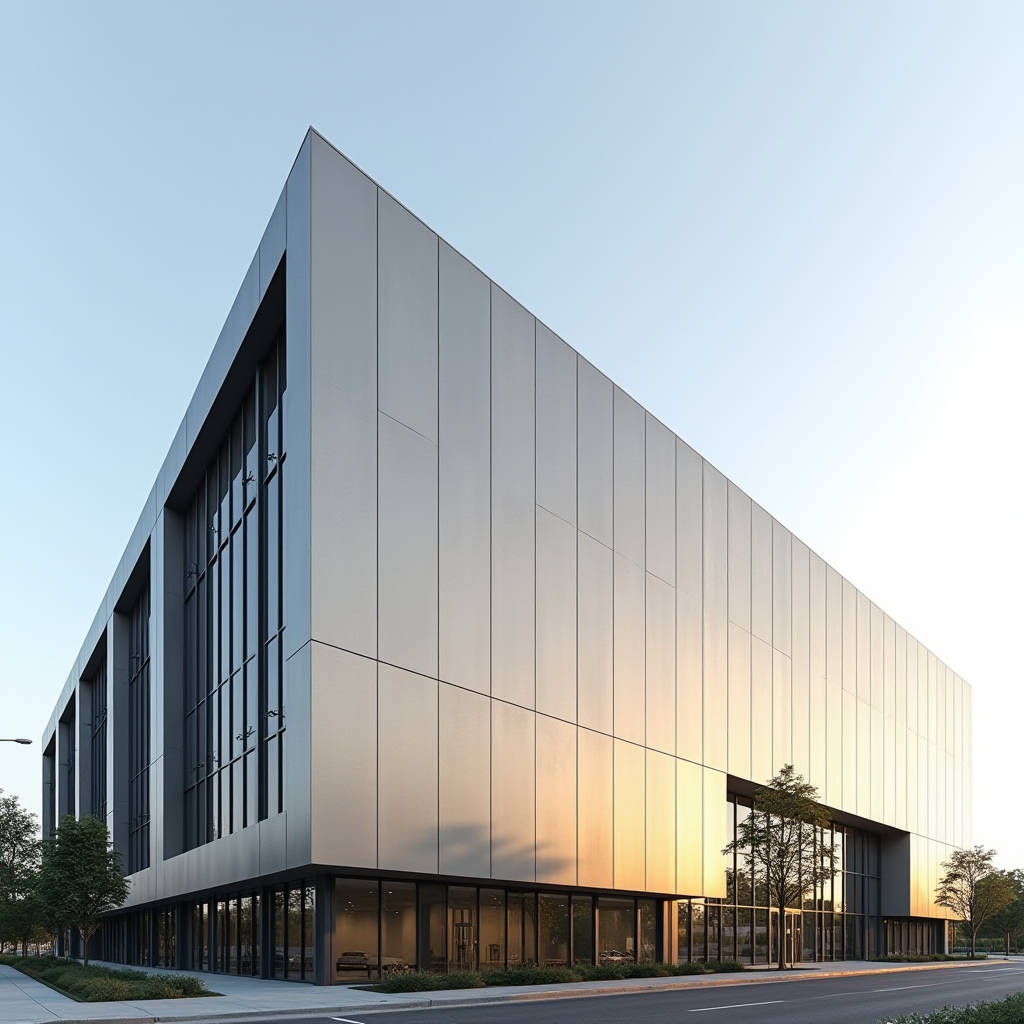
Sandblasted aluminum panel specifications show up on architectural drawing sets with increasing frequency, yet the actual performance requirements behind that spec line often go under-examined. A sandblasted finish is not a single, standardized outcome. The blast media, pressure, nozzle distance, and post-blast treatment all shift the final surface in ways that affect coating adhesion, gloss retention, and long-term weathering. For project teams managing facade procurement, the risk sits in the gap between what the render shows and what the factory delivers. This article unpacks the technical variables that determine whether a sandblasted aluminum panel performs as intended on the building envelope, with a focus on the relationship between surface profile, pretreatment chemistry, and PVDF or anodized topcoat durability.
What Actually Happens to the Aluminum Surface During Sandblasting
Sandblasting aluminum is a mechanical surface preparation process where compressed air propels abrasive media against the raw aluminum sheet. The impact removes mill scale, surface oxides, and minor imperfections while simultaneously creating a uniform matte texture. But the engineering significance goes deeper than aesthetics. The blasting process creates a specific surface profile measured in microns — peaks and valleys that directly influence how subsequent coatings mechanically interlock with the substrate.
On solid aluminum panels in the 2.0mm to 3.0mm thickness range, the blast profile typically falls between 25 and 75 microns Ra (roughness average), depending on the media type and pressure. This is critical because PVDF coating systems from manufacturers like PPG or AkzoNobel specify minimum and maximum surface roughness values for optimal adhesion. Too smooth, and the coating relies solely on chemical bonding. Too rough, and you risk peak penetration through the primer layer, creating corrosion initiation points.
The process also work-hardens the outermost layer of the aluminum. For 3003-H14 and 5052-H32 alloys commonly used in architectural cladding, this micro-hardening can marginally increase surface hardness — a secondary benefit for panels installed in high-traffic areas where incidental contact is likely. However, the same work-hardening effect means that post-blast forming operations on the panel edges require careful tooling to avoid micro-cracking at bend radii.
Media Selection and Its Direct Impact on Panel Performance
The choice of blasting abrasive is not a cosmetic decision. It determines the surface profile geometry, the rate of material removal, and the chemical cleanliness of the substrate before pretreatment. For architectural aluminum panels destined for PVDF coating, the industry has largely converged on three media types, each with distinct engineering trade-offs.
Glass bead blasting produces a smooth, satin finish with a surface roughness typically in the 20-40 micron Ra range. The spherical particles peen the surface rather than cut it, which means less material removal and a more uniform texture across large panel surfaces. This is the preferred method for panels that will receive a high-gloss PVDF topcoat, where surface uniformity directly affects the visual consistency of the installed facade.
Aluminum oxide grit, by contrast, creates a sharper, more angular surface profile in the 50-75 micron Ra range. The cutting action of the angular particles removes material faster and produces a surface with more mechanical "tooth" for coating adhesion. This media is often specified for panels destined for heavy-duty architectural environments — coastal installations, industrial zones, or anywhere the coating system needs maximum adhesion to withstand aggressive atmospheric conditions.
Steel grit is occasionally used but carries a contamination risk that many specifiers overlook. Iron particles can embed in the aluminum surface, and if not completely removed by chemical cleaning, they create galvanic corrosion cells at the microscopic level. The resulting pitting may not appear for 12-18 months after installation, but once it starts, it compromises both the coating and the substrate. For architectural panels, the additional cost of aluminum oxide or glass bead media is cheap insurance against this failure mode.
| Blast Media | Surface Roughness (Ra) | Material Removal Rate | Best Suited For | Contamination Risk |
|---|---|---|---|---|
| Glass Bead (60-100 mesh) | 20-40 μm | Low | High-gloss PVDF panels, decorative interior cladding | None |
| Aluminum Oxide (80-120 grit) | 50-75 μm | Medium-High | Coastal facades, industrial zones, heavy-duty exterior panels | None |
| Steel Grit (G-80) | 60-90 μm | High | Non-architectural, pre-anodizing prep (with thorough cleaning) | High — galvanic corrosion risk |
| Walnut Shell / Plastic Media | 10-25 μm | Very Low | Light surface cleaning, restoration work, thin-gauge sheets | None |
Pretreatment Chemistry After Blasting: The Step That Determines Coating Life
A sandblasted aluminum panel exits the blast booth with a clean, textured surface — and immediately begins to oxidize. The fresh aluminum surface reacts with atmospheric oxygen within minutes, forming a thin oxide layer. If the panel proceeds directly to coating without proper pretreatment, that uncontrolled oxide layer becomes the interface between metal and coating, and it is the weakest link in the system.
The industry-standard pretreatment for architectural aluminum is a chromate conversion coating applied through a multi-stage immersion or spray process. The sequence typically runs: alkaline cleaning to remove blast residue and oils, rinse, deoxidation to remove the uncontrolled oxide layer, rinse, chromate conversion coating application, rinse, and drying. The chromate layer provides two critical functions: it passivates the aluminum surface against further oxidation, and it creates a chemically receptive surface for the primer to bond to.
For projects where environmental regulations restrict hexavalent chromium, trivalent chromium or chromium-free pretreatment systems are available. These systems, including those based on zirconium or titanium chemistry, meet the performance requirements of AAMA 2605 when properly applied. However, the process window is narrower — bath chemistry, temperature, and dwell time require tighter control. Specifiers should verify that the panel fabricator has documented process control data for the specific pretreatment chemistry being used on the project.
The interaction between the blast profile and the pretreatment is where many problems originate. If the blast profile is too deep (above 80 microns Ra), the chromate coating may not fully penetrate the valleys, leaving unprotected aluminum at the bottom of each surface depression. Conversely, if the profile is too shallow (below 15 microns Ra), the mechanical interlock benefit of blasting is largely lost. The sweet spot for architectural panels is a 30-60 micron Ra profile that provides ample surface area for pretreatment coverage while maintaining full valley penetration.
Coating System Selection for Sandblasted Substrates
The coating system applied over a sandblasted aluminum panel must be engineered to work with the specific surface profile. A 70% PVDF architectural coating system — the benchmark for exterior facades per AAMA 2605 — typically consists of a primer layer, a color coat, and a clear topcoat. The primer is the critical interface layer. On a sandblasted surface, the primer must flow into the surface profile valleys while maintaining sufficient film thickness over the peaks.
Standard PVDF primer applied at 5-8 microns dry film thickness (DFT) may not fully cover the peaks of a 60-micron Ra profile. The result is pinpoint sites where the color coat directly contacts aluminum — and those points become the initiation sites for filiform corrosion, particularly in humid or coastal environments. The solution is a high-build primer applied at 10-15 microns DFT, which provides adequate coverage over the profile peaks while still penetrating the valleys.
For anodized finishes over sandblasted surfaces, the dynamic is different. Anodizing is an electrochemical process that converts the aluminum surface itself into aluminum oxide — it is not a coating applied on top. The sandblasted texture remains visible and tactile after anodizing, which is precisely why many architects specify this combination. However, the anodizing process partially dissolves the sharpest peaks of the blast profile, which can subtly alter the visual texture. Fabricators with experience in this combination, such as Futeng®, typically run sample panels to establish the relationship between pre-anodize blast profile and post-anodize appearance, then lock those parameters into the production process.
Flatness Tolerance and the Sandblasting Stress Factor
One of the least-discussed aspects of sandblasted aluminum panel production is the effect of the blasting process on panel flatness. Solid aluminum sheets in the 2.0mm to 3.0mm range carry residual stresses from the rolling process at the mill. When one side of the sheet is blasted, the compressive stress introduced by the peening action can cause the panel to bow toward the blasted side. This is particularly noticeable on larger panel formats — anything over 1,200mm in the long dimension is susceptible.
The mechanism is straightforward: the blasting media impacts the surface and creates a thin compressed layer. If only one side is blasted, the stress imbalance curves the sheet. The solution is to blast both sides of the panel, even if only one side will be visible. This balances the stress and restores flatness. The back side can receive a lighter blast — just enough to equalize the stress without wasting material or time.
For panels that will be installed as part of a unitized curtain wall system, flatness tolerance is typically specified at ±1.5mm per 1,000mm of panel length, measured diagonally. Achieving this on a large-format sandblasted panel requires both double-sided blasting and, in some cases, post-blast leveling. The fabricator's quality control process should include flatness checks on every panel after blasting, not just after coating, because the coating process itself introduces additional thermal stresses during curing.
Weathering Performance: What the Data Shows
Accelerated weathering data for PVDF-coated sandblasted aluminum panels consistently demonstrates that the blast profile does not degrade the coating's weather resistance — provided the pretreatment and primer system are correctly specified. Independent testing per ASTM G154 (QUV accelerated weathering) and ASTM B117 (salt spray) shows that properly pretreated and primed sandblasted panels achieve equivalent performance to non-blasted panels in terms of gloss retention, color stability, and corrosion resistance after 4,000 hours of exposure.
However, there is one area where sandblasted panels differ from smooth panels: dirt retention. The matte texture of a sandblasted surface, with its micro-scale peaks and valleys, can trap airborne particulates more readily than a smooth surface. This is primarily a concern for panels installed in urban environments with high particulate pollution. The effect is mitigated by the PVDF clear topcoat, which has inherently low surface energy and good dirt-shedding properties. Some coating manufacturers offer hydrophilic or hydrophobic clear coat variants specifically formulated for textured surfaces, and these are worth evaluating for projects in high-pollution areas.
For anodized sandblasted panels, the weathering equation is different. Anodized aluminum has excellent UV resistance — it does not chalk or fade — but the porous anodic layer can trap dirt and staining agents if not properly sealed. The industry standard for architectural anodizing, per AAMA 611, requires a minimum oxide thickness of 15 microns (Class I) for exterior applications, with proper sealing verified by a modified dye stain test. On a sandblasted surface, the increased surface area means the sealing step is even more critical than on smooth anodized finishes.
Specifying Sandblasted Aluminum Panels: Key Contract Document Clauses
When writing specifications for sandblasted aluminum panel procurement, several clauses deserve particular attention to avoid disputes between the design intent and the delivered product.
First, the surface roughness specification should reference a measurable standard. ASTM D7127 provides a method for measuring surface profile using portable stylus instruments. Specifying a range — for example, 30-50 microns Ra — rather than a single value gives the fabricator a workable window while ensuring the finish meets the architect's expectations.
Second, the specification should require sample panel approval before production begins. A sample panel measuring at least 300mm x 300mm, produced using the same alloy, thickness, blast media, pretreatment, and coating system as the production panels, serves as the visual and tactile reference standard. This sample should be retained by the architect or owner's representative for comparison against production panels.
Third, the packaging and handling requirements for sandblasted panels are more stringent than for smooth panels. The textured surface is more susceptible to abrasion during transport if panels rub against each other. Interleaving with foam or kraft paper, or the use of edge-protection profiles, should be specified. The incremental cost is minimal compared to the cost of replacing panels damaged in transit.
Quality Control Checks That Catch Problems Before Installation
A practical QC protocol for incoming sandblasted aluminum panel inspection at the project site or fabrication shop should include the following checks, performed on a statistically representative sample per ANSI/ASQ Z1.4:
- Surface roughness measurement using a portable profilometer, with readings taken at three locations per panel (center and two opposing corners). All readings should fall within the specified range.
- Visual uniformity check under diffuse daylight or standardized lighting, with the panel held at a 45-degree angle to the light source. The matte finish should appear uniform with no visible blast pattern variations, streaks, or "zebra striping" from inconsistent nozzle overlap.
- Coating thickness measurement using a calibrated eddy-current gauge, with readings taken at a minimum of five points per panel. For PVDF systems, total DFT should be 30-40 microns per AAMA 2605, with the primer layer verified at 5-15 microns.
- Cross-hatch adhesion testing per ASTM D3359, Method B, on a sample panel from each production batch. The coating should achieve a 5B rating (no coating removal) on the sandblasted substrate.
- Flatness check using a straightedge and feeler gauge, measuring deviation from a flat plane across the panel diagonal. Values should be within the specified tolerance.
These checks add approximately 15-20 minutes per inspection lot and provide documented assurance that the panels meet the specification before they are installed on the building.
Cost Variables in Sandblasted Panel Production
The cost of a sandblasted aluminum panel relative to a standard smooth PVDF panel is driven by several variables that project teams should understand when budgeting. The blasting process itself adds a processing step, but the larger cost drivers are the media type, the panel format, and the quality requirements.
Glass bead blasting is generally more expensive than aluminum oxide blasting on a per-square-meter basis because glass beads fracture and degrade more quickly, requiring more frequent media replacement. However, the smoother finish may reduce the primer thickness required, partially offsetting the media cost. For a typical 2.5mm solid aluminum panel with a 70% PVDF coating, the sandblasting process adds approximately 8-15% to the total panel cost, depending on the variables above.
Large-format panels (over 1.5m²) carry a higher blasting cost per square meter because they require more careful handling and more time in the blast booth to ensure uniform coverage. Double-sided blasting, recommended for flatness control, adds roughly 30-40% to the blasting cost but may be essential for panels in visible locations where flatness defects would be apparent.
Specifying a sandblasted aluminum panel is fundamentally about managing the interface between the mechanical surface profile and the chemical coating system. When the two are engineered together — rather than treated as independent decisions — the result is a facade material that delivers both the aesthetic the architect wants and the durability the building owner needs.
Installation Handling and Long-Term Maintenance
Sandblasted aluminum panels require slightly different handling during installation compared to smooth panels. The matte texture, while durable, can show burnishing marks if panels are dragged across each other or across rough surfaces. Installation crews should be briefed on handling procedures: lift panels rather than slide them, use clean gloves to avoid transferring skin oils to the surface, and remove protective film only after the panel is secured in its final position.
For long-term maintenance, sandblasted PVDF-coated panels follow the same cleaning protocols as smooth PVDF panels. Mild detergent and water, applied with a soft brush or sponge and rinsed thoroughly, is sufficient for most atmospheric soiling. The frequency of cleaning depends on the local environment — panels in coastal or industrial areas may require cleaning every 6-12 months, while panels in cleaner environments may go 2-3 years between cleanings. The key point is that the sandblasted texture does not require special cleaning agents or procedures; the PVDF topcoat chemistry, not the surface texture, governs the cleaning requirements.
For anodized sandblasted panels, maintenance is similarly straightforward. The sealed anodic layer resists staining and corrosion, and routine cleaning with pH-neutral detergents maintains the appearance. Abrasive cleaners should be avoided because they can wear through the anodic layer over time, exposing the raw aluminum underneath.
The engineering reality of sandblasted aluminum panels is that they are not a niche or experimental product. They are a well-established facade material with documented performance characteristics, supported by industry standards and decades of installed projects. The difference between a successful installation and a problematic one lies in the specification details: media type, surface profile range, pretreatment chemistry, primer build, and quality control protocol. When these elements are specified with precision and verified through inspection, the sandblasted aluminum panel delivers on its promise of a durable, low-maintenance, architecturally distinctive facade material.