Roll Coated Aluminum Sheet Engineering Guide for Solid Aluminium Cladding Facades
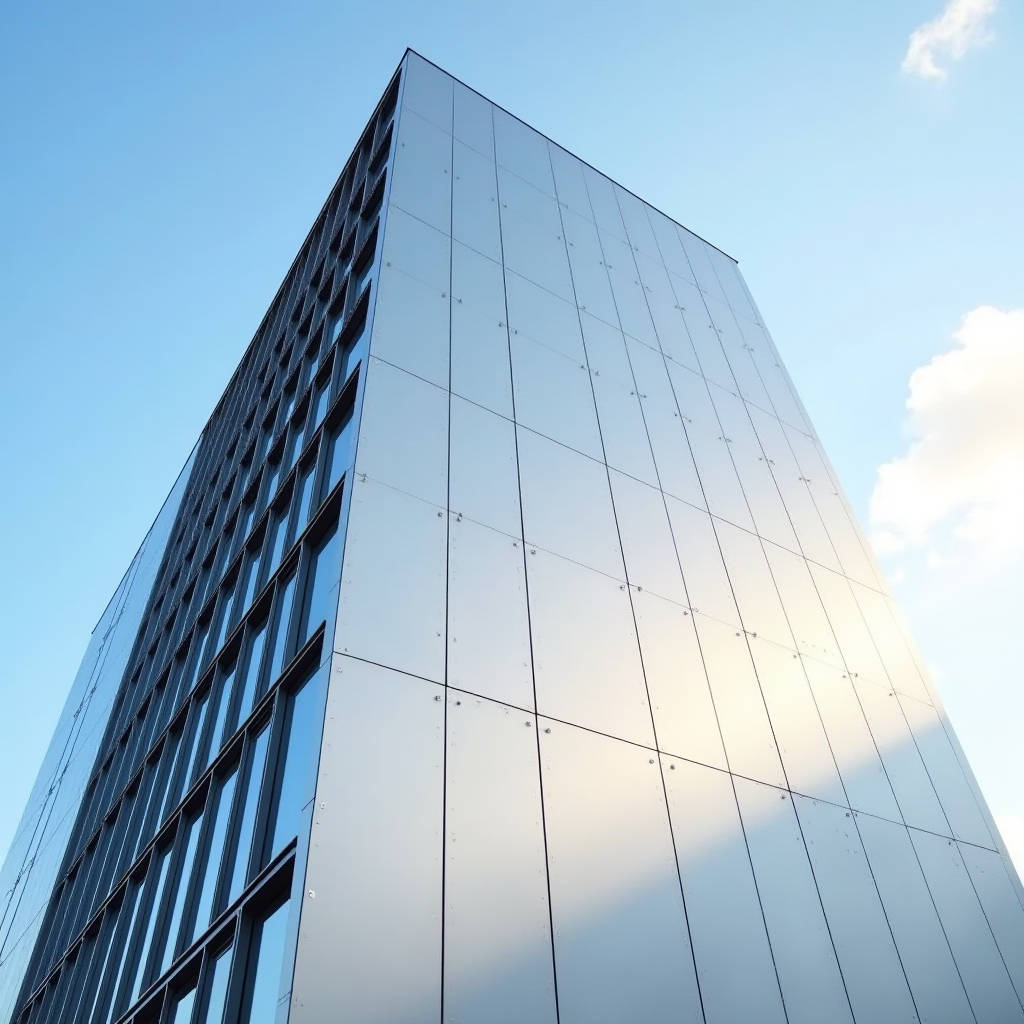
When a project specification calls for a uniform, high-durability finish on solid aluminium cladding panels, the conversation almost always turns to one manufacturing process: the roll coated aluminum sheet. Unlike post-fabrication spray methods, roll coating—also called coil coating—applies paint to flat aluminium strip in a continuous, factory-controlled line before any cutting, bending, or punching takes place. The result is a coating thickness measured in microns with near-zero deviation across thousands of square meters, a level of consistency that hand spraying simply cannot replicate. For curtain wall contractors and building envelope consultants, understanding what happens inside that coil coating line determines whether a facade still looks factory-fresh after a decade of UV exposure, salt spray, and thermal cycling. This article unpacks the technical realities behind roll coated aluminum sheet: how the pretreatment chemistry works, where PVDF and PE systems diverge in real-world performance, what the numbers say about cost over a building's life cycle, and why some fabricators quietly prefer roll coated stock over post-painted alternatives for complex perforated panel runs.
What Actually Happens Inside a Coil Coating Line
Most architects and quantity surveyors never see the inside of a coil coating facility. That is a problem, because the decisions made on that line directly determine whether a roll coated aluminum sheet will resist filiform corrosion or start peeling around fastener holes within three years.
The process starts with an uncoiler station feeding raw aluminium coil—typically 1xxx, 3xxx, or 5xxx series alloy—into a continuous strip. The first critical step is pretreatment. The strip passes through a series of immersion baths that clean and chemically convert the aluminium surface. A proper line uses alkaline degreasing followed by a chromate or chromium-free conversion coating. This conversion layer, measured in milligrams per square meter, creates the anchor profile that determines coating adhesion. Skip this step or rush the dwell time, and even a premium PVDF topcoat will eventually delaminate.
After pretreatment, the strip enters the coating room—a climate-controlled environment where temperature and humidity are held within tight tolerances. A reverse roller coater applies the primer coat, typically an epoxy or polyurethane-based system, at a wet film thickness calibrated to yield a specific dry film thickness (DFT) after curing. The strip then passes through an oven where it reaches a peak metal temperature (PMT) of roughly 230°C to 250°C, depending on the chemistry. The topcoat follows the same roller application and curing sequence. For PVDF systems, this means a 70/30 Kynar 500® or Hylar 5000® resin-to-acrylic ratio, applied at a nominal 25-30 microns DFT. The entire line runs at speeds between 30 and 80 meters per minute, and every meter of that strip sees identical application pressure, identical oven temperature, and identical cooling rate.
The implication for facade work is straightforward: when you specify a roll coated aluminum sheet, you are specifying a process where coating uniformity is statistically guaranteed. That matters enormously when panels are installed side by side on a 40-story tower and any color shift between adjacent panels will be visible from the street.
Pretreatment Chemistry and Why It Dictates Service Life
Ask a coatings chemist what separates a roll coated aluminum sheet that lasts 30 years from one that fails in five, and they will point to the pretreatment stage. The visible topcoat gets all the attention, but the interface between raw aluminium and the primer is where most failures begin.
Traditional chromate conversion coatings produce a chromium oxide layer that passivates the aluminium surface and provides excellent adhesion. The mechanism is well understood: hexavalent chromium reacts with the aluminium oxide surface, forming a mixed chromium-aluminium oxide film that is both hydrophobic and chemically resistant. The problem is that hexavalent chromium is classified as a carcinogen under REACH and OSHA regulations. This has driven the industry toward chromium-free alternatives based on zirconium, titanium, or silane chemistries.
The performance gap between chromate and chrome-free pretreatments has narrowed considerably. Independent testing by the American Architectural Manufacturers Association (AAMA) under specification 2605 now includes chrome-free pretreated samples that pass 4,000-hour salt spray tests with less than 2mm of scribe creep. However, not all chrome-free systems are equal. Some formulations work well with polyester primers but struggle with epoxy-based systems. Others perform well in neutral salt spray but degrade faster under the cyclic corrosion conditions specified in ASTM G85.
For specifiers, the practical takeaway is this: a roll coated aluminum sheet is only as good as the pretreatment line that produced it. When evaluating suppliers—including manufacturers like Futeng® who operate their own coil coating lines—the question to ask is not "what topcoat do you use?" but "what pretreatment chemistry do you run, and can you show me AAMA 2605 test data for that specific substrate-and-coating combination?"
PVDF vs. PE: A Technical Breakdown Beyond the Spec Sheet
Polyvinylidene fluoride (PVDF) and polyester (PE) are the two dominant coating chemistries for roll coated aluminum sheet in architectural applications. The price difference is substantial—PVDF typically commands a 40-60% premium over PE—but the performance gap is even larger than most project budgets account for.
PVDF owes its durability to the carbon-fluorine bond, one of the strongest chemical bonds in organic chemistry. With a bond dissociation energy of approximately 485 kJ/mol, the C-F bond resists photodegradation far more effectively than the carbon-oxygen and carbon-carbon bonds that dominate polyester resins. This translates directly into gloss retention and color stability. Under ASTM G154 accelerated weathering (QUV-B at 313nm), a properly formulated 70% PVDF coating will retain over 80% of its original gloss after 5,000 hours. A standard architectural polyester might drop below 50% gloss retention at half that exposure.
But the PE story is more nuanced than "cheap and inferior." Modern silicone-modified polyester (SMP) and high-durability polyester (HDP) systems have carved out a legitimate niche. For interior applications, soffit panels, or projects in low-UV climates with a planned 15-20 year service life, a well-formulated PE coating on a roll coated aluminum sheet can be the rational engineering choice. The key is matching the coating to the exposure conditions, not defaulting to PVDF on every project.
The following table summarizes the key performance parameters across the three main coating families used in architectural roll coating:
| Parameter | Standard Polyester (PE) | SMP / HDP | 70% PVDF (Kynar/Hylar) |
|---|---|---|---|
| Typical DFT (Topcoat) | 18-22 microns | 20-25 microns | 25-30 microns |
| Gloss Retention (5 yrs, Florida) | 30-50% | 50-70% | 80-90% |
| Color Shift (ΔE, 10 yrs S. Florida) | 5-8 ΔE | 3-5 ΔE | < 2 ΔE (light colors) |
| Applicable AAMA Spec | AAMA 2603 | AAMA 2604 | AAMA 2605 |
| Typical Warranty Period | 10-15 years | 15-20 years | 20-30 years |
| Relative Material Cost | 1.0x (baseline) | 1.3-1.5x | 1.6-2.0x |
| Formability (T-bend) | 0-1T | 1-2T | 2-3T |
| Recommended Application | Interior, soffits, low-rise | Mid-rise, industrial | High-rise, coastal, landmark |
Formability, Fabrication, and the T-Bend Problem
One of the less-discussed trade-offs when selecting a roll coated aluminum sheet is formability. The coil coating process applies paint to flat strip, but the final product—a folded cassette panel, a perforated screen, a curved column cover—requires post-coating fabrication. The coating must survive bending, routing, and punching without cracking or losing adhesion.
The industry measures coating flexibility using the T-bend test, described in ASTM D4145. A coated panel is bent 180 degrees around itself (0T), then around one thickness of the same metal (1T), two thicknesses (2T), and so on. The result is the tightest bend that produces no visible cracking when examined under 10x magnification. PE coatings routinely achieve 0T or 1T because the polyester resin is inherently flexible. PVDF, by contrast, is a harder, more crystalline polymer and typically achieves 2T to 3T. This means that sharp folds—like the 90-degree return legs on a rainscreen panel—may require a larger bend radius with PVDF than with PE.
This has real consequences on the shop floor. A fabricator accustomed to working with PE-coated stock may find that switching to a PVDF roll coated aluminum sheet requires adjusting brake press tooling, increasing bend radii, and potentially redesigning panel edge details to avoid cracking. The coating is not failing; it is behaving exactly as its chemistry dictates. The failure is in the specification process, where formability requirements were not cross-referenced against coating selection.
Perforated panels add another layer of complexity. When a roll coated aluminum sheet is punched with thousands of holes, each hole creates a raw aluminium edge. In a properly specified system, the cut edges are small enough that the surrounding coating provides cathodic protection, and the aluminium's natural oxide layer seals the edge. But in aggressive environments—coastal, industrial, or high-humidity—those cut edges become initiation points for filiform corrosion. Some manufacturers address this by specifying a post-perforation edge treatment, while others rely on the inherent corrosion resistance of the 3xxx or 5xxx series alloy combined with a robust pretreatment system.
Alloy Selection for Roll Coated Architectural Sheet
Not all aluminium alloys take a roll coating equally well. The alloy choice affects pretreatment response, coating adhesion, mechanical properties, and ultimately the flatness of the finished panel—a critical factor in facade work where oil-canning is a constant concern.
Alloy 3003 and its variant 3105 dominate the architectural roll coated aluminum sheet market. These are manganese-alloyed (1.0-1.5% Mn) materials with moderate strength (yield strength around 125-145 MPa in H14 temper) and excellent formability. The manganese content provides solid solution strengthening without creating intermetallic particles large enough to cause visible surface defects after coating. Alloy 3105 adds a small amount of magnesium (0.2-0.8%), which improves work hardening characteristics and gives slightly better resistance to oil-canning in flat panel applications.
For projects requiring higher strength—thinner panels spanning larger distances, or panels subject to higher wind loads—alloy 5052 is sometimes specified. This magnesium-alloyed material (2.2-2.8% Mg) offers yield strength in the range of 195-215 MPa in H32 temper. However, 5052 presents challenges in coil coating. The higher magnesium content makes the surface more reactive, requiring more aggressive pretreatment. Some coating lines also report slightly lower gloss uniformity on 5052 compared to 3003, particularly in darker colors where surface imperfections telegraph through the coating.
The specifier's decision tree should look something like this: for standard rainscreen panels up to 600mm wide with no unusual structural demands, 3003-H14 or 3105-H14 roll coated aluminum sheet in 2.0mm or 2.5mm thickness is the default choice. For wider panels, high-wind zones, or areas where impact resistance matters, move to 5052-H32 at 2.5mm or 3.0mm, but budget for a slightly higher reject rate on coating appearance and confirm with the coater that their line is qualified for 5xxx series architectural finishes.
Cost Analysis: Roll Coated vs. Post-Painted Over a 25-Year Façade Life
The procurement conversation around roll coated aluminum sheet often starts and ends with the per-square-meter price. That is a mistake. The relevant number is the total cost of ownership over the building's service life, and that calculation requires factoring in finish consistency, fabrication waste, installation speed, and long-term maintenance.
Roll coated stock typically carries a 10-15% premium over mill-finish aluminium that is fabricated first and then spray-painted in a batch process. But that premium buys several things. First, the coating thickness on a roll coated aluminum sheet is uniform to within ±2 microns across the entire coil. A batch spray line, by contrast, will show thickness variation between panels, between operators, and even between morning and afternoon shifts as booth conditions change. That variation translates into visible color differences on the facade—differences that may not be apparent when panels are inspected individually in the factory but become obvious once installed.
Second, fabrication waste behaves differently. When a fabricator cuts and folds a post-painted panel, any scratch, scuff, or bend mark means the entire panel—including the labor already invested in cutting and forming—is scrap. With roll coated stock, the coating is applied before fabrication, so scratches during handling affect only the base material. The fabricator can scrap a blank before investing labor, which typically reduces overall waste rates by 3-5 percentage points.
Third, and most significantly for the building owner, maintenance costs diverge over time. A PVDF roll coated aluminum sheet facade installed under AAMA 2605 guidelines will typically require no recoating for 25-30 years. A post-painted PE facade might need recoating at year 12-15. The recoating cost—including access equipment, surface preparation, and application—can easily exceed the original coating cost. When discounted back to present value at a 5% real discount rate, the roll coated option often comes out ahead even when the upfront price is higher.
For a hypothetical 5,000-square-meter facade, the numbers might look like this: a PE post-painted system at $45/m² installed versus a PVDF roll coated system at $58/m² installed. The upfront difference is $65,000. But if the PE system requires a $40/m² recoating at year 15, the present value of that future cost is roughly $19/m², or $95,000 total. Suddenly the roll coated option is cheaper by $30,000 in present-value terms—and that is before accounting for the disruption of scaffolding a building that is occupied.
Engineering Note: These figures are illustrative and will vary by region, building geometry, and local labor rates. Always obtain project-specific quotes and run a net present value analysis using your organization's standard discount rate.
Color Consistency, Metamerism, and the Limits of Digital Color Matching
Architects specify a RAL or Pantone number and assume the facade will match. Anyone who has managed a large cladding project knows it is not that simple. Roll coated aluminum sheet offers the best available tool for color control, but even coil coating has limits that specifiers need to understand.
The color of a roll coated surface is determined by the pigment dispersion in the paint, the film thickness, the substrate reflectivity, and the curing conditions. A coil coating line running at steady state produces remarkably consistent color—ΔE values below 0.5 across a single coil are routine. But when multiple coils are needed for a large project, coil-to-coil variation becomes the controlling factor. Reputable coaters maintain master color standards and blend each batch to match within ΔE 1.0 or better. The ISO 3664 standard for viewing conditions becomes critical here: color judgments made under different lighting can show metamerism, where two panels match perfectly under daylight but diverge under fluorescent or LED lighting.
Metamerism is particularly problematic with certain color families—grays, beiges, and some blues—where the pigment combination that produces the color under D65 daylight can involve different spectral reflectance curves. A roll coated aluminum sheet in a complex gray might use a blend of black, white, and colored pigments that produce a metameric match under one light source but not another. The only defense is to specify that color approval must include visual assessment under at least two light sources (typically D65 and Horizon/A) in addition to instrumental measurement.
For projects where color consistency is non-negotiable—signature architectural works, corporate headquarters with strict brand color requirements—some manufacturers offer a single-coil guarantee, where the entire project is produced from one continuous coil run. This eliminates coil-to-coil variation entirely but requires the fabricator to manage inventory so that panels are fabricated and installed in coil sequence to avoid apparent color shifts from different parts of the same coil.
Environmental Compliance and the Chrome-Free Transition
The regulatory landscape for coil coating is shifting, and specifiers who ignore this may find their specified system unavailable by the time the project reaches procurement. The European Union's REACH regulation has already restricted hexavalent chromium compounds, and similar restrictions are under active consideration in North America and parts of Asia.
For a roll coated aluminum sheet to be sold into the EU market, the pretreatment system must be chrome-free. This has driven rapid development of zirconium-based and titanium-based conversion coatings, as well as silane and organic-inorganic hybrid systems. The technical challenge is that chrome-free pretreatments generally produce a thinner conversion layer—typically 20-50 mg/m² versus 50-100 mg/m² for chromate—which places greater demands on the primer to provide barrier protection.
The performance data is encouraging but not yet complete. Accelerated weathering tests under AAMA 2605 show that chrome-free pretreated PVDF systems can match chromate-pretreated systems in gloss retention and color stability. However, filiform corrosion resistance—tested under ASTM G85 Annex A4 (cyclic acidified salt fog)—remains an area where some chrome-free systems underperform. The industry consensus is that chrome-free is viable for most architectural applications but requires more careful specification of the complete coating system, including primer chemistry and topcoat formulation.
From a procurement standpoint, the practical advice is to specify AAMA 2605 performance regardless of pretreatment chemistry, and to require test data for the specific pretreatment-primer-topcoat combination being proposed. A generic "chrome-free" claim without supporting test data is not sufficient for a 30-year facade.
Specifying Roll Coated Aluminum Sheet for Your Next Project
Writing a specification that captures the benefits of roll coated aluminum sheet without being unnecessarily restrictive requires balancing performance requirements against market availability. An overly narrow specification—one that names a single resin system, a single pretreatment chemistry, and a single alloy—may attract only one bidder or none at all. An overly broad specification invites substitution of lower-performing materials.
The most effective approach is to specify by performance standard rather than by chemistry. Reference AAMA 2605 for high-performance architectural applications, AAMA 2604 for mid-range, and AAMA 2603 for interior or sheltered applications. Require the coater to provide full test reports—not just summary data sheets—demonstrating compliance with the specified standard for the exact substrate alloy, pretreatment, and coating system being proposed. Include a requirement for on-site color verification using a calibrated spectrophotometer, with acceptance criteria of ΔE ≤ 1.0 against the approved standard.
For the substrate, specify the alloy and temper (e.g., 3003-H14 or 3105-H14) and the thickness tolerance. Solid aluminium cladding panels in 2.0mm, 2.5mm, or 3.0mm thickness are standard for rainscreen applications, with the thicker gauges used for larger panels or higher wind zones. Require that the coil coater provide mill test certificates tracing the aluminium back to the cast house, so that mechanical properties are verified.
Finally, include a requirement for fabrication sequencing. The best roll coated aluminum sheet in the world will not perform if the fabricator does not protect the coated surface during handling, cutting, and forming. Specify that panels must be fabricated with the protective film intact, removed only at final installation. Require that cut edges be deburred and, for aggressive environments, treated with a touch-up pen matched to the coating system.
The specification is a tool for managing risk, not a wish list. Every requirement should be traceable to a specific performance outcome. If you cannot explain why a particular clause exists, it probably should not be there.