Liquid Painted Aluminum Panel Coating Chemistry and Specification Decisions for Exterior Facades
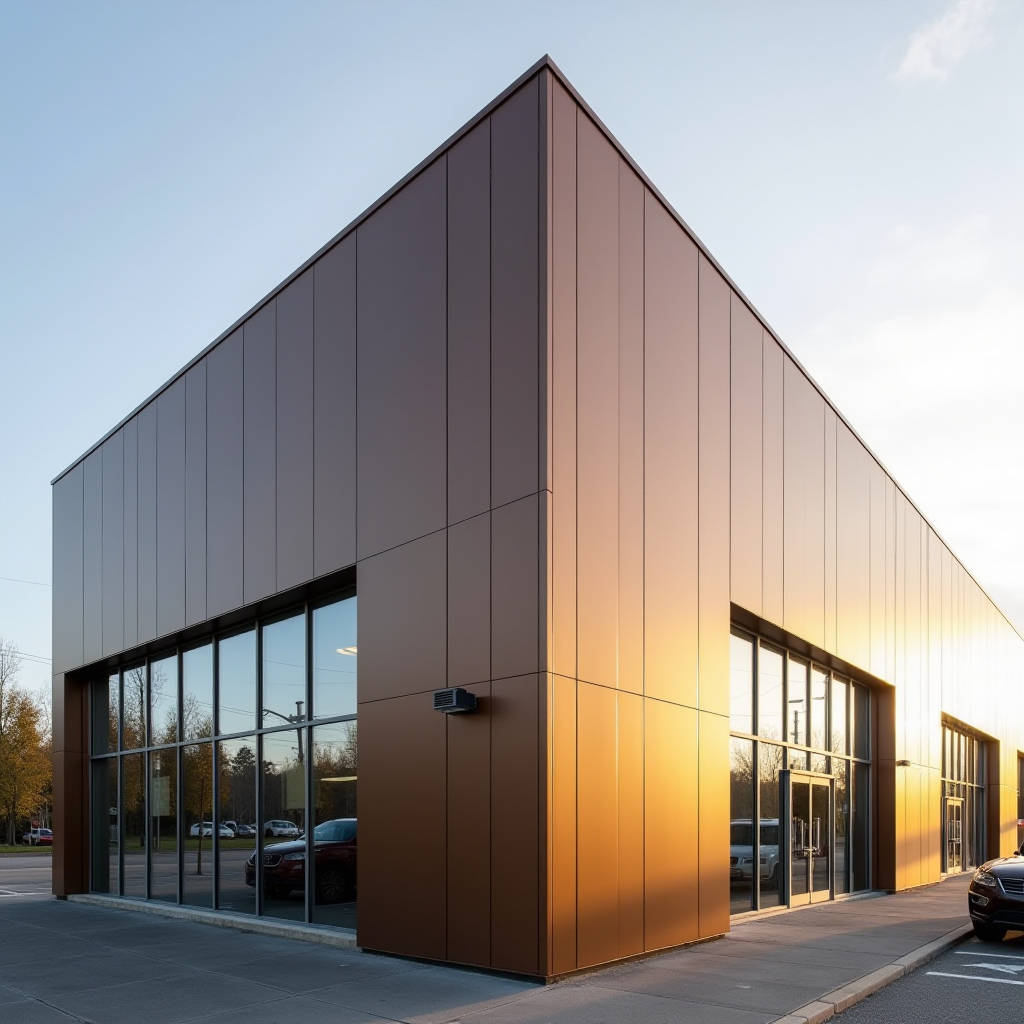
When a general contractor asks about exterior cladding, the conversation usually starts with a single question: how long will it look good before someone has to pay for remediation. For liquid painted aluminum panel systems, the answer depends on three things that most specification sheets gloss over—the chemistry of the coating, the gauge of the aluminum substrate, and whether the fabricator actually follows the pretreatment steps they claim to follow. A liquid painted aluminum panel is not a commodity product, even though the market sometimes treats it that way. The difference between a facade that still reads as crisp after 15 years and one that starts chalking in year seven comes down to decisions made long before the panels arrive on site.
What the Term Actually Means in a Specification Context
In architectural metalwork, "liquid painted" refers to spray-applied fluoropolymer or polyester coatings that are atomized and deposited onto a prepared aluminum surface in a controlled factory environment. This is distinct from powder coating, which uses electrostatically charged dry particles, and from anodizing, which builds an oxide layer through electrochemical processing. The liquid paint systems specified for exterior architecture are almost always solvent-based, though waterborne formulations have gained ground in European markets where VOC regulations are tighter.
The substrate matters. A liquid painted aluminum panel starts as a solid aluminum sheet—typically alloy 3003, 3004, or 5052 depending on forming requirements—cut to size, routed, and folded before coating. Thicknesses range from 2.0mm to 3.0mm for most curtain wall and rainscreen applications. Thinner material is sometimes proposed for interior feature walls, but exterior work demands the rigidity that only solid gauge aluminum provides. This is not a laminated composite; there is no polyethylene core, no risk of delamination, and no fire propagation concern tied to core materials.
Coating Chemistry: PVDF, FEVE, and Polyester
Three liquid coating families dominate architectural aluminum specification. Each has a distinct performance envelope, and choosing among them requires understanding what the project actually needs rather than what the budget initially suggests.
PVDF (polyvinylidene fluoride) systems, typically sold under trade names like Duranar or Fluropon, are the benchmark for exterior durability. A properly formulated 70% PVDF coating—meaning the resin solids are at least 70% PVDF by weight, with the balance being acrylic for pigment dispersion and adhesion—delivers proven color retention and chalk resistance over decades. The standard dry film thickness is 25-35 microns for a two-coat system and 35-45 microns for three-coat. These systems meet AAMA 2605, the most demanding architectural coating specification, which requires 10-year South Florida exposure testing with minimal color change and chalking.
FEVE (fluoroethylene vinyl ether) resins offer an alternative fluoropolymer chemistry that can be formulated at lower bake temperatures and in some cases as ambient-cure systems. This matters for projects where shop capacity or substrate heat sensitivity limits oven use. FEVE-based liquid painted aluminum panel coatings meet AAMA 2605 requirements and are widely used in Japan and increasingly in Southeast Asian markets.
Polyester coatings—specifically high-durability polyester or silicone-modified polyester (SMP)—meet AAMA 2604, the "high performance" standard. These systems cost less per square meter and offer good color range, but they do not match PVDF or FEVE for long-term exterior weathering. They are appropriate for interior applications, soffits, and projects in mild climates where the owner accepts a shorter maintenance cycle.
| Coating Type | Standard | Typical DFT (microns) | Color Retention (10yr) | Chalk Resistance | Relative Cost |
|---|---|---|---|---|---|
| 70% PVDF (3-coat) | AAMA 2605 | 35-45 | ΔE ≤ 5 | Rating 8+ | 100% |
| 70% PVDF (2-coat) | AAMA 2605 | 25-35 | ΔE ≤ 5 | Rating 8+ | 85% |
| FEVE (2-coat) | AAMA 2605 | 25-35 | ΔE ≤ 5 | Rating 8+ | 90% |
| High-Durability Polyester | AAMA 2604 | 20-30 | ΔE ≤ 8 | Rating 6-7 | 60% |
| SMP (Silicone-Modified) | AAMA 2604 | 20-30 | ΔE ≤ 8 | Rating 6 | 55% |
Pretreatment: Where Most Failures Start
Ask any coatings engineer what causes field failures in liquid painted aluminum panel installations, and they will point to the pretreatment line, not the paint booth. The aluminum surface must be chemically cleaned and conversion-coated before a single micron of liquid paint touches it. The standard process is a multi-stage immersion or spray system: alkaline degreasing, rinsing, deoxidizing or etching, rinsing, and then application of a chrome-based or chrome-free conversion coating.
Hexavalent chromium conversion coatings have been the gold standard for decades. They deliver excellent corrosion resistance and paint adhesion. However, REACH regulations in Europe and tightening EPA guidelines in the United States have pushed the industry toward trivalent chromium and chrome-free alternatives. Titanium-zirconium based conversion coatings are now common, and while they perform well in accelerated testing, the long-term field data is still accumulating. For projects in coastal or industrial environments, specifying a chrome-based pretreatment—where regulations permit—remains the conservative choice.
The pretreatment quality directly affects how a liquid painted aluminum panel behaves when water gets behind the coating at a cut edge or fastener penetration. A panel with poor conversion coating will filiform corrode within months. A properly pretreated panel will contain the corrosion to the immediate area of the breach.
Color Consistency Across Production Batches
Liquid paint allows for color matching that powder coating cannot easily replicate. The reason is in the tinting process: liquid coatings are mixed from base components and tinted to order, which means a skilled paint supplier can match a custom RAL, Pantone, or bespoke architectural color with high precision. But the challenge is batch-to-batch consistency across a large facade.
When a project requires 5,000 square meters of liquid painted aluminum panel, the fabricator will likely produce panels over multiple weeks. Paint from different batches, applied on different days, under slightly different humidity conditions, can show visible variation when panels are installed adjacent to each other on a single elevation. The industry standard for acceptable color variation is ΔE ≤ 1.0 when measured with a spectrophotometer under D65 illuminant. Achieving this across an entire project requires the fabricator to order paint in bulk, store it under controlled conditions, and apply it with consistent film build.
Metallic and mica finishes amplify this challenge. The orientation of metallic flakes in the cured film depends on spray technique, flash-off time, and oven ramp rate. Two panels coated with the same batch of metallic paint can look different if the applicator changed spray gun settings between runs. Specifiers should request a color range panel set—typically five panels showing the acceptable variation envelope—before production begins.
Application Methods: Manual Spray vs. Automated Lines
Liquid paint can be applied manually with hand-held spray guns or through automated reciprocating spray systems. Manual application gives flexibility for complex geometries—perforated panels, deeply formed profiles, curved sections—where a robot cannot maintain consistent distance and overlap. The trade-off is operator dependency. A skilled painter with 15 years of experience will produce better results than a trainee, and that variability shows up in film thickness uniformity.
Automated lines, by contrast, deliver consistent film build within ±5 microns across large flat panels. The panels move on a conveyor past stationary or oscillating spray heads, and the system controls fluid flow, atomization pressure, and gun-to-part distance with precision that manual application cannot match. For large flat wall panels, automated application is the preferred method. For complex 3D panels, manual application remains necessary, and the specifier should budget for a higher rejection rate and more rigorous quality control.
Futeng®, a fabricator with substantial experience in architectural aluminum, operates both automated flat-line systems and manual spray booths, which allows them to match the application method to the panel geometry rather than forcing a single approach across all project conditions.
Film Thickness Testing and Quality Assurance
Dry film thickness (DFT) is the most commonly measured quality parameter for liquid painted aluminum panel production, and it is also the most commonly misunderstood. A single DFT reading tells you almost nothing useful. What matters is the distribution of readings across a panel and across a production run.
The standard test method is ASTM D7091 for non-destructive measurement using eddy-current gauges on non-magnetic substrates. For each panel, measurements should be taken at a minimum of five points: near each corner and at the center. The specification should define both a minimum DFT (no single reading below a threshold, typically 80% of nominal) and a maximum DFT (to avoid cracking, typically 150% of nominal). The average across all readings should fall within ±10% of the specified thickness.
Beyond DFT, a complete QA program includes cross-hatch adhesion testing per ASTM D3359, solvent resistance rub testing per ASTM D5402 for cure verification, and color measurement per ASTM D2244. For projects specifying AAMA 2605, the fabricator should provide test reports from a certified laboratory, not just in-house measurements.
Environmental and Regulatory Pressures
The liquid paint industry is under regulatory pressure on two fronts: VOC emissions from solvent-based coatings and heavy metals in pretreatment chemicals. In the United States, architectural coatings fall under EPA's National Volatile Organic Compound Emission Standards, with limits varying by region. California's South Coast Air Quality Management District sets some of the strictest limits in the world.
Waterborne PVDF and FEVE formulations are emerging as alternatives that reduce VOC content without sacrificing performance. These systems use water as the primary carrier solvent, with co-solvents at much lower concentrations than traditional solvent-based paints. The technology is mature enough for specification, but the application process differs—waterborne coatings are more sensitive to humidity during flash-off, and the oven profile must be adjusted to prevent popping or blistering.
For international projects, the specifier must navigate different regulatory regimes. A liquid painted aluminum panel fabricated in one country for installation in another must comply with the VOC regulations of the destination market, which may be more restrictive than those at the point of manufacture. This is a procurement detail that gets overlooked until the shipment gets held at customs.
Handling, Shipping, and Site Storage
A liquid painted aluminum panel leaves the factory in perfect condition. What happens between the factory and the installed facade determines whether it stays that way. The coating is fully cured and chemically robust, but it is mechanically vulnerable to abrasion, impact, and staining from improper handling.
Panels should be shipped with protective polyethylene film—typically 50-70 microns thick, with a UV-stable adhesive rated for outdoor exposure of up to six months. The film should be removed as soon as practical after installation; leaving it on too long risks adhesive transfer, especially on dark colors in hot climates.
On site, panels should be stored vertically in a dry, covered area, separated by foam or cardboard spacers. Stacking panels face-to-face without protection will cause abrasion damage. If panels get wet during storage and are packed tightly together, water wicking between the protective film and the coating can cause staining or, in extreme cases, blistering.
Touch-up paint should be supplied with every order—typically in small bottles or aerosol cans matched to the production batch. Field touch-up will never match the factory finish perfectly, but a well-executed repair using the correct paint and technique can be visually acceptable from a distance of 3 meters or more, which is the industry standard for judging touch-up quality.
Cost Drivers Beyond the Square-Meter Rate
Procurement managers who compare liquid painted aluminum panel pricing solely on a per-square-meter basis miss the real cost structure. The raw aluminum sheet and the liquid paint material are only part of the equation. Fabrication complexity—the number of cuts, folds, perforations, and welded corners—drives labor cost more than the coating itself. A simple flat panel with a single return leg costs significantly less to produce than a panel with folded returns on all four sides, integrated stiffeners, and corner welds.
Color choice also affects cost. Standard PVDF colors—bright white, off-white, silver metallic, and medium bronze—are stocked by most paint suppliers and carry no premium. Custom color matching adds a lab fee and typically a 10-15% surcharge on the paint material. Special-effect finishes, including micas, pearlescents, and color-shift pigments, can double the paint cost per liter.
Order size matters. A small order of 50 square meters carries disproportionately high setup costs: the paint line must be cleaned, the color loaded, and test panels sprayed regardless of the production run length. The per-unit cost drops significantly above 500 square meters and stabilizes around 2,000 square meters, where setup costs are fully amortized.
Specifying for Coastal and Industrial Environments
Salt spray and industrial pollutants attack liquid painted aluminum panel surfaces through different mechanisms, and the specification should address both. For coastal projects within 5 kilometers of breaking surf, the minimum recommendation is a three-coat PVDF system with a chrome-based pretreatment and a minimum aluminum thickness of 2.5mm. The thicker substrate provides a larger corrosion allowance, and the three-coat system includes a corrosion-inhibiting primer that two-coat systems lack.
For industrial environments with high SO₂ concentrations, the concern is acid attack on the coating itself. PVDF resins are inherently resistant to acid hydrolysis, which is why they outperform polyester in these conditions. The specification should also consider the sealant and gasket materials used at panel joints, as these can degrade and allow water ingress that accelerates coating failure from the back side.
Testing per ASTM B117 (salt spray) and ASTM G85 (cyclic acidified salt spray) provides comparative data, but the real validation comes from long-term exposure sites in South Florida, which is why AAMA 2605 requires 10-year Florida exposure data for qualification.
Integrating with Rainscreen and Curtain Wall Systems
A liquid painted aluminum panel does not function in isolation. It is part of an assembly that includes the support framing, thermal isolation, air and water barriers, and joint treatment. The panel's flatness and dimensional stability directly affect the visual quality of the installed facade, particularly on pressure-equalized rainscreen systems where joint widths are narrow and consistent.
Solid aluminum panels in the 2.5mm to 3.0mm thickness range provide sufficient stiffness to resist oil-canning—the waviness or buckling visible under glancing light conditions—when properly engineered with stiffeners. The stiffener pattern, typically aluminum extrusions bonded to the panel back with structural adhesive, should be designed to limit deflection to L/180 under the design wind load. This is a structural engineering exercise, not a guess, and the panel fabricator should provide calculations stamped by a licensed engineer.
The coating on the panel edges and the back side matters too. A full-perimeter coating specification—where the liquid paint wraps around all exposed edges and the back side receives at least a wash coat—provides better corrosion protection than face-only coating. For marine environments, edge coating is not optional; it is the difference between a 20-year facade and one that shows edge corrosion in year five.
"The most expensive liquid painted aluminum panel is the one that gets specified incorrectly and has to be replaced. The second most expensive is the one that gets specified correctly but fabricated without proper pretreatment. The affordable one is the one where the specifier, fabricator, and installer all understand what the coating can and cannot do."
Making the Specification Decision
The decision tree for specifying a liquid painted aluminum panel starts with the project's exposure conditions and aesthetic expectations, not with the budget. Determine the environmental severity: inland mild, inland severe, coastal, or industrial. This drives the coating chemistry choice. Determine the required service life: 10 years, 20 years, or 30 years. This drives the coating specification tier—AAMA 2604 for 10-year expectations, AAMA 2605 for 20+ years. Determine the panel geometry: flat, curved, perforated, or complex 3D. This drives the application method and the QA program intensity.
Then, and only then, evaluate the budget against these technical requirements. Value engineering that downgrades the coating specification to save 15% on the cladding budget often costs more in repainting or replacement within the first decade. The liquid painted aluminum panel on the building is the face the owner sees every day. Getting it right the first time is cheaper than explaining why it went wrong.
For architects and contractors navigating these decisions, working with a fabricator who maintains in-house liquid painting capability—rather than outsourcing to a third-party applicator—reduces the coordination risk and provides a single point of responsibility for the finished panel quality. The specification should require the fabricator to submit pretreatment process documentation, coating batch certificates, and DFT measurement logs for every production run, not just a sample panel that may or may not represent what actually ships to the site.