Electrostatic Sprayed Aluminum Process Control and Coating Chemistry for Solid Cladding Panels
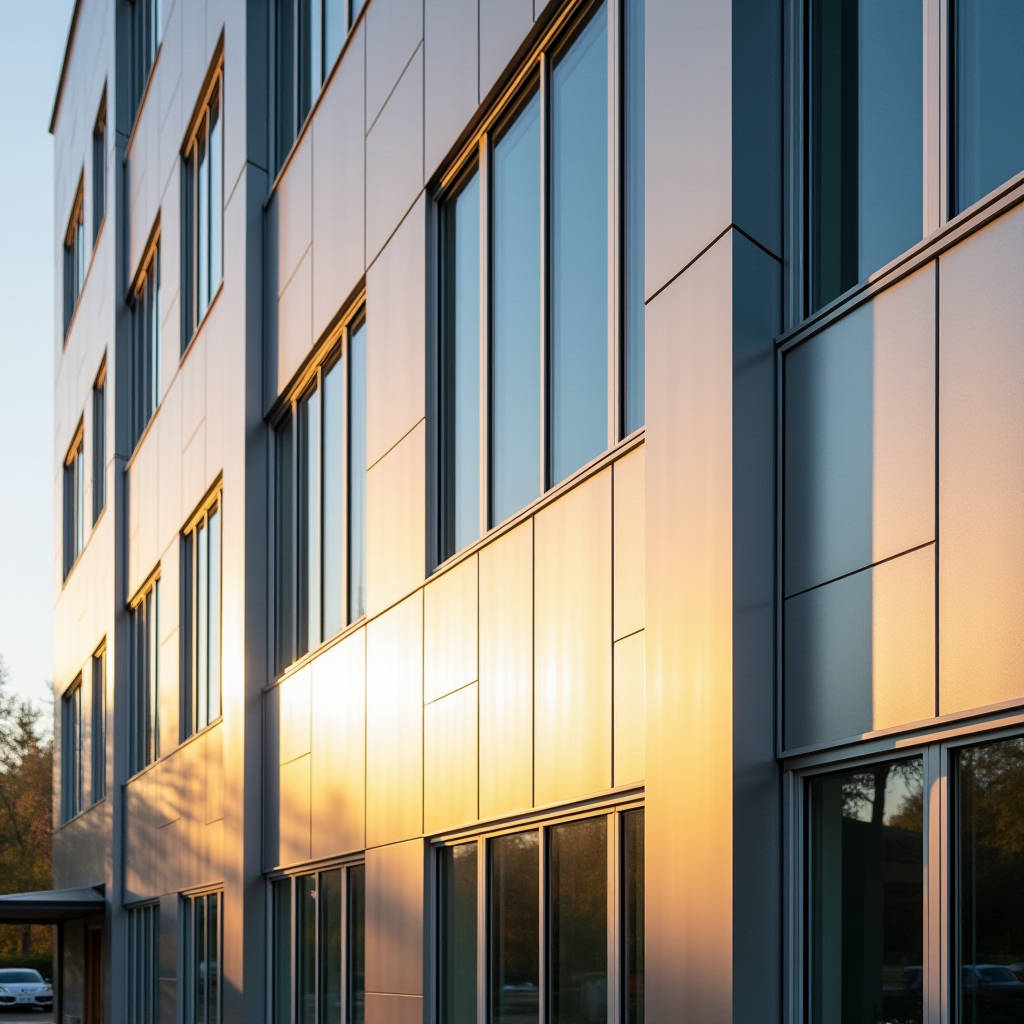
Electrostatic Sprayed Aluminum has become the default finishing choice for architects and facade engineers who need consistent color, durable weather resistance, and cost predictability across large-scale building envelopes. Unlike wet paint systems that rely on solvent evaporation, electrostatic spray coating deposits charged dry powder particles onto grounded aluminum panels, then fuses them into a continuous film inside a curing oven. The result is a uniform coating that bonds to the substrate at a molecular level. For solid aluminum cladding panels in the 2.0mm to 3.0mm thickness range, this process delivers a finish that resists chalking, fading, and corrosion for decades. The technology is not new, but the demands placed on it have intensified. Tighter project schedules, taller buildings, and stricter environmental regulations in markets like the EU and Australia mean that specifiers need to understand exactly what happens inside the powder coating line, and why process control matters more than the powder brand itself.
How Electrostatic Sprayed Aluminum Differs From Wet Paint and E-Coat
Electrostatic spray coating for aluminum operates on a simple physical principle: opposite charges attract. The aluminum panel is grounded, and the spray gun imparts a negative charge to the powder particles as they exit the nozzle. The charged powder wraps around edges, reaches into recesses, and coats surfaces that a conventional spray gun would miss. This phenomena, often called the Faraday cage effect, is both a benefit and a challenge. On complex geometries with deep grooves, the electrostatic field can actually repel powder from internal corners. Skilled coaters adjust voltage, gun distance, and powder flow rate to compensate.
Wet spray painting, by contrast, relies on atomized liquid paint propelled by compressed air. Transfer efficiency is typically 40% to 60%. The rest ends up as overspray, requiring solvent-based cleanup and generating hazardous waste. Electrostatic powder coating achieves transfer efficiencies of 60% to 85% in production environments, with the overspray collected and reused. This matters for procurement managers tracking material costs on projects with 5,000 square meters or more of cladding.
E-coat, or electrophoretic coating, is another electrostatic process, but it works differently. The aluminum part is immersed in a water-based bath containing charged paint particles. An electric current deposits the paint uniformly across every surface, including inside tubes and channels. E-coat provides excellent edge coverage and corrosion protection, which is why it dominates automotive and industrial applications. But for architectural cladding, e-coat has limitations. The film thickness is typically 15 to 25 microns, far thinner than the 60 to 80 microns standard for powder coating on exterior aluminum panels. And e-coat alone does not provide the UV resistance needed for 20-year facade exposure. It is often used as a primer under powder coating rather than a standalone finish.
Corona vs. Tribo: The Charging Method That Shapes Your Finish
Not all electrostatic spray systems are the same. The two dominant charging technologies, corona and tribo, produce different results on solid aluminum panels, and the choice affects everything from edge coverage to color consistency.
Corona charging uses a high-voltage electrode at the gun tip, typically 30 to 100 kV, to ionize the air and charge the powder particles. This method generates a strong electrostatic field that drives powder onto the grounded panel quickly. It handles a wide range of powder formulations and particle sizes. The downside is that free ions can build up on the coating surface, causing back-ionization, a defect that looks like small craters or orange peel. Corona systems also struggle with Faraday cage areas on panels with deep folds or perforations.
Tribo charging relies on friction. Powder particles rub against a PTFE or nylon surface inside the gun barrel, picking up a positive charge through the triboelectric effect. No high-voltage electrode means no free ions and no back-ionization. Tribo guns excel at coating complex geometries, perforated panels, and re-entrant corners. The trade-off is slower application speed and sensitivity to powder formulation. Not every powder charges well through friction, and ambient humidity affects performance.
For solid aluminum cladding panels with standard folded edges and flat faces, corona systems dominate production lines. The throughput advantage is significant. But for custom perforated panels, sunshade fins, or panels with deep returns, a tribo setup or a hybrid approach delivers better first-pass coverage and reduces the need for manual touch-up.
Pretreatment: The Step That Determines Whether Your Coating Lasts 5 Years or 25
The electrostatic spraying process itself gets most of the attention, but pretreatment is where coating failures originate. Aluminum arrives at the coating line with mill oils, shop dirt, and a thin layer of natural oxide. If any of these contaminants remain, the powder coating will delaminate, blister, or corrode from underneath.
A proper pretreatment line for architectural aluminum consists of at least five stages: alkaline degreasing to remove oils, a water rinse, acid etching or deoxidizing to remove the oxide layer, another rinse, and a conversion coating. The conversion coating is the critical step. Hexavalent chromium was the standard for decades, producing a yellow chromate layer that provided excellent corrosion resistance and paint adhesion. Environmental regulations have largely eliminated hex chrome from architectural coating lines in Europe and North America. Today, trivalent chromium or chromium-free zirconium/titanium-based conversion coatings are the norm.
The performance gap between chrome and chrome-free pretreatment has narrowed considerably. A properly applied zirconium conversion coating, with a coating weight of 10 to 30 mg/m², can achieve filiform corrosion resistance comparable to chromate on aluminum alloys 3003 and 5052, the grades most commonly used for solid aluminum cladding. The key is consistent process control: bath temperature, pH, contact time, and rinse water conductivity must be monitored and logged for every batch.
Specifiers should require pretreatment quality records as part of the coating submittal package. AAMA 2605, the benchmark specification for high-performance architectural coatings on aluminum, mandates specific pretreatment requirements and adhesion testing. Panels that pass the 4,000-hour salt spray test and the 10-year South Florida exposure test under AAMA 2605 have been through a pretreatment process that was properly designed and executed.
Powder Chemistry: Polyester, Polyurethane, and Fluoropolymer Options
The powder that enters the electrostatic spray gun determines the long-term appearance and performance of the finished panel. Three resin chemistries dominate the architectural aluminum market.
Standard polyester powders, based on polyester resins crosslinked with TGIC or HAA (β-hydroxyalkylamide), account for the majority of architectural powder coating volume. They provide good UV resistance, flexibility, and impact resistance at a competitive cost. TGIC-free HAA systems have gained market share due to regulatory pressure on TGIC, which is classified as a mutagen in some jurisdictions. HAA-cured polyesters offer comparable exterior durability with a lower health and safety burden during application.
Super-durable polyester powders use higher-grade resins and UV-stabilized pigment systems to extend service life. Under AAMA 2604, super-durable polyester must retain at least 50% gloss and show a color change of no more than 5 Delta E units after 5 years of South Florida exposure. These powders are suitable for mid-rise commercial buildings and projects where a 15- to 20-year coating life is acceptable.
Fluoropolymer powders, primarily based on PVDF (polyvinylidene fluoride) resin, represent the top tier. AAMA 2605-compliant fluoropolymer coatings must retain over 50% gloss and show less than 5 Delta E color change after 10 years of South Florida exposure. The 70% PVDF resin content, with 30% acrylic modifier, is the industry benchmark. Fluoropolymer powder coatings are relatively new compared to liquid PVDF, but they have been proven on landmark projects over the past 15 years. They offer the same weathering performance as liquid PVDF with the environmental advantages of a solvent-free powder process.
The table below summarizes the key performance differences across these powder chemistries for electrostatic sprayed aluminum panels.
| Property | Standard Polyester | Super-Durable Polyester | Fluoropolymer (PVDF) |
|---|---|---|---|
| Applicable AAMA Standard | AAMA 2603 | AAMA 2604 | AAMA 2605 |
| Typical Film Thickness | 60-80 microns | 60-80 microns | 60-80 microns |
| Gloss Retention (5 yr Florida) | 30-50% | 50-70% | 80-90% |
| Color Change (Delta E, 5 yr) | 5-8 | 3-5 | <3 |
| Expected Service Life | 10-15 years | 15-20 years | 25-30+ years |
| Relative Cost per m² | 1.0x (baseline) | 1.3-1.5x | 2.0-2.5x |
| Best Application | Interior, soffits, low-rise | Mid-rise commercial | High-rise, coastal, landmark |
Process Variables That Make or Break Coating Quality
Even with the right powder chemistry and pretreatment, the electrostatic spraying process itself contains variables that directly affect the finished panel quality. Understanding these variables helps procurement managers evaluate potential suppliers and helps facade engineers write tighter specifications.
Powder particle size distribution is one of the most overlooked factors. Fine particles, those below 10 microns, charge easily but tend to build up on the gun tip and create spitting defects. Coarse particles above 100 microns may not charge adequately and can sag during curing. The optimal particle size range for architectural powder coating is 30 to 50 microns, with a narrow distribution that ensures consistent charging and flow. Reputable powder suppliers provide particle size data, and coaters should verify it on receipt.
Gun-to-target distance is another critical parameter. In corona systems, the optimal distance is 200 to 300 mm. Too close, and the high-voltage field can cause arcing or back-ionization. Too far, and the electrostatic field weakens, reducing transfer efficiency and wrap-around. Automated reciprocators with programmable stroke patterns maintain consistent distance across the panel surface. Manual spraying, still common in some low-cost production environments, introduces variability that shows up as uneven film thickness and color variation.
Curing oven temperature and dwell time complete the process. Polyester powders typically cure at 180°C to 200°C for 10 to 15 minutes at metal temperature. Under-curing leaves the coating under-polymerized, reducing chemical resistance and weatherability. Over-curing can cause yellowing, gloss reduction, and embrittlement. The metal temperature, not the oven air temperature, is what matters. Coaters must use temperature probes on the panel itself to verify that the cure schedule has been met. For solid aluminum panels in the 2.0mm to 3.0mm range, the thermal mass is significant, and ramp-up time must be factored into the line speed calculation.
Quality Control Testing for Electrostatic Sprayed Aluminum Panels
A well-run coating line includes a quality control laboratory that tests panels at defined frequencies. The minimum QC program for architectural aluminum cladding should include the tests described in AAMA 2603, 2604, or 2605, depending on the specification level. But the standard tests are performed on flat coupons. Real-world panels have welds, rivets, fold lines, and cut edges that introduce stress concentrations and coating discontinuities.
Film thickness measurement is the most basic QC test and the one most frequently skipped in under-supervised operations. A digital coating thickness gauge, calibrated to the aluminum substrate, should measure thickness at multiple points per panel. The AAMA standards require a minimum of 1.2 mils (30 microns) for powder coatings, but the practical minimum for exterior durability is 2.0 mils (50 microns), with 2.5 to 3.0 mils (60 to 80 microns) being the industry norm for architectural work.
Cross-hatch adhesion testing per ASTM D3359 verifies that the coating bonds to the substrate. A lattice pattern is cut through the coating to the metal, tape is applied and removed, and the percentage of coating removed is rated. A 5B rating, meaning no coating removal, is expected for properly pretreated and cured electrostatic sprayed aluminum.
Impact testing per ASTM D2794 checks for coating flexibility and adhesion under rapid deformation. A weighted indenter is dropped onto the coated panel from a specified height. The coating should not crack or delaminate at the impact site. This test is particularly relevant for panels that will be brake-formed after coating, though post-forming is generally avoided for architectural cladding due to the risk of micro-cracking at bend lines.
Accelerated weathering in a QUV or xenon arc chamber provides a relative measure of UV resistance. QUV-B testing with condensation cycles can screen for resin degradation within 1,000 to 2,000 hours. But correlation with real-world Florida exposure is imperfect. Xenon arc testing with daylight filters, per ASTM G155, provides a better simulation of the full solar spectrum. For AAMA 2605 qualification, 10 years of actual South Florida exposure at 45° south is the gold standard, and no accelerated test fully replaces it.
Environmental and Regulatory Drivers Shaping the Market
Electrostatic spray coating has an inherent environmental advantage over liquid painting: no solvents. A liquid PVDF line uses solvent-based primers and topcoats that release volatile organic compounds (VOCs) during application and curing. Thermal oxidizers or solvent recovery systems are required to meet air quality regulations in most developed markets. A powder coating line eliminates VOCs entirely at the point of application. The powder is a solid, and the only emissions from the curing oven are trace amounts of volatiles from the resin crosslinking reaction.
This environmental profile matters for projects seeking green building certifications. LEED v4.1 awards points for low-emitting materials, and powder-coated aluminum cladding contributes to the Indoor Environmental Quality and Materials and Resources credits. BREEAM and Green Star have similar provisions. For projects in California, compliance with South Coast Air Quality Management District (SCAQMD) rules is mandatory, and powder coating avoids the permitting and abatement costs associated with liquid painting.
The phase-out of TGIC in certain markets has accelerated the shift to HAA-cured polyester powders. The European Union classified TGIC as a substance of very high concern under REACH, and while it remains available in many regions, forward-thinking suppliers have reformulated their product lines. HAA systems require slightly different curing conditions, with a narrower temperature window, but the performance of modern HAA polyesters matches or exceeds that of TGIC-based systems for architectural applications.
Waste management is another regulatory consideration. Powder overspray can be collected, sieved, and blended back into virgin powder at ratios of up to 20% without affecting coating quality. This closed-loop approach reduces raw material consumption and waste disposal costs. Liquid paint overspray, mixed with water-wash booth sludge, is a hazardous waste stream that requires licensed disposal. For a high-volume coating line processing 50,000 square meters of aluminum cladding per month, the waste reduction from powder coating is measured in tons per year.
Common Coating Defects and Their Root Causes
No coating process is defect-free, and electrostatic sprayed aluminum is no exception. The difference between a quality-focused supplier and a commodity coater is how defects are detected, analyzed, and prevented from recurring.
Orange peel describes a wavy surface texture that resembles the skin of an orange. It is caused by poor powder flow and leveling during the melt phase of curing. Contributing factors include excessive film thickness, insufficient cure temperature, or powder that has absorbed moisture during storage. Orange peel is primarily an aesthetic issue, but it can reduce gloss and make the panel harder to clean. A smooth, level finish with a distinctness-of-image (DOI) rating above 70 is achievable with properly formulated powders and controlled curing.
Pinholes and craters appear as small voids in the coating surface. They are usually caused by outgassing from the aluminum substrate. Cast aluminum plates and certain extruded profiles can have subsurface porosity that releases gas when heated in the curing oven. The gas bubbles through the molten powder layer and leaves a crater. Preheating the panel to drive off volatiles before coating, or using a powder formulated with degassing additives, can mitigate this problem.
Color variation between batches is one of the most common complaints on architectural projects. The human eye can detect color differences as small as 1 Delta E under controlled lighting. Powder manufacturers batch-match their products to a master standard, but variations in film thickness, cure temperature, and substrate texture can shift the perceived color. A Delta E tolerance of 1.0 or less is achievable for electrostatic sprayed aluminum when the coater controls all process variables. For large projects with multiple coating batches, the coater should produce color continuity panels that are reviewed under natural daylight before full production begins.
Fading and chalking are long-term degradation modes. Chalking is the formation of a powdery layer on the coating surface as the resin binder degrades under UV exposure. It is measured per ASTM D4214, with a rating of 8 or higher (on a 10-point scale) considered acceptable for architectural coatings after 5 years. Super-durable polyester and fluoropolymer powders are formulated to resist chalking for the design life of the building.
Supplier Evaluation: What to Look for Beyond the Price Per Square Meter
Procurement managers evaluating electrostatic sprayed aluminum panels often focus on the unit price. But the cost of coating failure, in terms of site labor, schedule delay, and reputation damage, dwarfs any upfront savings. A structured supplier evaluation should include a technical audit of the coating line, not just a review of the commercial proposal.
The coating line itself tells the story. A modern architectural coating line should have a multi-stage pretreatment tunnel with automated chemical dosing and conductivity monitoring. The spray booth should have automated reciprocators with programmable stroke patterns, not manual guns on fixed stands. The curing oven should have multiple temperature zones with data logging. The QC lab should have a calibrated thickness gauge, gloss meter, color spectrophotometer, and adhesion test kit, with records available for review.
Capacity and lead time are practical concerns. A line that processes 3,000 square meters per day can handle a typical mid-rise project in one or two shifts. But if the line is already running at 90% capacity, your project will compete with others for production slots. Ask about current utilization rates and typical lead times for projects of similar scale.
Logistics and packaging matter more than they seem. Electrostatic sprayed aluminum panels are finished goods, not raw material. Scratches, dents, and abrasions during shipping can ruin panels that passed every QC test at the factory. Panels should be interleaved with protective film or paper, packed in crates with edge protection, and shipped in containers with moisture barriers for ocean freight. The cost of proper packaging is a fraction of the cost of replacing damaged panels on site.
Futeng® is one supplier that has invested in automated electrostatic spraying lines configured for architectural aluminum cladding, with documented QC procedures and packaging protocols that meet the requirements of international projects. But the specific supplier choice should always be validated through a factory audit, not a brochure review.
Specifying Electrostatic Sprayed Aluminum for Your Next Project
Writing a specification that delivers the intended result requires more than referencing AAMA 2605 and hoping for the best. The specification should address the entire coating system: alloy and temper of the aluminum substrate, pretreatment method and conversion coating type, powder chemistry and manufacturer, film thickness range, cure schedule, and QC testing requirements.
The substrate alloy matters because different alloys respond differently to pretreatment. Alloy 3003 H14 is the most common for architectural cladding due to its formability and corrosion resistance. Alloy 5052 H32 offers higher strength and better saltwater corrosion resistance, making it suitable for coastal applications. The mill finish should be specified as suitable for architectural coating, with no visible roll marks, scratches, or staining.
For the coating itself, the specification should state the AAMA standard (2603, 2604, or 2605) and the powder chemistry that meets it. Naming a specific powder manufacturer and product code is acceptable if the specifier has tested and approved that product. Otherwise, the specification should state the performance requirements and allow equivalent products with supporting test data.
Film thickness should be specified as a range, not a minimum. A range of 60 to 80 microns (2.4 to 3.2 mils) is typical for architectural powder coating. The minimum ensures adequate protection, and the maximum prevents orange peel and cracking. The specification should also address edge coverage, which is a weak point for any coating system. A minimum of 30 microns on cut edges and drilled holes is a reasonable requirement for exterior panels.
Color and gloss should be specified with tolerances. A Delta E of 1.0 or less versus the approved color standard is achievable. Gloss should be specified at a 60° measurement angle per ASTM D523, with a tolerance of ±5 units for matte finishes (below 30 GU) and ±10 units for higher gloss levels. The specifier should also state whether the gloss measurement applies to the initial value or must be maintained after weathering.
Electrostatic sprayed aluminum, when properly specified, pretreated, coated, and tested, delivers a facade finish that performs for decades with minimal maintenance. The technology is mature, but the execution varies widely across suppliers. The projects that succeed are the ones where the specifier understands the process well enough to ask the right questions and verify the answers.