Color Coated Aluminum Coil Specification Guide for Solid Aluminium Cladding Facades
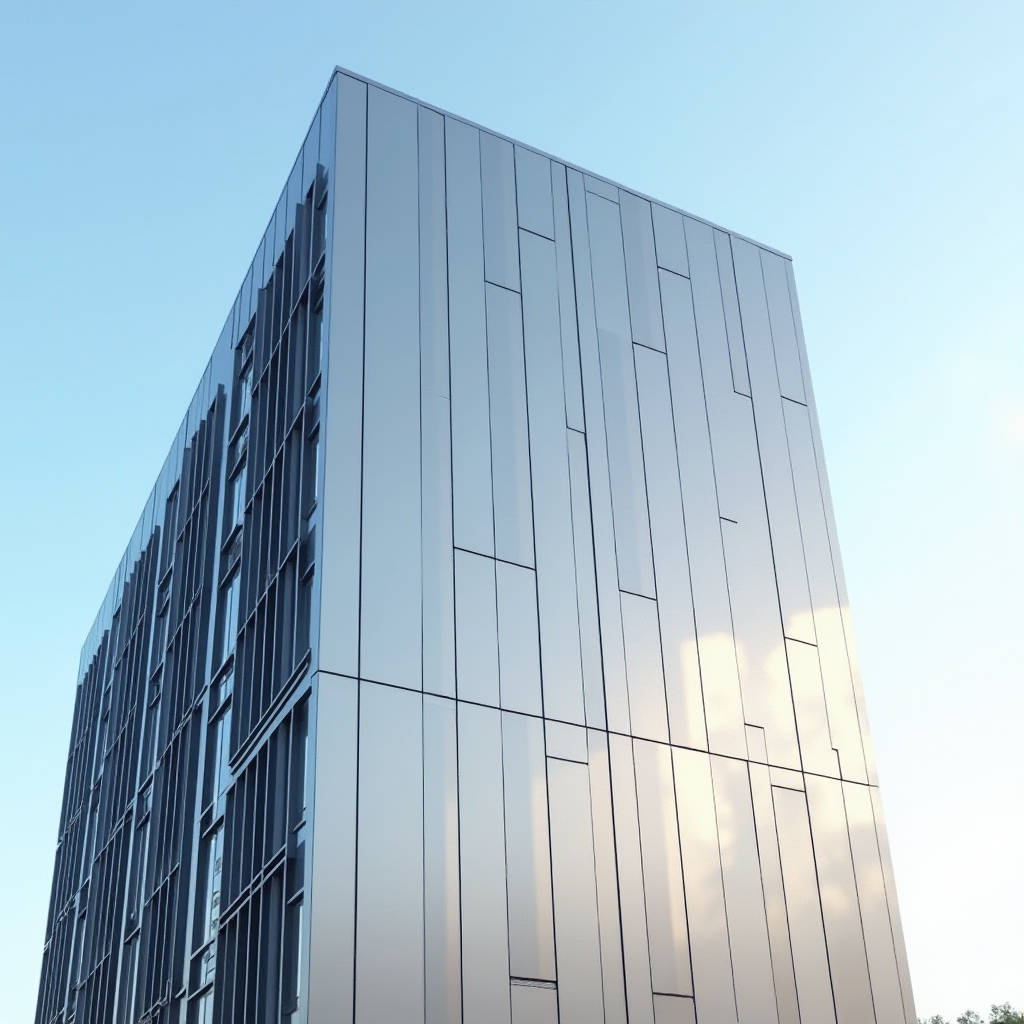
When a facade consultant specifies a Color Coated Aluminum Coil for a high-rise curtain wall project in Dubai or Singapore, the conversation rarely stays on RAL codes for long. What actually matters, and what separates a 15-year trouble-free facade from one that chalks and fades within six years, is the coating system chemistry, the pretreatment line, and the quality of the aluminum substrate itself. A Color Coated Aluminum Coil is not a commodity. The coil arriving at a fabricator's shop in Jeddah or Kuala Lumpur carries decisions made months earlier: alloy grade, temper, pretreatment type, primer formulation, topcoat resin, and the quality control protocols at the coater's facility. Getting any one of those decisions wrong cascades into field failures that no amount of on-site remediation can fix. This article examines the technical factors that procurement managers and facade engineers need to evaluate when specifying pre-painted aluminum coil for solid aluminium cladding panels, with a focus on PVDF and high-durability polyester systems, pretreatment chemistry, and the testing protocols that validate long-term weathering performance.
What a Color Coated Aluminum Coil Actually Is
A Color Coated Aluminum Coil begins as a bare aluminum substrate, typically in alloys 1050, 1100, 3003, 3004, 3105, 5005, or 5052, depending on the formability and strength requirements of the downstream application. The coil is unwound and fed through a continuous roller coating line where it undergoes cleaning, chemical pretreatment, primer application, topcoat application, and oven curing, all in a single pass at line speeds that can exceed 60 meters per minute. The result is a finished coil with a uniform, factory-applied paint system that can be slit, cut-to-length, punched, or brake-formed into finished components. For solid aluminium cladding panels, the most common thicknesses are 2.0mm, 2.5mm, and 3.0mm, with 2.5mm being the predominant choice for large-format facade panels where flatness and wind load resistance are critical.
The distinction between coil coating and post-fabrication spray coating is not trivial. Coil coating applies paint to a flat, continuous strip under tightly controlled conditions. Film thickness is uniform across the entire width and length. Cure temperatures are precisely managed. The paint is applied to a surface that has not yet been contaminated by forming lubricants, shop dust, or handling. This produces a finish quality that is difficult to replicate with spray application on fabricated parts. For architects specifying solid aluminium panels with demanding flatness and color consistency requirements, coil-coated material generally delivers superior results.
Coating System Chemistry: PVDF, HDP, and PE
Three coating chemistries dominate the Color Coated Aluminum Coil market for architectural applications. Each has a distinct performance profile, and the choice between them should be driven by the project's geographic location, building height, environmental exposure, and budget.
PVDF (Polyvinylidene Fluoride) – 70% Resin Rule
PVDF coatings, also known by trade names like Kynar 500® or Hylar 5000®, are the benchmark for architectural aluminum cladding. The defining characteristic is the resin system: a minimum of 70% PVDF resin by weight in the total binder, with the balance typically being acrylic resin. The acrylic component aids pigment dispersion and adhesion, but the PVDF component delivers the weathering performance. The carbon-fluorine bond is among the strongest chemical bonds in organic chemistry, which is why PVDF coatings resist UV degradation, chalking, and color fade for decades.
A properly formulated PVDF coating on a Color Coated Aluminum Coil should carry an AAMA 2605 certification. This standard, published by the American Architectural Manufacturers Association, requires passing 10-year South Florida exposure tests with maximum color change of 5 Delta E units, chalking rating of no less than 8, and gloss retention of at least 50%. For projects in the Middle East, Southeast Asia, or coastal Australia, where UV intensity and salt spray combine to accelerate coating degradation, AAMA 2605-compliant PVDF is the minimum defensible specification.
HDP (High-Durability Polyester)
High-durability polyester coatings occupy the middle ground. They use a modified polyester resin system, often incorporating silicone or other crosslinking agents, to achieve better weathering than standard polyester without reaching PVDF pricing. HDP coatings typically meet AAMA 2604 standards, which require 5-year South Florida exposure with a maximum 5 Delta E color change. For mid-rise commercial buildings, industrial facilities, and interior applications, HDP on a Color Coated Aluminum Coil provides a cost-effective balance of performance and budget.
PE (Standard Polyester)
Standard polyester coatings are the economy option. They meet AAMA 2603 requirements, which involve only 1-year South Florida exposure testing. PE coatings are suitable for interior applications, soffits, and sheltered areas, but they should not be specified for exterior wall cladding on any project where the building owner expects more than 5-7 years of color stability. The cost saving is real, typically 30-40% lower than PVDF, but the lifecycle cost analysis rarely favors PE for exterior facades.
| Property | PVDF (AAMA 2605) | HDP (AAMA 2604) | PE (AAMA 2603) |
|---|---|---|---|
| Resin System | 70%+ PVDF / Acrylic | Modified Polyester | Standard Polyester |
| South Florida Exposure | 10 years | 5 years | 1 year |
| Max ΔE (Color Change) | ≤ 5 | ≤ 5 | No specified limit |
| Chalk Rating (Minimum) | ≥ 8 | ≥ 6 | Not required |
| Gloss Retention | ≥ 50% | ≥ 30% | Not specified |
| Typical Dry Film Thickness | 25-35 μm (2-coat) | 20-25 μm | 15-20 μm |
| Typical Warranty | 20-30 years | 10-15 years | 5-10 years |
| Relative Cost (Index) | 100 | 65-75 | 40-50 |
| Recommended Exterior Application | High-rise, coastal, monumental | Mid-rise, industrial, inland | Interior, sheltered only |
Pretreatment: The Layer Nobody Sees but Everyone Pays For Later
Beneath the primer and topcoat of every Color Coated Aluminum Coil is a chemical conversion layer that determines whether the paint sticks for 5 years or 30 years. The pretreatment process cleans the aluminum surface and applies a conversion coating that provides corrosion resistance and paint adhesion. The two dominant pretreatment chemistries are hexavalent chromium (chrome) and chrome-free systems.
Chrome pretreatment, specifically a chromium phosphate or chromate conversion coating, has been the industry standard for decades. It delivers excellent corrosion resistance and paint adhesion, and it is forgiving of minor process variations. The coating weight is typically 5-15 mg/ft² for architectural applications. However, hexavalent chromium is classified as a carcinogen under REACH and OSHA regulations, and its use is increasingly restricted, particularly in the European Union.
Chrome-free pretreatment systems, based on titanium, zirconium, or silane chemistries, have been adopted by major coil coaters. These systems meet the corrosion resistance requirements of ASTM B117 salt spray testing (typically 1,000-3,000 hours depending on the specification) and the adhesion requirements of ASTM D3359 cross-hatch testing. The key variable is process control: chrome-free systems are less tolerant of bath chemistry fluctuations than chrome systems. When a procurement manager evaluates a Color Coated Aluminum Coil supplier, the question to ask is not just "chrome or chrome-free" but "what is your SPC (statistical process control) protocol for pretreatment bath monitoring."
For European projects, compliance with EN 1396 (Coil coated metals – Test methods) and EN 13523 series standards is mandatory. These standards specify tests for specular gloss, color measurement, adhesion, and resistance to filiform corrosion, which is particularly relevant for chrome-free pretreated aluminum in coastal environments.
Alloy Selection for Solid Aluminium Cladding Panels
The base alloy of a Color Coated Aluminum Coil dictates its formability, strength, and corrosion resistance. For solid aluminium cladding panels that will be brake-formed, routed, or perforated, the alloy selection is not arbitrary.
Alloy 3003, with manganese as the primary alloying element, provides moderate strength (ultimate tensile strength approximately 110 MPa in H14 temper) and excellent formability. It is the workhorse alloy for general architectural cladding. Alloy 3105 is similar but with slightly higher strength, making it suitable for panels requiring greater stiffness. For applications demanding higher strength, such as large-format panels with minimal stiffener framing, alloy 5005 (magnesium-bearing, UTS approximately 145 MPa in H14 temper) or 5052 (UTS approximately 230 MPa in H32 temper) are specified. The trade-off is cost: 5005 and 5052 carry a premium over 3003, typically 8-15% depending on market conditions.
The temper designation matters. H14 (strain-hardened and partially annealed, half-hard) is the most common temper for architectural coil because it provides a good balance of strength and formability. H32 (strain-hardened and stabilized) is used for 5000-series alloys. Specifying the wrong temper can result in cracking during brake forming or excessive springback that complicates panel fabrication.
Futeng® supplies Color Coated Aluminum Coil in alloys 1050, 1100, 3003, 3004, 3105, 5005, and 5052, with thicknesses from 0.3mm to 3.0mm and widths up to 1,560mm, covering the full range of architectural cladding requirements. The coil is processed on advanced roller coating lines with precise tension control to maintain flatness, which is critical for solid aluminium panels where even minor coil set can translate into visible waviness on a finished facade.
Color Consistency and Batch Management
Color variation across a building facade is one of the most common sources of dispute between contractors, fabricators, and coating suppliers. A Color Coated Aluminum Coil produced in one batch may show perceptible color differences from a coil produced three months later, even if both were ordered against the same RAL or Pantone reference.
The root cause is rarely the paint formulation itself. More often, it is variation in the substrate (surface roughness affects perceived color), variation in film thickness (thinner films allow more substrate influence), or variation in oven cure conditions (peak metal temperature affects pigment development). A well-managed coil coating line uses spectrophotometer readings at multiple points across the coil width, with data logged against each coil number. The tolerance standard for architectural work is typically ΔE ≤ 1.0 (CIE LAB) within a batch and ΔE ≤ 1.5 between batches of the same color.
For large projects, procurement managers should specify that all Color Coated Aluminum Coil for a given building elevation must come from a single production campaign, or at minimum from coils produced with the same batch of paint. This is not always commercially convenient, but the alternative, visible color banding across a facade, is far more expensive to resolve.
Testing Protocols That Matter
Specifying a Color Coated Aluminum Coil without specifying the testing regime is an incomplete specification. The following tests should be referenced in procurement documents for solid aluminium cladding panel projects:
- ASTM B117 – Salt spray (fog) testing. For PVDF on architectural aluminum, 3,000+ hours with no blistering and minimal scribe creep is a common requirement.
- ASTM D2244 – Color measurement and color difference calculation using CIE LAB coordinates.
- ASTM D3359 – Adhesion by tape test (cross-hatch). A rating of 5B (no removal) is expected for properly pretreated and cured coil coatings.
- ASTM D4214 – Chalking evaluation using photographic reference standards.
- ASTM G155 – Accelerated weathering using xenon arc lamps. This simulates UV exposure and is used for quality control, though it cannot fully replace natural exposure testing.
- EN 13523 Series – European standard for coil coated metals, covering specular gloss, color measurement, adhesion, and resistance to various environmental factors.
- AAMA 2605 – The gold standard for architectural PVDF coatings, requiring 10-year Florida exposure data.
For projects in the Middle East, additional testing per ISO 16474 (Paints and varnishes – Methods of exposure to laboratory light sources) may be warranted, particularly for colors with high solar absorptance that will experience elevated surface temperatures.
Film Thickness and Its Engineering Implications
The dry film thickness (DFT) of a Color Coated Aluminum Coil's paint system is not just a quality metric; it is an engineering parameter. For a two-coat PVDF system (primer plus topcoat), the typical DFT is 25-35 μm. For a three-coat system (primer, color coat, clear coat), DFT can reach 40-50 μm. Metallic and mica colors generally require a clear coat to protect the effect pigments, which adds 12-15 μm.
Insufficient film thickness leads to premature UV penetration, chalking, and color fade. Excessive film thickness, while rare in coil coating, can lead to cracking during forming operations. The specification should include both a nominal DFT and a minimum DFT, with the understanding that the minimum applies at any point on the coated surface. A common specification for PVDF on solid aluminium cladding panels is a minimum DFT of 25 μm for two-coat systems and 32 μm for three-coat systems, measured per ASTM D7091 (non-destructive measurement of dry film thickness on non-magnetic coatings applied to non-ferrous metals).
Supply Chain Considerations for International Projects
Procuring Color Coated Aluminum Coil for an international construction project involves lead times, logistics, and documentation that are often underestimated. A typical production lead time for custom-color PVDF coil is 4-6 weeks from order confirmation, plus 3-5 weeks for ocean freight from East Asia to the Middle East, Europe, or North America. Air freight is possible for urgent requirements but adds approximately $0.80-1.20 per kilogram to the delivered cost.
Documentation requirements vary by region. Projects in the Gulf Cooperation Council (GCC) countries typically require SASO or ESMA certification for imported aluminum products. European Union projects require CE marking per EN 1396 and REACH compliance documentation. North American projects may require documentation per the International Building Code and local fire test standards.
Mill certificates should be provided for each coil, documenting the alloy, temper, mechanical properties, coating specification, film thickness measurements, and color readings. A reputable Color Coated Aluminum Coil supplier will provide these as standard, not as a special request.
"The coil coating process is fundamentally a manufacturing discipline, not a craft. The quality of the finished product is determined by the statistical control of process variables: bath chemistry, oven temperature profiles, line speed, and tension. A supplier that cannot provide SPC data for these parameters is not a supplier you can rely on for a 50,000-square-meter facade."
Environmental and Regulatory Trends
The regulatory landscape for Color Coated Aluminum Coil production is shifting. The European Union's REACH regulation continues to restrict substances used in pretreatment and paint formulation. Chrome-free pretreatment is now effectively mandatory for architectural aluminum sold into the EU market. The US Environmental Protection Agency is moving in a similar direction, though the timeline is less aggressive.
Volatile organic compound (VOC) emissions from coil coating lines are regulated in most developed markets. Modern coil coating lines use thermal oxidizers to destroy VOCs before stack emission, achieving destruction efficiencies above 99%. Water-based primer systems are increasingly used to reduce solvent emissions, though solvent-based topcoats remain dominant for PVDF architectural coatings due to performance requirements.
For projects pursuing LEED, BREEAM, or Green Star certification, the recycled content of the aluminum substrate and the environmental profile of the coating system contribute to materials credits. The aluminum coil substrate typically contains 50-80% recycled content when sourced from major mills, and the coil coating process itself generates minimal waste compared to spray application, which can lose 30-50% of paint to overspray.
Making the Right Specification Decision
The decision tree for specifying a Color Coated Aluminum Coil for solid aluminium cladding panels should follow this sequence: first, determine the environmental exposure (UV intensity, salt spray, industrial pollutants, temperature extremes). Second, select the coating chemistry: PVDF for high-rise, coastal, and monumental buildings; HDP for mid-rise inland commercial; PE for interior only. Third, specify the alloy and temper based on the panel dimensions, forming requirements, and wind load calculations. Fourth, define the pretreatment chemistry, with chrome-free being the default for EU projects and increasingly for global projects. Fifth, specify the testing and documentation requirements, including AAMA 2605 for PVDF systems.
The cost difference between a correctly specified PVDF Color Coated Aluminum Coil and an under-specified PE alternative is typically $3-7 per square meter of finished facade. Over a 20-year building lifecycle, that translates to less than $0.35 per square meter per year. The cost of recoating a failed facade, including access, surface preparation, and application, ranges from $40-80 per square meter. The arithmetic is straightforward, but it requires the procurement team to think in lifecycle terms rather than initial cost terms.
The facade industry has learned these lessons through decades of field experience. The buildings that still look good after 20 years in harsh climates share a common characteristic: someone in the supply chain specified the coating system correctly, verified the pretreatment quality, and insisted on documented testing. The coil itself is just the starting point. What happens to it before it reaches the fabricator's shop determines whether the architect's vision survives the first decade of sun, salt, and rain.