Pre Painted Aluminum Coil Engineering Guide for Solid Aluminium Cladding Panel Fabrication
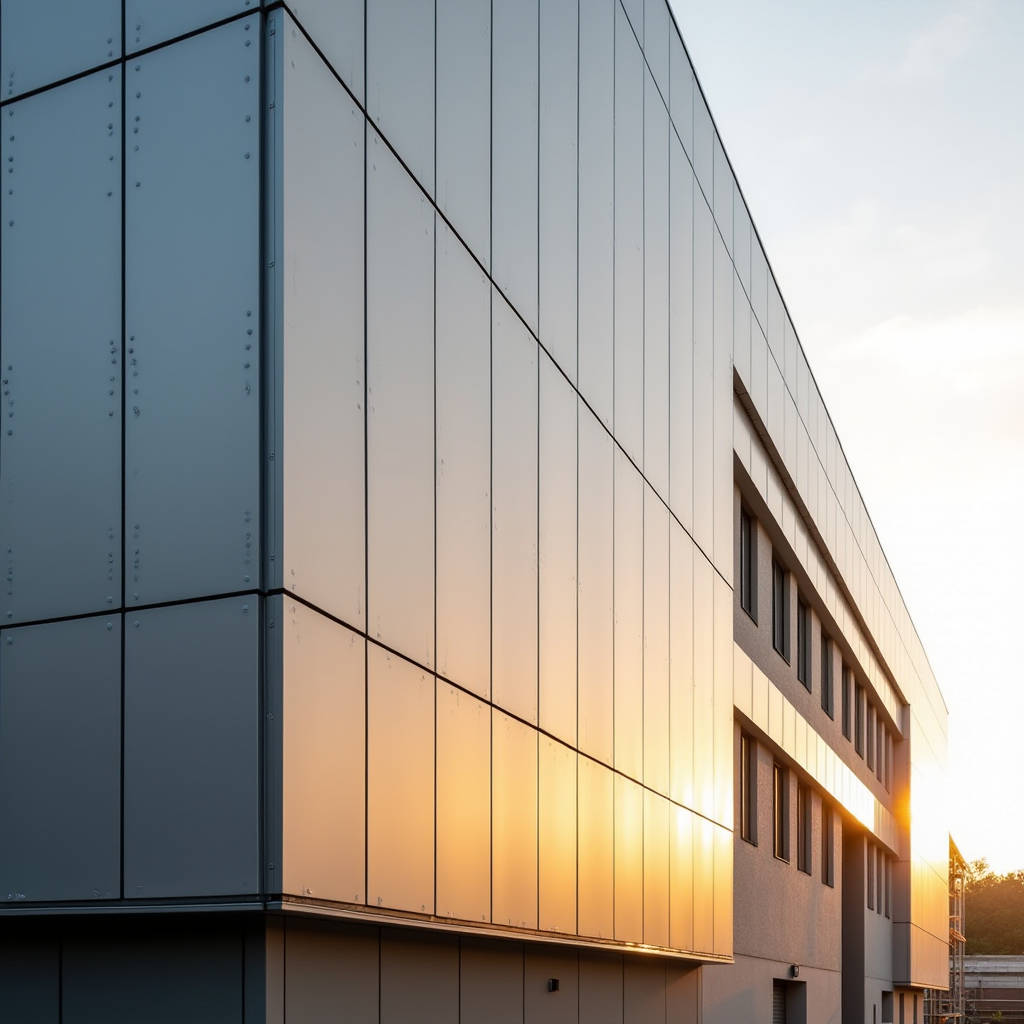
When a project specification calls for a particular RAL color across 8,000 square meters of facade, the procurement path splits into two directions: post-painting fabricated panels one by one, or sourcing the entire job from Pre Painted Aluminum Coil. The second option shifts the coating process upstream to a continuous coil line, where aluminum strip runs through cleaning, pre-treatment, primer application, and topcoat curing at speeds measured in meters per minute. The result is a finished coil that can be cut, routed, and folded into solid aluminium cladding panels without ever touching a spray booth. For quantity surveyors and facade contractors, the appeal is straightforward: faster fabrication turnaround, lower per-square-meter coating cost, and color consistency that batch spraying struggles to match. But the decision to use pre-painted coil for solid aluminium panels involves more than comparing price sheets. It demands a working understanding of coating chemistry, alloy compatibility, coil width limitations, and what happens to the paint film when a 3.0mm panel gets routed and bent on a CNC press brake.
What Pre Painted Aluminum Coil Actually Means for Solid Panel Production
Pre Painted Aluminum Coil is aluminum strip that has been coated with a protective and decorative finish while still in continuous coil form, before any cutting, bending, or fabrication takes place. The process runs on a coil coating line where the substrate passes through a series of rollers at tension. The aluminum gets degreased, chemically pre-treated with a chrome or chrome-free conversion coating, then coated with a primer layer and a topcoat. Curing happens in-line at temperatures that can exceed 230°C, and the finished coil is rewound for shipment to fabricators.
For solid aluminium cladding panel production, the fabricator receives this coil, decoils it, flattens it, and feeds it into a CNC turret punch or router. The key distinction: the paint film is already fully cured and cross-linked. The fabricator is not spraying anything. This means the coating must survive the mechanical stress of routing, the compression of folding, and the potential for micro-cracking along cut edges. Not every coil coating system is engineered for that level of post-coating abuse.
Alloy selection matters here. Most pre-painted coil intended for architectural cladding uses 3003, 3105, or 5052 alloys. 3003 and 3105 offer good formability at moderate cost. 5052 brings higher tensile strength and better corrosion resistance in marine environments. The thickness range for solid panel applications typically spans 1.5mm to 3.0mm, with 2.0mm and 2.5mm being the workhorse gauges for rainscreen facades. Anything below 1.5mm enters the territory of ACM skins or interior liners, not solid panel work.
Coating Chemistry: The Real Difference Between PE, HDP, SMP, and PVDF
Four coating families dominate the pre-painted aluminum coil market, and each one behaves differently under UV radiation, industrial fallout, and coastal salt spray. The choice of coating determines not just the warranty period but also the fabricator's ability to bend and route without film damage.
Polyester (PE)
Standard polyester coatings use a melamine or isocyanate cross-linked resin system. Film thickness typically runs 18-22 microns for the topcoat over a 5-8 micron primer. PE coatings offer good flexibility and are the easiest to fabricate without cracking. The trade-off is limited exterior durability. In direct sunlight, polyester resins chalk and fade noticeably within 5-7 years. For interior applications or sheltered soffits, PE makes economic sense. For exterior solid panels on a 20-year building envelope, it does not.
High-Durability Polyester (HDP) and Silicone-Modified Polyester (SMP)
HDP and SMP formulations incorporate silicone intermediates or modified polyester backbones to improve UV resistance. Typical topcoat thickness is 20-25 microns. These coatings can achieve 10-15 years of exterior performance before significant color shift occurs. They occupy a middle ground: better than standard PE, not as robust as PVDF, and priced accordingly. For projects in temperate climates with moderate UV exposure, HDP/SMP on pre-painted coil can be a defensible value-engineering choice.
PVDF (Polyvinylidene Fluoride)
PVDF coatings, typically based on Kynar 500® or Hylar 5000® resin systems, contain 70% PVDF resin by weight in the topcoat. The remaining 30% is acrylic resin that aids pigment dispersion and film formation. Total dry film thickness for a two-coat PVDF system runs 25-35 microns; three-coat systems with a clear topcoat reach 35-45 microns. PVDF is the industry standard for exterior architectural applications requiring color and gloss retention beyond 20 years. The fluoropolymer carbon-fluorine bond is chemically inert against UV radiation, acid rain, and most industrial pollutants.
A critical detail that separates quality coil coaters from commodity operations: the primer. PVDF topcoats need a compatible primer, typically a two-component epoxy or polyurethane system, to achieve adhesion to the aluminum substrate. If the primer is skimped, the entire warranty collapses regardless of how good the PVDF topcoat is. Specifiers should verify that the coil coater's PVDF system is approved by the resin manufacturer, not just claimed to be PVDF.
| Coating Type | Topcoat DFT (microns) | UV Resistance | Typical Exterior Warranty | Formability | Relative Cost |
|---|---|---|---|---|---|
| Standard Polyester (PE) | 18-22 | Low | 5-7 years | Excellent | 1.0x |
| HDP / SMP | 20-25 | Moderate | 10-15 years | Very Good | 1.3-1.5x |
| PVDF 2-Coat (Kynar 500®) | 25-35 | High | 20-30 years | Good | 2.0-2.5x |
| PVDF 3-Coat with Clear | 35-45 | Highest | 25-30+ years | Moderate | 2.8-3.2x |
| FEVE (Fluoroethylene Vinyl Ether) | 25-35 | High | 20-30 years | Good | 2.5-3.0x |
FEVE coatings deserve a mention. They are solvent-soluble fluoropolymers that can be formulated with higher gloss ranges than PVDF (up to 80+ GU at 60° versus PVDF's typical 25-35 GU). For architects who want a high-gloss metallic finish on solid panels and still need 20-year exterior performance, FEVE-based pre-painted coil is worth evaluating. The cost premium is real, but so is the aesthetic latitude.
The Fabrication Question: Can You Really Bend and Route Pre-Painted Coil Without Damage
This is the question that separates experienced fabricators from those who have only worked with post-painted panels. When you take Pre Painted Aluminum Coil and put it through a CNC router, the cutting tool removes aluminum and paint simultaneously. The paint film at the cut edge is now exposed. On a post-painted panel, the cut edge gets coated during the spray process. On a pre-painted panel, it does not.
Three things matter for edge integrity:
- Coating flexibility (T-bend rating): PVDF coatings are tested to ASTM D4145 for T-bend performance. A 0T to 2T rating means the coating can be bent 180° around a mandrel of 0 to 2 times the metal thickness without cracking. For solid panel fabrication involving 90° folds on a press brake, a 2T or better rating is generally required. Coil coaters targeting the architectural market should provide T-bend test data for their specific coating system.
- Cut edge corrosion: The exposed aluminum edge is a corrosion initiation point, especially in coastal or industrial environments. For solid panels made from pre-painted coil, fabricators often apply a clear edge sealant or touch-up pen to cut edges after routing. This is a manual step that adds labor cost but is essential for warranty compliance on PVDF-finished panels.
- Film adhesion after forming: The cross-hatch adhesion test (ASTM D3359) should be performed on a formed sample, not just a flat panel. Bending stretches the paint film; if adhesion is marginal, the film lifts at the bend radius. Reputable coil coaters test adhesion on formed specimens as part of their quality control.
For projects specifying 3.0mm solid aluminium panels with tight-radius folds, the fabricator should run a first-article test: take a sample of the pre-painted coil, fabricate it exactly as the production panels will be fabricated, and inspect the bend radii under magnification. If micro-cracking appears, the coating system or the bend radius needs adjustment before full production begins.
Color Consistency: The Underappreciated Advantage of Coil Coating
Post-painting solid panels in batches introduces color variation. Even with robotic spray lines, variables like ambient temperature, humidity, paint viscosity drift, and gun tip wear create measurable delta-E shifts between batches. A facade that spans 50 meters will show these shifts if panels from different spray batches are installed adjacent to each other.
Pre Painted Aluminum Coil eliminates batch-to-batch variation within a single coil. The entire coil is coated in one continuous pass under controlled conditions. Color is measured in-line with spectrophotometers, and the data is recorded for traceability. For a project requiring 2,000 square meters of solid panels in a single RAL color, sourcing from one coil ensures that panel 1 and panel 500 share the same color coordinates.
The limitation: coil width. Standard architectural coil widths range from 1,000mm to 1,600mm, with some coaters offering up to 2,000mm. If a project requires panels wider than the available coil width, the fabricator must either use multiple coils (reintroducing color matching risk) or switch to post-painting. The specifier should confirm coil width availability with the supplier before committing to pre-painted material for large-format panels.
Futeng® and other established suppliers in the pre-painted aluminum coil market maintain spectrophotometric records for every production run, which allows fabricators to request coil from the same production batch for phased project deliveries. This traceability is not a luxury; it is a risk management tool for facade contractors who cannot afford to re-clad a building because of color mismatch claims.
Coil Width, Panel Size, and Yield Optimization
Material yield is where pre-painted coil procurement either saves money or bleeds it. A fabricator receiving coil in 1,500mm width who needs to produce panels measuring 750mm x 600mm will achieve near-perfect nesting with minimal drop-off. The same fabricator producing panels at 1,480mm x 1,000mm from a 1,500mm coil width has almost no margin for edge trim and will struggle with handling.
Yield calculation should be done before the coil is ordered. The fabricator maps the panel cutting layout onto the coil width and calculates the percentage of material that becomes finished panels versus scrap. A well-optimized layout achieves 85-92% yield. A poorly planned one drops below 80%, and the cost advantage of pre-painted coil evaporates into the scrap bin.
Coil length also matters. A typical architectural coil weighs 2-3 metric tons and contains 200-400 linear meters depending on thickness and width. If the project requires 6,000 square meters of 2.0mm panels, the fabricator needs to calculate how many coils are required and whether partial coils can be avoided. Partial coils mean either paying for unused material or holding inventory for the next project, neither of which is ideal.
Warranty Architecture: What the Coil Coater Warrants vs. What the Fabricator Warrants
This is a source of confusion on many projects. The coil coater warrants the paint film: color retention, chalk resistance, film integrity, and adhesion to the substrate. The warranty is typically issued to the fabricator or the building owner and covers the coating only, not the fabricated panel assembly.
The fabricator warrants the panel: dimensional accuracy, structural integrity of folds and welds, and the attachment system. The fabricator does not warrant the coating, but the fabricator's fabrication process can void the coating warranty if it damages the paint film.
For a solid aluminium cladding project using pre-painted coil, the ideal warranty chain looks like this:
- The coil coater provides a PVDF coating warranty (typically 20-30 years for film integrity, color retention, and chalk resistance) referencing AAMA 2605 or equivalent standard.
- The fabricator provides a fabrication warranty (typically 5-10 years) covering panel dimensional stability and structural integrity.
- The installer provides a workmanship warranty covering correct installation per the system supplier's instructions.
If any link in this chain is weak, the project owner faces finger-pointing when coating defects appear. The specifier should require that the coil coater's warranty explicitly covers the coating after fabrication, not just on flat stock. Some coil coaters include language that limits or excludes coverage for fabricated edges and bends unless specific fabrication protocols are followed. These protocols should be documented and agreed upon before the coil is ordered.
Standards That Govern Pre-Painted Aluminum Coil for Architecture
Several standards define the performance requirements that pre-painted coil must meet for architectural applications. Understanding which standard applies to which coating type prevents specification errors that lead to premature coating failure.
AAMA 2605 is the highest performance specification for architectural coatings on aluminum, covering PVDF systems. It requires 10-year Florida exposure testing with maximum color change of 5 Delta-E units, minimum gloss retention of 50%, and chalk rating no worse than 8. AAMA 2605 is the benchmark for exterior solid panel applications on high-end commercial and institutional buildings. More details are available from the American Architectural Manufacturers Association.
AAMA 2604 covers high-performance coatings including HDP and SMP systems. The requirements are less stringent: 5-year Florida exposure, maximum 5 Delta-E color change, minimum 30% gloss retention. AAMA 2604-compliant pre-painted coil is suitable for mid-range commercial projects and residential applications where 10-15 year performance is acceptable.
AAMA 2603 covers standard polyester coatings with 1-year Florida exposure requirements. This is interior-grade performance and should not be specified for exterior solid panels regardless of the project budget.
EN 1396 is the European standard for coil-coated metals, specifying requirements for coating thickness, adhesion, flexibility, and durability. It references ISO 2810 for natural weathering and ISO 11341 for accelerated weathering. For projects in Europe or the Middle East where EN standards govern, the specifier should verify that the pre-painted coil meets EN 1396 for the intended end-use environment.
ASTM D4145 and ASTM D3359 are the test methods for T-bend flexibility and adhesion respectively, as discussed earlier. These are not performance standards but test methods that coil coaters use to demonstrate compliance with AAMA or EN requirements.
Supply Chain Realities: Lead Times, Minimum Order Quantities, and Logistics
Pre Painted Aluminum Coil is not an off-the-shelf product for architectural colors. Standard RAL colors may be available from stock-holding service centers, but custom colors require a coil coating run. The minimum order quantity (MOQ) for a custom color on a coil coating line typically ranges from 3 to 5 metric tons, depending on the coater. For a 2.0mm panel, 5 metric tons of coil yields approximately 320-350 square meters of finished panels after fabrication yield losses.
Lead times for custom coil coating runs in the current market range from 4 to 8 weeks, plus shipping time. Fabricators should factor this into the project schedule. Rush orders are possible but command premium pricing and may not be available during peak construction seasons.
For projects that require less than the MOQ, the options are: (1) select a stock color, (2) pool the order with another project, or (3) switch to post-painting. None of these are ideal, which is why pre-painted coil works best for medium to large-scale projects where the volume justifies the setup cost.
Shipping pre-painted coil requires care. The coil must be wrapped in protective film and packed in a way that prevents telescoping (the coil layers sliding relative to each other) during transit. Telescoping damages the paint film and can render the coil unusable. Reputable suppliers use edge protectors, steel strapping, and humidity-controlled containers for ocean freight. The cost of proper packing is trivial compared to the cost of a rejected coil on arrival.
When Pre-Painted Coil Is the Right Call, and When It Is Not
Pre-painted coil makes strong economic and technical sense when the project meets several conditions: the panel dimensions fit within available coil widths with good yield, the color is a standard or the volume justifies a custom run, the coating specification is PVDF or HDP for exterior exposure, and the fabricator has experience handling pre-painted material. Under these conditions, the cost per square meter of finished panels is typically 10-20% lower than post-painted panels of equivalent specification, and the color consistency is objectively better.
Pre-painted coil is the wrong choice when the project has many different colors in small quantities, when panel dimensions exceed available coil widths, when the coating specification is unusual (textured finishes, heavy metallics that require spray application for orientation control), or when the fabricator lacks the equipment and experience to handle pre-painted material without damaging the coating.
For the facade contractor evaluating a tender, the decision tree should start with the panel schedule: sizes, quantities, colors, and coating specification. From that data, the fabricator can determine whether pre-painted coil procurement is feasible and cost-effective. The answer is not always yes, but when it is, the project benefits from faster fabrication, lower coating cost, and a level of color uniformity that batch spraying cannot replicate.
The pre-painted aluminum coil supply chain has matured significantly over the past decade. Coil coaters have invested in wider lines, better process control, and more sophisticated coating formulations. Fabricators have developed the tooling and handling protocols to work with pre-painted material efficiently. For the right project, the combination of a quality coil coater, an experienced solid panel fabricator, and a well-written specification produces a facade that performs for decades with minimal maintenance. The key is knowing which projects fit the profile and executing the procurement and fabrication sequence with attention to the details that determine whether the coating survives the journey from coil to completed building.