Mill Finish Aluminum Sheet as the Substrate for Architectural Cladding Systems
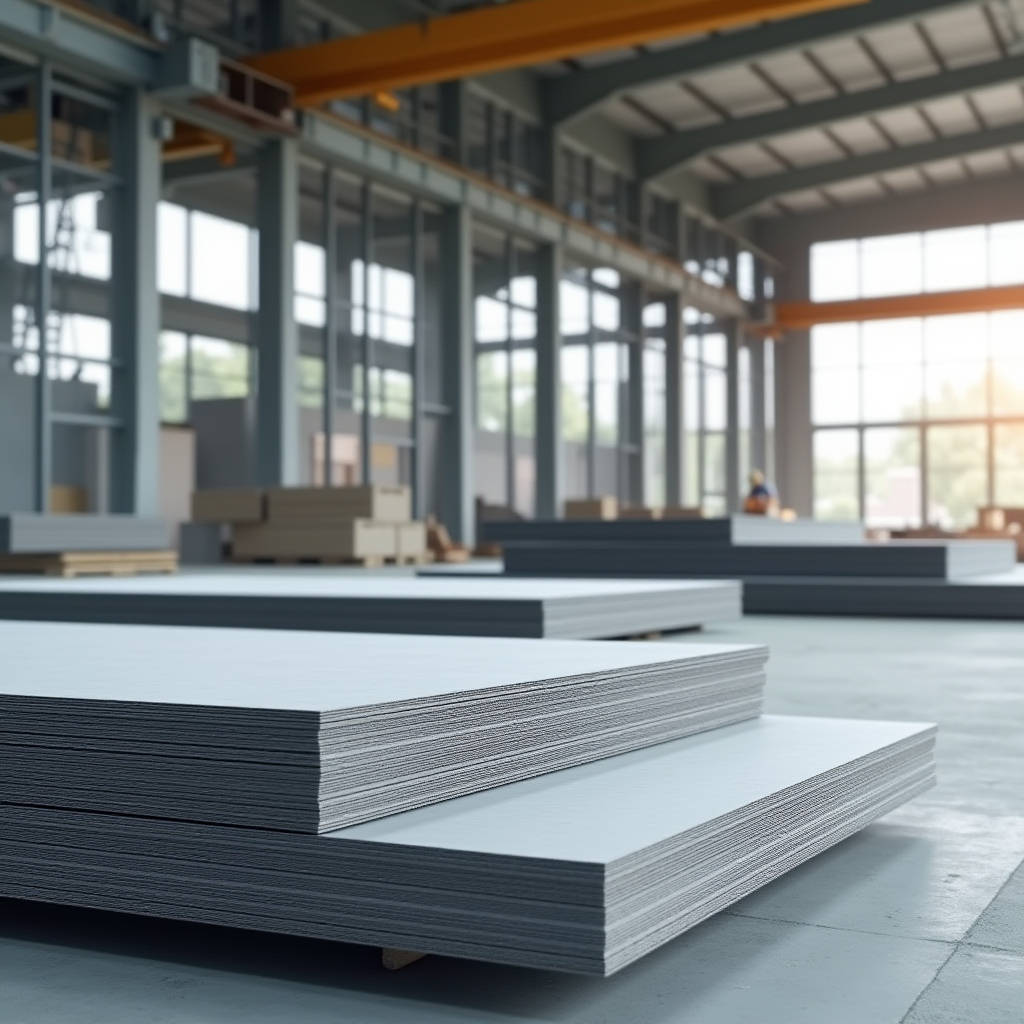
Mill finish aluminum sheet arrives from the rolling mill exactly as the name suggests: raw, uncoated, and carrying the natural oxide layer formed during the hot or cold rolling process. For architects and facade engineers, this material represents a blank canvas. It is the starting point for nearly every architectural aluminum application, from curtain wall panels to rainscreen cladding, from column covers to soffit liners. The surface carries a dull, slightly matte gray appearance with visible mill marks and a subtle directional grain left by the rollers. Understanding what mill finish actually means at the metallurgical level, and how it behaves before and after fabrication, determines whether a project stays on budget or spirals into costly rework. This article examines the material properties, surface characteristics, and practical engineering considerations that matter when specifying mill finish aluminum sheet for commercial building envelopes.
What Mill Finish Actually Means at the Metallurgical Level
The term "mill finish" describes aluminum sheet that has not undergone any secondary surface treatment after the rolling process. When aluminum ingots pass through hot rolling mills, they are reduced from slabs roughly 600mm thick down to gauges as thin as 0.5mm. Cold rolling follows to achieve final thickness tolerances and mechanical properties. The surface that emerges carries a thin, naturally occurring aluminum oxide layer — typically 2 to 5 nanometers thick — formed instantaneously when the bare metal contacts atmospheric oxygen.
This oxide layer provides minimal corrosion resistance. Unlike the thick, engineered oxide films produced by anodizing (which range from 5 to 25 microns), the natural oxide on mill finish aluminum sheet offers negligible barrier protection in aggressive environments. The Aluminum Association designates mill finish as "as-fabricated" finish, carrying no additional designation beyond the alloy and temper specification. For 5052-H32 mill finish aluminum sheet, the surface is simply the result of the final cold rolling pass, with no attempt to modify or enhance appearance.
Mill marks — those faint parallel lines visible on the surface — are not defects. They are inherent to the rolling process and vary in prominence depending on the final rolling reduction, roll surface condition, and lubricant used. For applications where the aluminum will be anodized or painted, these marks are irrelevant because subsequent surface preparation (etching, brightening, or conversion coating) removes them. For applications where mill finish aluminum sheet is used in its raw state, the visual consistency of these marks becomes a specification concern.
Alloy Selection for Architectural Mill Finish Sheet
Not all aluminum alloys behave identically in mill finish condition. The three most common architectural alloys — 3003, 5052, and 6061 — each bring distinct characteristics to mill finish aluminum sheet applications. 3003-H14 offers moderate strength with excellent formability, making it suitable for flashing, coping, and non-structural trim where the raw surface is acceptable. 5052-H32 delivers higher tensile strength (approximately 31,000 psi ultimate) and superior corrosion resistance in marine and industrial atmospheres, which is why it dominates rainscreen and soffit applications. 6061-T6, with its heat-treatable properties, provides the highest strength but exhibits more pronounced mill marks and a slightly different surface appearance due to its magnesium-silicon composition.
The choice of alloy also affects how the mill finish aluminum sheet ages visually. 5xxx series alloys containing magnesium may develop a slight yellowish cast over time as the magnesium in the alloy reacts with atmospheric moisture. This is purely cosmetic and does not affect structural integrity, but it matters on visible soffit panels or facade elements where color consistency is expected. 3xxx series alloys tend to remain more color-stable but are softer and more prone to handling damage during fabrication and installation.
Gauge Tolerances and Flatness Standards
Mill finish aluminum sheet is produced to specific thickness tolerances defined by ASTM B209 (Standard Specification for Aluminum and Aluminum-Alloy Sheet and Plate). For sheet gauges between 0.040" and 0.125" (1.0mm to 3.2mm), the standard thickness tolerance is ±0.003" to ±0.005" depending on the nominal gauge and alloy. These tolerances matter when the sheet is being formed into architectural panels that must fit into extruded framing systems with tight clearances.
Flatness is another critical parameter. Mill finish aluminum sheet that has been properly leveled on a precision cut-to-length line will exhibit minimal residual stress and lie flat on the fabrication table. Sheet that has not been adequately leveled may show edge wave or center buckle, which translates directly into oil-canning on installed facade panels. The flatness tolerance for mill finish sheet is typically specified as 1/8" in 4 feet for architectural applications, though tighter tolerances can be achieved with stretcher-leveled material.
| Alloy & Temper | Tensile Strength (ksi) | Yield Strength (ksi) | Corrosion Resistance | Typical Mill Finish Gauge Range | Best Architectural Application |
|---|---|---|---|---|---|
| 3003-H14 | 20-26 | 17 | Good (general atmospheric) | 0.024" - 0.125" | Flashing, coping, interior trim |
| 5052-H32 | 31-38 | 23 | Excellent (marine/industrial) | 0.032" - 0.125" | Rainscreen panels, soffits, column covers |
| 6061-T6 | 42-45 | 35 | Good (requires coating) | 0.040" - 0.190" | Structural panels, heavy-gauge cladding |
| 1100-H14 | 16-21 | 14 | Excellent (chemical) | 0.025" - 0.125" | Chemical-resistant liners, non-structural |
| 5005-H34 | 21-28 | 16 | Excellent (architectural) | 0.040" - 0.125" | Anodized facade panels, decorative trim |
Surface Preparation: The Bridge Between Mill Finish and Performance Coating
Mill finish aluminum sheet is rarely the final product. In architectural cladding, it serves as the substrate for anodizing, PVDF liquid coating, or powder coating. The quality of surface preparation directly determines coating adhesion and long-term performance. A mill finish surface carries residual rolling oils, fine aluminum particles, and the natural oxide layer. All three must be removed or modified before coating.
The standard preparation sequence for architectural mill finish aluminum sheet involves alkaline cleaning to remove organic contaminants, followed by acid etching or deoxidizing to strip the natural oxide and create a uniform, micro-roughened surface profile. For PVDF coating systems conforming to AAMA 2605, the cleaned aluminum receives a chrome-based or chrome-free conversion coating that provides approximately 200-300 mg/ft² of coating weight. This conversion layer serves as both a corrosion inhibitor and an adhesion promoter for the primer coat.
Chromate conversion coatings have been the industry standard for decades, but environmental regulations — particularly REACH in Europe and evolving EPA guidelines in North America — are driving adoption of titanium-zirconium based non-chrome alternatives. These newer systems achieve comparable performance when properly applied, though they require tighter process control. A reputable supplier like Futeng® ensures that mill finish aluminum sheet intended for architectural coating undergoes rigorous incoming inspection, checking for surface contamination, gauge consistency, and flatness before the material enters the pretreatment line.
Why Mill Finish Cannot Be Left Exposed
There is a persistent misconception that mill finish aluminum sheet can be used as an exposed architectural surface without any coating. This is technically possible but practically inadvisable for any permanent building envelope. The natural oxide layer provides some protection in mild, dry environments, but it is insufficient in urban, industrial, or coastal atmospheres where sulfur compounds, chlorides, and acidic precipitation accelerate corrosion. Unprotected mill finish aluminum exposed to these conditions develops white rust (aluminum oxide corrosion product), pitting, and uneven discoloration within months.
The Aluminum Association designates mill finish as suitable for interior applications and protected exterior applications only. For any exposed architectural element, a minimum of a high-performance organic coating or anodized finish is required. The cost of replacing failed mill finish panels far exceeds the incremental cost of factory-applied finishes.
Handling, Storage, and Fabrication: Protecting the Raw Surface
Mill finish aluminum sheet is more susceptible to handling damage than coated material. The bare surface scratches easily, picks up dirt and oils from handling equipment, and can develop water stains if stored improperly. For fabricators receiving mill finish sheet that will be coated in-house, these handling considerations directly affect coating yield and rework rates.
Best practices for storing mill finish aluminum sheet include keeping the material in a dry, temperature-stable environment, maintaining the original interleaving paper or protective film between sheets, and storing sheets vertically on edge with adequate support to prevent bowing. If sheets must be stored horizontally, the stack height should be limited to prevent pressure marks on the bottom sheets. Moisture trapped between sheets can cause water staining — a cosmetic issue that requires additional surface preparation before coating.
During fabrication, cutting lubricants and forming compounds must be selected for compatibility with the intended coating system. Silicone-based lubricants are particularly problematic because they contaminate the surface and cause coating adhesion failures. Water-soluble vanishing oils are preferred because they evaporate cleanly or can be removed in the pretreatment wash cycle. Welding mill finish aluminum sheet requires thorough removal of the natural oxide layer from the weld zone, along with post-weld cleaning to remove soot and flux residues.
Cost Structure: Mill Finish vs. Prefinished Sheet
The economic appeal of mill finish aluminum sheet is straightforward: it costs less per pound than prefinished material. The price differential varies by alloy, gauge, and market conditions, but mill finish 5052-H32 sheet typically runs 15-25% less than the same material with a factory-applied PVDF or powder coating. For a large facade project consuming 20,000 square feet of 0.080" sheet, that difference can represent $15,000 to $30,000 in material cost alone.
However, the true cost equation must account for what happens after the sheet arrives at the fabrication shop. Mill finish aluminum sheet that will be coated requires all the surface preparation steps described above — cleaning, etching, conversion coating — plus the coating application itself. If the fabricator has an in-house coating line, the total cost of mill finish plus coating may be comparable to buying prefinished coil. If the fabricator must send the sheet to a third-party coater, logistics, handling damage, and double freight costs can erase the initial savings.
The decision framework should consider project scale, coating specification, and supply chain logistics. For projects exceeding 15,000 square feet with a single coating color, prefinished coil from a mill-direct source often provides the lowest total installed cost. For smaller projects, multi-color designs, or projects where the fabricator has proven in-house coating capability, starting with mill finish aluminum sheet offers flexibility and shorter lead times. The American Architectural Manufacturers Association (AAMA) provides specification guidelines that help clarify when factory-applied versus shop-applied coatings are appropriate.
Quality Inspection: What to Check Before Accepting a Mill Finish Shipment
Receiving inspection of mill finish aluminum sheet should follow a structured checklist. Visual inspection under adequate lighting reveals surface defects: roll marks, scratches, pits, and embedded particles. These defects may be acceptable if the sheet is destined for coating, because the pretreatment process will address them. However, deep scratches or gouges that penetrate more than 5% of the sheet thickness should trigger rejection, as they can create stress concentrations during forming.
Dimensional inspection verifies thickness, width, length, and flatness against the purchase order and applicable ASTM B209 tolerances. A micrometer or ultrasonic thickness gauge provides accurate thickness measurements at multiple points across the sheet width. Flatness is checked with a straightedge and feeler gauge, measuring the maximum gap between the sheet surface and the straightedge.
Mill test reports (MTRs) should accompany every shipment and should be reviewed for alloy chemistry, mechanical properties, and compliance with the specified ASTM standard. The MTR is not just paperwork — it is the legal document that certifies the material meets the requirements of the project specification. For projects requiring third-party inspection, the MTRs form the basis of the audit trail.
Regional Availability and Supply Chain Considerations
Mill finish aluminum sheet is produced by rolling mills worldwide, but availability of specific alloys and gauges varies significantly by region. North American mills focus on 3003, 5052, and 6061 in standard gauges, with lead times of 4-8 weeks for mill-direct orders. European mills offer a broader range of EN AW alloys (the European equivalent of AA designations), including 5005 and 5754, which are popular for architectural applications. Asian mills, particularly in China, have expanded capacity dramatically and can supply mill finish aluminum sheet in gauges and alloys that are hard to source elsewhere.
Import tariffs and trade policies affect the landed cost of imported mill finish sheet. The U.S. Section 232 tariffs on aluminum imports, for example, add 10% to the cost of certain aluminum products from most countries. Buyers should verify the tariff classification of the specific product they are purchasing and factor duties into their cost comparisons. Working with suppliers who maintain inventory in local service centers can mitigate both tariff exposure and lead time risk.
For projects with demanding flatness requirements or tight gauge tolerances, the capabilities of the service center that levels and cuts the mill finish aluminum sheet matter as much as the capabilities of the rolling mill. Precision leveling equipment, such as a Herr-Voss or Braner line, can achieve flatness tolerances that general-purpose leveling lines cannot. The ASTM International standards for flatness provide a common language for specifying and verifying these requirements.
Environmental and Sustainability Factors
Aluminum's sustainability story is well known: it is infinitely recyclable without loss of properties, and recycling aluminum requires only 5% of the energy needed to produce primary aluminum. Mill finish aluminum sheet, because it carries no coating, is easier to recycle than prefinished or painted material. It can be re-melted directly without the need to burn off organic coatings or separate paint layers.
For projects pursuing LEED certification or other green building standards, the recycled content of mill finish aluminum sheet contributes to Materials and Resources credits. The exact recycled content varies by mill and product, but architectural aluminum sheet typically contains 30-50% post-industrial recycled content, with some mills offering products with 70% or more total recycled content.
Environmental Product Declarations (EPDs) are increasingly required for architectural materials. The Aluminum Association publishes industry-average EPDs for aluminum sheet products, which can be used when product-specific EPDs are not available. These documents provide the life-cycle assessment data — global warming potential, embodied energy, water consumption — that sustainability consultants and specifiers need.
Common Specification Mistakes and How to Avoid Them
Specifying mill finish aluminum sheet seems straightforward, but several common errors create problems downstream. The first is specifying "mill finish" as the final surface for exposed exterior applications. This violates the fundamental principle that mill finish is an intermediate product, not a finished architectural surface. The specification should clearly state the required final finish — anodized per AAMA 611, PVDF per AAMA 2605, or powder coat per AAMA 2604 — and treat the mill finish as the substrate condition.
The second error is failing to specify the alloy and temper. "Aluminum sheet" is not sufficient; the specification must state the exact alloy (e.g., 5052-H32) and reference the applicable ASTM standard. Without this, the fabricator may supply a lower-cost alloy that does not meet the strength or corrosion resistance requirements of the application.
The third error is ignoring flatness requirements. If the specification is silent on flatness, the supplier will deliver material that meets standard commercial tolerances, which may not be adequate for architectural panels where oil-canning is a concern. The specification should state the required flatness tolerance, typically referenced to ASTM B209 or a project-specific standard.
Mill finish aluminum sheet remains the foundation of architectural aluminum fabrication. Its raw surface, proper alloy selection, and correct handling set the stage for everything that follows — whether that is a high-performance PVDF coating, a durable anodized finish, or a powder coat that matches the architect's color specification. Understanding the material at this level, rather than treating it as a commodity, separates projects that perform from those that disappoint.