Qualanod Anodized Aluminum Lifecycle Cost Premium and 30 Year Facade Savings
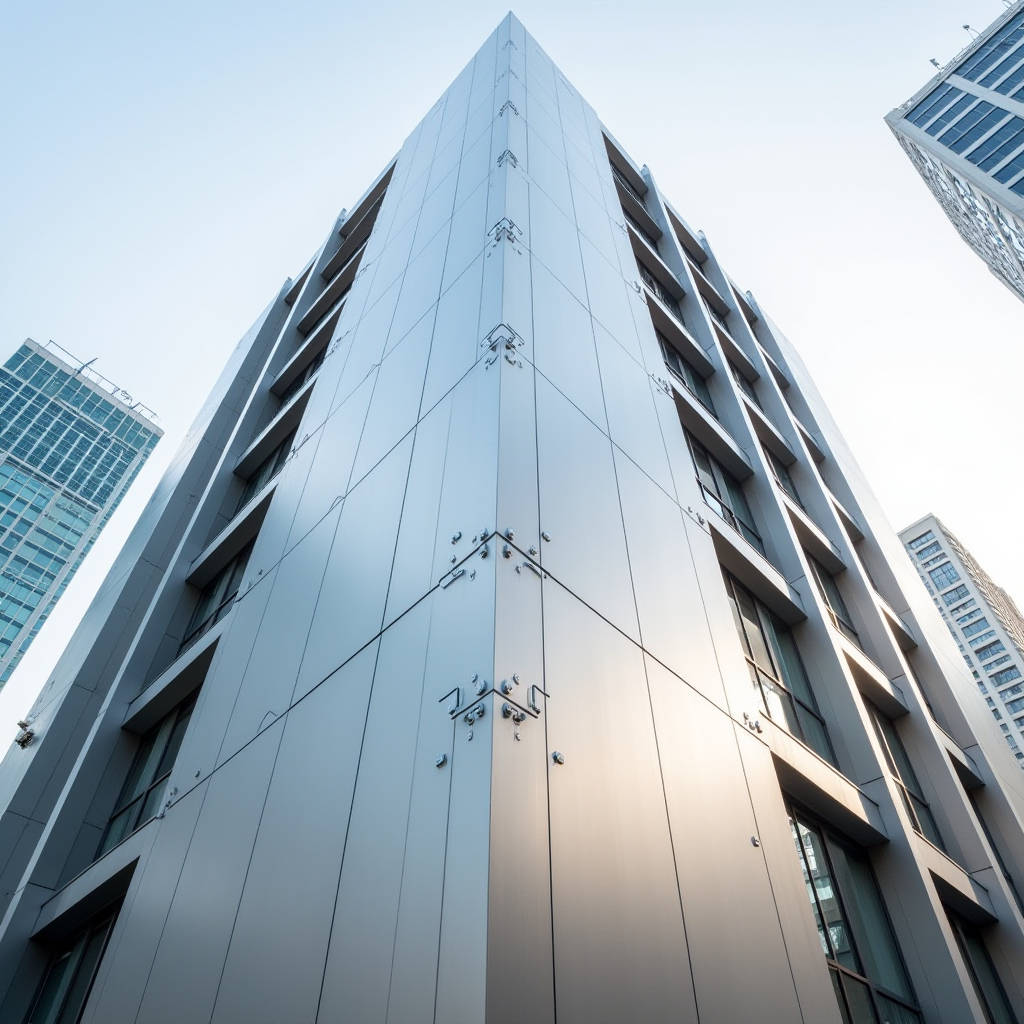
When a facade consultant specifies Qualanod Anodized Aluminum for a high-rise curtain wall, the immediate question from the QS team is rarely about aesthetics. It is about cost. Specifically, how much extra budget must be allocated per square meter to move from a standard powder-coated finish to a Qualanod-certified anodized surface, and whether that premium is justified over a 30-year building lifecycle. The answer is not a fixed number. It sits at the intersection of alloy grade, pretreatment rigor, oxide layer thickness, and the geographic location of the licensed anodizing plant. Based on current project data across Southeast Asia and the Middle East, the premium typically ranges from 15% to 35% over architectural polyester powder coating, but the long-term maintenance delta can swing total lifecycle costs by a factor of three in coastal environments.
Where the Cost Premium Originates
Anodizing is an electrochemical process that converts the aluminium surface into a durable, corrosion-resistant oxide layer. Unlike organic coatings that sit on top of the metal, the anodic film is integral to the substrate. Achieving Qualanod certification means the anodizing line must comply with specifications covering everything from bath chemistry and temperature control to sealing quality and film thickness uniformity. These requirements are codified in the Qualanod Specifications for Sulfuric Acid-Based Anodizing, which licensees must follow to the letter.
The cost drivers are structural, not cosmetic. First, alloy selection narrows dramatically. Qualanod standards mandate that the aluminium substrate must be suitable for architectural anodizing. Alloys in the 5000 and 6000 series — particularly 5005, 5052, 6063, and 6061 — are commonly specified, but each behaves differently in the anodizing bath. A 5005 alloy with controlled magnesium content produces a uniform, light silver finish with minimal color variation across batches. A 6063 extrusion with inconsistent metallurgy can show streaking that fails Qualanod visual inspection. Mills producing sheet or extrusion stock for anodizing must maintain tighter compositional tolerances, and that material costs 8% to 12% more than standard architectural-grade aluminium destined for opaque coatings.
Second, pretreatment is unforgiving. Qualanod mandates rigorous etching and desmutting stages that remove surface contaminants and create a uniform matte or satin texture before anodizing. Any shortcut here — insufficient rinse cycles, bath contamination, or skipped desmutting — produces patchy film growth that will be rejected during the mandatory quality audit. Licensed plants invest heavily in automated pretreatment lines with conductivity monitoring, and those capital costs are amortized across every square meter processed.
Oxide Thickness and the Performance-Cost Curve
The Qualanod label defines minimum oxide film thicknesses tied to application class. For architectural exterior applications, the minimum is typically 20 microns (AA20), with 25 microns (AA25) recommended for aggressive environments. This is not a simple linear relationship. Moving from AA15 to AA20 requires roughly 25% more anodizing time at a given current density. Moving from AA20 to AA25 adds another 20% to 25% in tank time. Electricity consumption, bath cooling load, and line occupancy all increase proportionally. The following table breaks down the practical implications for solid aluminium cladding panels.
| Oxide Class | Min. Film Thickness | Typical Application | Relative Processing Cost | Expected Coastal Lifespan |
|---|---|---|---|---|
| AA10 | 10 µm | Interior decorative | Base (1.0x) | Not recommended |
| AA15 | 15 µm | Interior / mild exterior | 1.15x – 1.25x | 10 – 15 years |
| AA20 | 20 µm | Standard architectural exterior | 1.35x – 1.50x | 20 – 25 years |
| AA25 | 25 µm | Coastal / industrial exterior | 1.60x – 1.80x | 30+ years |
These figures assume a 2.5mm or 3.0mm solid aluminium sheet — the standard thickness range for rainscreen cladding panels. Thinner material is not practical for anodized architectural applications because handling and fabrication stresses can cause micro-cracking in the oxide layer at bend radii. The Qualanod specifications also require that fabricated panels be tested for sealing quality using the dye spot test or admittance test per ISO 2143 and ISO 2931 respectively. A panel that passes these tests at AA25 thickness will resist chloride ion penetration for decades, even in the salt-laden atmosphere of a Gulf Coast or Southeast Asian waterfront project.
Comparing Qualanod Anodized Aluminum with PVDF and Powder Coating
Architectural specifiers routinely evaluate three finish technologies for solid aluminium cladding: Qualanod-certified anodizing, PVDF (polyvinylidene fluoride) liquid coating meeting AAMA 2605, and super-durable polyester powder coating meeting Qualicoat Class 2 or AAMA 2604. Each has a distinct cost profile and performance envelope.
PVDF coatings — typically 70% PVDF resin content applied at 30–40 microns dry film thickness — dominate the North American and Middle Eastern high-rise market. A 3-coat PVDF system on a 2.5mm solid aluminium panel costs roughly $18–$25 per square meter for the coating process alone, depending on color and batch size. Qualanod anodizing at AA20 thickness on the same substrate runs $22–$32 per square meter for the anodizing process. At first glance, anodizing appears more expensive. But the comparison is misleading if it stops at the factory gate.
Anodized surfaces do not chalk, peel, or fade in the same way organic coatings do. The color is derived from the metallic substrate itself — either natural silver tones or electrolytically deposited tin, cobalt, or nickel pigments trapped within the pore structure. UV radiation has virtually no effect on the inorganic oxide layer. A PVDF coating, while highly UV-resistant, will eventually show gloss reduction and color shift after 20 to 25 years of equatorial sun exposure. The maintenance cycle for anodized cladding is typically limited to periodic cleaning with mild detergent and water. No repainting, no recoating. For a 40-story tower with 25,000 square meters of cladding, the avoided cost of scaffold erection and recoating at year 20 can exceed $1.5 million in today's dollars.
Super-durable powder coating sits at the lower end of the cost spectrum — $12–$18 per square meter — and offers good color consistency and reasonable exterior durability. However, it cannot match the hardness of an anodic oxide layer. The oxide on a Qualanod-certified panel registers 400–500 HV on the Vickers hardness scale, compared to roughly 80–120 HV for a cured powder film. On ground-floor areas subject to pedestrian impact, shopping cart abrasion, or sand-laden wind, the anodized surface resists scratching in a way that organic films cannot.
Geographic and Supply Chain Realities
Not all Qualanod licensees are equal in terms of cost competitiveness. The Qualanod network includes licensed plants across Europe, the Middle East, Asia, and increasingly Africa. A project in Dubai specifying Qualanod Anodized Aluminum can source from QMEA-licensed facilities in the UAE or wider GCC, minimizing freight costs and lead times. A project in London may draw from Italian, German, or Spanish licensees. A project in Singapore or Bangkok may look to licensed plants in China, Japan, or Thailand.
The cost differential between regions is significant. European licensees operating under stringent environmental and energy regulations typically charge 20% to 30% more than Asian licensees for the same AA20 specification. However, European plants often offer tighter color consistency for architectural batch work, which reduces on-site rejection rates and the associated cost of replacement panels. Procurement managers must weigh the ex-works price against the total installed cost, including the risk premium for batch variation.
For solid aluminium cladding panels, the supply chain involves two separate quality-critical steps: the anodizing of flat sheet or coil, and the subsequent fabrication (cutting, routing, bending, and assembling) into finished panels. Qualanod certification applies to the anodizing process, not to fabrication. A fabricator sourcing anodized sheet from a licensed plant must handle the material carefully to avoid damaging the oxide layer. Post-fabrication touch-up of anodized surfaces is extremely limited — unlike painted finishes, you cannot simply buff out a scratch and re-spray. This places a premium on fabricators with documented experience in anodized panel production. Suppliers like Futeng® have developed specific handling protocols for anodized solid aluminium panels, including protective film application before CNC routing and controlled bend radii to prevent oxide micro-cracking.
Real-World Cost Model: 5,000 m² Facade
To ground the discussion in actionable numbers, consider a representative project: a 25-story commercial tower requiring 5,000 square meters of solid aluminium rainscreen cladding in a natural silver anodized finish, AA20 specification, on 2.5mm 5005 alloy sheet. The panels are 1,200mm wide by 3,000mm tall with a simple cassette profile.
The material cost breakdown per square meter, ex-works from a Qualanod-licensed Asian plant, runs approximately:
- 2.5mm 5005-H14 aluminium sheet: $11.00 – $13.50
- Qualanod AA20 anodizing (sheet level): $9.00 – $12.00
- Fabrication (cut, route, bend, assemble): $14.00 – $18.00
- Packaging and palletizing: $2.00 – $3.00
- Total ex-works per m²: $36.00 – $46.50
By comparison, the same panel with a 3-coat PVDF finish would run $32.00 – $40.00 per square meter ex-works. The anodized premium is $4.00 – $6.50 per square meter, or roughly 12% to 16%. Over 5,000 square meters, that is an additional $20,000 to $32,500 in upfront cost. Against a total facade package that may run $500,000 to $800,000 including substructure, brackets, insulation, and installation, the anodizing premium represents 3% to 6% of the total facade budget.
Now extend the analysis to 30 years. The PVDF facade will likely require recoating at year 20–25. At $45–$60 per square meter for scaffold, surface preparation, and reapplication (inflation-adjusted), the recoating cost for 5,000 square meters reaches $225,000 to $300,000. The anodized facade needs cleaning only. The net lifecycle saving from choosing Qualanod Anodized Aluminum over PVDF is approximately $200,000 to $270,000 — or 25% to 35% of the initial facade investment.
Sealing Quality: The Hidden Cost Determinant
One technical detail that separates Qualanod-certified anodizing from non-certified alternatives is the sealing specification. After anodizing, the porous oxide layer must be sealed to close the microscopic pores and lock in corrosion resistance. Qualanod mandates hot water sealing, nickel-based cold sealing, or a combination thereof, with performance verified by the admittance test (ISO 2931) or dye spot test (ISO 2143).
Inadequately sealed anodic films — common in non-certified, price-driven anodizing — absorb contaminants, develop a chalky appearance within 3 to 5 years, and lose corrosion resistance. The cost of replacing failed anodized panels on an occupied building, including access, demolition, disposal, and reinstallation, can exceed $200 per square meter. The Qualanod quality audit system, which includes unannounced plant inspections and sample testing by independent laboratories such as the IFO Institute for Surface Technology, exists precisely to prevent this scenario. The audit cost is built into the licensee's operating overhead and reflected in the per-square-meter anodizing price — a small insurance premium against catastrophic failure.
Color Consistency and Batch Management
Architects specifying anodized aluminium for large facades must understand that color variation is inherent to the process. Unlike paint, where pigment is precisely controlled, the anodized color depends on alloy composition, anodizing parameters, and sealing conditions. Qualanod addresses this through its batch control requirements, but the standard acknowledges that some variation is unavoidable.
The practical solution is to anodize all panels for a given elevation or visible plane from the same alloy heat or coil lot, processed in the same anodizing batch. This imposes logistical constraints: the fabricator must order sufficient sheet from a single mill run, and the anodizer must have tank capacity to process the entire batch without interruption. For a project requiring 2,000 square meters of anodized panels on a single elevation, the anodizer needs tank dimensions capable of handling sheets up to 4 meters in length — a capability not all licensees possess. The cost of splitting a batch across two anodizing runs is not financial but aesthetic: visible color shift between adjacent panels on the same elevation, which can lead to architect rejection and full replacement at the contractor's expense.
Specification Language That Protects Budget
Procurement managers and facade consultants can control costs by writing precise specification language. A vague requirement for "Qualanod-certified anodized finish" leaves the door open to AA15 thickness when the environment demands AA20 or AA25. The specification should state:
Anodizing shall be sulfuric acid-based, performed by a Qualanod-licensed facility, to minimum oxide film thickness AA20 (20 microns) per Qualanod Specifications current edition. Sealing quality shall be verified by admittance test per ISO 2931, with maximum admittance value of 20 µS at 2 minutes for AA20 film. Alloy shall be 5005-H14 or 5052-H32 for sheet, 6063-T5 or 6061-T6 for extrusions, with mill certificates confirming composition within Qualanod-approved ranges.
This language eliminates ambiguity and prevents cost-cutting substitutions that would undermine the lifecycle cost analysis. It also gives the contractor clear criteria for evaluating supplier quotations on an equal basis.
When the Premium Is Not Worth Paying
There are project types where the Qualanod premium does not deliver commensurate value. Interior feature walls, ceilings, and column cladding in climate-controlled environments do not require 20-micron oxide thickness or rigorous sealing. AA10 or AA15 anodizing from a non-certified but competent anodizer may be entirely adequate, at roughly half the cost. Similarly, temporary structures, exhibition stands, and retail fit-outs with 3-to-5-year design lives should not bear the cost of a 30-year finish.
For exterior architectural applications on solid aluminium cladding panels, however, the calculus consistently favors Qualanod Anodized Aluminum when the building owner intends to hold the asset for more than 15 years. The upfront premium is modest in the context of total facade cost, and the avoided maintenance expenditure over the building lifecycle is substantial. The key is to make the decision early — at the specification stage — rather than attempting to value-engineer the finish after the budget is locked. Retrofitting an anodized specification into a project designed for PVDF is nearly impossible due to the different alloy, handling, and fabrication requirements.
The Qualanod quality label, maintained since 1974 and continuously updated — most recently with the 01.07.2026 edition of the Specifications — provides the technical framework that makes this lifecycle cost analysis reliable. Without it, specifiers are comparing anodized products of unknown and variable quality, and the cost projections become guesswork. With it, the numbers are solid enough to present to any investment committee.