Qualicoat Powder Coated Aluminum Classes Testing and Specification Errors That Void Warranties
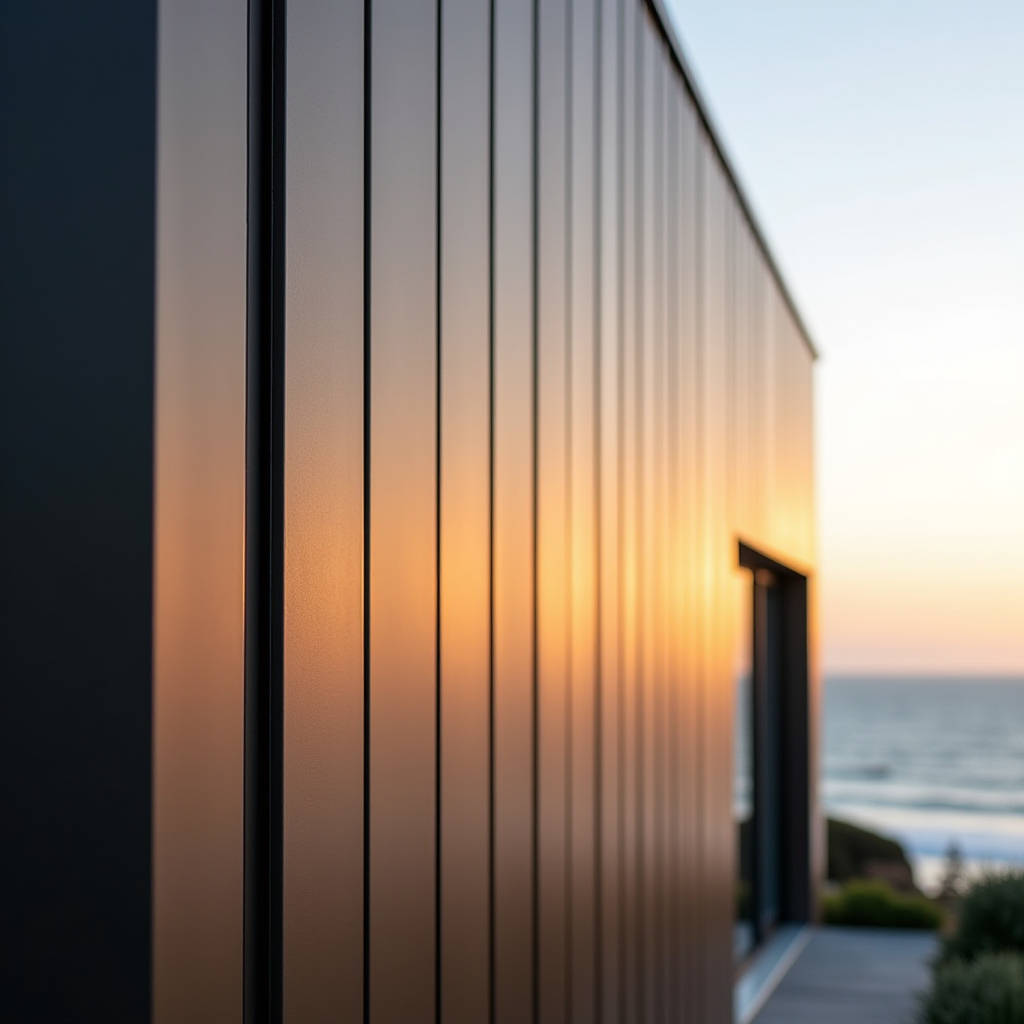
When a facade panel fails prematurely—chalking within five years, fading unevenly across elevations, or corroding at the cut edge—the root cause rarely traces back to a single bad batch. More often, the specification was silent on the coating standard that should have governed the entire supply chain. Qualicoat Powder Coated Aluminum exists precisely to close that gap. It is not a product you buy off the shelf. It is a quality label that binds the coater, the powder supplier, and the pretreatment chemical provider into a single audited system. For anyone writing performance specs for solid aluminium cladding panels on mid-rise commercial, institutional, or coastal residential projects, understanding what sits behind the Qualicoat stamp—and what does not—determines whether the warranty holds water five years down the line.
What the Qualicoat Label Actually Audits
Most specifiers assume the Qualicoat label means the powder itself passed a lab test. That assumption misses the point. The label audits the entire coating process—pretreatment chemistry, application environment, curing parameters, and finished product performance—as an integrated system. A licensed applicator cannot simply buy an approved powder and call the output Qualicoat-compliant. The powder supplier, the pretreatment chemical supplier, and the coating plant must all hold valid Qualicoat licenses simultaneously. If any one of those three licenses lapses, the label cannot be applied to the finished aluminium.
The 2024 update to the Qualicoat Specifications, often referred to in industry circles as "Qualicoat 3.0," pushed this systemic approach further. It introduced requirements around alloy composition, extrusion quality, and microstructure evaluation—acknowledging that the substrate itself influences long-term coating performance. For solid aluminium panels in the 2.0mm to 3.0mm thickness range, this matters because recycled content in the billet can introduce trace elements that alter surface reactivity during pretreatment. A perfectly executed powder application on a metallurgically inconsistent substrate can still fail the acetic acid salt spray test (AASS) required under ISO 9227 for Class 2 and above.
Breaking Down the Three Quality Classes
Qualicoat structures its certification around three application classes, each tied to a specific environmental exposure scenario. Choosing the wrong class for the project location is one of the most expensive mistakes a specifier can make—and the one that generates the most warranty disputes.
| Parameter | Class 1 (Standard) | Class 2 (Enhanced) | Class 3 (Superior) |
|---|---|---|---|
| Minimum Powder DFT | 60 microns | 60 microns | 60 microns |
| Pretreatment | Chrome or chrome-free conversion coating | Chrome or chrome-free conversion coating | Chrome or chrome-free conversion coating |
| Acetic Acid Salt Spray (ISO 9227) | Not required | 1,000 hours, max 4mm creep from scribe | 1,000 hours, max 4mm creep from scribe |
| Filiform Corrosion Resistance | Not required | Max 4mm filament length | Max 4mm filament length |
| UV/Humidity Resistance (Florida Exposure) | 1 year, max 50% gloss retention | 1 year, min 50% gloss retention | 3 years, min 50% gloss retention |
| Typical Application | Interior or sheltered exterior | General architectural exterior | Aggressive coastal/industrial |
| Seaside Approval | Not applicable | Optional add-on | Often bundled |
Class 1 should almost never appear on a solid aluminium cladding specification for exterior use. The absence of filiform corrosion testing alone disqualifies it for any facade exposed to rain-wash cycles. Class 2 represents the practical minimum for most commercial projects in temperate climates. Class 3 becomes non-negotiable within 5km of breaking surf, in heavy industrial zones with SO₂ exposure, or anywhere the architect has specified a dark colour with high solar absorption. The additional cost of Class 3 over Class 2 typically runs 8-12% on the coating line, which translates to roughly 3-5% on the total panel cost for a 2.5mm solid aluminium sheet—a margin that vanishes into rounding error compared to the cost of scaffold re-access for panel replacement.
The Seaside Approval Add-On: What It Tests That Class 3 Does Not
There is a persistent misunderstanding that Class 3 automatically covers marine environments. It does not. Qualicoat Seaside approval is a separate, additional certification that can be applied to Class 2 or Class 3 coatings. The distinction lies in the test methodology. Where Class 3 relies on acetic acid salt spray and Florida exposure, Seaside approval requires the coating to pass a cyclic corrosion test—typically a modified filiform test under ISO 4623 combined with extended condensation resistance testing per ISO 6270.
The practical implication for solid aluminium panels is significant. A 3.0mm panel installed on a beachfront hotel in Dubai or a resort in Phuket faces a combination of chloride deposition, UV radiation, and thermal cycling that no single accelerated test replicates perfectly. Seaside-approved Qualicoat Powder Coated Aluminum has been validated against a test regime that cycles between salt fog, drying, and humidity in a pattern designed to simulate tidal zone exposure. Specifiers who skip this add-on and rely solely on Class 3 may find their coating warranty voided by the powder supplier when the project location is disclosed.
Pretreatment: The Invisible Foundation
Powder coating adhesion on aluminium depends almost entirely on what happens before the powder hits the substrate. Qualicoat mandates a conversion coating—either hexavalent chrome (declining globally due to REACH restrictions) or a chrome-free alternative based on titanium/zirconium chemistry. The specification does not dictate which chemistry to use, but it does require the pretreatment line to be validated through the full Qualicoat test battery using the specific chemistry and process parameters that will be used in production.
For solid aluminium cladding panels, the pretreatment challenge is compounded by the fact that panels are often fabricated—cut, routed, folded—before coating. This means the pretreatment must reach every milled edge, every folded corner, and every rivet hole. Poor rinse drainage in these geometries can leave chemical residues that manifest as edge creep under filiform testing. The Qualicoat audit process checks for this: the licensed applicator must demonstrate that their racking method, immersion time, and rinse cascade are adequate for the specific panel geometries they process. A coater licensed for extruded profiles is not automatically competent to coat fabricated panels.
Powder Chemistry: Polyester, Super-Durable Polyester, and Fluoropolymer Blends
Qualicoat does not mandate a specific resin chemistry. It sets performance thresholds, and the powder manufacturer formulates to meet them. In practice, three resin families dominate architectural powder coating:
- Standard polyester (TGIC-free or Primid-cured): Adequate for Class 1 interiors. Gloss retention drops sharply after 3-5 years of exterior exposure. Not recommended for any facade application.
- Super-durable polyester: The workhorse for Class 2 and Class 3 applications. Uses a combination of hydroxyalkylamide curing agents and UV-stable pigments. Can achieve 10-15 years of colour stability in temperate climates when applied at 60-80 microns DFT.
- FEVE-based fluoropolymer blends: Occasionally used to bridge the gap between super-durable polyester and liquid PVDF. Not a direct substitute for 70% PVDF liquid coatings, but can approach 20-year gloss retention when formulated correctly.
The distinction between super-durable polyester and standard polyester is not visible to the naked eye on a freshly coated panel. Both look identical. The difference emerges at year four or five, when the standard polyester begins to chalk—a phenomenon where the resin matrix degrades under UV exposure, leaving pigment particles exposed on the surface. Running a finger across a chalked panel picks up a white residue. Qualicoat Class 2 and Class 3 specifically require super-durable polyester chemistry, and the audit process includes Fourier-transform infrared spectroscopy (FTIR) to verify the resin type.
Film Thickness: Why 60 Microns Is the Floor, Not the Target
The Qualicoat specification states a minimum dry film thickness (DFT) of 60 microns. In practice, responsible coaters targeting Class 2 or Class 3 will apply 70-80 microns to ensure no spot on the panel falls below 60 microns after accounting for edge-thinning effects. Edge-thinning is a well-documented phenomenon in electrostatic powder application: the charged powder particles follow field lines that curve away from sharp edges, resulting in lower film build at corners and cut edges. On a folded solid aluminium panel, the outside corners of the return legs are particularly vulnerable.
Specifiers should require DFT measurement reports that include edge readings, not just centre-of-panel readings. ISO 2360 provides the standard method for non-destructive DFT measurement on non-magnetic substrates. A competent Qualicoat-licensed applicator will provide a heat map of DFT readings across the panel surface, with edge values clearly identified. If the edge DFT drops below 40 microns, corrosion protection at that point is compromised regardless of what the centre-of-panel reading says.
Colour Consistency and Batch-to-Batch Control
Architects specify colour. The coating industry delivers colour. The gap between the two is where most disputes originate. Qualicoat addresses this through a combination of instrumental colour measurement and visual assessment protocols. The specification references CIELAB colour space (ISO 11664-4) and sets a maximum Delta E tolerance—typically 1.0 for batch-to-batch consistency on the same project.
What the Qualicoat standard does not control, however, is the metamerism risk. Two panels coated with powders from different manufacturers can measure identically under D65 illuminant (simulated daylight) and diverge visibly under the warm-white LED lighting used in a building lobby. This is a formulation issue, not a quality issue. The only defence is to specify that all powder for a given project must come from a single manufacturer's single batch, and that the coater must produce a single-batch certificate. For large projects requiring multiple coating runs, a master batch of powder should be reserved at the outset.
Futeng® has addressed this in their supply chain by maintaining a controlled powder inventory system where each project's powder batch is quarantined and linked to the project reference number, ensuring that even panels produced months apart draw from the same powder source.
Testing and Documentation: What the Specifier Should Demand
A Qualicoat license number printed on a delivery note is not sufficient due diligence. The specifier should request a project-specific compliance package that includes:
- Applicator's current Qualicoat license certificate with expiry date and scope (confirming the license covers fabricated panels, not just extrusions).
- Powder supplier's Qualicoat approval letter for the specific powder code and colour being used.
- Pretreatment chemical supplier's Qualicoat approval for the specific conversion coating chemistry.
- Batch test reports including DFT measurements (with edge readings), gloss values at 60° geometry, colour Delta E values, and adhesion test results (cross-hatch per ISO 2409 or pull-off per ISO 4624).
- For Class 3 or Seaside-approved work: the relevant AASS and filiform test certificates from an independent Qualicoat-approved laboratory.
This documentation package should be retained for the duration of the warranty period—typically 15-25 years for architectural powder coating. The Qualicoat specification requires the applicator to retain retained samples from each production batch for a minimum period, allowing retrospective testing if a field failure occurs.
Qualicoat vs. AAMA 2604/2605: A Practical Cross-Reference
Projects in North America or those funded by US-based developers often reference AAMA specifications. The comparison is not one-to-one, but a practical mapping helps specifiers bridge the two systems:
| Performance Attribute | Qualicoat Class 2 | AAMA 2604 | Qualicoat Class 3 | AAMA 2605 |
|---|---|---|---|---|
| Coating Type | Super-durable polyester powder | High-performance organic coating | Super-durable polyester powder | High-performance organic coating (typically 70% PVDF) |
| South Florida Exposure | 1 year, min 50% gloss retention | 5 years, min 30% gloss retention | 3 years, min 50% gloss retention | 10 years, min 50% gloss retention |
| Salt Spray Resistance | 1,000 hours AASS | 1,500 hours (5% NaCl) | 1,000 hours AASS | 4,000 hours (5% NaCl) |
| Colour Retention | Delta E ≤ 5 after 1 year Florida | Delta E ≤ 5 after 5 years Florida | Delta E ≤ 5 after 3 years Florida | Delta E ≤ 5 after 10 years Florida |
| Typical Warranty | 15 years | 10-15 years | 20-25 years | 20-30 years |
The key takeaway: Qualicoat Class 3 and AAMA 2605 are not equivalent. AAMA 2605 typically requires a 70% PVDF liquid coating (or a validated FEVE powder), while Qualicoat Class 3 can be achieved with super-durable polyester powder. For projects where the specification demands AAMA 2605 compliance, powder coating alone may not suffice—liquid PVDF from a Qualicoat-licensed applicator may be required. The Qualicoat label covers both powder and liquid coating, and the specifications include separate sections for each.
Qualicoat 3.0: Why the Substrate Now Matters
The 2024 Qualicoat 3.0 research programme, referenced in the updated specifications, represents a significant shift in the label's scope. Historically, Qualicoat focused exclusively on the coating process, treating the aluminium substrate as a given. The 3.0 update acknowledges that the metallurgical quality of the aluminium—specifically the distribution of intermetallic particles at the surface—directly affects pretreatment uniformity and, consequently, coating adhesion and corrosion resistance.
For solid aluminium cladding panels, this has practical implications. Aluminium alloy 1050, 3003, and 5005 are all commonly used for architectural panels, but their surface characteristics differ. Alloy 3003 contains manganese, which forms Al-Mn intermetallic particles that can create local galvanic cells if not properly passivated during pretreatment. Alloy 5005 contains magnesium, which can enrich at the surface during extrusion or rolling and interfere with chrome-free conversion coating deposition. The Qualicoat 3.0 framework pushes applicators to characterise the incoming substrate and adjust pretreatment parameters accordingly—a level of process control that separates licensed applicators from general powder coaters.
For specifiers, the practical step is to require that the aluminium substrate supplier provides a certificate of alloy composition and that the coater documents the pretreatment parameters used for that specific alloy. The days of treating "aluminium" as a generic substrate are ending.
Common Specification Errors and How to Avoid Them
After reviewing specifications from projects across Southeast Asia, the Middle East, and Europe, several recurring errors stand out:
- Specifying "Qualicoat approved" without a class: This is meaningless. A Class 1 coating carries the Qualicoat label and is entirely unsuitable for exterior use. The specification must state "Qualicoat Class 2" or "Qualicoat Class 3" as a minimum.
- Assuming Seaside approval is automatic with Class 3: It is not. Seaside approval must be specified separately and verified through the test documentation.
- Ignoring the applicator's scope of license: A coater licensed for architectural extrusions is not automatically licensed for fabricated panels. The license scope must be checked.
- Setting DFT at 60 microns with no edge measurement requirement: The specification should state "minimum 60 microns DFT at any point on the panel surface, including edges, measured in accordance with ISO 2360."
- Allowing powder substitution without re-testing: If the powder supplier or powder code changes mid-project, the entire Qualicoat compliance chain must be re-verified. The specification should prohibit substitution without prior approval and re-submission of the full compliance package.
Warranty Reality: What the Paper Covers and What It Does Not
A Qualicoat-compliant coating typically carries a warranty of 15-25 years depending on class and environment. But the warranty is only as strong as the chain of documentation. Warranty claims are routinely denied for reasons that have nothing to do with coating failure: the substrate was not properly specified, the panels were installed with incompatible sealants that leached plasticisers into the coating, or the cleaning regime used abrasive or alkaline cleaners that damaged the film.
The Qualicoat label provides a framework for quality assurance, but it does not replace project-specific due diligence. The specifier's responsibility is to ensure that the coating specification, the substrate specification, the fabrication specification, and the installation specification form a coherent whole. A Class 3 Seaside-approved coating on a 2.0mm panel with unprotected cut edges installed using acetic acid-cure silicone will still fail—and the coating warranty will not cover it.
For procurement managers and facade contractors sourcing solid aluminium cladding panels internationally, the Qualicoat license number of the proposed coater should be verified against the Qualicoat international licensee database before placing an order. The license is renewed annually, and a lapsed license is not a rare occurrence. The few minutes spent checking can prevent a container of panels arriving on site with a coating that cannot be certified.
The Qualicoat Powder Coated Aluminum label, when properly specified and verified, delivers a coating system with predictable long-term performance. The key word is "system." The label is not a product guarantee—it is a process guarantee. Understanding the difference is what separates a facade that performs from one that becomes a case study in coating failure.